
Navigate Italy's diverse driving environments with confidence. This unit covers essential techniques and rules for high-speed motorways (autostrade), challenging rural and mountain roads, safe tunnel passage, and adapting to adverse weather. You'll also learn about environmentally conscious driving practices to enhance fuel efficiency.
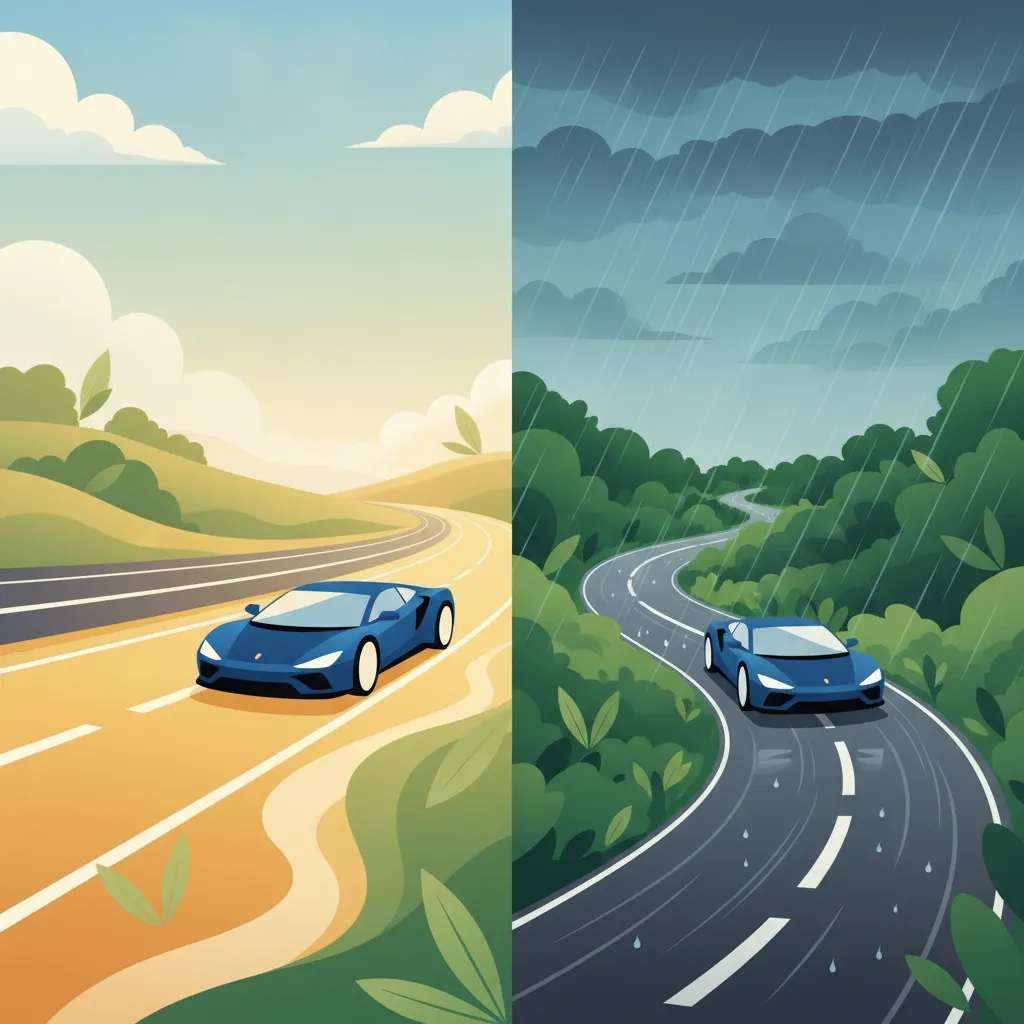
Browse all lessons that make up Rural Roads, Motorways, Tunnels, Weather and Environmental Driving. Each lesson focuses on specific topics, learning objectives, and core concepts, helping you build essential knowledge and follow a clear, structured progression toward your study goals in Italy.
This lesson focuses on the unique characteristics and challenges of driving on rural and mountain roads. It covers how to safely navigate sharp curves, steep inclines, and narrow lanes with limited visibility, often requiring the use of the horn to signal presence. The content also prepares drivers for potential hazards such as slow-moving agricultural vehicles, unexpected animal crossings, and variable road surface quality.
This lesson provides essential rules and techniques for driving on Italian motorways (autostrade) and major extra-urban roads. It explains how to safely merge onto the motorway from an entry ramp, the strict lane discipline required (drive right, overtake left), and how to exit correctly. The content also covers speed regulations, maintaining a safe following distance at high speed, and procedures for using service areas and handling emergencies.
This lesson details the specific safety protocols required when driving through tunnels. It covers the mandatory use of dipped headlights, adherence to specific speed limits, and the general prohibition on overtaking or stopping. The content also explains the correct procedures to follow in case of a breakdown, traffic jam, or fire inside a tunnel, including how to use emergency exits and SOS call boxes.
This lesson teaches drivers how to adapt their technique for various adverse weather conditions. It explains the risks of reduced grip and visibility in rain, fog, snow, and ice, and the need to significantly increase following distances and reduce speed. The content covers how to avoid and correct skids, the proper use of lights in poor visibility, and the legal requirements for winter tyres or snow chains in certain areas.
This lesson introduces the principles of eco-driving (guida ecologica), a driving style that reduces fuel consumption and lowers harmful emissions. It covers techniques such as maintaining a steady speed, anticipating traffic flow to avoid harsh braking and acceleration, and using the highest appropriate gear. The content also explains how regular vehicle maintenance, correct tyre pressure, and reducing unnecessary weight contribute to better fuel economy.
Explore high-intent keywords and long-tail search topics learners use when researching Rural Roads, Motorways, Tunnels, Weather and Environmental Driving. These terms reflect how people search for reliable study materials, structured explanations, and unit-level theory preparation support in Italy.
Find clear answers to the most common questions learners ask about Rural Roads, Motorways, Tunnels, Weather and Environmental Driving. Understand how the unit is organized, what learning goals it supports, and how it contributes to your study progression with structured explanations and practical guidance tailored for learners in Italy.
Rural roads in Italy often feature winding paths, variable surfaces, limited visibility due to hills or vegetation, and slower-moving traffic like agricultural machinery. In contrast, autostrade are high-speed, multi-lane highways designed for rapid transit, with strict rules on entry, exit, and overtaking. Speed limits are significantly higher on autostrade, and drivers must maintain a safe distance and be aware of faster vehicles.
When entering a tunnel, it's crucial to switch on your dipped headlights before entry, as visibility drastically changes. You should also check your mirrors and be prepared for potential traffic congestion or slower vehicles. Maintain a safe following distance and avoid unnecessary lane changes. Upon exiting, be aware that your eyes need a moment to readjust to the daylight, and be cautious of other road users.
In heavy rain, reduce your speed significantly, increase your following distance, and ensure your wipers and lights are on. Be wary of aquaplaning. In fog, use your fog lights (front and rear if equipped and necessary), reduce speed even further, and rely on road markings and edge lines for guidance. Avoid using high beams in fog as they can reflect and worsen visibility.
Environmental driving, or 'ecodriving', focuses on methods to reduce fuel consumption and vehicle emissions. For the theory test, this includes understanding how smooth acceleration and braking, maintaining optimal tyre pressure, anticipating traffic flow to avoid unnecessary stops, and reducing idling time can contribute to fuel efficiency and a lower environmental impact.
Yes, speed limits vary on rural roads in Italy depending on the road type and conditions. Generally, outside built-up areas on secondary roads, the limit is often 90 km/h for cars. However, these limits can be reduced by signage due to specific hazards, curves, or poor road conditions. Always adhere to posted speed limits and adjust your speed based on the road and visibility.
Mountain roads in Italy can present numerous risks including steep gradients, sharp hairpin bends, narrow passages, potential for falling rocks, and unpredictable weather changes. Drivers should use lower gears to control speed on descents, be prepared to yield to oncoming traffic on narrow sections, and always be alert for cyclists, pedestrians, and slow-moving vehicles.
All included lessons
Lessons in Rural Roads, Motorways, Tunnels, Weather and Environmental Driving
See who benefits most from studying Rural Roads, Motorways, Tunnels, Weather and Environmental Driving. This overview explains how the unit supports different learning needs, what level of knowledge is helpful before starting, and how it fits into the overall study path in Italy.
This unit is crucial for all learners preparing for the Italian Patente B theory test, especially those who find navigating diverse road conditions and challenging environments daunting. It's particularly beneficial for drivers who may not have extensive experience with high-speed motorways, rural routes, or extreme weather conditions.

Begin your structured study today by exploring our Italian driving license theory curriculum. Browse comprehensive courses designed to cover all official exam topics, build your knowledge of road rules, and prepare effectively for your test.
Explore Italian Theory CurriculumExplore all units and lessons included in this driving theory course.
Begin your structured study today by exploring our Italian driving license theory curriculum. Browse comprehensive courses designed to cover all official exam topics, build your knowledge of road rules, and prepare effectively for your test.
Explore Italian Theory Curriculum