
This unit is crucial for your Patente B theory test preparation, focusing on speed management, safe following distances, and proactive driving. You will learn how speed impacts stopping distance and how to apply defensive driving principles to anticipate and avoid hazards on Italian roads, ensuring you're ready for any situation.
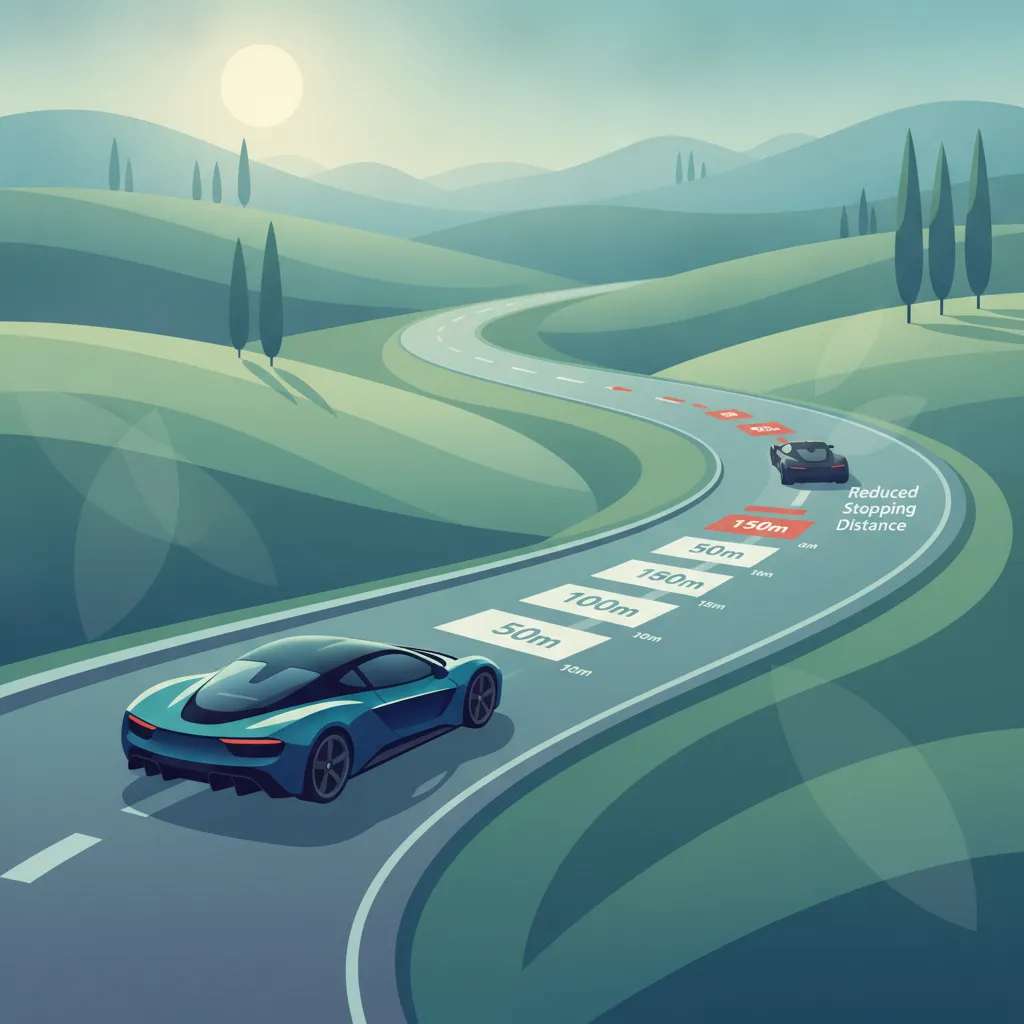
Browse all lessons that make up Speed, Distance, Stopping, Visibility and Defensive Driving. Each lesson focuses on specific topics, learning objectives, and core concepts, helping you build essential knowledge and follow a clear, structured progression toward your study goals in Italy.
This lesson details the legal speed limits applicable to different road classifications in Italy. It covers the standard limits for urban centers, extra-urban secondary roads, main extra-urban roads, and motorways (autostrade). The content also highlights the lower speed limits that apply to beginner drivers and in specific conditions such as adverse weather or road construction zones.
This lesson teaches the crucial skill of selecting a safe and appropriate speed that may be lower than the legal limit, based on prevailing conditions. It explains how to assess factors such as traffic flow, weather, visibility, and road surface quality to make prudent speed choices. The goal is to always maintain full control of the vehicle and have sufficient time to react to unexpected hazards.
This lesson provides a technical breakdown of the total stopping distance, explaining its two key components: reaction distance and braking distance. It details how factors like driver alertness affect reaction time, while speed, vehicle weight, and road grip influence braking distance. Understanding this relationship is fundamental to managing speed and maintaining a safe distance from other road users.
This lesson is dedicated to the vital concept of 'distanza di sicurezza', the safe following distance required to avoid a rear-end collision. It explains how this distance is not fixed but varies with speed and conditions, covering practical methods like the 'two-second rule' to help judge it accurately. Maintaining this space cushion provides the necessary time to react and brake safely if the vehicle ahead stops suddenly.
This lesson introduces the philosophy and techniques of defensive driving, a proactive approach focused on anticipating and mitigating potential hazards. It teaches drivers to maintain constant situational awareness by scanning the road ahead, behind, and to the sides. The content covers how to manage the space around the vehicle, identify potential escape routes, and predict the actions of other road users to prevent dangerous situations from developing.
Explore high-intent keywords and long-tail search topics learners use when researching Speed, Distance, Stopping, Visibility and Defensive Driving. These terms reflect how people search for reliable study materials, structured explanations, and unit-level theory preparation support in Italy.
Find clear answers to the most common questions learners ask about Speed, Distance, Stopping, Visibility and Defensive Driving. Understand how the unit is organized, what learning goals it supports, and how it contributes to your study progression with structured explanations and practical guidance tailored for learners in Italy.
The 'distanza di sicurezza' translates to safe following distance. In Italy, it's generally understood as the distance that guarantees a vehicle can stop safely without colliding with the vehicle in front, even if the latter brakes suddenly. While often described using the 'two-second rule' for dry conditions, it's crucial to adapt this distance based on speed, weather, road surface, and vehicle type. Understanding the factors that influence it is key for the theory test and safe driving.
Speed has a significant impact on stopping distance. Total stopping distance is comprised of reaction distance (distance traveled during your reaction time) and braking distance (distance traveled while brakes are applied). As speed increases, both reaction distance and braking distance increase dramatically. For example, doubling your speed can quadruple your braking distance. This is a fundamental concept tested in the Italian theory exam.
Total stopping distance is the sum of two main components: reaction distance and braking distance. Reaction distance depends on your speed and how quickly you perceive and react to a hazard. Braking distance is influenced by your speed, the efficiency of your brakes, the road surface condition, and the vehicle's weight. Understanding these components helps in choosing appropriate speeds and following distances.
Defensive driving is vital because the Italian theory exam assesses not just your knowledge of rules, but also your understanding of hazard perception and accident prevention. It involves actively anticipating potential dangers, making safe assumptions about other road users' actions, and maintaining a safe margin. Practicing defensive driving principles, as taught in this unit, helps you answer scenario-based questions correctly and drive more safely.
Yes, the Italian theory test includes questions on various speed limits. You need to know the general limits for urban areas, extra-urban roads, and motorways (autostrade). Importantly, you must also understand how conditions like weather, road surface, vehicle type (e.g., trailers), and beginner driver (neopatentati) restrictions can necessitate lower speeds than the legal maximum.
Several factors can significantly increase your braking distance. These include driving at higher speeds, poor road surface conditions (like wet, icy, or gravelly roads), worn-out tires, heavy loads, and less effective brakes. It's crucial to account for these variables, especially in adverse weather or when carrying passengers or cargo, to maintain safety and pass the theory exam's scenario questions.
All included lessons
Lessons in Speed, Distance, Stopping, Visibility and Defensive Driving
See who benefits most from studying Speed, Distance, Stopping, Visibility and Defensive Driving. This overview explains how the unit supports different learning needs, what level of knowledge is helpful before starting, and how it fits into the overall study path in Italy.
This unit is essential for all Patente B candidates preparing for their Italian theory exam. It is particularly beneficial for learners who want to deeply understand the physics of stopping distances and how speed management directly impacts safety, as well as those looking to develop proactive and defensive driving habits for real-world driving in Italy.

Begin your structured study today by exploring our Italian driving license theory curriculum. Browse comprehensive courses designed to cover all official exam topics, build your knowledge of road rules, and prepare effectively for your test.
Explore Italian Theory CurriculumExplore all units and lessons included in this driving theory course.
Begin your structured study today by exploring our Italian driving license theory curriculum. Browse comprehensive courses designed to cover all official exam topics, build your knowledge of road rules, and prepare effectively for your test.
Explore Italian Theory Curriculum