
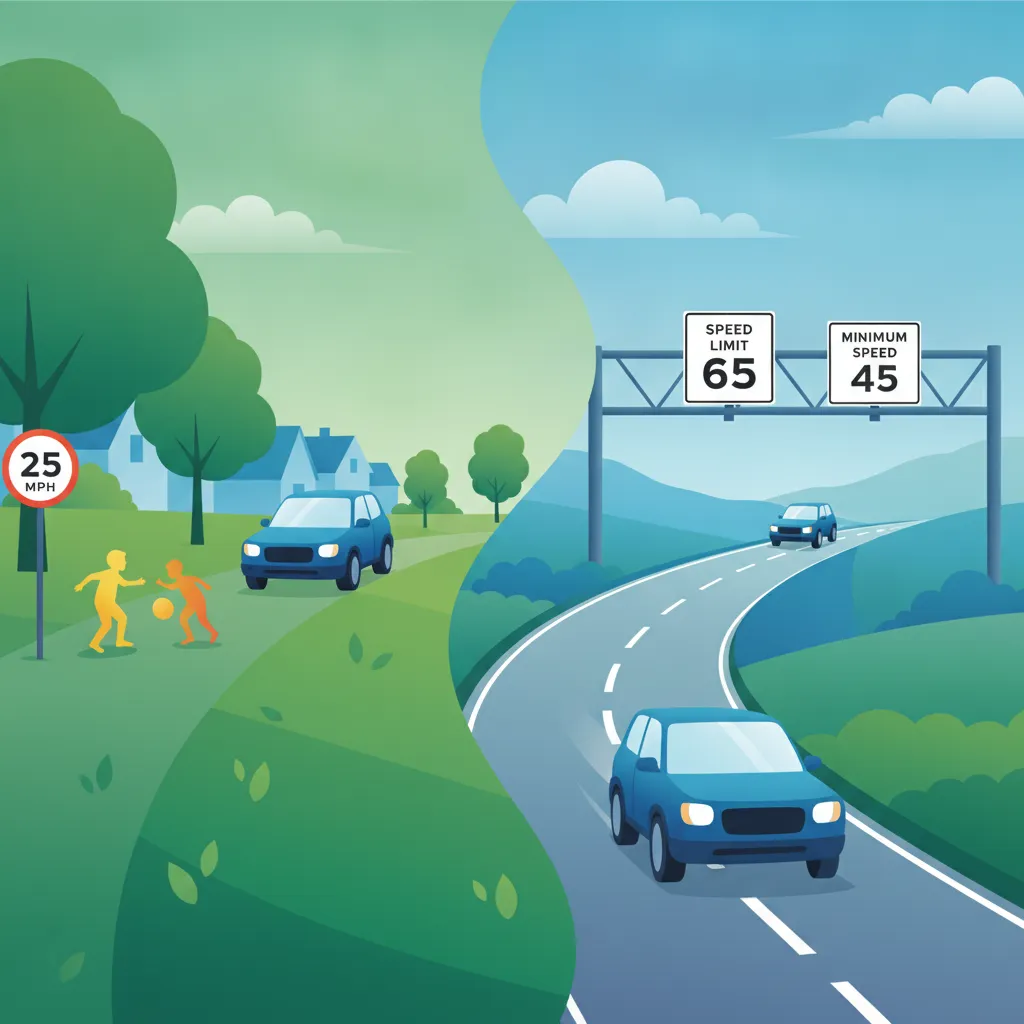
This lesson details the legal speed limits applicable to various road classifications across Italy, a core component of the Codice della Strada. You will learn the standard limits for urban centers, extra-urban roads, and motorways, as well as specific restrictions for beginner drivers and adverse conditions. Mastering these rules is essential for both your Patente B theory exam and ensuring safety on the road.
Lesson content overview
Understanding and adhering to legal speed limits is a fundamental aspect of safe driving and a critical component of the Italian Patente B theory examination. Speed limits are not arbitrary numbers; they are carefully determined to balance efficient traffic flow with the paramount goal of road safety. This lesson provides a comprehensive overview of the speed limits applicable across various road categories in Italy, alongside special considerations for beginner drivers and challenging environmental conditions. Mastering these regulations is essential for legal compliance, preventing accidents, and ensuring a responsible driving experience.
Speed limits in Italy are meticulously established based on factors such as road design, potential hazards, typical traffic density, and the surrounding environment. They represent the maximum speed at which a vehicle can be operated safely under ideal conditions. The primary purpose of these limits is to minimize the risk of accidents by providing drivers with adequate time to react to unexpected events and to control their vehicles effectively, especially during braking.
Driving above the posted speed limit significantly increases kinetic energy, leading to longer stopping distances and a greater risk of severe injuries in the event of a collision. Conversely, driving too slowly can also impede traffic flow and create hazardous situations. Therefore, selecting an appropriate speed—one that is both within the legal limit and suitable for prevailing conditions—is a core responsibility for every driver.
The Italian Codice della Strada (Highway Code) classifies roads into distinct categories, each with its own set of default speed limits. These classifications reflect the road's infrastructure, its primary function, and the level of risk associated with driving on it. Recognising the type of road you are on is the first step to knowing the applicable speed limit.
As drivers transition between different road types, they must be vigilant in observing changes in speed limits. While default limits apply in the absence of specific signage, temporary or permanent signs always take precedence. The hierarchy of these limits typically ranges from the lowest in congested urban areas to the highest on high-speed motorways.
Urban areas, known as Centri abitati, are characterized by a high concentration of residential buildings, commercial establishments, and mixed-use zones. These environments involve frequent interactions with pedestrians, cyclists, and other road users, as well as numerous intersections and potential hazards.
The standard speed limit within Italian urban areas is 50 km/h. This limit is designed to protect vulnerable road users, reduce the severity of accidents, and allow drivers sufficient time to react to complex traffic situations, such as pedestrians crossing unexpectedly or vehicles exiting driveways. Unless otherwise indicated by specific signage, drivers must assume and adhere to this default limit within any built-up area.
Always be prepared to brake or react quickly when driving in urban areas. The 50 km/h limit is a maximum, not a target, and conditions may warrant an even lower speed.
Within Centri abitati, certain areas are designated as "limited speed zones" where the default 50 km/h limit is further reduced. These zones are typically identified by specific signage. The most common reduction is to 30 km/h, particularly in:
It is crucial to observe and obey these specific signs, as they override the general urban limit. Ignoring such reduced limits, especially in sensitive areas like school zones, can lead to severe penalties and significantly increase the risk to vulnerable road users.
Strade extraurbane secondarie are roads located outside urban areas that are not classified as main primary routes. These roads often have single carriageways, moderate traffic volumes, and may feature a mix of bends, hills, and rural intersections.
For cars and motorcycles, the standard speed limit on strade extraurbane secondarie is 90 km/h. This limit reflects the generally higher design speed and fewer immediate hazards compared to urban environments, while still acknowledging the potential for unexpected obstacles, farm vehicles, or unlit sections.
Not all vehicles are permitted to travel at the 90 km/h limit on these roads. Heavier vehicles and those towing trailers have specific lower limits due to their increased mass, longer stopping distances, and reduced maneuverability. For trucks and vehicles with trailers exceeding 3.5 tons, the speed limit on strade extraurbane secondarie is 70 km/h. Drivers of such vehicles must be particularly aware of these differentiated limits.
Strade extraurbane principali are primary intercity roads, often designed as dual carriageways with separated lanes for opposing traffic. These roads connect major towns and are built for higher design speeds than secondary roads.
On strade extraurbane principali, the standard speed limit for cars and motorcycles is 110 km/h. The improved infrastructure, such as separated carriageways and typically fewer direct access points, allows for safer travel at higher speeds. However, even on these roads, drivers must remain vigilant for any temporary signage indicating lower limits due to road works, specific junctions, or adverse conditions.
Similar to secondary roads, heavier vehicles and those towing trailers face stricter speed limits on strade extraurbane principali. For trucks and vehicles with trailers exceeding 3.5 tons, the speed limit is 90 km/h. This distinction underscores the importance of understanding your vehicle's capabilities and respecting regulations designed to mitigate risks associated with larger and heavier vehicles.
Autostrade are Italy's high-capacity, divided highways, designed for long-distance travel and rapid transit between major cities. They feature multiple lanes in each direction, controlled access points, and are generally free of intersections at grade.
The highest standard speed limit in Italy applies to autostrade. For cars and motorcycles, the default maximum speed is 130 km/h. This limit is contingent on good weather conditions and the absence of any specific signage indicating a reduction. Autostrade are engineered to facilitate safe driving at these speeds, but drivers must always be ready to adjust to prevailing circumstances.
Do not assume the 130 km/h limit is always applicable on motorways. It is a maximum under ideal conditions; various factors can necessitate a reduction.
Just as on other extra-urban roads, trucks and vehicles with trailers exceeding 3.5 tons are subject to a reduced speed limit on autostrade, set at 90 km/h. These differentiated limits are crucial for ensuring the safety of all road users by accounting for the varying performance characteristics and stopping distances of different vehicle types.
To provide a safety buffer for less experienced motorists, Italian law imposes temporary reduced speed limits on neopatentati (beginner drivers). These restrictions are in place during the initial period after obtaining a driving license, allowing new drivers to gain experience in various road conditions at a reduced risk.
A driver is classified as a neopatentato for a specific duration after passing their Patente B examination. This period is typically one year from the date of license issuance for car drivers and three years for motorcycle riders (Patente A). During this time, the standard speed limits for certain road categories do not apply to them.
Beginner drivers must adhere to the following reduced speed limits:
A driver who has held their Patente B driving license for less than one year. These drivers are subject to specific reduced speed limits and other restrictions.
It is a common misunderstanding that these restrictions only apply for a shorter period, but they remain active for the full first year for car drivers. Strict adherence to these limits is mandatory, and violations can incur higher penalties.
Violations of speed limits by neopatentati carry more severe consequences than for experienced drivers. Penalties can include higher fines, double the points deduction from their license, and even license suspension in serious cases. This heightened enforcement is intended to impress upon new drivers the critical importance of caution and compliance during their initial driving experience.
The reduced speed limits for neopatentati are strictly enforced. Always double-check your speed, especially when transitioning to higher-speed roads like main extra-urban roads and motorways.
Legal speed limits represent maximums under ideal conditions. Drivers have a continuous responsibility to adjust their speed below these limits when circumstances dictate, prioritizing safety over adherence to the maximum allowed speed.
Challenging weather conditions significantly reduce grip, visibility, and reaction time, making it imperative to reduce speed.
Road works and construction zones often present altered road layouts, reduced lane widths, uneven surfaces, and the presence of workers. To protect both drivers and construction personnel, temporary speed limits are always enforced in these areas. These limits are indicated by specific temporary signs, which must be strictly obeyed. They typically override the default limits for the road type and can be significantly lower (e.g., 50 km/h or 30 km/h).
Beyond weather and road works, other factors also demand a reduction in speed:
Adherence to speed limits is a fundamental legal requirement under the Codice della Strada. Non-compliance not only endangers lives but also carries significant legal and financial consequences.
All specified speed limits, whether default for a road category or indicated by specific signs, are mandatory. Drivers do not have the discretion to exceed them, regardless of perceived road emptiness or their own driving skill. The principle of maximum safe speed dictates that the limit is the absolute ceiling under normal circumstances.
Speed limit signs are circular, white with a red border, and display the numerical speed in black.
When you see such a sign, that is the maximum speed permitted from that point forward until a new speed limit sign, a "end of speed limit" sign, or a sign indicating a different road category is encountered. It is the driver's responsibility to constantly observe signage and adjust speed accordingly.
Violating speed limits is one of the most frequent traffic offenses. Many violations stem from misunderstandings or inattention rather than deliberate recklessness.
Exceeding speed limits can lead to a range of penalties, including:
Speed limits are just one piece of the puzzle for safe driving. They must be integrated with other defensive driving techniques and a solid understanding of vehicle dynamics.
A crucial aspect of speed management is understanding the direct relationship between speed, reaction time, and stopping distance. The faster you drive, the greater the distance your vehicle will travel during your reaction time (the time it takes to perceive a hazard and initiate braking). Furthermore, braking distance increases exponentially with speed.
Defensive driving mandates always maintaining a speed that allows you to stop safely within the visible distance ahead, irrespective of the posted limit. This means:
Adhering to legal speed limits and exercising good judgment in selecting a safe speed for the prevailing conditions are cornerstones of responsible driving and crucial for passing your Patente B exam.
This lesson covers the legal speed limits for all Italian road types, from 50 km/h in urban areas to 130 km/h on motorways, with specific restrictions for heavy vehicles and beginner drivers. Understanding road classifications is essential because default limits apply when signs are absent, but posted signs always take precedence. Neopatentati face additional restrictions during their first year, including 100 km/h maximum on motorways instead of 130 km/h. Drivers must reduce speed below legal limits in adverse weather conditions such as heavy rain, fog, snow, or ice, as well as in construction zones where temporary signage applies. Mastering these rules is crucial for both passing the Patente B exam and ensuring legal compliance and road safety in Italy.
A short set of high-value points that capture the most important learning from this lesson.
Italian speed limits vary by road type: 50 km/h in urban areas (Centri Abitati), 90 km/h on secondary extra-urban roads, 110 km/h on main extra-urban roads, and 130 km/h on motorways (Autostrade).
Speed limits are maximum safe speeds under ideal conditions; drivers must always select a speed appropriate for current circumstances, regardless of the posted limit.
Reduced speed zones at 30 km/h apply in school areas, hospital zones, and high-pedestrian residential streets, overriding the default 50 km/h urban limit.
Trucks and vehicles with trailers exceeding 3.5 tons have lower limits than cars: 70 km/h on secondary roads, 90 km/h on main roads and motorways.
Neopatentati (beginner drivers in their first year with Patente B) must observe reduced limits: 100 km/h on motorways instead of 130 km/h, and 90 km/h on extra-urban roads instead of 110 km/h.
Explore all units and lessons included in this driving theory course.
Vehicle type matters: trucks and heavy vehicles face stricter speed limits than passenger cars on the same road.
Neopatentati restrictions last for one year for car drivers and three years for motorcycle riders from license issuance date.
Adverse weather automatically imposes lower speed requirements: heavy rain on motorways drops the limit to 110 km/h or lower, and fog requires speeds matching visible distance.
Temporary signs in construction zones always override default road category limits and must be obeyed.
The 30 km/h urban zone is common near schools, hospitals, and narrow residential streets with high pedestrian activity.
Assuming the urban speed limit is always 50 km/h everywhere—30 km/h zones near schools and hospitals override the default limit.
Believing the 130 km/h motorway limit applies regardless of conditions—heavy rain, fog, or road works automatically reduce this limit.
Thinking speed limits are recommendations rather than legal maximums that must never be exceeded.
Neopatentati drivers forgetting their special restrictions apply specifically for the full first year, not just the initial months.
Assuming it is safe to match the speed of surrounding traffic when others are speeding—the posted limit is the absolute maximum.
Lesson content overview
A short set of high-value points that capture the most important learning from this lesson.
Italian speed limits vary by road type: 50 km/h in urban areas (Centri Abitati), 90 km/h on secondary extra-urban roads, 110 km/h on main extra-urban roads, and 130 km/h on motorways (Autostrade).
Speed limits are maximum safe speeds under ideal conditions; drivers must always select a speed appropriate for current circumstances, regardless of the posted limit.
Reduced speed zones at 30 km/h apply in school areas, hospital zones, and high-pedestrian residential streets, overriding the default 50 km/h urban limit.
Trucks and vehicles with trailers exceeding 3.5 tons have lower limits than cars: 70 km/h on secondary roads, 90 km/h on main roads and motorways.
Neopatentati (beginner drivers in their first year with Patente B) must observe reduced limits: 100 km/h on motorways instead of 130 km/h, and 90 km/h on extra-urban roads instead of 110 km/h.
Explore all units and lessons included in this driving theory course.
Vehicle type matters: trucks and heavy vehicles face stricter speed limits than passenger cars on the same road.
Neopatentati restrictions last for one year for car drivers and three years for motorcycle riders from license issuance date.
Adverse weather automatically imposes lower speed requirements: heavy rain on motorways drops the limit to 110 km/h or lower, and fog requires speeds matching visible distance.
Temporary signs in construction zones always override default road category limits and must be obeyed.
The 30 km/h urban zone is common near schools, hospitals, and narrow residential streets with high pedestrian activity.
Assuming the urban speed limit is always 50 km/h everywhere—30 km/h zones near schools and hospitals override the default limit.
Believing the 130 km/h motorway limit applies regardless of conditions—heavy rain, fog, or road works automatically reduce this limit.
Thinking speed limits are recommendations rather than legal maximums that must never be exceeded.
Neopatentati drivers forgetting their special restrictions apply specifically for the full first year, not just the initial months.
Assuming it is safe to match the speed of surrounding traffic when others are speeding—the posted limit is the absolute maximum.
Explore search topics learners often look for when studying Legal Speed Limits in Different Zones. These topics reflect common questions about road rules, driving situations, safety guidance, and lesson level theory preparation for learners in Italy.
Browse additional driving theory lessons that cover connected traffic rules, road signs, and common driving situations related to this topic. Improve your understanding of how different rules interact across everyday traffic scenarios.
Understand the specific reduced speed limits that apply to beginner drivers (neopatentati) in Italy. This lesson details the lower maximum speeds on urban roads, main roads, and motorways, and the penalties for non-compliance.
This lesson focuses on the specific regulations applicable to beginner drivers (neopatentati) during their first three years of holding a Patente B. It outlines the stricter speed limits on motorways and main roads, as well as the restrictions on vehicle power-to-weight ratios. Furthermore, it details the absolute zero-tolerance policy for alcohol consumption and the increased penalties for traffic violations during this probationary period.
This lesson explores the specific speed limits applicable to AM vehicles across various zones, including urban, residential, and rural roads. Emphasis is placed on understanding the signage that indicates both permanent and temporary speed restrictions. Learners will also examine the rationale behind these limits and the importance of adapting speed to road conditions and traffic density.
This lesson teaches the crucial skill of selecting a safe and appropriate speed that may be lower than the legal limit, based on prevailing conditions. It explains how to assess factors such as traffic flow, weather, visibility, and road surface quality to make prudent speed choices. The goal is to always maintain full control of the vehicle and have sufficient time to react to unexpected hazards.
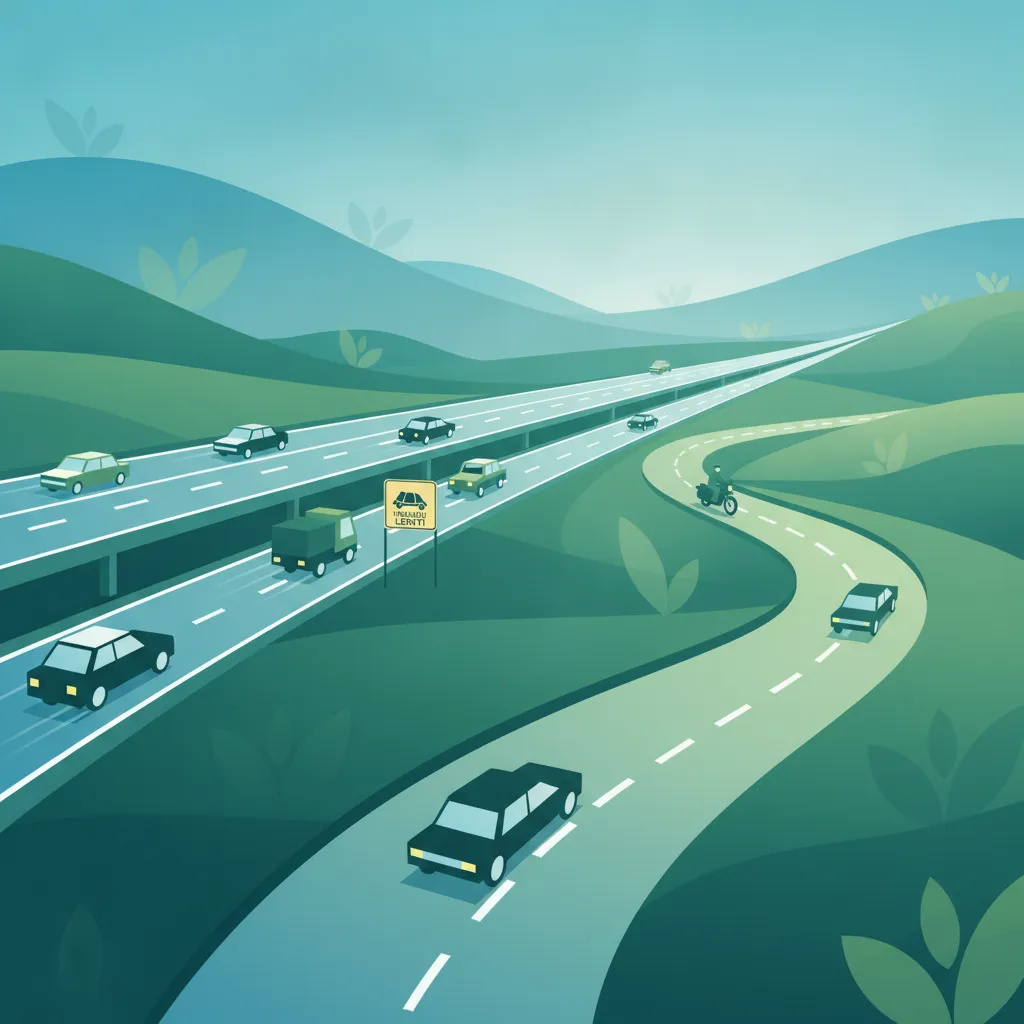
This lesson provides essential rules and techniques for driving on Italian motorways (autostrade) and major extra-urban roads. It explains how to safely merge onto the motorway from an entry ramp, the strict lane discipline required (drive right, overtake left), and how to exit correctly. The content also covers speed regulations, maintaining a safe following distance at high speed, and procedures for using service areas and handling emergencies.
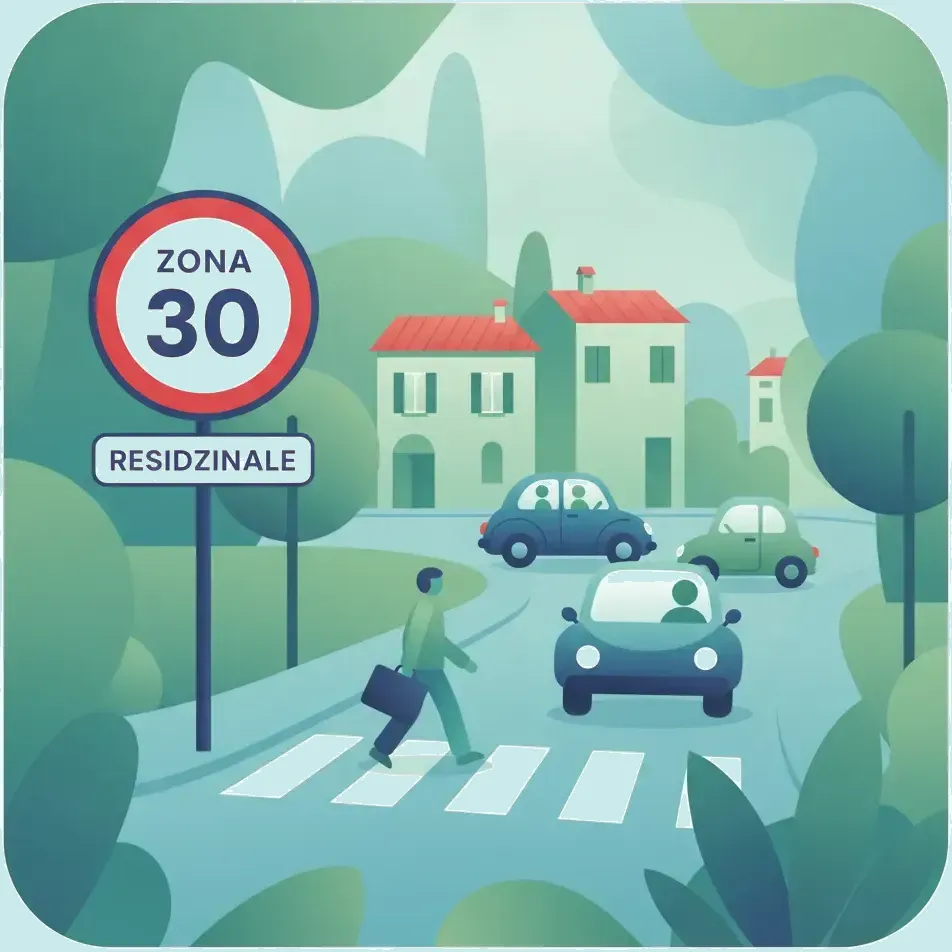
This lesson focuses on the specific signage and regulations for low-speed zones, such as "Zone 30" areas common in Italian towns. You will learn to recognize the signs that indicate reduced speed limits in residential areas, school zones, and other pedestrian-heavy environments. The content also explains various traffic calming measures and the priority rules that apply within these designated zones.
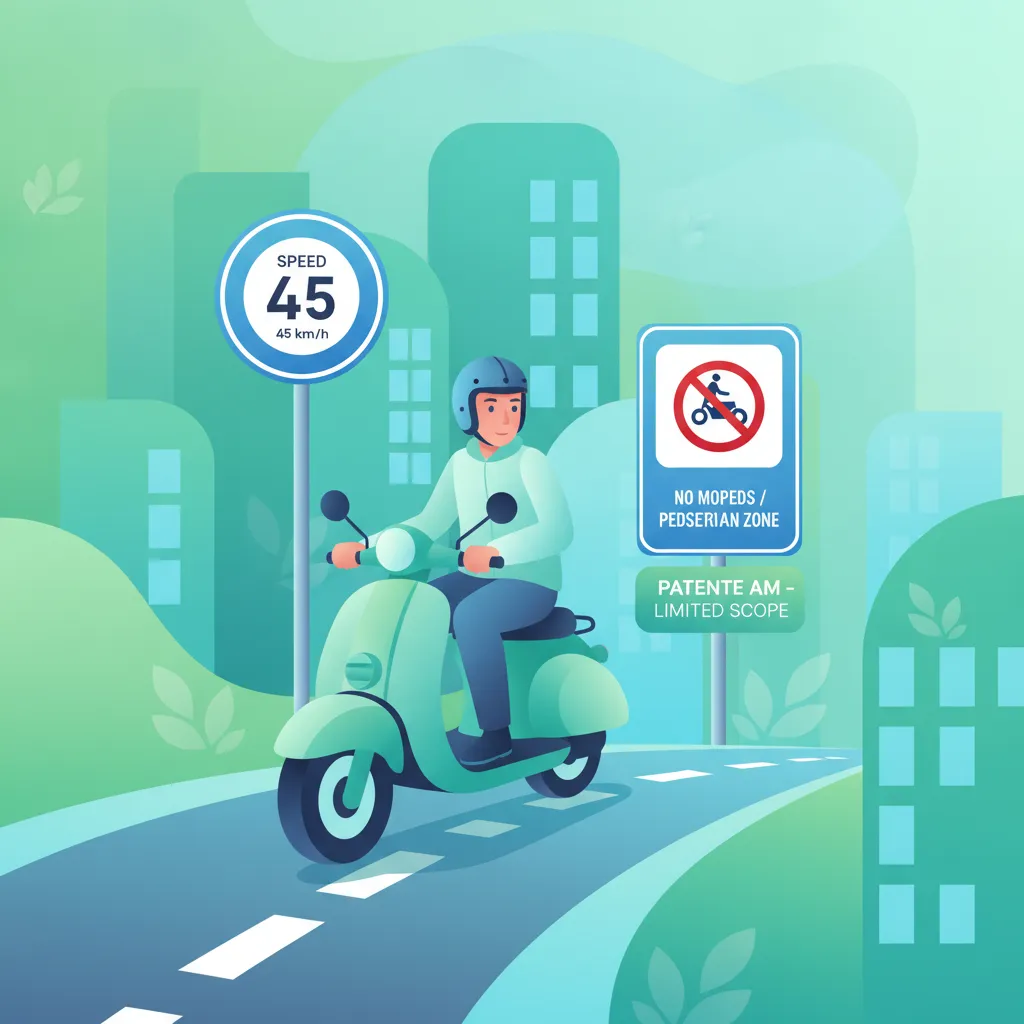
This lesson clarifies the precise scope of the Patente AM license, defining the vehicle categories it permits based on technical specifications. It details the legal limits on power, engine displacement, and maximum speed for mopeds and similar vehicles. You will also learn about the minimum age, registration process, and mandatory insurance needed to operate on public roads.

This lesson details the profound and dangerous effects of alcohol and drugs on driving ability, including impaired coordination, slowed reaction time, and poor judgment. It specifies the legal blood alcohol concentration (BAC) limits in Italy, including the strict zero-tolerance policy for beginner drivers. The content also outlines the severe legal consequences of a DUI conviction, which can include heavy fines, license revocation, and imprisonment.

This lesson provides a comprehensive review of the legal consequences for violating traffic laws in Italy. It reinforces the workings of the points system, explaining how different offenses lead to deductions and how a total loss of points results in license revocation. The content also covers the scale of monetary fines for various infractions and the conditions under which a driver's license may be temporarily suspended.
Learn when and why to reduce your speed below the posted limits in Italy. This lesson covers driving in adverse weather like rain, fog, and snow, as well as road works and other visibility hazards.

This lesson teaches drivers how to adapt their technique for various adverse weather conditions. It explains the risks of reduced grip and visibility in rain, fog, snow, and ice, and the need to significantly increase following distances and reduce speed. The content covers how to avoid and correct skids, the proper use of lights in poor visibility, and the legal requirements for winter tyres or snow chains in certain areas.
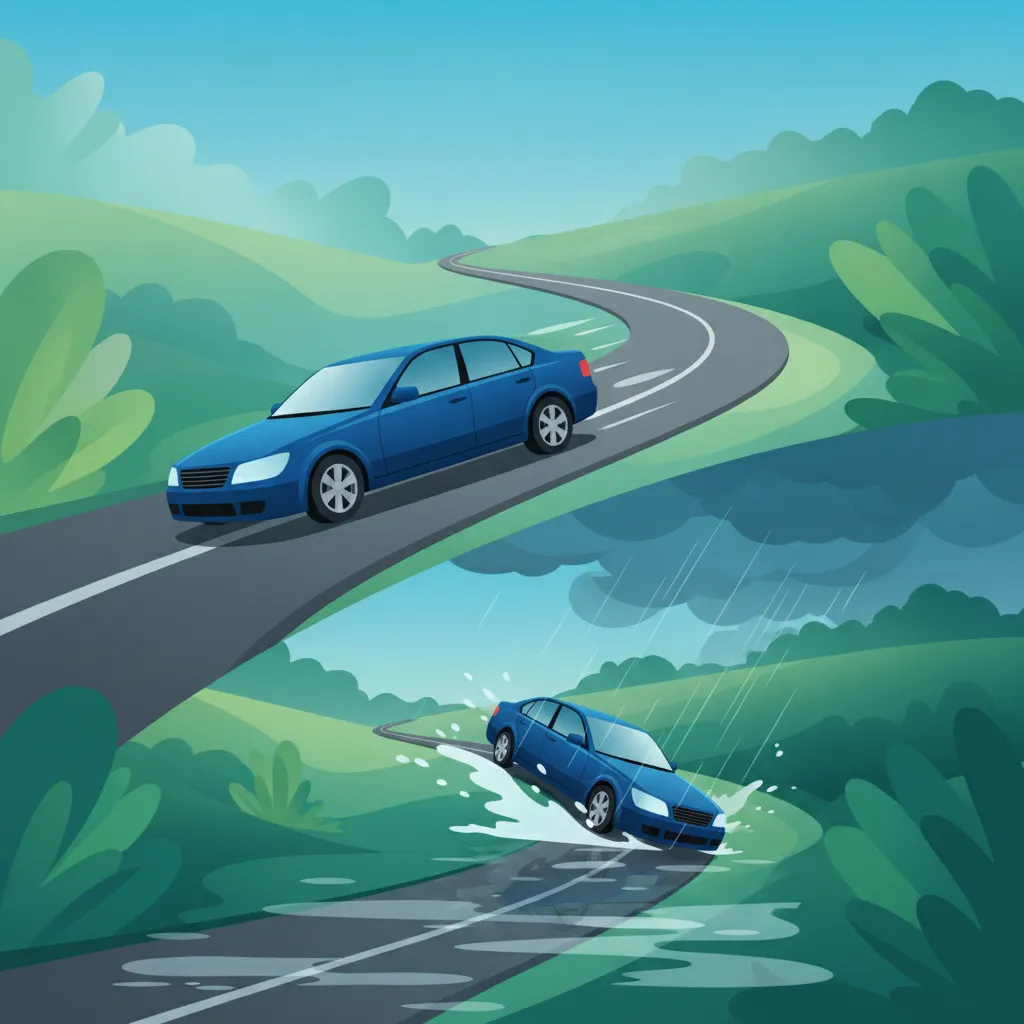
This lesson teaches the crucial skill of adapting speed to constantly changing environments, independent of the posted speed limit. It explains how to assess factors such as road surface condition, adverse weather, traffic flow, and limited visibility to determine a safe and appropriate speed. The principle taught is that the speed limit is a maximum, not a target, and responsible riding requires constant adjustment.
This lesson teaches the crucial skill of selecting a safe and appropriate speed that may be lower than the legal limit, based on prevailing conditions. It explains how to assess factors such as traffic flow, weather, visibility, and road surface quality to make prudent speed choices. The goal is to always maintain full control of the vehicle and have sufficient time to react to unexpected hazards.

This lesson focuses on the principle of 'appropriate speed' in urban environments, which often means driving slower than the legal maximum. It explains how to assess the environment for potential hazards—such as schools, parked cars, and busy intersections—and adjust speed accordingly to allow for adequate reaction time. Maintaining a safe, consistent speed reduces the need for harsh braking and contributes to a safer environment for everyone.

This lesson provides essential guidance on how to adjust driving techniques for a range of hazardous weather conditions. It covers reducing speed and increasing following distances in rain to prevent aquaplaning, using lights correctly in fog, and understanding the vehicle's reduced traction on snow and ice. It also explains how to anticipate and counteract the effects of strong crosswinds on high-sided vehicles.
This lesson explains the physical effects of different weather conditions on motorcycle safety. It details how rain reduces tyre adhesion and increases the risk of hydroplaning, while fog severely limits visibility, requiring a significant reduction in speed. The content also covers how extreme heat and cold can affect tyre pressure and compound performance, necessitating adjustments from the rider.
This lesson focuses on the factors that determine a motorcycle's total stopping distance: perception time, reaction time, and braking distance. It provides a clear understanding of how speed exponentially increases the distance required to come to a complete stop. Learners will be able to apply principles like the two-second rule to maintain a safe and appropriate following distance in various traffic situations.
This lesson explores the specific speed limits applicable to AM vehicles across various zones, including urban, residential, and rural roads. Emphasis is placed on understanding the signage that indicates both permanent and temporary speed restrictions. Learners will also examine the rationale behind these limits and the importance of adapting speed to road conditions and traffic density.
Find clear answers to common questions learners have about Legal Speed Limits in Different Zones. Learn how the lesson is structured, which driving theory objectives it supports, and how it fits into the overall learning path of units and curriculum progression in Italy. These explanations help you understand key concepts, lesson flow, and exam focused study goals.
Yes. For the first three years after obtaining a Patente B, neopatentati are subject to lower speed limits on motorways (100 km/h instead of 130 km/h) and main extra-urban roads (90 km/h instead of 110 km/h).
The general speed limit in built-up areas (centri abitati) is 50 km/h. Some areas may have specific zones restricted to 30 km/h, which will be clearly marked by signs.
In cases of precipitation (rain, snow) or reduced visibility (fog), speed limits are significantly reduced on motorways and main extra-urban roads, often requiring drivers to lower their speed regardless of the maximum indicated by signs.
Yes. Certain categories of vehicles are restricted from entering the motorway if they cannot maintain a specific minimum speed, which is typically 60 km/h, to ensure smooth traffic flow and safety.
Start searching now to pinpoint exactly which Italian driving theory topics, road signs, or traffic rules you need to master. Use our advanced filters to build a custom practice session and ensure you're fully prepared for every aspect of your official driving licence exam.