
This lesson guides you on how to adjust your speed according to varying road conditions, visibility, and traffic flow, even when below the legal limit. As part of our Patente B course, it helps you develop the defensive driving mindset required to pass the Italian theory exam and stay safe on the road.
Lesson content overview
Driving safely is not merely about adhering to posted speed limits; it is fundamentally about choosing a speed that is appropriate for the prevailing conditions. While legal speed limits define the maximum allowable speed, the concept of "safe speed" dictates that you must often drive slower to maintain control, react to hazards, and prevent accidents. This lesson is essential for all drivers preparing for their Italian Patente B theory test, as it delves into the crucial skill of adapting your speed to a multitude of dynamic factors.
Selecting the correct speed is paramount for road safety. An inappropriate speed, whether too fast or even too slow in certain contexts, can drastically increase the risk of a collision. Driving at a speed that is too high for the conditions reduces your reaction time, extends your stopping distance, and limits your ability to maneuver safely. Conversely, driving excessively slowly on a fast-moving road can also disrupt traffic flow and create hazards.
The ability to accurately assess road, traffic, weather, and visibility conditions, and then adjust your speed accordingly, is a hallmark of a responsible and skilled driver. This adaptive approach not only protects you and your passengers but also safeguards other road users. It ensures you always have full control of your vehicle and adequate time to perceive and react to unexpected events.
In Italy, as in many countries, there is a clear distinction between the legal speed limit and the safe speed.
The maximum speed permitted by law for a specific road type, vehicle class, and often, by specific signage. This is an absolute ceiling, and exceeding it is always illegal.
The appropriate speed that allows the driver to maintain full control of the vehicle, stop within the visible distance ahead, and react safely to any hazards under the current road, traffic, weather, visibility, and vehicle conditions. This speed may often be significantly lower than the legal speed limit.
The Italian Codice della Strada (Traffic Code) explicitly mandates that drivers must not only respect legal speed limits but also adapt their speed to prevailing circumstances. This means that even if you are driving below the posted maximum, you could still be deemed to be driving unsafely and face penalties if your speed is deemed excessive for the conditions. For instance, driving at 90 km/h on a motorway (where the limit is 130 km/h) might seem safe, but in heavy rain or dense fog, even 90 km/h could be dangerously fast.
Always remember: The legal speed limit is a maximum, not a target. Your safe speed is the speed at which you can confidently and safely control your vehicle given the current conditions.
One of the most critical factors influencing safe speed selection is the stopping distance. This is the total distance your vehicle travels from the moment you perceive a hazard until it comes to a complete stop. Stopping distance is composed of two main parts:
The relationship between speed and stopping distance is not linear; it is exponential. If you double your speed, your braking distance can quadruple. This is due to the physics of kinetic energy. At 90 km/h on a dry road, your total stopping distance might be around 70 meters. However, on a wet road, this could easily increase to over 100 meters, and on ice, it could be several times that.
You must always drive at a speed that allows you to stop safely within the distance you can clearly see ahead. If visibility is limited to 50 meters, your speed must be low enough to bring your vehicle to a complete stop within that 50-meter range.
Weather conditions are among the most significant factors requiring a reduction in speed. They directly affect both road surface grip and visibility, dramatically increasing the risk of accidents if speed is not adapted.
Rain reduces the friction between your tires and the road surface. Even light rain can make roads slippery, especially after a dry spell when oil and dirt mix with water to create a slick film. Heavy rain can lead to aquaplaning (also known as hydroplaning), where a layer of water builds up between your tires and the road, causing a complete loss of traction.
When driving in rain:
Snow and ice present the most hazardous road conditions, drastically reducing tire grip. Even a thin layer of ice, often invisible (black ice), can make roads extremely treacherous.
When driving in snow or on ice:
Fog, mist, and heavy smoke severely limit your visibility range. The fundamental rule is to drive only as fast as you can stop within the distance you can see ahead.
In fog:
Night driving inherently reduces visibility, even without adverse weather. Your perception of speed and distance can be altered, and hazards are harder to spot.
When driving at night:
The condition of the road surface directly impacts your vehicle's grip and thus its braking and handling capabilities. Different surfaces offer varying levels of friction.
Always observe the road surface carefully and adjust your speed proactively, especially when transitioning between different types of surfaces.
The density and movement of other vehicles significantly influence your safe speed. Driving responsibly means blending with the flow of traffic, not isolating yourself by driving too fast or too slow.
Do not accelerate to the posted speed limit if the surrounding traffic is moving significantly slower. This creates dangerous speed differentials and increases accident risk.
The state of your vehicle plays a crucial role in determining a safe speed. Overlooking these factors can severely compromise your ability to control the vehicle and stop safely.
Always consider your vehicle's current state and adjust your speed downwards if any of these factors are suboptimal.
The design and characteristics of the road itself dictate appropriate speeds. Different road types and their geometric features demand varying levels of caution.
Vulnerable road users, such as pedestrians (pedoni), cyclists (ciclisti), motorcyclists (motociclisti), and children, are at a higher risk in traffic due to their lack of physical protection. Your speed must always consider their presence.
Your responsibility as a driver includes anticipating the actions of vulnerable road users and adjusting your speed to ensure their safety.
The Italian Codice della Strada contains several articles that underpin the duty of drivers to adapt their speed to conditions, making it a legal obligation, not just a safety recommendation.
This article states that drivers must adapt their speed to traffic conditions, weather, visibility, and the state of the road. This is a fundamental principle applicable to all road types at all times. The rationale is to ensure vehicle control and prevent accidents. For example, if driving at 130 km/h on a motorway is normally allowed, but heavy snow reduces visibility and grip, Article 142 mandates a drastic reduction in speed, perhaps to 30 km/h, even if no specific lower limit is posted.
Article 141 clarifies that drivers must not exceed speed limits, but they also have an obligation to drive slower if required by conditions. This reinforces the idea that the legal limit is a maximum, and safety often dictates a lower speed. It aims to prevent uncontrolled situations. For instance, reducing speed on a wet road to maintain a safe stopping distance aligns with this article.
This article emphasizes the obligation to maintain a safe following distance (distanza di sicurezza) and control over the vehicle in accordance with road and traffic conditions. This directly impacts safe speed selection, as a shorter following distance necessitates a lower speed to allow for adequate reaction and braking time. Drivers must adjust their speed to ensure they can always stop without colliding with the vehicle in front or reacting to other hazards.
Article 150 specifically addresses the use of appropriate lights and the reduction of speed in conditions of reduced visibility, such as night, fog, or heavy rain. It is mandatory to use the correct lighting (e.g., low beams, fog lights) and to significantly lower your speed when visibility is impaired. The reasoning is that limited visibility directly compromises a driver's ability to perceive hazards and react safely.
New drivers often make certain mistakes regarding speed selection that can lead to dangerous situations. Understanding these common pitfalls can help you avoid them.
To consistently select a safe speed, keep these core principles in mind:
By internalizing these principles, you will develop the intuitive judgment needed to make prudent speed choices in any driving situation, enhancing your safety and that of others on the road.
Safe speed selection is a critical skill for any driver, moving beyond merely knowing legal limits to a dynamic process of continuous assessment and adjustment. It is a cornerstone of defensive driving and a direct legal obligation under the Italian Codice della Strada. By understanding how factors like weather, visibility, road surface, traffic flow, and vehicle condition impact your ability to control and stop your vehicle, you empower yourself to make responsible choices that significantly reduce accident risk. Always prioritize safety, and remember that an intelligent driver chooses a speed that is not just legal, but truly safe.
This lesson explains that safe speed selection requires continuously adapting to weather, visibility, road surface, traffic flow, and vehicle condition rather than simply following posted limits. The stopping distance principle is fundamental: you must always be able to stop within the visible road ahead, meaning reduced visibility demands lower speeds. Italian law (Articles 141, 142, 149, 150) makes this adaptation a legal obligation, not just a recommendation. Weather conditions like rain, snow, fog, and night driving each require specific speed reductions and safety adjustments. The key mindset shift is understanding that the legal limit is a maximum, while safe speed is the dynamic speed appropriate for the current conditions.
A short set of high-value points that capture the most important learning from this lesson.
The legal speed limit is a maximum ceiling, not a target; your safe speed must always match current conditions.
Stopping distance increases exponentially with speed, not linearly: doubling your speed can quadruple braking distance.
Always drive at a speed that allows you to stop completely within your visible range ahead.
Weather conditions like rain, fog, snow, and ice drastically reduce grip and visibility, requiring significant speed reductions (20-50% or more).
Your vehicle's load, tire condition, and brake status directly affect stopping distance and must influence your speed choice.
Explore all units and lessons included in this driving theory course.
In heavy rain: reduce speed by 20-30% and maintain at least a 4-second following distance.
In fog: drive only as fast as you can stop within the distance you can see, often requiring 30 km/h or less.
Always reduce speed BEFORE entering a curve, not during or after it.
Article 142 of the Codice della Strada mandates adapting speed to conditions even below posted limits.
Black ice is invisible and can form even at temperatures slightly above freezing, requiring extreme caution.
Driving at the posted limit regardless of weather conditions, believing the sign is the only guide.
Approaching curves at speeds too high, leading to loss of control especially on wet rural roads.
Using high beams in fog, which creates glare by reflecting off fog particles and worsens visibility.
Failing to reduce speed when heavily loaded or towing, which significantly increases stopping distance.
Accelerating to the limit in congested traffic, creating dangerous speed differentials with surrounding vehicles.
Lesson content overview
A short set of high-value points that capture the most important learning from this lesson.
The legal speed limit is a maximum ceiling, not a target; your safe speed must always match current conditions.
Stopping distance increases exponentially with speed, not linearly: doubling your speed can quadruple braking distance.
Always drive at a speed that allows you to stop completely within your visible range ahead.
Weather conditions like rain, fog, snow, and ice drastically reduce grip and visibility, requiring significant speed reductions (20-50% or more).
Your vehicle's load, tire condition, and brake status directly affect stopping distance and must influence your speed choice.
Explore all units and lessons included in this driving theory course.
In heavy rain: reduce speed by 20-30% and maintain at least a 4-second following distance.
In fog: drive only as fast as you can stop within the distance you can see, often requiring 30 km/h or less.
Always reduce speed BEFORE entering a curve, not during or after it.
Article 142 of the Codice della Strada mandates adapting speed to conditions even below posted limits.
Black ice is invisible and can form even at temperatures slightly above freezing, requiring extreme caution.
Driving at the posted limit regardless of weather conditions, believing the sign is the only guide.
Approaching curves at speeds too high, leading to loss of control especially on wet rural roads.
Using high beams in fog, which creates glare by reflecting off fog particles and worsens visibility.
Failing to reduce speed when heavily loaded or towing, which significantly increases stopping distance.
Accelerating to the limit in congested traffic, creating dangerous speed differentials with surrounding vehicles.
Explore search topics learners often look for when studying Safe Speed Selection Based on Conditions. These topics reflect common questions about road rules, driving situations, safety guidance, and lesson level theory preparation for learners in Italy.
Browse additional driving theory lessons that cover connected traffic rules, road signs, and common driving situations related to this topic. Improve your understanding of how different rules interact across everyday traffic scenarios.
Understand why legal speed limits are just a maximum and how to adjust your speed for rain, fog, traffic, and road conditions. Essential for safe driving and passing your Italian theory exam.
This lesson teaches the crucial skill of adapting speed to constantly changing environments, independent of the posted speed limit. It explains how to assess factors such as road surface condition, adverse weather, traffic flow, and limited visibility to determine a safe and appropriate speed. The principle taught is that the speed limit is a maximum, not a target, and responsible riding requires constant adjustment.
This lesson focuses on the principle of 'appropriate speed' in urban environments, which often means driving slower than the legal maximum. It explains how to assess the environment for potential hazards—such as schools, parked cars, and busy intersections—and adjust speed accordingly to allow for adequate reaction time. Maintaining a safe, consistent speed reduces the need for harsh braking and contributes to a safer environment for everyone.
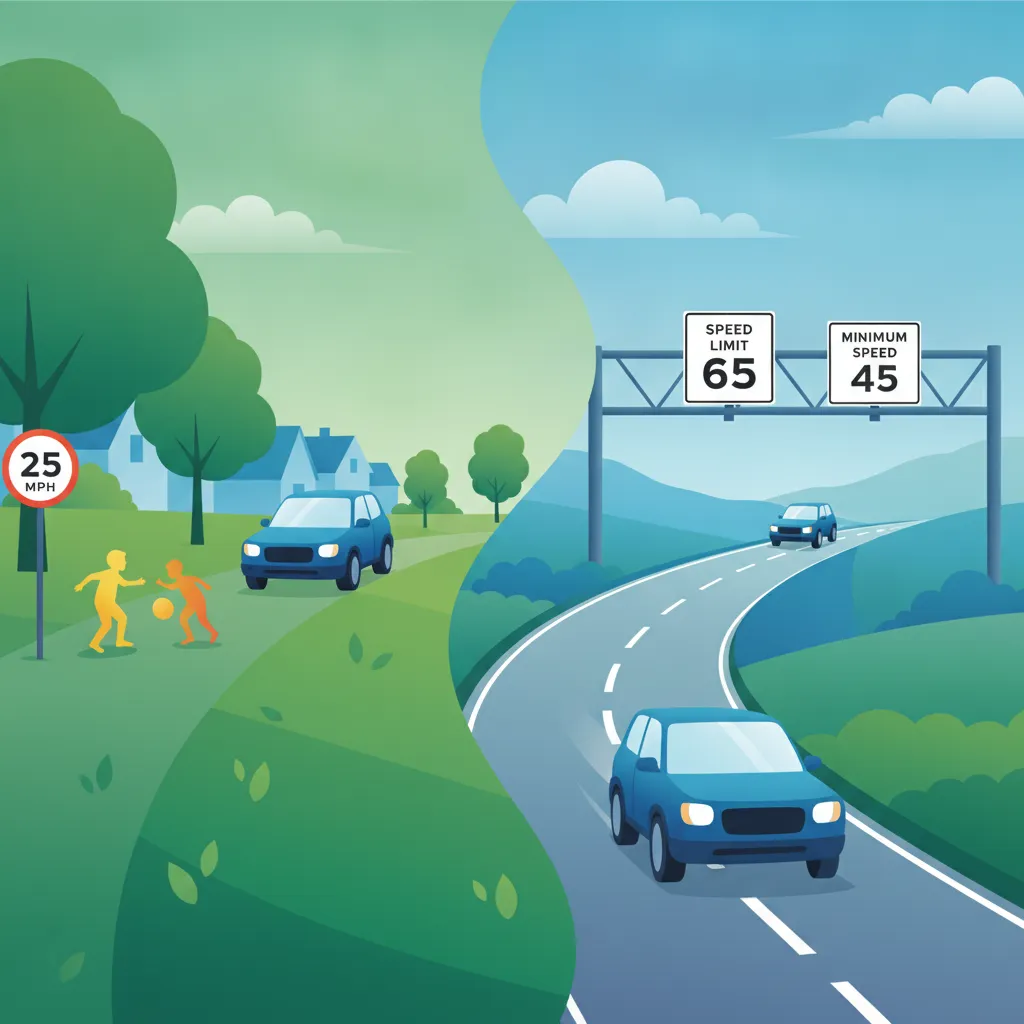
This lesson details the legal speed limits applicable to different road classifications in Italy. It covers the standard limits for urban centers, extra-urban secondary roads, main extra-urban roads, and motorways (autostrade). The content also highlights the lower speed limits that apply to beginner drivers and in specific conditions such as adverse weather or road construction zones.
This lesson provides essential rules and techniques for driving on Italian motorways (autostrade) and major extra-urban roads. It explains how to safely merge onto the motorway from an entry ramp, the strict lane discipline required (drive right, overtake left), and how to exit correctly. The content also covers speed regulations, maintaining a safe following distance at high speed, and procedures for using service areas and handling emergencies.
This lesson explores the specific speed limits applicable to AM vehicles across various zones, including urban, residential, and rural roads. Emphasis is placed on understanding the signage that indicates both permanent and temporary speed restrictions. Learners will also examine the rationale behind these limits and the importance of adapting speed to road conditions and traffic density.

This lesson teaches drivers how to adapt their technique for various adverse weather conditions. It explains the risks of reduced grip and visibility in rain, fog, snow, and ice, and the need to significantly increase following distances and reduce speed. The content covers how to avoid and correct skids, the proper use of lights in poor visibility, and the legal requirements for winter tyres or snow chains in certain areas.

This lesson focuses on the unique characteristics and challenges of driving on rural and mountain roads. It covers how to safely navigate sharp curves, steep inclines, and narrow lanes with limited visibility, often requiring the use of the horn to signal presence. The content also prepares drivers for potential hazards such as slow-moving agricultural vehicles, unexpected animal crossings, and variable road surface quality.
This lesson is dedicated to the vital concept of 'distanza di sicurezza', the safe following distance required to avoid a rear-end collision. It explains how this distance is not fixed but varies with speed and conditions, covering practical methods like the 'two-second rule' to help judge it accurately. Maintaining this space cushion provides the necessary time to react and brake safely if the vehicle ahead stops suddenly.
This lesson provides a comprehensive guide to riding on high-speed motorways, or autostrade. It details the correct procedures for safely merging into traffic from an entry ramp and exiting via a deceleration lane. The content reinforces strict lane discipline, rules for overtaking, and the importance of maintaining a significantly larger following distance to compensate for higher speeds and potential wind gusts.
Learn the physics behind stopping distance and how speed, road surface, and vehicle condition impact your ability to stop safely. Crucial for mastering safe driving in Italy.
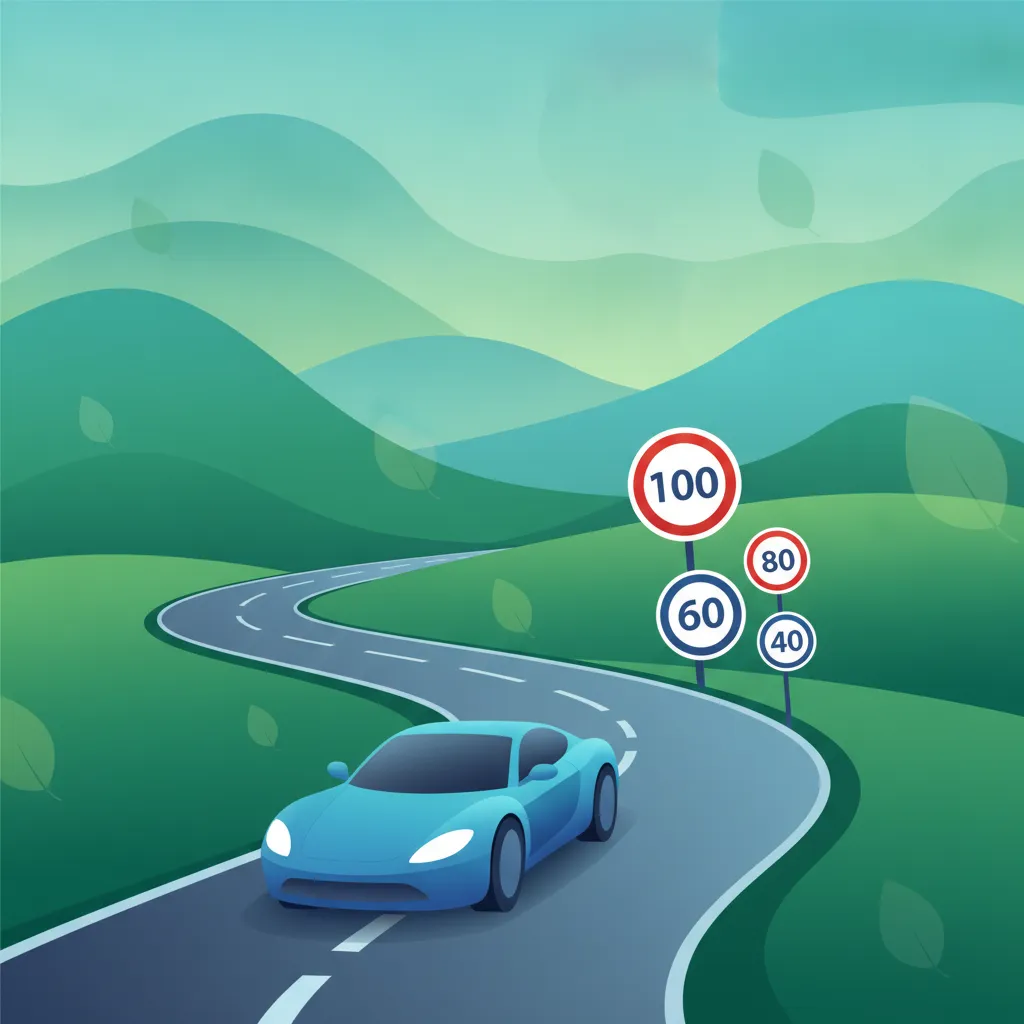
This lesson focuses on the factors that determine a motorcycle's total stopping distance: perception time, reaction time, and braking distance. It provides a clear understanding of how speed exponentially increases the distance required to come to a complete stop. Learners will be able to apply principles like the two-second rule to maintain a safe and appropriate following distance in various traffic situations.
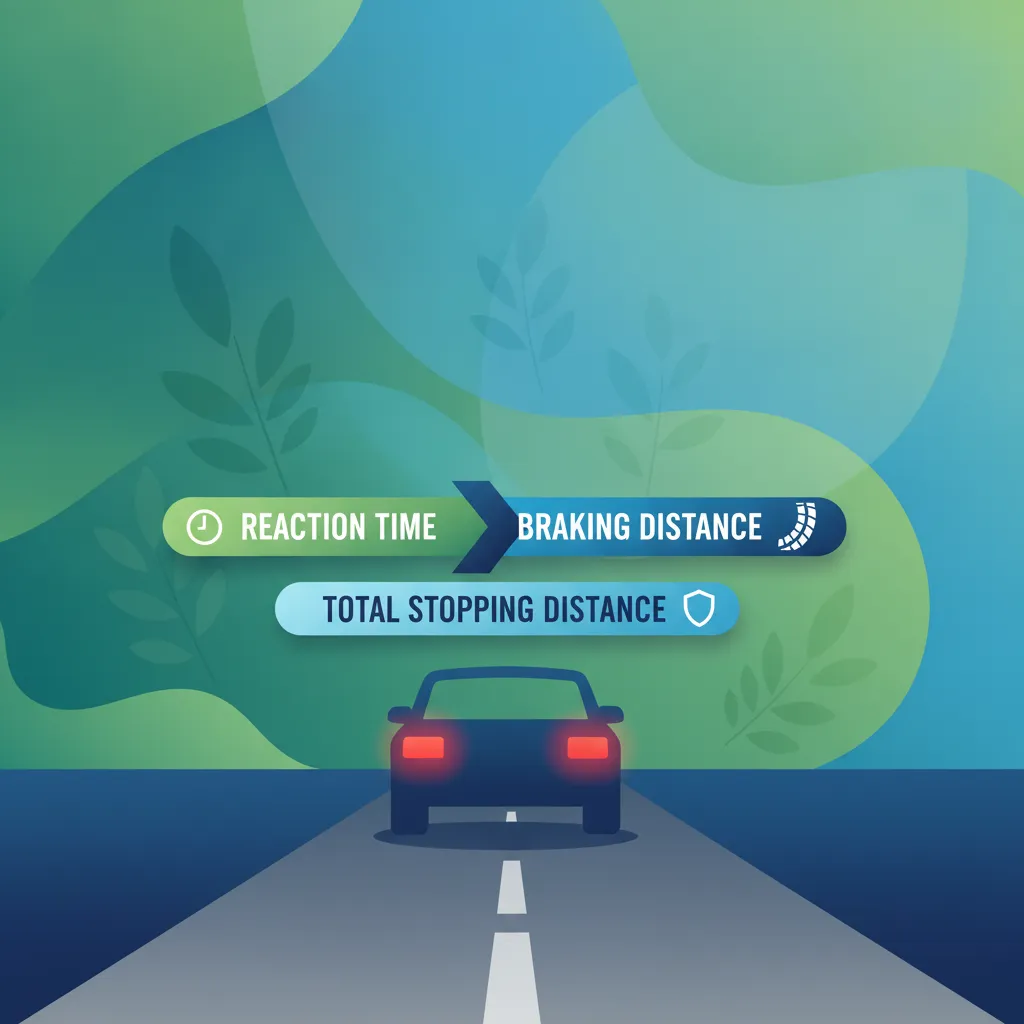
This lesson provides a technical breakdown of the total stopping distance, explaining its two key components: reaction distance and braking distance. It details how factors like driver alertness affect reaction time, while speed, vehicle weight, and road grip influence braking distance. Understanding this relationship is fundamental to managing speed and maintaining a safe distance from other road users.
This lesson teaches the crucial skill of adapting speed to constantly changing environments, independent of the posted speed limit. It explains how to assess factors such as road surface condition, adverse weather, traffic flow, and limited visibility to determine a safe and appropriate speed. The principle taught is that the speed limit is a maximum, not a target, and responsible riding requires constant adjustment.
This lesson focuses on the principle of 'appropriate speed' in urban environments, which often means driving slower than the legal maximum. It explains how to assess the environment for potential hazards—such as schools, parked cars, and busy intersections—and adjust speed accordingly to allow for adequate reaction time. Maintaining a safe, consistent speed reduces the need for harsh braking and contributes to a safer environment for everyone.
This lesson details the legal speed limits applicable to different road classifications in Italy. It covers the standard limits for urban centers, extra-urban secondary roads, main extra-urban roads, and motorways (autostrade). The content also highlights the lower speed limits that apply to beginner drivers and in specific conditions such as adverse weather or road construction zones.
This lesson explores the specific speed limits applicable to AM vehicles across various zones, including urban, residential, and rural roads. Emphasis is placed on understanding the signage that indicates both permanent and temporary speed restrictions. Learners will also examine the rationale behind these limits and the importance of adapting speed to road conditions and traffic density.
This lesson is dedicated to the vital concept of 'distanza di sicurezza', the safe following distance required to avoid a rear-end collision. It explains how this distance is not fixed but varies with speed and conditions, covering practical methods like the 'two-second rule' to help judge it accurately. Maintaining this space cushion provides the necessary time to react and brake safely if the vehicle ahead stops suddenly.
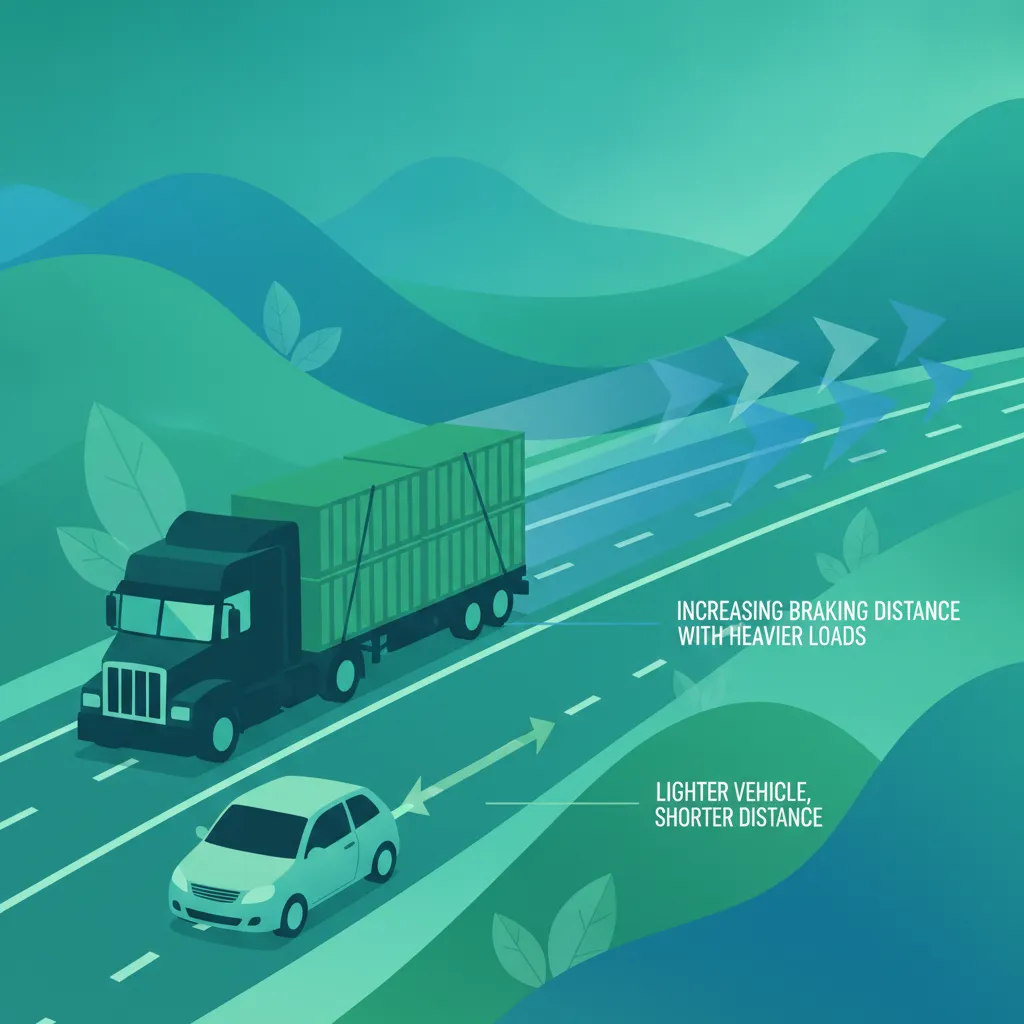
This lesson explores the critical physics behind stopping a heavy vehicle. It breaks down the components of total stopping distance—thinking distance and braking distance—and explains how this is significantly increased by vehicle mass and speed. Learners will understand the necessity of maintaining a much greater following distance than a car to allow enough space to stop safely in all conditions.

This lesson reinforces the correct procedures for interacting with emergency vehicles that are responding to a call with sirens and lights active. It explains the legal obligation to yield the right-of-way by safely moving to the side of the road and stopping if necessary. The content emphasizes making smooth, predictable movements to create a clear path, allowing emergency responders to proceed without delay.
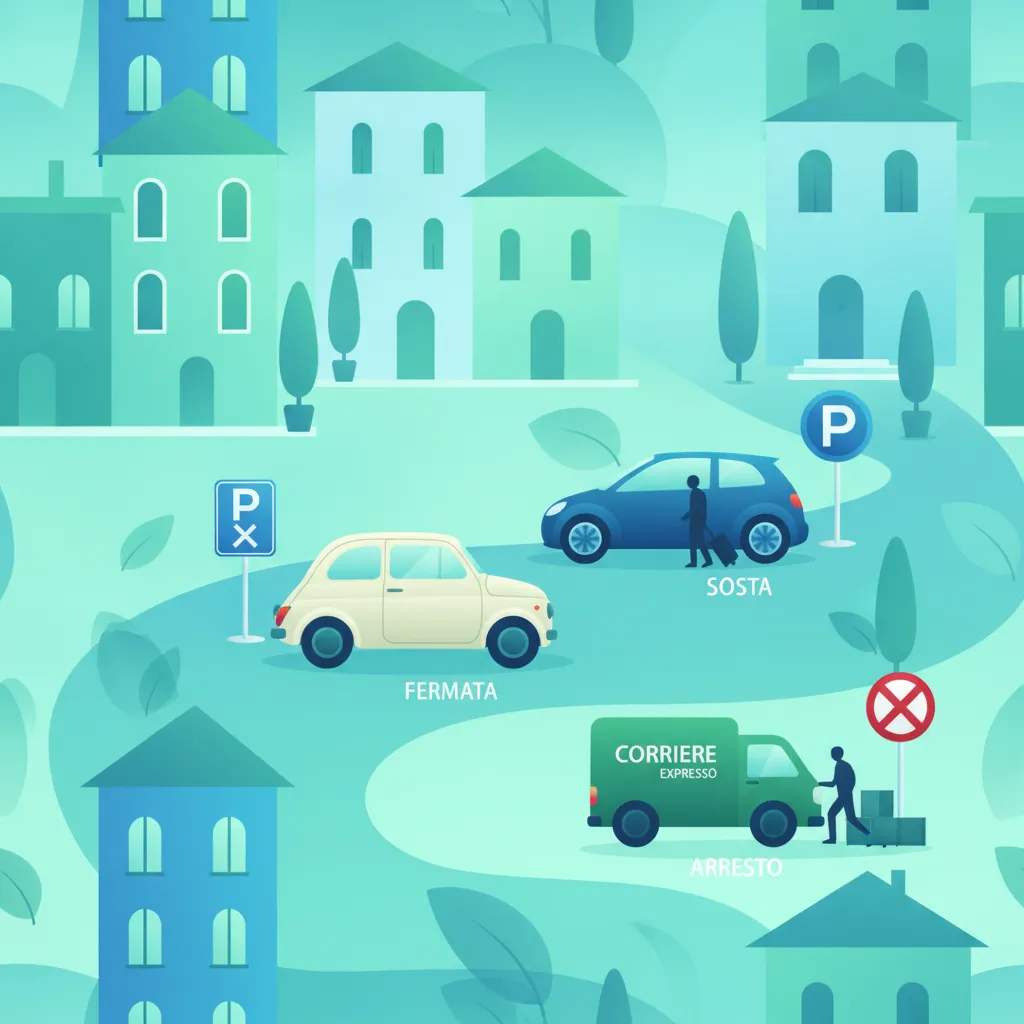
This lesson explains the important legal distinctions between three types of vehicle halts in Italy: 'fermata' (a brief stop for passengers/cargo without the driver leaving), 'sosta' (parking, where the driver may leave), and 'arresto' (a stop due to traffic or signals). Understanding these definitions is essential for knowing where and when it is legal to stop or park your vehicle without causing an obstruction or incurring a fine.
Find clear answers to common questions learners have about Safe Speed Selection Based on Conditions. Learn how the lesson is structured, which driving theory objectives it supports, and how it fits into the overall learning path of units and curriculum progression in Italy. These explanations help you understand key concepts, lesson flow, and exam focused study goals.
The legal speed limit is the absolute maximum under ideal conditions. You must drive slower when visibility is poor, the road is slippery, or traffic is dense to ensure you can stop within your field of vision and react to unexpected hazards.
Yes, factors like rain, fog, or snow significantly increase stopping distances. Under Italian traffic laws, you must adapt your speed so that you always maintain full control of the vehicle regardless of weather-related risks.
The exam often presents scenarios with varying road conditions. You will be tested on your ability to recognize that even if a sign says 50 km/h, current road or traffic conditions may necessitate a much lower speed to be considered safe.
The driver is responsible for assessing the environment continuously. This includes evaluating the density of road users, the presence of vulnerable users, and the quality of the road surface to choose a speed that prioritizes safety over maximum allowable limits.
Start searching now to pinpoint exactly which Italian driving theory topics, road signs, or traffic rules you need to master. Use our advanced filters to build a custom practice session and ensure you're fully prepared for every aspect of your official driving licence exam.