
This lesson introduces the core principles of defensive driving to help you navigate Italian roads safely and predictably. It builds upon your understanding of basic traffic rules by teaching you how to actively scan for risks, manage your vehicle's position, and anticipate the behavior of other road users.

Lesson content overview
Defensive driving is more than just following traffic laws; it's a proactive mindset and a comprehensive set of techniques designed to anticipate and avoid potential hazards on the road. For anyone preparing for their Italian Patente B, understanding and applying defensive driving principles is crucial for accident prevention, reducing reaction times, and ensuring safe interactions with all road participants. This lesson will delve into the philosophy, strategies, and practical applications of defensive driving, emphasizing vigilance, strategic positioning, and informed decision-making.
Defensive driving is a proactive mental and physical approach to operating a vehicle that prioritizes safety above all else. Instead of simply reacting to dangers as they arise, a defensive driver actively anticipates potential hazards and takes steps to prevent dangerous situations from developing. This philosophy integrates principles of physics, human factors, and legal obligations under the Codice della Strada (Italian Road Code).
The core idea is to always expect the unexpected. This means assuming other road users might make mistakes, road conditions could change suddenly, or your own vehicle might encounter an unforeseen issue. By constantly scanning the environment, predicting potential outcomes, and maintaining a safety buffer, drivers can make timely and legally correct decisions, significantly reducing the risk of collisions and ensuring a smoother, safer journey for everyone.
Defensive driving is a cornerstone of safe driving behavior and is fundamental for mastering advanced manoeuvres and emergency handling. It builds upon your understanding of basic traffic laws, right-of-way rules, vehicle control, and concepts of speed and distance.
Effective defensive driving relies on several interconnected principles that guide a driver's actions and decisions on the road. Mastering these will enable you to navigate complex traffic situations with greater confidence and safety.
Situational awareness is the continuous and systematic observation of your entire driving environment. This means not just looking straight ahead, but continuously scanning in all directions: front, sides, and rear. The purpose is to detect potential hazards as early as possible and assess their relevance to your current situation. This comprehensive scanning allows drivers to allocate visual attention appropriately, using mirrors and quick head turns to stay informed about surrounding traffic and conditions.
Maintaining adequate space around your vehicle, often called a "space cushion," is fundamental to defensive driving. This safety buffer provides the necessary time and distance to react to sudden changes in traffic flow, unexpected hazards, or emergency braking by other vehicles. The size of this cushion must be adjusted based on your speed, road conditions, weather, and traffic density. Proper space management influences your following distance, lane positioning, and speed decisions.
Hazard prediction, also known as threat anticipation, is the ability to foresee the likely actions of other road users based on their behavior, vehicle types, road signs, and environmental cues. This skill helps reduce surprise and eliminates the need for last-minute, abrupt reactions. By constantly asking "What if?", you can inform your speed adjustments, lane changes, and the timing of your manoeuvres, effectively preventing dangerous situations before they fully develop.
An escape route, or evacuation path, is a predetermined safe path a driver can take to avoid a hazard if it materializes. This requires constantly recognizing available paths, such as an open lane, a clear shoulder, or even just enough room to decelerate smoothly, to ensure you have an immediate and safe exit strategy. Identifying escape routes in advance is crucial, especially at intersections, during lane changes, or when navigating congested areas, as it requires knowledge of road geometry, lane availability, and your vehicle's capabilities.
Defensive driving stands in stark contrast to aggressive driving. While defensive driving emphasizes caution, compliance with traffic laws, and anticipation to prevent accidents, aggressive driving prioritizes expediency over safety. Aggressive behaviors include speeding, tailgating, rapid lane changes, and disregard for other drivers' safety. Cultivating a defensive mindset leads to a safer driving culture, fewer accidents, and a more pleasant experience for everyone on the road.
Effective visual scanning is the cornerstone of situational awareness. It involves a systematic method of looking ahead, to the sides, and behind your vehicle while driving, ensuring you detect hazards early and plan your responses.
The far scan technique involves looking 30 to 50 meters (or approximately 12 to 15 seconds) ahead of your vehicle. This allows you to anticipate upcoming hazards such as traffic jams, construction zones, curves, intersections, or changes in speed limits. By spotting potential issues well in advance, you gain crucial time to adjust your speed, choose the appropriate lane, or prepare for a necessary manoeuvre. For instance, noticing a slow-moving vehicle far ahead gives you time to plan a safe overtake or speed reduction.
The near scan focuses on the immediate area around your vehicle, including checking your side mirrors and ensuring clear paths to the left and right. This helps you monitor vehicles directly behind you, those in adjacent lanes, and any potential hazards close by, such as pedestrians stepping off a curb or parked cars opening doors. Regular checks of your rear-view mirror (every 5-8 seconds) are essential to understand the traffic flow behind you.
Peripheral vision allows you to detect movement and objects in your side vision without directly looking at them. While the far and near scans require direct focus, your peripheral scan maintains general awareness of what's happening to your left and right. This is vital for noticing cyclists, pedestrians, or vehicles encroaching from the side, especially at intersections or when driving in urban areas.
A common mistake is fixation on the road directly ahead, neglecting mirrors, and failing to look over the shoulder (blind spot check) during lane changes. These habits severely limit situational awareness and increase accident risk.
A fundamental principle of defensive driving and a legal requirement under the Codice della Strada is maintaining a safe distance from other vehicles. This "space cushion" or safety buffer provides the necessary margin for reaction and manoeuvring.
The minimum distance that must be maintained between two vehicles to avoid collisions, as legally mandated by the Italian Codice della Strada. It guarantees enough time for reaction and braking under given speed and conditions.
According to Article 149 of the Codice della Strada, drivers must always keep a safe following distance (Distanza di Sicurezza) from the vehicle ahead. This distance must be sufficient to allow you to stop safely if the vehicle ahead brakes suddenly. While no fixed distance in meters is specified for all situations, the common recommendation for dry conditions is the "two-second rule."
The Two-Second Rule: Choose a fixed object ahead (e.g., a sign or tree). When the vehicle in front passes it, start counting "one thousand one, one thousand two." If you reach the object before finishing your count, you are following too closely.
This rule should be expanded in adverse conditions:
Maintaining an adequate Distanza di Sicurezza is not just good practice; failure to do so is a traffic infraction that can result in fines and points on your license.
The total distance your vehicle travels from the moment you perceive a hazard until it comes to a complete stop is called the Total Stopping Distance. This is composed of two main parts: reaction distance and braking distance.
The distance your vehicle travels during the driver’s reaction time, which is the interval between recognizing a hazard and initiating a response (e.g., applying the brakes).
Under normal conditions, a driver's reaction time is typically assumed to be around 1 second for regulatory calculations. However, factors like fatigue, distraction, alcohol, drugs, or even strong emotions can significantly increase this time.
The formula for calculating reaction distance is:
Reaction Distance = Speed × Reaction Time
For example, at 90 km/h (which is approximately 25 meters per second), the reaction distance, assuming a 1-second reaction time, would be about 25 meters. This highlights why maintaining a sufficient space cushion is vital, even before you start braking.
The distance required for a vehicle to come to a complete stop once the brakes have been applied.
Braking distance is influenced by several critical factors:
Beyond just maintaining distance, a defensive driver actively plans for contingencies and continuously evaluates potential dangers.
An escape route is an alternative path you can take to avoid a collision if your primary path becomes blocked or dangerous. This requires constant observation and quick decision-making.
Scan Ahead and Around: Always be aware of open spaces to your left, right, and even the shoulder of the road.
Avoid Trapping Yourself: Never drive in a position where you are boxed in by other vehicles without a clear exit. For example, avoid driving alongside another vehicle in adjacent lanes for extended periods.
Plan for Intersections: Before entering an intersection, consider where you could steer if a vehicle unexpectedly runs a red light or fails to yield.
Maintain Lateral Distance: Keep enough side cushion to allow for a slight swerve if necessary.
The Codice della Strada (Article 145-146) implies the importance of not blocking escape routes for other vehicles, particularly during overtaking manoeuvres. Responsible drivers ensure there's enough space for other vehicles to complete their actions safely.
The ability to predict potential dangers based on current traffic conditions, road geometry, and the behavior of other road users.
Hazard perception is an advanced skill that develops with experience and conscious practice. It involves interpreting various cues:
By continuously processing these cues, you can adjust your speed, lane position, and readiness to brake, preventing many incidents before they become critical.
Legal speed limits are the maximum permissible speeds under ideal conditions. A core principle of defensive driving and a legal obligation (Article 142 Codice della Strada) is to adjust your speed according to actual conditions, even if it means driving well below the posted limit.
Driving at the maximum permitted speed despite poor visibility or adverse road conditions is a common violation that significantly increases the risk of accidents, even if you are technically within the speed limit. Always choose a speed that allows you to stop safely within the visible clear distance.
Applying defensive driving principles to specific manoeuvres, such as overtaking, changing lanes, turning, and merging, ensures you maintain safety buffers and reduce risks.
Lane changes are a common cause of accidents if not executed defensively.
Check Mirrors: Check your rear-view and side mirrors to assess traffic behind and in the target lane.
Signal Early: Activate your turn signal for at least 5 seconds (as per Italian guidelines) before initiating the lane change. This gives other drivers ample warning of your intention.
Check Blind Spot: Crucially, perform an over-the-shoulder glance in the direction of your intended lane change to check for vehicles in your blind spot. Your mirrors cannot show everything.
Assess Gap and Speed: Ensure there is sufficient space in the target lane and that you can merge smoothly without causing other drivers to brake or swerve. Adjust your speed to match the flow of traffic in the target lane.
Execute Smoothly: Steer gently into the new lane, maintaining your speed or accelerating slightly if safe to do so.
Cancel Signal: Once fully in the new lane, cancel your turn signal.
Overtaking must be planned and executed with extreme caution.
Defensive driving practices are not merely suggestions; many are mandated by Italian law to ensure public safety.
Even experienced drivers can fall into bad habits that undermine defensive driving principles. Being aware of these common errors can help you actively avoid them:
Defensive driving is not a static set of rules but a dynamic approach that adapts to specific driving contexts.
This lesson establishes defensive driving as a proactive approach to road safety that goes beyond simply following traffic rules, emphasizing constant hazard anticipation and strategic space management. The core techniques covered include systematic visual scanning (far, near, and peripheral), maintaining a proper space cushion with the two-second rule for Distanza di Sicurezza, and understanding total stopping distance as the sum of reaction distance and braking distance. Defensive drivers must predict hazards based on other road users' behavior, road geometry, and environmental cues while always identifying escape routes. The content directly addresses Italian Codice della Strada requirements including safe following distance (Art. 149), speed adaptation obligations (Art. 142), and proper mirror and signaling use (Art. 111, Art. 149), preparing learners for both the Patente B exam and real-world defensive driving scenarios.
A short set of high-value points that capture the most important learning from this lesson.
Defensive driving is a proactive mindset that anticipates hazards and creates safety margins rather than merely reacting to dangers as they occur.
Effective situational awareness requires continuous scanning in all directions: far ahead (30-50m), near surroundings via mirrors, and peripheral awareness for side movement.
Maintaining adequate space cushion around your vehicle provides reaction time and room to avoid hazards; this cushion must be adjusted for speed, weather, and traffic conditions.
Hazard perception skills involve predicting other road users' behavior based on cues like vehicle movements, road signs, environmental factors, and limited visibility areas.
The total stopping distance equals reaction distance (speed × reaction time) plus braking distance, which increases exponentially with speed.
Explore all units and lessons included in this driving theory course.
The two-second rule establishes minimum safe following distance (Distanza di Sicurezza) under dry conditions; increase to 4 seconds on wet roads and 8+ seconds on icy roads.
Article 149 of the Codice della Strada mandates maintaining sufficient distance to stop safely from the vehicle ahead; Article 142 requires adapting speed to actual conditions.
Lane changes require mirror check, 5-second minimum signal, blind spot check (over-the-shoulder), gap assessment, and smooth execution.
When overtaking cyclists or pedestrians, leave at least 1.5 meters lateral clearance to account for unexpected direction changes.
Vulnerable road users (pedestrians, cyclists, motorcyclists) may make sudden, unpredictable movements; always yield early even when you have right-of-way.
Following too closely (tailgating), which drastically reduces available stopping distance and increases rear-end collision risk in all conditions.
Driving at the posted speed limit despite poor visibility, fog, heavy rain, or icy roads rather than adjusting speed to match actual conditions.
Neglecting blind spot checks during lane changes, assuming mirrors alone provide complete awareness of surrounding traffic.
Over-relying on ABS and driver assistance systems as substitutes for maintaining safe following distances and appropriate speeds.
Using hazard lights while still moving instead of only when stationary due to unavoidable circumstances, which confuses other drivers about your intentions.
Lesson content overview
A short set of high-value points that capture the most important learning from this lesson.
Defensive driving is a proactive mindset that anticipates hazards and creates safety margins rather than merely reacting to dangers as they occur.
Effective situational awareness requires continuous scanning in all directions: far ahead (30-50m), near surroundings via mirrors, and peripheral awareness for side movement.
Maintaining adequate space cushion around your vehicle provides reaction time and room to avoid hazards; this cushion must be adjusted for speed, weather, and traffic conditions.
Hazard perception skills involve predicting other road users' behavior based on cues like vehicle movements, road signs, environmental factors, and limited visibility areas.
The total stopping distance equals reaction distance (speed × reaction time) plus braking distance, which increases exponentially with speed.
Explore all units and lessons included in this driving theory course.
The two-second rule establishes minimum safe following distance (Distanza di Sicurezza) under dry conditions; increase to 4 seconds on wet roads and 8+ seconds on icy roads.
Article 149 of the Codice della Strada mandates maintaining sufficient distance to stop safely from the vehicle ahead; Article 142 requires adapting speed to actual conditions.
Lane changes require mirror check, 5-second minimum signal, blind spot check (over-the-shoulder), gap assessment, and smooth execution.
When overtaking cyclists or pedestrians, leave at least 1.5 meters lateral clearance to account for unexpected direction changes.
Vulnerable road users (pedestrians, cyclists, motorcyclists) may make sudden, unpredictable movements; always yield early even when you have right-of-way.
Following too closely (tailgating), which drastically reduces available stopping distance and increases rear-end collision risk in all conditions.
Driving at the posted speed limit despite poor visibility, fog, heavy rain, or icy roads rather than adjusting speed to match actual conditions.
Neglecting blind spot checks during lane changes, assuming mirrors alone provide complete awareness of surrounding traffic.
Over-relying on ABS and driver assistance systems as substitutes for maintaining safe following distances and appropriate speeds.
Using hazard lights while still moving instead of only when stationary due to unavoidable circumstances, which confuses other drivers about your intentions.
Explore search topics learners often look for when studying Defensive Driving Techniques. These topics reflect common questions about road rules, driving situations, safety guidance, and lesson level theory preparation for learners in Italy.
Browse additional driving theory lessons that cover connected traffic rules, road signs, and common driving situations related to this topic. Improve your understanding of how different rules interact across everyday traffic scenarios.
Explore practical examples of defensive driving techniques in action. Understand how situational awareness, space management, and hazard anticipation apply to common driving situations on Italian roads. Learn to identify and react to potential dangers effectively.

This lesson provides an in-depth focus on sharing the road with the most vulnerable users. It teaches drivers to be acutely aware of pedestrians at crossings, cyclists filtering through traffic, and motorcyclists who may be in blind spots. The lesson emphasizes the importance of leaving extra space, signaling intentions clearly, and exercising extreme caution at junctions, where the majority of serious incidents occur.
This lesson provides critical guidance on how to safely share the road with vulnerable users, including pedestrians, cyclists, motorcyclists, and children. It highlights the importance of increased awareness in specific areas like school zones and crosswalks. The content teaches techniques for maintaining a safe lateral distance when overtaking, checking blind spots thoroughly, and anticipating the often unpredictable movements of these users.

This lesson focuses on the unique characteristics and challenges of driving on rural and mountain roads. It covers how to safely navigate sharp curves, steep inclines, and narrow lanes with limited visibility, often requiring the use of the horn to signal presence. The content also prepares drivers for potential hazards such as slow-moving agricultural vehicles, unexpected animal crossings, and variable road surface quality.

This lesson explains the rules for special urban traffic situations common in Italy. It provides a detailed explanation of Limited Traffic Zones (ZTL), including how to recognize the signage and understand the access restrictions to avoid fines. The content also offers guidance on navigating the narrow and complex streets of historic centers and safely maneuvering around frequently stopping delivery vehicles.
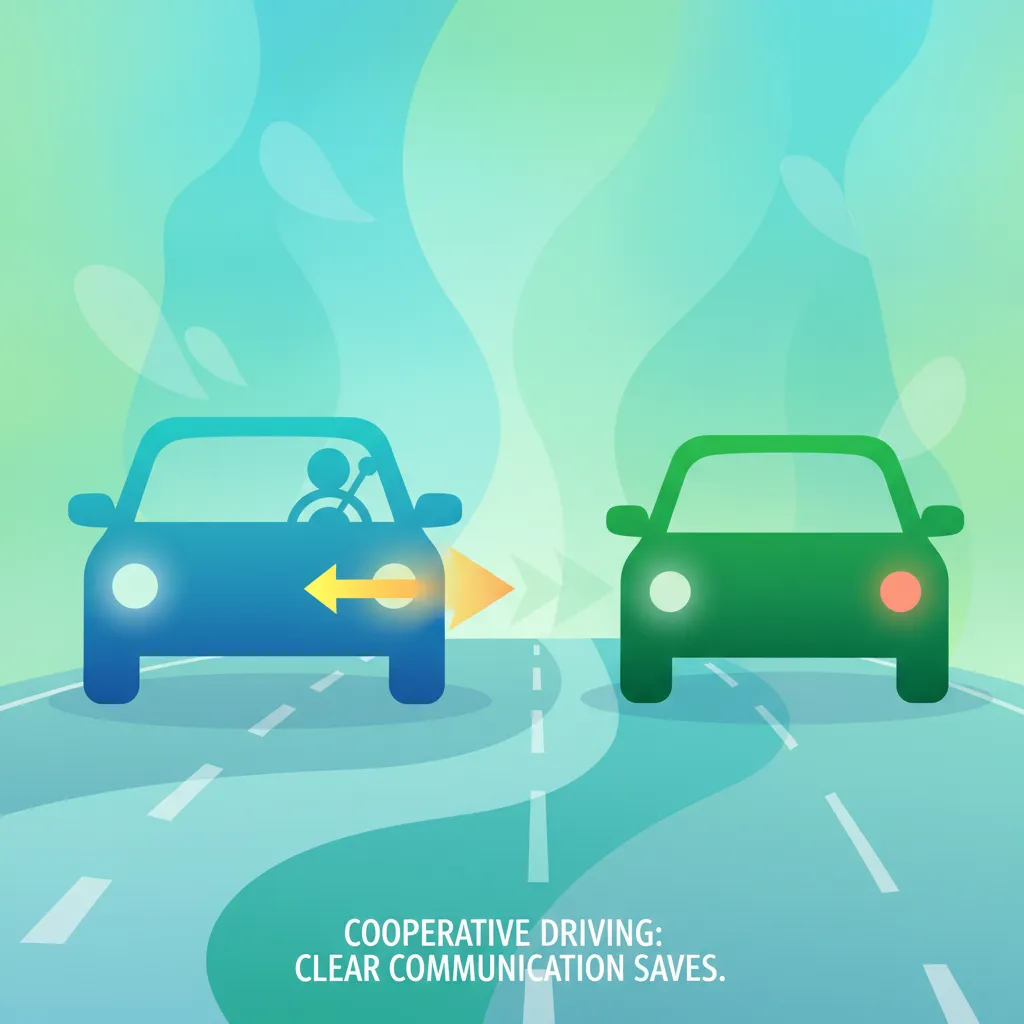
This lesson emphasizes the importance of clear communication and cooperative behavior among all road users to prevent conflicts and enhance safety. It details the proper and legal use of vehicle signals, such as turn indicators and hazard lights, as well as the appropriate use of the horn. The content also explores the role of non-verbal cues like eye contact and courtesy gestures in creating a predictable and safe driving environment.

This lesson addresses the critical responsibility of protecting vulnerable road users, such as pedestrians, cyclists, and motorcyclists, who are most at risk in a collision with a heavy vehicle. It teaches drivers to be hyper-aware in urban settings, to anticipate the unpredictable movements of VRUs, and to provide ample space, especially when turning at junctions. A key focus is on scanning for VRUs in blind spots before moving off or making any maneuver.

This lesson provides essential rules and techniques for driving on Italian motorways (autostrade) and major extra-urban roads. It explains how to safely merge onto the motorway from an entry ramp, the strict lane discipline required (drive right, overtake left), and how to exit correctly. The content also covers speed regulations, maintaining a safe following distance at high speed, and procedures for using service areas and handling emergencies.

This lesson explains the critical importance of a continuous and systematic visual scan for maintaining 360-degree awareness around the vehicle. It details the correct technique for using interior and exterior mirrors in conjunction with direct vision and shoulder checks to effectively identify hazards. The content emphasizes the need to be aware of blind spots before any maneuver, such as changing lanes or turning.

This lesson teaches the correct and safe technique for reversing a vehicle. It emphasizes the importance of performing a full 360-degree check for hazards before starting and maintaining slow, controlled movement. The content covers how to use mirrors and direct observation effectively, how to steer accurately while looking backward, and the increased need for caution regarding pedestrians and cyclists in the vehicle's blind areas.

This lesson focuses on the principle of 'appropriate speed' in urban environments, which often means driving slower than the legal maximum. It explains how to assess the environment for potential hazards—such as schools, parked cars, and busy intersections—and adjust speed accordingly to allow for adequate reaction time. Maintaining a safe, consistent speed reduces the need for harsh braking and contributes to a safer environment for everyone.
Learn about frequent errors drivers make that compromise safety, such as tailgating, late signaling, and poor hazard perception. This lesson details how to recognize and prevent these mistakes to improve your defensive driving skills according to the Italian Codice della Strada.
This lesson provides critical guidance on how to safely share the road with vulnerable users, including pedestrians, cyclists, motorcyclists, and children. It highlights the importance of increased awareness in specific areas like school zones and crosswalks. The content teaches techniques for maintaining a safe lateral distance when overtaking, checking blind spots thoroughly, and anticipating the often unpredictable movements of these users.
This lesson emphasizes the importance of clear communication and cooperative behavior among all road users to prevent conflicts and enhance safety. It details the proper and legal use of vehicle signals, such as turn indicators and hazard lights, as well as the appropriate use of the horn. The content also explores the role of non-verbal cues like eye contact and courtesy gestures in creating a predictable and safe driving environment.
This lesson provides an in-depth focus on sharing the road with the most vulnerable users. It teaches drivers to be acutely aware of pedestrians at crossings, cyclists filtering through traffic, and motorcyclists who may be in blind spots. The lesson emphasizes the importance of leaving extra space, signaling intentions clearly, and exercising extreme caution at junctions, where the majority of serious incidents occur.

This lesson is dedicated to warning signs, which are designed to alert drivers to potential dangers or changes in road conditions ahead. It covers the interpretation of signs indicating sharp bends, steep inclines or declines, slippery surfaces, and the potential presence of animals or pedestrians. Understanding these signs allows drivers to anticipate hazards and adjust their speed and driving style accordingly for safety.
This lesson explains the critical importance of a continuous and systematic visual scan for maintaining 360-degree awareness around the vehicle. It details the correct technique for using interior and exterior mirrors in conjunction with direct vision and shoulder checks to effectively identify hazards. The content emphasizes the need to be aware of blind spots before any maneuver, such as changing lanes or turning.
This lesson addresses the critical responsibility of protecting vulnerable road users, such as pedestrians, cyclists, and motorcyclists, who are most at risk in a collision with a heavy vehicle. It teaches drivers to be hyper-aware in urban settings, to anticipate the unpredictable movements of VRUs, and to provide ample space, especially when turning at junctions. A key focus is on scanning for VRUs in blind spots before moving off or making any maneuver.

This lesson addresses the significant risk posed by parked vehicles, particularly the hazard of drivers opening their doors into traffic. You will learn to maintain a safe lateral distance when passing parked cars and to actively scan for signs of occupancy. This proactive approach helps prevent dangerous "dooring" incidents and ensures safe passage in urban environments.
This lesson teaches the correct and safe technique for reversing a vehicle. It emphasizes the importance of performing a full 360-degree check for hazards before starting and maintaining slow, controlled movement. The content covers how to use mirrors and direct observation effectively, how to steer accurately while looking backward, and the increased need for caution regarding pedestrians and cyclists in the vehicle's blind areas.

This lesson details the proper and legal application of a vehicle's horn, lights, and signals as primary communication tools. It explains the specific circumstances for using high beams, low beams, and fog lights to maximize visibility without dazzling other drivers. The content also clarifies the rules for using the horn, turn indicators, and hazard lights to signal intentions, warn of danger, or indicate an emergency situation.

This lesson teaches the safe and systematic procedure for changing lanes. It covers the essential sequence of actions: signaling the intention, checking mirrors, performing a shoulder check to cover the blind spot, and then executing a smooth maneuver into the adjacent lane. The content stresses the need to judge the speed and distance of other vehicles to ensure a safe gap before initiating the lane change.
Find clear answers to common questions learners have about Defensive Driving Techniques. Learn how the lesson is structured, which driving theory objectives it supports, and how it fits into the overall learning path of units and curriculum progression in Italy. These explanations help you understand key concepts, lesson flow, and exam focused study goals.
The goal is to anticipate potential dangers caused by other road users, road conditions, or errors. It is about proactively adjusting your speed and position to maintain a safety buffer, rather than just reacting after a hazard has already occurred.
Many Patente B theory questions present complex scenarios where you must identify the correct action to avoid an accident. Better situational awareness allows you to identify these hazards faster and choose the safest, most logical response.
No, it also involves constant scanning of your surroundings, checking blind spots, managing the distance between your vehicle and others, and communicating your intentions clearly to other road users.
Yes, especially in ZTL areas or historic centers where pedestrian traffic is high and roads are narrow. Defensive driving helps you anticipate pedestrians stepping out from behind parked cars or cyclists maneuvering unexpectedly.
Start searching now to pinpoint exactly which Italian driving theory topics, road signs, or traffic rules you need to master. Use our advanced filters to build a custom practice session and ensure you're fully prepared for every aspect of your official driving licence exam.