
This lesson focuses on the critical concept of the safe following distance, or Distanza di Sicurezza, required by the Italian Codice della Strada. You will learn why maintaining this space cushion is essential for safety, how to adapt it to your speed and road conditions, and the practical methods needed to pass related theory test questions.

Lesson content overview
Maintaining a safe following distance is one of the most fundamental principles of defensive driving and a critical requirement for every driver in Italy. Known as distanza di sicurezza in the Italian Codice della Strada (Road Code), this essential practice ensures you have ample time and space to react to unexpected events, preventing rear-end collisions and safeguarding all road users. This lesson delves into the crucial concepts that determine safe following distances, from the physics of vehicle stopping to practical techniques like the "two-second rule," all vital for your Italian Patente B theory test.
The distanza di sicurezza is the minimum space cushion you must maintain between your vehicle and the vehicle directly in front of you. Its primary purpose is to allow you to come to a complete stop without colliding with the lead vehicle, even if it brakes suddenly and unexpectedly. This distance is not fixed; it is a dynamic measurement that must be continuously adjusted based on a multitude of factors, including your speed, road conditions, weather, and the state of your vehicle.
This concept is rooted in the basic physics of motion and human reaction times. Without adequate distanza di sicurezza, a sudden stop by the vehicle ahead leaves you with insufficient time to react and insufficient distance to brake, making a collision almost inevitable. Adhering to the principles of distanza di sicurezza is not just good practice; it is a legal obligation under Italian traffic law, specifically Article 149 of the Codice della Strada.
To truly grasp the importance of distanza di sicurezza, it's essential to understand what makes up the total stopping distance of a vehicle. Stopping distance is the total distance your vehicle travels from the moment you perceive a hazard until your vehicle comes to a complete halt. It is composed of two main components: reaction distance and braking distance.
Your reaction time is the period between perceiving a hazard and initiating a response, such as applying the brakes. For an alert driver, this typically averages around one second. However, factors like fatigue, distraction, alcohol, drugs, or even minor illnesses can significantly prolong reaction time, sometimes doubling or tripling it.
The reaction distance is the distance your vehicle travels during this reaction time. It is directly proportional to your speed: the faster you are travelling, the greater the distance covered before you even begin to brake. For example, at 50 km/h, your vehicle covers approximately 14 meters in one second. If your reaction time is two seconds, you would travel 28 meters before your foot even touches the brake pedal.
Braking distance is the distance your vehicle covers from the moment you apply the brakes until it comes to a complete stop. Unlike reaction distance, which is primarily dependent on speed and driver reaction time, braking distance is influenced by several factors:
The stopping distance is the sum of your reaction distance and your braking distance. It is the absolute minimum distance required to bring your vehicle to a complete stop. Understanding that stopping distance increases significantly with speed and degrades rapidly in adverse conditions is fundamental to maintaining a safe distanza di sicurezza.
Given the variability of stopping distances, how can a driver practically estimate distanza di sicurezza in real-time? The two-second rule is a simple, effective, and widely recommended method that helps drivers maintain an appropriate safe following distance across various speeds.
The principle is straightforward: you should maintain a distance that takes at least two seconds for your vehicle to reach the point where the vehicle ahead of you just passed.
Choose a fixed point: As the vehicle ahead of you passes a fixed, easily identifiable object on the side of the road (e.g., a road sign, a bridge, a tree, a lamp post).
Start counting: Begin counting "one thousand one, one thousand two..." (or simply "one, two...") immediately after the vehicle ahead passes that point.
Check your position: If your front bumper reaches that same fixed point before you finish counting "two," you are following too closely.
Adjust distance: Reduce your speed and increase your following distance, then repeat the process until you can comfortably count "one thousand one, one thousand two" before reaching the reference point.
The brilliance of the two-second rule is its adaptability: it automatically adjusts to your speed. At 50 km/h, two seconds translates to roughly 28 meters. At 90 km/h, it’s about 50 meters. At 130 km/h, it becomes approximately 72 meters. This dynamic nature means you don't need to calculate precise meter distances; the time interval provides a proportional safe gap for any given speed.
The two-second rule provides a good baseline for ideal conditions. Always be prepared to increase this interval when conditions are less than ideal.
While the two-second rule is an excellent starting point, safe driving requires adaptive following distance. This means consciously increasing your following interval beyond the standard two seconds when specific conditions reduce your ability to react or stop safely. Failing to adapt your distanza di sicurezza to prevailing circumstances is a common cause of collisions.
Weather plays a significant role in road safety. When driving in challenging weather, you must increase your following distance:
Driving at night or in conditions with poor natural light (e.g., dusk, dawn, deep shadows) reduces your ability to see hazards and judge distances accurately. Your perception range is limited to your headlights. Therefore, you should always increase your distanza di sicurezza to allow more time to react to objects that only become visible late.
autostrade) due to higher speeds compared to urban streets (strade urbane). Always prioritize the time-based rule.Never assume that because the vehicle ahead is smaller or appears to be a good driver, you can reduce your following distance. Always maintain your safe gap based on your stopping capabilities and your reaction time.
In Italy, the maintenance of distanza di sicurezza is not merely a recommendation; it is a legal requirement enforced by the Codice della Strada. Compliance is crucial not only for safety but also to avoid penalties.
Article 149 of the Codice della Strada explicitly states that drivers must maintain a safe distance from the preceding vehicle. This distance must be sufficient to ensure a safe stop if the vehicle ahead brakes suddenly. The article emphasizes that drivers must adapt this distance based on:
Failure to comply with Article 149 is a traffic violation and can result in administrative fines, and potentially points deducted from your license. In cases where insufficient distanza di sicurezza leads to a collision, the driver who was following too closely is almost always deemed responsible.
Closely related to distanza di sicurezza is Article 148 of the Codice della Strada, which pertains to the speed at which a driver can cause a collision. This article implicitly links speed selection to the driver's ability to stop safely within their perceived distance. It means you must never drive at a speed that prevents you from stopping within the visible road ahead, especially in conditions of reduced visibility (e.g., fog, night, curves). This reinforces the need to adjust both speed and following distance synergistically for safety.
Despite clear rules and practical guidance, insufficient following distance (often referred to as tailgating) remains a leading cause of rear-end collisions. Understanding common scenarios where drivers often misjudge distanza di sicurezza can help you avoid these risks.
distanza di sicurezza dangerously insufficient.To mitigate these risks, always prioritize safety over haste. Maintain a consistent mental check using the two-second rule, and always err on the side of caution by increasing your following distance when in doubt or when conditions are challenging.
Maintaining a proper distanza di sicurezza is a cornerstone of defensive driving. Defensive driving means anticipating potential hazards and taking proactive measures to avoid accidents, even if caused by other drivers.
By consistently maintaining an adequate following distance, you gain several advantages:
Remember, the goal is not just to avoid hitting the car in front, but to drive in a way that minimizes your risk of being involved in any type of collision.
The concept of distanza di sicurezza is fundamental to safe driving and a critical component of the Italian Patente B theory course. It demands a thorough understanding of how reaction time, braking distance, and total stopping distance are affected by speed, vehicle condition, and environmental factors.
distanza di sicurezza in normal conditions. Count "one thousand one, one thousand two" after the vehicle ahead passes a fixed point.distanza di sicurezza by increasing the two-second interval in adverse conditions (rain, snow, fog), at night, with heavy loads, or when following large vehicles.distanza di sicurezza is a key element of defensive driving, providing critical time, space, and visibility to avoid collisions.By consistently applying these principles, you will not only comply with Italian traffic laws but also significantly enhance your safety and the safety of everyone on the road.
This lesson covers distanza di sicurezza, the safe following distance mandated by Italian traffic law under Article 149 of the Codice della Strada. Understanding stopping distance requires grasping that it equals reaction distance (affected by speed and reaction time) plus braking distance (affected by speed, road surface, tyre condition, vehicle state, and gradient). The two-second rule provides a practical speed-adaptive method for normal conditions, while drivers must consciously increase this interval in adverse weather, poor visibility, heavy loads, or when following large vehicles. Maintaining adequate following distance is both a legal obligation and a cornerstone of defensive driving, providing time, visibility, and escape options to prevent rear-end collisions.
A short set of high-value points that capture the most important learning from this lesson.
Distanza di sicurezza is not a fixed distance but a dynamic minimum that must be continuously adjusted based on speed, road conditions, weather, and vehicle state
Stopping distance equals reaction distance (distance covered during perception and reaction) plus braking distance (distance covered while braking)
The two-second rule is a practical, speed-adaptive method: count to two seconds after the vehicle ahead passes a fixed point to verify adequate following distance
You must increase your following interval beyond two seconds in adverse conditions such as rain, snow, fog, heavy loads, night driving, or when following large vehicles
Article 149 of the Codice della Strada legally requires maintaining a safe distance sufficient to stop without colliding, adapted to all prevailing conditions
Explore all units and lessons included in this driving theory course.
Reaction distance is directly proportional to speed: at 50 km/h you cover approximately 14 meters per second of reaction time
Braking distance increases exponentially with speed and degrades significantly on wet, icy, or poor road surfaces
In rain, increase to three seconds; in snow, at least four seconds; on ice, driving should be avoided entirely
Heavy loads, towing, or large vehicles require longer braking distances and greater following gaps
Tailgating carries near-certain fault in any rear-end collision under Italian traffic law
Assuming the two-second rule is sufficient in all conditions without considering weather or vehicle load
Underestimating braking distance increases at higher speeds, especially on motorways where collisions are more severe
Following large vehicles too closely and losing visibility of the road ahead and traffic signals
Becoming complacent in slow urban traffic where even a sudden stop from low speed can cause a collision
Driving with reduced reaction time due to fatigue, distraction, or mobile phone use while maintaining a normal gap
Lesson content overview
A short set of high-value points that capture the most important learning from this lesson.
Distanza di sicurezza is not a fixed distance but a dynamic minimum that must be continuously adjusted based on speed, road conditions, weather, and vehicle state
Stopping distance equals reaction distance (distance covered during perception and reaction) plus braking distance (distance covered while braking)
The two-second rule is a practical, speed-adaptive method: count to two seconds after the vehicle ahead passes a fixed point to verify adequate following distance
You must increase your following interval beyond two seconds in adverse conditions such as rain, snow, fog, heavy loads, night driving, or when following large vehicles
Article 149 of the Codice della Strada legally requires maintaining a safe distance sufficient to stop without colliding, adapted to all prevailing conditions
Explore all units and lessons included in this driving theory course.
Reaction distance is directly proportional to speed: at 50 km/h you cover approximately 14 meters per second of reaction time
Braking distance increases exponentially with speed and degrades significantly on wet, icy, or poor road surfaces
In rain, increase to three seconds; in snow, at least four seconds; on ice, driving should be avoided entirely
Heavy loads, towing, or large vehicles require longer braking distances and greater following gaps
Tailgating carries near-certain fault in any rear-end collision under Italian traffic law
Assuming the two-second rule is sufficient in all conditions without considering weather or vehicle load
Underestimating braking distance increases at higher speeds, especially on motorways where collisions are more severe
Following large vehicles too closely and losing visibility of the road ahead and traffic signals
Becoming complacent in slow urban traffic where even a sudden stop from low speed can cause a collision
Driving with reduced reaction time due to fatigue, distraction, or mobile phone use while maintaining a normal gap
Explore search topics learners often look for when studying Distanza di Sicurezza and Following Distance. These topics reflect common questions about road rules, driving situations, safety guidance, and lesson level theory preparation for learners in Italy.
Browse additional driving theory lessons that cover connected traffic rules, road signs, and common driving situations related to this topic. Improve your understanding of how different rules interact across everyday traffic scenarios.
Explore how speed, road surface, weather, and vehicle condition affect the critical 'distanza di sicurezza' in Italy. Learn to adapt your following distance for safer driving and to meet Patente B theory requirements.
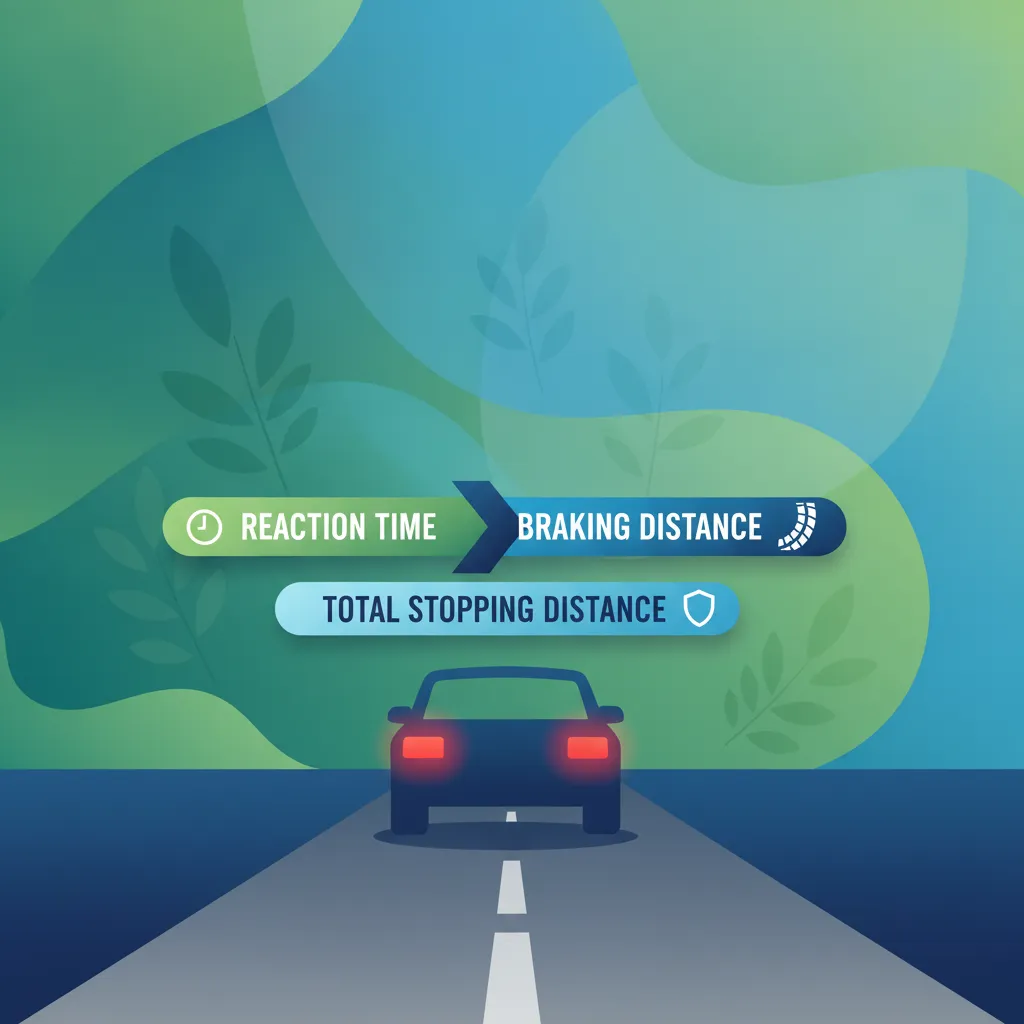
This lesson provides a technical breakdown of the total stopping distance, explaining its two key components: reaction distance and braking distance. It details how factors like driver alertness affect reaction time, while speed, vehicle weight, and road grip influence braking distance. Understanding this relationship is fundamental to managing speed and maintaining a safe distance from other road users.

This lesson teaches riders how to maintain a safe following distance using the two-second rule, which accounts for reaction time and braking distance. It covers grip management, explaining how tire condition and road surfaces like wet asphalt affect traction. Mastering these concepts is essential for anticipating hazards and preventing rear-end collisions.
This lesson teaches the crucial skill of selecting a safe and appropriate speed that may be lower than the legal limit, based on prevailing conditions. It explains how to assess factors such as traffic flow, weather, visibility, and road surface quality to make prudent speed choices. The goal is to always maintain full control of the vehicle and have sufficient time to react to unexpected hazards.

This lesson addresses two key aspects of defensive riding: maintaining a safe buffer and performing overtaking maneuvers. It details how to use time-based rules, such as the two-second rule, to ensure adequate following distance for reaction. The content also provides a structured approach to overtaking, covering observation, signalling, speed management, and ensuring sufficient clearance before returning to the lane.
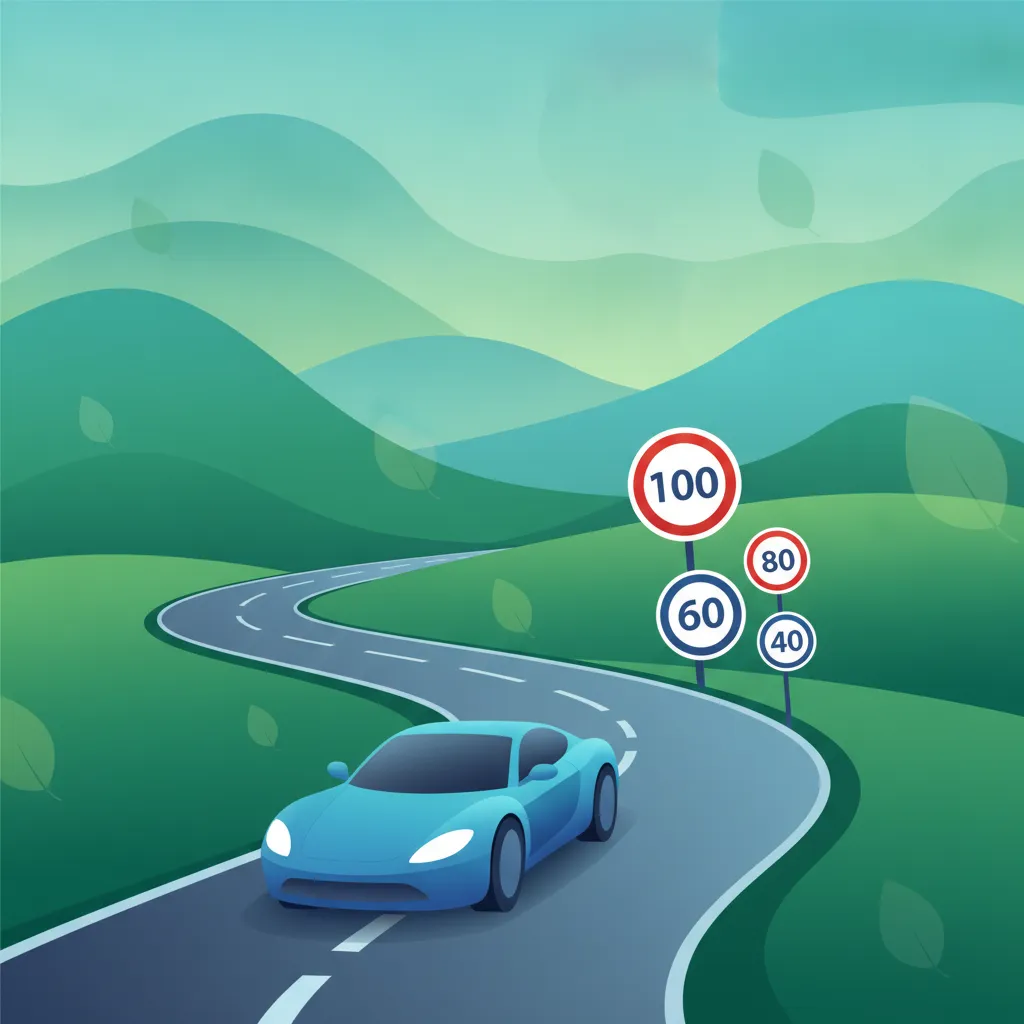
This lesson focuses on the factors that determine a motorcycle's total stopping distance: perception time, reaction time, and braking distance. It provides a clear understanding of how speed exponentially increases the distance required to come to a complete stop. Learners will be able to apply principles like the two-second rule to maintain a safe and appropriate following distance in various traffic situations.
This lesson provides critical guidance on how to safely share the road with vulnerable users, including pedestrians, cyclists, motorcyclists, and children. It highlights the importance of increased awareness in specific areas like school zones and crosswalks. The content teaches techniques for maintaining a safe lateral distance when overtaking, checking blind spots thoroughly, and anticipating the often unpredictable movements of these users.
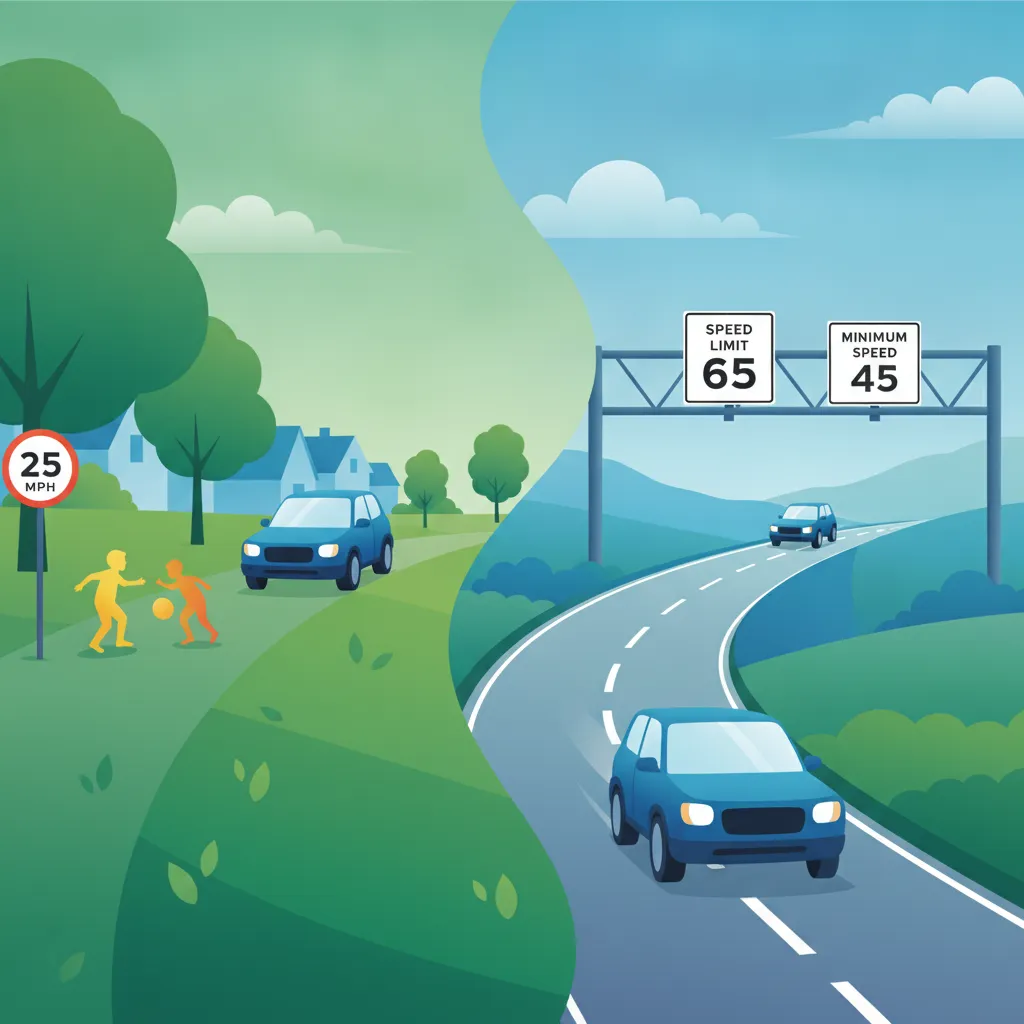
This lesson details the legal speed limits applicable to different road classifications in Italy. It covers the standard limits for urban centers, extra-urban secondary roads, main extra-urban roads, and motorways (autostrade). The content also highlights the lower speed limits that apply to beginner drivers and in specific conditions such as adverse weather or road construction zones.

This lesson provides comprehensive guidance on the rules and best practices for safe overtaking. It explains how to assess whether it is legal and safe to pass, considering road markings, signs, and the distance of oncoming traffic. The content details the correct procedure, including signaling, accelerating, maintaining a safe distance during the maneuver, and returning to the original lane safely.
This lesson provides essential rules and techniques for driving on Italian motorways (autostrade) and major extra-urban roads. It explains how to safely merge onto the motorway from an entry ramp, the strict lane discipline required (drive right, overtake left), and how to exit correctly. The content also covers speed regulations, maintaining a safe following distance at high speed, and procedures for using service areas and handling emergencies.
This lesson defines the scope of the Italian Patente B license according to the Codice della Strada. It clarifies the specific types of vehicles, including maximum weight and passenger capacity, that can be operated. The content also details the official requirements for applicants, such as minimum age, necessary health certifications, and vision standards needed to qualify for the license.
Master adaptive driving by understanding how to adjust 'distanza di sicurezza' in various real-world situations. This lesson covers scenarios like urban traffic, adverse weather, and night driving, crucial for defensive driving and your Patente B theory.

This lesson introduces the philosophy and techniques of defensive driving, a proactive approach focused on anticipating and mitigating potential hazards. It teaches drivers to maintain constant situational awareness by scanning the road ahead, behind, and to the sides. The content covers how to manage the space around the vehicle, identify potential escape routes, and predict the actions of other road users to prevent dangerous situations from developing.
This lesson addresses two key aspects of defensive riding: maintaining a safe buffer and performing overtaking maneuvers. It details how to use time-based rules, such as the two-second rule, to ensure adequate following distance for reaction. The content also provides a structured approach to overtaking, covering observation, signalling, speed management, and ensuring sufficient clearance before returning to the lane.
This lesson teaches riders how to maintain a safe following distance using the two-second rule, which accounts for reaction time and braking distance. It covers grip management, explaining how tire condition and road surfaces like wet asphalt affect traction. Mastering these concepts is essential for anticipating hazards and preventing rear-end collisions.

This lesson provides an in-depth focus on sharing the road with the most vulnerable users. It teaches drivers to be acutely aware of pedestrians at crossings, cyclists filtering through traffic, and motorcyclists who may be in blind spots. The lesson emphasizes the importance of leaving extra space, signaling intentions clearly, and exercising extreme caution at junctions, where the majority of serious incidents occur.
This lesson provides critical guidance on how to safely share the road with vulnerable users, including pedestrians, cyclists, motorcyclists, and children. It highlights the importance of increased awareness in specific areas like school zones and crosswalks. The content teaches techniques for maintaining a safe lateral distance when overtaking, checking blind spots thoroughly, and anticipating the often unpredictable movements of these users.
This lesson provides essential rules and techniques for driving on Italian motorways (autostrade) and major extra-urban roads. It explains how to safely merge onto the motorway from an entry ramp, the strict lane discipline required (drive right, overtake left), and how to exit correctly. The content also covers speed regulations, maintaining a safe following distance at high speed, and procedures for using service areas and handling emergencies.
This lesson provides comprehensive guidance on the rules and best practices for safe overtaking. It explains how to assess whether it is legal and safe to pass, considering road markings, signs, and the distance of oncoming traffic. The content details the correct procedure, including signaling, accelerating, maintaining a safe distance during the maneuver, and returning to the original lane safely.
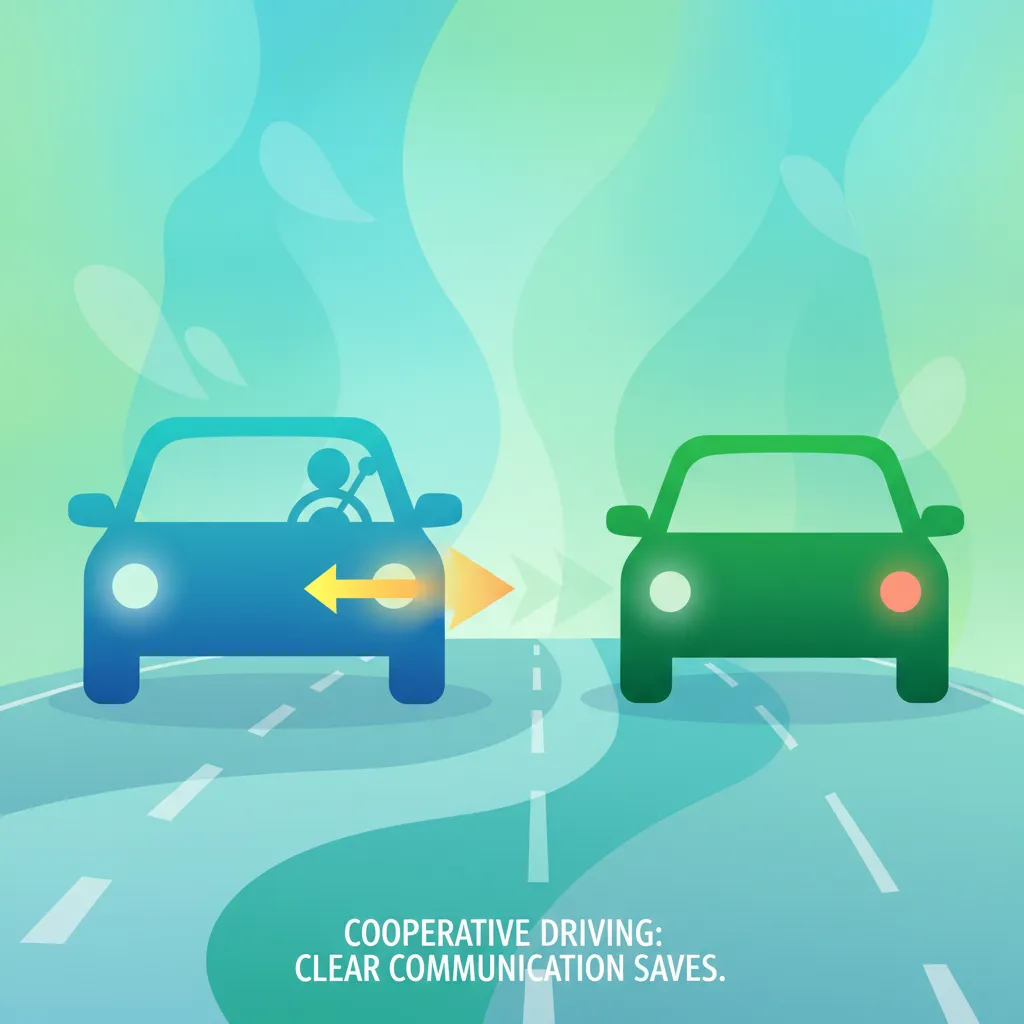
This lesson emphasizes the importance of clear communication and cooperative behavior among all road users to prevent conflicts and enhance safety. It details the proper and legal use of vehicle signals, such as turn indicators and hazard lights, as well as the appropriate use of the horn. The content also explores the role of non-verbal cues like eye contact and courtesy gestures in creating a predictable and safe driving environment.
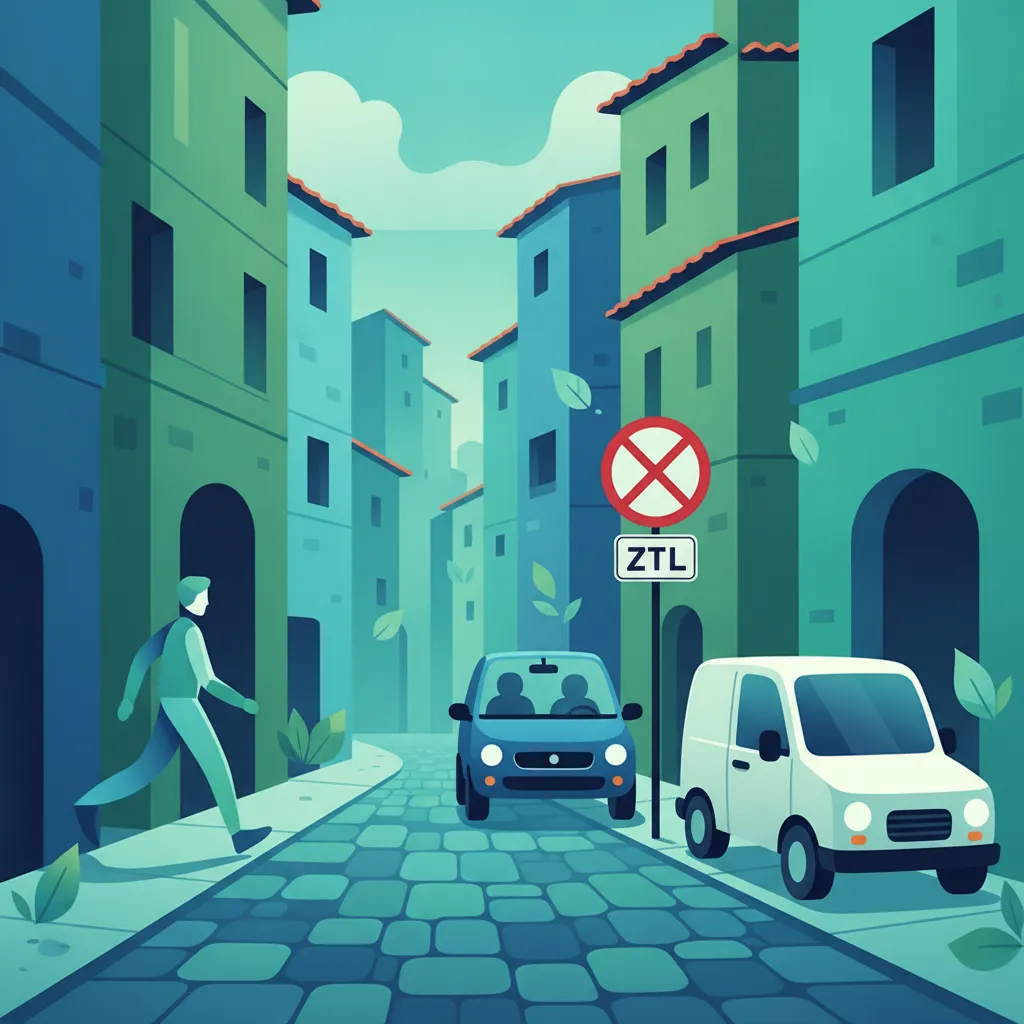
This lesson explains the rules for special urban traffic situations common in Italy. It provides a detailed explanation of Limited Traffic Zones (ZTL), including how to recognize the signage and understand the access restrictions to avoid fines. The content also offers guidance on navigating the narrow and complex streets of historic centers and safely maneuvering around frequently stopping delivery vehicles.

This lesson teaches the correct and safe technique for reversing a vehicle. It emphasizes the importance of performing a full 360-degree check for hazards before starting and maintaining slow, controlled movement. The content covers how to use mirrors and direct observation effectively, how to steer accurately while looking backward, and the increased need for caution regarding pedestrians and cyclists in the vehicle's blind areas.
Find clear answers to common questions learners have about Distanza di Sicurezza and Following Distance. Learn how the lesson is structured, which driving theory objectives it supports, and how it fits into the overall learning path of units and curriculum progression in Italy. These explanations help you understand key concepts, lesson flow, and exam focused study goals.
No, it is not fixed. It depends on your speed, the type of road, weather conditions, and the efficiency of your vehicle's braking system. You must always adjust your distance to ensure you can stop safely if the vehicle in front brakes suddenly.
The two-second rule is a practical estimation method. You choose a stationary object on the road, and when the car ahead passes it, you count two seconds; if you pass the same object before two seconds, you are too close. It is a vital tool for staying safe and answering exam questions correctly.
Yes, absolutely. As speed increases, both your reaction distance and braking distance grow significantly. Therefore, the distance between you and the car ahead must increase proportionally to maintain the same level of safety.
Failure to keep a safe distance is a common cause of rear-end collisions and a frequently tested topic. Legally, it can lead to fines and, in case of an accident, you are almost always held responsible for failing to allow enough time to react.
Start searching now to pinpoint exactly which Italian driving theory topics, road signs, or traffic rules you need to master. Use our advanced filters to build a custom practice session and ensure you're fully prepared for every aspect of your official driving licence exam.