
This lesson provides a comprehensive guide to navigating Italian motorways (autostrade) and major extra-urban roads safely and legally. You will learn the critical rules for merging, lane discipline, and high-speed driving that are essential for both your Patente B theory exam and real-world driving conditions.
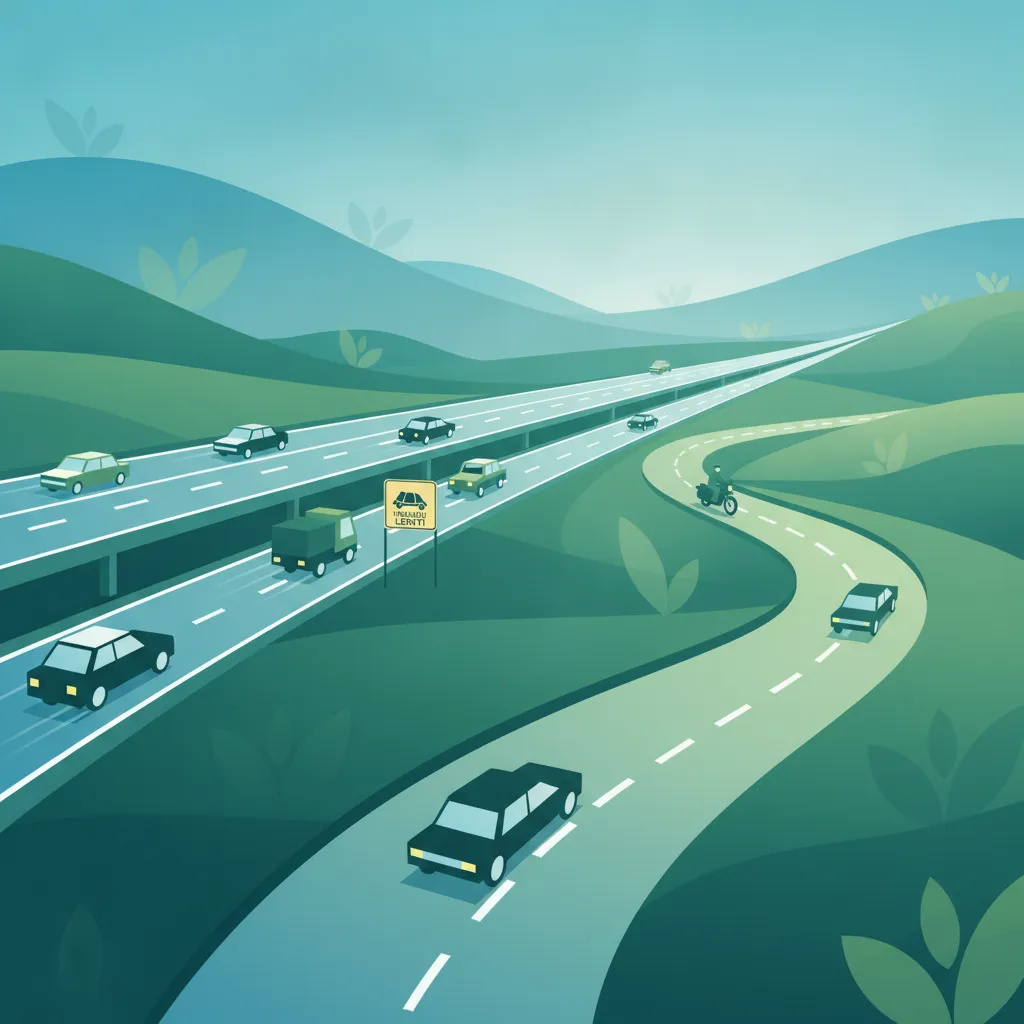
Lesson content overview
Navigating Italy's high-speed road network, which includes autostrade (motorways) and major extra-urban roads, requires specific knowledge and adherence to strict rules. This lesson provides essential techniques and regulations crucial for safe and efficient travel, particularly for those preparing for the Italian Patente B theory test. Understanding these principles ensures predictable driver behavior, minimizes collision risks, and promotes smooth traffic flow on high-speed thoroughfares.
This topic builds upon foundational driving skills such as understanding basic road signs, general speed limits, correct lane usage, and safe overtaking procedures. Mastering these concepts is vital for advanced driving scenarios, including navigating tunnels and adapting to adverse weather conditions on high-speed roads.
Autostrade are Italy's primary controlled-access highways, specifically designed for uninterrupted, high-speed, long-distance travel. They are characterized by separate carriageways for opposing traffic, multiple lanes, and grade-separated interchanges, meaning there are no at-grade intersections, traffic lights, or pedestrian crossings. Access to autostrade is typically restricted to motorized vehicles, ensuring a consistent and fluid traffic flow.
These motorways are easily identifiable by their green signage. They often involve tolls, collected at entry and exit points. Key features include consistent lane widths, well-maintained surfaces, and the presence of a hard shoulder for emergencies. The general speed limit on autostrade is 130 km/h, though this is reduced in adverse weather conditions or where specific signage indicates. Drivers must always keep to the rightmost lane unless actively overtaking. A common misunderstanding is treating the left lane as a general driving lane, rather than one strictly reserved for passing.
Extra-urban roads are major thoroughfares located outside urban areas. Unlike autostrade, these roads may feature at-grade intersections, roundabouts, and occasionally pedestrian crossings or direct access to properties. They are typically identified by blue signage and serve as vital links between towns and regions.
Extra-urban roads can vary significantly in their configuration. Some are dual carriageways with separated directions of travel, while others are single carriageways with two-way traffic. Speed limits are generally lower than on autostrade; for dual carriageways, the limit is typically 110 km/h, and for single carriageways, it's 90 km/h. These limits are also subject to reduction under adverse weather or specific signage. Overtaking on extra-urban roads, similar to autostrade, is strictly permitted only on the left. A frequent mistake is assuming these roads have the same access restrictions as autostrade or attempting to overtake on the right.
Merging onto an autostrada requires a specific technique to safely integrate your vehicle into the high-speed flow of traffic. This process primarily uses an acceleration lane, designed to allow drivers to match the speed of vehicles already on the motorway.
Assess and Signal: As you approach the entry ramp, observe the traffic flow on the autostrada. Signal your intention to merge early.
Accelerate: Use the acceleration lane to build up speed, aiming to match the speed of the autostrada traffic (up to 130 km/h under normal conditions). It is crucial not to stop at the end of the ramp, as this creates a significant hazard.
Find a Gap: Continuously check your mirrors and blind spot to identify a safe and adequate gap in the rightmost lane of the autostrada.
Merge Safely: Smoothly steer into the chosen gap, maintaining your speed. Do not cut off other drivers or force them to brake.
Failing to accelerate sufficiently or stopping on the ramp are common and dangerous errors. Always yield to traffic already on the autostrada.
Exiting the autostrada also requires a planned and gradual approach to ensure safety and prevent disruption to traffic flow. This procedure typically involves using a deceleration lane to reduce speed.
Signal Early: Identify your exit well in advance and signal your intention to exit at least 300 metres before reaching the exit ramp.
Position Correctly: Move into the appropriate lane designated for your exit. This is usually the rightmost lane. Ensure you do not change lanes abruptly or at the last minute.
Enter Deceleration Lane: Steer into the deceleration lane. Begin to gradually reduce your speed only once you are fully within this dedicated lane.
Adjust Speed: Continue reducing your speed to suit the conditions of the exit ramp and the road you are joining.
Abrupt braking on the main carriageway or late lane changes are common causes of rear-end collisions during exiting.
Strict adherence to speed limits is paramount on Italian roads, especially on autostrade and extra-urban routes. These limits are set to ensure safety based on road design, traffic conditions, and potential hazards.
Speed limits are subject to immediate reduction under specific conditions:
Exceeding speed limits carries significant fines and penalties, including demerit points on your license. Always adjust your speed to conditions, even if the posted limit is higher.
Maintaining an adequate following distance is a critical defensive driving technique, especially on high-speed roads. This distance provides sufficient time to react to sudden braking or other unforeseen events by the vehicle ahead.
The recommended guideline is the "two-second rule":
A method to ensure a safe following distance by choosing a fixed object ahead (e.g., a sign or bridge), and ensuring that when the vehicle in front passes that object, you do not reach it for at least two full seconds.
At 130 km/h, a two-second gap equates to approximately 72 metres. This distance allows for perception time, reaction time, and vehicle braking distance.
In adverse conditions, such as rain, fog, snow, or when the road surface is wet, this rule should be extended to at least four seconds, or even more depending on severity. This increased distance accounts for reduced visibility and decreased tire grip. Drivers often mistakenly use a fixed distance in metres, which becomes insufficient as speed increases. Always calculate based on time, and increase the interval when conditions are not ideal.
Service areas, also known as rest stops or autogrills, are essential facilities along autostrade, providing fuel, food, rest, and sometimes emergency services. Proper use of these areas is crucial for road safety and efficient traffic flow.
When you intend to enter a service area:
Stopping in an active traffic lane to enter a service area creates a severe hazard and can lead to rear-end collisions.
In the event of a breakdown, accident, or other emergency on an autostrada or extra-urban road, following strict protocols is vital for your safety and the safety of other road users.
Move to the Hard Shoulder: If possible, guide your vehicle to the hard shoulder (corsia di emergenza) as far to the right as possible, away from the flow of traffic. If there is no hard shoulder, try to reach the nearest safe stopping point.
Activate Hazard Lights: Immediately turn on your hazard warning lights (four-way flashers) to alert other drivers to your stationary vehicle.
Wear Safety Vest: Before exiting the vehicle, ensure you put on a high-visibility safety vest. This is mandatory if you leave the vehicle on the roadway or hard shoulder.
Place Warning Triangle: Position a warning triangle at least 100 metres behind your vehicle (or at a suitable safe distance on extra-urban roads, where it should be at least 50 metres).
Seek Safety: If it is safe to do so, move your passengers to a safe location away from the traffic lanes, such as behind the crash barrier. If it's unsafe to exit the vehicle (e.g., on a curve with poor visibility), remain inside with seatbelts fastened.
Use Emergency Telephone: On autostrade, use the nearest emergency telephone (colonnina SOS), which are typically located every 2 km, to contact emergency services. These phones automatically identify your location. If no emergency phone is available, use your mobile phone to call 112 (European emergency number).
Await Assistance: Wait for assistance to arrive. Do not attempt major repairs yourself.
Never walk or stand in the active traffic lanes. The hard shoulder is for emergencies only and should not be used for regular driving or stopping.
Adherence to specific rules is mandatory for safe and legal driving on autostrade and major extra-urban roads. These regulations are designed to minimize risks and maintain efficient traffic flow.
Drivers must always keep to the rightmost available lane, except when overtaking another vehicle. Overtaking is strictly permitted only on the left. Once the overtaking manoeuvre is complete, drivers should return to the right lane as soon as it is safe to do so. This rule is fundamental for preventing lane-switching conflicts and ensuring faster traffic can pass unhindered. Continuous driving in the left lane without overtaking is a violation.
As discussed, strict speed limits apply to different road types and conditions. On autostrade, the maximum is 130 km/h, reduced to 110 km/h in rain. On dual carriageway extra-urban roads, it is 110 km/h, and on single carriageways, 90 km/h, both subject to reductions in adverse weather. Always adjust your speed according to temporary signs and prevailing conditions.
When merging onto an autostrada, drivers must use the acceleration lane to match traffic speed and merge without stopping. When exiting, drivers must signal at least 300 metres before the exit, move to the designated lane, and use the deceleration lane to reduce speed gradually.
Hazard lights are mandatory when your vehicle is stationary on the hard shoulder or involved in an emergency stop. They serve as a crucial warning to other drivers about a potential hazard. They should not be used while driving in normal traffic conditions.
While not explicitly legislated with a fixed distance, maintaining a safe following distance, typically the "two-second rule," is strongly advised by the Codice della Strada. This distance should be increased significantly in adverse weather conditions.
Always remember that these rules are in place not just for legal compliance, but primarily for your safety and the safety of everyone else on the road.
Understanding common mistakes can help you prevent dangerous situations and avoid legal penalties on autostrade and extra-urban roads.
Driving in the Left Lane Unnecessarily:
Stopping on the Hard Shoulder Without Hazard Lights:
Abrupt Lane Changes Near Autostrada Exits:
Tailgating at High Speeds:
Overtaking on the Right on Dual Carriageways:
Failing to Adjust Speed in Adverse Weather (e.g., Heavy Rain):
Driving on autostrade and extra-urban roads demands continuous adaptation to varying environmental conditions. Weather and light significantly impact visibility and road grip, requiring drivers to adjust their behavior accordingly.
Autostrade offer high-speed, controlled environments with dedicated entry/exit and emergency lanes. Extra-urban roads, while also high-speed, can have at-grade intersections, varied lane configurations, and potentially vulnerable road users. Always be prepared for unexpected situations on extra-urban roads, even when following lane discipline and overtaking rules.
This lesson covers the essential rules for driving on Italian autostrade and extra-urban roads, which are high-speed environments requiring strict adherence to lane discipline (keep right, overtake left), specific speed limits (130/110/90 km/h depending on road type), and weather-adapted driving. Key procedures include proper merging using acceleration lanes, exiting with 300-metre advance signalling, and emergency protocols involving the hard shoulder, hazard lights, safety vests, and SOS phones. The two-second following distance rule must be extended to at least four seconds in rain, fog, or snow. Understanding these rules is essential for both passing the Patente B theory exam and safe real-world motorway driving in Italy.
A short set of high-value points that capture the most important learning from this lesson.
Always keep to the rightmost lane on autostrade and extra-urban roads, using the left lane only for overtaking before returning right
Speed limits on autostrade are 130 km/h (reduced to 110 km/h in rain), 110 km/h on dual carriageway extra-urban roads, and 90 km/h on single carriageway extra-urban roads
Use the two-second rule for following distance at high speed, extending to four seconds or more in adverse weather conditions
Never stop on the acceleration lane when merging; instead, accelerate to match traffic speed and find a safe gap to merge smoothly
In emergencies on autostrade, move to the hard shoulder, activate hazard lights, wear a high-visibility vest, and place the warning triangle at least 100 metres behind
Explore all units and lessons included in this driving theory course.
Green signs indicate autostrade, blue signs indicate extra-urban roads
Signal your intention to exit or enter service areas at least 300 metres in advance
SOS emergency phones (colonnina SOS) are located every 2 km on Italian autostrade and automatically identify your location
Overtaking is permitted only on the left side on both autostrade and extra-urban roads in Italy
In heavy fog on autostrade, speed may be reduced to 50 km/h or lower as shown on variable message signs
Continuously driving in the left lane without overtaking, which obstructs faster traffic and violates lane discipline rules
Failing to reduce speed in adverse weather, not accounting for reduced traction and longer braking distances
Stopping on the acceleration lane instead of accelerating to match traffic flow before merging
Overtaking on the right side of vehicles, which is illegal and dangerous because drivers do not expect to be passed on the right
Using rear fog lights in light fog conditions where they can dazzle drivers behind you
Lesson content overview
A short set of high-value points that capture the most important learning from this lesson.
Always keep to the rightmost lane on autostrade and extra-urban roads, using the left lane only for overtaking before returning right
Speed limits on autostrade are 130 km/h (reduced to 110 km/h in rain), 110 km/h on dual carriageway extra-urban roads, and 90 km/h on single carriageway extra-urban roads
Use the two-second rule for following distance at high speed, extending to four seconds or more in adverse weather conditions
Never stop on the acceleration lane when merging; instead, accelerate to match traffic speed and find a safe gap to merge smoothly
In emergencies on autostrade, move to the hard shoulder, activate hazard lights, wear a high-visibility vest, and place the warning triangle at least 100 metres behind
Explore all units and lessons included in this driving theory course.
Green signs indicate autostrade, blue signs indicate extra-urban roads
Signal your intention to exit or enter service areas at least 300 metres in advance
SOS emergency phones (colonnina SOS) are located every 2 km on Italian autostrade and automatically identify your location
Overtaking is permitted only on the left side on both autostrade and extra-urban roads in Italy
In heavy fog on autostrade, speed may be reduced to 50 km/h or lower as shown on variable message signs
Continuously driving in the left lane without overtaking, which obstructs faster traffic and violates lane discipline rules
Failing to reduce speed in adverse weather, not accounting for reduced traction and longer braking distances
Stopping on the acceleration lane instead of accelerating to match traffic flow before merging
Overtaking on the right side of vehicles, which is illegal and dangerous because drivers do not expect to be passed on the right
Using rear fog lights in light fog conditions where they can dazzle drivers behind you
Explore search topics learners often look for when studying Driving on Autostrade and Extra-Urban Roads. These topics reflect common questions about road rules, driving situations, safety guidance, and lesson level theory preparation for learners in Italy.
Browse additional driving theory lessons that cover connected traffic rules, road signs, and common driving situations related to this topic. Improve your understanding of how different rules interact across everyday traffic scenarios.
Explore advanced driving regulations and specific scenarios for Italian motorways (autostrade) and major extra-urban roads. Understand complex lane discipline, overtaking subtleties, and emergency procedures beyond the basics for your Patente B theory.

This lesson focuses on the specific regulations and techniques for operating a heavy vehicle on high-speed motorways. It covers mandatory lane discipline for trucks, the rules governing overtaking other heavy vehicles, and the specific speed limits that apply. Best practices for merging onto and exiting the motorway, maintaining safe following distances, and using the hard shoulder only in genuine emergencies are also detailed.
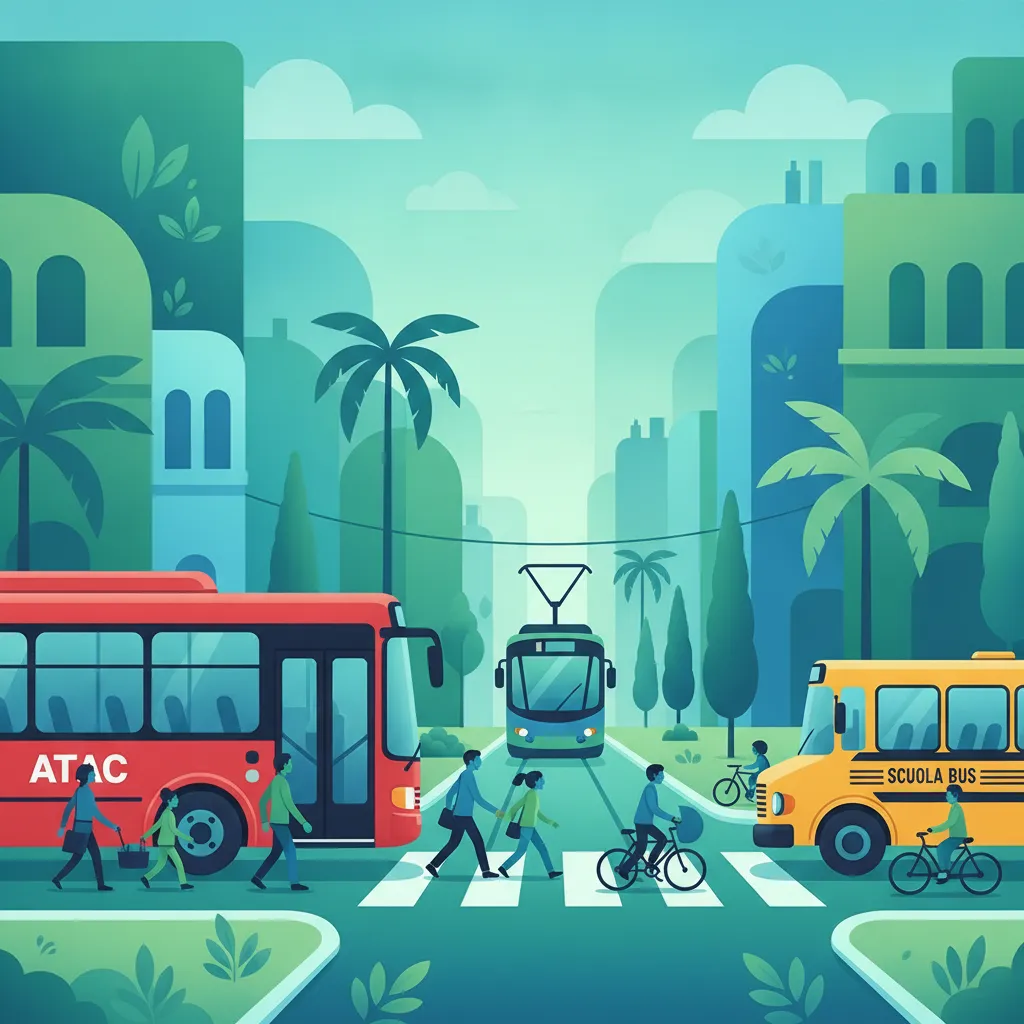
This lesson details the correct procedures for interacting with public transport and school buses. It explains the rules for dedicated bus lanes, the absolute priority of trams, and the legal requirement to yield to buses pulling out from a stop. The content also covers the specific laws requiring drivers to stop when a school bus is loading or unloading passengers, to ensure child safety.

This lesson provides a detailed explanation of the priority rules that govern Italian intersections and roundabouts. You will learn to identify priority roads and correctly apply the rules for stop and give way signs. It also covers the specific procedures for entering, navigating, and exiting roundabouts, emphasizing when to yield to circulating traffic.
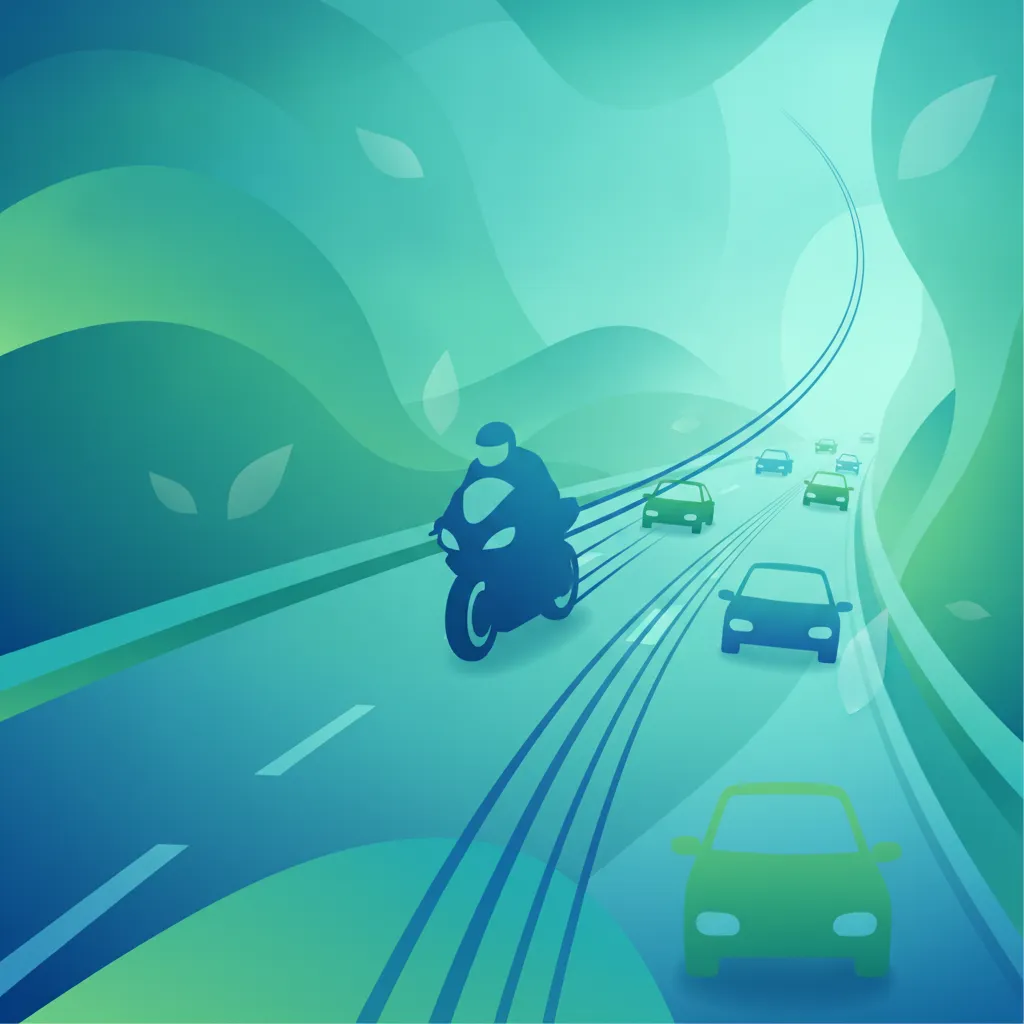
This lesson provides a comprehensive guide to riding on high-speed motorways, or autostrade. It details the correct procedures for safely merging into traffic from an entry ramp and exiting via a deceleration lane. The content reinforces strict lane discipline, rules for overtaking, and the importance of maintaining a significantly larger following distance to compensate for higher speeds and potential wind gusts.
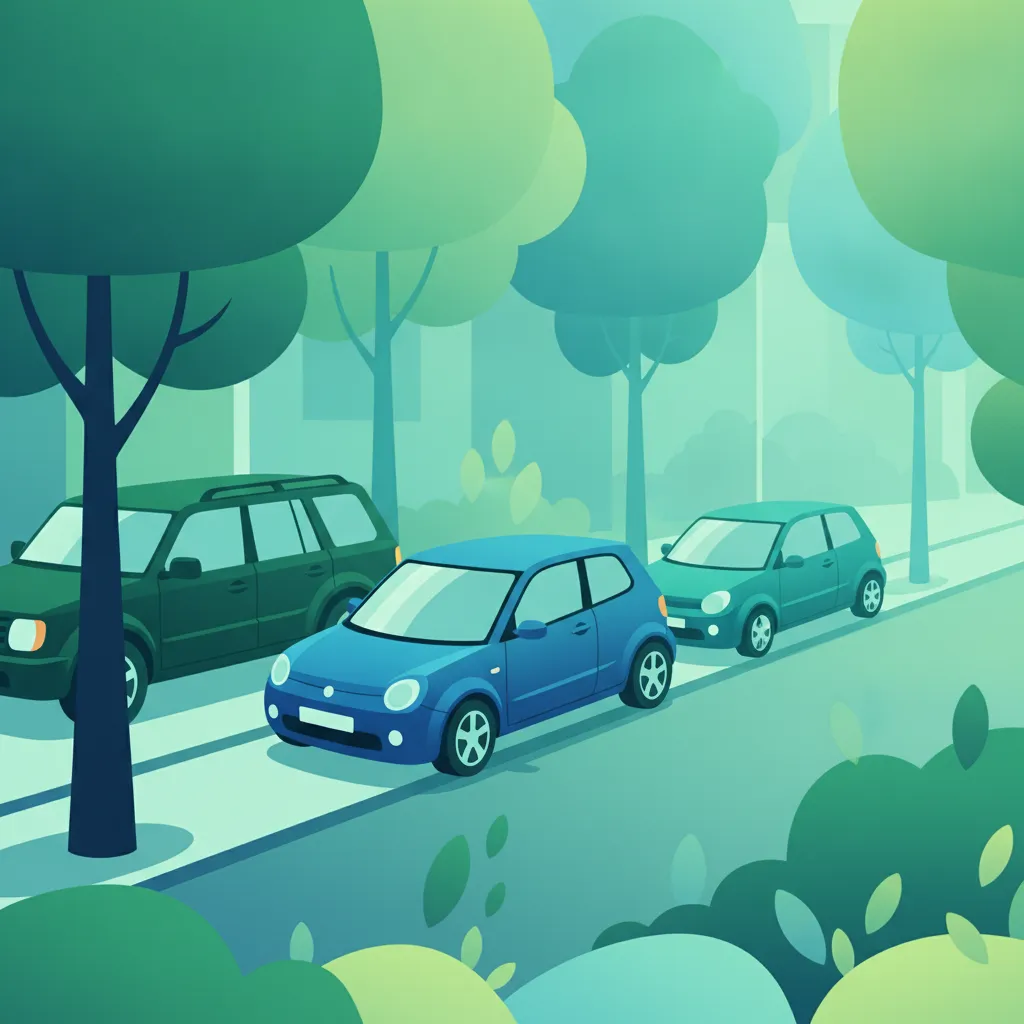
This lesson provides a practical guide to parking regulations in Italian urban areas. It explains the meaning of different colored parking lines (blue for paid, white for free, yellow for reserved), the use of the parking disc (disco orario) for time-limited zones, and how to operate pay-and-display machines. The content also covers how to identify no-parking zones to avoid fines and towing.
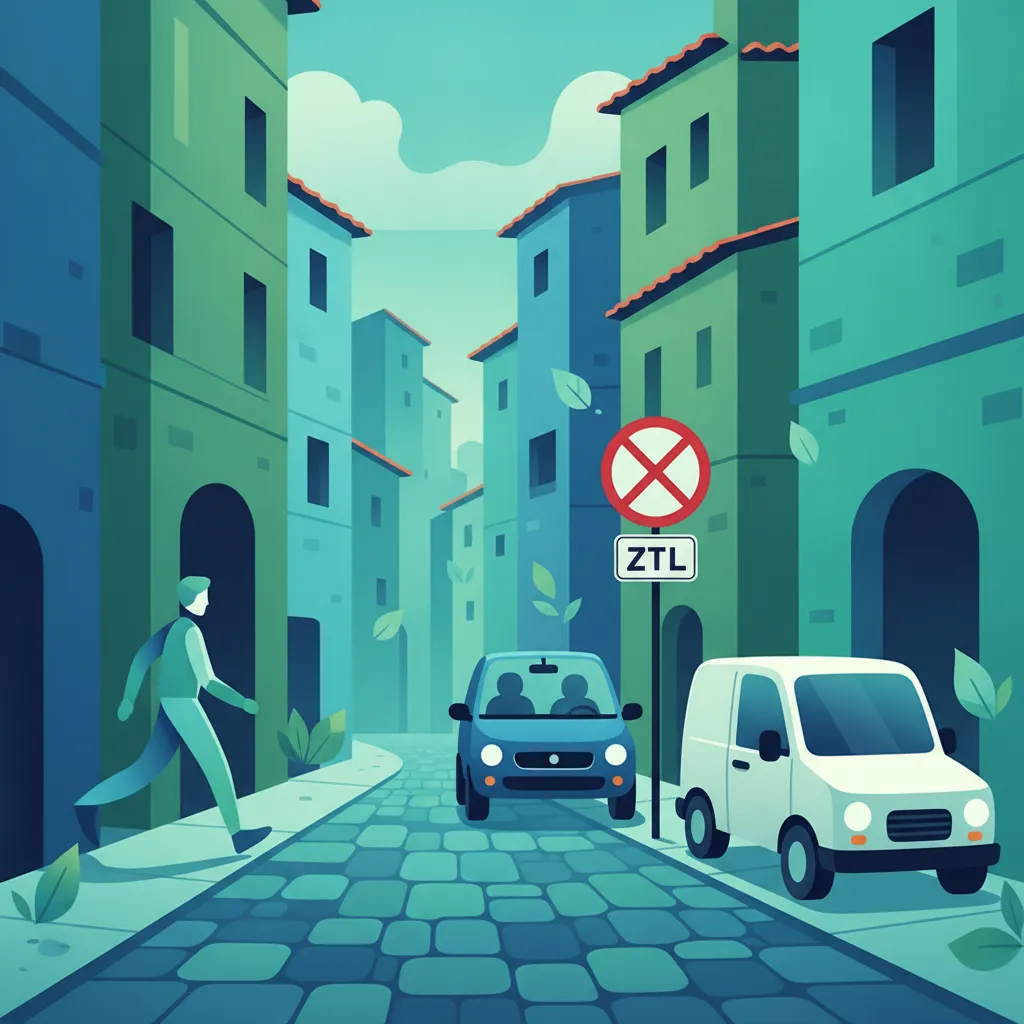
This lesson explains the rules for special urban traffic situations common in Italy. It provides a detailed explanation of Limited Traffic Zones (ZTL), including how to recognize the signage and understand the access restrictions to avoid fines. The content also offers guidance on navigating the narrow and complex streets of historic centers and safely maneuvering around frequently stopping delivery vehicles.

This lesson provides a detailed guide to understanding road markings and pavement symbols in Italy. It explains the critical difference between continuous and broken lane lines regarding overtaking, the function of stop lines and yield markings at intersections, and the meaning of directional arrows painted in lanes. The content also covers markings for pedestrian crossings, bus lanes, and designated parking areas.
This lesson covers the general principles of priority at intersections governed by traffic signs and signals. It explains how to identify a priority road and the obligation to yield to traffic when encountering a 'dare la precedenza' (yield) or stop sign. The content also reviews the hierarchy of authority, where signals from a traffic officer override all other signs and lights.
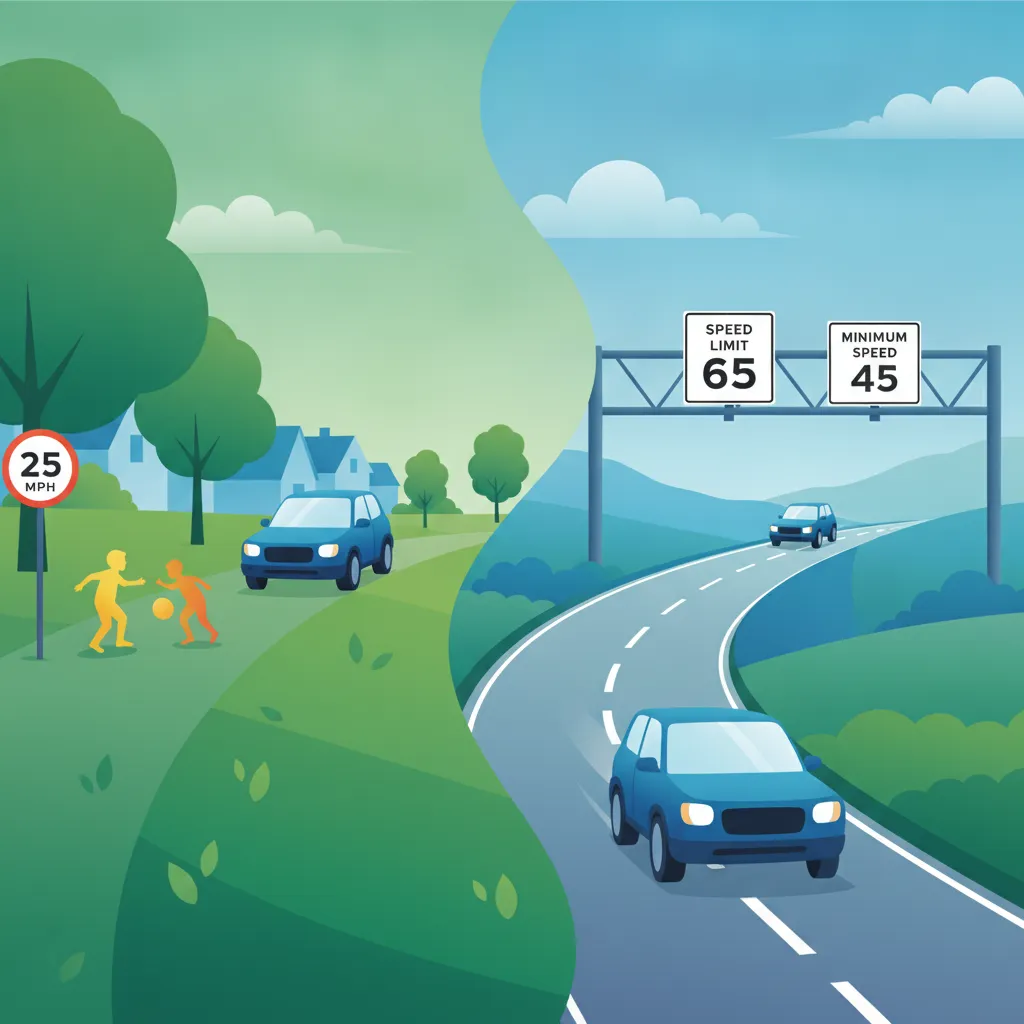
This lesson details the legal speed limits applicable to different road classifications in Italy. It covers the standard limits for urban centers, extra-urban secondary roads, main extra-urban roads, and motorways (autostrade). The content also highlights the lower speed limits that apply to beginner drivers and in specific conditions such as adverse weather or road construction zones.

This lesson details how to safely approach and enter intersections by correctly interpreting traffic lights, stop signs, and give-way rules. It emphasizes the importance of scanning for hazards, checking blind spots, and anticipating the actions of other road users. You will learn to adjust your speed and position your vehicle correctly to navigate crossings without incident.
Learn about frequent violations and misunderstandings when driving on Italian autostrade and extra-urban roads. This lesson details how to avoid common mistakes related to speed, lane discipline, merging, and emergency protocols.
This lesson provides a comprehensive guide to riding on high-speed motorways, or autostrade. It details the correct procedures for safely merging into traffic from an entry ramp and exiting via a deceleration lane. The content reinforces strict lane discipline, rules for overtaking, and the importance of maintaining a significantly larger following distance to compensate for higher speeds and potential wind gusts.

This lesson addresses the increased complexity of overtaking in urban environments with dense traffic and frequent intersections. It stresses the importance of thorough observation, including mirror and blind spot checks, to ensure a safe gap is available. The content covers judging speed differentials and the necessity of clear signalling to execute the maneuver without causing conflict with other road users.
This lesson focuses on the specific regulations and techniques for operating a heavy vehicle on high-speed motorways. It covers mandatory lane discipline for trucks, the rules governing overtaking other heavy vehicles, and the specific speed limits that apply. Best practices for merging onto and exiting the motorway, maintaining safe following distances, and using the hard shoulder only in genuine emergencies are also detailed.
This lesson equips riders to safely manage the challenges posed by road construction zones. It explains how to interpret temporary signage, navigate lane closures or diversions, and maintain heightened awareness for surface hazards like gravel or steel plates. The content emphasizes the need to reduce speed and increase following distances to safely share the road with large construction vehicles and workers.

This lesson focuses on the principle of 'appropriate speed' in urban environments, which often means driving slower than the legal maximum. It explains how to assess the environment for potential hazards—such as schools, parked cars, and busy intersections—and adjust speed accordingly to allow for adequate reaction time. Maintaining a safe, consistent speed reduces the need for harsh braking and contributes to a safer environment for everyone.

This lesson provides an in-depth focus on sharing the road with the most vulnerable users. It teaches drivers to be acutely aware of pedestrians at crossings, cyclists filtering through traffic, and motorcyclists who may be in blind spots. The lesson emphasizes the importance of leaving extra space, signaling intentions clearly, and exercising extreme caution at junctions, where the majority of serious incidents occur.

This lesson focuses on the driver's responsibility to protect pedestrians, especially at designated crossings (strisce pedonali). It reinforces the legal requirement to yield to pedestrians who are on or about to enter a crosswalk. The content also covers the importance of reducing speed and increasing vigilance in urban areas, school zones, and other places with high pedestrian activity.

This lesson focuses on the unique characteristics and challenges of driving on rural and mountain roads. It covers how to safely navigate sharp curves, steep inclines, and narrow lanes with limited visibility, often requiring the use of the horn to signal presence. The content also prepares drivers for potential hazards such as slow-moving agricultural vehicles, unexpected animal crossings, and variable road surface quality.

This lesson is dedicated to fostering awareness and safe interaction with vulnerable road users commonly found in cities. It details the legal priority of pedestrians at crossings and the importance of giving ample space to cyclists. Additionally, it covers the specific hazards associated with tram tracks and the need to be vigilant around public transport vehicles like buses and taxis.
This lesson covers the general principles of priority at intersections governed by traffic signs and signals. It explains how to identify a priority road and the obligation to yield to traffic when encountering a 'dare la precedenza' (yield) or stop sign. The content also reviews the hierarchy of authority, where signals from a traffic officer override all other signs and lights.
Find clear answers to common questions learners have about Driving on Autostrade and Extra-Urban Roads. Learn how the lesson is structured, which driving theory objectives it supports, and how it fits into the overall learning path of units and curriculum progression in Italy. These explanations help you understand key concepts, lesson flow, and exam focused study goals.
No, overtaking on the right is strictly prohibited on motorways, except when the vehicle ahead is clearly signalling to turn left or is positioned in the left lane to turn left.
You must move the vehicle to the emergency lane (corsia di emergenza) if possible, switch on your hazard lights, put on a high-visibility vest before exiting, and place the warning triangle at least 50 meters behind your vehicle.
Learners may drive on motorways once they have attained a sufficient level of vehicle control and have received authorization from their instructor, provided they adhere to all safety and speed regulations.
The acceleration lane is designed for you to match your vehicle's speed with the traffic already on the motorway before merging safely into the flow without forcing other drivers to brake.
Start searching now to pinpoint exactly which Italian driving theory topics, road signs, or traffic rules you need to master. Use our advanced filters to build a custom practice session and ensure you're fully prepared for every aspect of your official driving licence exam.