
This lesson guides you through the critical safety procedures required when driving in tunnels on Italian roads. You will learn the specific legal obligations for vehicle operation, lighting, and how to respond correctly in emergency situations, ensuring you are prepared for both the theory exam and real-world conditions.
Lesson content overview
Driving through tunnels presents unique challenges and requires specific safety protocols to ensure the safety of all road users. Unlike open roads, tunnels are enclosed environments with limited natural light, restricted visibility, and constrained maneuverability. This lesson, designed for the Italian Patente B Theory course, details the essential rules and procedures for navigating tunnels safely, covering everything from mandatory lighting to emergency response. Adhering to these guidelines, rooted in the Codice della Strada, is crucial for preventing accidents and ensuring efficient emergency interventions.
Tunnels are engineered to provide passage through natural barriers or under urban areas, but their design introduces inherent risks. The transition from bright daylight to the artificial light inside a tunnel can momentarily impair a driver's vision, and the confined space amplifies the potential impact of even minor incidents. Reduced ventilation in longer tunnels can also affect air quality and driver alertness. The safety protocols discussed in this lesson are specifically designed to mitigate these hazards, promoting consistent visibility, controlled traffic flow, and effective emergency response.
One of the most fundamental rules for tunnel navigation in Italy is the mandatory use of dipped headlights (anabbaglianti). This rule applies regardless of the time of day or the perceived brightness within the tunnel.
A vehicle's low beam headlights, designed to illuminate the road ahead without dazzling oncoming traffic. They provide sufficient light for visibility and to make the vehicle visible to others.
Upon approaching a tunnel, drivers must switch on their dipped headlights before entering and keep them illuminated until they have fully exited the tunnel. The purpose of this rule is twofold: it ensures that the driver has adequate illumination to see the road, other vehicles, and any obstacles, and crucially, it makes the driver's vehicle visible to others, reducing the risk of collisions, especially rear-end accidents or those involving merging traffic. Using high beams (abbaglianti) inside a tunnel is strictly prohibited as they can cause severe glare for other drivers, particularly those approaching from the opposite direction.
Some modern vehicles are equipped with automatic headlight systems that activate dipped beams in low-light conditions. While these systems can be helpful, drivers should never solely rely on them inside tunnels. It is the driver's responsibility to ensure their dipped headlights are manually activated if the automatic system does not respond promptly or correctly. A quick check of your dashboard indicator lights before entering the tunnel will confirm that your dipped headlights are on.
Maintaining an appropriate and safe speed is paramount when driving through tunnels. Speed limits in tunnels are often specific and may differ from those on the surrounding roads. These limits are determined based on the tunnel's characteristics, such as length, width, ventilation systems, and emergency infrastructure.
Drivers must always observe the posted speed limits indicated by regulatory signs inside and at the entrance of the tunnel. These signs are typically circular with a red border and a black number indicating the maximum permissible speed in kilometers per hour (km/h).
Where no specific speed limit is indicated within a tunnel, the default maximum speed for cars and motorcycles in Italy is 80 km/h. However, it is always prudent to drive at a speed that allows for safe stopping within the visible distance.
In certain conditions, such as heavy traffic, adverse weather (rain, fog), or during maintenance, variable speed limit signs may be used. These electronic signs dynamically display the current maximum speed. Drivers must always obey these variable limits, which are designed to enhance safety under changing circumstances. Exceeding posted or default speed limits in tunnels not only incurs significant fines and penalty points but also drastically reduces reaction time and stopping distance, increasing the risk of severe accidents in an already confined environment.
To maintain consistent traffic flow and minimize collision risks in restricted spaces, two critical prohibitions apply almost universally in tunnels: no overtaking and no stopping.
Overtaking (sorpasso) another vehicle is generally prohibited inside tunnels unless specific road markings and signage explicitly permit it, usually in tunnels with multiple lanes and clear visibility. The typical sign for this prohibition is a circular sign with a red border, depicting two cars side-by-side with a red diagonal line through them.
Attempting to overtake in a tunnel can be extremely dangerous. The limited space, potential for reduced visibility, and absence of emergency lanes make lane changes hazardous. Such maneuvers significantly increase the risk of head-on collisions or side-swiping accidents. Drivers should maintain a safe following distance and remain in their lane, adjusting their speed to the flow of traffic, even if it is moving slower than desired. Patience is key in these enclosed environments.
Stopping or parking your vehicle inside a tunnel is strictly forbidden, except in specific emergency situations or designated areas. The sign indicating this prohibition is usually a circular sign with a red border and a red diagonal line through a blue background, sometimes with a 'P' (for parking) crossed out.
This rule is vital for several reasons. A stopped vehicle can create an unexpected obstruction, leading to rear-end collisions, especially given the rapid speed changes and limited sightlines in tunnels. Furthermore, stopping blocks traffic flow and can hinder emergency services from accessing the tunnel swiftly in case of an incident. Drivers must continue moving through the tunnel unless compelled to stop due to an unavoidable mechanical failure, a severe traffic jam, or an accident ahead.
Despite careful driving, emergencies can occur. Knowing the correct procedure during a breakdown, a severe traffic jam, or a fire inside a tunnel is critical for your safety and the safety of others.
If your vehicle is forced to stop inside a tunnel due to an emergency—such as a breakdown, an accident, or an unexpected blockage—the immediate activation of hazard warning lights (also known as hazard flashers) is mandatory. These flashing amber lights alert other drivers that your vehicle is stationary or moving unusually slowly, significantly reducing the risk of a rear-end collision. Keep them activated until your vehicle is safely moved, or assistance arrives.
If possible, try to drive your vehicle to the nearest emergency lay-by or designated safe stopping area. If not, stop as close as possible to the right side of the lane.
Immediately activate your hazard warning lights to alert approaching traffic.
Turn off your engine to minimize exhaust fumes and conserve fuel.
Exit the vehicle carefully, ensuring you are visible to other drivers, and move to a safe location, such as a pedestrian walkway or the nearest emergency exit. Do not stand directly behind or in front of your vehicle.
Locate the nearest SOS call box to contact emergency services and report your exact location and the nature of the emergency.
Follow any instructions given by emergency personnel or displayed on electronic tunnel signs.
Modern tunnels are equipped with emergency infrastructure designed to facilitate rapid communication and evacuation.
An emergency communication device located at regular intervals within tunnels, allowing direct contact with emergency services or tunnel control centers.
SOS call boxes are typically marked with a clear sign, often featuring a telephone symbol or a red cross. These boxes provide a direct line to emergency services, allowing you to quickly report an incident (breakdown, accident, fire) and receive immediate instructions.
An illuminated sign indicating the nearest safe evacuation route from a tunnel, usually leading to a separate, protected passage or an external area.
Emergency exits are crucial for evacuating personnel safely, especially during fires or other major incidents. These exits are clearly marked with illuminated signs, often showing a person running towards a door. In the event of a fire, smoke, or a severe blockage, follow these signs to evacuate the tunnel on foot. Always prioritize your personal safety and that of your passengers, leaving the vehicle if necessary, and moving towards the designated safe areas. Never block emergency exits with your vehicle.
Understanding common pitfalls can help drivers avoid dangerous situations and legal penalties.
Safe tunnel navigation also requires adapting to various external and internal conditions.
The rules for tunnel navigation are not arbitrary; they are grounded in clear safety principles:
These foundational concepts collectively ensure that drivers are prepared for the unique environment of tunnels, fostering a safer driving experience for everyone.
To solidify your understanding, consider these common tunnel driving scenarios:
Scenario: Entering a Tunnel at Mid-day
Scenario: Approaching a Congested Tunnel Section
Scenario: Fire Alarm Activated in a Tunnel
By mastering these protocols and understanding the rationale behind them, you will be well-prepared to navigate tunnels safely and confidently as a driver holding an Italian Patente B.
This lesson covers essential tunnel safety protocols required for the Italian Patente B theory exam, including the mandatory use of dipped headlights, specific speed limits (default 80 km/h or as posted), and strict prohibitions on overtaking and stopping except in emergencies. It details correct procedures for breakdowns, including hazard light activation, evacuation to pedestrian walkways, and SOS call box usage. Emergency exit signs and fire evacuation protocols are explained with practical scenarios. The content emphasizes that tunnel rules derive from the Codice della Strada and are designed to mitigate the unique hazards of enclosed driving environments.
A short set of high-value points that capture the most important learning from this lesson.
Dipped headlights (anabbaglianti) are mandatory in Italian tunnels at all times, regardless of tunnel lighting or external conditions.
Speed limits inside tunnels default to 80 km/h for cars when no sign is posted, but posted limits and variable signs must always be obeyed.
Overtaking and stopping inside tunnels are prohibited except in designated areas with explicit permission.
During a breakdown or emergency stop in a tunnel, immediately activate hazard lights and move to safety via pedestrian walkways or emergency exits.
SOS call boxes provide direct contact with emergency services and are located at regular intervals throughout Italian tunnels.
Explore all units and lessons included in this driving theory course.
High beams (abbaglianti) are strictly prohibited inside tunnels due to glare hazards for oncoming drivers.
If trapped in a tunnel fire, turn off the engine, leave keys in the ignition, and evacuate on foot following illuminated emergency exit signs.
Heavy vehicles like trucks may have lower specific speed limits (e.g., 70 km/h) due to longer stopping distances.
Never attempt to reverse inside a tunnel, even to avoid congestion.
Variable speed limit signs must be obeyed as they are displayed dynamically for current conditions.
Assuming dipped headlights are unnecessary if the tunnel appears well-lit internally.
Driving at the posted speed limit during heavy congestion instead of reducing speed to match traffic conditions.
Stopping inside a tunnel for non-emergency reasons such as checking a GPS or taking a phone call.
Failing to activate hazard warning lights immediately when forced to stop due to a breakdown.
Ignoring variable speed limit signs displayed on electronic boards during adverse conditions.
Lesson content overview
A short set of high-value points that capture the most important learning from this lesson.
Dipped headlights (anabbaglianti) are mandatory in Italian tunnels at all times, regardless of tunnel lighting or external conditions.
Speed limits inside tunnels default to 80 km/h for cars when no sign is posted, but posted limits and variable signs must always be obeyed.
Overtaking and stopping inside tunnels are prohibited except in designated areas with explicit permission.
During a breakdown or emergency stop in a tunnel, immediately activate hazard lights and move to safety via pedestrian walkways or emergency exits.
SOS call boxes provide direct contact with emergency services and are located at regular intervals throughout Italian tunnels.
Explore all units and lessons included in this driving theory course.
High beams (abbaglianti) are strictly prohibited inside tunnels due to glare hazards for oncoming drivers.
If trapped in a tunnel fire, turn off the engine, leave keys in the ignition, and evacuate on foot following illuminated emergency exit signs.
Heavy vehicles like trucks may have lower specific speed limits (e.g., 70 km/h) due to longer stopping distances.
Never attempt to reverse inside a tunnel, even to avoid congestion.
Variable speed limit signs must be obeyed as they are displayed dynamically for current conditions.
Assuming dipped headlights are unnecessary if the tunnel appears well-lit internally.
Driving at the posted speed limit during heavy congestion instead of reducing speed to match traffic conditions.
Stopping inside a tunnel for non-emergency reasons such as checking a GPS or taking a phone call.
Failing to activate hazard warning lights immediately when forced to stop due to a breakdown.
Ignoring variable speed limit signs displayed on electronic boards during adverse conditions.
Explore search topics learners often look for when studying Tunnel Navigation and Safety Protocols. These topics reflect common questions about road rules, driving situations, safety guidance, and lesson level theory preparation for learners in Italy.
Browse additional driving theory lessons that cover connected traffic rules, road signs, and common driving situations related to this topic. Improve your understanding of how different rules interact across everyday traffic scenarios.
Learn the specific rules for driving through Italian tunnels, including mandatory dipped headlights, speed limits, and the prohibition of overtaking and stopping. Essential for Patente B theory.
This lesson details the specific rules and safety considerations for driving through the extensive tunnels and high viaducts common in Italy. It covers pre-entry checks, maintaining a safe following distance, and the correct procedures to follow in case of a breakdown or fire inside a tunnel. The lesson also addresses the hazard of strong crosswinds on exposed viaducts and how to maintain vehicle control.

This lesson addresses the unique hazards associated with riding through tunnels. It focuses on the importance of adapting vision when entering and exiting, managing speed within the confined space, and maintaining a steady lane position. The content also covers awareness of emergency exits and procedures, as well as the potential for changes in air quality due to ventilation systems.
This lesson delivers a comprehensive explanation of right-of-way regulations at Italian intersections. It covers the interpretation of traffic light signals, the absolute requirement to stop at stop signs, and yielding at give-way signs. Furthermore, it details the default priority rules for unmarked intersections and the specific obligations a rider has towards pedestrians on crossings.

This lesson addresses the increased complexity of overtaking in urban environments with dense traffic and frequent intersections. It stresses the importance of thorough observation, including mirror and blind spot checks, to ensure a safe gap is available. The content covers judging speed differentials and the necessity of clear signalling to execute the maneuver without causing conflict with other road users.
This lesson provides essential rules and techniques for driving on Italian motorways (autostrade) and major extra-urban roads. It explains how to safely merge onto the motorway from an entry ramp, the strict lane discipline required (drive right, overtake left), and how to exit correctly. The content also covers speed regulations, maintaining a safe following distance at high speed, and procedures for using service areas and handling emergencies.

This lesson provides comprehensive guidance on the rules and best practices for safe overtaking. It explains how to assess whether it is legal and safe to pass, considering road markings, signs, and the distance of oncoming traffic. The content details the correct procedure, including signaling, accelerating, maintaining a safe distance during the maneuver, and returning to the original lane safely.
This lesson focuses on the vital safety procedures required when approaching and crossing railway lines (passaggio a livello). It details how to interpret the warning systems, including flashing red lights, audible alarms, and lowering barriers, all of which mandate a complete stop. The content also covers procedures for crossings without barriers and emphasizes the importance of ensuring tracks are clear in both directions before proceeding.

This lesson focuses on the principle of 'appropriate speed' in urban environments, which often means driving slower than the legal maximum. It explains how to assess the environment for potential hazards—such as schools, parked cars, and busy intersections—and adjust speed accordingly to allow for adequate reaction time. Maintaining a safe, consistent speed reduces the need for harsh braking and contributes to a safer environment for everyone.
This lesson explains the concept of 'Zone a Traffico Limitato' (ZTL), common in Italian city centers, which restricts vehicle access at certain times. It covers how to identify ZTL boundaries, understand the operating hours, and the procedures for obtaining permits for commercial deliveries. The lesson also touches on environmental zones that may restrict access based on a vehicle's emission standards.

This lesson provides a comprehensive guide to a vehicle's lighting systems and their correct use according to the Codice della Strada. It explains the functions of low beams, high beams, fog lights, and daytime running lights, detailing when each should be used to ensure visibility for the driver and by other road users. Proper use of lighting is critical for safety during night driving and in conditions of poor visibility.
Understand critical safety protocols for breakdowns, traffic jams, and fires inside Italian tunnels. Learn to use SOS call boxes and emergency exits effectively for driver safety.
This lesson details the specific rules and safety considerations for driving through the extensive tunnels and high viaducts common in Italy. It covers pre-entry checks, maintaining a safe following distance, and the correct procedures to follow in case of a breakdown or fire inside a tunnel. The lesson also addresses the hazard of strong crosswinds on exposed viaducts and how to maintain vehicle control.
This lesson equips riders with the correct procedures to follow in the event of a breakdown or accident. It covers how to move the vehicle to a safe location, alert other traffic, and contact emergency services using the universal 112 number. You will also learn the basics of accident scene management and the necessary steps for reporting the incident to police and insurance.
This lesson addresses the unique hazards associated with riding through tunnels. It focuses on the importance of adapting vision when entering and exiting, managing speed within the confined space, and maintaining a steady lane position. The content also covers awareness of emergency exits and procedures, as well as the potential for changes in air quality due to ventilation systems.

This lesson provides a step-by-step guide for managing a vehicle breakdown safely. It reinforces the procedure for stopping on the hard shoulder, activating hazard lights, and placing a warning triangle at the correct distance. The lesson emphasizes the importance of wearing high-visibility clothing, exiting the vehicle from the side away from traffic, and waiting in a safe location before contacting a roadside assistance service.
This lesson prepares drivers for unexpected emergencies that may occur far from base. It provides a clear, step-by-step guide on what to do in the event of a breakdown on a motorway, including how to stop safely on the hard shoulder, make the vehicle visible, and call for assistance. Basic procedures for dealing with a vehicle fire or being the first at an accident scene are also covered, prioritizing personal safety at all times.

This lesson provides a clear, step-by-step guide for handling a mechanical breakdown on the road. It emphasizes the priority of moving the motorcycle to a safe location away from traffic flow and making oneself visible by using hazard lights and wearing a high-visibility vest. The content covers the correct procedure for contacting roadside assistance or emergency services and waiting for help in a secure position.
This lesson focuses on the vital safety procedures required when approaching and crossing railway lines (passaggio a livello). It details how to interpret the warning systems, including flashing red lights, audible alarms, and lowering barriers, all of which mandate a complete stop. The content also covers procedures for crossings without barriers and emphasizes the importance of ensuring tracks are clear in both directions before proceeding.
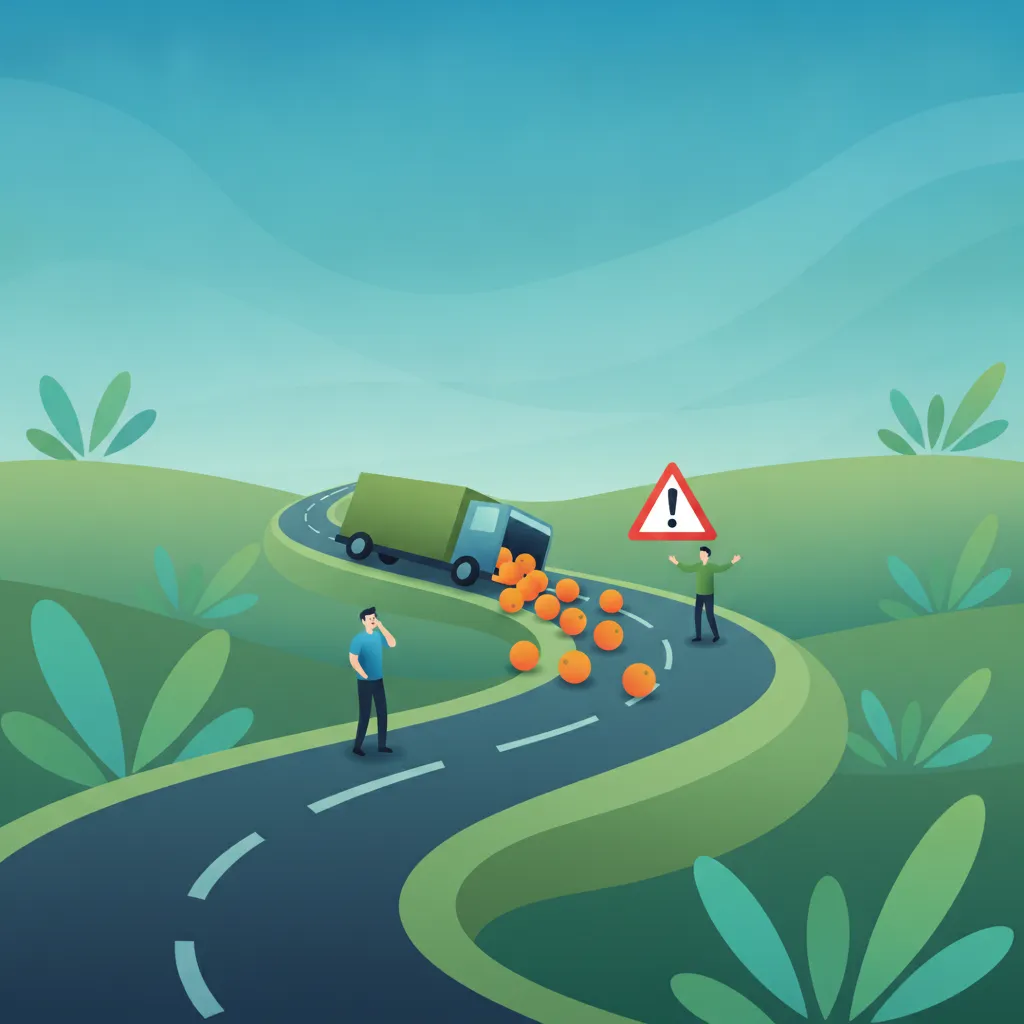
This lesson prepares drivers for incidents beyond a simple breakdown, such as losing part of the load onto the roadway or dealing with a spillage. It outlines the immediate priorities: ensuring personal safety, warning other traffic of the hazard, and notifying the authorities. The lesson also covers the fundamental principles of managing an accident scene, including protecting the area, assessing for casualties, and providing essential information to emergency services.
Find clear answers to common questions learners have about Tunnel Navigation and Safety Protocols. Learn how the lesson is structured, which driving theory objectives it supports, and how it fits into the overall learning path of units and curriculum progression in Italy. These explanations help you understand key concepts, lesson flow, and exam focused study goals.
Yes, it is mandatory to use dipped headlights inside all tunnels, regardless of whether they are artificially lit or during daytime hours, to ensure your vehicle is visible to others.
You must turn on your hazard lights, pull as far to the right as possible (preferably in an emergency bay), turn off the engine, and exit the vehicle to use the nearest SOS call box while keeping safe from passing traffic.
Overtaking is strictly prohibited in tunnels unless there are multiple lanes clearly marked for the same direction of travel, allowing for safe passing without changing the lane geometry improperly.
Stopping in a tunnel poses a severe hazard due to reduced visibility and limited space, which can lead to high-speed rear-end collisions or catastrophic chain reactions in the event of a fire.
Start searching now to pinpoint exactly which Italian driving theory topics, road signs, or traffic rules you need to master. Use our advanced filters to build a custom practice session and ensure you're fully prepared for every aspect of your official driving licence exam.