
Navigate Poland's busy urban and residential areas safely by understanding the specific rules for school zones, 'living zones' (strefa zamieszkania), and pedestrian-only streets. This lesson is crucial for protecting vulnerable road users and passing your Category B theory exam, building on your knowledge of urban driving and right-of-way principles.
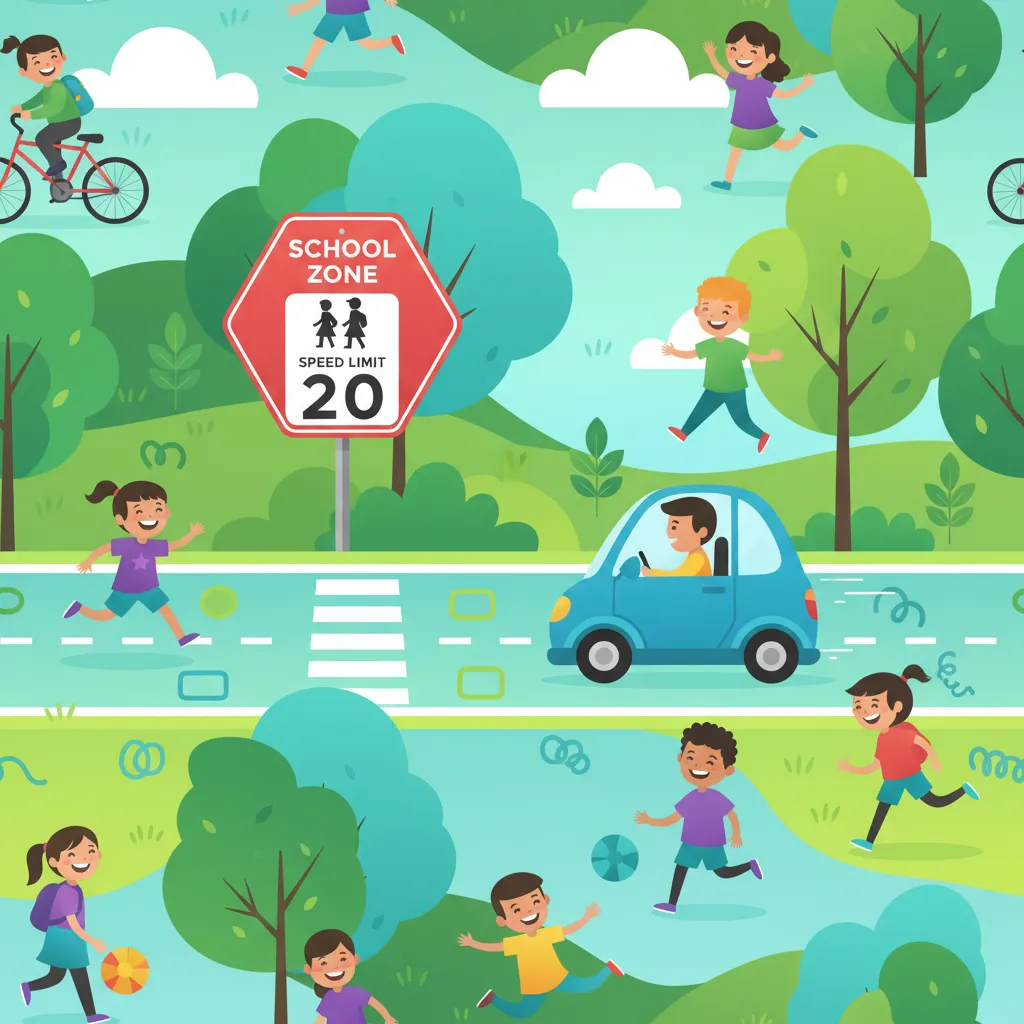
Lesson content overview
Driving safely and responsibly requires a keen awareness of your surroundings, especially in areas where vulnerable road users, such as pedestrians and children, are prevalent. In Poland, specific traffic regulations designate certain zones as priorities for pedestrian safety, demanding heightened caution and adherence to special rules. This lesson, crucial for your Polish Category B driving theory preparation, delves into these critical areas: living zones (strefa zamieszkania), school zones (strefa szkolna), play streets (ulica zabawna), and pedestrian areas (strefa piesza). Understanding and meticulously following these rules is paramount for legal compliance, accident prevention, and ensuring the well-being of the most unprotected individuals on our roads.
The core philosophy behind these specially designated zones is to elevate pedestrian safety above vehicle flow. Polish traffic law establishes a framework that systematically reduces vehicle speed, demands increased driver vigilance, and often reallocates road space to favor those on foot. This proactive approach significantly enhances safety for everyone, particularly children who may exhibit unpredictable behavior.
The fundamental safety logic hinges on the physics of motion. Lowering vehicle speeds dramatically impacts stopping distance and the kinetic energy involved in a potential collision. For instance, reducing speed from 40 km/h to 20 km/h cuts kinetic energy by a remarkable 75%. This substantial reduction directly translates into a greater ability for drivers to react and stop, and, critically, into fewer and far less severe injuries if a collision unfortunately occurs. Mastering these concepts is an essential aspect of responsible driving and passing your Polish Category B theory test.
A "living zone," known in Poland as strefa zamieszkania, is a residential area designed to give absolute priority to pedestrians. These zones are characterized by a universal, mandatory speed limit of 20 km/h for all motorized vehicles. The designation aims to create a safe environment where residents, especially children, can move freely and securely, often utilizing the entire width of the road for play or passage.
Upon entering a strefa zamieszkania, marked by the distinctive sign (a white background, green border, and a stylized house and car symbol), drivers must immediately adjust their speed and mindset. This low speed limit is not advisory; it is legally binding under Article 74 § 5 of the Polish road traffic law. Within these zones, pedestrians possess the right of way at every crossing, including unmarked ones, irrespective of any traffic signals that might otherwise apply. This explicit pedestrian priority is crucial for driver awareness.
Drivers often misinterpret these zones, assuming a higher speed is permissible if the road appears wide or empty. However, the 20 km/h limit applies consistently throughout the entire zone. Another common misunderstanding is neglecting to yield at unmarked pedestrian crossings, believing pedestrians must wait. In a living zone, however, all pedestrians, whether on a marked zebra crossing or simply stepping into the street, have priority. For example, if you are driving through a residential cul-de-sac marked as a strefa zamieszkania and observe children playing or walking near the curb, you must reduce your speed to 20 km/h and be prepared to stop immediately.
School zones, or strefa szkolna, are critical areas requiring extra vigilance from drivers, especially given the presence of children during peak hours. These zones are established around schools and educational institutions to safeguard students during their arrival and departure times.
The definition of a school zone often involves specific signage displaying a school building icon. These signs may also be accompanied by supplementary plates (tabliczki uzupełniające) indicating additional details, such as the distance over which the special rules apply (e.g., “300 m”) or, most importantly, time-based speed limits (e.g., “30 km/h 7-9 h, 15-17 h”). This means the speed limit can vary depending on the time of day, aligning with school hours when student traffic is heaviest.
When you encounter a strefa szkolna sign, your primary responsibility is to reduce your speed according to the posted limit, which is often 30 km/h. If a supplementary plate indicates time-based restrictions, this reduced limit is mandatory only during those specified hours, as stipulated by Article 74 § 6 of Polish road traffic law. Outside these hours, the default urban speed limit (usually 50 km/h) or other posted limits apply, but caution should always be maintained. You must also be prepared to stop for children crossing the road, a requirement reinforced when a school crossing guard (przejściowiec) is present. Drivers are legally obligated to obey the instructions of a school crossing guard, per Article 57 § 5.
A common misconception is that the reduced speed limit in a school zone only applies if children are visibly present. This is incorrect. The posted speed limit, especially when indicated with time restrictions, is legally in force for the entire designated distance and during the specified times, regardless of whether children are immediately visible. For instance, if you see a sign indicating "30 km/h 7-9 h" at a school entrance at 7:30 am, you must adjust your speed to 30 km/h and remain highly vigilant for children, even if you don't see any right away.
Play streets, or ulica zabawna, are distinct urban spaces specifically designated for children's recreational use. These areas prioritize play and social interaction over motorized traffic, creating a very safe environment for the youngest road users.
The designation is marked by a unique sign featuring a child on a swing. In many cases, motorized traffic is entirely prohibited in ulice zabawne, requiring drivers to find an alternate route. However, some local ordinances may permit limited access for residents or emergency vehicles. When motorized traffic is allowed, it is typically restricted to an extremely low speed limit, often around 10 km/h. This ultra-low speed ensures maximum safety for children who may be playing in the street, unpredictably darting into the path of a vehicle.
The practical meaning for drivers is clear: treat these areas as shared spaces where children have absolute priority. If entry is prohibited, you must stop and turn around. If limited access is allowed, you must proceed at no more than 10 km/h, constantly scanning for children and being prepared to stop instantly. Common misunderstandings include confusing play streets with regular residential streets, leading drivers to maintain higher speeds or fail to recognize the severe restrictions. Failing to adhere to the restrictions in a ulica zabawna is not only illegal but also extremely dangerous.
Pedestrian areas, or strefa piesza, are zones primarily or exclusively reserved for foot traffic. These areas are commonly found in city centers, historic districts, and shopping precincts, designed to enhance the urban experience by minimizing vehicle presence and maximizing space for pedestrians.
The entrance to a strefa piesza is indicated by a rectangular sign featuring a white background and a stylized pedestrian symbol. Critically, these signs are often accompanied by a prohibitory sign, such as zakaz wjazdu (no entry), which legally prohibits motorized traffic from entering the zone. In some mixed-use strefy pieszych, limited access may be granted to specific vehicles (e.g., delivery vehicles during certain hours) at a very low speed, typically 10 km/h, but this will always be explicitly indicated by supplementary signage.
Drivers must meticulously observe the posted signs. If a zakaz wjazdu sign is present, entry is strictly prohibited, and you must choose an alternate route. This rule is legally binding under Article 59 of the Polish Road Traffic Act. Attempting to enter or drive through a pedestrian-only zone is a serious violation that can result in significant fines and penalty points. If limited access is permitted, you must adhere to the 10 km/h speed limit and yield to all pedestrians, as they have absolute priority. A common mistake is assuming that a "shared space" sign implies normal urban speeds; the sign itself defines the restrictions, and caution is paramount.
Correct interpretation of traffic signs and road markings is fundamental to safe driving in pedestrian-focused zones. These visual cues provide drivers with crucial information about speed limits, right-of-way, and access restrictions.
Strefa zamieszkania (Living Zone) (D-40): As discussed, this sign indicates a residential area with a 20 km/h speed limit and pedestrian priority.Szkoła (School) (D-39): This sign alerts drivers to the proximity of a school, requiring increased caution and adherence to specific speed limits.Ulica zabawna (Play Street) (D-41): This sign denotes a street dedicated to play, with severely restricted or prohibited motorized traffic.Strefa piesza (Pedestrian Area) (D-42): This sign identifies an area primarily for pedestrians, often with vehicle entry restrictions.Many of these main signs are often accompanied by tabliczki uzupełniające (supplementary plates). These provide vital additional information, such as:
Przejście dla pieszych or przejściowiec): Marked with white parallel lines, these crossings are often preceded by a yellow "STOP" line for vehicles in living zones and school zones. Drivers must stop behind this line when pedestrians are crossing, even if no traffic lights are present or the light is green for vehicles. This is a crucial element of pedestrian priority in these zones (Article 36 § 3).All drivers must comply with the hierarchy of signs: primary signs (danger, prohibitory, mandatory) take precedence, and supplementary plates provide essential context, especially for time-based or conditional rules.
Adherence to specific rules and regulations is mandatory when driving in zones prioritizing pedestrians. These rules are enshrined in the Polish Road Traffic Act (Ustawa o ruchu drogowym) and supplemented by local municipal bylaws.
strefa zamieszkania, the maximum speed for all motorized vehicles is 20 km/h. This is a mandatory limit, not a recommendation, designed to significantly reduce collision severity and stopping distances. Failure to comply can result in fines and penalty points. (Article 74 § 5).strefy pieszych, motorized traffic is generally prohibited. Drivers must respect "no entry" signs (zakaz wjazdu) and find alternative routes. Entry is only permitted if a sign explicitly allows it for specific vehicles (e.g., residents, deliveries) and often with a strict speed limit. (Article 59).ulica zabawna (usually for residents only), the speed limit is extremely low, typically 10 km/h. This ensures maximum safety for playing children. These specific limits are often defined by local bylaws, referenced within national law.przejściowiec) is present and signaling, drivers must stop and follow their instructions without exception. The crossing guard's signals override other traffic controls. (Article 57 § 5).Ignoring the specific regulations in pedestrian-focused zones can lead to severe consequences, including accidents, fines, and penalty points. Awareness of common pitfalls can help drivers avoid violations.
zakaz wjazdu sign: Some drivers mistakenly interpret a "pedestrian area" sign as a "shared space" that permits vehicles, ignoring the explicit "no entry" prohibition.Driving conditions are rarely static, and drivers must adapt their behavior in pedestrian zones based on various factors.
światła mijania) and exercise extreme caution at pedestrian crossings. Children or pedestrians in dark clothing can be almost invisible until very close.strefa zamieszkania or school zone signage, the default urban speed limits (typically 50 km/h) apply. However, drivers should still exercise increased caution near playgrounds, parks, and any areas where children might be present.The stringent rules for school zones, play streets, and pedestrian areas are not arbitrary; they are rooted in scientific principles, human behavior, and accident statistics.
This lesson on pedestrian-focused zones is an integral part of your Polish Driving Theory – Comprehensive Category B License Preparation. It builds upon foundational knowledge and sets the stage for more complex driving scenarios.
D-40, D-39, D-41, D-42) and road markings (zebra crossings, stop lines) that define these zones is a fundamental requirement.Navigating Polish roads demands a comprehensive understanding of diverse traffic environments. Zones designed for pedestrian safety—living zones, school zones, play streets, and pedestrian areas—represent some of the most critical environments for drivers to master for their Polish Category B driving theory test.
Strefa zamieszkania) enforce a permanent 20 km/h speed limit and grant unconditional priority to pedestrians throughout the entire area.Strefa szkolna) often feature temporary speed reductions, typically to 30 km/h, during specific school hours, with an absolute requirement to yield to children and obey school crossing guards.Ulica zabawna) are dedicated to children's recreation, either prohibiting motorized traffic entirely or limiting vehicle speed to a mere 10 km/h for permitted access.Strefa piesza) generally prohibit motor vehicles, with any permitted entry requiring strict adherence to "no entry" signs and extremely low speeds.D-40, D-39, D-41, D-42, and their supplementary plates, alongside markings like zebra crossings and stop lines, provide the legal framework for these zones.By internalizing these principles and consistently applying them in real-world driving, you will not only ensure compliance with Polish traffic law but, more importantly, contribute significantly to the safety and well-being of all road users.
This lesson covers four critical pedestrian-focused zones in Polish traffic law: living zones (strefa zamieszkania) with a permanent 20 km/h limit and unconditional pedestrian priority; school zones (strefa szkolna) with time-based 30 km/h restrictions during school hours; play streets (ulica zabawna) where motorized traffic is prohibited or limited to 10 km/h; and pedestrian areas (strefa piesza) where vehicles are generally banned. Understanding the specific road signs (D-40 through D-42), supplementary plates indicating time and distance restrictions, and the legal obligations under Polish traffic law is essential for both safe driving and passing the Category B theory exam. The safety rationale is grounded in physics—lower speeds dramatically reduce kinetic energy and stopping distance—and human factors such as limited reaction time and reduced visibility of children near schools.
A short set of high-value points that capture the most important learning from this lesson.
Living zones (strefa zamieszkania) enforce a mandatory 20 km/h speed limit with unconditional pedestrian priority throughout the entire area, marked by the D-40 sign
School zones (strefa szkolna) typically impose 30 km/h speed limits during specific hours (often 7-9 h and 15-17 h), enforced via supplementary plates, not just when children are visible
Play streets (ulica zabawna) either prohibit motorized traffic entirely or allow extremely limited access at 10 km/h maximum, indicated by the D-41 sign
Pedestrian areas (strefa piesza) generally prohibit vehicles entirely; any permitted entry requires strict adherence to 'no entry' signs and very low speeds, per Article 59
Reducing speed from 40 km/h to 20 km/h cuts kinetic energy by 75%, dramatically improving stopping ability and reducing injury severity in collisions
Explore all units and lessons included in this driving theory course.
Speed limits in living zones (20 km/h) and school zones during restricted hours (30 km/h) are legally binding, not advisory—exceeding them results in fines and penalty points
Pedestrians have absolute priority at all crossings in living zones and school zones, including at unmarked crossings and even when traffic signals favor vehicles (Article 34 § 12)
Time-based speed restrictions in school zones apply for the entire designated distance during specified hours, regardless of whether children are currently visible
Drivers must stop behind yellow 'STOP' lines at zebra crossings in living zones and school zones when pedestrians are present, per Article 36 § 3
School crossing guards (przejściowiec) have authority over other traffic controls—drivers must obey their signals without exception, per Article 57 § 5
Exceeding the 20 km/h speed limit in living zones, often because the road appears wide or empty, but the limit applies consistently throughout the entire zone
Failing to yield at zebra crossings within school zones even when traffic lights are green for vehicles, due to pedestrian priority overriding signals in designated zones
Believing reduced school zone speed limits only apply when children are visibly present, when in fact the time-based restrictions are legally in force during specified periods
Entering pedestrian-only zones (strefa piesza) with a zakaz wjazdu sign by misinterpreting the pedestrian symbol as indicating 'shared space' rather than vehicle prohibition
Misreading supplementary plates by misunderstanding time ranges or distances, leading to unintentional speeding or incorrect lane positioning
Lesson content overview
A short set of high-value points that capture the most important learning from this lesson.
Living zones (strefa zamieszkania) enforce a mandatory 20 km/h speed limit with unconditional pedestrian priority throughout the entire area, marked by the D-40 sign
School zones (strefa szkolna) typically impose 30 km/h speed limits during specific hours (often 7-9 h and 15-17 h), enforced via supplementary plates, not just when children are visible
Play streets (ulica zabawna) either prohibit motorized traffic entirely or allow extremely limited access at 10 km/h maximum, indicated by the D-41 sign
Pedestrian areas (strefa piesza) generally prohibit vehicles entirely; any permitted entry requires strict adherence to 'no entry' signs and very low speeds, per Article 59
Reducing speed from 40 km/h to 20 km/h cuts kinetic energy by 75%, dramatically improving stopping ability and reducing injury severity in collisions
Explore all units and lessons included in this driving theory course.
Speed limits in living zones (20 km/h) and school zones during restricted hours (30 km/h) are legally binding, not advisory—exceeding them results in fines and penalty points
Pedestrians have absolute priority at all crossings in living zones and school zones, including at unmarked crossings and even when traffic signals favor vehicles (Article 34 § 12)
Time-based speed restrictions in school zones apply for the entire designated distance during specified hours, regardless of whether children are currently visible
Drivers must stop behind yellow 'STOP' lines at zebra crossings in living zones and school zones when pedestrians are present, per Article 36 § 3
School crossing guards (przejściowiec) have authority over other traffic controls—drivers must obey their signals without exception, per Article 57 § 5
Exceeding the 20 km/h speed limit in living zones, often because the road appears wide or empty, but the limit applies consistently throughout the entire zone
Failing to yield at zebra crossings within school zones even when traffic lights are green for vehicles, due to pedestrian priority overriding signals in designated zones
Believing reduced school zone speed limits only apply when children are visibly present, when in fact the time-based restrictions are legally in force during specified periods
Entering pedestrian-only zones (strefa piesza) with a zakaz wjazdu sign by misinterpreting the pedestrian symbol as indicating 'shared space' rather than vehicle prohibition
Misreading supplementary plates by misunderstanding time ranges or distances, leading to unintentional speeding or incorrect lane positioning
Explore search topics learners often look for when studying School Zones, Play Streets, and Pedestrian Areas. These topics reflect common questions about road rules, driving situations, safety guidance, and lesson level theory preparation for learners in Poland.
Browse additional driving theory lessons that cover connected traffic rules, road signs, and common driving situations related to this topic. Improve your understanding of how different rules interact across everyday traffic scenarios.
Learn to avoid frequent errors drivers make in school zones, living zones (strefa zamieszkania), and pedestrian areas. Understand the critical rules for pedestrian priority and speed limits to ensure safety and compliance with Polish traffic law.
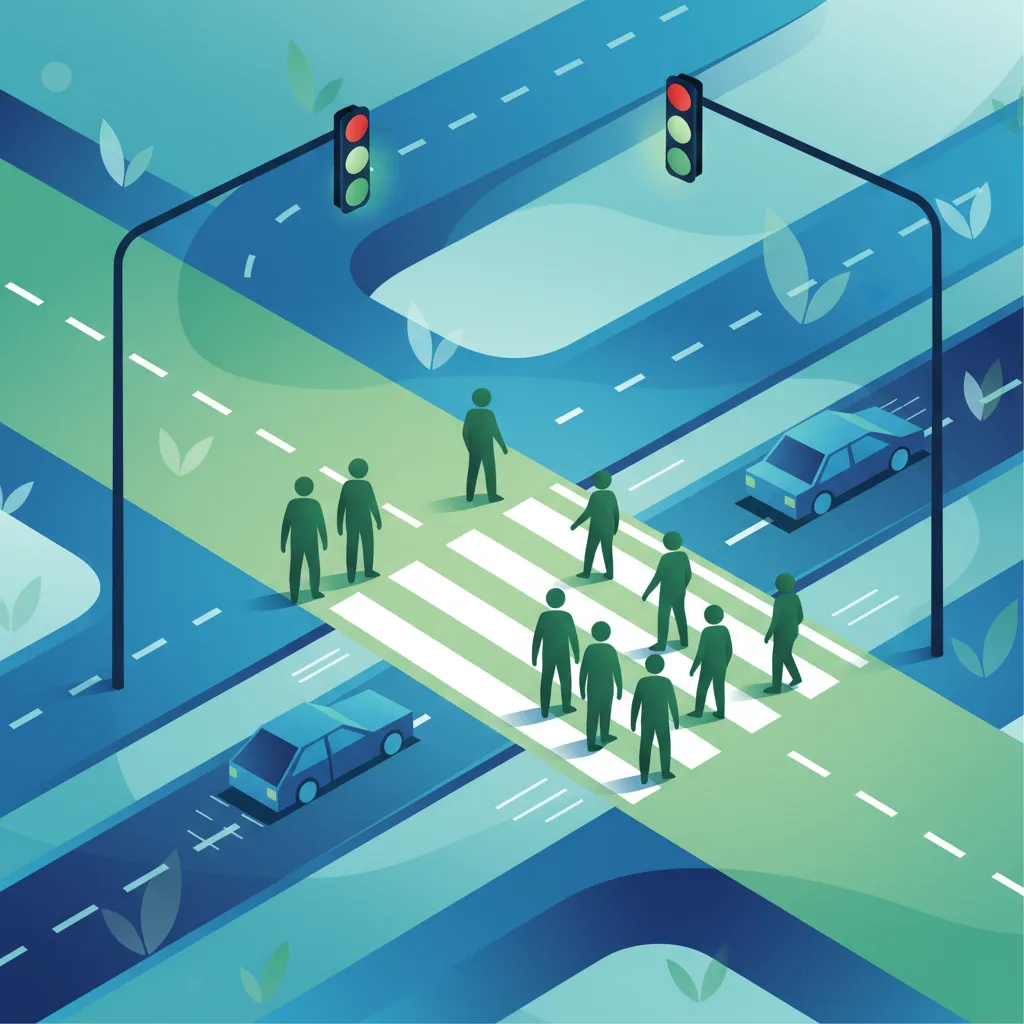
This lesson addresses advanced scenarios, including multi-lane intersections and interactions with vulnerable road users. It reinforces the legal obligation to give absolute priority to pedestrians at marked crossings (zebra crossings). The content also covers navigating around traffic islands and using dedicated turning lanes in complex urban environments.
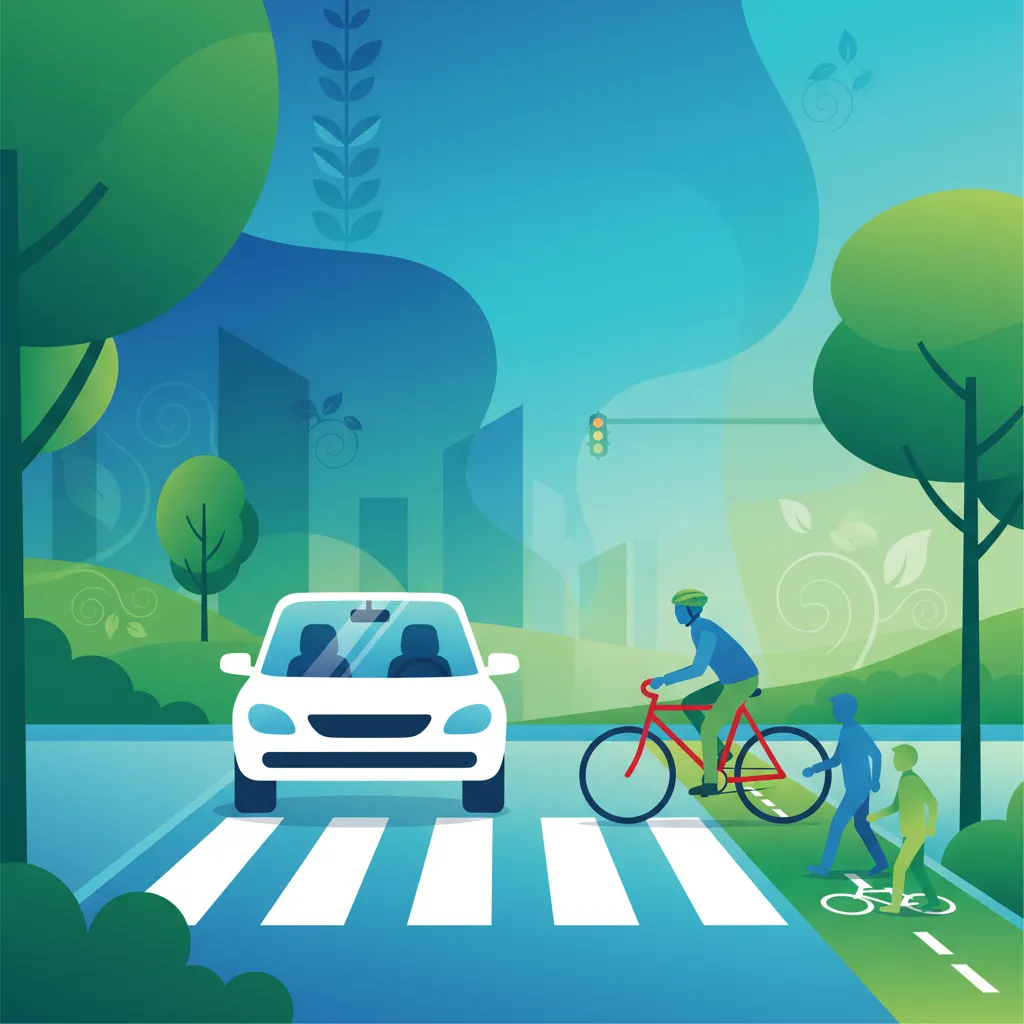
This lesson focuses on safe coexistence with cyclists and pedestrians, who are prevalent in urban areas. It covers the rules for driving alongside dedicated bicycle lanes and the legal requirement to yield to pedestrians at marked crossings. The content stresses the importance of constant awareness, especially when turning at intersections, to prevent conflicts with vulnerable road users.

This lesson defines what constitutes a 'built-up area' in Poland, marked by specific informational signs. It explains the default speed limit of 50 km/h that applies within these zones unless otherwise indicated. The content highlights the need for increased vigilance due to higher traffic density and the frequent presence of pedestrians.
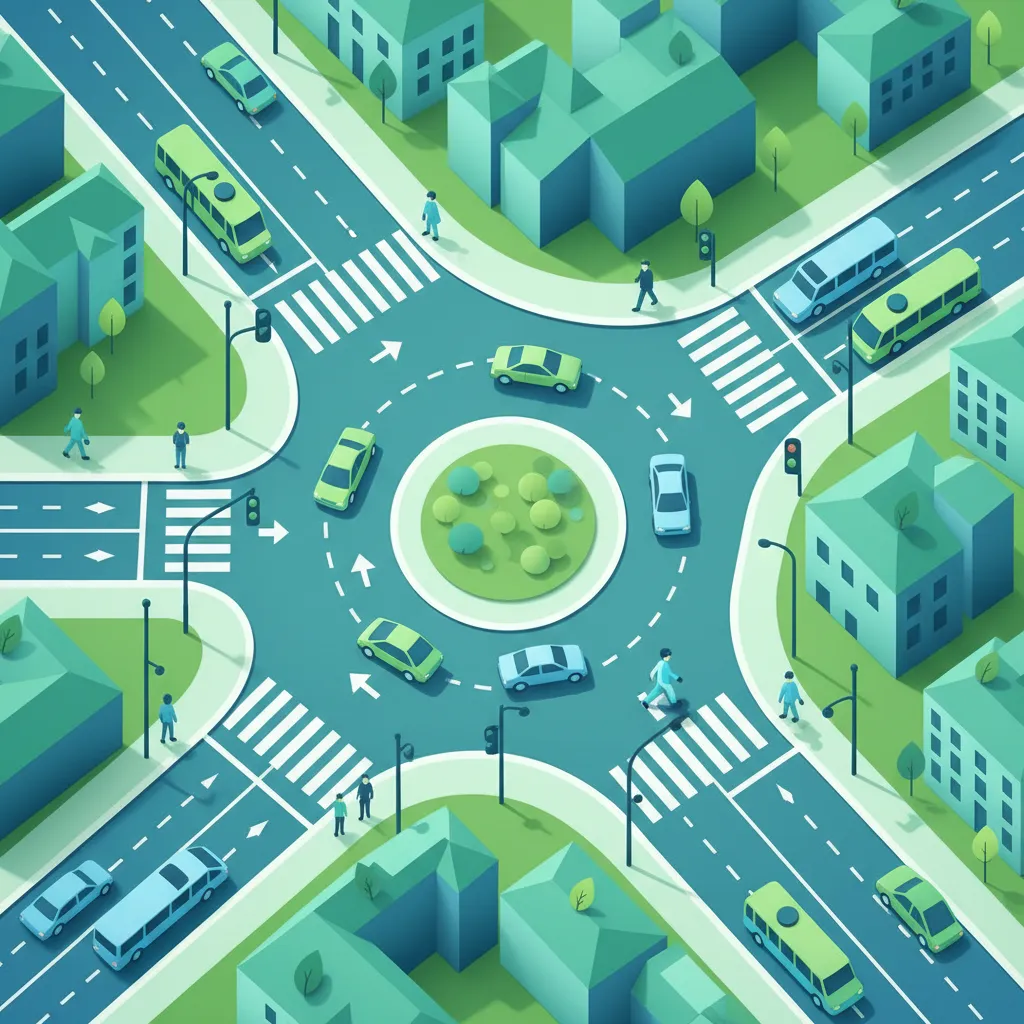
This lesson explores the priority hierarchy for buses at different intersections, roundabouts, and pedestrian crossings. Learners will understand how traffic signals and signs affect their approach and how to safely navigate roundabouts with correct lane discipline. Special attention is given to yielding to pedestrians, especially near bus stops.
This lesson focuses on navigating intersections that are not controlled by traffic signals. It covers the interpretation of the 'Yield' sign (ustąp pierwszeństwa) and the application of the 'priority to the right' rule at junctions of equal roads. Safe decision-making and proper observation techniques are emphasized for these common scenarios.
This lesson details the various parking regulations encountered in residential areas. It explains how to interpret signs indicating permitted parking zones, time restrictions, and areas where parking is prohibited. Correctly positioning the vehicle within marked bays and understanding rules about pavement parking are also covered to avoid fines and obstruction.
This lesson provides strategies for safely navigating the numerous intersections typical of urban environments. It reinforces the application of priority rules in situations with limited visibility and high traffic volume. Techniques for making turns in narrow streets and being aware of pedestrians and cyclists at junctions are central to the instruction.
This lesson introduces the core concept of priority, or 'pierwszeństwo przejazdu,' in Polish traffic law. It explains the general rule of yielding to traffic from the right at intersections of equal status. This principle forms the foundation for navigating uncontrolled junctions and is a critical piece of knowledge for all drivers.
This lesson provides a detailed breakdown of traffic light operations in Poland. It explains the sequence of red, amber, and green lights, and the specific rules for turning when a green arrow signal is displayed. The meaning of a flashing amber light and the rules for pedestrian crossings at signalized intersections are also covered.
This lesson introduces the fundamental principles of right-of-way on Polish roads, explaining how priority road signs determine the flow of traffic at intersections. Learners will explore the hierarchy of vehicle classes and the specific obligations that arise when approaching a yield line or a give-way sign. The content details the legal precedence of main road traffic over secondary road traffic, helping riders safely navigate intersections and avoid right-of-way infractions.
Explore how rules for living zones, school zones, and pedestrian areas apply differently in urban versus rural settings. Understand the context behind these regulations and related traffic signs for comprehensive Polish driving theory knowledge.
This lesson addresses advanced scenarios, including multi-lane intersections and interactions with vulnerable road users. It reinforces the legal obligation to give absolute priority to pedestrians at marked crossings (zebra crossings). The content also covers navigating around traffic islands and using dedicated turning lanes in complex urban environments.
This lesson defines what constitutes a 'built-up area' in Poland, marked by specific informational signs. It explains the default speed limit of 50 km/h that applies within these zones unless otherwise indicated. The content highlights the need for increased vigilance due to higher traffic density and the frequent presence of pedestrians.
This lesson details the various parking regulations encountered in residential areas. It explains how to interpret signs indicating permitted parking zones, time restrictions, and areas where parking is prohibited. Correctly positioning the vehicle within marked bays and understanding rules about pavement parking are also covered to avoid fines and obstruction.
This lesson explores the priority hierarchy for buses at different intersections, roundabouts, and pedestrian crossings. Learners will understand how traffic signals and signs affect their approach and how to safely navigate roundabouts with correct lane discipline. Special attention is given to yielding to pedestrians, especially near bus stops.
This lesson focuses on traffic control signals, primarily traffic lights. It details the meaning of each color in the sequence—red, amber, and green—as well as flashing signals and arrows for specific turns. The content also covers lane control signals and pedestrian signals to ensure safe and compliant navigation through controlled intersections.
This lesson provides a detailed breakdown of traffic light operations in Poland. It explains the sequence of red, amber, and green lights, and the specific rules for turning when a green arrow signal is displayed. The meaning of a flashing amber light and the rules for pedestrian crossings at signalized intersections are also covered.
This lesson focuses on safe coexistence with cyclists and pedestrians, who are prevalent in urban areas. It covers the rules for driving alongside dedicated bicycle lanes and the legal requirement to yield to pedestrians at marked crossings. The content stresses the importance of constant awareness, especially when turning at intersections, to prevent conflicts with vulnerable road users.
This lesson clarifies the legal distinction between 'stopping' and 'parking' and the rules that apply to each. It teaches how to read and understand a variety of parking signs, including those that indicate time limits, paid parking zones, and areas where stopping is completely forbidden. This knowledge is essential for avoiding fines and ensuring traffic flow is not obstructed.
This lesson introduces the fundamental principles of right-of-way on Polish roads, explaining how priority road signs determine the flow of traffic at intersections. Learners will explore the hierarchy of vehicle classes and the specific obligations that arise when approaching a yield line or a give-way sign. The content details the legal precedence of main road traffic over secondary road traffic, helping riders safely navigate intersections and avoid right-of-way infractions.
This lesson addresses the increasingly common restrictions on HGV access to urban areas and designated low-emission zones. It explains how to identify these zones through specific signage and understand the criteria for entry, which may be based on the vehicle's emission standard or subject to time-of-day limitations. Learners will become familiar with the necessity of obtaining special permits for city center deliveries and the legal consequences of violating these access regulations.
Find clear answers to common questions learners have about School Zones, Play Streets, and Pedestrian Areas. Learn how the lesson is structured, which driving theory objectives it supports, and how it fits into the overall learning path of units and curriculum progression in Poland. These explanations help you understand key concepts, lesson flow, and exam focused study goals.
A 'living zone' or 'strefa zamieszkania' is a designated residential area where children can play freely and pedestrians have full priority. The speed limit is strictly 20 km/h. Drivers must yield to pedestrians and cyclists everywhere in this zone, and parking is usually restricted to specific marked bays.
In school zones, the general speed limit is typically reduced to 30 km/h, especially during certain hours or when children are present. Some school zones might also incorporate 'living zone' rules with a 20 km/h limit. Always look for specific signage indicating the exact speed restrictions.
Yes, pedestrians have the highest priority in a 'living zone' (strefa zamieszkania). Drivers must be prepared to stop for any pedestrian or cyclist, even if they are not in a designated crossing. The emphasis is on shared space, with the driver expected to be exceptionally cautious.
'Living zones' are specifically designed to prioritize pedestrians and cyclists, allowing children to play and people to walk freely. Regular residential streets do not automatically grant such high priority to pedestrians, and drivers can generally proceed at a higher speed, following standard traffic rules and paying attention to pedestrian crossings.
Yes, Poland uses specific signs to denote 'living zones' (usually a blue sign with children playing, bicycles, and pedestrians) and school zones (often a yellow warning sign depicting children). Always pay close attention to road signs as they dictate the applicable rules and speed limits.
Build custom practice sessions tailored precisely to your needs. Focus on areas requiring improvement, review specific Polish road signs, or master complex traffic rules to ensure full preparation for your official driving license exam.