
This lesson details the various parking regulations encountered in Polish residential areas. You'll learn to interpret signs for permitted parking zones, time restrictions, and prohibited spots. Mastering correct vehicle positioning, including pavement parking rules, is crucial for your Category B theory exam and avoiding fines in urban settings.
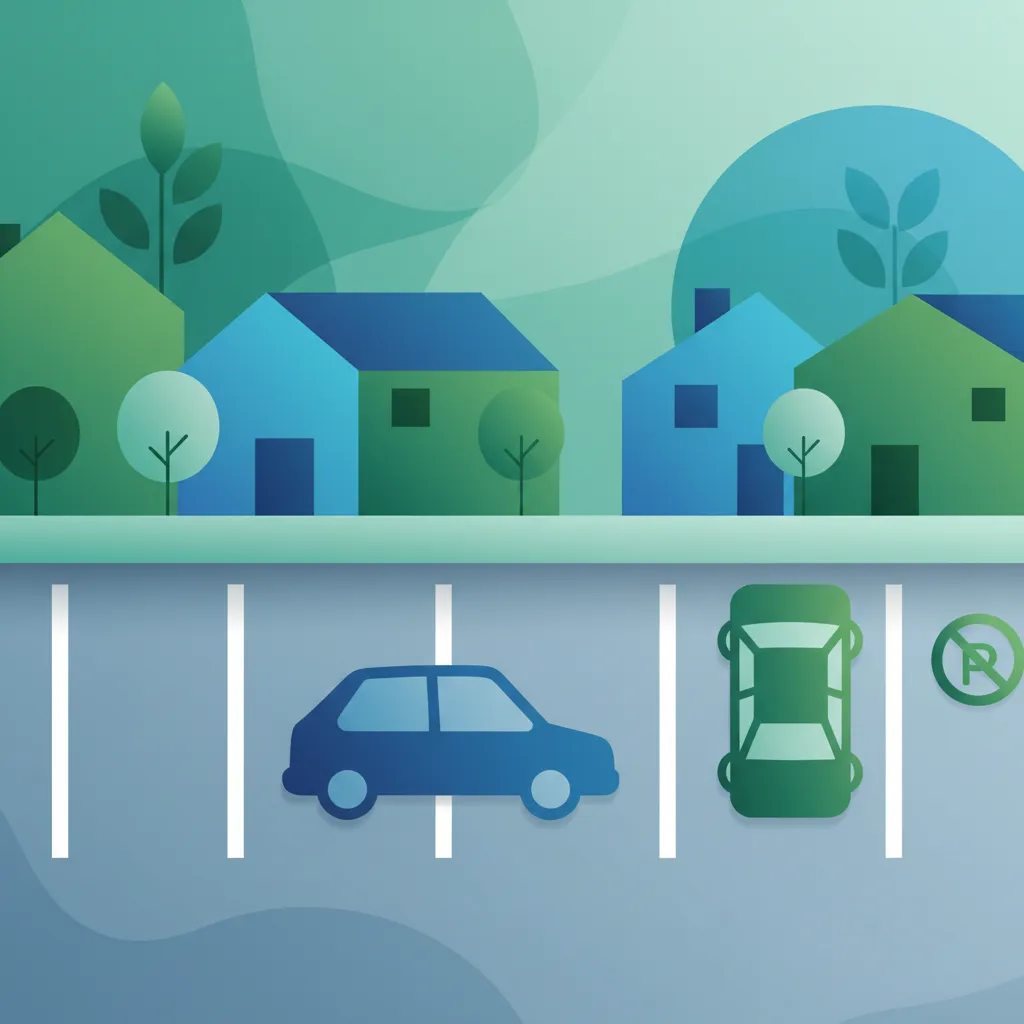
Lesson content overview
Navigating and parking in built-up residential areas in Poland requires a thorough understanding of specific rules designed to ensure safety, maintain accessibility, and promote orderly traffic flow. This lesson provides a comprehensive overview of the parking regulations applicable within these zones, which are crucial for all drivers seeking a Polish Category B license. Adhering to these regulations is not only about avoiding fines and penalties but also about contributing to a safe and functional environment for residents, pedestrians, and other road users.
Proper parking in residential zones goes beyond mere convenience; it is a fundamental aspect of responsible driving in Poland. These regulations are meticulously crafted to balance the diverse needs of motorists, local residents, and vulnerable road users such as pedestrians and cyclists. Ignoring them can lead to significant consequences, including fines, vehicle towing, and even traffic demerit points on your driving record. More importantly, incorrect parking can obstruct emergency services, block access to private properties, reduce visibility at junctions, and create hazards for children playing or people with disabilities. Mastering these rules is essential for safe and considerate driving in any Polish town or city.
Understanding the core principles behind residential parking regulations in Poland helps drivers apply the rules effectively in various situations. These principles are rooted in safety, orderliness, and equitable access.
These principles collectively aim to create a predictable and safe urban environment, reducing congestion and promoting considerate driving habits throughout Poland's built-up areas.
Traffic signs and road markings are the primary tools for communicating parking regulations. Drivers must be able to recognize, understand, and react appropriately to these visual cues.
The most common sign indicating a general parking area is the D-18 sign, a blue square with a white letter "P". This sign marks the beginning of a parking zone where vehicles can be left. It may be accompanied by additional panels that specify conditions such as parking direction (e.g., parallel, perpendicular), time limits, or specific vehicle types allowed. Always look for these supplementary panels, as they provide crucial details.
The B-35 sign, featuring a red circle with a blue background and a single red diagonal line, means "No Parking" (Zakaz Postoju). This sign prohibits leaving a vehicle unattended, but typically allows for a very brief stop (e.g., up to one minute) to pick up or drop off passengers or goods, provided the driver remains with the vehicle and does not obstruct traffic. However, this rule often comes with exceptions specified by additional panels.
Even stricter is the B-36 sign, a red circle with a blue background and two intersecting red diagonal lines, which means "No Stopping" (Zakaz Zatrzymywania Się). This sign prohibits any halt of the vehicle, even for a moment, except in situations dictated by traffic conditions (e.g., stopping at a red light) or a breakdown. Drivers must keep moving through zones marked with this sign.
Many parking zones in residential areas are subject to time restrictions. These are indicated by the D-18 (Parking Place) sign with an additional white panel showing specific hours and days (e.g., "08:00–18:00, Mon–Fri") or a maximum duration (e.g., "Max 2h"). Outside the specified hours, the parking rules may change – for instance, parking might become unrestricted, or it might be completely prohibited. Drivers must carefully check these panels and adhere to the displayed schedule to avoid fines.
A D-18 sign with an additional information panel (e.g., T-24) often indicates that the parking zone is reserved for residents with valid permits, sometimes alongside a symbol of a house or specific text.
In some residential districts, parking is reserved exclusively for residents who possess a valid permit. These zones, sometimes referred to as Strefa zamieszkania (though this term broadly refers to a residential zone with special traffic rules), are typically marked by a standard blue D-18 (Parking Place) sign accompanied by an information panel. This panel will explicitly state that parking is reserved for vehicles displaying a resident permit or specify conditions under which non-permit holders may park (e.g., for a very limited time). Drivers without a valid permit for that specific zone must find alternative parking to avoid penalties.
Areas designated for loading and unloading goods are critical for local businesses and deliveries. These zones are often marked by B-35 (No Parking) signs, but with an accompanying information panel (T-24) that specifies an exception for loading/unloading activities, often with a strict time limit (e.g., "Max 15 min"). The purpose is to allow quick commercial operations without creating long-term obstructions. Drivers using these zones must ensure they are actively loading or unloading and promptly move their vehicle once the task is complete, never exceeding the stipulated time.
Beyond general signage, specific rules govern where and how you can park in Polish residential areas.
Many parking spaces in built-up areas operate under time constraints to manage parking demand. For example, a sign might indicate "Parking allowed 08:00–18:00, Monday–Friday." This means parking is permissible only within those hours. Parking outside these specified times, such as overnight or on weekends, might be prohibited, or the area could revert to being a general parking zone. Drivers must always verify the current time against the displayed restrictions. Failing to move a vehicle before the time limit expires, or parking in a restricted zone outside the permitted hours, will result in a fine.
A designated residential zone in Poland where pedestrians have priority, speed limits are very low (20 km/h), and parking is only allowed in specially marked places.
In many Polish cities, Strefa zamieszkania areas are established. These zones are identified by specific entry and exit signs. Within a Strefa zamieszkania, parking is permitted only in specially designated and marked parking bays. This is a crucial distinction: simply being in a residential zone does not mean you can park anywhere on the street. If you do not have a valid resident permit, or if you are not parking in a marked bay, you are in violation. Resident permits must be clearly displayed on the inside of the vehicle, typically on the rear-side window, so they are visible to enforcement officers.
These zones are specifically allocated for the short-term loading or unloading of goods. They are not intended for passenger pick-up/drop-off beyond the immediate act of entry/exit, nor are they for waiting or prolonged stops. The time limits in these zones are typically very strict, often just 15 minutes. Exceeding this limit, even by a small margin, can lead to a fine. The primary purpose is to facilitate commercial activity efficiently without hindering traffic flow or emergency access.
Certain areas are designated as absolute no-parking zones, typically indicated by B-35 (No Parking) or B-36 (No Stopping) signs, sometimes with additional panels for specific times or conditions. These zones are usually established where parking would create significant hazards or obstructions. Examples include areas immediately adjacent to traffic lights, sections of road where visibility is critical, or emergency vehicle access routes. Stopping in these zones is almost always prohibited, with the only exception being an emergency breakdown.
In Poland, parking a vehicle, even partially, on the pavement (sidewalk) is generally prohibited. The pavement is reserved for pedestrians and other vulnerable road users.
Parking on the pavement is only allowed if a traffic sign explicitly permits it, and typically only if at least 1.5 meters of clear space remains for pedestrians.
Even if a portion of the pavement appears wide enough, you cannot park there unless explicitly indicated by a sign, such as a D-18 (Parking Place) sign with an image showing a vehicle parked partially on the pavement. Violating this rule can impede wheelchair users, parents with prams, and pedestrians, leading to fines and potential safety hazards. The vehicle must be entirely on the roadway unless specific signage allows otherwise.
To ensure safety and visibility, Polish regulations stipulate minimum distances that a parked vehicle must maintain from specific road features. These "clearance distances" are vital to prevent obstruction and reduce accident risks.
While not always marked by specific clearance distances, drivers must never park in a way that obstructs the entrance or exit of any driveway, garage, or private property. This also applies to parking across dropped curbs designed for vehicle access. Such actions are illegal and can lead to fines and towing, as they infringe upon property access rights.
When parking spaces are delineated by white lines or other road markings, your vehicle must be positioned entirely within those lines. These "parking bays" are designed to maximize the use of available space and maintain order.
Assess the Space: Ensure the bay is large enough for your vehicle and that there's adequate clearance.
Align Your Vehicle: Carefully maneuver your vehicle so that all four wheels are within the painted lines.
Leave Room: Aim to park centrally within the bay, leaving sufficient space for adjacent vehicles to open their doors and maneuver.
Parallel or Perpendicular: Follow the implied or explicitly marked orientation (e.g., parallel to the curb, or perpendicular/angled).
Parking at an angle, straddling two bays, or encroaching onto adjacent spaces or the roadway, is considered incorrect. Such misaligned parking can obstruct other vehicles, cause congestion, or make it difficult for other drivers to use their designated spots, leading to fines. It also reflects poor driving etiquette and a lack of consideration for other road users.
Understanding common mistakes is key to avoiding them. Violating parking regulations in Poland can lead to various penalties, including significant fines and, in some cases, vehicle towing.
Strefa zamieszkania without a valid permit, or failing to display an existing permit correctly, often incur fines.Consequences for these violations typically involve a monetary fine, issued by municipal guards (Straż Miejska) or the police. Repeated or severe violations, particularly those causing significant obstruction or danger, can lead to the vehicle being towed at the owner's expense.
While core parking rules remain constant, external conditions and specific contexts can influence how drivers should apply them. Being aware of these variations ensures safe and compliant parking in all situations.
Local authorities frequently implement temporary parking restrictions for various reasons:
It is the driver's responsibility to look out for and obey these temporary signs, which can be easily missed.
To drive confidently and lawfully in Poland's residential zones, always remember these key points:
D-18, B-35, B-36) and accompanying information panels.Strefa zamieszkania), ensure you have and correctly display a valid permit.By consistently applying these principles, you will ensure a safe, legal, and stress-free parking experience in Polish residential areas.
This lesson covers Polish residential parking regulations essential for Category B theory exam preparation. You must recognize key signs: D-18 for permitted parking zones, B-35 for no parking (allowing brief stops), and B-36 for absolute no stopping. Specific clearance distances of 10m from intersections and crossings, 15m from public transport stops, and 5m from fire hydrants are mandatory. Pavement parking is prohibited unless explicitly allowed by a sign with sufficient pedestrian clearance. Understanding time-limited zones, resident permit requirements, and correct bay alignment will help you avoid fines and drive safely in Polish urban areas.
A short set of high-value points that capture the most important learning from this lesson.
Polish parking regulations use specific sign codes: D-18 marks permitted parking zones, B-35 prohibits parking (brief stops allowed), and B-36 prohibits all stops.
Mandatory clearance distances apply: park at least 10m from intersections and crossings, 15m from bus/tram stops, and 5m from fire hydrants.
Pavement parking is generally prohibited in Poland unless a sign explicitly permits it and at least 1.5m of pedestrian space remains.
In Strefa zamieszkania (residential zones), parking is allowed only in specially marked bays, regardless of other factors.
Time-limited parking zones require you to move your vehicle before the stated time expires or face a fine.
Explore all units and lessons included in this driving theory course.
B-35 allows brief stops (e.g., passenger drop-off) but B-36 prohibits any halt, even momentary, except in emergencies.
Resident parking permits (zezwolenie na parkowanie) must be displayed on the rear-side window to be valid in permit zones.
Loading/unloading zones typically allow only 15 minutes and must be used only for active commercial loading, not passenger pick-up.
Temporary restrictions (street cleaning, road works) carry the same legal weight as permanent signs and must be obeyed.
When parking bays have painted lines, your vehicle must be positioned entirely within those lines to avoid a fine.
Confusing B-35 (no parking) with B-36 (no stopping) and incorrectly believing no stops are allowed under B-35.
Parking on the sidewalk without checking for explicit signage permitting it, assuming a wide pavement makes it acceptable.
Overstaying time limits in limited parking zones or parking outside the designated hours without realizing rules have changed.
Failing to maintain the 10-metre clearance from pedestrian crossings, often due to misjudging distances.
Parking in a Strefa zamieszkania without a valid resident permit displayed, assuming the zone is generally available.
Lesson content overview
A short set of high-value points that capture the most important learning from this lesson.
Polish parking regulations use specific sign codes: D-18 marks permitted parking zones, B-35 prohibits parking (brief stops allowed), and B-36 prohibits all stops.
Mandatory clearance distances apply: park at least 10m from intersections and crossings, 15m from bus/tram stops, and 5m from fire hydrants.
Pavement parking is generally prohibited in Poland unless a sign explicitly permits it and at least 1.5m of pedestrian space remains.
In Strefa zamieszkania (residential zones), parking is allowed only in specially marked bays, regardless of other factors.
Time-limited parking zones require you to move your vehicle before the stated time expires or face a fine.
Explore all units and lessons included in this driving theory course.
B-35 allows brief stops (e.g., passenger drop-off) but B-36 prohibits any halt, even momentary, except in emergencies.
Resident parking permits (zezwolenie na parkowanie) must be displayed on the rear-side window to be valid in permit zones.
Loading/unloading zones typically allow only 15 minutes and must be used only for active commercial loading, not passenger pick-up.
Temporary restrictions (street cleaning, road works) carry the same legal weight as permanent signs and must be obeyed.
When parking bays have painted lines, your vehicle must be positioned entirely within those lines to avoid a fine.
Confusing B-35 (no parking) with B-36 (no stopping) and incorrectly believing no stops are allowed under B-35.
Parking on the sidewalk without checking for explicit signage permitting it, assuming a wide pavement makes it acceptable.
Overstaying time limits in limited parking zones or parking outside the designated hours without realizing rules have changed.
Failing to maintain the 10-metre clearance from pedestrian crossings, often due to misjudging distances.
Parking in a Strefa zamieszkania without a valid resident permit displayed, assuming the zone is generally available.
Explore search topics learners often look for when studying Parking Regulations in Residential Zones. These topics reflect common questions about road rules, driving situations, safety guidance, and lesson level theory preparation for learners in Poland.
Browse additional driving theory lessons that cover connected traffic rules, road signs, and common driving situations related to this topic. Improve your understanding of how different rules interact across everyday traffic scenarios.
Explore specific Polish parking regulations beyond standard bays. Understand rules for loading zones, resident-only parking, and areas with strict time limits. Essential theory for navigating complex urban parking scenarios safely and legally.
This lesson focuses on the rules and social responsibility surrounding parking spaces designated for disabled individuals. It explains the eligibility requirements for a disabled parking permit and the correct way to display it. The content stresses the severe penalties for misuse and the importance of leaving these spaces available for those who genuinely need them.
This lesson clarifies the legal distinction between 'stopping' and 'parking' and the rules that apply to each. It teaches how to read and understand a variety of parking signs, including those that indicate time limits, paid parking zones, and areas where stopping is completely forbidden. This knowledge is essential for avoiding fines and ensuring traffic flow is not obstructed.
This lesson focuses on areas with high pedestrian activity, requiring special caution. It covers the rules for 'living zones' (strefa zamieszkania), where pedestrians have priority and the speed limit is 20 km/h. The content also addresses regulations for school zones and other designated pedestrian areas to ensure the safety of the most vulnerable road users.

This lesson defines what constitutes a 'built-up area' in Poland, marked by specific informational signs. It explains the default speed limit of 50 km/h that applies within these zones unless otherwise indicated. The content highlights the need for increased vigilance due to higher traffic density and the frequent presence of pedestrians.

This lesson focuses on the unique demands of urban riding within Polish cities, addressing traffic lights, pedestrian zones, one-way streets, and the presence of tram tracks. Learners will study safe lane positioning on narrow roads, blind-spot management, and how to share the road with buses and cyclists. The content also covers strategies for navigating stop-and-go traffic, anticipating signal changes, and maintaining visibility in dense urban environments.

This lesson breaks down the often-daunting task of parallel parking into a simple, repeatable process. It teaches drivers how to use specific reference points on their vehicle to gauge positioning relative to the curb and other cars. Correcting the maneuver and ensuring the final position is legal and safe are also key components.
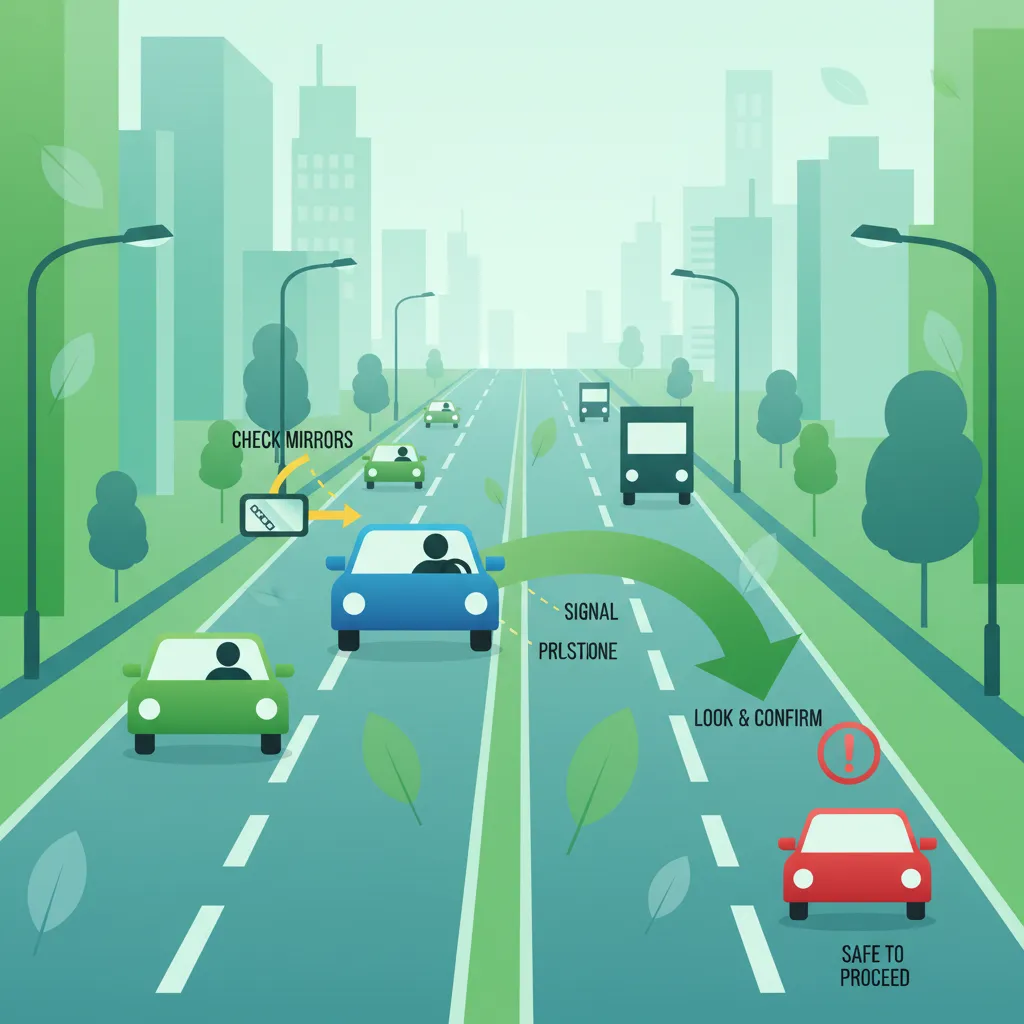
This lesson adapts lane-changing principles for the challenging environment of dense city traffic. It reinforces the critical 'mirror, signal, maneuver' sequence, with a strong focus on checking blind spots immediately before moving. The content advises on judging gaps in traffic and executing the lane change smoothly and decisively.

In this lesson, learners explore riding on rural and countryside roads, where road markings may be sparse and surface conditions varied. The content covers safe overtaking in single-lane sections, interaction with agricultural vehicles and animals, and the handling of gravel or uneven surfaces. Learners will also study the importance of anticipating curves and adjusting speed to light conditions, equipping them with the skills needed for safe countryside travel.

This lesson provides a comprehensive breakdown of the right-of-way rules that govern intersections. It explains the clear directives given by traffic lights, stop signs, and yield signs, and clarifies the procedures at unmarked or uncontrolled intersections, where the 'priority to the right' rule often applies. Learners will understand the legal hierarchy of these rules to make correct, safe, and predictable decisions when navigating through any junction, reducing the risk of conflict with other traffic.
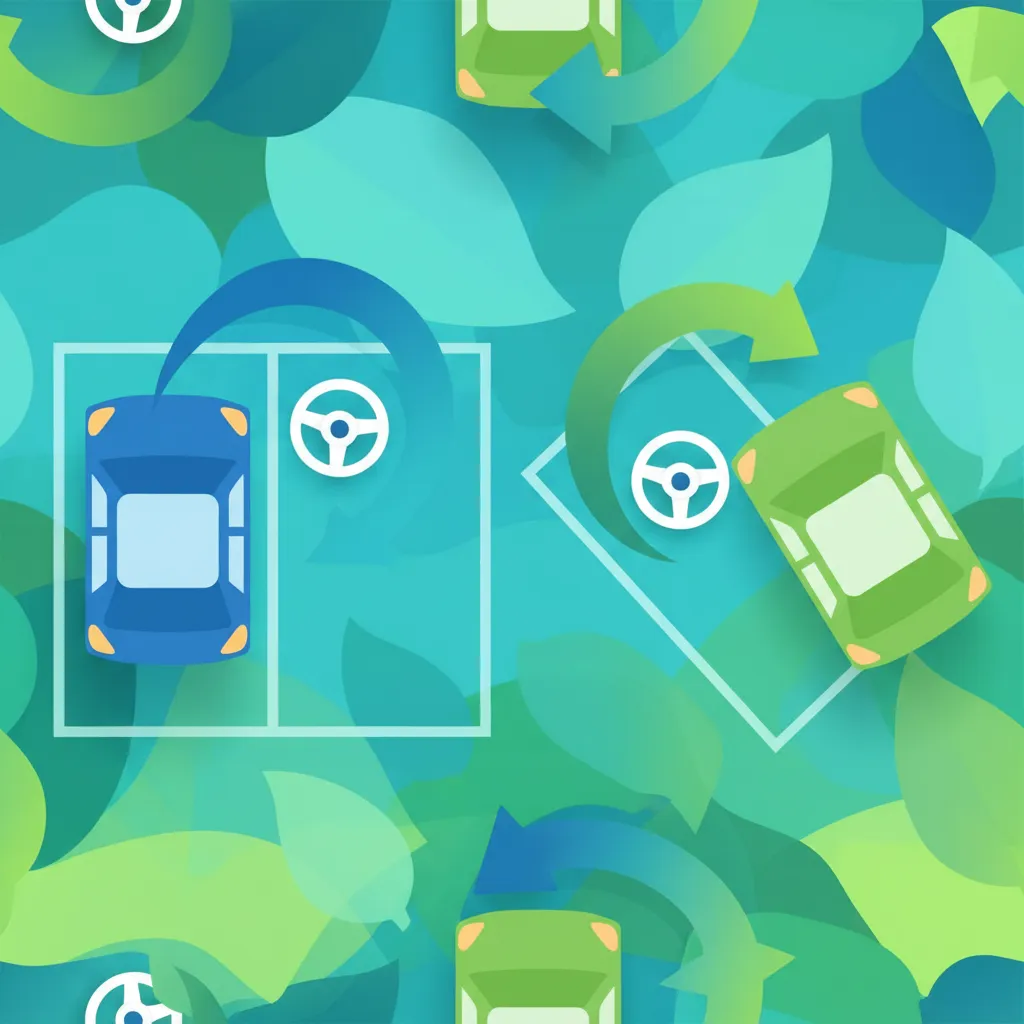
This lesson covers the common parking scenarios found in car parks: perpendicular (90-degree) and angled bays. It explains the techniques for both driving in forwards and reversing in, highlighting the visibility and safety advantages of the latter. Proper alignment within the marked lines is a key focus to ensure space for other vehicles.
Learn about frequent parking mistakes in Polish residential areas, including incorrect bay usage, pavement parking, and ignoring signs. Understand the consequences and penalties associated with these violations to avoid fines and ensure compliance.
This lesson focuses on the rules and social responsibility surrounding parking spaces designated for disabled individuals. It explains the eligibility requirements for a disabled parking permit and the correct way to display it. The content stresses the severe penalties for misuse and the importance of leaving these spaces available for those who genuinely need them.
This lesson clarifies the legal distinction between 'stopping' and 'parking' and the rules that apply to each. It teaches how to read and understand a variety of parking signs, including those that indicate time limits, paid parking zones, and areas where stopping is completely forbidden. This knowledge is essential for avoiding fines and ensuring traffic flow is not obstructed.
This lesson breaks down the often-daunting task of parallel parking into a simple, repeatable process. It teaches drivers how to use specific reference points on their vehicle to gauge positioning relative to the curb and other cars. Correcting the maneuver and ensuring the final position is legal and safe are also key components.
This lesson covers the common parking scenarios found in car parks: perpendicular (90-degree) and angled bays. It explains the techniques for both driving in forwards and reversing in, highlighting the visibility and safety advantages of the latter. Proper alignment within the marked lines is a key focus to ensure space for other vehicles.
This lesson details the Polish traffic penalty system, explaining how violations result in fines and the accumulation of demerit points (punkty karne). It covers the point thresholds that can lead to licence suspension and the legal responsibilities of a driver involved in a traffic offense. Understanding this system is crucial for maintaining a clean driving record and promoting lawful behavior on the road.

This lesson focuses on the rules of lane usage for maintaining safe and efficient traffic flow. It covers the meaning of different lane markings, such as solid versus broken lines, and the general principle of keeping to the rightmost lane unless overtaking. Proper lane discipline is crucial for predictability and preventing conflicts on multi-lane roads.

This lesson details the legal framework for overtaking in Poland. It explains how to interpret road markings, such as solid and double solid lines, and prohibition signs that forbid passing. The content emphasizes the critical need for sufficient sight distance and a clear path before initiating an overtaking maneuver to ensure safety.
This lesson explains the function of circular prohibition signs, which impose legal restrictions on drivers. It details common prohibitions such as speed limits, 'no entry' signs, and restrictions on overtaking or parking. Compliance with these signs is mandatory, and this lesson ensures learners can correctly identify and obey them.
Find clear answers to common questions learners have about Parking Regulations in Residential Zones. Learn how the lesson is structured, which driving theory objectives it supports, and how it fits into the overall learning path of units and curriculum progression in Poland. These explanations help you understand key concepts, lesson flow, and exam focused study goals.
These blue 'P' signs indicate designated parking areas. They are often accompanied by additional panels that specify conditions, such as time limits (e.g., 'P + 1h' means parking for a maximum of one hour), fees, or specific days of the week when the restrictions apply. Always check the supplementary panels for full details.
No, pavement parking in Poland is generally restricted and only allowed under specific conditions. You may park on the pavement only if a sign explicitly permits it (e.g., a 'P' sign with a graphic showing parking on the pavement), or if there's sufficient space for pedestrians (at least 1.5 meters wide) and your vehicle's weight does not exceed 2.5 tonnes. Always prioritize pedestrian safety and check for prohibition signs.
In Poland, you must not park closer than 10 meters from a pedestrian crossing, a level crossing, or an intersection. This rule ensures clear visibility for all road users and pedestrians. Failing to observe this distance is a common violation and can result in a fine.
Common reasons for parking fines in Polish residential areas include parking in a no-parking zone (indicated by 'B-35' or 'B-36' signs), exceeding time limits in paid or restricted zones, obstructing pedestrian pathways or driveways, parking too close to intersections or crossings, or parking on the pavement without explicit permission or sufficient space.
Parking requiring payment in Poland is usually indicated by specific signs (e.g., a 'P' sign with additional text like 'PŁATNE' or symbols of coins) and marked parking meters or ticket machines. Always check for these indicators and display your valid parking ticket or proof of payment clearly on your dashboard.
Build custom practice sessions tailored precisely to your needs. Focus on areas requiring improvement, review specific Polish road signs, or master complex traffic rules to ensure full preparation for your official driving license exam.