
Welcome to the lesson on driving in built-up areas in Poland! As part of the 'Urban and Residential Driving' unit, this lesson is crucial for understanding the specific rules and challenges of navigating Polish towns and cities. It builds on your knowledge of general road signs and speed limits, preparing you for the practicalities of higher traffic density and increased pedestrian activity.

Lesson content overview
Navigating built-up areas, known as obszar zabudowany in Poland, is a fundamental skill for every driver. These zones, encompassing cities, towns, and villages, are characterized by a higher density of traffic, frequent pedestrian and cyclist activity, and numerous intersections. Understanding the specific rules and safe driving practices within these areas is crucial not only for passing your Polish Category B theory test but also for ensuring safety on the road.
This lesson will define what constitutes a built-up area in Poland, how its boundaries are marked by specific informational signs, and detail the default speed limit that applies. We will explore the critical need for increased vigilance, the legal obligations drivers face, and the specific driving behaviours required to manage the complexities of urban environments effectively.
A built-up area, or obszar zabudowany, in Polish traffic law, is a designated zone where roads are situated within a settlement. Its primary purpose is to regulate traffic flow and protect all road users, especially vulnerable ones like pedestrians and cyclists, in environments with higher infrastructure density and human activity. The moment you enter such a zone, specific rules automatically apply, overriding some general road regulations.
The core principle behind these regulations is safety. Lower speeds reduce the kinetic energy of vehicles, significantly decreasing the severity of potential collisions and providing drivers with more time to react to unexpected situations. These areas are also where you'll encounter a higher concentration of traffic lights, pedestrian crossings, and various types of junctions, all demanding heightened attention and a proactive driving style.
The start and end of a built-up area are clearly indicated by specific informational road signs. These signs serve as mandatory visual cues, informing drivers about the change in legal regime and the requirement to adjust their driving behaviour.
When you see a B-11 sign, it means you are entering a built-up area. This rectangular informational sign features a white background, a black outline, and a black silhouette of a house or houses. It is a mandatory signal that immediately triggers the application of the default speed limit and other associated urban driving rules. Drivers must internalize that upon passing this sign, their driving approach must shift to one of increased caution and reduced speed. Failure to recognise and obey this sign is legally considered speeding and can result in penalties.
Conversely, the B-21 sign marks the end of a built-up area. This sign is identical in design to the B-11 sign but features a prominent red diagonal line crossing through the house silhouette. Once you pass this sign, the default 50 km/h speed limit for built-up areas ceases to apply, and you revert to the general speed limits applicable to the road category you are entering (e.g., 80 km/h on a secondary rural road). It is important not to accelerate before fully passing this sign, as the legal change only occurs after you have physically moved beyond it.
Always be prepared to adjust your speed and driving style instantly upon seeing signs B-11 and B-21. These signs are not merely advisory; they legally define the operational rules for the road ahead.
The cornerstone of driving regulations within Polish built-up areas is the default speed limit. This limit is set to balance efficient traffic flow with the paramount need for safety in densely populated environments.
The standard maximum speed limit within any built-up area in Poland is 50 km/h. This limit applies to all motor vehicles unless a specific road sign indicates otherwise. The rationale for this universal limit is deeply rooted in safety principles:
Drivers must consistently monitor their speedometers and adjust their driving to remain within this limit. Using cruise control or a speed limiter, if available, can be helpful tools to maintain the correct speed, especially when entering an obszar zabudowany from a faster road.
While 50 km/h is the default, certain areas within the obszar zabudowany demand even lower speeds due to specific hazards or higher vulnerability of road users.
A common example is a residential speed zone (strefa ograniczonej prędkości), indicated by a B-26 sign, where the speed limit is typically reduced to 30 km/h. These zones are often found near schools, playgrounds, or dense residential streets where children and pedestrians are highly prevalent, and vehicle access is often shared with pedestrians or cyclists. Drivers must be particularly vigilant in these areas, as the risk of an unforeseen encounter is significantly higher.
A specifically designated area within a built-up zone, marked by a B-26 sign, where the speed limit is reduced (often to 30 km/h) to enhance safety for pedestrians and residents, particularly children.
In very rare circumstances, certain wide urban avenues or arterial roads within a built-up area may have a temporarily increased speed limit of 60 km/h. This is always indicated by specific supplementary signage, usually a speed limit sign (e.g., C-14) placed below or instead of the standard 50 km/h sign. These exceptions are uncommon and typically require a local ordinance, but drivers should be aware that the default rule can be overridden by explicit signage. If no such sign is present, the 50 km/h limit always applies.
Driving in built-up areas requires a different set of skills and a heightened level of awareness compared to driving on open rural roads. The dynamic and often unpredictable nature of urban traffic demands constant vigilance and proactive decision-making.
The presence of pedestrians, cyclists, and potentially children playing near roads is a defining characteristic of built-up areas. These vulnerable road users are less protected in a collision, making it the driver's responsibility to anticipate their movements and ensure their safety.
Polish law specifies rules for vehicle lighting, especially within built-up areas.
The low-intensity headlight setting used to illuminate the road ahead without dazzling oncoming drivers or pedestrians, mandatory in built-up areas from sunset to sunrise and during reduced visibility.
From sunset to sunrise, and during periods of reduced visibility (e.g., fog, heavy rain, snow) at any time of day, drivers within built-up areas must use dipped beams (światła mijania). High beams (światła drogowe) are strictly prohibited in built-up areas as they can cause severe glare for oncoming drivers, cyclists, and pedestrians, leading to disorientation and increased accident risk. Correct lighting ensures you are visible to others without negatively impacting their visibility.
Using high beams in a built-up area at night is illegal and dangerous. Always switch to dipped beams to avoid dazzling other road users.
Effective communication is paramount in urban driving.
A designated area on the road, typically marked with white stripes, where pedestrians have legal priority to cross the street.
One of the most crucial rules in built-up areas concerns pedestrian crossings (przejście dla pieszych). In Poland, vehicles must yield to pedestrians who are on a marked crosswalk or are about to step onto one, regardless of the presence of traffic lights or other signals. Pedestrians have a very high priority at these locations. Always approach marked crossings with caution, ready to stop. Look for signs of intent from pedestrians, such as looking at the crossing or stepping close to the curb.
Adherence to built-up area regulations is not just a matter of safety; it is a legal obligation under the Polish Road Traffic Act (Ustawa Prawo o ruchu drogowym). Non-compliance can lead to significant penalties, including fines, penalty points, and even the loss of your driving license for repeated or severe infractions.
Several articles within the Road Traffic Act directly govern conduct within built-up areas:
Common violations specific to built-up areas include:
Understanding these legal obligations and the consequences of violating them reinforces the importance of responsible driving behavior within obszar zabudowany.
Safe driving is not just about following fixed rules; it's also about adapting to changing conditions. Built-up areas present a variety of contextual factors that require drivers to modify their behavior, even when legally within the speed limit.
Adverse weather conditions significantly impact driving safety in built-up areas:
The time of day can alter the risk profile in a built-up area:
The characteristics of your vehicle also play a role:
The strict rules and specific driving techniques for built-up areas are founded on fundamental safety principles and statistical evidence. Understanding the "why" behind the rules empowers drivers to make safer choices.
The relationship between speed, kinetic energy, and stopping distance is critical in urban safety. Kinetic energy increases with the square of speed. This means doubling your speed quadruples your kinetic energy, leading to dramatically more destructive impacts in a collision. A reduction in speed from 80 km/h to 50 km/h can cut kinetic energy by over 60%, making a significant difference in crash outcomes.
The total distance a vehicle travels from the moment a driver perceives a hazard to the moment the vehicle comes to a complete stop, encompassing perception-reaction distance and braking distance.
The distance a vehicle travels during the time it takes for a driver to perceive a hazard, process the information, and react (e.g., by moving their foot to the brake pedal).
Lower speeds also result in shorter stopping distances. If you need to stop suddenly, every meter counts. At 50 km/h, your overall stopping distance (including reaction time) is considerably shorter than at 80 km/h, providing a vital safety margin in a city environment where unexpected events are common.
In a built-up area, the visual environment is complex and cluttered. There are numerous potential hazards: parked cars obscuring views, side streets, driveways, advertising signs, and a constant flow of pedestrians and cyclists. Driving at a lower speed gives your brain more time to:
This enhanced perception and reaction time significantly reduce the likelihood of being caught off guard and unable to react effectively.
Traffic data consistently shows that built-up areas have a higher incidence of accidents, particularly those involving pedestrians and cyclists. The primary contributing factors often include speeding, distracted driving, and a failure to yield right-of-way. Strict enforcement and adherence to the 50 km/h limit, combined with increased driver vigilance, are directly correlated with reduced fatalities and serious injuries in these zones. Each rule and practice discussed serves to mitigate these documented risks.
Understanding driving in built-up areas builds upon and prepares you for several other crucial aspects of your Polish driving theory education:
By mastering the principles of driving in obszar zabudowany, you lay a strong foundation for navigating the full spectrum of Polish road conditions safely and legally.
Let's consider some real-world scenarios to solidify your understanding of driving in built-up areas.
Entering a City from a Rural Road:
Navigating a Busy Residential Street with a School:
Night Driving in a Town:
Approaching a Marked Pedestrian Crossing:
Leaving a Small Village:
Mastering driving in built-up areas (obszar zabudowany) is a cornerstone of safe and responsible driving in Poland. It requires a distinct mindset, characterized by heightened vigilance, a strict adherence to the default 50 km/h speed limit, and a proactive approach to interacting with a diverse range of road users. By understanding the specific signs, legal obligations, and the underlying safety rationale, you will be well-prepared to navigate urban environments confidently, ensuring both your safety and the safety of others. This knowledge is not merely for passing an exam; it is for a lifetime of safe driving.
Driving in Polish built-up areas (obszar zabudowany) requires recognizing sign B-11 for entry and B-21 for exit, with the default 50 km/h speed limit applying throughout. Lower speed zones marked by B-26 (typically 30 km/h) are common near schools and residential areas. Pedestrians have priority at all marked crosswalks, and dipped beams are mandatory from sunset to sunrise. The 50 km/h limit significantly reduces kinetic energy and stopping distances compared to rural speeds, directly lowering collision severity in high-density urban environments where traffic, pedestrians, and cyclists constantly interact.
A short set of high-value points that capture the most important learning from this lesson.
Built-up areas (obszar zabudowany) in Poland are marked by sign B-11 at entry and sign B-21 at exit, triggering specific legal rules.
The default maximum speed limit in Polish built-up areas is 50 km/h, applicable to all motor vehicles unless otherwise indicated by signage.
Drivers must yield to pedestrians on marked crosswalks (przejście dla pieszych) regardless of traffic signals or other conditions.
From sunset to sunrise and during reduced visibility, dipped beams (światła mijania) are mandatory; high beams are prohibited in built-up areas.
Residential speed zones marked by sign B-26 typically reduce the limit to 30 km/h near schools and high-pedestrian areas.
Explore all units and lessons included in this driving theory course.
Sign B-11 = start of built-up area, default 50 km/h applies; Sign B-21 = end of built-up area, limit reverts to road category rules.
Kinetic energy increases with the square of speed, making collisions at 80 km/h over 60% more destructive than at 50 km/h.
Dipped beams are required in built-up areas from sunset to sunrise and during poor visibility; high beams cause dangerous glare.
At pedestrian crossings, stopping before the crosswalk is mandatory when pedestrians are waiting or stepping onto it.
Do not accelerate past 50 km/h until your vehicle has completely passed the B-21 sign; the legal change occurs after you cross it.
Continuing at 80 km/h after passing B-11 before decelerating, assuming the speed limit change is gradual rather than immediate.
Assuming pedestrians will wait at crossings and attempting to 'squeeze through' before they fully enter the road.
Using high beams at night in urban areas, causing dangerous glare to oncoming drivers, cyclists, and pedestrians.
Accelerating to rural road speeds while still within the built-up area upon seeing B-21 in the distance.
Failing to switch to dipped beams during daytime reduced visibility (fog, heavy rain) in built-up zones.
Lesson content overview
A short set of high-value points that capture the most important learning from this lesson.
Built-up areas (obszar zabudowany) in Poland are marked by sign B-11 at entry and sign B-21 at exit, triggering specific legal rules.
The default maximum speed limit in Polish built-up areas is 50 km/h, applicable to all motor vehicles unless otherwise indicated by signage.
Drivers must yield to pedestrians on marked crosswalks (przejście dla pieszych) regardless of traffic signals or other conditions.
From sunset to sunrise and during reduced visibility, dipped beams (światła mijania) are mandatory; high beams are prohibited in built-up areas.
Residential speed zones marked by sign B-26 typically reduce the limit to 30 km/h near schools and high-pedestrian areas.
Explore all units and lessons included in this driving theory course.
Sign B-11 = start of built-up area, default 50 km/h applies; Sign B-21 = end of built-up area, limit reverts to road category rules.
Kinetic energy increases with the square of speed, making collisions at 80 km/h over 60% more destructive than at 50 km/h.
Dipped beams are required in built-up areas from sunset to sunrise and during poor visibility; high beams cause dangerous glare.
At pedestrian crossings, stopping before the crosswalk is mandatory when pedestrians are waiting or stepping onto it.
Do not accelerate past 50 km/h until your vehicle has completely passed the B-21 sign; the legal change occurs after you cross it.
Continuing at 80 km/h after passing B-11 before decelerating, assuming the speed limit change is gradual rather than immediate.
Assuming pedestrians will wait at crossings and attempting to 'squeeze through' before they fully enter the road.
Using high beams at night in urban areas, causing dangerous glare to oncoming drivers, cyclists, and pedestrians.
Accelerating to rural road speeds while still within the built-up area upon seeing B-21 in the distance.
Failing to switch to dipped beams during daytime reduced visibility (fog, heavy rain) in built-up zones.
Explore search topics learners often look for when studying Driving in Built-up Areas (obszar zabudowany). These topics reflect common questions about road rules, driving situations, safety guidance, and lesson level theory preparation for learners in Poland.
Browse additional driving theory lessons that cover connected traffic rules, road signs, and common driving situations related to this topic. Improve your understanding of how different rules interact across everyday traffic scenarios.
Explore complex traffic situations and specific regulations encountered in Polish built-up areas beyond the basic 50 km/h limit. Learn advanced techniques for navigating busy urban environments safely and legally.
This lesson details the rules and best practices for driving on Poland's fastest roads. It covers the higher speed limits, the strict lane discipline of keeping right except to overtake, and prohibitions on stopping. The aim is to ensure drivers can handle the demands of sustained high-speed travel safely and efficiently.
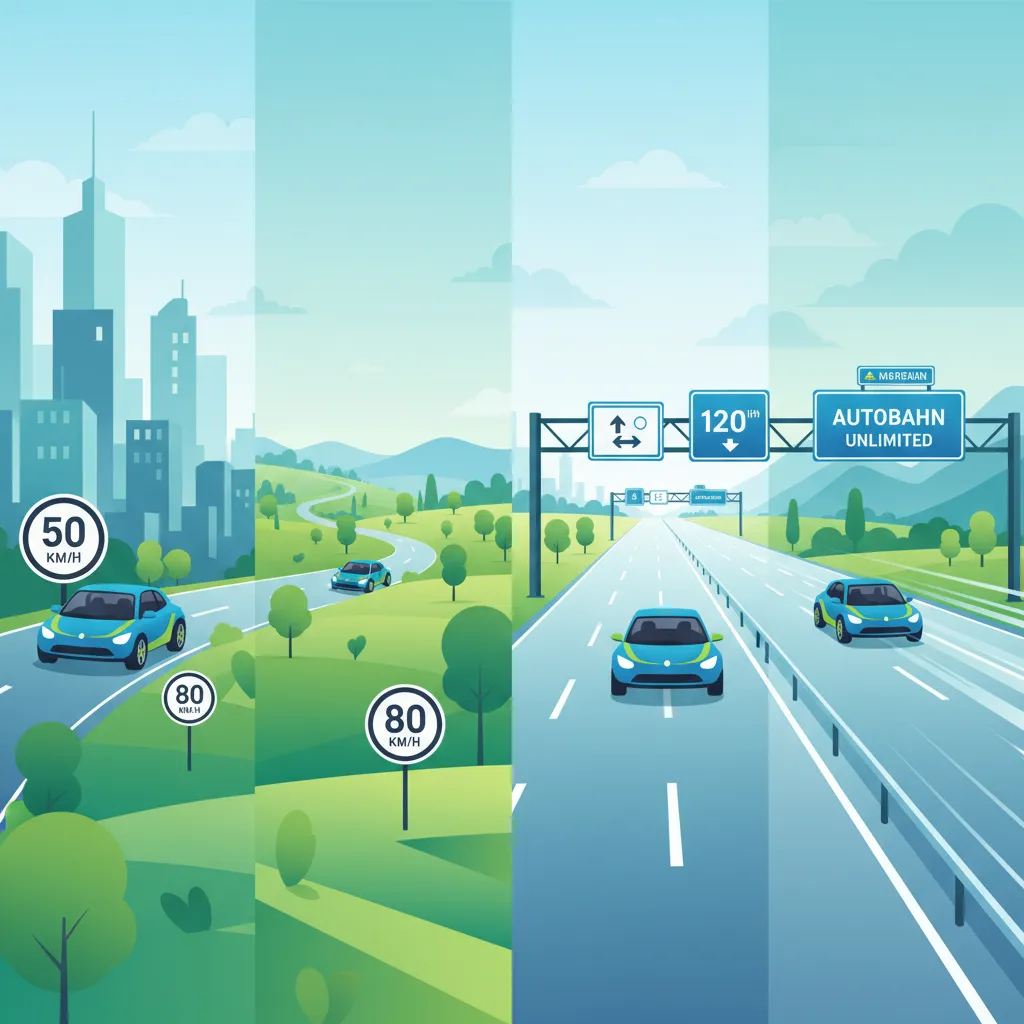
This lesson details the statutory speed limits for different road environments in Poland. It covers the 50 km/h limit in built-up areas (obszar zabudowany), as well as the higher limits for rural roads, expressways, and motorways. Understanding these default limits is fundamental for legal and safe driving across the country.
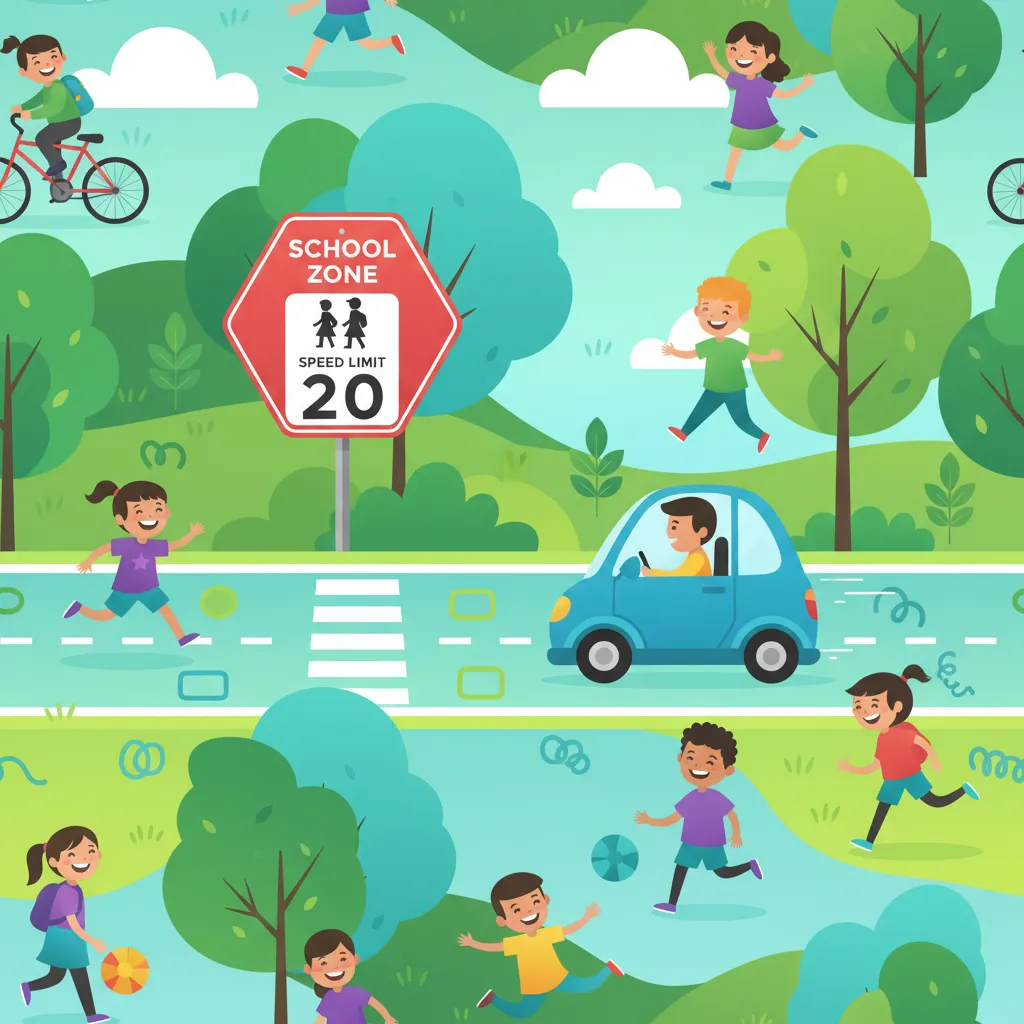
This lesson focuses on areas with high pedestrian activity, requiring special caution. It covers the rules for 'living zones' (strefa zamieszkania), where pedestrians have priority and the speed limit is 20 km/h. The content also addresses regulations for school zones and other designated pedestrian areas to ensure the safety of the most vulnerable road users.
This lesson focuses on the unique demands of urban riding within Polish cities, addressing traffic lights, pedestrian zones, one-way streets, and the presence of tram tracks. Learners will study safe lane positioning on narrow roads, blind-spot management, and how to share the road with buses and cyclists. The content also covers strategies for navigating stop-and-go traffic, anticipating signal changes, and maintaining visibility in dense urban environments.
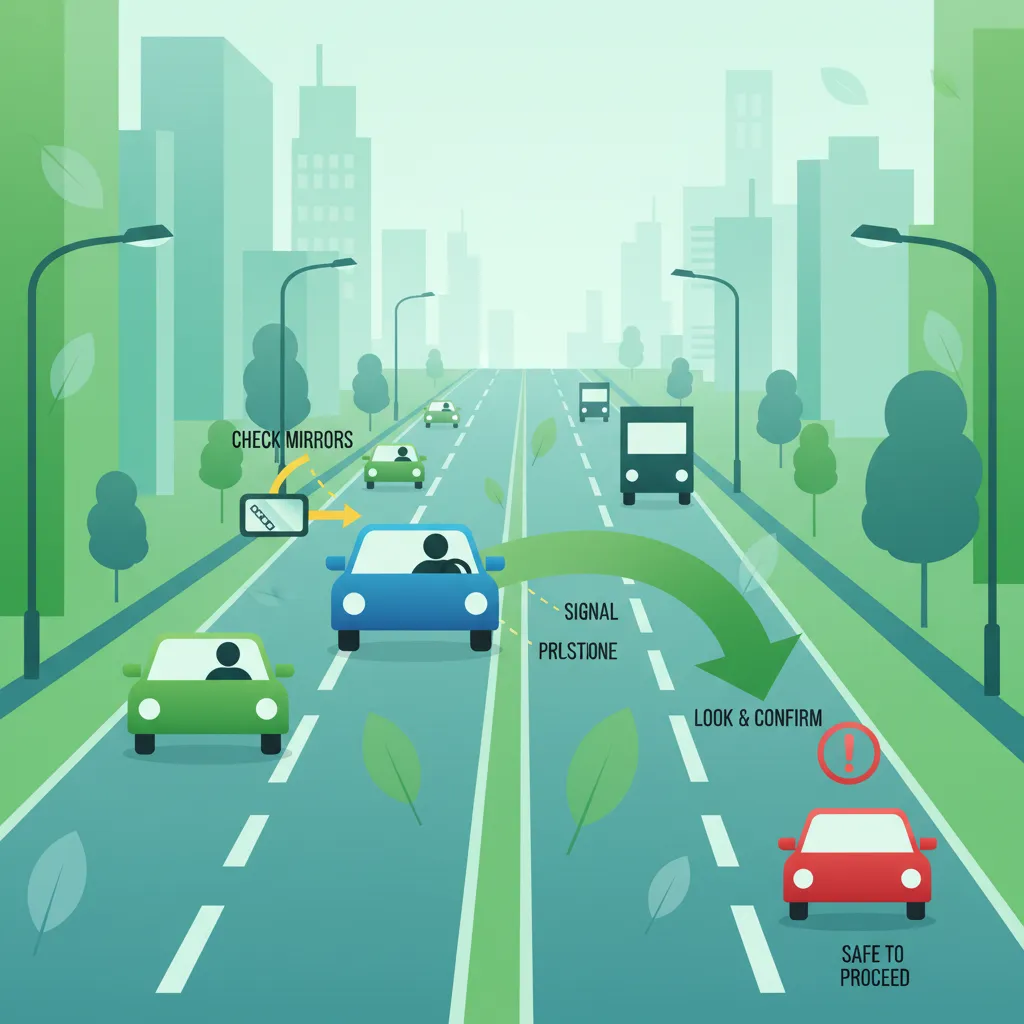
This lesson adapts lane-changing principles for the challenging environment of dense city traffic. It reinforces the critical 'mirror, signal, maneuver' sequence, with a strong focus on checking blind spots immediately before moving. The content advises on judging gaps in traffic and executing the lane change smoothly and decisively.
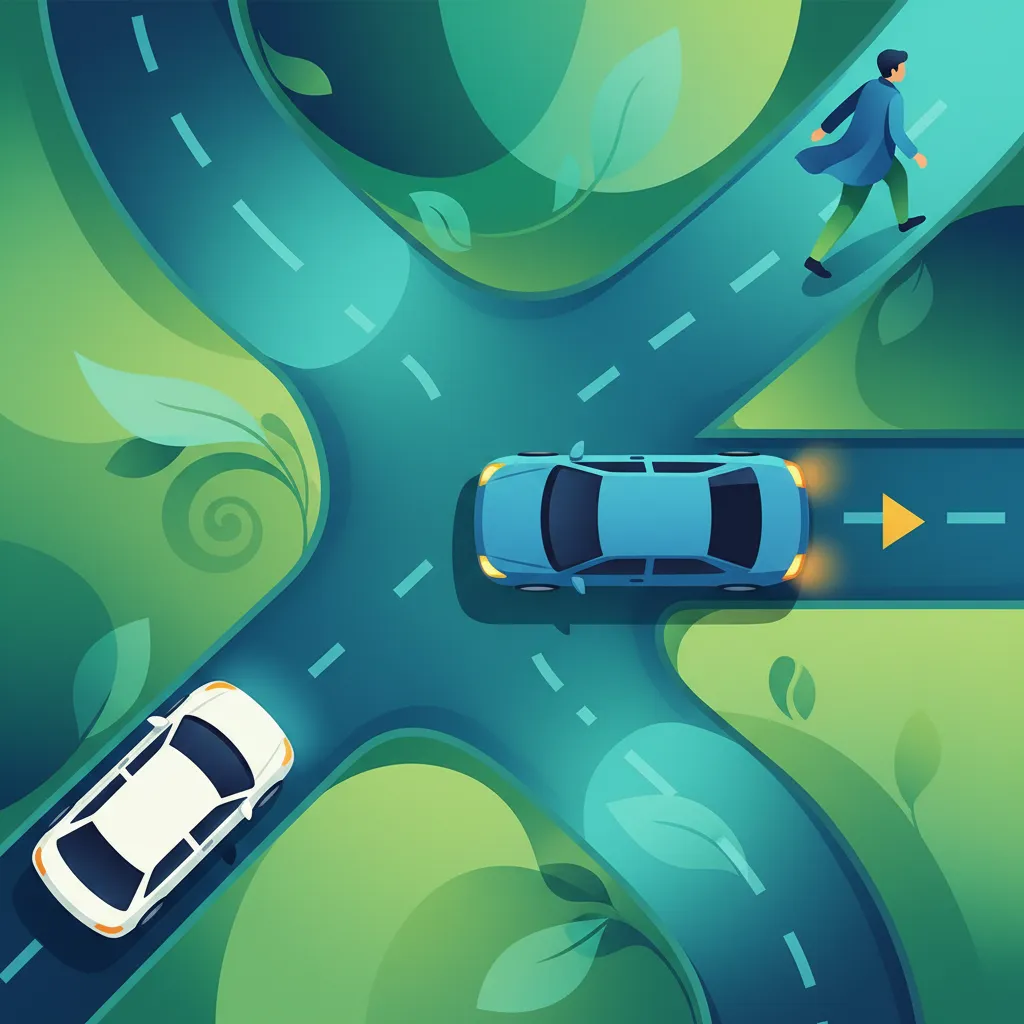
This lesson provides strategies for safely navigating the numerous intersections typical of urban environments. It reinforces the application of priority rules in situations with limited visibility and high traffic volume. Techniques for making turns in narrow streets and being aware of pedestrians and cyclists at junctions are central to the instruction.
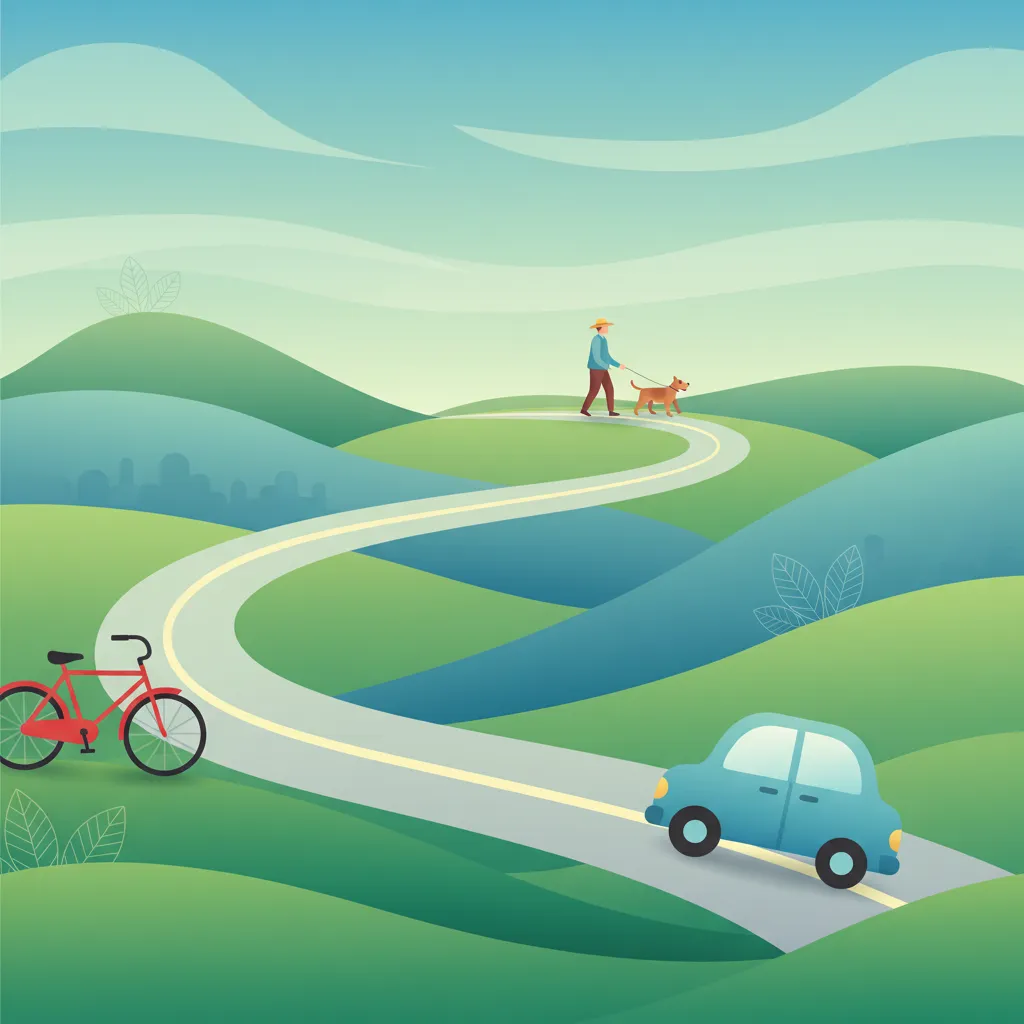
In this lesson, learners explore riding on rural and countryside roads, where road markings may be sparse and surface conditions varied. The content covers safe overtaking in single-lane sections, interaction with agricultural vehicles and animals, and the handling of gravel or uneven surfaces. Learners will also study the importance of anticipating curves and adjusting speed to light conditions, equipping them with the skills needed for safe countryside travel.
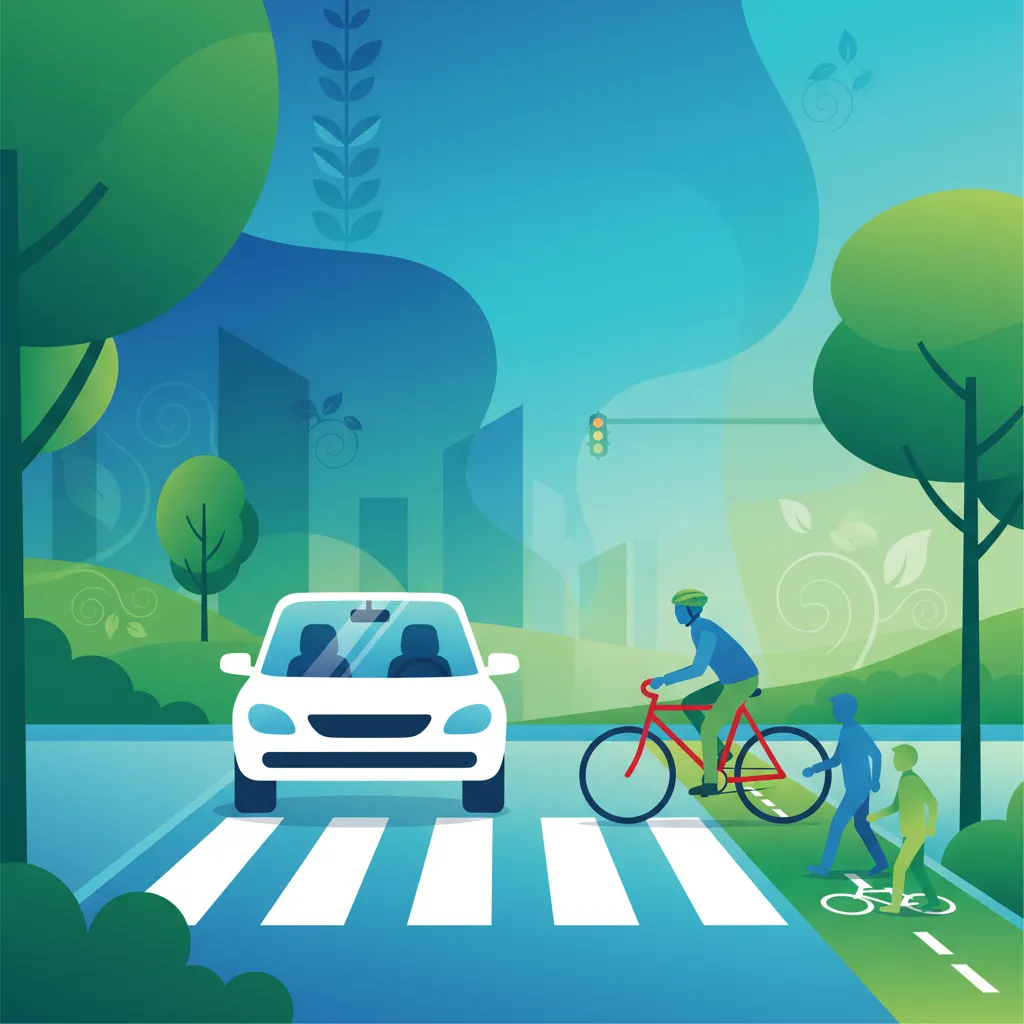
This lesson focuses on safe coexistence with cyclists and pedestrians, who are prevalent in urban areas. It covers the rules for driving alongside dedicated bicycle lanes and the legal requirement to yield to pedestrians at marked crossings. The content stresses the importance of constant awareness, especially when turning at intersections, to prevent conflicts with vulnerable road users.

This lesson explores the unique characteristics of driving on rural roads. It highlights potential hazards such as sharp, unbanked curves, poor road surfaces, and limited visibility due to hills and vegetation. The content teaches drivers to anticipate these conditions and adjust their speed and position to navigate safely.

This lesson teaches the crucial concept that drivers must always adapt their speed to the current conditions. It explains how factors like rain, fog, ice, heavy traffic, and poor visibility reduce safety margins and require a lower speed than the posted limit. This principle of defensive driving is essential for preventing accidents in challenging situations.
Understand the critical importance of protecting vulnerable road users like pedestrians and cyclists within Polish built-up areas. Learn the specific rules and vigilance required for safe interactions at crosswalks and busy streets.
This lesson focuses on safe coexistence with cyclists and pedestrians, who are prevalent in urban areas. It covers the rules for driving alongside dedicated bicycle lanes and the legal requirement to yield to pedestrians at marked crossings. The content stresses the importance of constant awareness, especially when turning at intersections, to prevent conflicts with vulnerable road users.
This lesson focuses on areas with high pedestrian activity, requiring special caution. It covers the rules for 'living zones' (strefa zamieszkania), where pedestrians have priority and the speed limit is 20 km/h. The content also addresses regulations for school zones and other designated pedestrian areas to ensure the safety of the most vulnerable road users.
This lesson examines the responsibilities of motorcyclists when approaching pedestrian crossings and interacting with cyclists, emphasizing the marked right-of-way for pedestrians at zebra crossings. Learners will study how to determine safe passing distances, adjust speed, and use visual cues such as eye contact to ensure pedestrians have cleared the crossing. The content also covers interactions with cyclists sharing the road, highlighting the need for anticipation and adequate passing gaps.
This lesson addresses advanced scenarios, including multi-lane intersections and interactions with vulnerable road users. It reinforces the legal obligation to give absolute priority to pedestrians at marked crossings (zebra crossings). The content also covers navigating around traffic islands and using dedicated turning lanes in complex urban environments.
This lesson focuses on the unique demands of urban riding within Polish cities, addressing traffic lights, pedestrian zones, one-way streets, and the presence of tram tracks. Learners will study safe lane positioning on narrow roads, blind-spot management, and how to share the road with buses and cyclists. The content also covers strategies for navigating stop-and-go traffic, anticipating signal changes, and maintaining visibility in dense urban environments.
This lesson is dedicated to the safe overtaking of two-wheeled vehicles. It explains the legal requirement to leave a sufficient lateral distance (at least 1 meter) when passing cyclists. The content highlights the vulnerability of these road users and the need for patience, reduced speed, and careful judgment.
This lesson highlights the professional driver's heightened responsibility to protect vulnerable road users. It focuses on the significant blind spots around a large truck, particularly during turns in urban areas where pedestrians and cyclists are common. The content teaches strategies for anticipating the unpredictable movements of these users, providing ample space when passing, and using warning signals to communicate intentions clearly, fostering a culture of shared road safety.
This lesson provides strategies for safely navigating the numerous intersections typical of urban environments. It reinforces the application of priority rules in situations with limited visibility and high traffic volume. Techniques for making turns in narrow streets and being aware of pedestrians and cyclists at junctions are central to the instruction.
This lesson adapts lane-changing principles for the challenging environment of dense city traffic. It reinforces the critical 'mirror, signal, maneuver' sequence, with a strong focus on checking blind spots immediately before moving. The content advises on judging gaps in traffic and executing the lane change smoothly and decisively.
This lesson introduces the fundamental principles of right-of-way on Polish roads, explaining how priority road signs determine the flow of traffic at intersections. Learners will explore the hierarchy of vehicle classes and the specific obligations that arise when approaching a yield line or a give-way sign. The content details the legal precedence of main road traffic over secondary road traffic, helping riders safely navigate intersections and avoid right-of-way infractions.
Find clear answers to common questions learners have about Driving in Built-up Areas (obszar zabudowany). Learn how the lesson is structured, which driving theory objectives it supports, and how it fits into the overall learning path of units and curriculum progression in Poland. These explanations help you understand key concepts, lesson flow, and exam focused study goals.
The general speed limit within a Polish built-up area (obszar zabudowany) is 50 km/h. This applies day and night unless specific signs indicate a different speed limit, which could be lower or, in some special cases, higher.
You will typically enter a built-up area when you see a blue informational sign featuring a white outline of a town or city skyline. The end of the built-up area is indicated by a similar sign with a red diagonal line through it.
Built-up areas have a higher density of traffic, more frequent junctions, and a greater presence of pedestrians and cyclists. This requires drivers to be significantly more vigilant, reduce their speed, and be prepared for sudden actions from other road users.
For Category B vehicles, the speed limit in a built-up area is 50 km/h regardless of whether it is daytime or nighttime, unless specific signs indicate otherwise. This rule ensures a consistent level of safety in densely populated zones.
You must always be prepared for pedestrians, especially children, to appear unexpectedly. Always yield to pedestrians crossing the road, particularly at marked crossings. Be extra cautious near schools, playgrounds, and bus stops.
Build custom practice sessions tailored precisely to your needs. Focus on areas requiring improvement, review specific Polish road signs, or master complex traffic rules to ensure full preparation for your official driving license exam.