
Welcome to the lesson on navigating intersections and small junctions, a key part of your Polish Category B driving theory preparation. This lesson builds directly on understanding priority rules and prepares you for the challenges of urban driving, ensuring you can handle these common scenarios safely and confidently on the road and in your exam.
Lesson content overview
Intersections are the most dynamic and potentially hazardous points within any road network, especially in bustling urban environments. Mastering the art of maneuvering through these junctions is not only crucial for your safety but also a fundamental requirement for passing your Polish Category B theory test. This lesson delves into the theory and practical considerations for safely navigating various types of intersections and small junctions, emphasizing the application of priority rules, effective communication, and awareness of vulnerable road users.
Intersections are physical points where two or more roadways meet, allowing traffic to cross, turn, or merge. Their geometric configuration significantly influences how drivers must behave, dictating specific yielding and signaling patterns. Recognizing the type of junction ahead is the first step toward safe navigation.
A crossroads is an intersection where two or more roads cross, typically at right angles. These can be controlled by traffic signals, signs, or be uncontrolled, relying solely on general priority rules, such as the rule of the right (zasada prawej ręki) in Poland.
At a T-junction, one road ends at a perpendicular road, forming the shape of the letter 'T'. The road that ends must almost always yield to traffic on the through road. These are very common in residential and urban areas.
Y-junctions occur when roads converge or diverge at angles less than 90 degrees, resembling the letter 'Y'. These junctions often have merging or diverging traffic flows, requiring careful observation and smooth transitions. Due to the acute angles, visibility can sometimes be challenging, necessitating reduced speed and extra caution.
Small roundabouts are circular intersections designed to manage traffic flow efficiently, particularly in urban settings. Instead of traditional traffic lights, vehicles travel in one direction around a central island. In Poland, the general rule is that vehicles entering the roundabout must yield to traffic already circulating within it, unless specific signage dictates otherwise. This is a key departure from the "rule of the right" that applies at uncontrolled junctions.
Always identify the type of junction early and look for any accompanying signs or road markings that modify the standard priority rules.
The concept of right-of-way, or legal priority to proceed (pierwszeństwo przejazdu), is the cornerstone of safe intersection maneuvering. It prevents deadlocks and allocates responsibility, ensuring a coordinated flow of traffic. In Poland, these rules are primarily governed by the Polish Road Traffic Act (Ustawa o Ruchu Drogowym).
This fundamental principle dictates that vehicles entering a main road from a subordinate road must yield to traffic already on the main road. This applies at uncontrolled intersections and those explicitly marked with a "Give Way" sign. You must be prepared to stop and only proceed when a safe gap in traffic exists.
When encountering a A-7 "Give Way" (Ustąp pierwszeństwa) sign, you must slow down and be ready to stop if necessary. Your primary duty is to ensure that your entry into the intersection does not force any other road user to change their speed or direction. This rule is crucial for protecting traffic already in motion on the higher-priority road.
A "Stop" sign (znak B-20, STOP) is a non-negotiable directive. When you encounter this octagonal red sign, you must bring your vehicle to a complete halt at the stop line, or if none is present, at a point where you have a clear view of the intersecting road. Only after coming to a full stop and ensuring the way is clear may you proceed. Failure to stop completely is a serious traffic violation.
A "Priority Road" sign (znak D-1) informs you that you are on a road where you generally have the right-of-way over traffic entering from side roads, unless otherwise indicated by specific signs or signals. This priority continues until you encounter an "End of Priority Road" sign (znak D-2) or another sign that changes the priority. While on a priority road, always be prepared for others to make mistakes and do not assume they will always yield.
At uncontrolled intersections—those without traffic lights, "Give Way" signs, "Stop" signs, or "Priority Road" signs—the general rule in Poland is to yield to traffic approaching from your right. This rule applies unless specific road markings or an officer directs otherwise. It's especially common in residential areas and small side streets.
Turning at an intersection requires precision, foresight, and clear communication. Proper vehicle positioning, timely signaling, and accurate gap acceptance are vital for safe execution of turns.
When making a right turn, you should typically approach the intersection in the rightmost lane, unless road markings or signs indicate otherwise. Signal your intention to turn right well in advance (at least 5 seconds before the maneuver). As you turn, maintain a consistent speed, check for pedestrians and cyclists who may be crossing your path, and avoid swinging wide into other lanes.
Left turns are often more complex as they usually involve crossing the path of oncoming traffic. Approach in the leftmost lane designated for left turns. Signal your left turn early. You must yield to all oncoming traffic, including pedestrians and cyclists, unless a dedicated left-turn signal or lane grants you priority. Wait until there is a safe gap, then complete your turn smoothly, avoiding cutting corners or turning too wide.
A U-turn is a maneuver to reverse your direction of travel. U-turns are generally restricted to designated areas and are prohibited where signs indicate "No U-Turn" (znak B-23) or where visibility is insufficient, such as within 20 meters of an intersection. Always ensure you have sufficient space and that the maneuver can be completed safely without obstructing other traffic.
In Poland, turning right on a red light is permissible only if a specific green arrow sign (symbol S-2 or a modified traffic light S-3) accompanies the red signal, and you have first come to a complete stop before the stop line. Even with the green arrow, you must yield to pedestrians and all other traffic. This conditional permission allows for improved traffic flow but prioritizes safety above all else.
Visibility is your ability to clearly see the road ahead and to the sides of your vehicle. Sight distance is the actual length of road you can see. Both are critical for safely navigating intersections. Obstructions such as parked vehicles, dense vegetation, buildings, or even the curvature of the road can severely limit your sight distance, creating "blind spots" or "blind corners."
Drivers must always adjust their speed to ensure they can stop their vehicle within the distance they can see ahead. This is known as the Speed Adjustment to Visibility rule. When approaching intersections with limited visibility, reduce your speed significantly. This gives you more time to react to unexpected hazards, like a pedestrian stepping out or a vehicle emerging from a blind spot. Do not assume the way is clear just because you can't see anything; actively look and be prepared to stop.
Over-reliance on mirrors can be dangerous. Always perform head checks (looking over your shoulder) to check blind spots, especially before turning or changing lanes.
Pedestrians and cyclists are considered vulnerable road users (VRUs) due to their lack of protective barriers and higher risk of severe injury in a collision. Drivers bear a greater responsibility to ensure their safety, especially at intersections.
At marked pedestrian crossings (zebra crossings), pedestrians have the absolute right-of-way. Vehicles must stop to allow pedestrians to cross, even if they are only waiting to step onto the crossing. Always slow down when approaching a pedestrian crossing and be prepared to stop. Before making a turn, particularly a right turn, check carefully for pedestrians who may be crossing the street you are turning into.
Many urban intersections include dedicated cyclist lanes or shared spaces. Drivers must yield to cyclists when turning across a bike lane. When overtaking a cyclist on a road without a segregated bike lane, Polish law requires you to maintain a minimum lateral distance of 1.5 meters (approximately 5 feet) to ensure their safety. Cyclists may sometimes be treated as pedestrians when crossing, depending on the specific markings and regulations. Always give cyclists ample space and anticipate their movements.
Clear communication is paramount at intersections. Your vehicle's signals are your primary tool for informing other road users of your intentions.
Turn indicators must be activated well in advance of any turn or lane change. In Poland, the rule specifies activating them at least 5 seconds before beginning the maneuver. This gives other drivers, pedestrians, and cyclists sufficient time to anticipate your actions and adjust their behavior accordingly, significantly reducing the risk of collisions. Continue signaling until the maneuver is fully completed.
Hazard warning lights are for emergency situations, such as when your vehicle is stationary in a dangerous position on the road or in the event of a breakdown. They are not to be used while moving, for example, to indicate that you are driving slowly or approaching an obstruction. Misuse of hazard lights can confuse other road users and undermine their effectiveness for genuine emergencies.
Maintaining proper lane discipline means positioning your vehicle correctly within designated traffic lanes when approaching and traversing a junction. Follow lane arrows painted on the road (e.g., "turn left only," "straight or right") and road markings. You must not change lanes within the intersection itself, nor should you cut across solid lane lines. This prevents lane conflicts and ensures predictable traffic flow, which is crucial in busy urban areas.
Understanding the specific legal framework is essential for safe and lawful driving in Poland. The Ustawa o Ruchu Drogowym (Road Traffic Act) sets out the core rules.
| Rule | Statement | Applicability | Correct Example |
|---|---|---|---|
| Yielding (Ustąp pierwszeństwa) | Drivers must yield to traffic on the main road when entering from a subordinate road. | All uncontrolled intersections and those marked with A-7 "Give Way". | Approaching a T-junction with an A-7 sign, the driver stops to allow main road traffic to pass. |
| Complete Stop at STOP Sign | A complete stop is mandatory at a B-20 "STOP" sign before proceeding, after ensuring the way is clear. | Intersections marked with the B-20 octagon. | Driver stops fully at the white stop line, checks for cross traffic, then proceeds safely. |
| Timely Signaling | Turn signals must be activated at least 5 seconds before beginning a turn or lane change. | All turning maneuvers and lane changes on public roads. | Driver signals left 7 seconds before reaching the turn-off point. |
| Pedestrian Priority | Pedestrians have priority at marked pedestrian crossings (P-10 zebra crossings); vehicles must stop. | Wherever a zebra crossing is present. | Driver stops well before the zebra crossing when a pedestrian approaches or steps onto it. |
| Cyclist Overtaking Distance | A minimum lateral distance of 1.5 meters must be maintained when overtaking cyclists on a road without a segregated bike lane. | When overtaking cyclists on shared carriageways. | Driver moves entirely into the adjacent lane to ensure a wide berth for the cyclist. |
| Speed Adjustment to Visibility | Speed must be reduced so that the vehicle can be stopped within the distance visible ahead. | All road types; especially at intersections with limited sight. | Driver slows to 30 km/h when approaching a blind corner intersection in dense fog. |
| Right Turn on Red (Conditional) | A driver may turn right after a full stop at a red signal, provided a green arrow sign (S-2/S-3) is present and the way is clear of other traffic and pedestrians. | Intersections with appropriate signage (S-2/S-3). | Driver stops at the red light with a green arrow, checks for pedestrians/oncoming cars, then turns right. |
| U-Turn Restrictions | U-turns are prohibited where a B-23 "No U-Turn" sign is displayed or where visibility is insufficient. | Specific roads indicated by signs or certain distances from intersections. | Driver drives past an intersection to find a designated U-turn spot further down the road. |
Even experienced drivers can make mistakes at intersections. Being aware of common violations and understanding how to adapt to varying conditions can significantly enhance your safety.
A-7 "Give Way" sign as optional or merely slowing instead of stopping at a B-20 "STOP" sign.Driving conditions are rarely ideal. You must adapt your behavior based on:
Scan Early: Look ahead for signs, markings, and the type of junction. Identify potential hazards (pedestrians, cyclists, heavy traffic).
Adjust Speed: Slow down as you approach, ready to stop if necessary. The appropriate speed allows you to stop within your visible distance.
Position Correctly: Choose the correct lane and position your vehicle appropriately for your intended movement (straight, left, right).
Signal Clearly: Activate your turn indicator at least 5 seconds before your maneuver.
Assess Right-of-Way: Determine who has priority based on signs, signals, and general rules.
Check All Around: Look for pedestrians, cyclists, and other vehicles. Pay special attention to blind spots.
Execute Smoothly: Proceed when safe, maintaining a consistent speed and path. Cancel your signal once the maneuver is complete.
Mastering maneuvers at intersections and small junctions is a critical skill for any driver. By understanding the different types of junctions, diligently applying right-of-way rules, communicating your intentions clearly, and adapting to varying conditions, you will significantly enhance your safety and confidence on the road, contributing to a smoother and more secure traffic flow for everyone.
This lesson covers the essential skills for navigating urban intersections and small junctions in Poland, including identifying junction types (crossroads, T-junctions, Y-junctions, and roundabouts) and applying the correct right-of-way rules for each. Key priorities include understanding the 'rule of the right' at uncontrolled intersections, recognizing and obeying specific Polish road signs (A-7, B-20, D-1, D-2, B-23), and executing turns safely with proper signaling at least 5 seconds in advance. The lesson emphasizes protecting vulnerable road users, requiring full stops at zebra crossings and maintaining 1.5 meters when overtaking cyclists. Drivers must always adjust speed to ensure they can stop within their visible sight distance, particularly at blind corners and junctions with limited visibility. These principles are essential for passing the Polish Category B theory test and driving safely in urban environments.
A short set of high-value points that capture the most important learning from this lesson.
Identify the four main urban junction types (crossroads, T-junctions, Y-junctions, and roundabouts) as each has specific yielding requirements and behaviors.
At uncontrolled intersections without signs or signals, apply the 'rule of the right' (zasada prawej ręki) - yield to traffic approaching from your right.
Turn signals must be activated at least 5 seconds before beginning any turning maneuver to give other road users time to anticipate your actions.
Pedestrians have absolute priority at zebra crossings (P-10); you must stop even if they are only waiting to step onto the crossing.
Speed must always be adjusted so you can stop within your visible sight distance, especially at intersections with limited visibility.
Explore all units and lessons included in this driving theory course.
A-7 Give Way sign = mandatory yield; B-20 Stop sign = mandatory complete stop; D-1 Priority Road sign = your road has priority until D-2 End sign appears.
U-turns are prohibited where a B-23 No U-turn sign is displayed or where visibility is insufficient - generally within 20 meters of an intersection.
Right turn on red is only permitted when accompanied by a green arrow sign (S-2/S-3) and requires a full stop before proceeding.
When overtaking cyclists on roads without a segregated bike lane, maintain a minimum lateral distance of 1.5 meters.
On roundabouts in Poland, vehicles already circulating have priority over vehicles entering - this differs from the rule of the right.
Treating the A-7 Give Way sign as optional - it is a legal obligation to yield to intersecting traffic.
Making an incomplete stop at B-20 STOP signs, such as a rolling stop instead of a full halt at the stop line.
Activating turn signals too late (only 1-2 seconds before turning), giving other drivers insufficient warning time.
Failing to check for pedestrians crossing when making a right turn, especially at zebra crossings.
Assuming other drivers on side roads will always correctly yield at priority roads - be prepared to react if they do not.
Lesson content overview
A short set of high-value points that capture the most important learning from this lesson.
Identify the four main urban junction types (crossroads, T-junctions, Y-junctions, and roundabouts) as each has specific yielding requirements and behaviors.
At uncontrolled intersections without signs or signals, apply the 'rule of the right' (zasada prawej ręki) - yield to traffic approaching from your right.
Turn signals must be activated at least 5 seconds before beginning any turning maneuver to give other road users time to anticipate your actions.
Pedestrians have absolute priority at zebra crossings (P-10); you must stop even if they are only waiting to step onto the crossing.
Speed must always be adjusted so you can stop within your visible sight distance, especially at intersections with limited visibility.
Explore all units and lessons included in this driving theory course.
A-7 Give Way sign = mandatory yield; B-20 Stop sign = mandatory complete stop; D-1 Priority Road sign = your road has priority until D-2 End sign appears.
U-turns are prohibited where a B-23 No U-turn sign is displayed or where visibility is insufficient - generally within 20 meters of an intersection.
Right turn on red is only permitted when accompanied by a green arrow sign (S-2/S-3) and requires a full stop before proceeding.
When overtaking cyclists on roads without a segregated bike lane, maintain a minimum lateral distance of 1.5 meters.
On roundabouts in Poland, vehicles already circulating have priority over vehicles entering - this differs from the rule of the right.
Treating the A-7 Give Way sign as optional - it is a legal obligation to yield to intersecting traffic.
Making an incomplete stop at B-20 STOP signs, such as a rolling stop instead of a full halt at the stop line.
Activating turn signals too late (only 1-2 seconds before turning), giving other drivers insufficient warning time.
Failing to check for pedestrians crossing when making a right turn, especially at zebra crossings.
Assuming other drivers on side roads will always correctly yield at priority roads - be prepared to react if they do not.
Explore search topics learners often look for when studying Maneuvering at Intersections and Small Junctions. These topics reflect common questions about road rules, driving situations, safety guidance, and lesson level theory preparation for learners in Poland.
Browse additional driving theory lessons that cover connected traffic rules, road signs, and common driving situations related to this topic. Improve your understanding of how different rules interact across everyday traffic scenarios.
Deepen your understanding of complex priority situations and right-of-way challenges in busy Polish urban intersections. Learn how to navigate multi-lane junctions, unusual layouts, and situations with limited visibility for your Category B theory.
This lesson provides a comprehensive breakdown of the right-of-way rules that govern intersections. It explains the clear directives given by traffic lights, stop signs, and yield signs, and clarifies the procedures at unmarked or uncontrolled intersections, where the 'priority to the right' rule often applies. Learners will understand the legal hierarchy of these rules to make correct, safe, and predictable decisions when navigating through any junction, reducing the risk of conflict with other traffic.
This lesson addresses advanced scenarios, including multi-lane intersections and interactions with vulnerable road users. It reinforces the legal obligation to give absolute priority to pedestrians at marked crossings (zebra crossings). The content also covers navigating around traffic islands and using dedicated turning lanes in complex urban environments.
This lesson focuses on navigating intersections that are not controlled by traffic signals. It covers the interpretation of the 'Yield' sign (ustąp pierwszeństwa) and the application of the 'priority to the right' rule at junctions of equal roads. Safe decision-making and proper observation techniques are emphasized for these common scenarios.
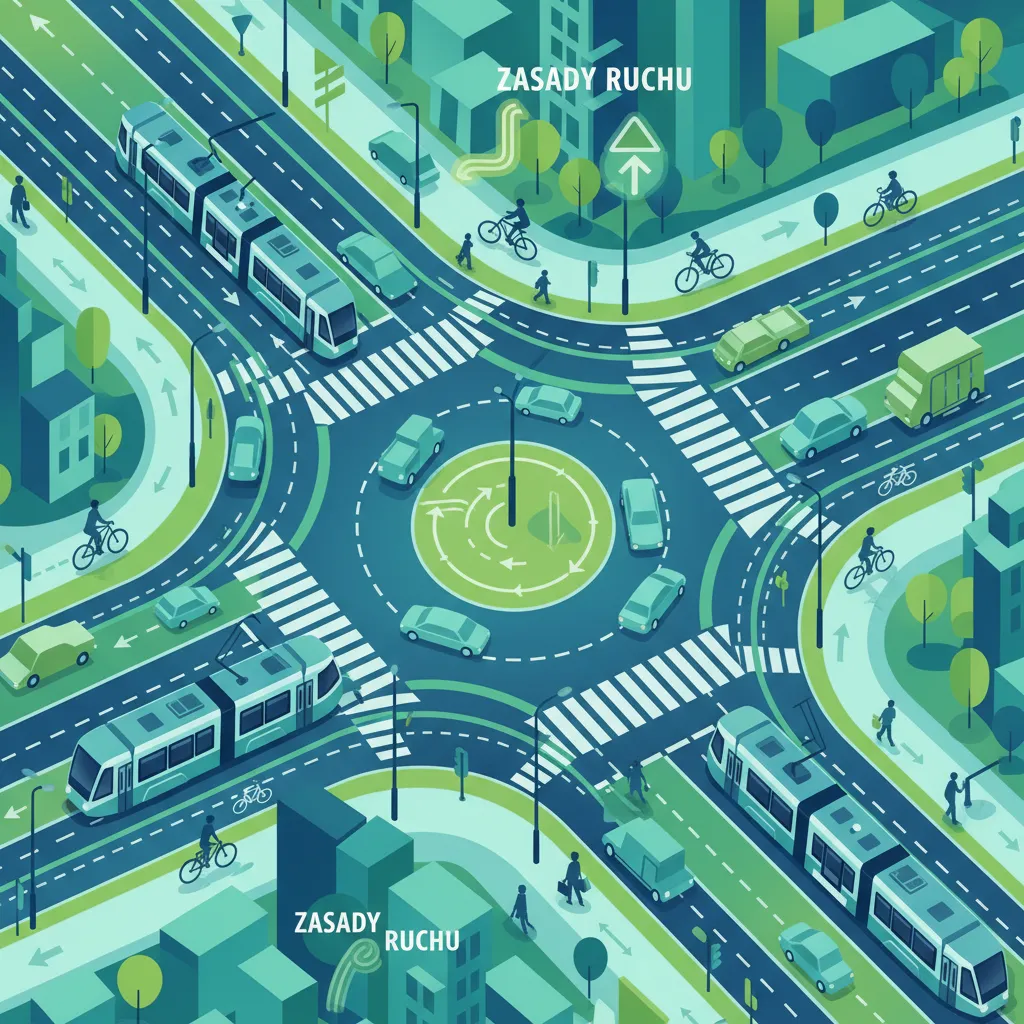
In this lesson, learners investigate complex junctions and intersections found across urban, rural, and highway environments, focusing on multi-lane configurations, traffic light coordination, and roundabout navigation. The content emphasizes priority rules, blind-spot assessment when merging, and safe lane selection for turning maneuvers. Learners will also consider interactions with cyclists and pedestrians, and the importance of adjusting approach speed for safe navigation.
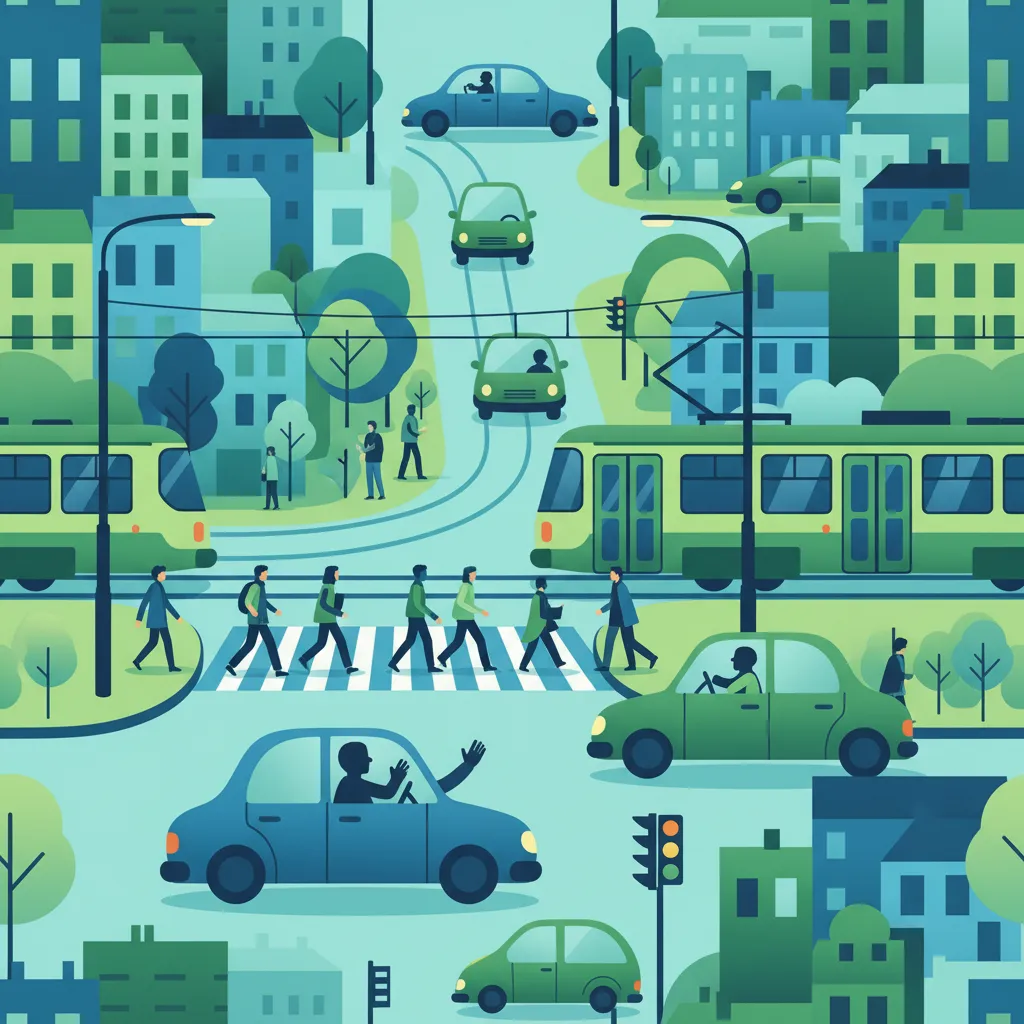
This lesson introduces the core concept of priority, or 'pierwszeństwo przejazdu,' in Polish traffic law. It explains the general rule of yielding to traffic from the right at intersections of equal status. This principle forms the foundation for navigating uncontrolled junctions and is a critical piece of knowledge for all drivers.
This lesson introduces the fundamental principles of right-of-way on Polish roads, explaining how priority road signs determine the flow of traffic at intersections. Learners will explore the hierarchy of vehicle classes and the specific obligations that arise when approaching a yield line or a give-way sign. The content details the legal precedence of main road traffic over secondary road traffic, helping riders safely navigate intersections and avoid right-of-way infractions.
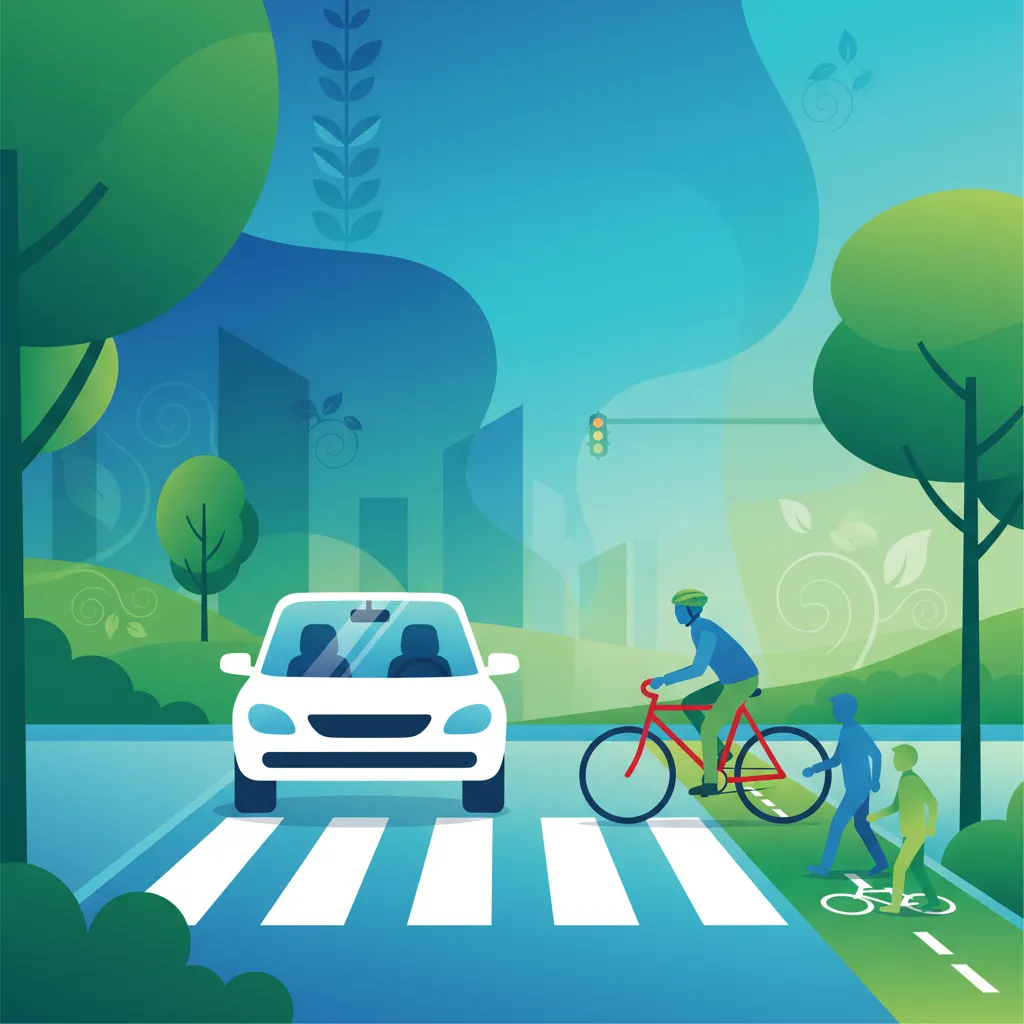
This lesson focuses on safe coexistence with cyclists and pedestrians, who are prevalent in urban areas. It covers the rules for driving alongside dedicated bicycle lanes and the legal requirement to yield to pedestrians at marked crossings. The content stresses the importance of constant awareness, especially when turning at intersections, to prevent conflicts with vulnerable road users.

This lesson defines what constitutes a 'built-up area' in Poland, marked by specific informational signs. It explains the default speed limit of 50 km/h that applies within these zones unless otherwise indicated. The content highlights the need for increased vigilance due to higher traffic density and the frequent presence of pedestrians.
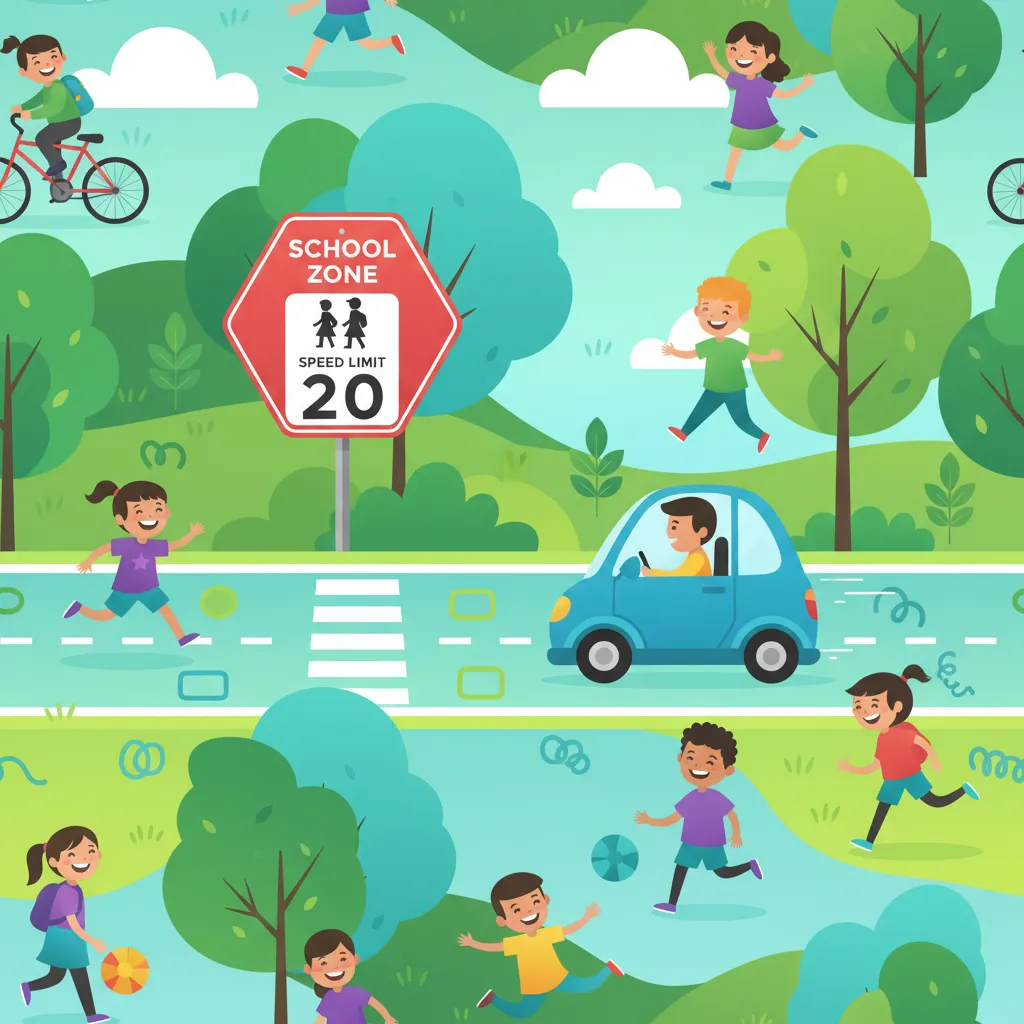
This lesson focuses on areas with high pedestrian activity, requiring special caution. It covers the rules for 'living zones' (strefa zamieszkania), where pedestrians have priority and the speed limit is 20 km/h. The content also addresses regulations for school zones and other designated pedestrian areas to ensure the safety of the most vulnerable road users.
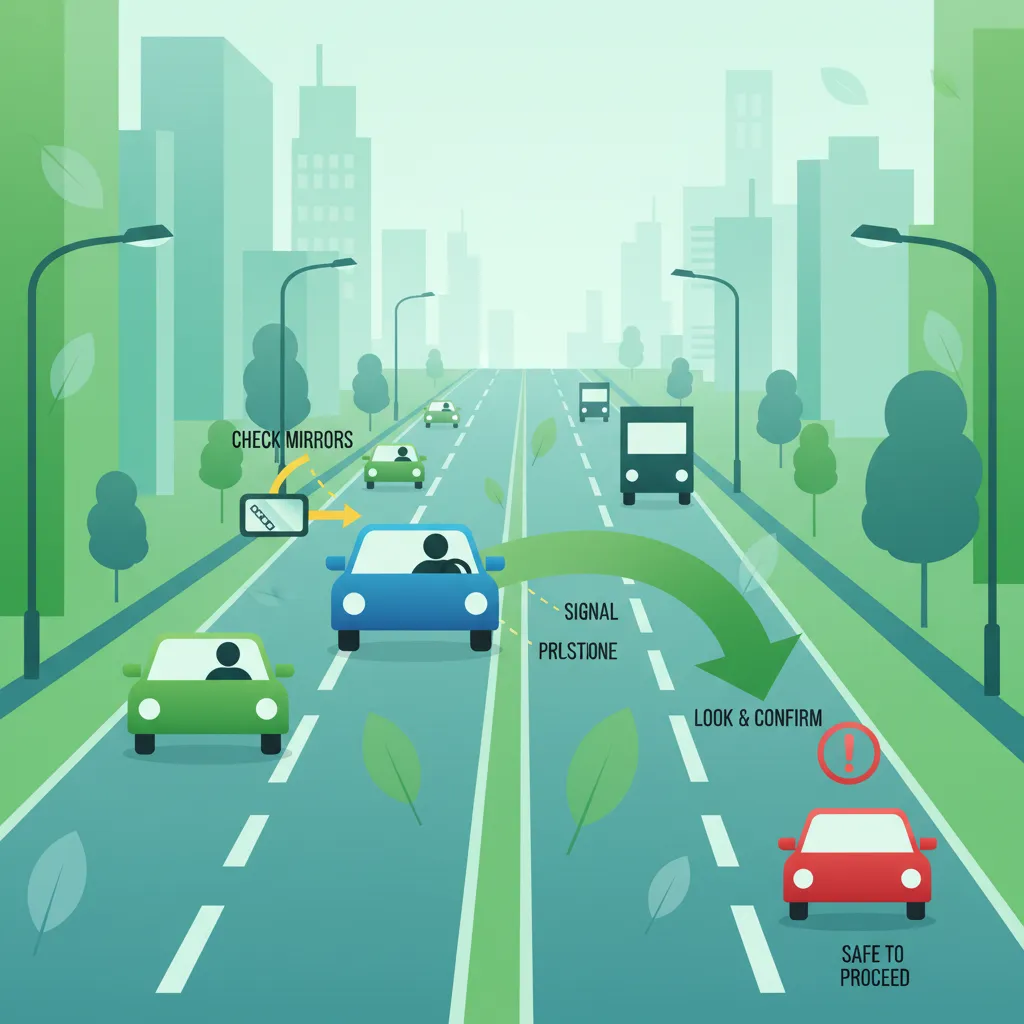
This lesson adapts lane-changing principles for the challenging environment of dense city traffic. It reinforces the critical 'mirror, signal, maneuver' sequence, with a strong focus on checking blind spots immediately before moving. The content advises on judging gaps in traffic and executing the lane change smoothly and decisively.
Master the rules for safely interacting with vulnerable road users like pedestrians and cyclists at Polish urban intersections and crossings. Essential theory for ensuring safety and passing your Category B driving test.
This lesson focuses on safe coexistence with cyclists and pedestrians, who are prevalent in urban areas. It covers the rules for driving alongside dedicated bicycle lanes and the legal requirement to yield to pedestrians at marked crossings. The content stresses the importance of constant awareness, especially when turning at intersections, to prevent conflicts with vulnerable road users.
This lesson addresses advanced scenarios, including multi-lane intersections and interactions with vulnerable road users. It reinforces the legal obligation to give absolute priority to pedestrians at marked crossings (zebra crossings). The content also covers navigating around traffic islands and using dedicated turning lanes in complex urban environments.
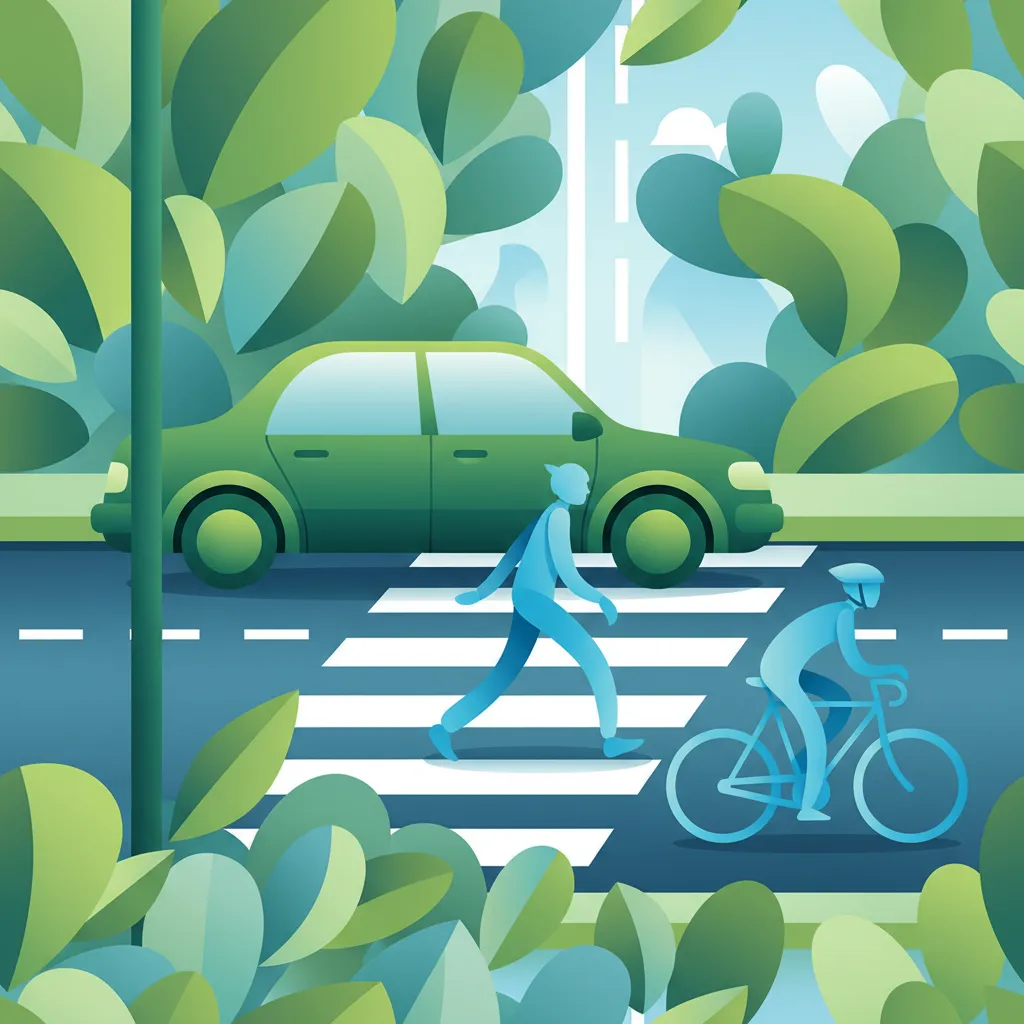
This lesson examines the responsibilities of motorcyclists when approaching pedestrian crossings and interacting with cyclists, emphasizing the marked right-of-way for pedestrians at zebra crossings. Learners will study how to determine safe passing distances, adjust speed, and use visual cues such as eye contact to ensure pedestrians have cleared the crossing. The content also covers interactions with cyclists sharing the road, highlighting the need for anticipation and adequate passing gaps.
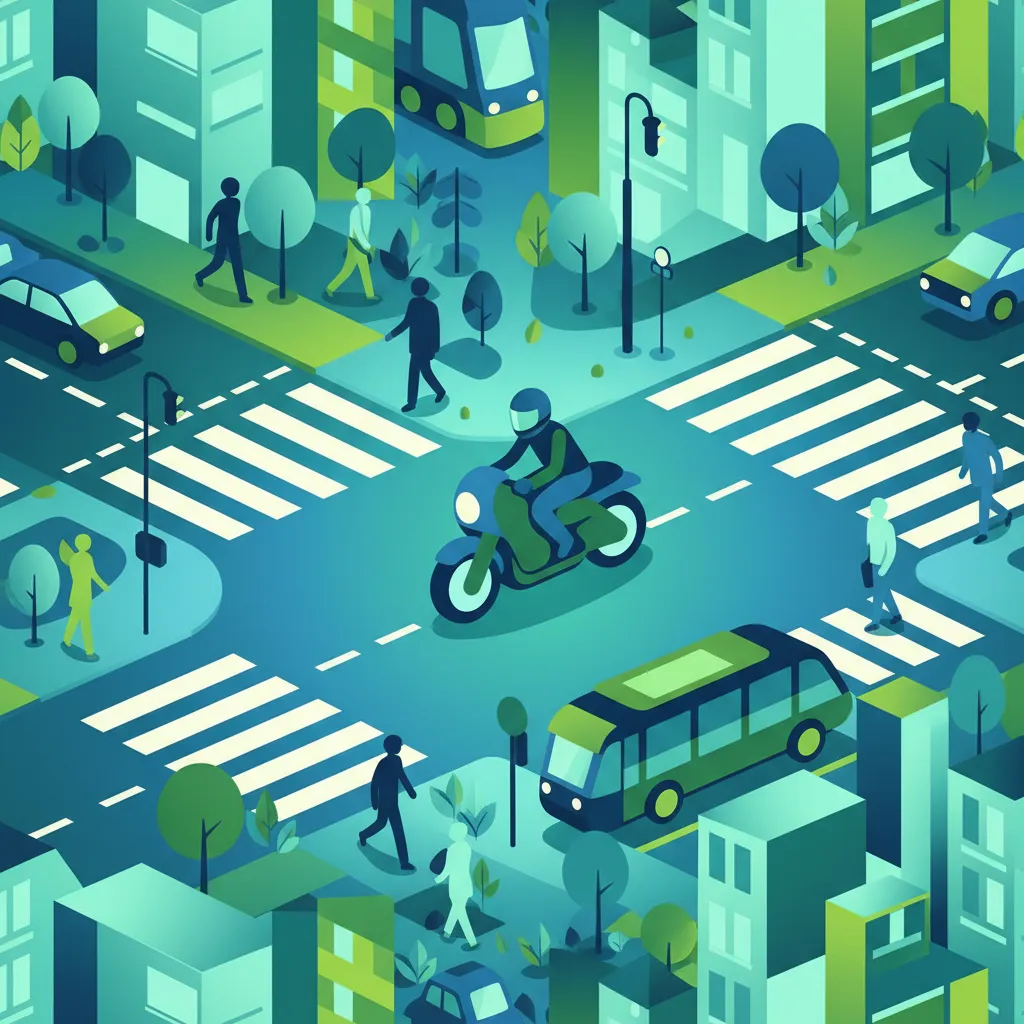
This lesson focuses on the unique demands of urban riding within Polish cities, addressing traffic lights, pedestrian zones, one-way streets, and the presence of tram tracks. Learners will study safe lane positioning on narrow roads, blind-spot management, and how to share the road with buses and cyclists. The content also covers strategies for navigating stop-and-go traffic, anticipating signal changes, and maintaining visibility in dense urban environments.
This lesson focuses on areas with high pedestrian activity, requiring special caution. It covers the rules for 'living zones' (strefa zamieszkania), where pedestrians have priority and the speed limit is 20 km/h. The content also addresses regulations for school zones and other designated pedestrian areas to ensure the safety of the most vulnerable road users.
This lesson focuses on navigating intersections that are not controlled by traffic signals. It covers the interpretation of the 'Yield' sign (ustąp pierwszeństwa) and the application of the 'priority to the right' rule at junctions of equal roads. Safe decision-making and proper observation techniques are emphasized for these common scenarios.
This lesson adapts lane-changing principles for the challenging environment of dense city traffic. It reinforces the critical 'mirror, signal, maneuver' sequence, with a strong focus on checking blind spots immediately before moving. The content advises on judging gaps in traffic and executing the lane change smoothly and decisively.
In this lesson, learners investigate complex junctions and intersections found across urban, rural, and highway environments, focusing on multi-lane configurations, traffic light coordination, and roundabout navigation. The content emphasizes priority rules, blind-spot assessment when merging, and safe lane selection for turning maneuvers. Learners will also consider interactions with cyclists and pedestrians, and the importance of adjusting approach speed for safe navigation.
This lesson highlights the professional driver's heightened responsibility to protect vulnerable road users. It focuses on the significant blind spots around a large truck, particularly during turns in urban areas where pedestrians and cyclists are common. The content teaches strategies for anticipating the unpredictable movements of these users, providing ample space when passing, and using warning signals to communicate intentions clearly, fostering a culture of shared road safety.

In this lesson, learners explore riding on rural and countryside roads, where road markings may be sparse and surface conditions varied. The content covers safe overtaking in single-lane sections, interaction with agricultural vehicles and animals, and the handling of gravel or uneven surfaces. Learners will also study the importance of anticipating curves and adjusting speed to light conditions, equipping them with the skills needed for safe countryside travel.
Find clear answers to common questions learners have about Maneuvering at Intersections and Small Junctions. Learn how the lesson is structured, which driving theory objectives it supports, and how it fits into the overall learning path of units and curriculum progression in Poland. These explanations help you understand key concepts, lesson flow, and exam focused study goals.
The most common mistake is failing to properly assess priority in situations with limited visibility or unexpected movements from other road users, including pedestrians and cyclists. Many learners also underestimate the need to adjust their speed and position correctly, especially when making turns in narrow spaces.
Limited visibility doesn't change the fundamental priority rules, but it significantly increases the risk. You must slow down, be prepared to stop, and exercise extra caution. If you cannot see potential hazards or other vehicles clearly, you must assume they could appear at any moment and act defensively, even if you technically have priority.
At small, unmarked junctions, general priority rules apply – typically, vehicles on the main road have priority, and if roads are of equal importance, the vehicle approaching from the right has priority. However, the primary rule is to proceed with extreme caution, observe all surroundings, and be ready to yield if necessary, especially to pedestrians and cyclists.
When a junction includes a pedestrian crossing, you must always yield to pedestrians who are on or entering the crossing. Even if they are not yet on the crossing but are clearly intending to cross, you should be prepared to stop. This is a critical aspect of urban driving and a common exam topic.
The exam often presents scenarios where you must determine who has priority, identify potential hazards due to visibility or other road users, and choose the safest action when turning or proceeding through a junction. Questions will test your understanding of signs, signals, and the hierarchy of rules in specific urban contexts.
Build custom practice sessions tailored precisely to your needs. Focus on areas requiring improvement, review specific Polish road signs, or master complex traffic rules to ensure full preparation for your official driving license exam.