
This unit delves into the specialized road signs, regulations, and restrictions crucial for operating heavy goods vehicles (HGVs) in Poland and the EU. You'll learn to interpret signage related to vehicle dimensions and weight, understand access rules for restricted zones, and master the essential compliance requirements for driver hours and tachograph usage, vital for passing your Category C theory exam and for professional driving.
Browse all lessons that make up Road Signs, Regulations, and Special Restrictions for Heavy Vehicles. Each lesson focuses on specific topics, learning objectives, and core concepts, helping you build essential knowledge and follow a clear, structured progression toward your study goals in Poland.
This lesson provides a foundational understanding of the Polish road sign system, categorizing signs into three main types: warning, prohibitory/mandatory, and informational. It explains the significance of different shapes and color codes, enabling drivers to quickly interpret their meaning and legal obligation. By mastering the visual language of road signs, learners will be equipped to make correct and safe decisions in any traffic situation they encounter.
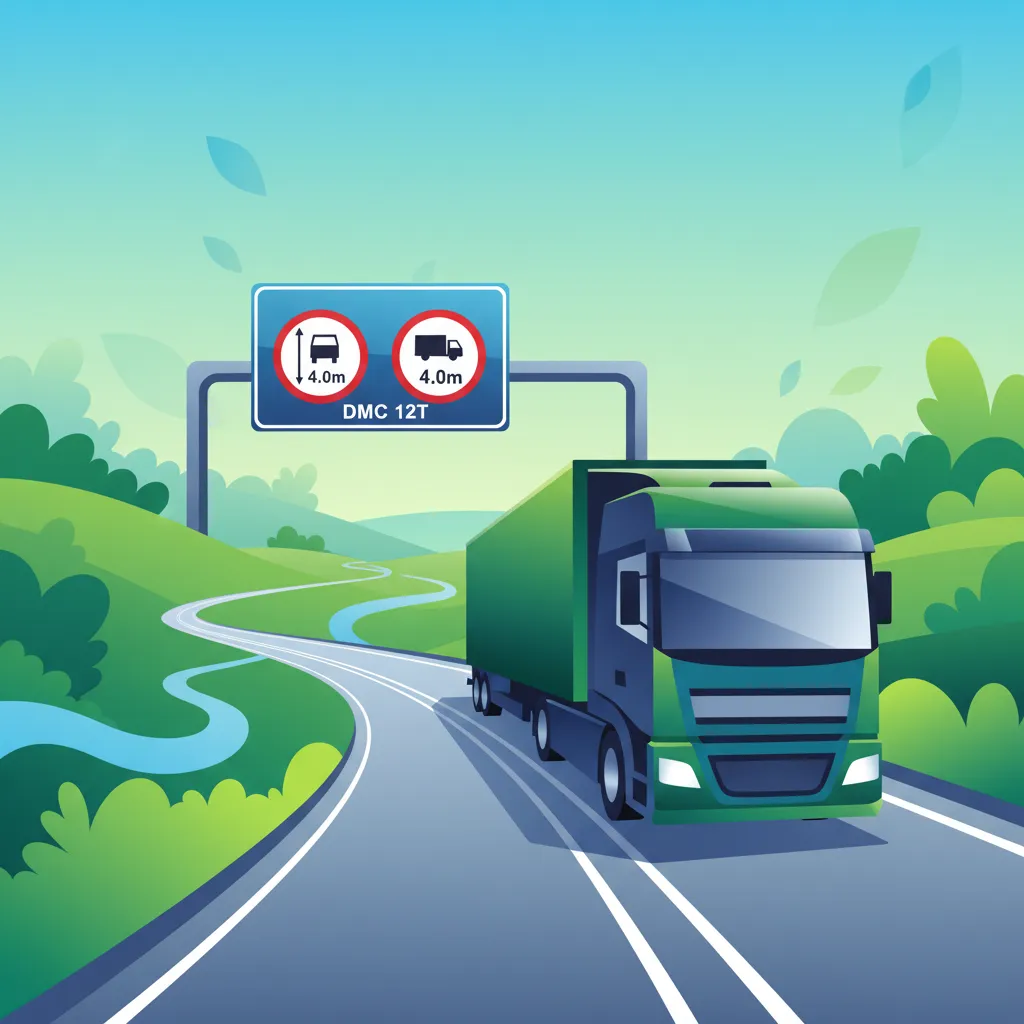
This lesson concentrates on the specific road signs that are of utmost importance to HGV drivers. It details how to interpret signs indicating maximum permissible weight, axle load, vehicle height, and overall length. Understanding these restrictions is crucial for effective route planning to avoid bridges with low clearance, roads with weight limits, or tunnels that cannot accommodate the vehicle's dimensions, thus preventing accidents and infrastructure damage.
This lesson addresses the increasingly common restrictions on HGV access to urban areas and designated low-emission zones. It explains how to identify these zones through specific signage and understand the criteria for entry, which may be based on the vehicle's emission standard or subject to time-of-day limitations. Learners will become familiar with the necessity of obtaining special permits for city center deliveries and the legal consequences of violating these access regulations.
This lesson provides an overview of the key EU regulations that harmonize the road transport industry across member states. It focuses on the standardized rules for drivers' hours and rest periods, which are designed to combat fatigue and enhance safety. The content also explains the principles of cabotage—the transport of goods within one member state by a haulier from another—and the necessary documentation for smooth and legal cross-border operations.
This lesson offers a detailed guide to the use of the tachograph, an essential tool for ensuring compliance with drivers' hours regulations. It explains how to operate both analogue and digital tachographs, correctly use the driver card, and accurately record all periods of work, availability, breaks, and rest. Learners will understand the specific legal limits on driving time and the minimum required rest periods, as well as the procedures followed during roadside inspections by transport authorities.
Explore high-intent keywords and long-tail search topics learners use when researching Road Signs, Regulations, and Special Restrictions for Heavy Vehicles. These terms reflect how people search for reliable study materials, structured explanations, and unit-level theory preparation support in Poland.
Find clear answers to the most common questions learners ask about Road Signs, Regulations, and Special Restrictions for Heavy Vehicles. Understand how the unit is organized, what learning goals it supports, and how it contributes to your study progression with structured explanations and practical guidance tailored for learners in Poland.
In Poland, HGVs face various weight restrictions including gross vehicle weight limits, axle load limits, and sometimes specific weight limits for certain roads or bridges. Signs indicating these limits are crucial to recognize. Exceeding these limits can lead to significant fines and safety hazards, so understanding them is paramount for Category C drivers.
Access to urban and environmental zones in Poland is often governed by vehicle emission standards and specific permits. You must look for signage indicating zone entry requirements, which might specify Euro emission classes or require special stickers. Always check local regulations and ensure your vehicle and documentation comply before entering such areas.
Under EU regulations, a driver's daily driving time is typically limited to 9 hours, extendable to 10 hours twice per week. There are also requirements for minimum daily and weekly rest periods. Proper use of the tachograph is mandatory to record these times accurately and ensure compliance with working time directives.
For cross-border transport within the EU, essential documents typically include the vehicle registration certificate, driver's license (Category C), CMR consignment notes (for goods transport), tachograph records, and potentially permits or specific transport authorizations depending on the route and cargo. Ensuring all documentation is up-to-date and readily available is critical for smooth transit.
Incorrect or missing tachograph records are a serious offense under EU regulations. Inspections can result in substantial fines for the driver and the transport company, and may even lead to the suspension of driving privileges. It is vital to ensure your tachograph is functioning correctly and that all driving, rest, and loading/unloading periods are accurately logged daily.
Yes, Poland and the EU use specific signs to indicate restrictions on vehicle dimensions. You will encounter signs showing maximum height, width, and length. These are often placed before bridges, tunnels, or narrow sections of road where oversized vehicles may not be able to pass safely. Always adhere to these restrictions.
All included lessons
Lessons in Road Signs, Regulations, and Special Restrictions for Heavy Vehicles
See who benefits most from studying Road Signs, Regulations, and Special Restrictions for Heavy Vehicles. This overview explains how the unit supports different learning needs, what level of knowledge is helpful before starting, and how it fits into the overall study path in Poland.
This unit is essential for individuals pursuing a Polish Category C licence, particularly those planning to drive HGVs professionally in Poland or across the EU. It's especially beneficial for drivers who need to understand complex international transport regulations and the specific demands of long-haul or specialized freight operations.

Dive into our curated curriculum designed for Polish driving license aspirants. Select a course, follow its guided modules, and master every aspect of traffic rules and road signs necessary to pass your theory exam with confidence.
Polish Theory CurriculumExplore all units and lessons included in this driving theory course.
Dive into our curated curriculum designed for Polish driving license aspirants. Select a course, follow its guided modules, and master every aspect of traffic rules and road signs necessary to pass your theory exam with confidence.
Polish Theory Curriculum