
As a professional Category C driver, maintaining operational safety and environmental awareness is paramount. This unit covers essential knowledge on managing driver fatigue, responding effectively to on-road emergencies and accidents, and adopting eco-driving practices to minimise environmental impact. It consolidates your understanding for safe and responsible heavy goods vehicle operation.
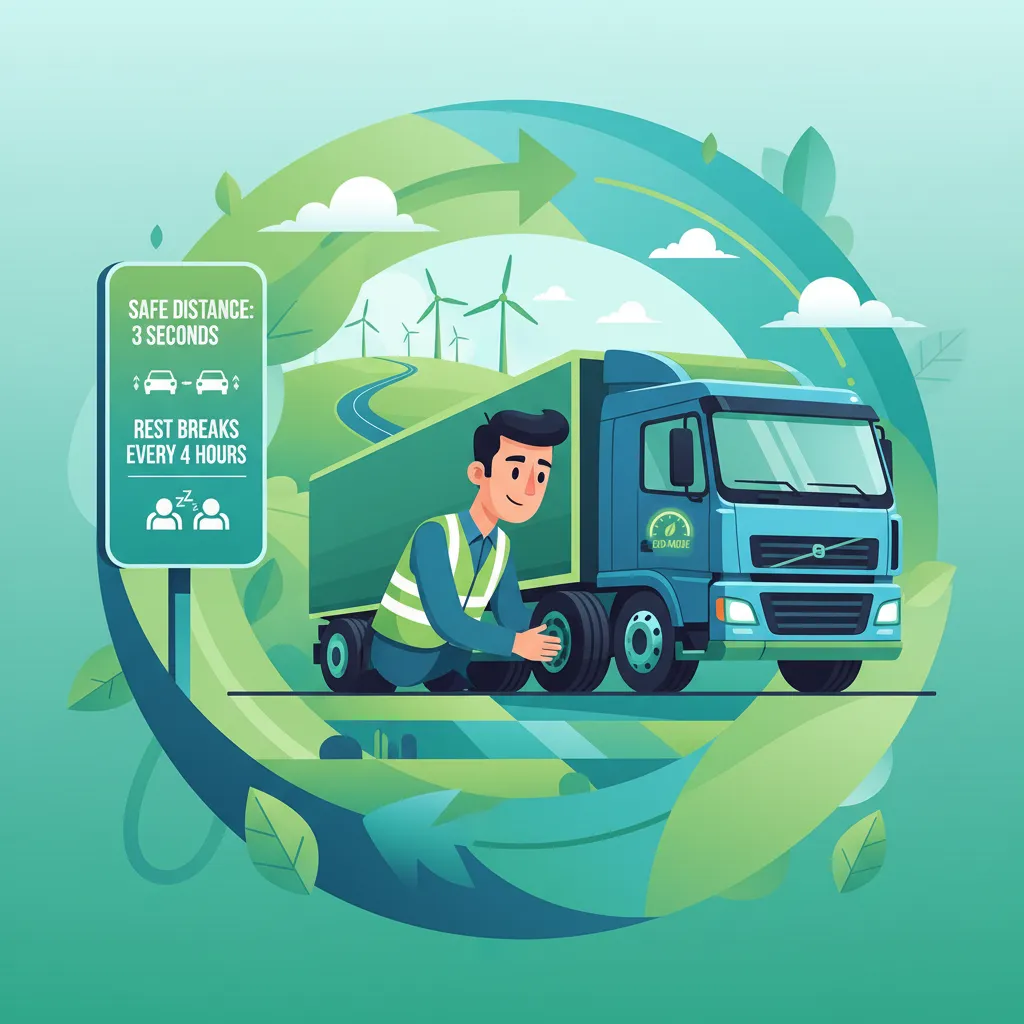
Browse all lessons that make up Operational Safety, Fatigue Management, and Environmental Considerations. Each lesson focuses on specific topics, learning objectives, and core concepts, helping you build essential knowledge and follow a clear, structured progression toward your study goals in Poland.
This lesson addresses the critical safety issue of driver fatigue. It explains the physiological causes of fatigue, including disruption to circadian rhythms, and teaches drivers to recognize its early warning signs. The content reviews the legal requirements for breaks and rest periods in detail and provides practical strategies for managing sleep hygiene and using alertness techniques to ensure they remain focused and responsive while on duty, thereby preventing fatigue-related incidents.
This lesson provides essential knowledge for responding to sudden and dangerous vehicle malfunctions. It outlines step-by-step procedures for handling a catastrophic tire blowout, managing a loss of braking power, and reacting to a shift in cargo that destabilizes the vehicle. The focus is on maintaining as much control as possible, bringing the vehicle to a safe stop away from traffic, and activating hazard warnings to protect the scene and other road users.
This lesson details the professional driver's responsibilities in the event of a collision. It covers the immediate actions required to secure the scene, such as activating hazard lights and placing warning triangles, to prevent further incidents. Learners will understand the correct procedure for contacting emergency services, providing assistance to injured parties if trained, and the legal requirements for documenting and reporting the accident to the authorities and their employer.
This lesson explores the environmental impact of HGV operations and the regulations designed to mitigate it. It covers modern emission control systems and standards (e.g., Euro 6), and the importance of compliance with rules governing noise pollution. The content reinforces eco-driving techniques as a primary method for reducing fuel consumption and emissions, promoting the driver's role in achieving more sustainable and environmentally friendly logistics operations.
This concluding lesson emphasizes that safety is an ongoing commitment built on a professional culture and continuous learning. It discusses the importance of personal health and well-being, including stress management and regular medical checks, as a foundation for safe driving. The content promotes the value of continuous professional development to stay updated on new regulations and technologies, fostering a proactive mindset that prioritizes safety above all else.
Explore high-intent keywords and long-tail search topics learners use when researching Operational Safety, Fatigue Management, and Environmental Considerations. These terms reflect how people search for reliable study materials, structured explanations, and unit-level theory preparation support in Poland.
Find clear answers to the most common questions learners ask about Operational Safety, Fatigue Management, and Environmental Considerations. Understand how the unit is organized, what learning goals it supports, and how it contributes to your study progression with structured explanations and practical guidance tailored for learners in Poland.
Key signs of fatigue include frequent yawning, heavy eyelids, difficulty focusing, drifting out of your lane, missing signs or exits, and feeling irritable or restless. Recognizing these early is crucial for preventing accidents.
Polish and EU work-time regulations mandate specific driving periods and minimum rest times for HGV drivers. Adhering to these rules is not just a legal requirement but a fundamental strategy to prevent fatigue and ensure you are alert and safe when driving.
Your immediate priority is safety: secure the scene if possible, switch on hazard lights, and if safe, set up warning triangles. Then, check for injuries and call emergency services immediately (112 in Poland). Only move vehicles if absolutely necessary and safe to do so.
Eco-driving involves smooth acceleration and braking, anticipating traffic flow, maintaining optimal speed, and reducing idling. These practices directly lower fuel consumption, which in turn reduces CO2 emissions and other pollutants, contributing to better air quality.
HGVs must comply with various EU emission standards (e.g., Euro VI). This means having engines designed to produce fewer harmful emissions. Regular maintenance and correct driving practices, like those learned in eco-driving, help ensure the vehicle operates within these standards.
In case of brake failure, your immediate actions are to engage the parking brake gradually, downshift to lower gears to use engine braking, and steer to a safe location. Use the emergency brake if necessary and warn other road users. Never switch off the engine while moving, as this can disable power steering.
All included lessons
Lessons in Operational Safety, Fatigue Management, and Environmental Considerations
See who benefits most from studying Operational Safety, Fatigue Management, and Environmental Considerations. This overview explains how the unit supports different learning needs, what level of knowledge is helpful before starting, and how it fits into the overall study path in Poland.
This unit is crucial for all aspiring Category C HGV drivers in Poland preparing for their theory exam. It's particularly vital for those new to professional driving, as it consolidates critical safety and responsibility aspects not always covered in basic driving courses, ensuring readiness for complex HGV operations.

Dive into our curated curriculum designed for Polish driving license aspirants. Select a course, follow its guided modules, and master every aspect of traffic rules and road signs necessary to pass your theory exam with confidence.
Polish Theory CurriculumExplore all units and lessons included in this driving theory course.
Dive into our curated curriculum designed for Polish driving license aspirants. Select a course, follow its guided modules, and master every aspect of traffic rules and road signs necessary to pass your theory exam with confidence.
Polish Theory Curriculum