
This lesson outlines the indispensable legal paperwork associated with freight transport for Category C vehicles in Poland. You'll learn the purpose and content of key documents like the load manifest, cargo declaration, and official weight certificates. Understanding these obligations is crucial not only for passing your Polish HGV theory exam but also for ensuring compliance during routine inspections and cross-border operations.

Lesson content overview
Operating a heavy goods vehicle (HGV) in Poland, especially within the Category C class, comes with significant responsibilities that extend beyond driving skills. A critical aspect of these duties involves meticulous management and adherence to legal documentation for transported loads. This lesson, part of the Polish Category C Heavy Goods Vehicle Theory curriculum, details the mandatory paperwork required for both domestic and international freight operations, emphasizing the driver's role in ensuring compliance.
Proper load documentation is not merely bureaucratic overhead; it serves as a robust framework for safety, legal accountability, and efficient cross-border trade. It provides a formal, legally recognized record of the cargo, its conditions, and the parties involved, creating an essential audit trail for transport authorities, customs, and taxation purposes. Understanding and correctly managing these documents protects carriers and drivers from potential fines, vehicle detentions, and serious legal liabilities.
The necessity for comprehensive load documentation stems from a combination of national and international regulations designed to ensure safety, legal compliance, and smooth logistics. These documents confirm that a load's weight, dimensions, and nature have been accurately assessed, aligning with vehicle capabilities and legal limits. They also clarify the responsible parties—the carrier, consignor (sender), and driver—assigning accountability in case of incidents or regulatory breaches. For international operations, standardized documents, such as those governed by the CMR Convention, are crucial for customs clearance and reciprocal enforcement across borders.
This module builds upon foundational knowledge from earlier lessons, particularly those concerning load types, weight limits, and cargo securement. The information recorded in transport documents directly originates from the calculations and checks performed during load preparation. Consequently, accurate documentation is vital for subsequent lessons covering driving maneuvers, vehicle dynamics, and overall operational safety.
Adhering to several core principles is fundamental to effective load documentation for heavy goods vehicles. These principles guide the preparation, management, and retention of all necessary paperwork, ensuring legal compliance and operational safety.
Legal Documentation Requirement: Drivers and carriers must possess and be able to present all required transport documents before and throughout the journey. This guarantees regulatory compliance and allows authorities to verify the legality and safety of the cargo. Failure to comply can result in fines, vehicle detainment, or even suspension of operations.
Accuracy and Completeness: Every document must precisely reflect the true nature, weight, volume, and classification of the load. Accurate data is essential for safety calculations, such as weight distribution and center of gravity, and prevents deception in customs and taxation. Incorrect information can lead to overloaded vehicles, instability, and severe legal penalties.
Timeliness: All documentation must be prepared and finalized prior to departure and kept updated throughout the transport process. Timely preparation allows for necessary checks at loading points and ensures readiness for any roadside or border inspections, preventing last-minute compliance issues. Delays, fines, or denial of entry at borders can result from late or missing documents.
Document Retention: Transport documents must be retained for a legally defined period, typically ranging from 2 to 5 years, following the completion of the transport. This practice provides essential evidence for post-incident investigations, audits, or legal disputes. The loss of critical documents can expose the carrier to prolonged investigations and substantial penalties.
Driver Responsibility: The driver holds direct accountability for verifying that all required documents are present, correct, and legible before commencing a trip. This aligns with a strong safety culture, ensuring that the person operating the vehicle is fully aware of its cargo and compliant status. Drivers who overlook or neglect documentation responsibilities can be held personally liable for infringements.
Several key documents form the backbone of legal load documentation for Category C vehicles in Poland. Each serves a distinct purpose and is crucial for different aspects of freight transport.
The Load Manifest, known in Polish as Spis Ładunku, is a detailed inventory list of all goods loaded onto the vehicle. It meticulously records the type, quantity, weight, dimensions, and packaging details of each item. This document is crucial for general cargo and takes on special importance for dangerous goods, where it must include specific ADR classification codes.
The Load Manifest must be signed by both the consignor (sender) and the carrier. It is particularly required for loads exceeding 1 tonne or when the cargo is not pre-packed in standardized units. It serves as a crucial document for inspections at police checkpoints or customs, providing a clear overview of the vehicle's contents.
A common misunderstanding is assuming a simple commercial receipt is sufficient; however, a formal, detailed manifest is legally mandated. Neglecting packaging details, especially for hazardous materials, is another frequent error. For instance, a truck transporting 15 pallets of steel rods would detail each pallet's individual weight (e.g., 1 tonne), dimensions, and the total gross weight (15 tonnes) within the manifest.
The Cargo Declaration, or Deklaracja Towarowa, is a formal statement typically required for cross-border transport. It declares the nature, origin, value, and customs classification (Harmonized System, or HS code) of the cargo. This document is pivotal for customs clearance and is presented to customs officials at border posts.
Common subcategories include the T2 Transit Declaration for intra-EU road transport, which facilitates the movement of non-Community goods within the EU customs territory, and the CN (Customs Notification) Declaration for formal import/export procedures. EU Regulation 952/2013 (the Union Customs Code) mandates these declarations for all commercial cargo crossing external EU borders, particularly for goods surpassing certain value thresholds or those subject to duties.
It is a frequent error to assume that a commercial invoice can replace a formal cargo declaration. Additionally, failing to update the declaration after any load changes en route can lead to significant issues. An example would be a carrier transporting 3 tonnes of organic chemicals, requiring an HS code, value, and ADR classification on a T2 form before entering another EU country like Germany.
The Weight Certificate, known as Świadectwo Wagi in Polish, is an official document that confirms the gross vehicle weight (GVW) and individual axle loads. This certificate is typically issued by an authorized weighing station and is a critical document for ensuring compliance with road safety regulations and preventing vehicle overloading.
There are typically two types: periodic certificates, required for vehicles exceeding a certain gross total weight (often 3 tonnes), and event-specific certificates, obtained when transporting loads that approach legal weight limits. This document must be kept within the vehicle cab and is frequently inspected during roadside checks by transport authorities.
The Polish Road Transport Act (Prawo o transporcie drogowym) stipulates that vehicles above 3 tonnes GTW must carry a current weight certificate. Drivers often mistakenly believe that the vehicle's technical inspection certificate is sufficient, or they overlook the necessity to obtain a new certificate after adding or removing significant portions of the load. For example, a 12-tonne truck loading 8 tonnes of construction material would obtain a weight certificate showing a total weight of 20 tonnes, confirming it remains within the legal limit of, for instance, 22 tonnes.
The Consignment Note, often referred to as a CMR note or Międzynarodowy List Przewozowy, is a standardized transport contract document used for international road freight. It operates under the framework of the Convention on the Contract for the International Carriage of Goods by Road (CMR Convention).
This document accompanies the vehicle across international borders and provides crucial details about the consignor (sender), consignee (receiver), carrier, and the cargo itself. It exists in standard form for non-dangerous goods and a specific "CMR – ADR" version for hazardous materials. The CMR Convention legally obliges the carrier to hold the original note for the entire duration of the transport.
A common pitfall is believing that a national waybill is adequate for crossing EU borders. Furthermore, neglecting the legal requirement to retain the CMR note for a statutory period, often 5 years after delivery, can lead to compliance issues during audits. An example would be a Polish carrier transporting furniture to the Czech Republic, who must complete a CMR note, signed by both the consignor and the carrier, before commencing the journey.
For the transport of hazardous substances, specific Dangerous Goods Documentation, often referred to as the ADR Pack, is mandatory. This includes the ADR Transport Document, which details the UN number (e.g., UN 1203 for gasoline) and packing group classification, along with appropriate classification labels and emergency response information.
Transporting hazardous materials without the correct and complete ADR documentation is a serious offense that can lead to severe penalties, cargo confiscation, and even criminal charges.
This documentation must accompany the load at all times and be readily accessible, typically displayed in the driver's cabin. The requirements are governed by ADR Annex II (EU Regulation No 1272/2008 CLP, concerning classification, labelling and packaging of substances and mixtures). Misclassifying a substance's hazard class or failing to update documentation after repacking are common errors. For instance, transporting 2 tonnes of diesel requires an ADR document clearly stating UN 1042, its packing group (e.g., III), and relevant safety data sheets (SDS).
The Driver’s Proof of Load Check, or Lista Kontroli Ładunku in Polish, is a vital internal and often legally mandated checklist. It is used by the driver to methodically verify critical aspects of load distribution, cargo securing, and the completeness of documentation before departure.
This checklist typically includes items for a pre-trip inspection, covering visual checks of securing devices and a confirmation of estimated weight distribution. In some cases, a post-trip report might document any load changes during the journey. This document serves as concrete evidence that the driver has performed the required checks, reinforcing accountability and supporting safety protocols. National road traffic regulations often explicitly require verification of load securing before a vehicle begins its travel.
Treating this checklist as optional is a significant misunderstanding. It is a critical tool for mitigating risk. An example would be a driver signing off on the checklist, confirming that the cargo weight does not exceed axle limits and that the load is properly restrained with appropriate lashing equipment.
Understanding the specific laws and regulations is paramount for compliance in heavy goods vehicle transport. Both Polish national laws and broader EU regulations dictate the requirements for load documentation.
The Polish Road Transport Act (Ustawa o transporcie drogowym) is the primary national legislation governing road transport in Poland.
The main body of law in Poland that regulates the commercial transport of goods and passengers by road, including licensing, vehicle requirements, and operational procedures for carriers and drivers.
It mandates that every commercial vehicle transporting a load, especially those exceeding specific weight thresholds, must carry a valid Weight Certificate and Load Manifest (Spis Ładunku). This applies to all Category C vehicles during the transport of goods, ensuring vehicle stability and safe road operations. Compliance is mandatory, and violations can lead to significant penalties.
While not directly a load documentation requirement, EU Regulation 165/2014, concerning tachographs, indirectly influences documentation. The regulation governs driving times, rest periods, and records these activities. Since load weight directly impacts vehicle dynamics and safety, heavier loads can influence average speeds and thus the need for mandatory driver rest periods as recorded by the tachograph. Accurate load documentation supports tachograph compliance by ensuring calculations are based on correct operational parameters.
The CMR Convention is a United Nations convention that governs the legal contractual framework for the international carriage of goods by road.
An international treaty that standardizes the conditions for contracts for the international carriage of goods by road, particularly concerning the documents used and the liability of the carrier.
Under this convention, an original CMR Consignment Note must be in the possession of the carrier (and thus the driver) for the entire journey when undertaking international road transport within CMR signatory states. This is a mandatory requirement for cross-border freight and is crucial for legal disputes and establishing responsibilities.
The ADR is a European Agreement that sets out regulations for the international carriage of dangerous goods by road.
An international agreement governing the transport of hazardous materials by road across international borders, specifying requirements for packaging, labelling, vehicle construction, and documentation.
It mandates that the transport of hazardous substances requires specific ADR Transport Documents, proper labeling, and strict compliance with packing groups (Class I, II, III, based on danger level). This applies to any Category C vehicle carrying classified dangerous goods and is mandatory. Failure to comply can lead to severe penalties, including cargo confiscation and legal prosecution.
The Union Customs Code (UCC), established by Regulation (EU) No 952/2013, governs customs procedures across the European Union.
The comprehensive legal framework that defines the rules and procedures for customs across the European Union, including import, export, and transit declarations.
It stipulates that a Cargo Declaration (e.g., T2, CN) must accompany goods crossing EU external borders. This declaration requires details such as value, origin, and HS (Harmonized System) code. This is mandatory for international freight, particularly imports and exports, and non-compliance can result in customs fines or seizure of goods.
Specific regulations issued by the Polish Minister of Infrastructure further detail the requirements for vehicle load documentation. These regulations reinforce that trucks must keep a Load Manifest in the vehicle cabin, and the driver must be able to present it to police upon demand. This rule applies specifically to domestic freight transport exceeding a specified weight, reinforcing the national compliance framework.
Understanding typical violations and how they manifest in real-world scenarios is crucial for preventing non-compliance.
The requirements and scrutiny for load documentation can vary based on several contextual factors.
These scenarios illustrate how legal obligations for load documentation play out in real-world heavy goods vehicle operations.
Setting: A 12-tonne Category C truck departs from a warehouse in Warsaw, carrying 8 tonnes of building materials (e.g., bricks and cement bags) on a regional road during clear weather.
Rule/Decision Point: The driver must possess a complete Load Manifest (Spis Ładunku) and a valid Weight Certificate (Świadectwo Wagi) as per Polish law.
Correct Behavior: Before departure, the driver carefully checks the Load Manifest, ensuring all items, quantities, and weights are correctly listed. They confirm that the total gross vehicle weight (20 tonnes) is within the legal GVW limit for the vehicle (e.g., 22 tonnes). The driver signs the pre-trip load checklist, confirming load securement, and ensures the current Weight Certificate is prominently displayed or readily available in the cab. During a roadside check, all documents are presented promptly, and the journey proceeds without interruption.
Incorrect Behavior: The driver, in a rush, either omits the Load Manifest entirely or carries an expired Weight Certificate from the previous month. If stopped by the police, the driver receives a fine for missing or invalid documentation. The vehicle might be detained until proper re-weighing is conducted or valid paperwork is supplied, causing significant delays to the delivery schedule.
Setting: A truck is transporting 5 tonnes of industrial solvent (classified under UN 1263, a hazardous material) from Poznań, Poland, to Berlin, Germany, crossing the border during a rainy autumn day.
Rule/Decision Point: Due to the international transport of hazardous goods, comprehensive ADR Documentation, a CMR Consignment Note, and a Cargo Declaration (T2 form) must be present and correctly completed.
Correct Behavior: The driver ensures all necessary documents are prepared: the ADR transport document with UN number, packing group, and emergency instructions; a fully completed CMR note signed by all parties; and an accurate T2 form for customs transit. At the German border checkpoint, customs officials verify the extensive documentation. Finding everything in order, they process the cargo as compliant, allowing the vehicle to pass efficiently into Germany, despite the adverse weather conditions.
Incorrect Behavior: The driver forgets to include a critical part of the ADR documentation, such as the safety data sheet or proper hazard labels. At the German customs checkpoint, officials immediately identify the omission. The cargo is detained, a severe safety violation notice is issued, and a hefty penalty is imposed on the carrier. The driver may also face personal liability, and the dangerous goods cannot proceed until all documentation and safety measures are correctly in place.
Setting: Mid-journey, a driver operating a Category C truck stops at a logistics hub to unload 2 tonnes of empty pallets and load an additional 1 tonne of spare automotive parts.
Rule/Decision Point: Any significant change in load composition or weight requires an immediate update to the Load Manifest and, if necessary, a review or new Weight Certificate, along with an updated driver’s load check.
Correct Behavior: Upon completing the load adjustment, the driver immediately updates the Load Manifest to reflect the new cargo items and revised weights. If the weight change is substantial or brings the vehicle close to its limits, the driver proactively obtains a quick weigh-in-motion verification at the hub or a nearby certified station. They then sign the updated load checklist, confirming the new load is secure and documented. This diligent update ensures continued compliance for the remainder of the journey.
Incorrect Behavior: The driver, feeling pressured for time, proceeds without revising any documents. Later, during a routine inspection, authorities discover a discrepancy between the original recorded load manifest and the actual cargo present in the vehicle. This mismatch leads to a fine for inaccurate documentation and potential questions regarding the securement of the newly added items.
Accurate load documentation is intrinsically linked to vehicle stability and braking performance. Precise recording of cargo weight and distribution allows drivers and carriers to calculate and maintain the vehicle's center of gravity within safe limits, significantly reducing the risk of rollovers, particularly on curves or uneven terrain. Similarly, correctly documented load weights ensure that the vehicle never exceeds its design parameters for braking, preventing dangerously extended stopping distances that can lead to accidents.
Standardized documentation, such as the CMR Consignment Note and ADR Transport Document, establishes uniform procedures for inspections and checks across different jurisdictions. This predictability reduces uncertainties and delays at border crossings and weigh stations, streamlining logistical operations. By knowing exactly what documents are required and what information they should contain, drivers and carriers can prepare meticulously, avoiding costly hold-ups.
Implementing a mandatory pre-trip driver’s load check list (Lista Kontroli Ładunku) serves as a critical tool to mitigate human error. It reduces reliance on memory, ensuring that crucial checks—from load securement to document presence—are not overlooked due to fatigue, time pressure, or distractions. This structured approach fosters a culture of consistent compliance and accountability, ultimately contributing to overall road safety.
Adhering to legal obligations for load documentation is a cornerstone of responsible and compliant heavy goods vehicle operation in Poland and across the EU.
Legal Basis: The foundation for these requirements lies in the Polish Road Transport Act (Ustawa o transporcie drogowym), the EU CMR Convention, the ADR Agreement, and the Union Customs Code (Regulation (EU) No 952/2013).
Mandatory Documents: Key documents that drivers must possess and manage include the:
Key Requirements: Beyond merely possessing documents, they must adhere to strict standards of accuracy, completeness, and timeliness. Furthermore, legal regulations dictate document retention periods and emphasize their constant availability for inspection by authorities.
Step 1: Determine Cargo Details. Identify the exact type, weight, and destination of the cargo. This informs which documents are needed.
Step 2: Prepare Basic Cargo Documents. Complete the Load Manifest and, if required for international or customs purposes, the Cargo Declaration.
Step 3: Obtain Weight Certificate. Secure a current, official Weight Certificate from a certified weighing station, confirming GVW and axle loads.
Step 4: Prepare International & Customs Forms. For international journeys, complete the CMR Consignment Note and any necessary customs forms (e.g., T2).
Step 5: Compile ADR Documentation. If transporting hazardous materials, meticulously prepare all required ADR documents, including UN numbers and safety data sheets.
Step 6: Perform Pre-Trip Checks. Conduct a thorough pre-trip load check, verify all documents, sign the Driver’s Load Check List, and ensure all paperwork is securely kept within the vehicle cab, ready for inspection.
Step 7: Update Documents En Route. Promptly update any relevant documents immediately after any changes to the load's composition or weight occur during the journey.
Step 8: Retain Documents. After transport, retain all documents for the legally mandated period for potential audits or investigations.
Impact: Diligent adherence to these documentation requirements safeguards vehicle stability and operational safety, ensures legal compliance, prevents fines and detentions, facilitates smooth border crossings, and ultimately contributes to the overall efficiency and security of road transport.
This lesson covers the mandatory legal documentation for Polish Category C HGV operations, detailing six essential documents: Load Manifest, Cargo Declaration, Weight Certificate, CMR Consignment Note, ADR Documentation, and Driver's Load Check List. Drivers must verify document accuracy, completeness, and timeliness before departure, with specific requirements varying between domestic and international transport. Key regulations include the Polish Road Transport Act, CMR Convention, ADR Agreement, and Union Customs Code. Common violations include missing manifests, incorrect weight reporting, and inadequate dangerous goods paperwork, each carrying significant penalties including fines, vehicle detention, and criminal charges.
A short set of high-value points that capture the most important learning from this lesson.
Every Category C driver must carry and verify mandatory documents including Load Manifest, Weight Certificate, and Cargo Declaration before departure
The Load Manifest must detail exact type, weight, and quantity of each cargo item and be signed by both consignor and carrier
Weight Certificates are mandatory for vehicles exceeding 3 tonnes GVW and must reflect current load conditions
International transport requires additional documents: CMR Consignment Note for cross-border trips and T2/CN customs declarations for EU external borders
Drivers bear direct personal responsibility for document accuracy and must complete a pre-trip load checklist before every journey
Explore all units and lessons included in this driving theory course.
Load Manifest (Spis Ładunku) is required for loads exceeding 1 tonne and must include packaging details, especially for hazardous goods with ADR codes
CMR Consignment Note is mandatory for international transport under the CMR Convention and must be retained for 5 years after delivery
ADR documentation must include UN number, packing group, and safety data sheets when transporting hazardous materials
Any load change during the journey requires immediate document updates to both Load Manifest and Weight Certificate
Polish Road Transport Act mandates that all commercial vehicles carrying loads must keep a valid Weight Certificate in the vehicle cabin
Assuming a commercial invoice or simple receipt is sufficient instead of a formal Load Manifest
Using an expired Weight Certificate or failing to obtain a new one after significant load changes
Relying on digital copies without verifying if physical paper copies are required by local regulations
Transporting hazardous goods with incomplete ADR documentation such as missing UN numbers or safety data sheets
Failing to update load documents after adding or removing cargo at logistics hubs mid-journey
Lesson content overview
A short set of high-value points that capture the most important learning from this lesson.
Every Category C driver must carry and verify mandatory documents including Load Manifest, Weight Certificate, and Cargo Declaration before departure
The Load Manifest must detail exact type, weight, and quantity of each cargo item and be signed by both consignor and carrier
Weight Certificates are mandatory for vehicles exceeding 3 tonnes GVW and must reflect current load conditions
International transport requires additional documents: CMR Consignment Note for cross-border trips and T2/CN customs declarations for EU external borders
Drivers bear direct personal responsibility for document accuracy and must complete a pre-trip load checklist before every journey
Explore all units and lessons included in this driving theory course.
Load Manifest (Spis Ładunku) is required for loads exceeding 1 tonne and must include packaging details, especially for hazardous goods with ADR codes
CMR Consignment Note is mandatory for international transport under the CMR Convention and must be retained for 5 years after delivery
ADR documentation must include UN number, packing group, and safety data sheets when transporting hazardous materials
Any load change during the journey requires immediate document updates to both Load Manifest and Weight Certificate
Polish Road Transport Act mandates that all commercial vehicles carrying loads must keep a valid Weight Certificate in the vehicle cabin
Assuming a commercial invoice or simple receipt is sufficient instead of a formal Load Manifest
Using an expired Weight Certificate or failing to obtain a new one after significant load changes
Relying on digital copies without verifying if physical paper copies are required by local regulations
Transporting hazardous goods with incomplete ADR documentation such as missing UN numbers or safety data sheets
Failing to update load documents after adding or removing cargo at logistics hubs mid-journey
Explore search topics learners often look for when studying Legal Obligations for Load Documentation. These topics reflect common questions about road rules, driving situations, safety guidance, and lesson level theory preparation for learners in Poland.
Browse additional driving theory lessons that cover connected traffic rules, road signs, and common driving situations related to this topic. Improve your understanding of how different rules interact across everyday traffic scenarios.
Understand the critical legal documents required for transporting cargo with Category C vehicles in Poland and the EU. Covers manifests, CMR, ADR, and weight certificates essential for compliance and avoiding penalties.
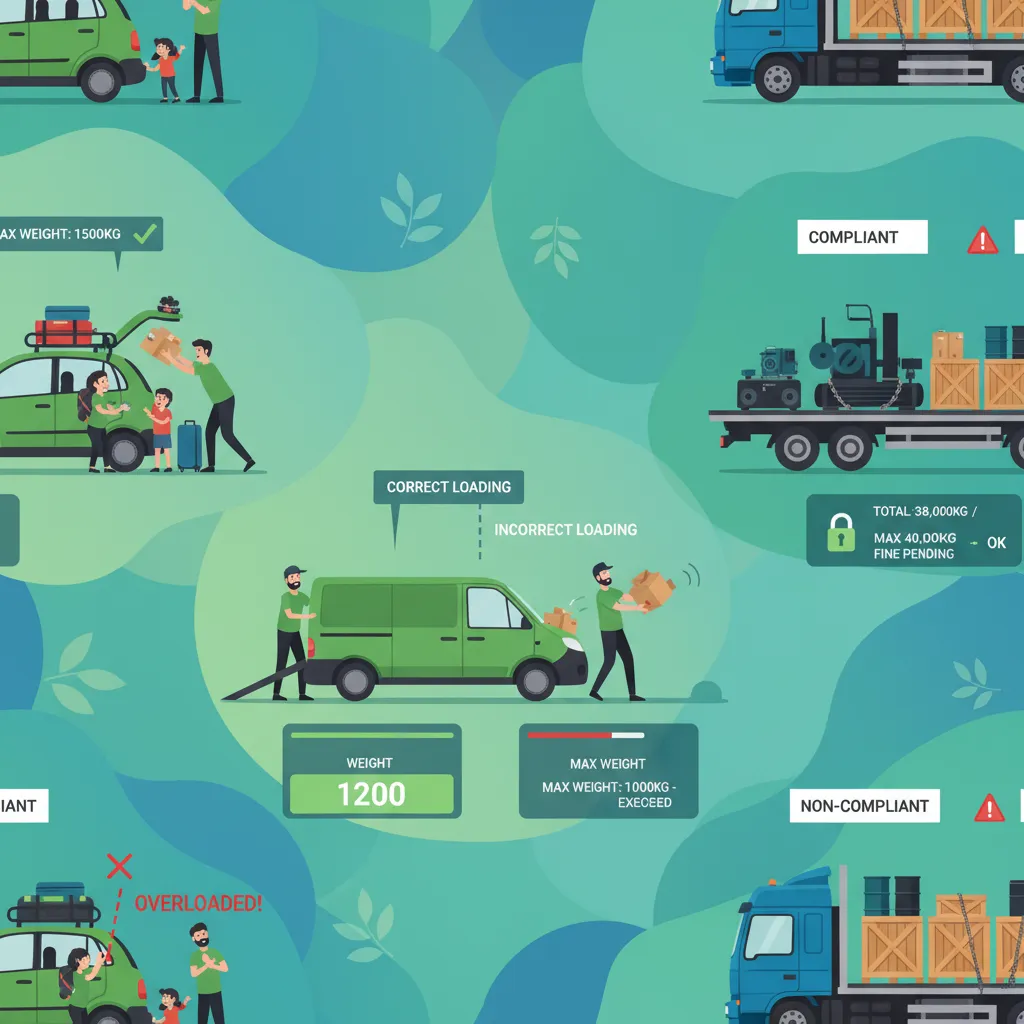
This lesson introduces the legal framework governing vehicle and axle weight limits in Poland and the EU. Learners will understand how to determine a vehicle's maximum permissible payload and interpret official load charts and documentation. The content covers the importance of correct weight distribution to avoid exceeding individual axle limits and explains the serious legal and safety consequences of operating an overloaded vehicle.
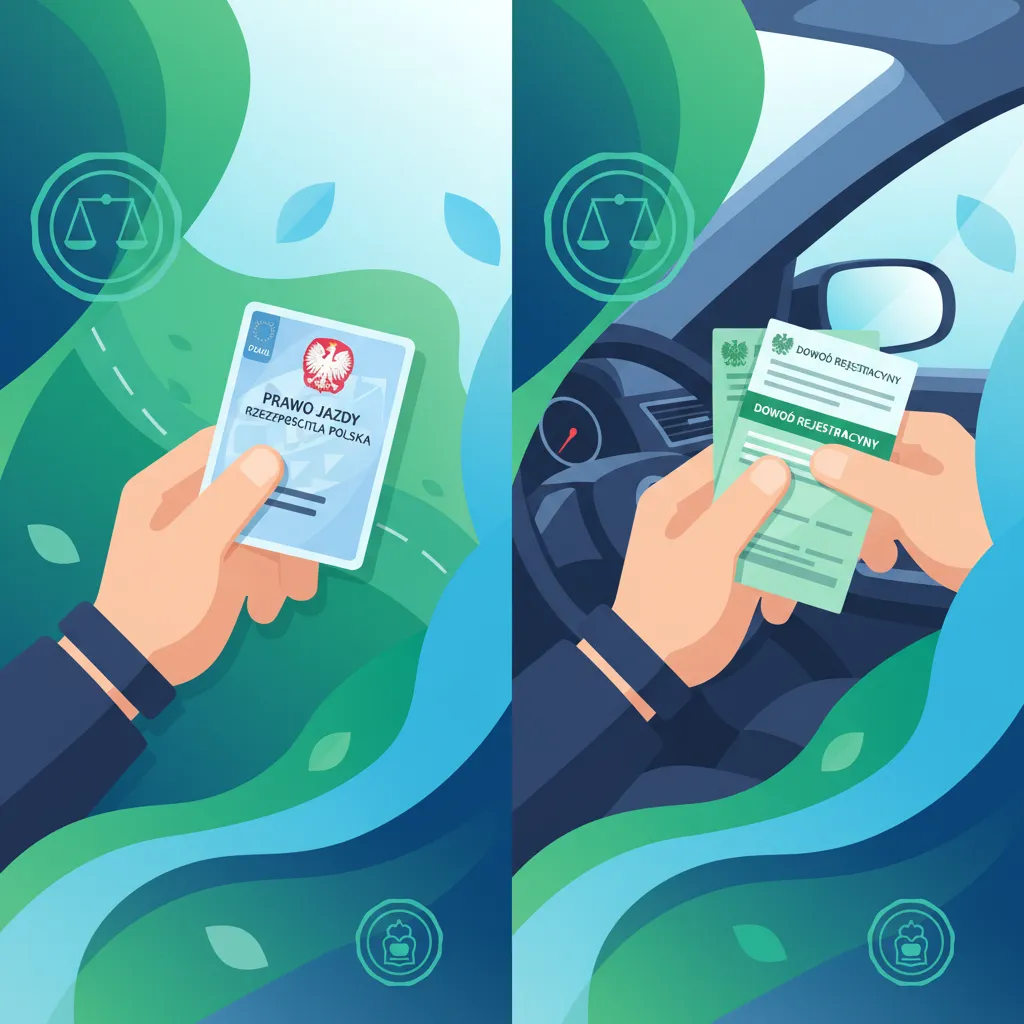
This lesson focuses on the critical documentation every professional driver must carry and maintain. It covers the driver's licence, vehicle registration, and tachograph records, explaining their legal importance and proper management. Learners will also study the requirements for transport permits, cargo declarations, and safety inspection reports, ensuring full compliance with Polish and EU regulations to avoid penalties and operational delays during roadside checks.

This lesson provides an overview of the key EU regulations that harmonize the road transport industry across member states. It focuses on the standardized rules for drivers' hours and rest periods, which are designed to combat fatigue and enhance safety. The content also explains the principles of cabotage—the transport of goods within one member state by a haulier from another—and the necessary documentation for smooth and legal cross-border operations.

This lesson provides a detailed breakdown of vehicle classifications relevant to the Category C licence. It explains the concept of 'dopuszczalna masa całkowita' (permissible total weight) and how it defines a vehicle's category. Learners will identify different truck types, such as rigid vehicles, based on their axle configurations and understand the specific roadworthiness and registration requirements for each class, ensuring correct vehicle operation under the law.
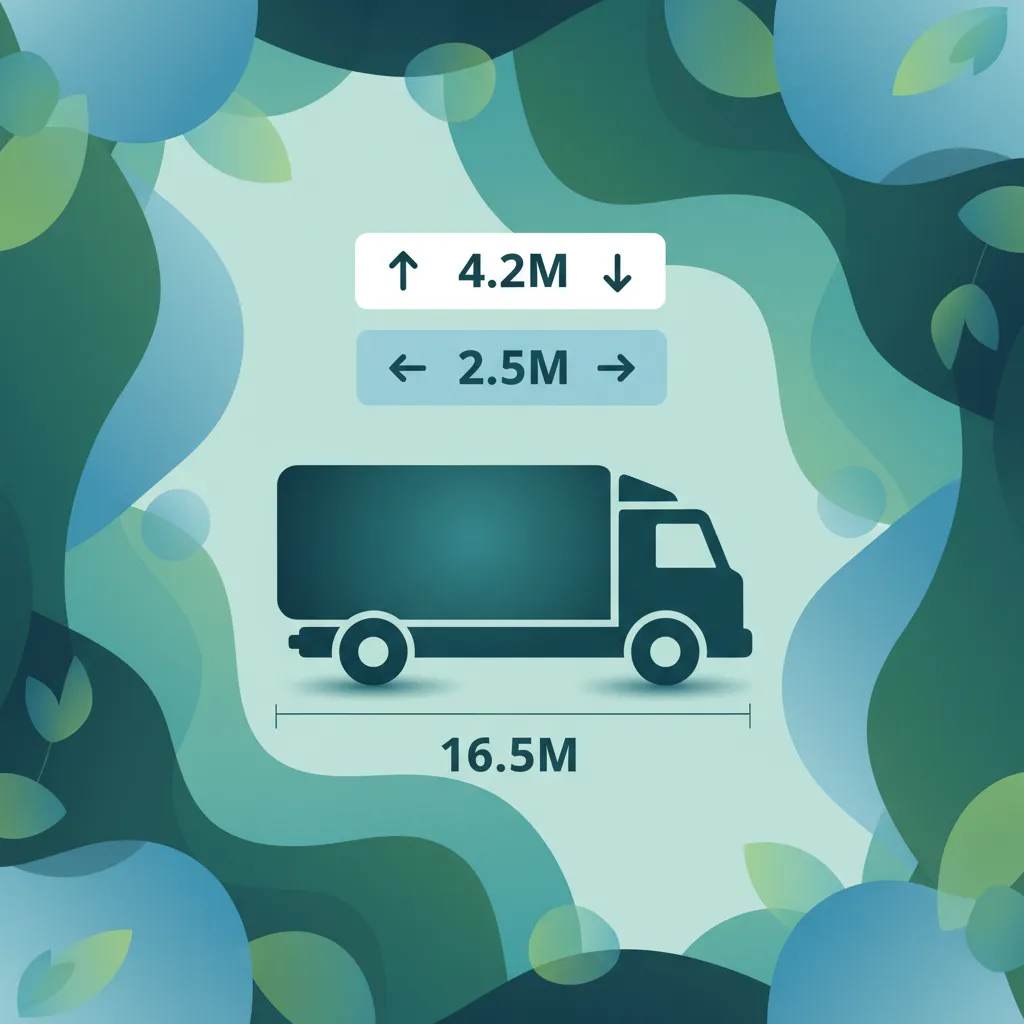
This lesson concentrates on the specific road signs that are of utmost importance to HGV drivers. It details how to interpret signs indicating maximum permissible weight, axle load, vehicle height, and overall length. Understanding these restrictions is crucial for effective route planning to avoid bridges with low clearance, roads with weight limits, or tunnels that cannot accommodate the vehicle's dimensions, thus preventing accidents and infrastructure damage.
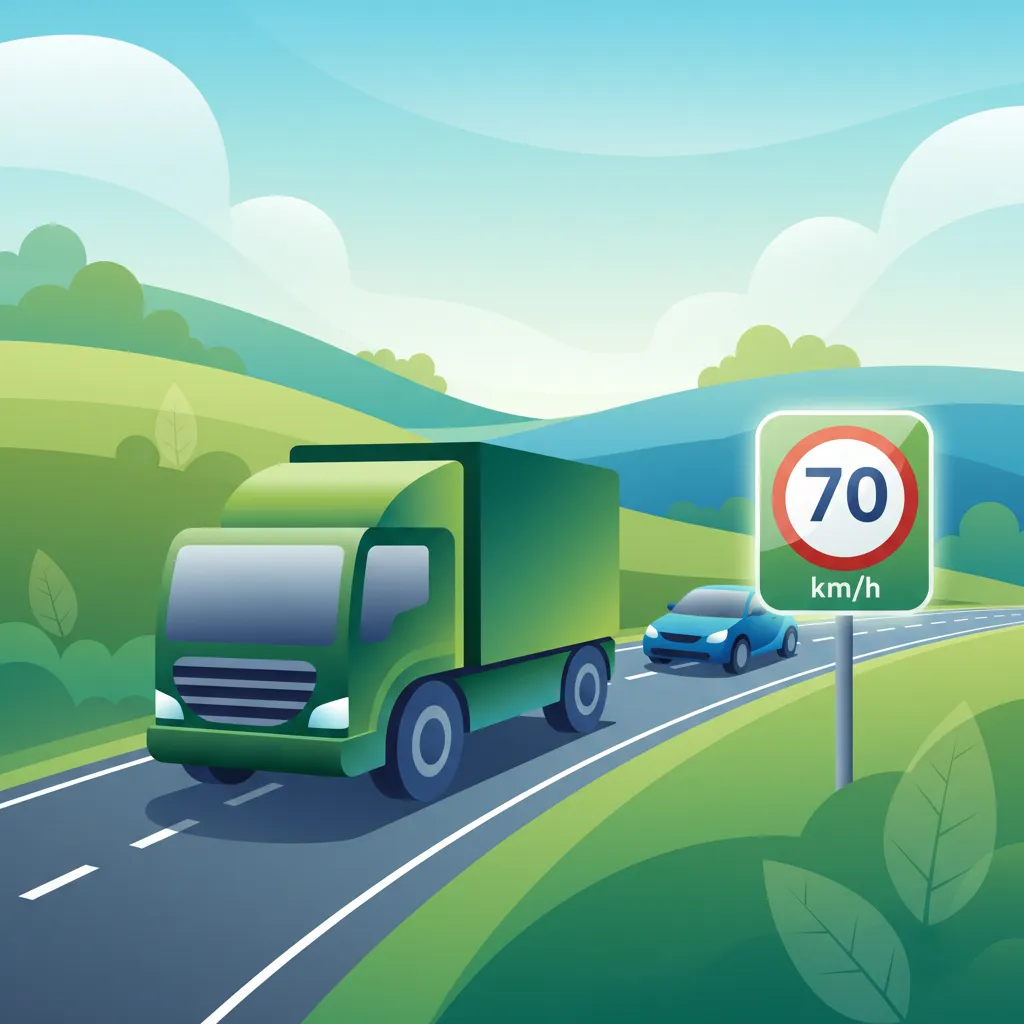
This lesson outlines the statutory speed limits that professional drivers of Category C vehicles must adhere to on Polish roads. It clearly distinguishes the maximum permitted speeds in built-up areas, on single carriageways, and on motorways. The content also explains how to interpret road signs that may indicate temporary or vehicle-specific speed restrictions, ensuring drivers remain compliant with the law and avoid penalties from speed enforcement measures.

This lesson provides comprehensive guidelines for safely transporting agricultural equipment, focusing on proper load securing techniques and weight distribution calculations. It discusses route planning that accounts for road conditions, bridge weight capacities, and seasonal obstacles like mud or snow. The lesson also emphasizes the use of protective equipment and regular compliance verification for safe operations.

This lesson examines the signs that convey dimensional and weight restrictions, which are vital for safe tractor and trailer operation. It outlines how to read width, height, and weight limit signs and the legal implications of exceeding these limits. The lesson provides guidance on planning loads to comply with bridge and road classification restrictions found across Polish rural networks.
Explore practical scenarios and common violations related to essential load documentation for Category C HGV drivers in Poland. Learn how to navigate situations like load changes, international transport, and hazardous materials to ensure full legal compliance.
This lesson focuses on the critical documentation every professional driver must carry and maintain. It covers the driver's licence, vehicle registration, and tachograph records, explaining their legal importance and proper management. Learners will also study the requirements for transport permits, cargo declarations, and safety inspection reports, ensuring full compliance with Polish and EU regulations to avoid penalties and operational delays during roadside checks.
This lesson introduces the legal framework governing vehicle and axle weight limits in Poland and the EU. Learners will understand how to determine a vehicle's maximum permissible payload and interpret official load charts and documentation. The content covers the importance of correct weight distribution to avoid exceeding individual axle limits and explains the serious legal and safety consequences of operating an overloaded vehicle.
This lesson provides a detailed breakdown of vehicle classifications relevant to the Category C licence. It explains the concept of 'dopuszczalna masa całkowita' (permissible total weight) and how it defines a vehicle's category. Learners will identify different truck types, such as rigid vehicles, based on their axle configurations and understand the specific roadworthiness and registration requirements for each class, ensuring correct vehicle operation under the law.

This lesson equips drivers with the skills to operate a large vehicle within the challenging confines of an urban environment. It addresses how to navigate narrow streets, deal with traffic calming measures, and manage frequent stop-and-go situations while being vigilant for pedestrians and other road users. The content also emphasizes the importance of meticulous route planning to avoid unsuitable roads and the use of anticipation to maintain smooth progress and minimize disruption in congested areas.
This lesson outlines the statutory speed limits that professional drivers of Category C vehicles must adhere to on Polish roads. It clearly distinguishes the maximum permitted speeds in built-up areas, on single carriageways, and on motorways. The content also explains how to interpret road signs that may indicate temporary or vehicle-specific speed restrictions, ensuring drivers remain compliant with the law and avoid penalties from speed enforcement measures.
This lesson provides an overview of the key EU regulations that harmonize the road transport industry across member states. It focuses on the standardized rules for drivers' hours and rest periods, which are designed to combat fatigue and enhance safety. The content also explains the principles of cabotage—the transport of goods within one member state by a haulier from another—and the necessary documentation for smooth and legal cross-border operations.

This lesson explains the specialized techniques required for initiating movement and bringing a heavy, loaded truck to a halt. It emphasizes fine clutch and throttle control to overcome inertia without causing driveline stress or cargo shift. Learners will also study methods for smooth, gradual braking that account for the vehicle's significant momentum, ensuring safety, passenger comfort, and the integrity of the cargo while minimizing wear on the braking system.
This lesson concentrates on the specific road signs that are of utmost importance to HGV drivers. It details how to interpret signs indicating maximum permissible weight, axle load, vehicle height, and overall length. Understanding these restrictions is crucial for effective route planning to avoid bridges with low clearance, roads with weight limits, or tunnels that cannot accommodate the vehicle's dimensions, thus preventing accidents and infrastructure damage.

This lesson examines real-world case studies of harvest traffic, where multiple tractors and trailers share limited road space during peak agricultural periods. Learners explore strategies for coordinating speed, maintaining safe distances, and using signaling to communicate intentions. The content also addresses the challenges of field access points and the need for cooperation with other drivers.

This lesson details the professional driver's responsibilities in the event of a collision. It covers the immediate actions required to secure the scene, such as activating hazard lights and placing warning triangles, to prevent further incidents. Learners will understand the correct procedure for contacting emergency services, providing assistance to injured parties if trained, and the legal requirements for documenting and reporting the accident to the authorities and their employer.
Find clear answers to common questions learners have about Legal Obligations for Load Documentation. Learn how the lesson is structured, which driving theory objectives it supports, and how it fits into the overall learning path of units and curriculum progression in Poland. These explanations help you understand key concepts, lesson flow, and exam focused study goals.
The load manifest serves as a detailed record of the goods being transported. It typically includes information such as the consignor, consignee, description of goods, quantity, weight, and sometimes value. Its primary purpose is to ensure transparency and accountability throughout the transport process, facilitating inspections and customs procedures.
Yes, while the general principle remains the same, specific requirements for cargo declarations can vary. International transport, especially outside the EU or for certain regulated goods, often demands more extensive and specific customs declarations. Within the EU, standard transport documents usually suffice, but compliance with individual country regulations is still necessary for Category C operators.
Incomplete or incorrect load documentation can lead to significant penalties for Category C drivers and their employers. These can include fines, vehicle immobilization, delays, and even legal proceedings. Serious breaches, especially concerning dangerous goods or illegal transport, can result in licence suspension or revocation. It's crucial for drivers to verify all paperwork.
A Category C driver must verify the accuracy and completeness of all load documentation before every single departure. This is a critical step in the pre-trip inspection process. Any discrepancies should be reported and rectified before the journey begins to ensure compliance with Polish and international transport laws.
An official weight certificate provides certified proof of a vehicle's or cargo's weight, often issued at a weighbridge. It's crucial for Category C transport to ensure compliance with legal axle load and gross vehicle weight limits. This document helps prevent overloading, which is a serious offence in Poland and poses significant safety risks, impacting braking and vehicle stability.
Build custom practice sessions tailored precisely to your needs. Focus on areas requiring improvement, review specific Polish road signs, or master complex traffic rules to ensure full preparation for your official driving license exam.