
This concluding lesson focuses on building a strong safety culture as a professional HGV driver. We'll cover how continuous learning, personal well-being, and staying updated on regulations are crucial for safe driving and exam success in Category C licensing.

Lesson content overview
Operating a heavy goods vehicle (HGV) safely on Polish and international roads demands more than just initial training and a valid licence. It requires an ongoing commitment to learning, a proactive approach to personal well-being, and an ingrained safety-first mindset. This lesson explores the critical role of continuous professional development (CPD) and a robust safety culture in ensuring the highest standards of safety for Category C drivers.
For professional Category C drivers, safety is a dynamic and evolving responsibility. It encompasses not only adherence to traffic laws and vehicle operation principles but also a deep understanding of human factors and the constantly changing landscape of road transport. The physical and mental condition of the driver, coupled with up-to-date knowledge of regulations and technologies, forms the bedrock of safe HGV operations. Embracing a philosophy of lifelong learning and a strong safety culture significantly mitigates risks, protects lives, and enhances overall road safety.
A safety culture is more than just a set of rules; it's the collective mindset, shared values, and ingrained practices that prioritize safety above all other operational considerations. For a Polish HGV driver, this means consistently making decisions that reduce risk, even when faced with time pressures or logistical challenges.
The shared values, attitudes, and behaviors within an organization that collectively prioritize safety in all operations and decision-making processes. It encourages open communication about hazards and a commitment to continuous improvement.
A strong safety culture transforms safety from a mere compliance requirement into a core organizational value. When safety is deeply embedded, drivers naturally assess risks, report potential hazards, and adhere to safety protocols without needing constant supervision. This proactive approach significantly reduces the likelihood of accidents and near-misses by fostering an environment where safe practices are not just expected but actively rewarded and supported. It influences everything from how a driver performs a pre-trip inspection to how they interact with dispatchers and manage their time on the road.
Effective safety culture relies heavily on several key components:
For example, a transport company might hold weekly "Safety Huddles" where drivers discuss recent near-misses, share best practices for challenging routes, and collectively brainstorm ways to improve safety protocols. This active engagement reinforces the idea that safety is a shared responsibility and that every driver's input is valued.
The world of road transport is constantly evolving, with new regulations, vehicle technologies, and best practices emerging regularly. Continuous Professional Development (CPD) ensures that Category C drivers remain competent, compliant, and equipped to handle these changes throughout their careers.
Structured, ongoing learning activities that maintain, improve, and expand a professional driver's knowledge, skills, and competencies, ensuring they remain current with legal, technical, and safety standards.
The initial Category C licence exam provides a fundamental understanding, but it is merely the starting point. Without ongoing training, a driver's knowledge can quickly become outdated. This can lead to:
CPD is not just about avoiding penalties; it's about maintaining a proactive mindset that prioritizes safety, efficiency, and professionalism. It empowers drivers to adapt to new challenges and continuously improve their performance.
CPD for Category C drivers can take various forms, offering flexibility while ensuring comprehensive coverage:
For instance, if there's a legislative change to maximum speed limits for HGVs on motorways in Poland or across the EU, drivers would typically complete an online CPD module within a specified timeframe to ensure immediate compliance.
In Poland, the commitment to CPD for professional drivers is legally mandated. The Polish Road Transport Act, in conjunction with specific regulations on professional drivers, requires Category C licence holders to undergo periodic training.
Generally, professional drivers must complete at least 35 hours of CPD every 5 years to maintain their professional driver's qualification. This periodic training is crucial for ensuring that drivers not only acquire their initial qualification but also continuously update it in response to new challenges and legislative changes. Failure to complete mandatory CPD can result in fines and, in some cases, suspension of the professional driving qualification. These regulations align with broader EU directives, ensuring a consistent standard of driver competence across member states.
The driver is the most critical component of any heavy goods vehicle operation. Their physical and mental condition directly impacts reaction time, judgment, and vehicle control. Therefore, prioritizing personal health and well-being is not just a personal choice but a fundamental safety imperative for Category C drivers.
All professional Category C drivers in Poland are legally required to possess a current medical fitness certificate. This document, issued after a comprehensive health assessment, confirms that the driver meets the necessary physical and mental standards to safely operate an HGV.
An official document, issued by a qualified physician, confirming that a driver meets the required health standards (physical and mental) to safely operate a heavy goods vehicle, often subject to periodic renewal.
Polish Regulations on Professional Drivers (Rozporządzenie Ministra Infrastruktury, 2005, with subsequent amendments) mandate regular medical examinations. For most drivers, these are required every 5 years. However, for drivers with certain health conditions (e.g., diabetes, hypertension), or those over a specific age, more frequent examinations may be necessary.
It's a common misunderstanding to assume that "feeling fine" equates to medical fitness. Certain conditions can be asymptomatic but still pose a risk to safe driving, or they might legally require specific monitoring to ensure continued eligibility for a professional licence. Regular checks ensure early detection and management of any health issues that could impair driving ability, thereby reducing the risk of medical-related incidents on the road.
Driving a heavy goods vehicle, especially on long hauls or through congested urban areas, can be incredibly stressful. Mental strain can impair judgment, increase aggression, and reduce reaction times just as effectively as physical fatigue. Therefore, mastering stress management techniques is a vital skill for every professional driver.
Techniques to build mental resilience and manage stress include:
While there might not be explicit laws mandating stress management, Polish labour law provisions (similar to OSHA guidelines) require employers to assess and mitigate occupational stress where possible. For the driver, proactive stress management directly contributes to safer driving behaviour, such as maintaining safe following distances and avoiding aggressive manoeuvres, particularly on congested routes.
Sleep hygiene refers to the set of practices and habits necessary to get quality, restorative sleep. Given that driver fatigue is a major contributing factor to HGV accidents, excellent sleep hygiene is non-negotiable for professional drivers.
Key strategies for good sleep hygiene include:
Before a long haul, perform a personal fatigue level check. If you feel tired, make the conscious decision to take a break at the next service area, even if it means a slight delay. Your safety and the safety of others depend on it.
These practices directly support adherence to EU Regulation (EC) No 561/2006 on drivers’ hours, which mandates minimum daily and weekly rest periods. By optimizing sleep quality, drivers are better equipped to remain alert and make sound judgments throughout their shifts, significantly reducing the risk of fatigue-related incidents.
The road transport sector is dynamic, with constant evolution in laws, vehicle technology, and safety standards. Professional Category C drivers must proactively adapt to these changes to ensure continued compliance and safe operation.
Traffic law and transport regulations are frequently amended, both at the national (Polish) and European Union levels. These changes can cover a wide range of topics, including:
It is a common misunderstanding to assume that once a licence is obtained, the rules remain static. Professional drivers must actively engage in CPD and self-study to stay informed. Transport companies also have a responsibility to communicate these changes effectively to their drivers. For example, if a national amendment reduces the maximum speed for HGVs on motorways, drivers must update their knowledge, recalibrate route-planning tools, and adjust their driving behaviour accordingly.
Modern heavy goods vehicles are increasingly equipped with sophisticated technologies designed to enhance safety, efficiency, and driver comfort. Drivers need to understand how these systems work and how to interact with them effectively.
Training on these technologies is a crucial part of CPD. For instance, the introduction of mandatory electronic tachographs necessitated widespread training for drivers on how to operate the devices accurately, interpret the data, and understand the implications for drivers' hours compliance. Proper use of these technologies significantly contributes to safety and regulatory adherence.
Compliance with a range of specific regulations is fundamental to operating heavy goods vehicles in Poland and across the EU. These rules cover driver fitness, training obligations, operational limits, and reporting requirements.
These regulations collectively form a robust framework designed to ensure the safety and professionalism of Category C drivers in Poland and throughout the European Union. Adherence to these rules is not merely a legal obligation but a cornerstone of responsible and safe heavy goods vehicle operation.
Understanding safety principles and regulations is one thing; applying them effectively in real-world driving situations is another. Here are practical examples demonstrating how CPD, safety culture, and personal well-being play out for Category C drivers.
Beyond individual compliance, a truly safe heavy goods vehicle operation integrates risk-based thinking and fosters an environment of continuous organizational learning. These concepts transform reactive responses into proactive prevention.
A systematic approach to identifying potential hazards, assessing their probability and severity, and implementing proactive measures to mitigate or eliminate risks before incidents occur.
Risk-based thinking is about systematically identifying potential hazards before they manifest as incidents. For a Category C driver, this means:
By anticipating potential problems and taking preventative actions, drivers and transport companies can significantly reduce the likelihood and impact of unforeseen events. This proactive stance is far more effective than simply reacting to emergencies after they happen.
An organization that actively seeks to create, acquire, and transfer knowledge, and to modify its behavior to reflect new knowledge and insights. It learns from its experiences, both successes and failures.
A learning organization in the context of HGV transport turns every experience—be it an incident, a near-miss, a customer complaint related to transport, or a regulatory update—into an opportunity for improvement.
This systematic approach to knowledge capture and implementation ensures that mistakes are not repeated and that safety measures are continually refined. It fosters a culture where reporting problems is seen as a contribution to safety, rather than a cause for concern.
Continuous professional development and a strong safety culture are not optional extras for Category C drivers; they are fundamental requirements for responsible and legal operation of heavy goods vehicles. From maintaining peak personal health and mastering stress management techniques to diligently updating knowledge on new regulations and technologies, the commitment to safety is lifelong. By embracing these principles, Polish HGV drivers contribute to a safer road environment for everyone and uphold the highest standards of their profession.
This lesson covers the essential framework for professional Category C HGV operation in Poland, combining safety culture principles with mandatory regulatory requirements. Key areas include the legal CPD obligation of 35 hours every 5 years, medical fitness requirements under Polish law, and strict adherence to EU drivers' hours rules via digital tachographs. The content emphasizes that safety culture transforms compliance from a legal requirement into an organizational value, requiring proactive risk assessment, continuous learning, and personal health management including stress and fatigue control. Practical scenarios illustrate correct decision-making for health checks, regulatory updates, and real-world driving challenges.
A short set of high-value points that capture the most important learning from this lesson.
Safety culture is a collective mindset where shared values and behaviors prioritize safety above operational convenience in all decisions
Category C drivers must complete at least 35 hours of CPD every 5 years to maintain their professional driver qualification
A current medical fitness certificate is legally required and must be renewed periodically (typically every 5 years)
Driver fatigue is a major accident factor, making proper sleep hygiene and adherence to mandatory rest periods non-negotiable
Modern HGVs require ongoing training to properly use vehicle assistance systems (ACC, LKA, AEB) and digital tachographs
Explore all units and lessons included in this driving theory course.
Polish Road Transport Act mandates medical examinations for professional drivers, with more frequent checks for drivers with chronic conditions or older age groups
EU Regulation 561/2006 requires minimum daily rest of 11 hours and maximum daily driving time limits to prevent fatigue
Stress management techniques like deep breathing, cognitive re-framing, and mindfulness breaks help maintain safe driving judgment under pressure
Digital tachographs (mandatory for vehicles over 3.5 tonnes) must accurately log all activities: driving, other work, breaks, and rest periods
Risk-based thinking means anticipating potential hazards through pre-trip checks, load verification, and contingency planning before incidents occur
Assuming initial licence qualification is sufficient and neglecting mandatory CPD, which can lead to professional qualification revocation
Continuing to drive with an expired medical certificate or dismissing minor health symptoms as irrelevant
Falsifying tachograph entries or operating without a driver card to conceal non-compliance with rest periods
Ignoring updated regulations like new speed limits or road restrictions after they come into effect
Failing to report near-miss incidents, allowing hidden hazards to persist without systemic improvements
Lesson content overview
A short set of high-value points that capture the most important learning from this lesson.
Safety culture is a collective mindset where shared values and behaviors prioritize safety above operational convenience in all decisions
Category C drivers must complete at least 35 hours of CPD every 5 years to maintain their professional driver qualification
A current medical fitness certificate is legally required and must be renewed periodically (typically every 5 years)
Driver fatigue is a major accident factor, making proper sleep hygiene and adherence to mandatory rest periods non-negotiable
Modern HGVs require ongoing training to properly use vehicle assistance systems (ACC, LKA, AEB) and digital tachographs
Explore all units and lessons included in this driving theory course.
Polish Road Transport Act mandates medical examinations for professional drivers, with more frequent checks for drivers with chronic conditions or older age groups
EU Regulation 561/2006 requires minimum daily rest of 11 hours and maximum daily driving time limits to prevent fatigue
Stress management techniques like deep breathing, cognitive re-framing, and mindfulness breaks help maintain safe driving judgment under pressure
Digital tachographs (mandatory for vehicles over 3.5 tonnes) must accurately log all activities: driving, other work, breaks, and rest periods
Risk-based thinking means anticipating potential hazards through pre-trip checks, load verification, and contingency planning before incidents occur
Assuming initial licence qualification is sufficient and neglecting mandatory CPD, which can lead to professional qualification revocation
Continuing to drive with an expired medical certificate or dismissing minor health symptoms as irrelevant
Falsifying tachograph entries or operating without a driver card to conceal non-compliance with rest periods
Ignoring updated regulations like new speed limits or road restrictions after they come into effect
Failing to report near-miss incidents, allowing hidden hazards to persist without systemic improvements
Explore search topics learners often look for when studying Continuous Professional Development and Safety Culture. These topics reflect common questions about road rules, driving situations, safety guidance, and lesson level theory preparation for learners in Poland.
Browse additional driving theory lessons that cover connected traffic rules, road signs, and common driving situations related to this topic. Improve your understanding of how different rules interact across everyday traffic scenarios.
Understand the legal requirements for Category C driver health, including mandatory medical certificates and periodic training (CPD) hours. Essential for maintaining your professional driving qualification and ensuring road safety in Poland.

This lesson focuses on the stringent health standards mandated for operating heavy goods vehicles. It details the required medical assessments, including vision, cardiovascular, and neurological checks, that prospective drivers must pass. Learners will understand the process of obtaining a medical certificate, the requirements for periodic renewals to ensure ongoing fitness for duty, and the legal implications of failing to meet these essential health criteria for professional driving.
This lesson examines the compulsory training structure for professional Category C drivers. It outlines the required components of certified training programs, including both theoretical instruction and practical driving experience. Learners will understand the standards for competence assessment, the structure of the official licensing examinations, and the legal obligation to maintain accurate training records to demonstrate compliance with professional driver qualifications.
This lesson outlines the statutory speed limits that professional drivers of Category C vehicles must adhere to on Polish roads. It clearly distinguishes the maximum permitted speeds in built-up areas, on single carriageways, and on motorways. The content also explains how to interpret road signs that may indicate temporary or vehicle-specific speed restrictions, ensuring drivers remain compliant with the law and avoid penalties from speed enforcement measures.

This lesson details the exact requirements to qualify for a Category D driving licence. It covers the minimum age, the mandatory medical examinations for health fitness, and the hierarchy of prerequisite licences like Category B and C. You will also learn about the accredited training process and the necessary documentation for certification.

This lesson addresses the critical safety issue of driver fatigue. It explains the physiological causes of fatigue, including disruption to circadian rhythms, and teaches drivers to recognize its early warning signs. The content reviews the legal requirements for breaks and rest periods in detail and provides practical strategies for managing sleep hygiene and using alertness techniques to ensure they remain focused and responsive while on duty, thereby preventing fatigue-related incidents.

This lesson outlines the essential legal paperwork associated with freight transport. It details the purpose and content of key documents like the load manifest, cargo declaration, and official weight certificates. Learners will understand their legal responsibility to verify that all documentation is accurate and complete before departure, and the importance of maintaining proper records for potential inspections by transport authorities or for cross-border customs procedures.
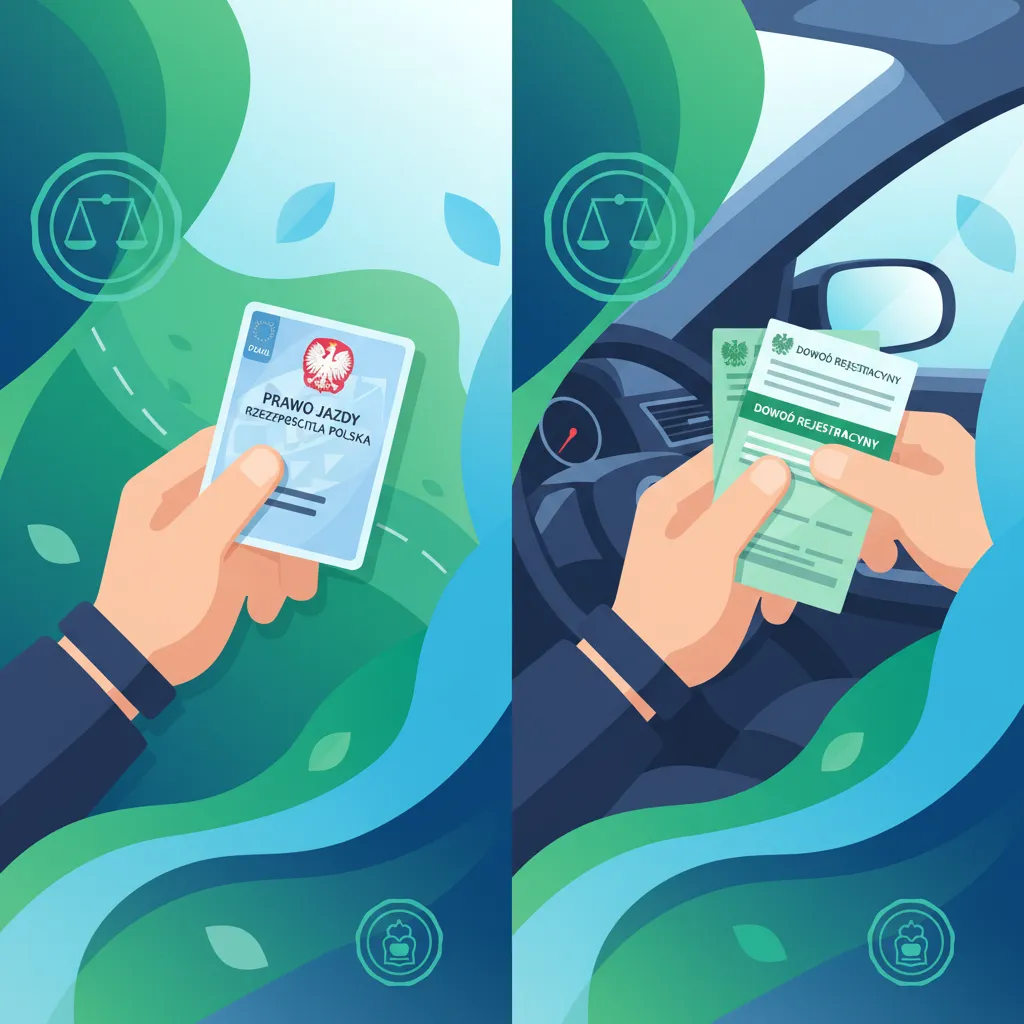
This lesson focuses on the critical documentation every professional driver must carry and maintain. It covers the driver's licence, vehicle registration, and tachograph records, explaining their legal importance and proper management. Learners will also study the requirements for transport permits, cargo declarations, and safety inspection reports, ensuring full compliance with Polish and EU regulations to avoid penalties and operational delays during roadside checks.
Explore the principles of safety culture and risk-based thinking in professional driving. Learn how continuous learning and proactive hazard assessment contribute to safer operations for Category C drivers in Poland.

This lesson highlights the professional driver's heightened responsibility to protect vulnerable road users. It focuses on the significant blind spots around a large truck, particularly during turns in urban areas where pedestrians and cyclists are common. The content teaches strategies for anticipating the unpredictable movements of these users, providing ample space when passing, and using warning signals to communicate intentions clearly, fostering a culture of shared road safety.

This lesson addresses the high-risk maneuver of reversing a large truck. It provides systematic techniques for using mirrors and, if available, cameras to monitor the vehicle's path, while strongly emphasizing the importance of managing extensive blind spots. Learners will study procedures for maneuvering within tight spaces like loading docks and yards, including the proper use of a spotter (banksman) to ensure the area is clear and to provide guidance, minimizing the risk of collisions.
This lesson addresses the critical safety issue of driver fatigue. It explains the physiological causes of fatigue, including disruption to circadian rhythms, and teaches drivers to recognize its early warning signs. The content reviews the legal requirements for breaks and rest periods in detail and provides practical strategies for managing sleep hygiene and using alertness techniques to ensure they remain focused and responsive while on duty, thereby preventing fatigue-related incidents.

This lesson teaches drivers how to adapt their speed, following distance, and control inputs to safely navigate adverse conditions. It covers the challenges posed by rain, snow, and ice, explaining the loss of traction and the increased risk of skidding or aquaplaning. The content provides specific strategies for driving in fog, which reduces visibility, and strong crosswinds, which can affect the stability of a high-sided vehicle, promoting a proactive and defensive driving mindset.

This lesson introduces defensive driving strategies tailored for bus operation, emphasizing hazard perception and risk management. Learners will study techniques for continuous situational awareness and maintaining safe following distances for adequate reaction time. The content covers emergency maneuvers and interaction with vulnerable road users to reduce accident likelihood.

This lesson equips drivers with the skills to operate a large vehicle within the challenging confines of an urban environment. It addresses how to navigate narrow streets, deal with traffic calming measures, and manage frequent stop-and-go situations while being vigilant for pedestrians and other road users. The content also emphasizes the importance of meticulous route planning to avoid unsuitable roads and the use of anticipation to maintain smooth progress and minimize disruption in congested areas.

This lesson provides essential knowledge for responding to sudden and dangerous vehicle malfunctions. It outlines step-by-step procedures for handling a catastrophic tire blowout, managing a loss of braking power, and reacting to a shift in cargo that destabilizes the vehicle. The focus is on maintaining as much control as possible, bringing the vehicle to a safe stop away from traffic, and activating hazard warnings to protect the scene and other road users.

This lesson focuses on the specific challenges HGVs face when navigating roundabouts. It details the correct procedure for approach, including selecting the appropriate lane based on the intended exit and yielding to traffic already circulating. The content emphasizes the need to account for the vehicle's large turning radius and off-tracking to avoid encroaching on adjacent lanes or mounting curbs, ensuring a smooth and safe passage through the roundabout.

This lesson details the specific protocols for overtaking and changing lanes in a heavy goods vehicle. It explains the importance of calculating sufficient space and speed differential before committing to a pass, while constantly being aware of the large blind spots around the truck. The content also covers procedures for safely merging onto highways and maintaining correct lane positioning to facilitate smooth and predictable traffic flow for all road users.

This lesson explains the critical concept of off-tracking, where the rear wheels follow a shorter path than the front wheels during a turn. Learners will understand how to calculate the required space for a turn and position the vehicle correctly before entering a corner to avoid striking curbs, signs, or other vehicles. The content provides practical strategies for safely navigating intersections and roundabouts by anticipating the vehicle's sweep path and maintaining adequate clearance.
Find clear answers to common questions learners have about Continuous Professional Development and Safety Culture. Learn how the lesson is structured, which driving theory objectives it supports, and how it fits into the overall learning path of units and curriculum progression in Poland. These explanations help you understand key concepts, lesson flow, and exam focused study goals.
CPD ensures you stay current with evolving traffic laws, new vehicle technologies, and safety best practices in Poland and the EU. It helps maintain your skills, adapt to industry changes, and ultimately enhances your safety and employability as a professional HGV driver.
Good physical and mental health is fundamental for safe driving. Factors like fatigue, stress, and illness can significantly impair reaction times, decision-making, and overall control of an HGV. Regular medical checks and proactive well-being management are crucial for Category C drivers.
CPD for truck drivers often includes updates on tachograph regulations and working hours, new cargo securement techniques, eco-driving strategies, vehicle maintenance advancements, and defensive driving courses. It's about continuous improvement in all aspects of professional operation.
A safety culture goes beyond mere rule-following; it’s a shared mindset where safety is a core value for everyone in an organisation. For an HGV driver, it means actively identifying risks, reporting unsafe conditions, prioritising safety over schedules, and encouraging safe practices among colleagues.
CPD can involve attending workshops, completing online courses on specific topics (like dangerous goods transport or new EU regulations), obtaining certifications, and participating in company-mandated safety training. Keeping records of completed CPD activities is often necessary.
Build custom practice sessions tailored precisely to your needs. Focus on areas requiring improvement, review specific Polish road signs, or master complex traffic rules to ensure full preparation for your official driving license exam.