
This lesson is crucial for Category C licence holders, focusing on emergency procedures for common, dangerous malfunctions like brake failure, tire blowouts, and load shifts. Understanding these steps is vital for maintaining control and ensuring safety when the unexpected happens on Polish roads, directly preparing you for challenging scenarios on the theory exam.

Lesson content overview
Operating a heavy goods vehicle (HGV) requires not only skill and adherence to regulations but also the ability to react calmly and effectively to unexpected and dangerous malfunctions. This lesson is designed to equip aspiring professional truck drivers with the essential knowledge and step-by-step procedures for responding to three critical emergencies: brake failure, a catastrophic tire blowout, and a sudden cargo load shift. Understanding and correctly executing these responses can mean the difference between maintaining control and a severe accident, protecting lives, cargo, and preventing significant legal liabilities under Polish Category C safety regulations.
Driving a heavy goods vehicle presents unique challenges due to its size, weight, and inertia. When a critical system fails or cargo destabilises, the vehicle's dynamics change dramatically, demanding immediate and precise action from the driver. This lesson focuses on dynamic emergency management—the driver's ability to swiftly recognise a malfunction, accurately assess its impact on vehicle handling, and execute a prescribed sequence of actions to safely bring the vehicle to a stop and protect other road users.
The foundational logic underpinning these procedures is the safety-first principle: immediate actions must minimise risk to occupants, other road users, and the cargo. Loss of braking power, tire pressure, or load balance directly alters critical physics parameters like friction, traction, and the vehicle's centre of gravity, profoundly affecting steering and stability. Polish traffic law, specifically the Ustawa Prawo o Ruchu Drogowym (Road Traffic Act), and the EU Directive 2006/126/EC, mandate that the driver must ensure the vehicle remains in a state of safe operation at all times, including readiness for emergency manoeuvres.
This knowledge builds upon previous units, linking directly to Unit 2 (Vehicle Construction, Systems, and Technical Inspection) for understanding brake systems and tire construction, Unit 3 (Load Management and Cargo Securement) for load-shift dynamics, and Unit 5 (Speed Management, Braking, and Stopping Distances) for comprehending the impact of malfunctions on stopping capability.
When an emergency strikes in a heavy goods vehicle, several core principles guide effective driver response. These principles aim to manage the immediate danger and mitigate further risks.
Maintaining directional stability and the ability to reduce speed, even when a primary system like braking or steering is compromised. The driver must rely on alternate controls such as engine braking and precise steering adjustments.
The immediate and paramount objective is to reduce risk to the driver, other vehicle occupants, nearby road users, and the cargo. This principle dictates activating warning signals and selecting the safest possible escape route or stopping area, avoiding abrupt movements that could escalate the hazard.
Reducing vehicle speed using non-service brake methods, such as engine braking (retarder, gear downshift) or utilising road gradient, especially when hydraulic or air braking pressure is lost. This technique is crucial for maintaining control and preventing brake fade.
Rapidly re-establishing vehicle balance when cargo moves from its secured position. This prevents dangerous outcomes like rollovers or a complete loss of steering control. Actions may include easing off the accelerator and making gentle steering corrections.
Alerting nearby drivers to the abnormal behaviour or disabled status of your vehicle through the prompt use of hazard warning lights, the horn, and appropriate hand signals where permissible and safe. This reduces the risk of secondary collisions.
Brake failure, whether partial or complete, is one of the most serious emergencies a heavy goods vehicle driver can face. It involves a total or partial loss of braking capability due usually to hydraulic or air system failure, a ruptured brake line, or a pedal malfunction. The practical meaning for the driver is reduced stopping power, significantly longer stopping distances, and a potential for skidding.
Brake failure is not always an instantaneous total loss. It can manifest in different ways:
Never assume that the Anti-Lock Braking System (ABS) can compensate fully for a total loss of braking force. ABS only prevents wheels from locking up; it does not generate braking force itself. If there's no pressure or hydraulic fluid, ABS cannot function effectively.
In the event of brake failure, immediate and systematic action is crucial.
Stay Calm and Assess: The first reaction should be to remain calm. Identify the type of brake failure (soft, hard, partial, or total loss) and gauge the remaining braking capacity.
Activate Hazard Warning Lights: Immediately activate your hazard warning lights to alert other road users to your distressed state. This is a mandatory safety measure in Poland when a vehicle is stopped or moving abnormally due to a malfunction.
Shift to a Lower Gear: Use engine braking to slow the vehicle. Downshift through the gears sequentially (do not skip gears initially, as this can shock the drivetrain) to utilise the engine's compression resistance. This is especially critical on descents.
Engage Engine Retarder/Auxiliary Brakes: If your HGV is equipped with an engine brake or retarder (such as an exhaust brake, compression release brake, or hydraulic/electromagnetic retarder), engage it immediately. These systems are designed to provide significant supplemental braking power without relying on the service brakes.
Pump the Brake Pedal (Hydraulic Systems): If you have a hydraulic brake system with a soft pedal, rapidly pumping the pedal might build up residual pressure and provide some limited braking force. This is generally not effective for air brake systems.
Use the Parking/Emergency Brake (Carefully): As a last resort, if speed is relatively low and the vehicle is moving straight, gently apply the parking brake. Be extremely cautious as abrupt application can lock the wheels, leading to a skid or jackknife, especially with an HGV. Use it intermittently to scrub off speed, but release it if the vehicle starts to skid.
Steer to a Safe Stop: Guide the vehicle to the nearest safe location, such as the hard shoulder of a motorway, a wide lay-by, or a side road. Maintain a firm but relaxed grip on the steering wheel, making only gentle, controlled steering inputs. Avoid sudden lane changes or swerving.
Utilise Road Gradient: If on a downhill slope, steering onto an uphill escape ramp (if available) can help slow the vehicle naturally. If no such ramp exists, look for a gentle uphill gradient to steer into.
Familiarise yourself with your vehicle's specific engine braking system and parking brake operation during normal driving conditions. This preparation is invaluable in an emergency.
A tire blowout is the sudden, rapid loss of air pressure in a tire, which can be catastrophic (explosive) or more gradual. It instantly alters the vehicle's handling characteristics and, if not managed correctly, can lead to severe loss of control.
The location of the blowout significantly influences the vehicle's reaction:
The key to surviving a tire blowout is to maintain control and avoid panic reactions.
Grip the Steering Wheel Firmly: Hold the steering wheel with both hands, tightly but without tensing up. Resist the urge to turn the wheel sharply. Your priority is to keep the vehicle travelling as straight as possible.
Ease Off the Accelerator: Do not brake hard immediately. Gently lift your foot from the accelerator pedal to allow the vehicle to gradually decelerate.
Maintain Direction: The vehicle will naturally pull towards the side of the blown tire. Counter this pull with smooth, controlled steering corrections. Over-correcting can lead to a spin or rollover.
Gentle, Gradual Braking: Once the vehicle's initial surge or pull has stabilised, and you're maintaining a relatively straight path, begin to apply gentle, progressive brake pressure. Avoid slamming the brakes, especially if it's a front tire blowout.
Engage Engine Braking: Downshift to use the engine's compression to further assist in slowing the vehicle in a controlled manner.
Signal and Move to a Safe Location: Activate your hazard warning lights. Once you have regained sufficient control and speed has reduced, slowly and deliberately guide the vehicle to the nearest safe stopping area, such as the hard shoulder or a lay-by. It is mandatory to reduce speed and move to the emergency lane or shoulder when a tire blowout occurs on motorways or expressways in Poland.
Stop and Secure the Vehicle: Once stopped, fully engage the parking brake and place warning triangles (trójkąt ostrzegawczy) according to regulations to protect the scene.
Continuing to drive at speed after a tire blowout is extremely dangerous. The disintegrating tire can cause significant damage to the vehicle's suspension, brake lines, and even fuel tanks, increasing the risk of fire or further loss of control.
Cargo load shift occurs when freight moves from its secured position within the vehicle, dramatically altering the truck's centre of gravity and potentially causing severe instability. This can lead to a sudden pull to one side, steering vibration, or an elevated risk of rollover. Polish law (Rozporządzenie Ministra Infrastruktury) requires cargo to be properly secured to prevent such shifts.
Load shifts can manifest in several ways, each with distinct consequences:
The immediate practical meaning for the driver is a sudden, unexplained change in the vehicle's handling. This might include:
Responding to a load shift requires a calm and controlled approach to re-establish vehicle balance.
Reduce Speed Gradually: Immediately ease off the accelerator. Rapid deceleration or braking can worsen the load shift by increasing dynamic forces.
Maintain Straight Line and Gentle Steering: Hold the steering wheel steady. Avoid sudden or sharp steering corrections, as these can amplify the lateral forces acting on the shifted load and increase the risk of rollover, especially on curves.
Avoid Abrupt Maneuvers: Do not make any sudden lane changes or evasive actions. Focus on guiding the vehicle smoothly.
Find a Safe Stopping Location: Activate your hazard warning lights and carefully guide the vehicle to the nearest safe and level stopping area, such as a large lay-by or rest stop. Avoid stopping on a slope, which could exacerbate the shift.
Inspect and Re-secure the Cargo: Once safely stopped, inspect the cargo and its securement. Re-secure the load using appropriate methods (straps, chains, bracing) before continuing your journey. This is a mandatory step under Polish regulations.
Continuing to drive with a known load shift at high speed, especially through curves, dramatically increases the risk of a rollover accident and severe cargo damage.
Drivers of Category C heavy goods vehicles operate under a strict framework of national and international regulations designed to ensure safety. Understanding these rules is crucial not only for compliance but also for safe emergency response.
Hazard Warning Lights: The Polish Road Traffic Act (§ 71 ust. 2) mandates the use of hazard warning lights (światła awaryjne) when a vehicle is stopped due to a malfunction on the carriageway or shoulder, or when it poses an obstruction to traffic.
Safe Stopping and Road Obstruction: Polish regulations (§ 77 ust. 2) oblige drivers to bring their vehicle to a safe stop without endangering other traffic. This often means moving to the hard shoulder or an emergency lane if available.
Tire Blowout Response: The Rozporządzenie Ministra Infrastruktury (§ 41) implies that drivers must maintain control and move to a safe stopping area after a tire blowout, particularly on motorways and expressways where emergency lanes are designated for such situations. Abrupt braking after a front-axle tire blowout is also discouraged by general traffic law principles (§ 23) to prevent loss of steering.
Cargo Securement: Polish law (Rozporządzenie Ministra Infrastruktury § 70) and the broader EU Directive 2006/126/EC regarding professional competence for road transport operators, specifically regarding cargo securing, require that all cargo be secured to prevent shifting during transit. If a shift occurs, the driver has a legal duty to stop at the nearest safe location to re-secure the load.
Controlled Steering Input: General provisions of the Polish Road Traffic Act (§ 34) mandate that drivers must always maintain control of their vehicle. This translates into performing controlled steering inputs – holding the wheel firmly but avoiding sudden, aggressive movements – during any loss-of-control event.
Mistakes made during an emergency can escalate a difficult situation into a catastrophic one. Being aware of common pitfalls is as important as knowing the correct procedures.
Emergency procedures are not one-size-fits-all. External factors such as weather, road type, the vehicle's load state, and the presence of vulnerable road users necessitate adjustments to standard protocols.
If an emergency occurs near cyclists, pedestrians, or motorcyclists, exercise extreme caution. Avoid sudden lane changes or swerving which could put them at direct risk. Use the horn (if appropriate and safe) and hand signals to communicate your distress and intent, while focusing primarily on maintaining control of your heavy vehicle.
Understanding the underlying physics explains why certain emergency procedures are effective and others are dangerous.
Navigating the complexities of heavy goods vehicle operation requires preparedness for critical emergencies. By internalising the principles and procedures discussed, you enhance your safety and the safety of everyone on the road.
This lesson covers critical emergency procedures for Category C drivers, addressing brake failure (soft/hard pedal types, engine braking, parking brake as last resort), tire blowout response (firm steering grip, gradual deceleration, front vs rear effects), and load shift mitigation (maintaining straight line, gentle steering, stopping to re-secure cargo). Key principles include preserving control through smooth inputs, using hazard lights immediately, and understanding why abrupt actions escalate danger. Polish regulations require hazard lights when stopped due to malfunction and mandate cargo re-securing after any shift. The physics concepts of inertia, friction limits, and centre of gravity explain why gradual deceleration and controlled steering are essential for HGV safety.
A short set of high-value points that capture the most important learning from this lesson.
Stay calm and immediately assess the specific type of emergency to determine the correct response sequence
Always activate hazard warning lights first to alert other road users before taking corrective action
Use engine braking (retarder and gear downshifting) as the primary method to reduce speed when service brakes fail
Maintain smooth, gradual steering inputs and avoid abrupt corrections to prevent rollover or jackknife
After any emergency stop, secure the vehicle with parking brake and warning triangles, then address the underlying cause
Explore all units and lessons included in this driving theory course.
ABS prevents wheel lockup but cannot generate braking force—complete brake failure renders ABS ineffective
Front tire blowouts primarily affect steering; rear blowouts primarily affect vehicle stability and can cause fishtailing
A lateral load shift raises the effective centre of gravity, dramatically increasing rollover risk especially on curves
Polish regulations mandate hazard lights when a vehicle is stopped or moving abnormally due to a malfunction
Downshifting through gears sequentially uses engine compression to gradually scrub speed without stressing the drivetrain
Applying full-lock steering after brake failure—abrupt corrections almost guarantee a rollover with high centre-of-gravity HGVs
Maintaining speed after a rear tire blowout instead of gradually reducing, leading to fishtailing or jackknife
Failing to activate hazard warning lights when stopped on the shoulder, creating serious rear-end collision risk
Over-steering aggressively to counteract load shift forces, which amplifies lateral forces and increases rollover tendency
Neglecting to use engine retarder on downhill grades when brakes fail, leading to brake fade and complete loss of control
Lesson content overview
A short set of high-value points that capture the most important learning from this lesson.
Stay calm and immediately assess the specific type of emergency to determine the correct response sequence
Always activate hazard warning lights first to alert other road users before taking corrective action
Use engine braking (retarder and gear downshifting) as the primary method to reduce speed when service brakes fail
Maintain smooth, gradual steering inputs and avoid abrupt corrections to prevent rollover or jackknife
After any emergency stop, secure the vehicle with parking brake and warning triangles, then address the underlying cause
Explore all units and lessons included in this driving theory course.
ABS prevents wheel lockup but cannot generate braking force—complete brake failure renders ABS ineffective
Front tire blowouts primarily affect steering; rear blowouts primarily affect vehicle stability and can cause fishtailing
A lateral load shift raises the effective centre of gravity, dramatically increasing rollover risk especially on curves
Polish regulations mandate hazard lights when a vehicle is stopped or moving abnormally due to a malfunction
Downshifting through gears sequentially uses engine compression to gradually scrub speed without stressing the drivetrain
Applying full-lock steering after brake failure—abrupt corrections almost guarantee a rollover with high centre-of-gravity HGVs
Maintaining speed after a rear tire blowout instead of gradually reducing, leading to fishtailing or jackknife
Failing to activate hazard warning lights when stopped on the shoulder, creating serious rear-end collision risk
Over-steering aggressively to counteract load shift forces, which amplifies lateral forces and increases rollover tendency
Neglecting to use engine retarder on downhill grades when brakes fail, leading to brake fade and complete loss of control
Explore search topics learners often look for when studying Emergency Procedures: Brake Failure, Tire Blowout, Load Shift. These topics reflect common questions about road rules, driving situations, safety guidance, and lesson level theory preparation for learners in Poland.
Browse additional driving theory lessons that cover connected traffic rules, road signs, and common driving situations related to this topic. Improve your understanding of how different rules interact across everyday traffic scenarios.
Learn to anticipate and prevent critical vehicle emergencies. This lesson focuses on driver vigilance, pre-trip inspections, and understanding how vehicle state and external conditions impact emergency response in Category C trucks.

This lesson addresses the high-risk maneuver of reversing a large truck. It provides systematic techniques for using mirrors and, if available, cameras to monitor the vehicle's path, while strongly emphasizing the importance of managing extensive blind spots. Learners will study procedures for maneuvering within tight spaces like loading docks and yards, including the proper use of a spotter (banksman) to ensure the area is clear and to provide guidance, minimizing the risk of collisions.

This lesson focuses on the critical procedures for executing an emergency stop with an air-braked vehicle. It explains how to apply firm, steady pressure to the brake pedal to achieve maximum braking force without locking the wheels, which could lead to a loss of control. The content also discusses the response time of air brake systems and how to manage the significant forces of deceleration when the vehicle is fully loaded, ensuring the quickest possible stop in a crisis situation.

This lesson addresses the critical safety issue of driver fatigue. It explains the physiological causes of fatigue, including disruption to circadian rhythms, and teaches drivers to recognize its early warning signs. The content reviews the legal requirements for breaks and rest periods in detail and provides practical strategies for managing sleep hygiene and using alertness techniques to ensure they remain focused and responsive while on duty, thereby preventing fatigue-related incidents.

This lesson highlights the professional driver's heightened responsibility to protect vulnerable road users. It focuses on the significant blind spots around a large truck, particularly during turns in urban areas where pedestrians and cyclists are common. The content teaches strategies for anticipating the unpredictable movements of these users, providing ample space when passing, and using warning signals to communicate intentions clearly, fostering a culture of shared road safety.

This lesson details the professional driver's responsibilities in the event of a collision. It covers the immediate actions required to secure the scene, such as activating hazard lights and placing warning triangles, to prevent further incidents. Learners will understand the correct procedure for contacting emergency services, providing assistance to injured parties if trained, and the legal requirements for documenting and reporting the accident to the authorities and their employer.

This lesson explains the specialized techniques required for initiating movement and bringing a heavy, loaded truck to a halt. It emphasizes fine clutch and throttle control to overcome inertia without causing driveline stress or cargo shift. Learners will also study methods for smooth, gradual braking that account for the vehicle's significant momentum, ensuring safety, passenger comfort, and the integrity of the cargo while minimizing wear on the braking system.

This lesson details the specific protocols for overtaking and changing lanes in a heavy goods vehicle. It explains the importance of calculating sufficient space and speed differential before committing to a pass, while constantly being aware of the large blind spots around the truck. The content also covers procedures for safely merging onto highways and maintaining correct lane positioning to facilitate smooth and predictable traffic flow for all road users.

This lesson teaches the essential skill of calculating a heavy vehicle's total stopping distance. It breaks the calculation into two key parts: the driver's perception-reaction distance and the vehicle's braking distance. Learners will understand how factors such as vehicle mass, speed, road gradient, and the friction coefficient of the road surface dramatically influence the distance required to come to a complete and safe stop, emphasizing the need for large safety margins.

This lesson teaches drivers how to adapt their speed, following distance, and control inputs to safely navigate adverse conditions. It covers the challenges posed by rain, snow, and ice, explaining the loss of traction and the increased risk of skidding or aquaplaning. The content provides specific strategies for driving in fog, which reduces visibility, and strong crosswinds, which can affect the stability of a high-sided vehicle, promoting a proactive and defensive driving mindset.

This lesson focuses on the specific challenges HGVs face when navigating roundabouts. It details the correct procedure for approach, including selecting the appropriate lane based on the intended exit and yielding to traffic already circulating. The content emphasizes the need to account for the vehicle's large turning radius and off-tracking to avoid encroaching on adjacent lanes or mounting curbs, ensuring a smooth and safe passage through the roundabout.
Understand the legal framework and physics principles behind emergency procedures for heavy goods vehicles in Poland. This lesson details why specific actions are mandated and how vehicle dynamics affect critical situations like brake failure or load shifts.
This lesson details the professional driver's responsibilities in the event of a collision. It covers the immediate actions required to secure the scene, such as activating hazard lights and placing warning triangles, to prevent further incidents. Learners will understand the correct procedure for contacting emergency services, providing assistance to injured parties if trained, and the legal requirements for documenting and reporting the accident to the authorities and their employer.

This lesson explores the environmental impact of HGV operations and the regulations designed to mitigate it. It covers modern emission control systems and standards (e.g., Euro 6), and the importance of compliance with rules governing noise pollution. The content reinforces eco-driving techniques as a primary method for reducing fuel consumption and emissions, promoting the driver's role in achieving more sustainable and environmentally friendly logistics operations.
This lesson focuses on the critical procedures for executing an emergency stop with an air-braked vehicle. It explains how to apply firm, steady pressure to the brake pedal to achieve maximum braking force without locking the wheels, which could lead to a loss of control. The content also discusses the response time of air brake systems and how to manage the significant forces of deceleration when the vehicle is fully loaded, ensuring the quickest possible stop in a crisis situation.

This lesson concentrates on the specific road signs that are of utmost importance to HGV drivers. It details how to interpret signs indicating maximum permissible weight, axle load, vehicle height, and overall length. Understanding these restrictions is crucial for effective route planning to avoid bridges with low clearance, roads with weight limits, or tunnels that cannot accommodate the vehicle's dimensions, thus preventing accidents and infrastructure damage.

This lesson outlines the essential legal paperwork associated with freight transport. It details the purpose and content of key documents like the load manifest, cargo declaration, and official weight certificates. Learners will understand their legal responsibility to verify that all documentation is accurate and complete before departure, and the importance of maintaining proper records for potential inspections by transport authorities or for cross-border customs procedures.

This lesson outlines the emergency procedures a tractor driver must follow in case of a breakdown, trailer detachment, or accident. It covers immediate actions such as pulling over safely, deploying warning triangles, and using hazard lights to alert other road users. The lesson details the steps for reporting the incident, providing first aid, and securing the scene to prevent further hazards.

This lesson focuses on the stringent health standards mandated for operating heavy goods vehicles. It details the required medical assessments, including vision, cardiovascular, and neurological checks, that prospective drivers must pass. Learners will understand the process of obtaining a medical certificate, the requirements for periodic renewals to ensure ongoing fitness for duty, and the legal implications of failing to meet these essential health criteria for professional driving.
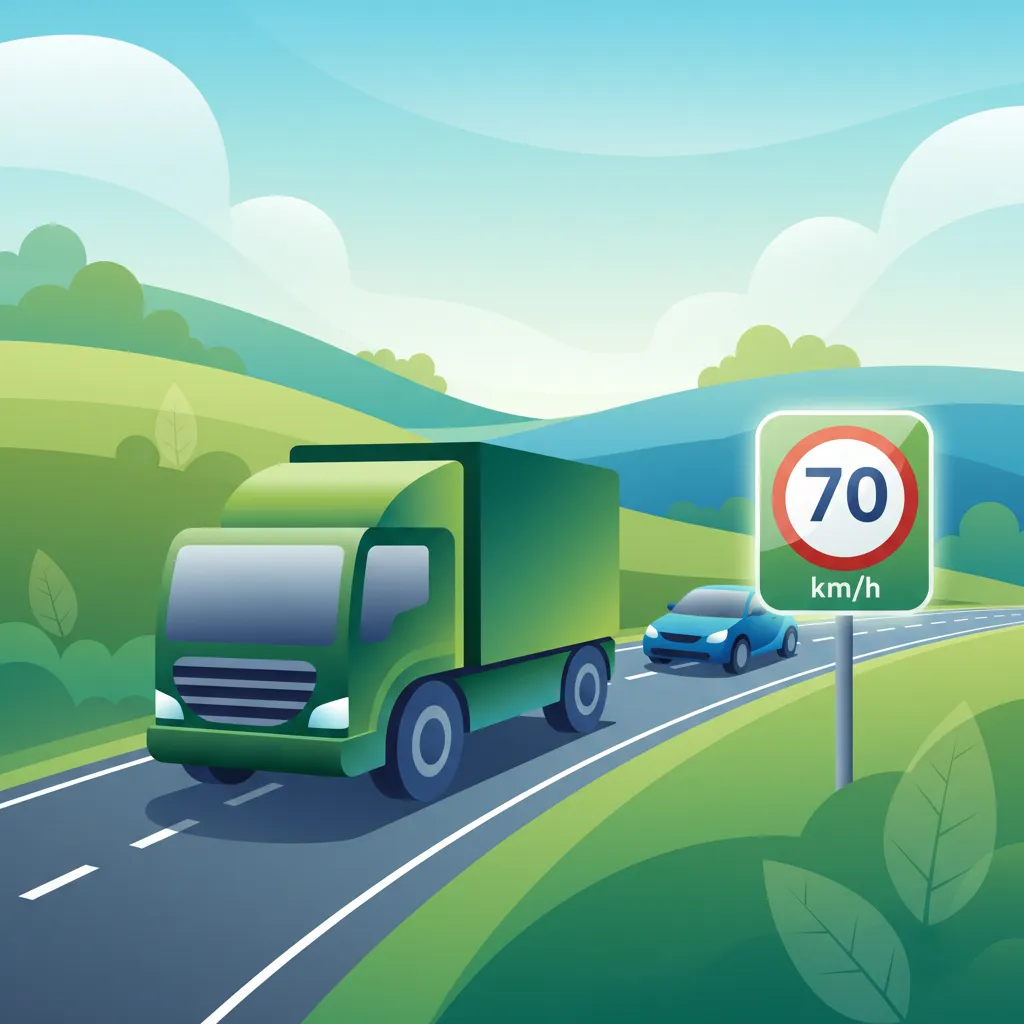
This lesson outlines the statutory speed limits that professional drivers of Category C vehicles must adhere to on Polish roads. It clearly distinguishes the maximum permitted speeds in built-up areas, on single carriageways, and on motorways. The content also explains how to interpret road signs that may indicate temporary or vehicle-specific speed restrictions, ensuring drivers remain compliant with the law and avoid penalties from speed enforcement measures.
This lesson addresses the critical safety issue of driver fatigue. It explains the physiological causes of fatigue, including disruption to circadian rhythms, and teaches drivers to recognize its early warning signs. The content reviews the legal requirements for breaks and rest periods in detail and provides practical strategies for managing sleep hygiene and using alertness techniques to ensure they remain focused and responsive while on duty, thereby preventing fatigue-related incidents.
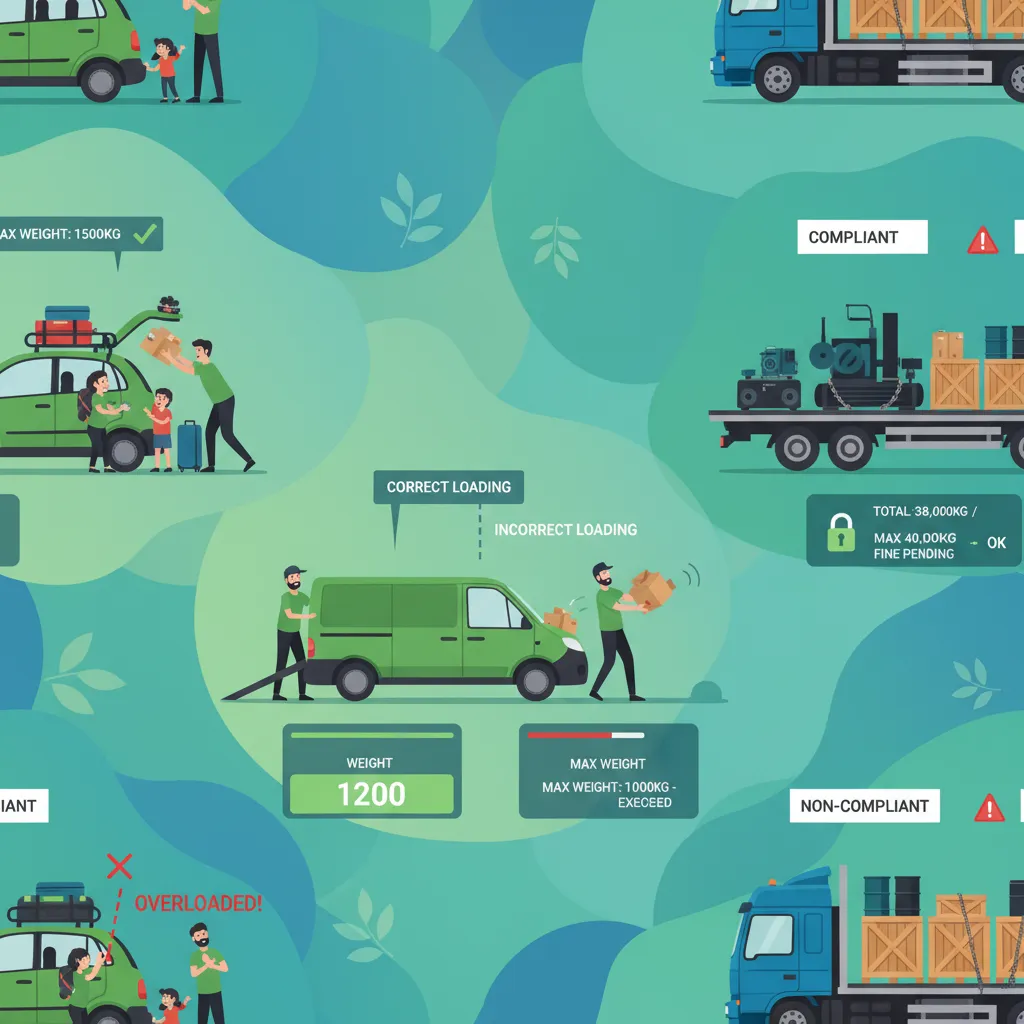
This lesson introduces the legal framework governing vehicle and axle weight limits in Poland and the EU. Learners will understand how to determine a vehicle's maximum permissible payload and interpret official load charts and documentation. The content covers the importance of correct weight distribution to avoid exceeding individual axle limits and explains the serious legal and safety consequences of operating an overloaded vehicle.
Find clear answers to common questions learners have about Emergency Procedures: Brake Failure, Tire Blowout, Load Shift. Learn how the lesson is structured, which driving theory objectives it supports, and how it fits into the overall learning path of units and curriculum progression in Poland. These explanations help you understand key concepts, lesson flow, and exam focused study goals.
The immediate priority is to stay calm and assess the situation. Immediately engage the hazard warning lights to alert other road users. Begin to reduce speed using engine braking or a retarder if equipped, and pump the brake pedal to build up any residual pressure. Scan for a safe place to stop off the main carriageway, away from traffic.
If you experience a tire blowout, do not brake suddenly, as this can cause the vehicle to swerve uncontrollably. Maintain a firm grip on the steering wheel to keep the vehicle straight. Ease off the accelerator and allow the vehicle to slow down naturally. Once at a safe speed, steer gently towards the side of the road and engage your hazard lights. Only apply brakes gently once you have control and are pulling over.
A load shift can dramatically alter the vehicle's center of gravity, leading to instability, increased braking distances, and a higher risk of tipping, especially on corners or uneven surfaces. It can also cause sudden, unpredictable steering reactions. The primary risk is loss of control.
If you detect a load shift, immediately reduce speed by easing off the accelerator and using engine braking or retarders. Avoid abrupt steering inputs. Find the safest possible place to stop, ideally off the road, and use hazard lights. Once stopped, check the load's security if it is safe to do so, or contact assistance.
Yes, absolutely. The Polish driving theory exam for Category C includes questions on emergency situations and vehicle malfunctions. Demonstrating knowledge of correct procedures, such as those for brake failure, tire blowouts, and load shifts, is crucial for passing the exam and ensuring safe operation of a heavy goods vehicle.
Build custom practice sessions tailored precisely to your needs. Focus on areas requiring improvement, review specific Polish road signs, or master complex traffic rules to ensure full preparation for your official driving license exam.