
Understanding how to safely operate a vehicle in winter is a vital part of the Swedish driving theory curriculum. This guide explores the legal requirement to adapt your speed to current conditions, the hidden dangers of black ice, and the necessity of preparing both your vehicle and your travel plan for the Swedish winter season. Mastering these concepts is essential for both your personal safety on the road and success in your theory exam.
Article content overview
Driving in Sweden during the winter months, typically defined by the period from October to April, demands a shift in both your mindset and your driving techniques. As a learner driver, you must understand that road conditions change rapidly due to temperature fluctuations, snowfall, and the specific challenges posed by the Swedish climate. Trafikverket, the Swedish Transport Administration, works tirelessly to maintain the state road network, but the ultimate responsibility for road safety rests with you, the driver. Adapting your behavior to these conditions is not just a safety recommendation; it is a fundamental pillar of the Swedish driving theory exam.
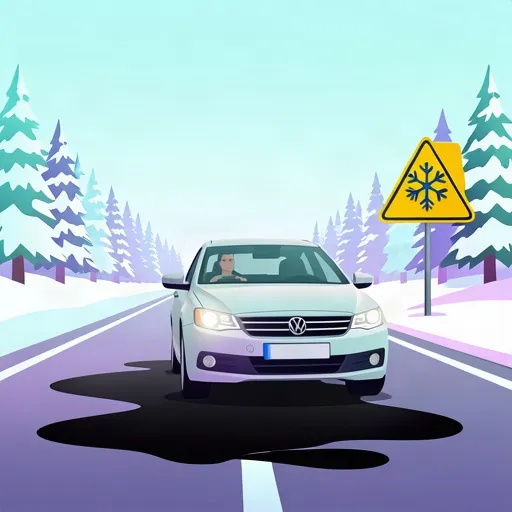
One of the most dangerous elements you will encounter on Swedish roads is svarthalka, commonly known as black ice. This phenomenon occurs when a thin, nearly invisible layer of ice forms on the asphalt, often following a period of thaw or light precipitation. Because it is transparent, it blends in perfectly with the road surface, making it impossible to detect by sight alone.
Black ice is particularly treacherous because it catches many inexperienced drivers off guard. You might be driving on seemingly wet pavement when your vehicle suddenly loses traction. If you encounter this, it is crucial to remain calm. Avoid sudden braking, harsh steering inputs, or aggressive acceleration, as these actions can easily cause your vehicle to skid out of control. Instead, gently release the accelerator, keep your steering wheel steady, and wait for your tires to regain their grip.
In Sweden, the law requires you to adapt your speed to the current road conditions, not just the posted speed limit. The "anpassa hastigheten" (adapt speed) rule is a central theme in the theory exam. It means that even if a road has a 90 km/h limit, it may be illegal to drive at that speed if the road is covered in snow, slush, or ice.
To practice safe speed adaptation, always leave a much larger following distance to the vehicle in front of you than you would during the summer. By increasing the distance, you provide yourself with the necessary time and space to react if the car ahead brakes suddenly or if you experience a loss of traction.
Preparing your vehicle and your travel plan is a legal and safety necessity. From December 1st to March 31st, it is mandatory to use winter tires (either studded or friction tires) if winter road conditions exist. However, you should not wait for the legal deadline to prepare. Ensuring your vehicle is equipped with high-quality tires, a snow shovel, a tow rope, and jumper cables is vital for your safety.
Trafikverket monitors road conditions across Sweden using over 700 weather stations. They prioritize major roads for plowing and anti-icing measures (salting). However, they cannot be everywhere at once. When plowing vehicles are on the road, you should never attempt to overtake them, especially when they are operating as "tandemplogar" (tandem plows). Overtaking a tandem plow is extremely dangerous and is a common topic in theory questions regarding hazard awareness.
In the theory exam, you will be tested on your ability to recognize hazardous situations and your knowledge of legal responsibilities. You may encounter questions asking you to interpret a scenario where the weather is changing or where a specific road sign indicates a hazard. Always analyze the situation from the perspective of "safe driving behavior"—prioritizing risk reduction over reaching your destination quickly.
Article content overview
Explore related topics, search based questions, and concepts that learners often look up when studying Winter Driving and Black Ice. These themes reflect real search intent and help you understand how this topic connects to wider driving theory knowledge in Sweden.
Find clear and practical answers to common questions learners often have about Winter Driving and Black Ice. This section helps explain difficult points, remove confusion, and reinforce the key driving theory concepts that matter for learners in Sweden.
Svarthalka is the Swedish term for black ice. It is a thin, invisible layer of ice on the road surface that occurs when moisture freezes, often on bridges or near water. It is dangerous because it provides almost no grip, making it difficult for drivers to detect until they lose control of the vehicle.
According to Swedish traffic laws, it is the driver's legal duty to 'anpassa hastigheten' (adapt the speed) to the prevailing road and weather conditions, regardless of the posted speed limit. This means you must reduce your speed significantly if the road is slippery, snowy, or visibility is poor.
Always check weather reports and Trafikverket's traffic updates before starting your journey. Ensure your vehicle has the correct winter equipment, such as approved winter tires, and carry safety gear like a warm blanket, a charged mobile phone, and a high-visibility vest in case you become stranded.
On slippery roads, your braking distance increases significantly compared to dry pavement. Maintaining a much larger following distance gives you more time to react and brake gradually, which is essential for maintaining vehicle stability on ice or snow.
Continue your learning journey by exploring more detailed articles and guides. Clarify specific traffic rules, understand complex road signs, or review safe driving practices. Our extensive content library supports your Swedish driving license theory preparation.