Understanding how to safely navigate roadwork areas is a critical skill for both the Swedish driving theory exam and daily driving. This guide covers your legal obligations as a driver to prioritize temporary signage and proactive trip planning via official sources like Trafikverket. You will learn how to handle unexpected congestion and respect the safety of road workers as part of your fundamental duty of care on Swedish roads.
Article content overview
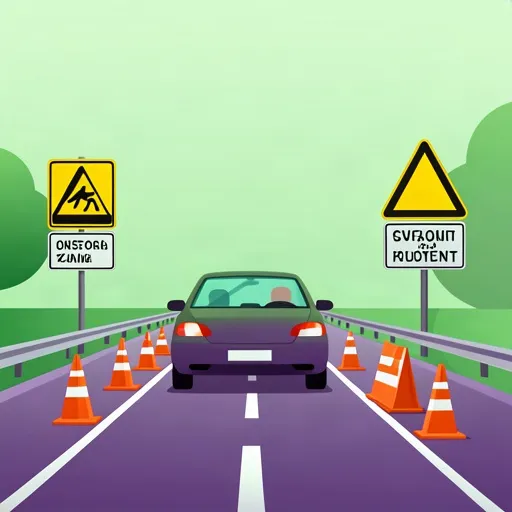
Swedish traffic law establishes that temporary traffic control measures at roadwork zones take legal precedence over both permanent signage and GPS navigation systems. Drivers must immediately comply with flag persons and follow temporary signs, even when they contradict usual routes or digital map guidance. The A20 warning sign mandates speed reduction and heightened awareness for workers and machinery, while Trafikverket offers proactive trip planning resources to avoid unexpected construction encounters. Maintaining appropriate speed, following distance, and lane discipline through work zones protects both drivers and vulnerable road workers operating in close proximity to traffic.
A short set of high-value points that capture the most important ideas from this article.
Temporary traffic signs legally override permanent road markings and GPS directions in Sweden
The A20 sign requires immediate speed reduction and heightened vigilance for workers and hazards
Flag persons have full authority and drivers must stop immediately when directed
Consult Trafikverket before long trips to check for planned roadworks and closures
Construction zones require increased following distance due to sudden stops and narrowed lanes
Temporary signs in Sweden are typically yellow with red borders or yellow with black symbols
Following temporary road markings over permanent white lines is a legal requirement
Road surfaces in work zones may include loose gravel, uneven surfaces, or reduced grip
Trafikverket provides real-time official updates on roadworks and route disruptions
Flag person instructions supersede all other traffic control when present
Following GPS directions when temporary signs clearly indicate a different route
Not reducing speed sufficiently upon seeing the A20 warning sign
Treating flag person signals as optional rather than mandatory instructions
Assuming permanent lane markings apply when temporary cones or barriers are in place
Failing to increase following distance in construction zones, leading to rear-end collisions
Article content overview
A short set of high-value points that capture the most important ideas from this article.
Temporary traffic signs legally override permanent road markings and GPS directions in Sweden
The A20 sign requires immediate speed reduction and heightened vigilance for workers and hazards
Flag persons have full authority and drivers must stop immediately when directed
Consult Trafikverket before long trips to check for planned roadworks and closures
Construction zones require increased following distance due to sudden stops and narrowed lanes
Temporary signs in Sweden are typically yellow with red borders or yellow with black symbols
Following temporary road markings over permanent white lines is a legal requirement
Road surfaces in work zones may include loose gravel, uneven surfaces, or reduced grip
Trafikverket provides real-time official updates on roadworks and route disruptions
Flag person instructions supersede all other traffic control when present
Following GPS directions when temporary signs clearly indicate a different route
Not reducing speed sufficiently upon seeing the A20 warning sign
Treating flag person signals as optional rather than mandatory instructions
Assuming permanent lane markings apply when temporary cones or barriers are in place
Failing to increase following distance in construction zones, leading to rear-end collisions
Explore related topics, search based questions, and concepts that learners often look up when studying Navigating Swedish Roadworks. These themes reflect real search intent and help you understand how this topic connects to wider driving theory knowledge in Sweden.
Find clear and practical answers to common questions learners often have about Navigating Swedish Roadworks. This section helps explain difficult points, remove confusion, and reinforce the key driving theory concepts that matter for learners in Sweden.
Yes, according to the Swedish traffic regulations, temporary road signs and markings provided for construction or temporary traffic conditions take priority over existing permanent signs.
Trafikverket provides real-time updates on major road projects, closures, and diversions. Checking their resources helps you plan your route efficiently and avoid being caught off guard by unexpected roadwork.
The A20 sign is the official Swedish warning sign for roadworks, alerting drivers that they are approaching a section of road where construction or maintenance is occurring.
No, you should always prioritize the physical temporary road signs and instructions provided by on-site personnel. GPS systems may not always have the most current information regarding temporary diversions or lane changes.
Continue your learning journey by exploring more detailed articles and guides. Clarify specific traffic rules, understand complex road signs, or review safe driving practices. Our extensive content library supports your Swedish driving license theory preparation.