
Learners will explore the key safety directives provided by Transportstyrelsen to ensure a secure and legal boating experience. These practices, such as maintaining sobriety and being reachable in an emergency, mirror the core safety values expected of all responsible drivers on Swedish public networks. Mastering these fundamental habits will enhance your risk assessment skills both on the water and behind the wheel.
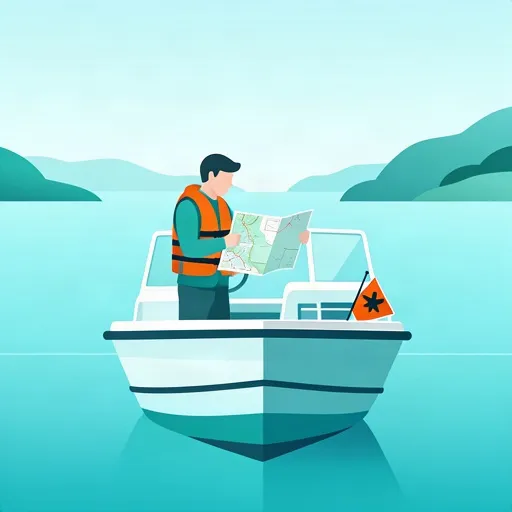
Article content overview
When you study for your driving license in Sweden, the focus is largely on road traffic safety and the regulations set by the Swedish Transport Agency (Transportstyrelsen). However, the mindset of a responsible driver extends beyond the tarmac. The core principles of risk assessment, situational awareness, and adherence to safety protocols—such as those required for recreational boating—share a common foundation with the rules you must master for your theory exam. Understanding how to manage safety at sea is an excellent exercise in developing the professional caution required of every vehicle operator.
Recreational boating has seen a significant increase in popularity across Sweden. With this rise in activity, Transportstyrelsen emphasizes that safety should never be compromised for convenience. Just as you are expected to monitor your surroundings, check your mirrors, and maintain a safe distance from other vehicles on the road, you are expected to maintain "good seamanship" (sjövett) on the water. Many incidents, such as motor failure or grounding, occur because operators fail to prepare adequately or underestimate the conditions they are about to face.
In Sweden, the legal limit for alcohol consumption when operating a boat is 0.2 promille—exactly the same as the limit for driving a car on public roads. Ignoring this law poses a severe risk to yourself and others, and it carries the same potential for legal consequences, including the revocation of your right to hold a license.
Transportstyrelsen has established a foundational list of safety practices, often referred to as the "Ten-to-top" guidelines. These directives serve as a blueprint for responsible behavior. Whether you are navigating a narrow channel at sea or navigating a complex roundabout in urban traffic, the logic remains the same: preparation, equipment maintenance, and clear communication are your best tools for survival.
For a student preparing for the Swedish driving theory test, the statistics provided by Transportstyrelsen regarding maritime accidents offer a sobering reminder of why we have traffic rules. The most common incidents—motor failure, grounding, and falling overboard—are almost always linked to a lack of preparation. When you are behind the wheel, you perform an ongoing risk assessment: Is the road slippery? Is there a pedestrian near the crossing? Should I slow down before this curve? These are the exact mental habits that make for a safe captain.
The continuous process of perceiving environmental elements and events, understanding their meaning, and projecting their status into the near future. In traffic, this means constantly scanning for potential hazards before they become critical situations.
The Swedish transport system relies on all participants following established conventions. While boating rules may seem distant from car driving, both systems are designed to protect life and property. When you study for your driving license, you are learning a culture of respect for the rules of the road. Understanding that safety regulations are not mere suggestions, but rather essential safeguards, is the hallmark of a mature driver.
Article content overview
Explore related topics, search based questions, and concepts that learners often look up when studying Swedish Boating Safety Guidelines. These themes reflect real search intent and help you understand how this topic connects to wider driving theory knowledge in Sweden.
Find clear and practical answers to common questions learners often have about Swedish Boating Safety Guidelines. This section helps explain difficult points, remove confusion, and reinforce the key driving theory concepts that matter for learners in Sweden.
The legal limit for boating under the influence in Sweden is 0.2 per mille, which is identical to the limit for driving motor vehicles on land.
Many principles of transportation, such as risk awareness, situational preparedness, and adherence to legal limits, are transferable. Cultivating these habits improves overall safety consciousness for all types of travel.
According to the Swedish Transport Agency, the most common incidents include motor failure, grounding, and falling overboard.
Transportstyrelsen provides official safety guidelines and advisory information to help boaters navigate safely, minimize risks, and reduce the number of accidents and fatalities in Swedish waters.
Continue your learning journey by exploring more detailed articles and guides. Clarify specific traffic rules, understand complex road signs, or review safe driving practices. Our extensive content library supports your Swedish driving license theory preparation.