Learners will discover how consistent application of Swedish traffic law fosters voluntary compliance rather than mere fear of punishment. This analysis highlights the psychological shift from external pressure to internal safety responsibility, which is a core concept tested in the Swedish driving theory examination regarding hazard perception and risk management.
Article content overview
In the Swedish driving theory examination, students are often tested on more than just the literal interpretation of road signs and speed limits. A crucial component of passing the theory test and becoming a safe motorist is understanding the social contract that governs our roads. When authorities like Transportstyrelsen and Trafikverket set regulations, the goal is not merely to create a system of penalties, but to foster a culture of voluntary compliance where drivers understand that fair, consistent enforcement is the bedrock of public safety.
The core of modern Swedish traffic safety theory is the concept of legitimacy. When a driver perceives that traffic laws are applied fairly—meaning the rules are consistent, logical, and serve a clear safety purpose—they are far more likely to follow them even when no police patrol is in sight. This internal shift from "fear of being caught" to "personal responsibility for others" is what safety experts define as voluntary compliance.
In the Swedish context, police enforcement is designed to be predictable. When a driver understands that speed limits are set based on the design speed of the road, the presence of vulnerable road users, and environmental factors, the law feels less like an arbitrary restriction and more like a necessary safety tool. Recognizing this link is essential for answering hazard perception questions on the theory exam, as the exam often assesses whether you understand the intent behind a rule rather than just memorizing it.
Consistency is the most effective tool in the Swedish traffic safety arsenal. If traffic rules were enforced sporadically or appeared to target specific demographics without cause, public trust would erode, leading to higher rates of rule-breaking. Instead, the Swedish model emphasizes that every motorist is subject to the same standards, whether on rural roads or within dense urban environments.
On your theory exam, always consider the "Safety Objective" of a rule. If a question asks why you should adhere to a speed limit even when the road appears empty, the correct reasoning is almost always rooted in the predictability of traffic flow and the protection of potential hazards that are not immediately visible.
Trafikverket and other authorities utilize engineering and regulation to guide behavior. By utilizing clear road signage, consistent road markings, and intelligent speed adaptation, they create an environment where the "right" choice is often the easiest and most logical one for the driver.
When you encounter signs like the one above, you are being reminded that the road geometry dictates a specific, safe speed. Understanding these signs as guidance rather than just warnings helps you develop the defensive driving habits that the theory exam seeks to verify.
The Swedish theory exam frequently presents scenarios where you must choose the safest course of action in complex traffic. Often, these questions are designed to see if you prioritize the spirit of the law over personal convenience.
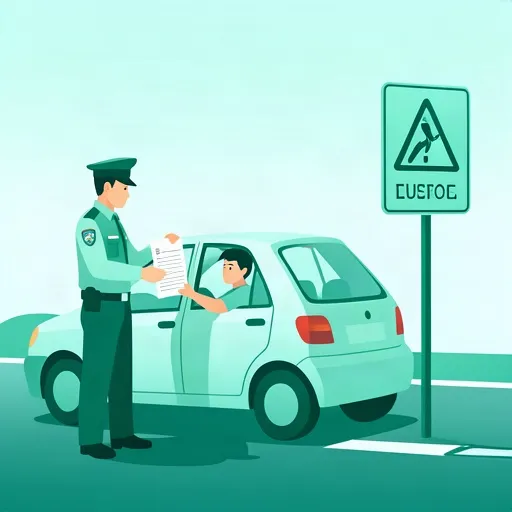
In this situation, the correct behavior is not dictated by the absence of a police car, but by the safety principle of yielding to protect vulnerable road users. Your compliance here is a reflection of your commitment to the shared social contract of Swedish road safety.
Achieving a passing grade on your theory exam requires more than just rote memorization. It requires a fundamental shift in how you view the road. By internalizing that laws exist to protect life and maintain order, you become a safer, more predictable driver. This mindset is exactly what Trafikverket wants to see in new drivers: a commitment to safety that remains intact regardless of the level of active enforcement present on the road.
Article content overview
Explore related topics, search based questions, and concepts that learners often look up when studying Fairness and Road Safety. These themes reflect real search intent and help you understand how this topic connects to wider driving theory knowledge in Sweden.
Find clear and practical answers to common questions learners often have about Fairness and Road Safety. This section helps explain difficult points, remove confusion, and reinforce the key driving theory concepts that matter for learners in Sweden.
When drivers perceive enforcement as fair and legitimate, they are more likely to internalize rules and follow them voluntarily, even when police are not present, which significantly improves overall road safety.
The theory exam tests your understanding of the social contract on the road; recognizing that rules exist for collective safety rather than just to avoid fines is a key aspect of safe driving behavior.
Swedish authorities like Trafikverket emphasize Vision Zero and a culture of cooperation, where enforcement acts as a reminder of shared safety goals rather than simply as a punitive measure.
Continue your learning journey by exploring more detailed articles and guides. Clarify specific traffic rules, understand complex road signs, or review safe driving practices. Our extensive content library supports your Swedish driving license theory preparation.