
This lesson details the essential documents you must carry and the legal validity of your Turkish Category B driving licence. Understanding these rules is a fundamental step in your preparation for the MTSK e-sınav and ensures you stay compliant during real-world driving. You will learn the requirements for registration, mandatory insurance, and how to maintain your licence status.
Lesson content overview
Operating a motor vehicle on public roads is a regulated privilege that comes with significant legal responsibilities. In Turkey, traffic law strictly mandates that drivers must carry specific physical documents inside the vehicle at all times. These documents serve as proof of the driver's competence, the vehicle’s legal registration, and financial liability coverage.
This lesson explores the mandatory documentation required under the Turkish Highways Traffic Law (No. 2918), the exact validity terms of a Category B driving licence, the step-by-step renewal process, and the rules governing compulsory liability insurance. Understanding these requirements is essential not only for passing the official Ministry of National Education (MEB) e-sınav but also for successfully navigating roadside traffic checks and inspections.
Under Turkish traffic regulations, driving is a contract between the citizen and the state. By issuing a driving licence and vehicle registration, the state certifies that the driver is physically and mentally fit to drive, and that the vehicle meets the safety and environmental criteria necessary for public road use.
Carrying valid, physical documents is an absolute legal obligation. During any routine traffic check or following a traffic accident, law enforcement officers (Trafik Polisi or Jandarma Trafik) will first request these documents. Failing to produce them immediately upon request, presenting expired documents, or carrying unverified digital scans instead of the originals constitutes a direct violation of traffic laws and carries administrative and financial penalties.
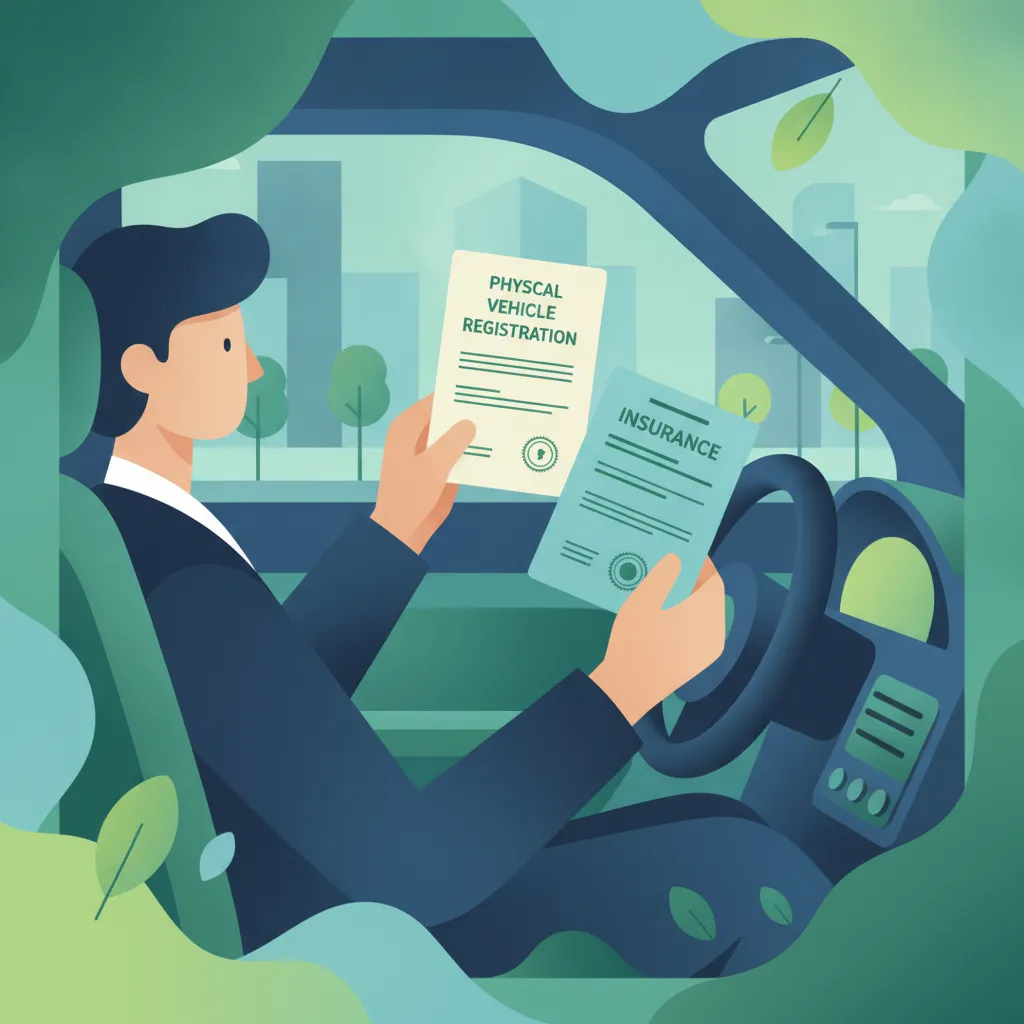
When operating a Category B vehicle on Turkish roads, the driver must have three primary documents physically present and easily accessible inside the cabin.
The driving licence is the official permit that proves the holder has passed the theoretical and practical examinations and is authorized to operate a vehicle within a specific category.
Commonly referred to in Turkey as the Ruhsat, this document consists of two folded sheets housed in a protective folder. It is the official proof of vehicle ownership, tax registration, and technical specifications.
Commonly known as Zorunlu Trafik Sigortası, this compulsory third-party liability policy provides financial coverage for physical injuries, medical expenses, and property damages caused to third parties in an accident where you are at fault.
A Turkish driving licence does not remain valid indefinitely. To ensure that drivers maintain physical fitness and cognitive competence over time, the state enforces strict validity limits and renewal intervals.
The designated timeframe during which a driving licence card is legally effective. Operating a vehicle even one day past this printed expiration date constitutes driving without a valid licence, resulting in substantial administrative fines.
For Category B (and associated light categories such as A1, A2, B1, F, and G), the standard validity period is 10 years from the date of issuance or latest renewal.
In contrast, professional and heavy-vehicle categories (such as C1, C, D1, D, CE) carry a shorter validity period of 5 years due to the higher physical demands and public safety risks associated with operating larger, commercial transport vehicles.
Once the 10-year period expires, the physical card becomes legally void. The driver must undergo a formal renewal process to verify their ongoing fitness to drive before a new card is issued.
To renew an expired or soon-to-expire Turkish driving licence, drivers must follow a standardized legal and administrative workflow. It is highly recommended to initiate this process within the final months of the licence’s validity period to avoid driving with an expired document.
Obtain a Medical Report (Sürücü Sağlık Raporu): Visit an authorized family physician (Aile Hekimi), state hospital, or private medical clinic. The physician will evaluate your vision, hearing, reflexes, and overall physical and mental stability. For Category B licences, you must meet the "Group 1" health requirements. If any chronic issues or vision impairments are detected, you may be referred to a specialist or restricted to driving with corrective lenses (indicated by Code 01.01 on your licence).
Obtain a Biometric Photograph: You must provide one biometric photograph taken within the last six months, meeting the standards set by the General Directorate of Civil Registration and Nationality (Nüfus ve Vatandaşlık İşleri Genel Müdürlüğü - NVİ).
Pay the Renewal Fees: Pay the valuable paper fee (Değerli Kağıt Bedeli) and the police foundation share (Vakıf Payı) through authorized tax offices, participating banks, or official e-Devlet online payment gateways. Always retain the digital or physical payment receipt.
Schedule an NVİ Appointment: Book an appointment with your local Civil Registry Office (Nüfus Müdürlüğü) either via the official NVİ appointment portal (randevu.nvi.gov.tr) or by calling the ALO 199 helpline.
Submit Your Application and Receive a Temporary Permit: Present your expired licence, medical report, payment receipt, and biometric photo at the NVİ office. Your biometric data (fingerprints and signature) will be verified and stored. Since your old licence card is cancelled on-site, the officer will issue a Temporary Driving Document (Geçici Sürücü Belgesi), which is valid for 15 days, allowing you to drive legally until your new physical licence is printed and delivered to your registered home address via PTT (Turkish Post).
A critical distinction must be made between the legally mandated traffic insurance and optional private auto policies. Failing to understand the difference is a common point of confusion for many student drivers.
| Feature | Compulsory Traffic Insurance (Zorunlu Trafik Sigortası) | Optional Comprehensive Insurance (Kasko) |
|---|---|---|
| Legal Status | Mandatory by Law. You cannot legally drive or pass vehicle inspections without it. | Optional. Purely voluntary for added personal financial security. |
| Primary Coverage | Damages, medical costs, and liabilities inflicted upon third parties (other drivers, pedestrians, property). | Damages sustained by your own vehicle due to accidents, theft, fire, vandalism, or natural disasters. |
| Victim Protection | High. Specifically designed to prevent financial ruin of innocent road users in an accident. | Focuses on asset protection for the policyholder. |
| Non-Compliance Penalty | Immediate administrative fine, vehicle impoundment, and towing to a secure lot. | No legal penalty; you simply bear the financial risk of your own vehicle's damages. |
The Uninsured Driving Trap: Many drivers assume that having "Kasko" policy automatically satisfies all legal requirements. It does not. Even if you have the most expensive comprehensive Kasko policy, you must still maintain active Compulsory Traffic Insurance (Zorunlu Trafik Sigortası) for your vehicle to be legally registered and driven on public roads.
During routine traffic stops, safety checkpoints, or following a collision, traffic officers will request your documents. Knowing how to conduct yourself and present these documents ensures a smooth, respectful, and legally compliant interaction.
When signaled to stop by a traffic officer using a illuminated wand, stop sign, or hand signal, you must safely pull over to the right shoulder or designated inspection bay, switch off your engine, turn on your hazard lights if visibility is poor, and remain calm inside the vehicle.
When the officer approaches:
The Turkish government's integrated e-Devlet portal features digital versions of your driving licence and vehicle registration, complete with secure, verifiable QR codes. While traffic officers can scan these barcodes to verify your status, keeping physical documents inside the vehicle remains the most reliable practice. In remote areas with poor mobile reception or during system outages, failing to produce a physical document when the digital system cannot be queried can still result in delay and potential administrative fines.
Failing to manage your documentation properly leads to severe legal and financial consequences. The table below outlines common infractions under Turkish traffic laws:
The administrative burden of carrying documents and undergoing periodic medical checks is designed to protect society. By requiring a medical clearance every ten years, the state reduces the incidence of sudden medical emergencies behind the wheel (such as uncontrolled cardiovascular issues or severely deteriorated vision).
Similarly, the strict enforcement of compulsory liability insurance ensures that if you are involved in a collision, the injured parties are guaranteed medical treatment and property restoration, preventing civil disputes from escalating into financial ruin. Maintaining valid documents is the hallmark of a responsible, defensive, and law-abiding driver.
This lesson covers the three mandatory documents required inside any vehicle in Turkey: the Sürücü Belgesi (driving licence), Araç Tescil Belgesi (vehicle registration/Ruhsat), and Zorunlu Trafik Sigortası (compulsory traffic insurance). The Category B licence remains valid for 10 years with a mandatory medical examination required at each renewal, while heavy vehicle categories renew every 5 years. The lesson clarifies that compulsory third-party insurance is legally mandatory, whereas Kasko is optional and does not replace it. During roadside checks, drivers must present original physical documents to traffic officers who verify status via POLNET database. Failure to maintain valid documentation results in immediate fines, vehicle impoundment, and potential personal liability for damages if insurance has lapsed.
A short set of high-value points that capture the most important learning from this lesson.
Drivers must carry three specific physical documents: Sürücü Belgesi (driving licence), Araç Tescil Belgesi (vehicle registration/Ruhsat), and Zorunlu Trafik Sigortası (compulsory third-party insurance)
Category B licence is valid for 10 years, while heavy vehicle categories (C, D) require renewal every 5 years
Compulsory traffic insurance is legally mandatory, but optional Kasko does not replace it
The renewal process requires a medical report, biometric photo, fee payment, and NVİ office appointment before receiving a 15-day temporary permit
Automatic-only licences (Code 78) legally restrict holders to automatic transmission vehicles only
Explore all units and lessons included in this driving theory course.
Physical documents are the primary legal standard; digital e-Devlet versions may fail during system outages or in areas with poor connectivity
The vehicle registration (Ruhsat) must stay with the car even when borrowed or rented
Expired insurance triggers immediate vehicle impoundment, confiscation of registration, and tow fees plus daily storage costs
An expired licence is treated the same as driving without a licence, with substantial fines and possible vehicle impoundment
Code 01.01 on the licence indicates mandatory corrective lenses; failing to update medical conditions can void insurance and create personal liability
Assuming Kasko comprehensive insurance satisfies the legal requirement for compulsory traffic insurance
Relying solely on digital copies or phone photos instead of carrying original physical documents
Waiting until the licence has already expired before initiating the renewal process
Presenting photocopies of vehicle registration at police checkpoints instead of the official security-printed originals
Driving a manual vehicle when holding an automatic-only licence (Code 78)
Lesson content overview
A short set of high-value points that capture the most important learning from this lesson.
Drivers must carry three specific physical documents: Sürücü Belgesi (driving licence), Araç Tescil Belgesi (vehicle registration/Ruhsat), and Zorunlu Trafik Sigortası (compulsory third-party insurance)
Category B licence is valid for 10 years, while heavy vehicle categories (C, D) require renewal every 5 years
Compulsory traffic insurance is legally mandatory, but optional Kasko does not replace it
The renewal process requires a medical report, biometric photo, fee payment, and NVİ office appointment before receiving a 15-day temporary permit
Automatic-only licences (Code 78) legally restrict holders to automatic transmission vehicles only
Explore all units and lessons included in this driving theory course.
Physical documents are the primary legal standard; digital e-Devlet versions may fail during system outages or in areas with poor connectivity
The vehicle registration (Ruhsat) must stay with the car even when borrowed or rented
Expired insurance triggers immediate vehicle impoundment, confiscation of registration, and tow fees plus daily storage costs
An expired licence is treated the same as driving without a licence, with substantial fines and possible vehicle impoundment
Code 01.01 on the licence indicates mandatory corrective lenses; failing to update medical conditions can void insurance and create personal liability
Assuming Kasko comprehensive insurance satisfies the legal requirement for compulsory traffic insurance
Relying solely on digital copies or phone photos instead of carrying original physical documents
Waiting until the licence has already expired before initiating the renewal process
Presenting photocopies of vehicle registration at police checkpoints instead of the official security-printed originals
Driving a manual vehicle when holding an automatic-only licence (Code 78)
Explore search topics learners often look for when studying Documentation and Licence Validity. These topics reflect common questions about road rules, driving situations, safety guidance, and lesson level theory preparation for learners in Turkey.
Browse additional driving theory lessons that cover connected traffic rules, road signs, and common driving situations related to this topic. Improve your understanding of how different rules interact across everyday traffic scenarios.
Understand the administrative penalty system, the accumulation of traffic violation points, and the legal consequences of non-compliance with Turkish highway traffic regulations. Learn how these rules are applied to keep roads safe and ensure driver accountability according to Turkish Ministry of National Education theory standards.
This lesson covers the severe administrative, financial, and criminal penalties associated with serious traffic violations in Turkey. It outlines the legal processes for driving licence suspension, vehicle impoundment, and mandatory driver retraining programs. Motorists will understand the long-term impact of a criminal driving record.
This lesson outlines the spectrum of penalties and legal consequences that goods vehicle drivers may face for violating traffic regulations. It details the types of infractions, ranging from minor violations to serious offenses, and explains the corresponding fines, points, and license suspensions. Learners will gain an understanding of the enforcement mechanisms and how repeat offenses can exacerbate penalties.
In this lesson, learners will be introduced to the legal framework governing traffic penalties in Turkey, including the various fines, licence suspensions, and criminal charges that may result from traffic violations. It will cover the points system, the severity of penalties for specific offences such as speeding and reckless driving, and the legal processes involved in enforcement.
Violating Turkish traffic regulations results in serious legal and financial consequences designed to hold drivers accountable and ensure public safety. This lesson outlines the specific penalty points assigned to common infractions, the fine structure for speeding and illegal parking, and the conditions under which your moped or driving licence can be seized. Understanding these administrative penalties reinforces the importance of maintaining strict, daily compliance with national traffic laws.
This lesson provides an overview of the penalties and legal consequences associated with traffic violations and non-compliance in goods vehicle operation. Learners will learn about the fines, demerit points, and potential license suspensions that can result from various infractions. The lesson emphasizes the importance of adhering to regulations and the impact of repeated offenses on drivers.
This lesson explains the mechanics of the Turkish traffic demerit points system and the corresponding fine structures for legal violations. It details how specific offenses accumulate points and the exact thresholds that trigger licence suspension or permanent revocation. Drivers will learn the administrative processes involved in appealing penalties.
This lesson outlines the spectrum of legal repercussions that motorcyclists may face when violating traffic regulations, ranging from monetary fines to licence suspension or revocation. Learners will gain insight into the administrative processes involved, the role of law enforcement and judicial bodies, and how repeated offenses can lead to escalating penalties. Understanding these consequences reinforces the importance of strict adherence to traffic laws.
This lesson outlines the legal framework governing passenger vehicle operation, highlighting the penalties for various offences, such as speeding, failure to adhere to stop procedures, or neglecting passenger safety protocols. Learners will understand the importance of compliance to avoid fines, licence suspension, or other legal actions, and the role of regulatory bodies in enforcement.
In this lesson, participants will learn about the specific offences and penalties that apply to passenger vehicle drivers, focusing on violations that directly jeopardize passenger safety and public security. The content outlines the legal repercussions of non-compliance, including fines, licence suspensions, and other enforcement actions. Understanding these penalties reinforces the critical nature of adhering to traffic laws and safety protocols in professional passenger transport.
Explore the mandatory periodic vehicle inspection requirements and the technical safety standards necessary to keep a vehicle legally roadworthy in Turkey. Gain a comprehensive understanding of the rules regarding vehicle lighting, tire condition, and safety equipment that drivers must monitor to stay compliant with national traffic legislation.

This lesson focuses on routine vehicle inspections, fluid level checks, and basic preventive maintenance tasks every driver should perform. It details the indicators on the dashboard instrument panel and how to react to critical engine warning lights. Motorists will learn to recognize mechanical faults before they lead to dangerous road breakdowns.
This lesson focuses on the critical safety checks for tyres, brakes, lights, and mirrors on goods vehicles. Learners will learn how to assess tyre pressure, tread depth, and overall condition, ensuring optimal road grip and handling. The lesson also covers brake inspection techniques to identify wear or malfunction, ensuring effective stopping power and proper functionality of signalling systems.
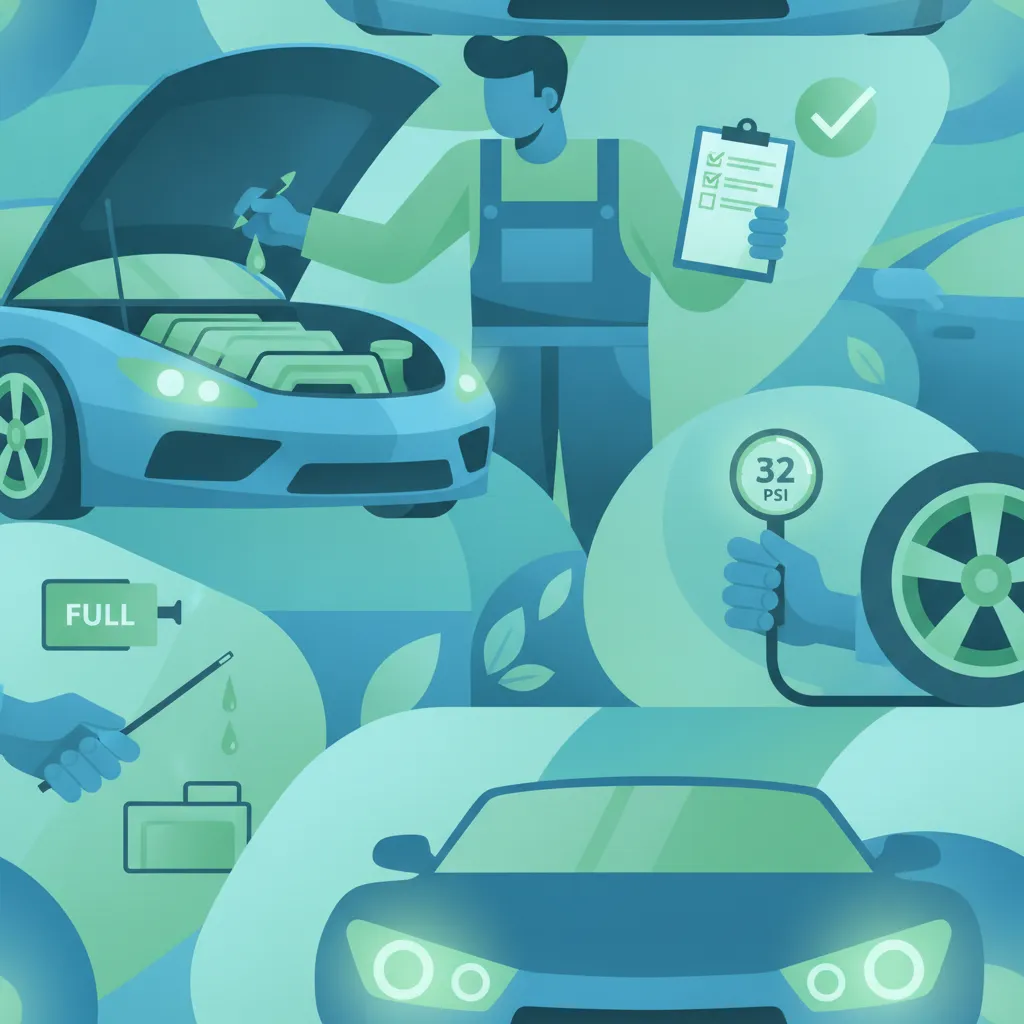
This lesson outlines the essential components of a comprehensive pre-trip vehicle inspection for goods vehicles. It covers the visual and functional checks required for tyres, brakes, lights, mirrors, coupling mechanisms, fluid levels, and vital documentation. The lesson emphasizes the importance of conducting thorough inspections before each trip to identify safety hazards and prevent accidents.
Learners will gain insight into the essential documentation and registration processes for passenger vehicles, covering the requirements for legal operation and fleet management. The lesson details the necessary paperwork, periodic inspections, and permits required to maintain compliance with Turkish transport regulations. Mastery of these administrative aspects ensures that drivers are prepared to meet all legal obligations for vehicle operation.
This lesson details the statutory duties imposed on motor vehicle drivers by Turkish traffic legislation to maintain order on public roads. It emphasizes mandatory seat belt usage, mobile phone bans, vehicle inspection rules, and general compliance with police directions. Understanding these duties ensures drivers avoid heavy penalties and maintain road safety.
Regulatory traffic signs convey absolute legal commands that riders must obey to avoid heavy fines and ensure safe, orderly movement. This lesson walks through prohibitory indicators, mandatory speed limits, turn restrictions, and specific moped bans on motorways or designated high-speed corridors. You will learn to recognize the distinctive shapes and colors of these signs, enabling rapid, accurate decision-making while operating your lightweight vehicle under Turkish highway laws.

This lesson covers the proper usage, maintenance, and alignment of the vehicle's lighting systems, including high beams, low beams, and fog lights. It explains the legal requirements for activating lights during daytime, twilight, tunnel crossings, and heavy rain. Drivers will learn how to avoid blinding oncoming motorists while maintaining visibility.

This lesson introduces the proper utilization of mirrors, rearview cameras, and additional sensor systems to enhance situational awareness for goods vehicle drivers. Learners will understand the importance of correctly adjusting mirrors for optimal coverage, interpreting camera feeds, and relying on sensor alerts. The lesson emphasizes integrating modern safety technology into daily driving practices.

This lesson explains the legal guidelines and safety physics for carrying passengers and securing cargo inside or on top of a vehicle. It details how excess weight or poorly distributed cargo negatively affects vehicle handling, braking, and fuel efficiency. Drivers will learn the legal payload limits specified under Turkish Category B regulations.

Learners will explore the proper adjustment and utilization of mirrors, rear-view cameras, and blind spot sensors to maximize visibility while operating a passenger vehicle. The lesson covers the optimal positioning of mirrors for comprehensive coverage, interpreting camera and sensor alerts, and integrating these tools into safe driving practices. Proper use of these technologies reduces blind spots and enhances overall situational awareness.
Find clear answers to common questions learners have about Documentation and Licence Validity. Learn how the lesson is structured, which driving theory objectives it supports, and how it fits into the overall learning path of units and curriculum progression in Turkey. These explanations help you understand key concepts, lesson flow, and exam focused study goals.
You must carry your valid driving licence, the vehicle's registration certificate (Ruhsat), and proof of the current compulsory traffic insurance (Zorunlu Mali Sorumluluk Sigortası) at all times.
In Turkey, a Category B driving licence is generally valid for 10 years, after which it must be renewed following a health check, unless earlier renewal is required due to specific medical or legal conditions.
Driving without carrying your licence is considered a traffic violation. While you may not lose the licence itself immediately, you will face an administrative fine for failing to present mandatory documentation.
Official identification in Turkey requires the physical licence card. While digital infrastructure is evolving, you must always carry the physical card to ensure full compliance with current Turkish traffic enforcement protocols.
Use our comprehensive practice search to find exactly the Turkish driving theory questions you need to master. Whether reviewing specific road signs, traffic rules, or first aid scenarios, select your perfect practice set and boost your confidence for the official ehliyet sınavı.