
This lesson provides essential training on how to plan safe and legal routes for heavy goods vehicles under Turkish traffic legislation. You will learn to identify prohibited zones and interpret weight and height restrictions, which is critical for both the professional theory exam and safe fleet operation. This topic builds directly upon your understanding of vehicle dimensions and road space.
Lesson content overview
Route planning is a fundamental operational pillar for any professional driver operating heavy goods vehicles (HGVs). Unlike passenger cars, which can navigate almost any public road without spatial or weight concerns, commercial vehicles carrying heavy loads are subject to strict legal limitations and physical barriers.
In Turkey, professional drivers seeking C1, C, C1E, or CE licenses must master the integration of legal restrictions, infrastructure limits, and modern navigation technologies. This comprehensive guide covers the essential principles of legal compliance, vehicle-road compatibility, and the practical implementation of routing strategies under the Turkish Highway Traffic Regulation (Karayolları Trafik Yönetmeliği).
Professional driving demands more than steering and braking; it requires proactive risk management before the vehicle ever leaves the depot. Under Article 65 of the Turkish Highway Traffic Law No. 2918 (Karayolları Trafik Kanunu), strict limits are placed on vehicle dimensions, gross weights, and axle configurations to protect highway infrastructure and ensure public safety.
Improperly planned routes lead to severe consequences, including infrastructure damage (such as bridge strikes or road surface rutting), heavy administrative fines, vehicle impoundment, and catastrophic structural failures. For example, routing a vehicle that exceeds the maximum permissible axle load over an older regional bridge can cause structural fatigue or immediate collapse.
Proper route planning optimizes three core parameters:
The weight of a heavy goods vehicle is transferred to the road surface through its tires and axles. Excessive weight concentrates high-stress forces on localized areas of the road, leading to accelerated wear, asphalt deformation, or bridge failure. Regulatory authorities enforce two main types of weight limits:
Professional drivers must cross-reference their actual vehicle weight configuration with localized weight limit signs, which are common on older provincial roads, historic bridges, and secondary routes maintained by local municipalities.
The "Under-Limit" Fallacy: Never assume a major state highway (Devlet Yolu) can accommodate any load size or weight. Bridge rehabilitation, temporary construction zones, or seasonal road damage can result in rapid, temporary weight downgrades that are only marked by local signage.
Height clearance restrictions represent one of the most critical safety hazards for HGV drivers. A bridge or tunnel strike is highly destructive, often shearing off container tops, damaging overhead power lines, and blocking vital transport arteries for hours or days.
In Turkey, the standard clearance limit for interstate highways is designed around a standard maximum vehicle height of 4.00 metres. However, older structures, city underpasses, historic stone bridges, and secondary rural roads frequently feature clearances far below this standard.
When planning a route, drivers of high-sided vehicles, car transporters, or container chassis must know their exact loaded height down to the centimetre.
Manoeuvring a large vehicle combination through tight spaces requires a clear understanding of width and length restrictions. Narrow lanes, historic town gates, and winding mountain passes present severe physical constraints.
To reduce traffic congestion, minimize environmental impact, and protect historical infrastructure, metropolitan municipalities in Turkey utilize Transportation Coordination Centers (Ulaşım Koordinasyon Merkezi or UKOME) to establish access restrictions for goods vehicles.
Major metropolitan areas like Istanbul, Ankara, and Izmir have strict truck bans inside central business districts and historic quarters.
One of the most common causes of heavy vehicle routing incidents is the reliance on standard passenger car navigation systems (such as generic mobile mapping apps). Standard GPS systems calculate the fastest or shortest path based solely on passenger car speeds and routing. They lack the database parameters required to filter out low bridges, weight-restricted roads, or sharp turning radiuses unsuitable for HGVs.
Professional truck-specific GPS devices and advanced telematics platforms require the driver to input the vehicle's specific physical profile before commencing a journey.
Input Gross Vehicle Weight (GVW): Enter the actual weight from the weighbridge or shipping manifest to avoid weight-restricted bridges and local roads.
Input Maximum Axle Loads: Specify the single and tandem axle weights to comply with bridge design limits.
Enter Total Vehicle Dimensions: Input precise height, width, and overall length (including any rear overhang or drawbar trailers).
Specify Cargo Type: Indicate if the cargo includes hazardous materials (ADR), which are restricted from certain tunnels, water protection zones, and metropolitan centers.
Route planning is not a static, one-time task; it is an ongoing process of active navigation. Road conditions change rapidly due to accidents, construction, extreme weather, or emergency closures.
A safe route on a dry, clear summer day can become highly hazardous under winter or adverse weather conditions. Professional drivers must adjust their route plans according to seasonal and geographical realities.
Turkey's geography features high mountain chains with passes that regularly experience severe snow, ice, and high winds (such as the Bolu Mountain Pass on the D-100 or the passes across the Taurus Mountains).
Understanding the direct consequences of routing decisions helps drivers develop a professional, compliance-first mindset.
| Action / Decision | Immediate Structural/Legal Effect | Long-Term Operational Outcome |
|---|---|---|
| Using generic passenger car GPS without HGV profiling | High risk of entering narrow streets, low-clearance areas, or weight-restricted zones. | Delays, structural strikes, costly recovery services, and severe traffic fines. |
| Verifying cargo dimensions and vehicle height before departure | Ensuring safe passage under all scheduled overpasses and tunnels. | Zero bridge-strike incidents, maintained fleet safety rating, and reliable delivery times. |
| Overloading axles or ignoring bridge weight limits | Concentrated stress on infrastructure, asphalt deformation, and structural bridge damage. | Heavy administrative fines, potential driver license suspension, and infrastructure collapse risk. |
| Planning routes around metropolitan UKOME time bans | Avoiding restricted zones during peak hours or securing municipal permits in advance. | Smooth urban transit, zero traffic congestion penalties, and improved fuel economy. |
A professional goods vehicle driver is defined by preparation. Safe and legal route planning protects lives, preserves infrastructure, and ensures your livelihood. By combining rigorous physical checks of your vehicle's dimensions with truck-specific navigation tools and a deep respect for Turkish road signs, you ensure that every journey is completed safely, legally, and efficiently.
This lesson covers the legal and practical framework for planning safe, compliant routes for heavy goods vehicles (C1, C, C1E, CE) in Turkey. It details how to interpret road signs for weight limits (TT-23, TT-24), height restrictions (TT-22), and width/length constraints, emphasizing that drivers must verify their vehicle's exact loaded dimensions against posted limits rather than relying on default highway standards. The content explains UKOME urban access restrictions, the necessity of truck-specific GPS with complete vehicle profile input, and how to handle conditional hazards such as low bridges, mountain passes, and adverse weather. Two practical scenarios reinforce the critical importance of stopping and reassessing rather than proceeding when uncertain about a route's suitability for your specific vehicle.
A short set of high-value points that capture the most important learning from this lesson.
Route planning for heavy goods vehicles balances three core parameters: legal compliance, infrastructure protection, and operational efficiency.
Vehicle weight must be checked against both Gross Vehicle Weight (GVW) limits and individual axle weight limits, which protect bridges from concentrated stress.
Height clearance planning must account for active air suspension settings, road resurfacing that reduces clearances, and snow/ice accumulation.
UKOME (Transportation Coordination Centers) in major Turkish cities impose time-of-day bans and permit requirements for heavy vehicles in urban zones.
Standard passenger car GPS systems cannot be relied upon for HGV routing; drivers must input their exact vehicle profile into truck-specific navigation.
Explore all units and lessons included in this driving theory course.
Turkish highway GVW limits are typically 40 tonnes for standard 5-axle articulated combinations (up to 44 tonnes for ISO containers).
Standard maximum vehicle height is 4.00 metres, but always allow a 20-30 cm safety margin when approaching low-clearance indicators.
Articulated combinations are limited to 16.50 metres; road trains to 18.75 metres; standard width to 2.55 metres.
UKOME time restrictions for trucks over 3.5 or 7.5 tonnes GVW commonly apply during 07:00-10:00 and 16:00-20:00 in metropolitan areas.
Temporary yellow-background signs take precedence over pre-programmed GPS instructions.
Assuming that because a route follows a major state highway, it can accommodate any load size without checking local bridge weight signs.
Entering exact vehicle dimensions without accounting for air suspension height changes or cargo overhang, leading to incorrect clearance calculations.
Relying on generic passenger car navigation apps instead of truck-specific GPS that filters low bridges and weight-restricted roads.
Proceeding under an unmarked underpass because no height limit sign is posted, which is a dangerous assumption on older local roads.
Attempting to cross a weight-restricted bridge based on the belief that a safety margin exists beyond the posted limit, when the sign is the legal maximum.
Lesson content overview
A short set of high-value points that capture the most important learning from this lesson.
Route planning for heavy goods vehicles balances three core parameters: legal compliance, infrastructure protection, and operational efficiency.
Vehicle weight must be checked against both Gross Vehicle Weight (GVW) limits and individual axle weight limits, which protect bridges from concentrated stress.
Height clearance planning must account for active air suspension settings, road resurfacing that reduces clearances, and snow/ice accumulation.
UKOME (Transportation Coordination Centers) in major Turkish cities impose time-of-day bans and permit requirements for heavy vehicles in urban zones.
Standard passenger car GPS systems cannot be relied upon for HGV routing; drivers must input their exact vehicle profile into truck-specific navigation.
Explore all units and lessons included in this driving theory course.
Turkish highway GVW limits are typically 40 tonnes for standard 5-axle articulated combinations (up to 44 tonnes for ISO containers).
Standard maximum vehicle height is 4.00 metres, but always allow a 20-30 cm safety margin when approaching low-clearance indicators.
Articulated combinations are limited to 16.50 metres; road trains to 18.75 metres; standard width to 2.55 metres.
UKOME time restrictions for trucks over 3.5 or 7.5 tonnes GVW commonly apply during 07:00-10:00 and 16:00-20:00 in metropolitan areas.
Temporary yellow-background signs take precedence over pre-programmed GPS instructions.
Assuming that because a route follows a major state highway, it can accommodate any load size without checking local bridge weight signs.
Entering exact vehicle dimensions without accounting for air suspension height changes or cargo overhang, leading to incorrect clearance calculations.
Relying on generic passenger car navigation apps instead of truck-specific GPS that filters low bridges and weight-restricted roads.
Proceeding under an unmarked underpass because no height limit sign is posted, which is a dangerous assumption on older local roads.
Attempting to cross a weight-restricted bridge based on the belief that a safety margin exists beyond the posted limit, when the sign is the legal maximum.
Explore search topics learners often look for when studying Route Planning: Legal and Practical Considerations. These topics reflect common questions about road rules, driving situations, safety guidance, and lesson level theory preparation for learners in Turkey.
Browse additional driving theory lessons that cover connected traffic rules, road signs, and common driving situations related to this topic. Improve your understanding of how different rules interact across everyday traffic scenarios.
Learn the legal requirements for gross vehicle weight and axle load distribution in Turkey. This guide explains how to identify weight limit signs and ensure your cargo configuration remains within the structural capacity of roads, bridges, and infrastructure as required by the Turkish Highway Traffic Regulation.
This lesson delves into the principles of weight distribution and load limits for goods vehicles, emphasizing the impact on vehicle stability and safety. It examines the concept of Gross Vehicle Weight (GVW) and the legal limits imposed on individual axles to prevent overloading. Learners will explore how improper weight distribution affects the centre of gravity, braking performance, and handling characteristics.

This lesson provides a detailed overview of the classification system for goods vehicles in Turkey, focusing on the specific dimensional limits for each category. Learners will become familiar with the maximum allowable length, width, and height for these vehicles, as defined by Turkish law. Understanding these limits is crucial for ensuring compliance with road regulations and avoiding serious violations.
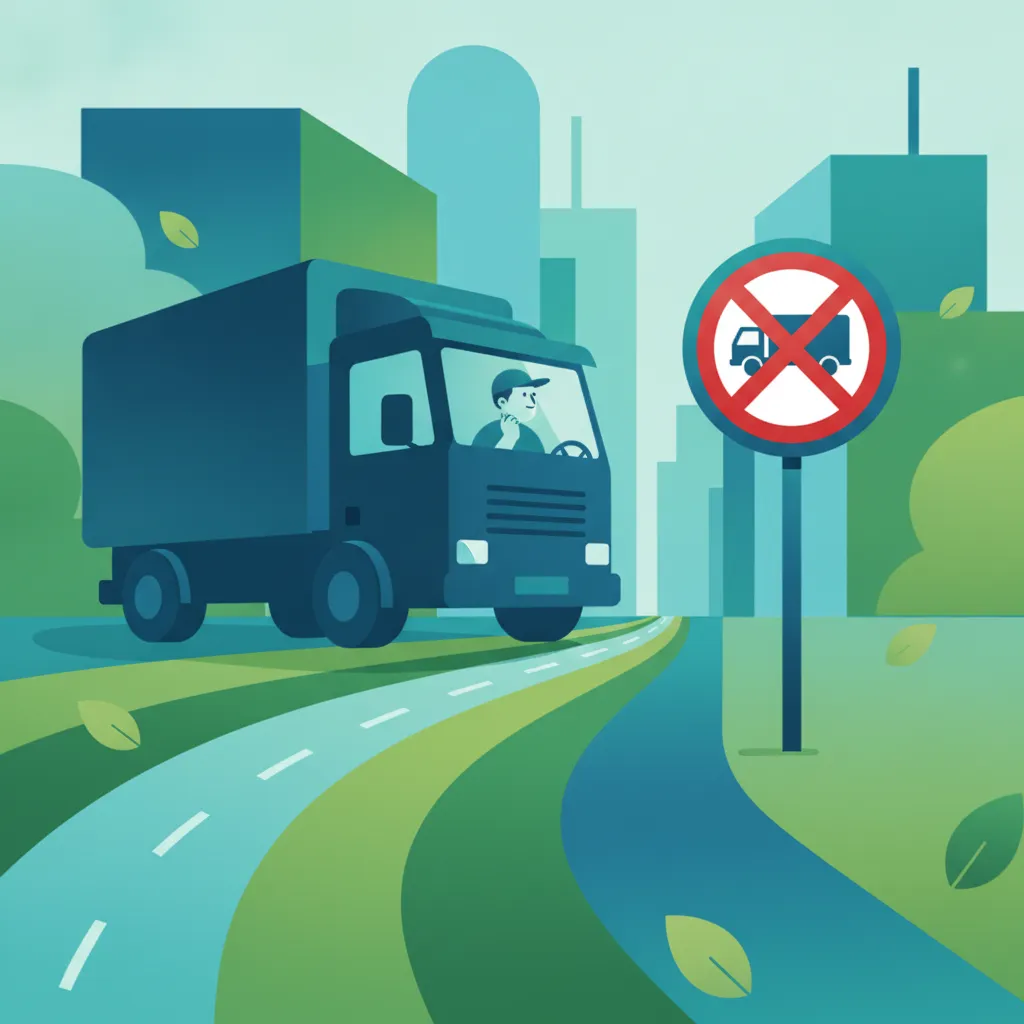
This lesson focuses on the various access restrictions imposed on heavy goods vehicles within Turkish road networks. Learners will understand the reasons for restrictions such as low bridge clearances, tunnel usage, construction zones, and urban delivery area limitations. The lesson also covers how to recognize and comply with legal notices and signage indicating restricted commercial zones.
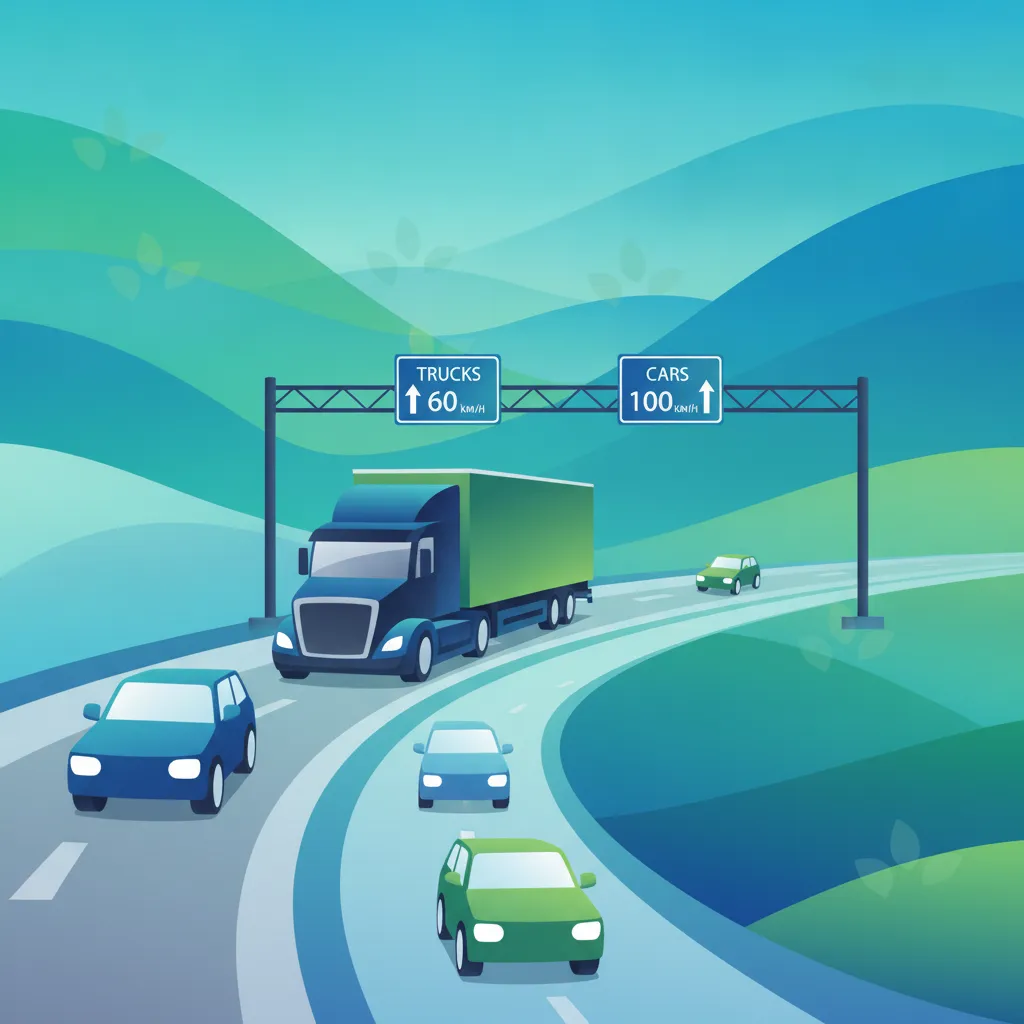
This lesson focuses on speed regulation for goods vehicles, highlighting how vehicle weight, load, and road conditions influence safe operating speeds. Learners will understand legal speed limits for various road types and the necessity of adapting speed to traffic flow and environmental conditions. The lesson also emphasizes the importance of maintaining appropriate speed to ensure vehicle control.
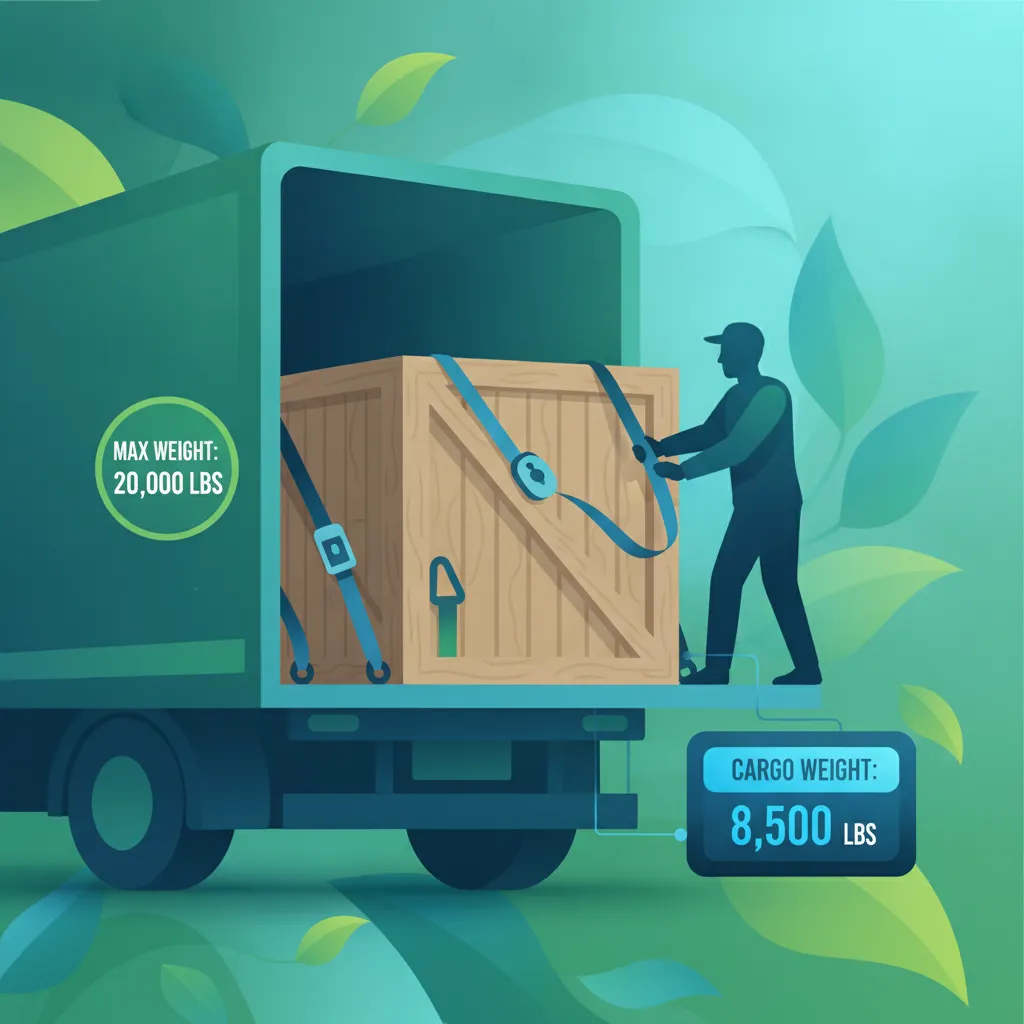
This lesson explains the legal guidelines and safety physics for carrying passengers and securing cargo inside or on top of a vehicle. It details how excess weight or poorly distributed cargo negatively affects vehicle handling, braking, and fuel efficiency. Drivers will learn the legal payload limits specified under Turkish Category B regulations.
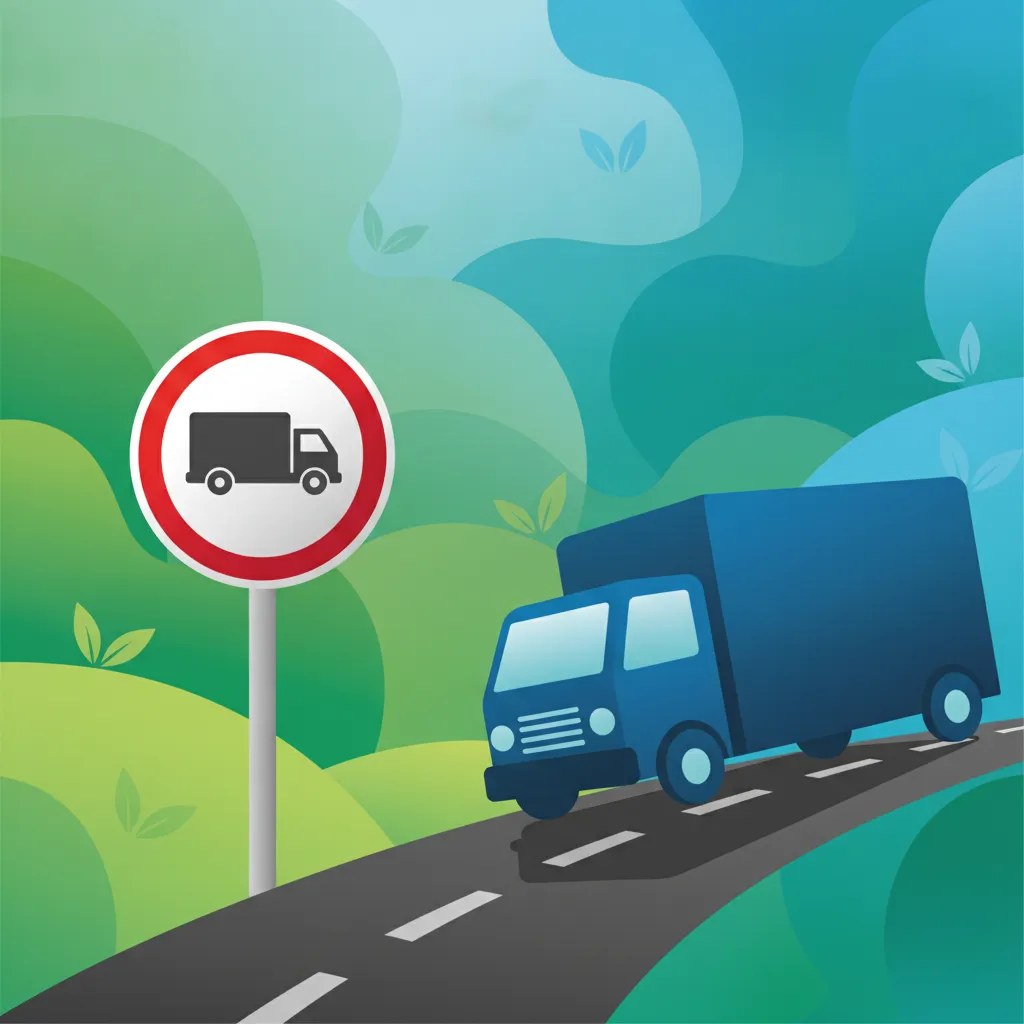
This lesson focuses on traffic signs and road markings that are specifically relevant to goods vehicles in Turkey. Learners will become familiar with signs indicating prohibited routes, weight limits, height restrictions, hazardous material transport, and lane usage regulations. The lesson emphasizes the importance of accurately interpreting these signs to ensure compliance with traffic laws.
This lesson examines the specific road space requirements necessary for large goods vehicles to operate safely and efficiently. Topics include the need for adequate lane width, lateral clearance, and turning lanes to accommodate wider and longer vehicles. Learners will explore the proper use of shoulders, overtaking procedures, and the impact of large vehicles on overall road capacity in traffic.
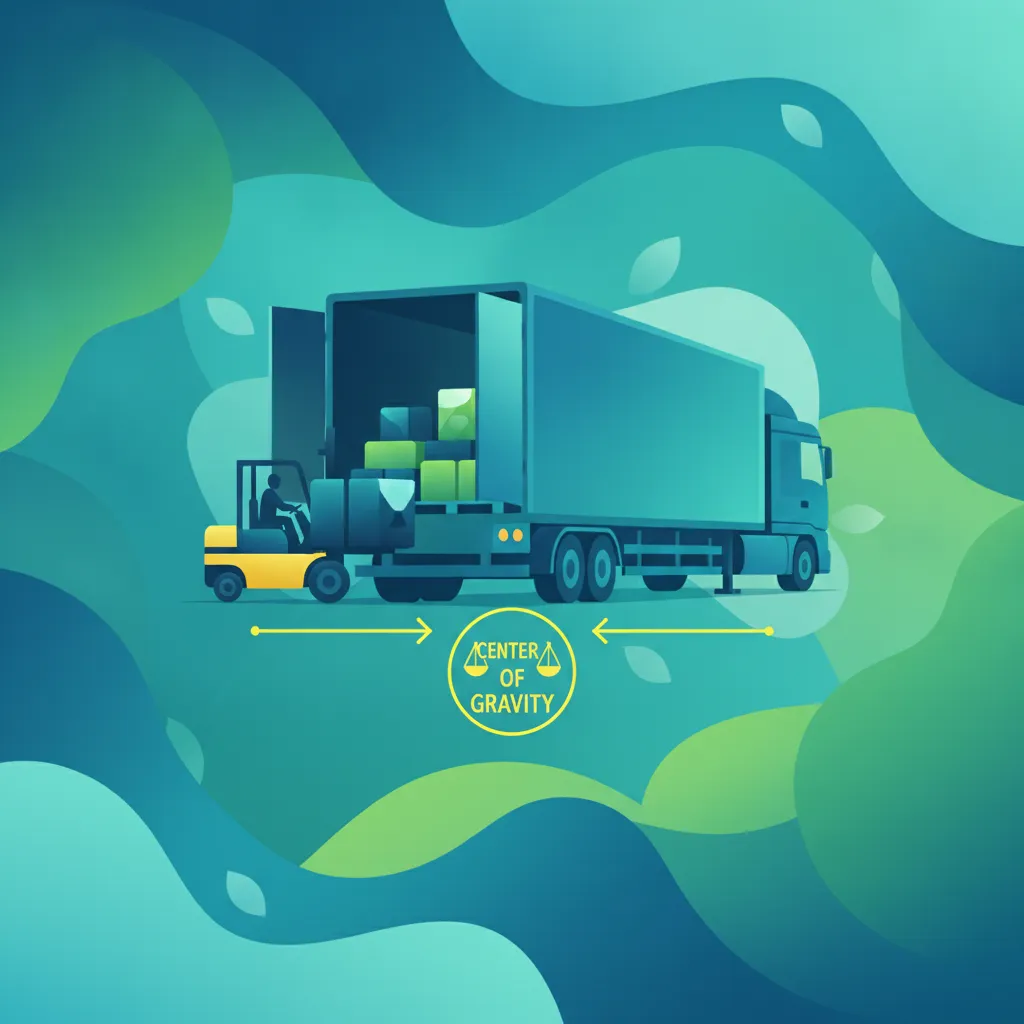
This lesson focuses on the essential principles of load planning and weight distribution for goods vehicles. Learners will understand how to assess cargo weight, determine optimal placement, and maintain a low centre of gravity to ensure vehicle stability. The lesson emphasizes legal load limits, the dangers of overloading, and the impact of uneven load distribution on handling and braking.
This lesson focuses on the importance of maintaining safe following distances for goods vehicles, taking into account longer braking distances and increased load. Learners will learn how to calculate appropriate gaps based on speed, road conditions, and vehicle dynamics. The lesson emphasizes safe following practices to prevent rear-end collisions and improve overall traffic safety in Turkey.
This lesson focuses on the critical importance of lane discipline and proper lane usage for large goods vehicles. Learners will understand the challenges posed by wider vehicle dimensions, the necessity of maintaining adequate lane occupancy, and the need for precise lane keeping. Emphasis is placed on selecting appropriate lanes, adhering to traffic flow, and ensuring general highway safety.
Explore the regulations governing goods vehicle access in major Turkish cities. Understand how UKOME policies, time-of-day traffic bans, and specialized municipal delivery permits impact your route planning and daily operations in urban business districts and historic centers to ensure full legal compliance.

This lesson explores the unique challenges faced during urban deliveries, such as navigating restricted loading zones, traffic congestion, and narrow streets. Learners will learn strategies for safe maneuvering, efficient loading and unloading, and maintaining situational awareness in high-pedestrian traffic areas. Emphasis is placed on complying with local regulations and optimizing time management.
This lesson focuses on the various access restrictions imposed on heavy goods vehicles within Turkish road networks. Learners will understand the reasons for restrictions such as low bridge clearances, tunnel usage, construction zones, and urban delivery area limitations. The lesson also covers how to recognize and comply with legal notices and signage indicating restricted commercial zones.
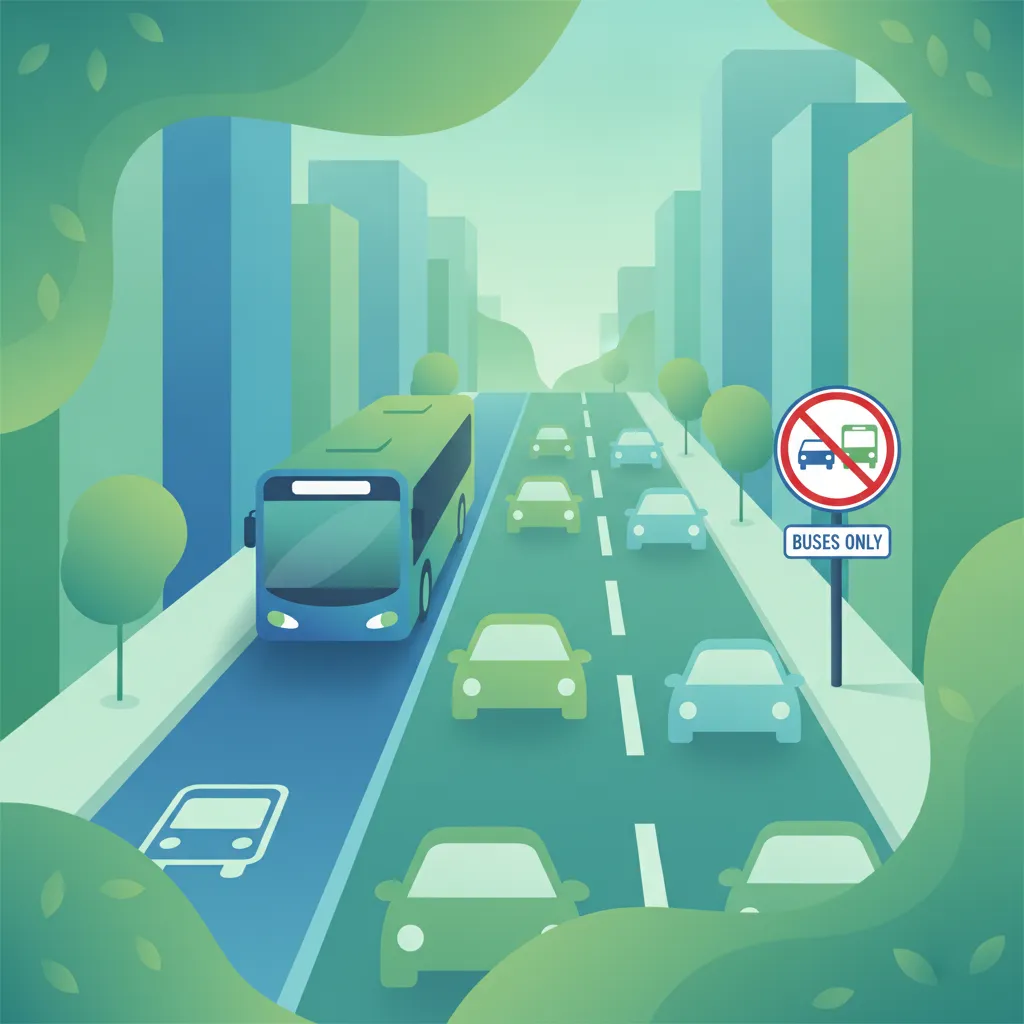
Learners will explore the specific regulations governing bus lanes, priority routes, and other legal restrictions applicable to passenger vehicles. The lesson covers the conditions under which buses may use dedicated lanes, how to navigate priority roadways, and the penalties associated with misuse. Understanding these rules is essential for efficient operation and avoiding violations in high-traffic areas.
Find clear answers to common questions learners have about Route Planning: Legal and Practical Considerations. Learn how the lesson is structured, which driving theory objectives it supports, and how it fits into the overall learning path of units and curriculum progression in Turkey. These explanations help you understand key concepts, lesson flow, and exam focused study goals.
Standard navigation systems do not account for vehicle height, width, or weight limits. A professional truck GPS allows you to input your specific vehicle dimensions, ensuring the route avoids low bridges, weight-restricted roads, or narrow streets that would be illegal or physically impossible to navigate.
Look for regulatory traffic signs such as the circular white sign with a red border depicting a truck, which signifies that goods vehicles are prohibited. You must also monitor signs indicating maximum axle load or total vehicle weight limits.
Yes, they apply across C1, C, C1E, and CE categories. While the specific limits may vary based on your vehicle's actual size and weight, the fundamental requirement to plan routes that accommodate your vehicle's physical characteristics is universal for all professional drivers.
Ignoring these restrictions can lead to severe accidents, bridge strikes, and infrastructure damage. Legally, you will face significant administrative fines, points on your licence, and potentially the suspension of your professional driving qualifications.
Use our comprehensive practice search to find exactly the Turkish driving theory questions you need to master. Whether reviewing specific road signs, traffic rules, or first aid scenarios, select your perfect practice set and boost your confidence for the official ehliyet sınavı.