
This lesson explores the critical dimensions and road space requirements necessary to operate C1, C, C1E, and CE category vehicles safely in Turkey. Building on your knowledge of vehicle dimensions, you will learn how to accurately judge lane occupancy and clearance to ensure safe navigation on highways and urban roads.
Lesson content overview
Operating a Large Goods Vehicle (LGV) or Heavy Goods Vehicle (HGV) within the Turkish transport network requires an advanced understanding of spatial dynamics. Whether driving a rigid truck under a Class C license or an articulated vehicle under Class CE, professional drivers must constantly calculate and manage the physical space their vehicle occupies.
This lesson details the specific road space requirements dictated by vehicle dimensions and the Karayolları Trafik Yönetmeliği (Turkish Highway Traffic Regulation). It covers lane widths, lateral clearance, turning dynamics, shoulder regulations, and safe overtaking protocols.
Lane width is a critical element of road infrastructure design. While passenger cars have ample room to maneuver within standard lanes, large goods vehicles operate with highly restricted safety margins. Under the guidelines of the Karayolları Genel Müdürlüğü (KGM - General Directorate of Highways), standard highway (Otoyol) lanes in Turkey are typically constructed with a width of 3.75 metres. However, on state roads (Devlet Yolları), provincial roads (İl Yolları), and within urban municipal areas, lane widths can narrow significantly to 3.0 metres or less.
To put this into perspective, the maximum legal width limit for standard refrigerated and box-type large vehicles in Turkey is 2.60 metres (excluding side mirrors).
When an LGV measuring 2.60 metres in width travels down a standard 3.75-metre highway lane, it leaves a total of 1.15 metres of excess lane width. Distributed evenly, this provides only 0.575 metres of clearance on either side of the vehicle. If the same vehicle operates on a narrow municipal road with a lane width of 3.0 metres, the total excess width drops to 0.40 metres, leaving a razor-thin clearance of just 20 centimetres on each side.
To safely manage these narrow tolerances, professional drivers must adhere to the following positioning guidelines:
Attempting to split lanes or straddle lane markings to gain lateral clearance is a serious violation under Turkish traffic law. This behavior confuses other road users and increases the risk of side-swipe collisions. Always stay centered within your designated lane boundaries.
Lateral clearance is defined as the physical space maintained between the outer sides of your vehicle (including mirrors, loads, and trailer overhangs) and adjacent objects, road markings, or other vehicles. This clearance acts as an indispensable safety cushion that compensates for driver error, crosswinds, road surface irregularities, and vehicle sway.
The dynamic buffer zone kept between the sides of a large vehicle and other roadway elements, such as guardrails, parked cars, cyclists, and moving traffic, to prevent physical contact during transit.
Large vehicles do not travel in a perfectly straight line. Several dynamic forces can cause a truck to drift or sway within its lane:
Under normal driving conditions, professional LGV drivers must maintain a minimum lateral clearance of at least 0.5 metres from lane markings. When passing vulnerable road users such as pedestrians, cyclists, or motorcyclists, this lateral safety margin must be increased to a minimum of 1.5 metres.
Reduce Speed: Lowering your speed decreases both the aerodynamic bow wave effect and the kinetic energy of any lateral vehicle sway.
Firmly Grip the Steering Wheel: Keep both hands at the 9-and-3 or 10-and-2 positions to quickly counteract sudden wind gusts or road ruts.
Monitor Your Mirrors Constantly: Check your wide-angle and close-proximity mirrors every 5 to 8 seconds to ensure your trailer wheels are not encroaching on adjacent lanes.
Intersections present the highest risk of collision for large goods vehicles due to the physical phenomenon known as off-tracking (also referred to as "swept path" or low-speed off-tracking).
When any vehicle negotiates a turn, its rear wheels do not follow the exact path of the front wheels. Instead, the rear wheels cut inward toward the center of the turn. In long, articulated vehicles (Class CE), this inward path deviation is highly pronounced. The longer the distance between the vehicle’s kingpin (or steering axle) and the rear trailer axles, the greater the off-tracking effect.
Turkish traffic regulations mandate that drivers use dedicated turning lanes where available. Because an LGV requires a much wider turning radius, drivers must execute turns with extreme caution:
A buttonhook turn involves driving straight into the intersection before turning the steering wheel sharply right, keeping the rear wheels clear of the curb while preventing smaller vehicles from squeezing into your right-side blind spot. A jug-handle turn involves swinging wide left before entering the intersection, which invites smaller passenger vehicles to unsafely overtake on your right side.
The road shoulder (emniyet şeridi or banket) is the paved or unpaved margin running parallel to the active traffic lanes. Under the Turkish Highway Traffic Regulation, the shoulder is designed to serve as a safety buffer for emergency situations, breakdowns, and emergency vehicle access.
Driving, parking, or overtaking on the road shoulder is strictly prohibited for all standard traffic. For large vehicles, this rule is strictly enforced due to the structural limitations of shoulders and the danger of obstructing emergency services.
Overtaking an LGV, or executing an overtaking maneuver within an LGV, requires significant road space and precise spatial calculation. Due to their extended length (up to 18.75 metres for standard road trains in Turkey), overtaking maneuvers take much longer to complete than those involving passenger cars.
When a smaller passenger car attempts to overtake a large truck, the overtaking driver requires a clear line of sight and a substantial gap in oncoming traffic. For example, overtaking a vehicle traveling at 80 km/h when your own speed is 90 km/h requires several hundred metres of clear road.
When you are driving an LGV and need to overtake a slower vehicle (such as agricultural machinery or an overloaded commercial vehicle):
Under the Turkish Highway Traffic Regulation, when sign TT-31 is posted, truck drivers must remain in the right-hand lane and under no circumstances attempt to pass slower vehicles, unless the vehicle ahead is moving at extremely low speed (such as a stationary broken-down vehicle or a slow moving road-maintenance vehicle with active amber beacons).
Failing to respect road space limits and dimensions can result in severe legal penalties, points on your professional driver's license (ceza puanı), and serious accidents. Below are some of the most common space-related violations in Turkey:
In historic or highly congested Turkish urban centers (e.g., parts of Istanbul, Izmir, or Trabzon), double-parked delivery vehicles often reduce the effective lane width to less than 2.5 metres.
A professional driver must constantly adapt their spatial calculations based on changing environmental factors, vehicle state, and road design:
In rain, fog, snow, or black ice (gizli buzlanma):
When operating in urban environments where pedestrians, cyclists, and scooter riders are present:
The table below compiles the essential legal and technical terms used in Turkish road transport and license examinations.
| Term (EN) | Local Term (TR) | Practical Definition / Regulatory Context |
|---|---|---|
| Lane Width | Şerit Genişliği | The physical width of a travel lane, ranging from 3.0m (urban) to 3.75m (highways) in Turkey. |
| Lateral Clearance | Yan Güvenlik Mesafesi | The safety buffer maintained on either side of the vehicle to prevent collisions from sway or wind. |
| Off-tracking | İz Sapması / Dingil Sapması | The phenomenon where rear wheels cut inside the turning path of the steering axle. |
| Emergency Shoulder | Emniyet Şeridi | The lane on the outer edge of highways reserved strictly for emergency parking and response vehicles. |
| Overtaking Ban | Geçme Yasağı | Regulatory restriction preventing heavy vehicles from overtaking, indicated by sign TT-31. |
| Width Limit | Genişlik Sınırı (TT-15) | Structural limit marking maximum allowable vehicle width for safe transit on a road segment. |
| Trailer Swing | Dorse Savrulması | The lateral movement of an articulated trailer due to centrifugal force, wind, or braking. |
This lesson covers the critical spatial demands of operating large goods vehicles (C and CE categories) in Turkey, including lane width tolerances, lateral clearance minimums, and turning dynamics. Large vehicles up to 2.60m wide leave only razor-thin clearance in urban lanes, requiring centered positioning and constant mirror monitoring. The phenomenon of off-tracking means articulated vehicles cut inward at low speeds, demanding the buttonhook turn method to prevent curbside collisions. Heavy vehicle drivers must respect shoulder prohibitions, maintain 0.5m standard lateral clearance (1.5m near vulnerable users), and obey overtaking bans where posted.
A short set of high-value points that capture the most important learning from this lesson.
Large goods vehicles (max 2.60m wide) operate with extremely tight margins in standard lanes—0.575m clearance on each side of a 3.75m highway lane versus only 0.20m on a 3.0m urban lane.
Drivers must maintain a minimum lateral clearance of 0.5m from lane markings under normal conditions, increasing to at least 1.5m when passing vulnerable road users such as cyclists and pedestrians.
Off-tracking causes articulated vehicles' rear wheels to cut inside the turning path at low speeds, requiring drivers to swing wide using the buttonhook turn method rather than hugging the curb.
The emergency shoulder (emniyet şeridi) is strictly reserved for breakdowns only—driving, parking, or overtaking on shoulders is prohibited and carries severe penalties.
Heavy goods vehicles over 3.5 tonnes must obey overtaking bans (TT-31) and remain in the right-hand lane on restricted road segments.
Explore all units and lessons included in this driving theory course.
Highway lanes are typically 3.75m wide in Turkey; urban and state roads can be as narrow as 3.0m or less.
Lateral clearance requirements: 0.5m minimum standard, 1.5m minimum when passing vulnerable road users.
Low-speed off-tracking cuts trailer wheels inward (use buttonhook turn); high-speed turning causes outward trailer swing.
Turn signals must be activated 5 seconds/30 metres in advance in urban areas and 150 metres on rural roads.
Road sign TT-31 prohibits goods vehicles over 3.5 tonnes from overtaking; TT-15 indicates width restrictions for narrow lanes.
Edge shyness—drivers sit high in trucks and steer too far from barriers, causing trailer tires to encroach on opposite lanes.
Attempting jug-handle turns instead of buttonhook turns, inviting smaller vehicles to overtake unsafely on the right side.
Forcing large vehicles through narrow urban streets with double-parked vehicles, reducing clearance below safe limits and risking severe structural damage.
Confusing high-speed and low-speed turning dynamics—drivers may not anticipate the outward trailer swing at speeds above 40 km/h on exits and roundabouts.
Attempting to straddle lane markings or split lanes to gain lateral clearance, which violates Turkish traffic law and increases side-swipe collision risk.
Lesson content overview
A short set of high-value points that capture the most important learning from this lesson.
Large goods vehicles (max 2.60m wide) operate with extremely tight margins in standard lanes—0.575m clearance on each side of a 3.75m highway lane versus only 0.20m on a 3.0m urban lane.
Drivers must maintain a minimum lateral clearance of 0.5m from lane markings under normal conditions, increasing to at least 1.5m when passing vulnerable road users such as cyclists and pedestrians.
Off-tracking causes articulated vehicles' rear wheels to cut inside the turning path at low speeds, requiring drivers to swing wide using the buttonhook turn method rather than hugging the curb.
The emergency shoulder (emniyet şeridi) is strictly reserved for breakdowns only—driving, parking, or overtaking on shoulders is prohibited and carries severe penalties.
Heavy goods vehicles over 3.5 tonnes must obey overtaking bans (TT-31) and remain in the right-hand lane on restricted road segments.
Explore all units and lessons included in this driving theory course.
Highway lanes are typically 3.75m wide in Turkey; urban and state roads can be as narrow as 3.0m or less.
Lateral clearance requirements: 0.5m minimum standard, 1.5m minimum when passing vulnerable road users.
Low-speed off-tracking cuts trailer wheels inward (use buttonhook turn); high-speed turning causes outward trailer swing.
Turn signals must be activated 5 seconds/30 metres in advance in urban areas and 150 metres on rural roads.
Road sign TT-31 prohibits goods vehicles over 3.5 tonnes from overtaking; TT-15 indicates width restrictions for narrow lanes.
Edge shyness—drivers sit high in trucks and steer too far from barriers, causing trailer tires to encroach on opposite lanes.
Attempting jug-handle turns instead of buttonhook turns, inviting smaller vehicles to overtake unsafely on the right side.
Forcing large vehicles through narrow urban streets with double-parked vehicles, reducing clearance below safe limits and risking severe structural damage.
Confusing high-speed and low-speed turning dynamics—drivers may not anticipate the outward trailer swing at speeds above 40 km/h on exits and roundabouts.
Attempting to straddle lane markings or split lanes to gain lateral clearance, which violates Turkish traffic law and increases side-swipe collision risk.
Explore search topics learners often look for when studying Road Space Requirements for Large Vehicles. These topics reflect common questions about road rules, driving situations, safety guidance, and lesson level theory preparation for learners in Turkey.
Browse additional driving theory lessons that cover connected traffic rules, road signs, and common driving situations related to this topic. Improve your understanding of how different rules interact across everyday traffic scenarios.
Learn the mechanics of off-tracking and swept path requirements for heavy goods vehicles. This guide explains how to properly execute turns at urban intersections while managing the inward deviation of trailer wheels to prevent property damage and ensure safe spatial navigation according to Turkish traffic regulations.
This lesson explores effective turning strategies for goods vehicles, focusing on managing the larger turn radius required due to vehicle size and load. Learners will understand how to approach corners safely, adjust speed, use signals appropriately, and compensate for off-tracking. The lesson also highlights how load distribution impacts turning dynamics and the importance of vehicle control.
This lesson focuses on the challenges and techniques required when maneuvering goods vehicles in confined spaces such as loading docks, narrow streets, and urban environments. It addresses the importance of spatial awareness, precision driving, and understanding vehicle dimensions to avoid collisions. Learners will explore strategies for effective parking, reversing, and handling blind spots safely.

This lesson focuses on the specific manoeuvring techniques required when operating articulated vehicles or those towing trailers. Learners will understand the dynamics of pivot points, the causes and mitigation of trailer sway, and how to execute turns safely with a trailer attached. Proper coupling checks and trailer length considerations are emphasized for safe operations on public roads.
This lesson focuses on the importance of maintaining safe following distances for goods vehicles, taking into account longer braking distances and increased load. Learners will learn how to calculate appropriate gaps based on speed, road conditions, and vehicle dynamics. The lesson emphasizes safe following practices to prevent rear-end collisions and improve overall traffic safety in Turkey.
This lesson focuses on the critical importance of lane discipline and proper lane usage for large goods vehicles. Learners will understand the challenges posed by wider vehicle dimensions, the necessity of maintaining adequate lane occupancy, and the need for precise lane keeping. Emphasis is placed on selecting appropriate lanes, adhering to traffic flow, and ensuring general highway safety.
This lesson focuses on effectively managing road closures and detours that affect goods vehicle routes. Learners will explore strategies for obtaining real-time information, updating navigation systems, and planning alternate routes to maintain efficiency and compliance. Emphasis is placed on safety considerations, communication with dispatch centers, and adhering to traffic management.
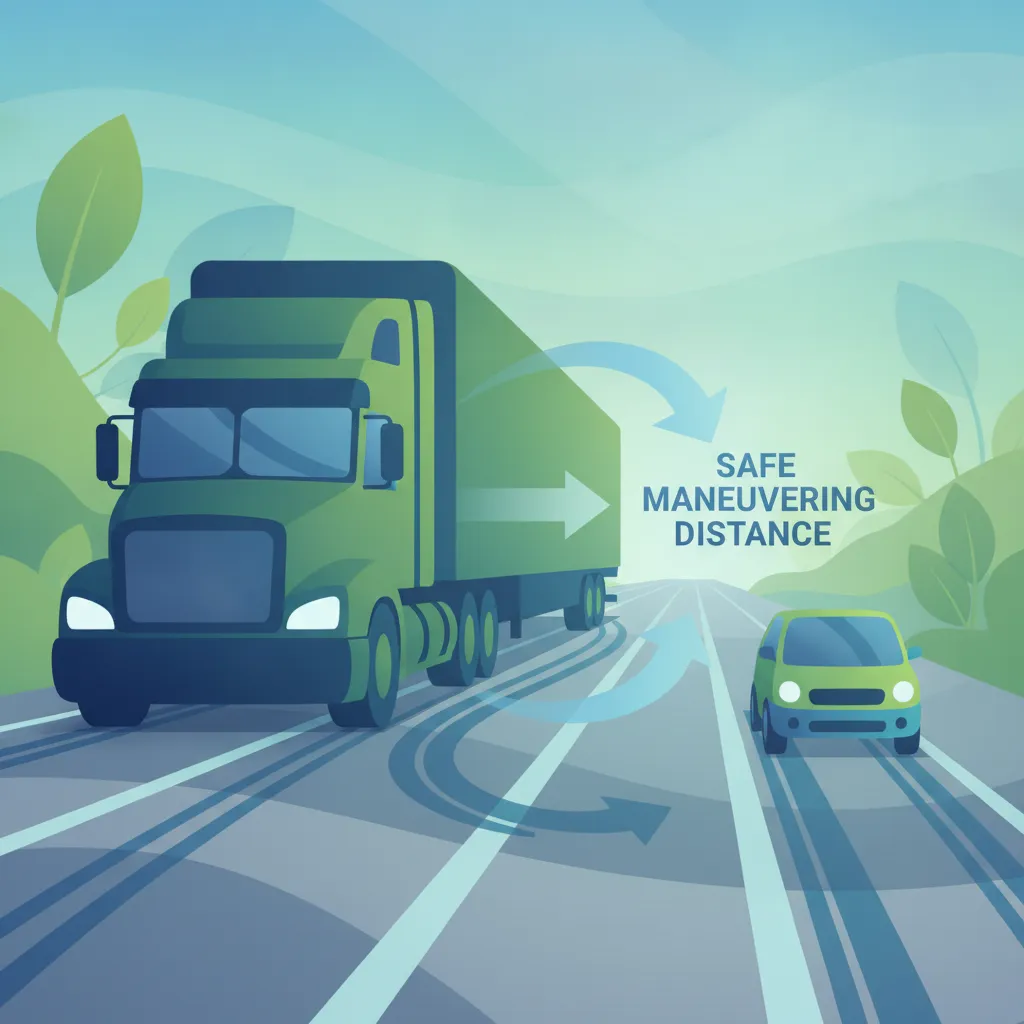
This lesson focuses on how the size and dimensions of goods vehicles influence their interaction with road infrastructure and overall traffic flow. It discusses the increased road space occupancy, especially in urban settings, and the implications for lane usage, bridge clearances, and tunnel dimensions. Learners will gain insight into the infrastructure challenges posed by large vehicles, including wear on road surfaces.
This lesson focuses on the execution of safe right and left turns with large passenger vehicles, emphasizing the identification and management of blind spots. Learners will understand the correct use of turn signals, proper positioning within the turn, and the importance of thorough observation before and during turning. Strategies for minimizing blind spot exposure are also covered.
This lesson focuses on the various access restrictions imposed on heavy goods vehicles within Turkish road networks. Learners will understand the reasons for restrictions such as low bridge clearances, tunnel usage, construction zones, and urban delivery area limitations. The lesson also covers how to recognize and comply with legal notices and signage indicating restricted commercial zones.
This lesson explores the unique challenges encountered when driving goods vehicles on rural roads, including narrow widths, sharp curves, animal crossings, and varying road surface conditions. Learners will understand the importance of adjusting speed, maintaining vigilance, and respecting road markings. Emphasis is placed on safe navigation practices to mitigate risks associated with rural areas.
Understand the importance of maintaining centered lane alignment and adequate lateral clearance for large vehicles on highways and urban roads. This theory lesson covers managing aerodynamic effects and wind gusts, as well as the required safety buffers when overtaking or sharing the road with vulnerable road users.
This lesson focuses on the critical importance of lane discipline and proper lane usage for large goods vehicles. Learners will understand the challenges posed by wider vehicle dimensions, the necessity of maintaining adequate lane occupancy, and the need for precise lane keeping. Emphasis is placed on selecting appropriate lanes, adhering to traffic flow, and ensuring general highway safety.
This lesson explores the unique challenges encountered when driving goods vehicles on rural roads, including narrow widths, sharp curves, animal crossings, and varying road surface conditions. Learners will understand the importance of adjusting speed, maintaining vigilance, and respecting road markings. Emphasis is placed on safe navigation practices to mitigate risks associated with rural areas.
Learners will explore the fundamentals of maintaining correct lane discipline, focusing on appropriate lane positioning, understanding lane markings, and executing lane changes safely. Emphasis is placed on the unique considerations for large passenger vehicles within the lane, such as width and maneuverability. The lesson also addresses the impact of proper lane discipline on overall traffic flow and safety.
This lesson focuses on the importance of maintaining safe following distances for goods vehicles, taking into account longer braking distances and increased load. Learners will learn how to calculate appropriate gaps based on speed, road conditions, and vehicle dynamics. The lesson emphasizes safe following practices to prevent rear-end collisions and improve overall traffic safety in Turkey.
This lesson focuses on effectively managing road closures and detours that affect goods vehicle routes. Learners will explore strategies for obtaining real-time information, updating navigation systems, and planning alternate routes to maintain efficiency and compliance. Emphasis is placed on safety considerations, communication with dispatch centers, and adhering to traffic management.
This lesson examines the integral role of the goods vehicle driver in contributing to overall traffic safety and a positive safety culture. It focuses on proactive driving behaviors, hazard identification, and effective risk management strategies. Communication techniques with other road users, compliance with traffic flow regulations, and competent emergency responses are highlighted as essential skills.

This lesson introduces the proper utilization of mirrors, rearview cameras, and additional sensor systems to enhance situational awareness for goods vehicle drivers. Learners will understand the importance of correctly adjusting mirrors for optimal coverage, interpreting camera feeds, and relying on sensor alerts. The lesson emphasizes integrating modern safety technology into daily driving practices.
This lesson focuses on the challenges and techniques required when maneuvering goods vehicles in confined spaces such as loading docks, narrow streets, and urban environments. It addresses the importance of spatial awareness, precision driving, and understanding vehicle dimensions to avoid collisions. Learners will explore strategies for effective parking, reversing, and handling blind spots safely.

This lesson examines lane division and proper lane usage on multi-lane roads and highways. Learners will understand the purpose of lane markings in guiding drivers to maintain appropriate lane discipline. Topics include correct lane selection for different vehicle types, overtaking procedures, and lane-changing techniques. Real-world examples illustrate the importance of respecting lane usage rules.

This lesson focuses on protecting vulnerable road users, such as pedestrians, cyclists, and motorcyclists, in mixed traffic environments. Learners will examine specific strategies for increased vigilance, anticipatory driving, and properly yielding to these users. The lesson also covers high-risk zones, such as school areas and public transport stops, emphasizing the need for heightened safety.
Find clear answers to common questions learners have about Road Space Requirements for Large Vehicles. Learn how the lesson is structured, which driving theory objectives it supports, and how it fits into the overall learning path of units and curriculum progression in Turkey. These explanations help you understand key concepts, lesson flow, and exam focused study goals.
Because of the off-tracking phenomenon in articulated vehicles, you must take a wider arc when turning. Always observe your side mirrors to ensure the rear trailer axles do not mount the kerb or collide with objects in the inner turn.
Heavy goods vehicles are wider and more sensitive to aerodynamic buffeting. Maintaining adequate lateral clearance is vital to prevent side-swipe accidents, especially when overtaking smaller vehicles or passing cyclists at high speeds.
Yes, some intersections have designated wider lanes or advanced stop lines. Always observe signs that restrict specific lanes to heavy vehicles and follow road markings that dictate the path of travel for long-length vehicles.
Use our comprehensive practice search to find exactly the Turkish driving theory questions you need to master. Whether reviewing specific road signs, traffic rules, or first aid scenarios, select your perfect practice set and boost your confidence for the official ehliyet sınavı.