
This lesson details the strict regulatory environment for transporting hazardous materials under Turkish and international law. By understanding these specific cargo requirements, you will prepare for critical sections of your professional C-category theory exam and ensure safe operation in real-world scenarios.
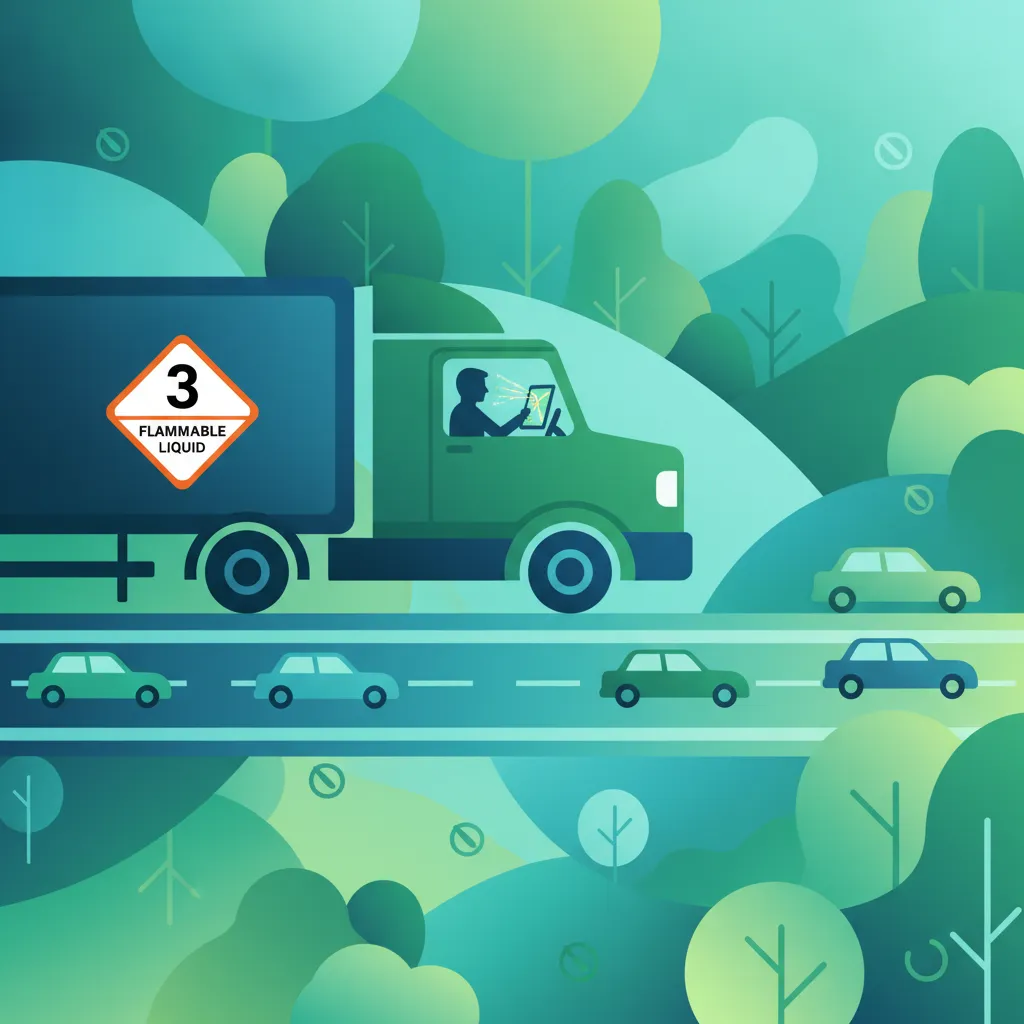
Lesson content overview
Transporting hazardous materials and dangerous goods by road is one of the most highly regulated aspects of the commercial transport industry. For professional drivers in Turkey pursuing C1, C, C1E, or CE licenses, mastering these regulations is not just a requirement to pass the theory exam—it is a critical safety imperative.
Because an incident involving hazardous cargo can lead to catastrophic environmental damage, severe injuries, and loss of life, both national and international legal frameworks mandate strict compliance. This lesson explores the legal, technical, and operational rules governing hazardous material transport in Turkey.
Hazardous materials transport in Turkey is governed by a combination of international treaties and localized national legislation. The primary international framework is the ADR (Accord européen relatif au transport international des marchandises Dangereuses par Route), known in English as the Agreement Concerning the International Carriage of Dangerous Goods by Road.
Turkey became a party to the ADR in 2010. Consequently, all national rules have been harmonized with this agreement.
The transport of dangerous goods is legally regulated through several key national documents:
Any commercial carrier operating within Turkish borders must comply with these guidelines. Failure to do so results in heavy administrative fines, vehicle impoundment, and the immediate suspension of the driver's professional credentials.
To ensure standardized handling, transport, and emergency response, hazardous materials are classified into nine distinct hazard classes based on their physical and chemical properties. Each class has unique labeling, packaging, and handling rules.
A four-digit number assigned by the United Nations Committee of Experts on the Transport of Dangerous Goods to identify hazardous substances and articles (e.g., UN 1203 for gasoline).
A professional driver must never begin a journey carrying hazardous goods without verifying that all mandatory legal paperwork is in the cab. These documents provide law enforcement and emergency responders with critical information during an incident.
ADR Transport Document (Transport Dec): This document lists the shipper and consignee, the proper shipping name of the substances, their hazard class, UN numbers, packaging group, and total quantity. For international freight, this is often incorporated into or accompanied by a CMR consignment note.
Instructions in Writing (Safety Data Sheets / SDS): Written instructions must be provided to the driver in a language they understand. They outline the actions to be taken in the event of an accident, the specific hazards of the cargo, and the emergency equipment required.
Vehicle Approval Certificate (ADR Uygunluk Belgesi): This certificate confirms that the vehicle (especially tankers) meets the strict technical specifications required by ADR for hauling specific classes of dangerous goods.
Driver’s SRC 5 Certificate: The professional driving qualification certificate required under Turkish law specifically for dangerous goods transport.
Failing to carry physical, legible copies of any of these documents violates the Turkish Road Transport Regulation. If inspected by the Ministry of Transport or local police, the vehicle will be grounded immediately, and both the driver and the transport operator will face severe financial penalties.
Any vehicle transporting dangerous goods in quantities exceeding the ADR exemptions (often referred to as the 1000-point rule) must be prepared with specific visual identifiers and emergency response tools.
The primary method of notifying other road users and emergency services of a hazardous load is the orange placard.
Under ADR and Turkish national laws, vehicles must carry fire extinguishers based on the maximum permissible mass of the vehicle:
| Vehicle Maximum Permissible Mass (MPM) | Minimum Total Capacity (Dry Powder or Equivalent) | Requirements for Extinguishers |
|---|---|---|
| Under 3.5 tonnes | 4 kg | At least one 2 kg unit, plus additional capacity to reach 4 kg. |
| 3.5 tonnes to 7.5 tonnes | 8 kg | At least one 6 kg unit. Minimum of two extinguishers total. |
| Over 7.5 tonnes | 12 kg | At least one 6 kg unit. Minimum of two extinguishers total. |
All extinguishers must be sealed, bear a valid inspection mark/date, and be readily accessible to the driver, protected from the weather.
Every vehicle carrying hazardous materials must carry an emergency kit. As per ADR Chapter 8.1.5, this must include:
When hauling dangerous goods, standard cargo-securing rules (covered in Section 3 of the curriculum) must be executed with absolute precision. Shifting cargo can cause leaks, ruptures, toxic releases, or explosions.
Route planning for hazardous materials transport involves significantly more restrictions than conventional freight transport. Drivers must actively plan to avoid high-risk zones, densely populated municipal centers, and specific geological obstacles.
Tunnels present an extreme hazard if an accident involving dangerous cargo occurs inside. Tunnels are classified into five categories (A to E) based on the level of risk they present.
Drivers must check their transport document for the Tunnel Restriction Code (e.g., (D/E) or (B)), which dictates which tunnels they are legally permitted to enter.
In Turkey, municipal governments set strict curfews and routing requirements for vehicles hauling hazardous materials. For instance, crossing the Bosporus bridges in Istanbul (Fatih Sultan Mehmet, 15 July Martyrs, or Yavuz Sultan Selim Bridges) with hazardous cargo is subject to specific hours, permits, and route mandates.
Professional drivers must recognize the specific traffic signs regulating hazardous goods.
Under the Karayolları Trafik Yönetmeliği, vehicles carrying hazardous materials are subject to reduced legal speed limits unless otherwise signed:
These limits are intentionally set lower than standard heavy goods vehicle speed limits to provide drivers with a greater safety margin in emergency braking scenarios.
In Turkey, holding a standard commercial driver’s license (Class C or CE) is not sufficient to legally transport dangerous goods. Drivers must undergo specialized training and obtain the SRC 5 Certificate.
The professional competence certificate (Mesleki Yeterlilik Belgesi) issued by the Ministry of Transport and Infrastructure, validating that a driver has successfully completed ADR-compliant training and passed the national qualification exam.
In the event of an accident, leak, spill, or fire involving dangerous cargo, the driver's immediate actions are critical to saving lives and minimizing environmental disaster.
Secure the Vehicle and Scene: Apply the parking brake, shut down the engine, and isolate the battery using the main switch (if equipped). Keep the vehicle illuminated but avoid using open flame torches or sparking electrical equipment.
Alert the Authorities (112): Call the emergency services immediately. State clearly that you are carrying hazardous goods. Provide the UN Number, hazard class, quantity of cargo, and the location of the incident from your ADR transport document.
Establish a Safety Perimeter: Warn other road users to keep back. Ensure people remain upwind from any gas leaks or toxic plumes. Place warning signs and cones around the scene.
Deploy Safety Gear if Safe: If a small leak can be safely contained (e.g., placing a collection bucket under a dripping valve or using a drain seal to protect a water source), do so using your protective gloves, goggles, and safety equipment. Never attempt to handle or contain major spills of toxic or explosive substances.
Provide First Aid: Assist injured parties using the eye-wash bottles or basic first aid, ensuring you do not contaminate yourself with the hazardous substance.
The transport of dangerous goods is heavily policed in Turkey. The Gendarmerie (Jandarma), Traffic Police (Trafik Polisi), and Ministry of Transport inspectors conduct roadside checks to ensure compliance.
Some of the most common violations include:
To operate safely and pass the professional theory exam, a driver must understand how this lesson interacts with other crucial driving modules:
By strictly adhering to the ADR framework and the Turkish Highway Traffic Regulation, professional heavy vehicle drivers protect themselves, other road users, and the environment from the risks of hazardous transport.
This lesson covers the comprehensive regulatory framework for hazardous materials transport in Turkey, centered on the ADR international agreement. Learners must understand the nine hazard classes, mandatory documentation (ADR Transport Document, Instructions in Writing, Vehicle Approval Certificate, SRC 5 Certificate), and vehicle marking requirements including orange placards with HIN and UN numbers. Safety equipment standards specify fire extinguisher capacity by vehicle weight and required emergency kit contents per ADR Chapter 8.1.5. Key operational requirements include reduced speed limits for dangerous goods vehicles, tunnel restriction codes (A-E), and specific route restrictions in urban areas like Istanbul's bridges. Professional drivers must complete SRC 5 training and renew every five years to legally transport hazardous goods.
A short set of high-value points that capture the most important learning from this lesson.
ADR (Accord Dangereux Routier) is the international framework governing hazardous goods transport in Turkey, harmonized since 2010.
Hazardous materials are classified into 9 ADR classes (1-9), from explosives to miscellaneous substances, each with specific handling requirements.
All vehicles carrying dangerous goods must display orange placards with UN numbers and Hazard Identification Numbers (HIN/Kemler Code) on front and rear.
Drivers must carry the SRC 5 Certificate, ADR transport documents, Instructions in Writing (SDS), and a valid Vehicle Approval Certificate.
Tunnel restriction codes (A-E) dictate which dangerous goods can legally pass through specific road tunnels.
Explore all units and lessons included in this driving theory course.
The 9 ADR hazard classes: Explosives (1), Gases (2), Flammable Liquids (3), Flammable Solids (4), Oxidizers (5), Toxic/Infectious (6), Radioactive (7), Corrosive (8), Miscellaneous (9).
Fire extinguisher requirements scale with vehicle weight: under 3.5t requires 4kg total, 3.5-7.5t requires 8kg total, over 7.5t requires 12kg total.
Incompatible hazard classes (e.g., oxidizers Class 5.1 with flammable solids Class 4) must never share the same transport unit.
Hazardous goods vehicles have reduced speed limits: 30 km/h urban, 50 km/h state roads, 60 km/h divided highways, 70 km/h motorways.
The SRC 5 certificate is valid for 5 years and requires renewal training before expiry to maintain driving privileges.
Confusing the blank orange plate (for packaged goods) with the numbered orange plate (for tankers showing HIN on top, UN number below).
Assuming a standard C or CE license alone permits dangerous goods transport—SRC 5 certification is mandatory.
Failing to check the Tunnel Restriction Code on transport documents, which may prohibit entry to certain tunnel categories.
Transporting incompatible materials together (e.g., oxidizing agents with flammable substances) due to not checking chemical compatibility rules.
Carrying expired fire extinguishers or insufficient quantities for the vehicle's maximum permissible mass class.
Lesson content overview
A short set of high-value points that capture the most important learning from this lesson.
ADR (Accord Dangereux Routier) is the international framework governing hazardous goods transport in Turkey, harmonized since 2010.
Hazardous materials are classified into 9 ADR classes (1-9), from explosives to miscellaneous substances, each with specific handling requirements.
All vehicles carrying dangerous goods must display orange placards with UN numbers and Hazard Identification Numbers (HIN/Kemler Code) on front and rear.
Drivers must carry the SRC 5 Certificate, ADR transport documents, Instructions in Writing (SDS), and a valid Vehicle Approval Certificate.
Tunnel restriction codes (A-E) dictate which dangerous goods can legally pass through specific road tunnels.
Explore all units and lessons included in this driving theory course.
The 9 ADR hazard classes: Explosives (1), Gases (2), Flammable Liquids (3), Flammable Solids (4), Oxidizers (5), Toxic/Infectious (6), Radioactive (7), Corrosive (8), Miscellaneous (9).
Fire extinguisher requirements scale with vehicle weight: under 3.5t requires 4kg total, 3.5-7.5t requires 8kg total, over 7.5t requires 12kg total.
Incompatible hazard classes (e.g., oxidizers Class 5.1 with flammable solids Class 4) must never share the same transport unit.
Hazardous goods vehicles have reduced speed limits: 30 km/h urban, 50 km/h state roads, 60 km/h divided highways, 70 km/h motorways.
The SRC 5 certificate is valid for 5 years and requires renewal training before expiry to maintain driving privileges.
Confusing the blank orange plate (for packaged goods) with the numbered orange plate (for tankers showing HIN on top, UN number below).
Assuming a standard C or CE license alone permits dangerous goods transport—SRC 5 certification is mandatory.
Failing to check the Tunnel Restriction Code on transport documents, which may prohibit entry to certain tunnel categories.
Transporting incompatible materials together (e.g., oxidizing agents with flammable substances) due to not checking chemical compatibility rules.
Carrying expired fire extinguishers or insufficient quantities for the vehicle's maximum permissible mass class.
Explore search topics learners often look for when studying Hazardous Materials Transport Regulations. These topics reflect common questions about road rules, driving situations, safety guidance, and lesson level theory preparation for learners in Turkey.
Browse additional driving theory lessons that cover connected traffic rules, road signs, and common driving situations related to this topic. Improve your understanding of how different rules interact across everyday traffic scenarios.
Learn the fundamental principles of load distribution and securing techniques for heavy goods vehicles. This guide explains how center of gravity, friction, and proper lashing methods impact vehicle handling and safety during transport operations under Turkish road transport regulations.
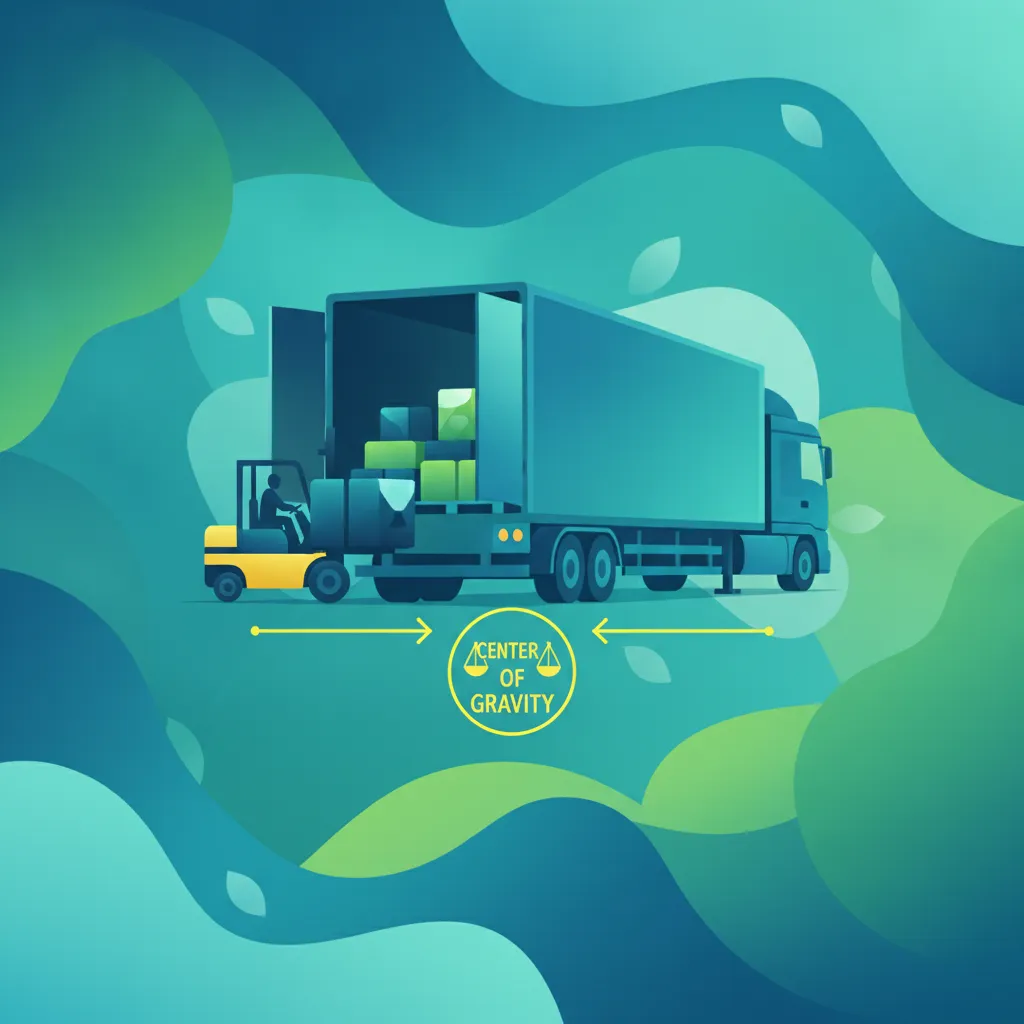
This lesson focuses on the essential principles of load planning and weight distribution for goods vehicles. Learners will understand how to assess cargo weight, determine optimal placement, and maintain a low centre of gravity to ensure vehicle stability. The lesson emphasizes legal load limits, the dangers of overloading, and the impact of uneven load distribution on handling and braking.
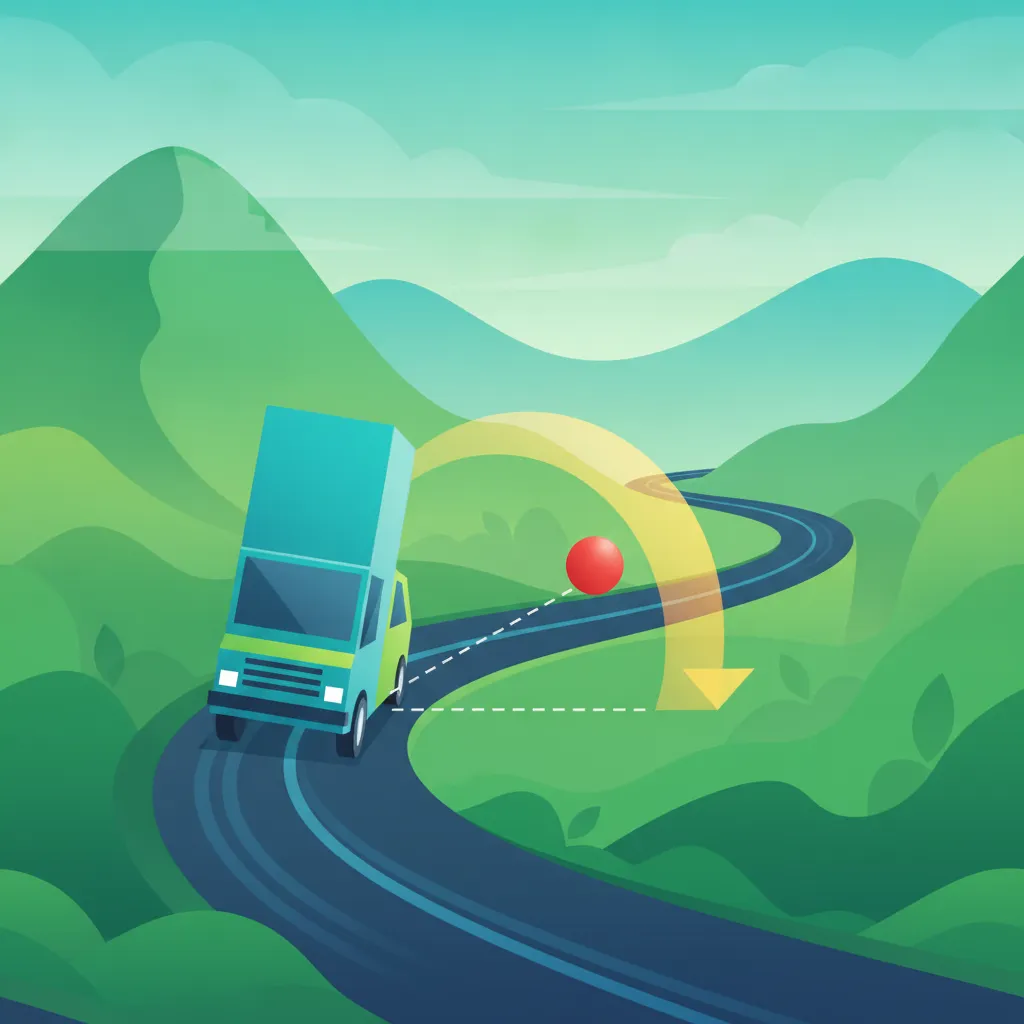
This lesson delves into the concept of centre of gravity and its critical impact on the stability of goods vehicles. Learners will explore how load height and distribution affect side and dynamic stability, particularly during braking, cornering, and evasive maneuvers. The lesson explains the increased rollover risk associated with a high centre of gravity and provides strategies for managing weight.

This lesson examines the effects of load dynamics on vehicle stability during acceleration and deceleration. Learners will learn how cargo can shift and affect handling, particularly during sudden speed changes or emergency braking situations. The lesson emphasizes proper load securing, gradual acceleration, and controlled braking to maintain stability and prevent serious accidents.

This lesson delves into the principles of weight distribution and load limits for goods vehicles, emphasizing the impact on vehicle stability and safety. It examines the concept of Gross Vehicle Weight (GVW) and the legal limits imposed on individual axles to prevent overloading. Learners will explore how improper weight distribution affects the centre of gravity, braking performance, and handling characteristics.

This lesson provides a detailed overview of cargo securing techniques and the legal requirements for securing loads on goods vehicles. It covers the proper use of straps, chains, tarpaulins, and other securing methods to prevent cargo shift during transit. Learners will learn how to assess the need for additional restraints based on cargo type, weight, and dynamic transport conditions.

This lesson addresses the particular challenges posed by standing passengers and the handling of luggage within passenger vehicles. Learners will explore best practices for securing items, guiding passenger movement, and maintaining vehicle stability. Understanding these aspects helps prevent accidents caused by shifting loads or passenger instability, especially during sudden stops or turns.
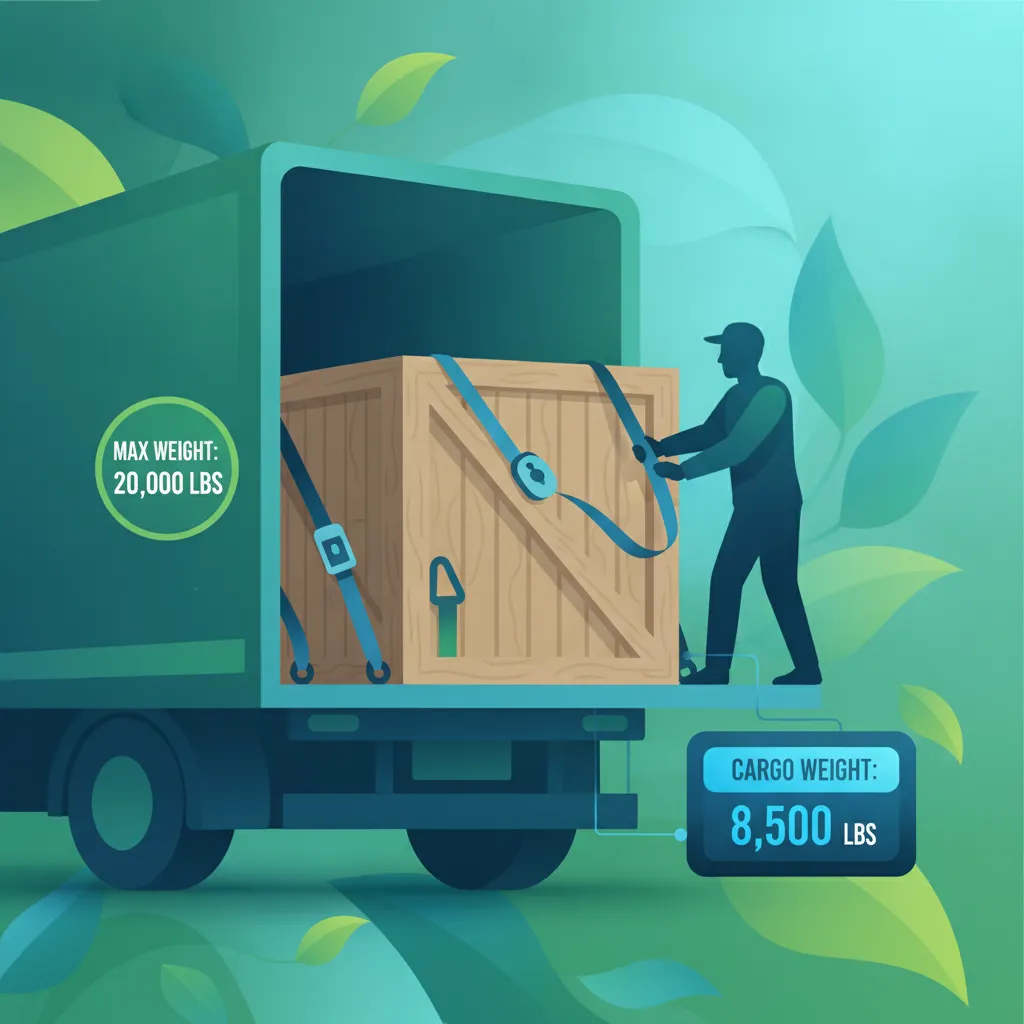
This lesson explains the legal guidelines and safety physics for carrying passengers and securing cargo inside or on top of a vehicle. It details how excess weight or poorly distributed cargo negatively affects vehicle handling, braking, and fuel efficiency. Drivers will learn the legal payload limits specified under Turkish Category B regulations.
This lesson focuses on the critical importance of lane discipline and proper lane usage for large goods vehicles. Learners will understand the challenges posed by wider vehicle dimensions, the necessity of maintaining adequate lane occupancy, and the need for precise lane keeping. Emphasis is placed on selecting appropriate lanes, adhering to traffic flow, and ensuring general highway safety.

This lesson focuses on the importance of maintaining safe following distances for goods vehicles, taking into account longer braking distances and increased load. Learners will learn how to calculate appropriate gaps based on speed, road conditions, and vehicle dynamics. The lesson emphasizes safe following practices to prevent rear-end collisions and improve overall traffic safety in Turkey.

This lesson addresses the techniques required for safely navigating grades and slopes with heavy goods vehicles. Learners will explore the use of engine braking, proper gear selection, and auxiliary retarders to manage speed on steep downhill sections. The lesson also covers strategies for starting on uphill grades without rollback, considering vehicle weight and load distribution.
Understand the legal considerations for planning commercial routes, including tunnel classification codes and access restrictions for heavy vehicles. This lesson provides clear guidance on navigating road infrastructure safely while complying with national traffic regulations and professional driving requirements.
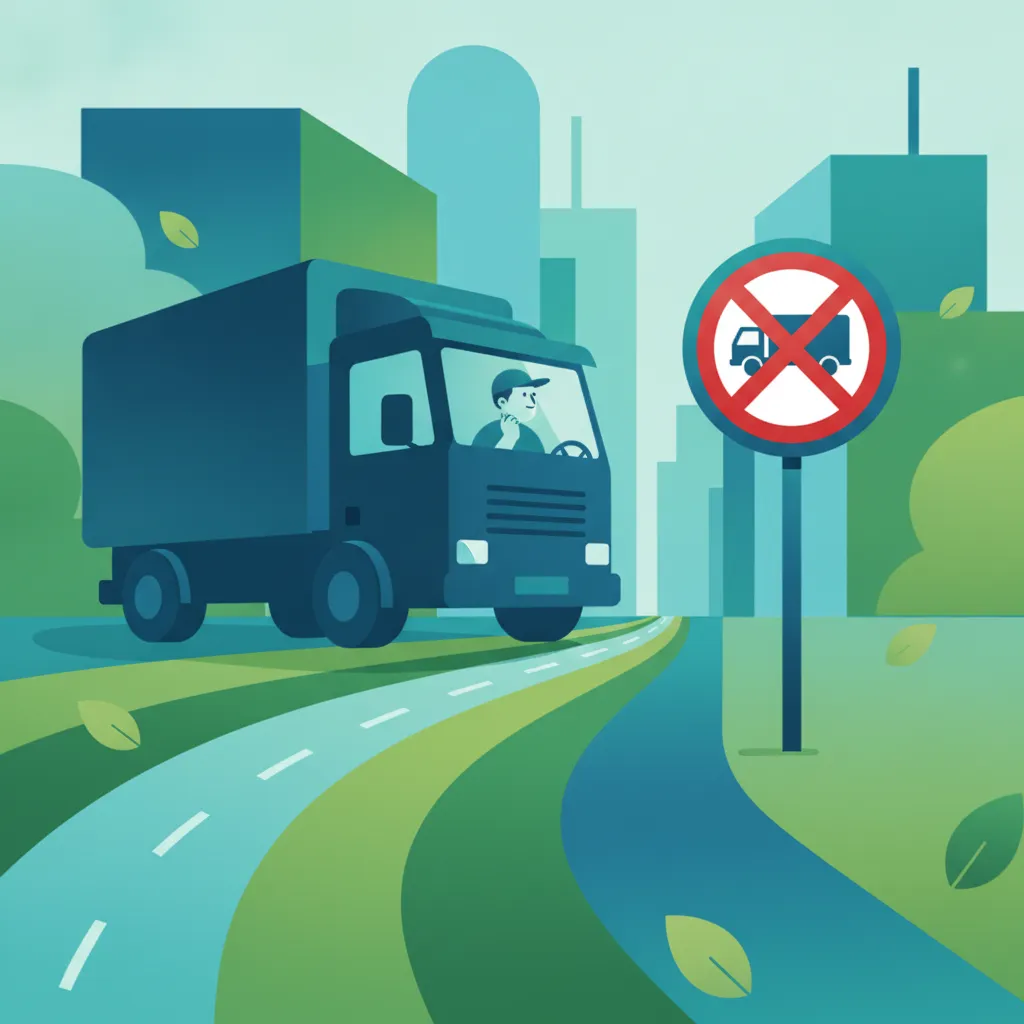
This lesson focuses on the various access restrictions imposed on heavy goods vehicles within Turkish road networks. Learners will understand the reasons for restrictions such as low bridge clearances, tunnel usage, construction zones, and urban delivery area limitations. The lesson also covers how to recognize and comply with legal notices and signage indicating restricted commercial zones.
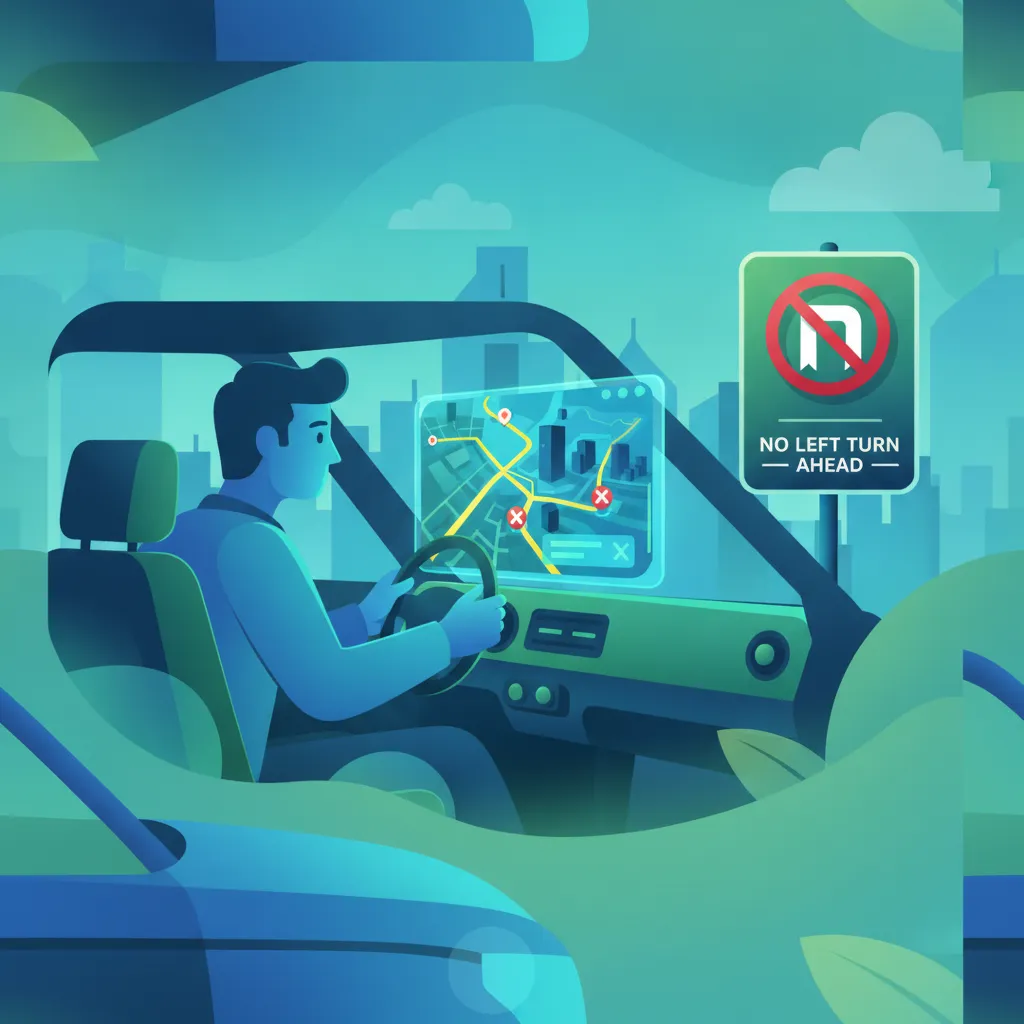
This lesson explores the legal and practical aspects of route planning for goods vehicles, emphasizing the importance of selecting suitable routes that adhere to road restrictions. Learners will learn how to identify roads with weight limits, height clearance, and prohibited zones for heavy vehicles. They will also discover how to use navigation systems and truck-specific GPS effectively.
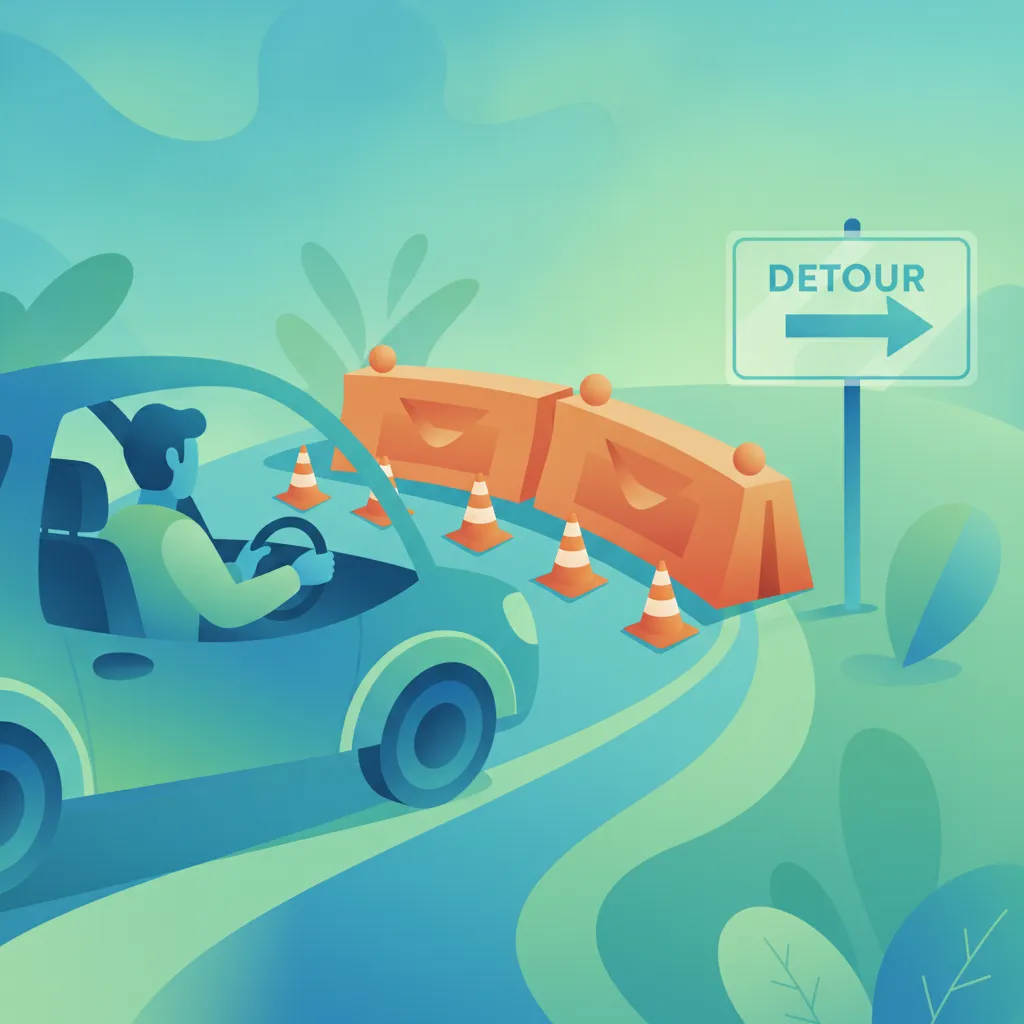
This lesson focuses on effectively managing road closures and detours that affect goods vehicle routes. Learners will explore strategies for obtaining real-time information, updating navigation systems, and planning alternate routes to maintain efficiency and compliance. Emphasis is placed on safety considerations, communication with dispatch centers, and adhering to traffic management.
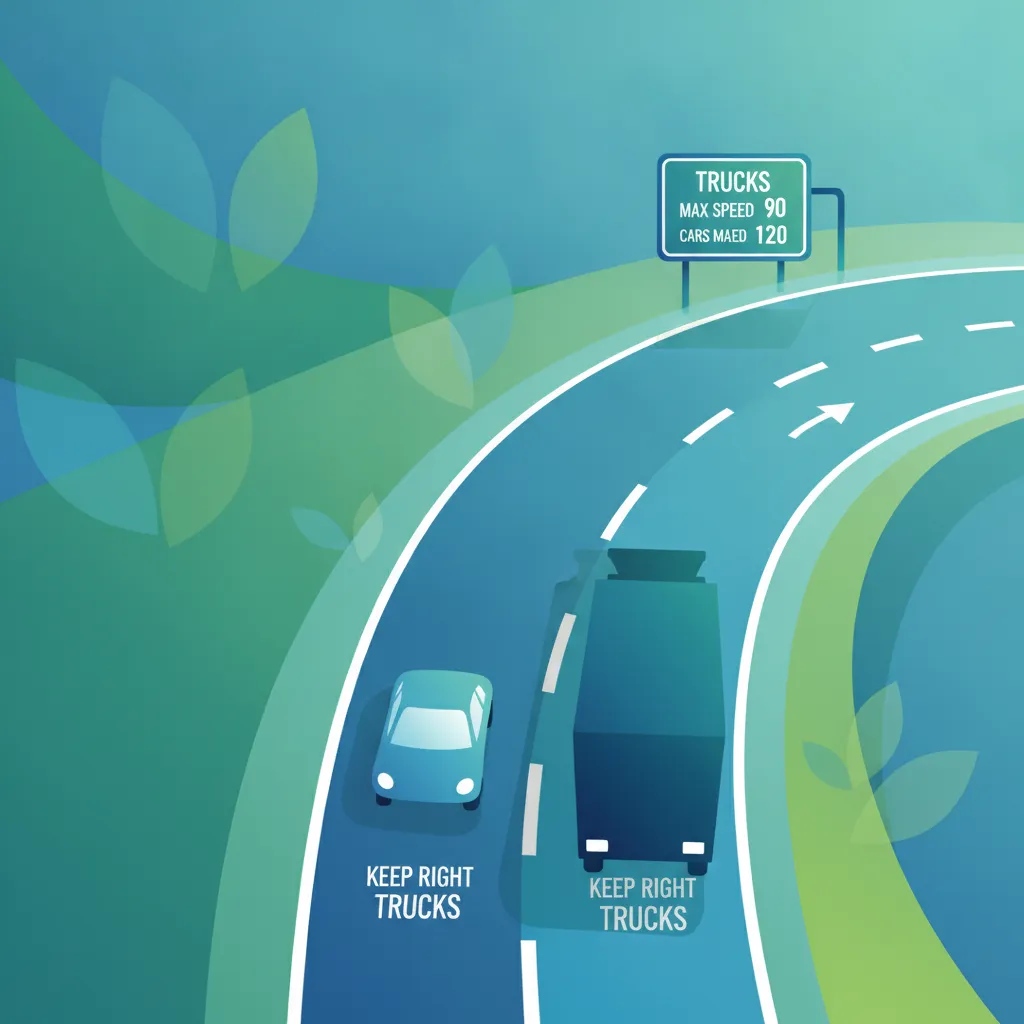
This lesson addresses the specific considerations for goods vehicle operation on highways and expressways, covering speed limits, lane discipline, safe merging, and overtaking. Learners will learn how to adapt to traffic flow, manage heavy vehicle dynamics at higher speeds, and ensure safe operation. The lesson emphasizes the importance of vigilance and proper lane usage to prevent accidents.
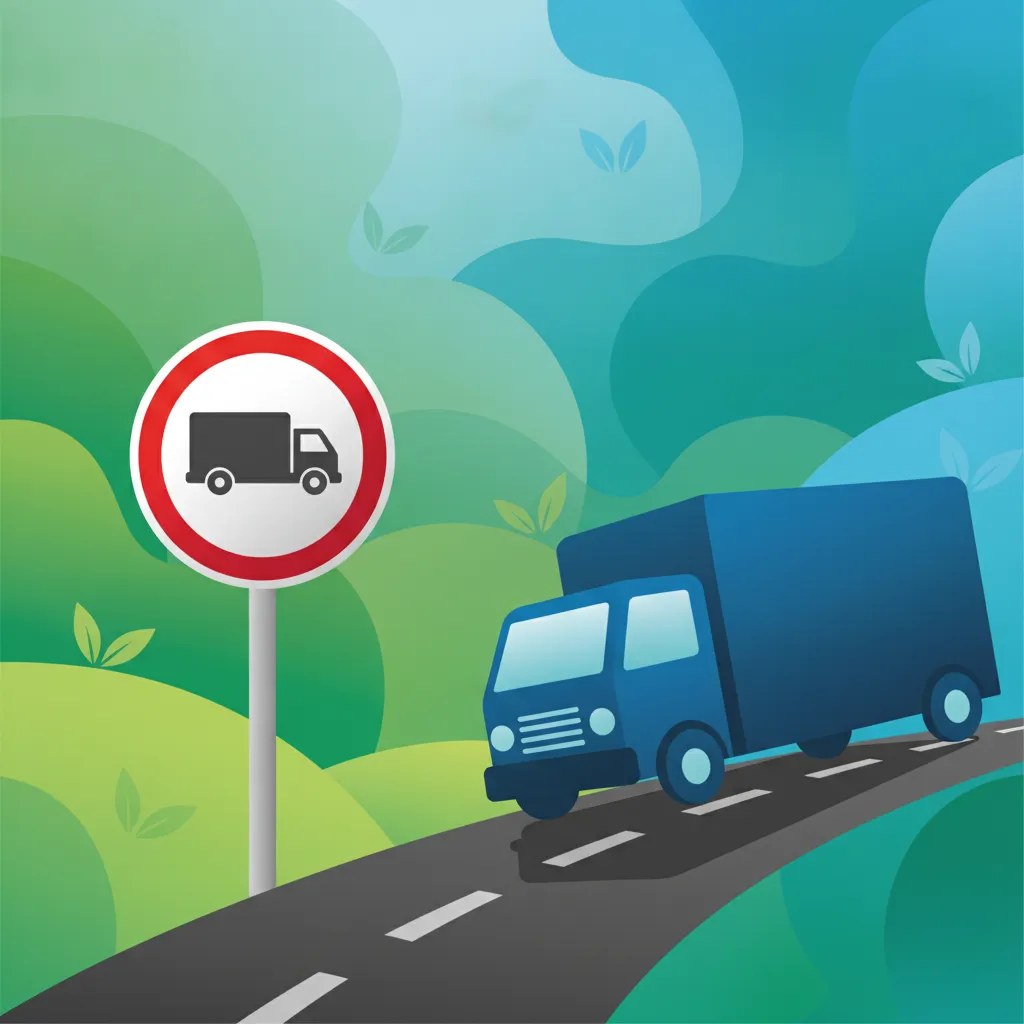
This lesson focuses on traffic signs and road markings that are specifically relevant to goods vehicles in Turkey. Learners will become familiar with signs indicating prohibited routes, weight limits, height restrictions, hazardous material transport, and lane usage regulations. The lesson emphasizes the importance of accurately interpreting these signs to ensure compliance with traffic laws.
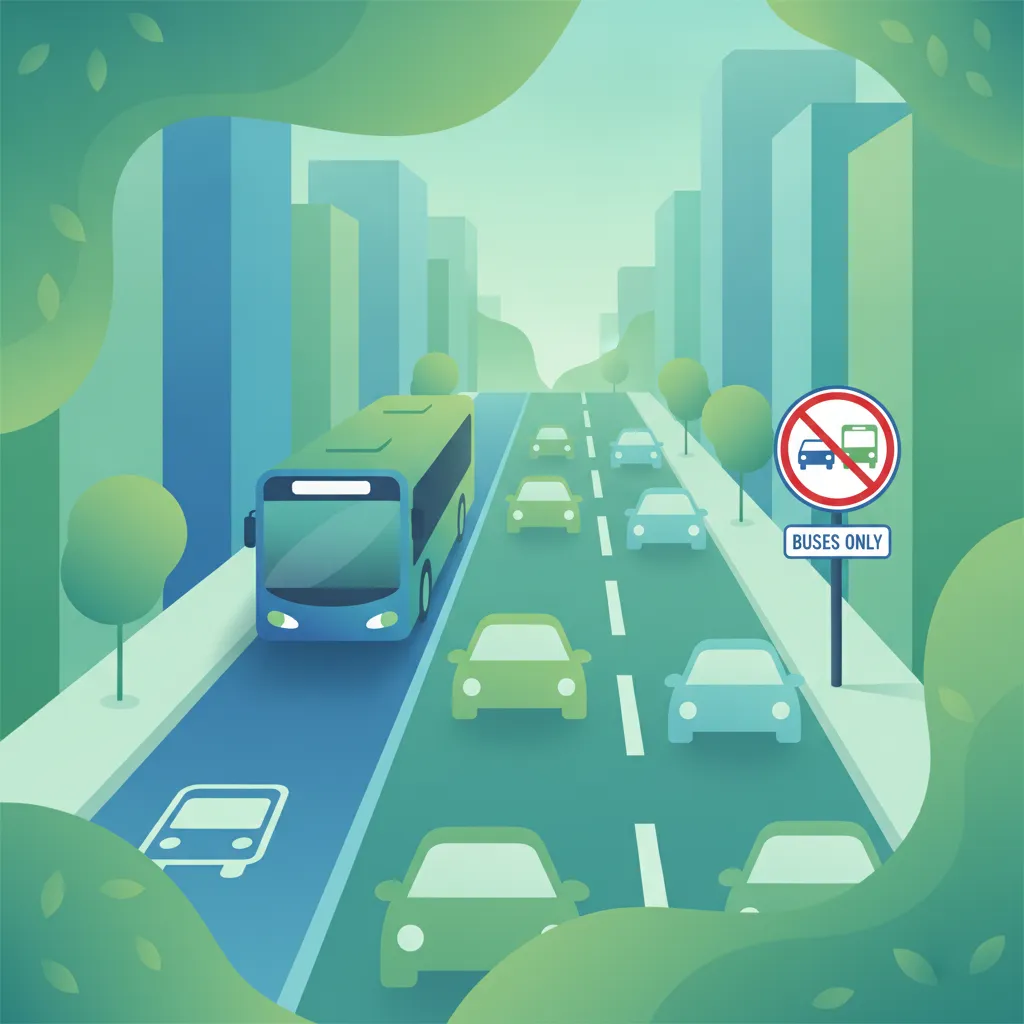
Learners will explore the specific regulations governing bus lanes, priority routes, and other legal restrictions applicable to passenger vehicles. The lesson covers the conditions under which buses may use dedicated lanes, how to navigate priority roadways, and the penalties associated with misuse. Understanding these rules is essential for efficient operation and avoiding violations in high-traffic areas.

This lesson provides a detailed overview of the classification system for goods vehicles in Turkey, focusing on the specific dimensional limits for each category. Learners will become familiar with the maximum allowable length, width, and height for these vehicles, as defined by Turkish law. Understanding these limits is crucial for ensuring compliance with road regulations and avoiding serious violations.
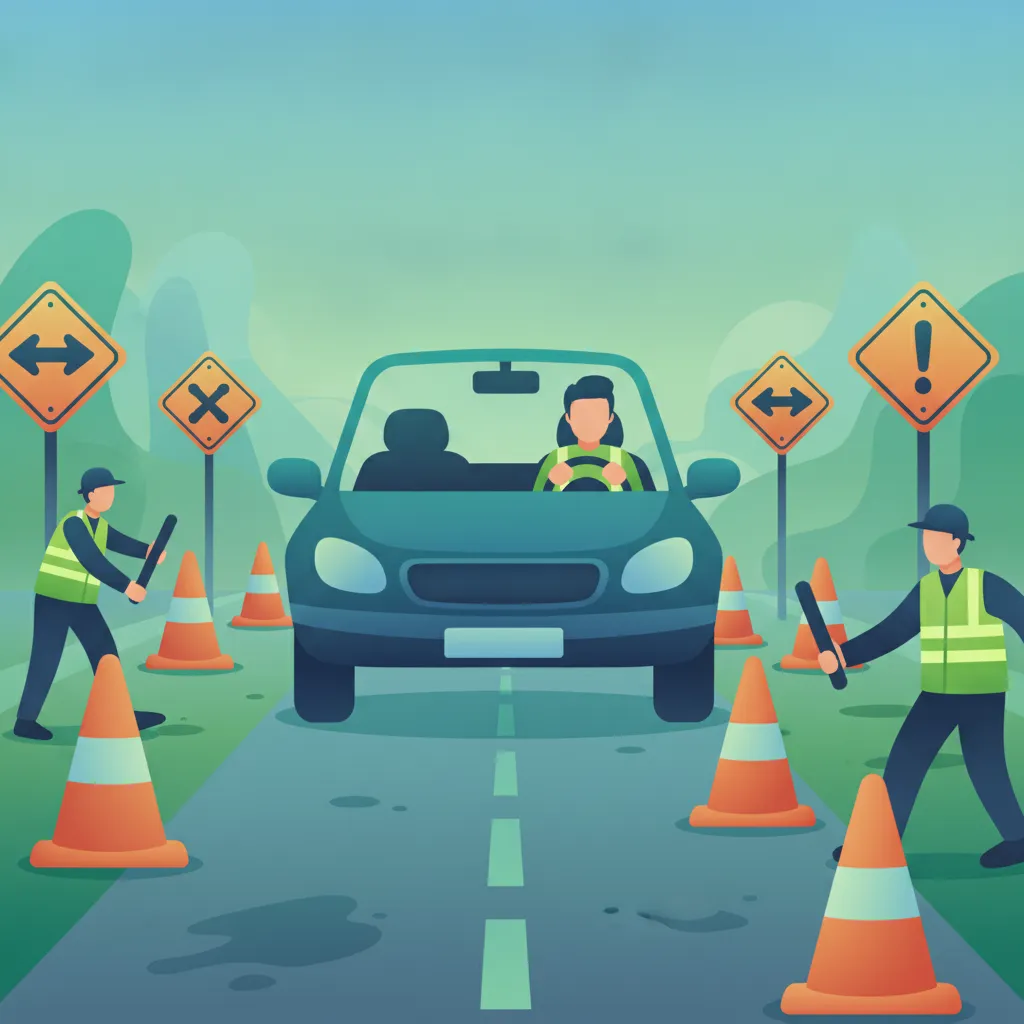
This lesson focuses on the safe navigation of goods vehicles through roadworks and construction zones. Learners will examine the importance of recognizing temporary signs, adhering to reduced speed limits, and maintaining heightened caution around workers and equipment. The lesson emphasizes the need for special attention due to the altered road environment and hazards specific to heavy vehicles.
Find clear answers to common questions learners have about Hazardous Materials Transport Regulations. Learn how the lesson is structured, which driving theory objectives it supports, and how it fits into the overall learning path of units and curriculum progression in Turkey. These explanations help you understand key concepts, lesson flow, and exam focused study goals.
ADR stands for the European Agreement concerning the International Carriage of Dangerous Goods by Road. In Turkey, it sets the standard for how hazardous items must be packed, labeled, and transported to ensure safety in transit.
Yes, even if you do not carry hazardous materials, you must be able to recognize these placards on other vehicles to maintain a safe distance and identify potential risks on the road during your professional driving duties.
Yes, vehicles carrying hazardous materials are often restricted to specific routes, especially when passing through tunnels, urban centers, or sensitive ecological areas. These restrictions are highlighted by specific road signs.
Many candidates confuse the labeling requirements with general load-securing rules. Always remember that hazardous cargo requires specialized, highly visible placarding that goes beyond standard load tie-downs.
Use our comprehensive practice search to find exactly the Turkish driving theory questions you need to master. Whether reviewing specific road signs, traffic rules, or first aid scenarios, select your perfect practice set and boost your confidence for the official ehliyet sınavı.