
This lesson focuses on the complex demands of operating large goods vehicles within congested city environments. You will learn how to navigate narrow streets, manage restricted loading zones, and interact safely with high volumes of vulnerable road users, ensuring you are fully prepared for the practical and theoretical challenges of professional driving in Turkey.
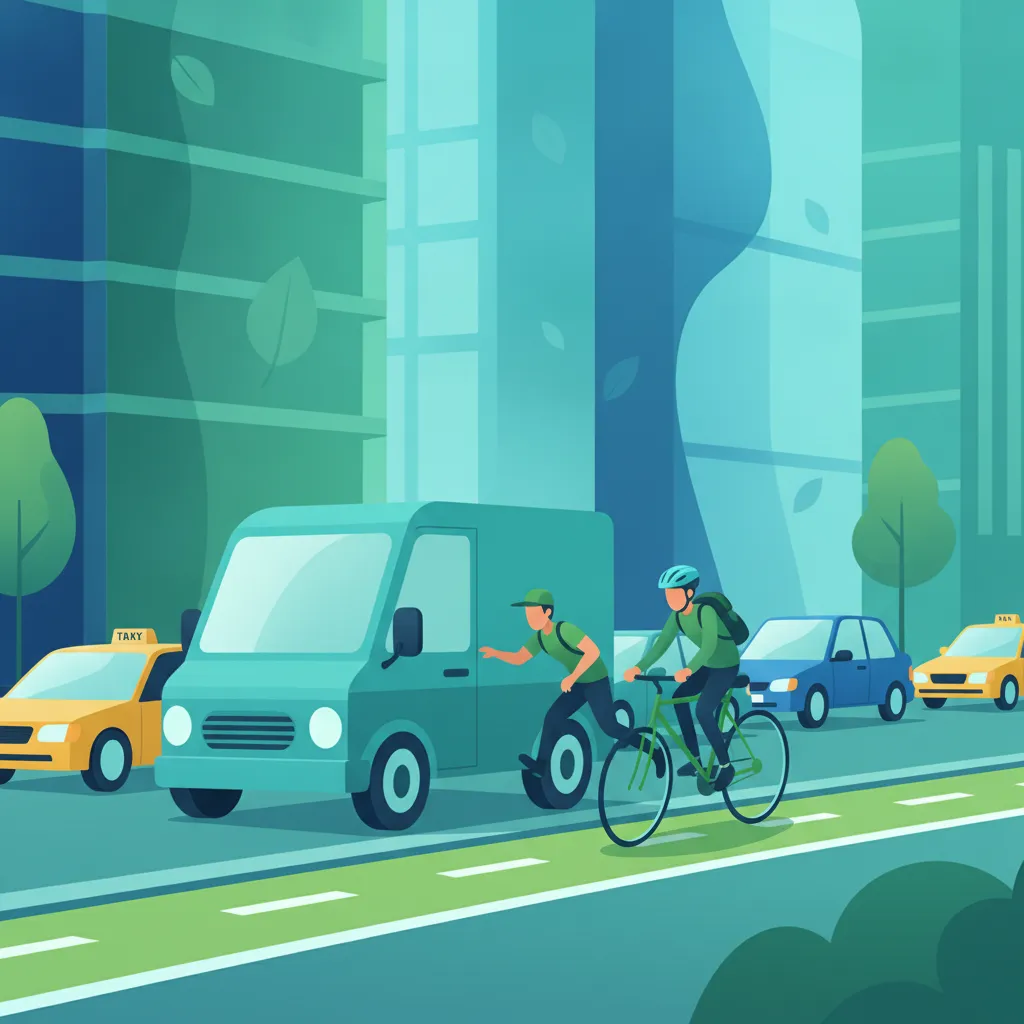
Lesson content overview
Operating goods vehicles in metropolitan environments is one of the most demanding tasks a professional driver can face. Navigating heavy vehicles through crowded city centers, narrow historic streets, and heavily restricted zones requires a deep understanding of municipal regulations, precise vehicle control, and heightened situational awareness.
This lesson provides comprehensive strategies for managing urban delivery logistics safely and legally under the Turkish Highway Traffic Regulation (Karayolları Trafik Yönetmeliği). It covers loading zone compliance, maneuvering in tight spaces, safeguarding vulnerable road users, and maintaining vehicle stability under stop-and-go driving conditions.
Urban logistics are highly regulated to prevent gridlock and maintain public safety. In Turkey, municipalities and metropolitan transport coordination centers (UKOME - Ulaşım Koordinasyon Merkezi) dictate where, when, and how commercial vehicles can load and unload goods.
A loading zone (Yükleme ve Boşaltma Alanı) is a dedicated section of the roadway marked by specific road signs and road markings reserved for commercial vehicles. These zones are designed to keep the main traffic lanes clear while goods are transferred.
Under the Turkish Highway Traffic Regulation, the following rules apply to loading zones:
In metropolitan areas like Istanbul, Ankara, and Izmir, UKOME establishes strict hours during which heavy goods vehicles (HGVs) above certain weight thresholds (typically 3.5 tonnes or 4 tonnes gross vehicle weight) are prohibited from entering central commercial districts.
Professional drivers must plan their routes to arrive within the approved municipal delivery windows. Violating these time restrictions can result in substantial administrative fines, vehicle impoundment, and penalty points on the driver's professional license.
Urban infrastructure often dates back to eras before modern heavy vehicles existed. Navigating a C1, C, or CE-class vehicle through narrow streets requires technical precision and active space management.
When driving through narrow streets, especially those with on-street parking on one or both sides, space is extremely restricted. Drivers must apply the following spatial management strategies:
Assess Clearance Heights and Widths: Always verify low-hanging trees, overhead cables, building balconies, and shop awnings. Ensure your vehicle's physical dimensions (including side mirrors) fit comfortably.
Reduce Speed: Maintain a low, controlled speed (typically under 20 km/h) to maximize your reaction time.
Central Lane Positioning: On narrow, two-way streets with parked cars, position your vehicle slightly closer to the center line (if safe and clear of oncoming traffic) to maintain a buffer zone from opening car doors.
Use Your Mirrors Constantly: Check your wide-angle and close-proximity mirrors every few seconds to monitor your rear wheel tracking, tail-swing, and clearance from parked vehicles.
In narrow sections where two vehicles cannot pass simultaneously, the Turkish Highway Traffic Regulation establishes clear right-of-way rules. On narrow, steep sloped streets:
Congestion is an unavoidable aspect of urban deliveries. Continuous stop-and-go driving poses unique challenges to the vehicle's mechanical components, fuel consumption, and the driver’s cognitive load.
In dense traffic, passenger car drivers frequently cut in front of larger commercial vehicles, ignoring the truck's stopping distance requirements.
The Danger of Tailgating in Cities: Heavy goods vehicles require significantly longer stopping distances than passenger cars, even at low speeds. Tailgating to prevent other vehicles from merging reduces your reaction time and increases the risk of a rear-end collision.
To safely manage traffic congestion:
Repeated hard acceleration and braking in heavy traffic drastically increase fuel consumption and accelerate brake wear (brake fade).
While highway driving features prolonged periods of constant speed, urban delivery driving is characterized by frequent deceleration, sharp turns, stop-and-go maneuvers, and roundabouts. These actions generate high dynamic forces that act upon the vehicle's cargo.
Every acceleration, braking action, and turn subjects the load to kinetic forces. If the cargo is not properly distributed and secured, it will shift.
Professional delivery drivers often perform multi-drop routes, where the cargo volume decreases throughout the day. This requires constant cargo management.
The highest risk factor in urban delivery environments is the dense presence of Vulnerable Road Users (VRUs)—pedestrians, cyclists, motorcyclists, and e-scooter riders. Heavy commercial vehicles have significant blind spots, making them highly dangerous in mixed-traffic urban zones.
Drivers must maintain 360-degree situational awareness. Pedestrians in commercial shopping districts are often distracted by mobile phones or packages, and children or elderly citizens may misjudge a heavy vehicle's speed and stopping distance.
Scan Crossing Points: Actively scan pedestrian crossings (yaya geçitleri), school zones, and public transit stops well in advance.
Yield Right-of-Way: Always yield to pedestrians who have stepped onto, or are about to step onto, a designated crossing. Under Turkish traffic law, failing to yield at a pedestrian crossing carries severe legal penalties and automatic driver's license points.
Look for Hidden Pedestrians: Be alert to pedestrians stepping out from between parked vehicles, or from behind delivery vans and buses.
One of the most common and fatal urban accidents involving goods vehicles is the right-turn collision with a cyclist or motorcyclist traveling straight along the passenger side of the truck.
To prevent right-turn collisions:
An efficient urban delivery driver does not rely solely on driving skills; they rely heavily on pre-trip planning and route optimization.
Using a standard passenger vehicle GPS or mobile navigation app is a major risk for professional goods vehicle drivers. Standard systems do not account for heavy vehicle limitations.
Professional drivers must use dedicated commercial vehicle navigation systems where vehicle dimensions (height, width, length, gross weight, and axle weight) are programmed into the device.
Urban environments are dynamic; roadworks, accidents, or municipal events can block your planned route.
Understanding how to react in complex urban scenarios is key to avoiding penalties and protecting public safety.
To succeed as a professional delivery driver, you must balance efficiency with safety and legal compliance.
                  ┌─────────────────────────────────────────┐
                  │      URBAN DELIVERY COMPLIANCE          │
                  └────────────────────┬────────────────────┘
                                       │
         ┌─────────────────────────────┼─────────────────────────────┐
         ▼                             ▼                             ▼
┌─────────────────┐           ┌─────────────────┐           ┌─────────────────┐
│ LEGAL LOADING   │           │ VEHICLE CONTROL │           │ VRU PROTECTION  │
├─────────────────┤           ├─────────────────┤           ├─────────────────┤
│ • Use designated│           │ • Match speed to│           │ • Active mirror │
│   zones only.   │           │   tight spaces. │           │   scanning.     │
│ • Respect UKOME │           │ • Secure cargo  │           │ • Always yield  │
│   time windows. │           │   at every drop.│           │   at crossings. │
└─────────────────┘           └─────────────────┘           └─────────────────┘
This lesson covers the critical skills for operating heavy goods vehicles in Turkish urban environments, including compliance with loading zone regulations under the Turkish Highway Traffic Regulation (Karayolları Trafik Yönetmeliği), UKOME-mandated delivery time windows for vehicles over 3.5 tonnes, and tactical maneuvering through narrow historic streets requiring central lane positioning and low-speed operation. Learners must master the right-of-way rules on sloped streets (descending yields to ascending), protect vulnerable road users through active mirror scanning at junctions, and understand that standard GPS navigation is insufficient for commercial vehicles. The lesson also addresses cargo security during multi-drop routes, eco-driving techniques for stop-and-go traffic, and the correct responses to common urban scenarios such as blocked loading zones and dead-end streets.
A short set of high-value points that capture the most important learning from this lesson.
Loading zones are reserved for active loading and unloading only; once finished, the vehicle must move immediately and double parking is strictly prohibited.
UKOME (Ulaşım Koordinasyon Merkezi) sets municipal delivery time windows for heavy goods vehicles over 3.5-4 tonnes, and violating these windows can result in fines, impoundment, and penalty points.
On narrow streets with parked vehicles, position slightly toward the center line, maintain low speed under 20 km/h, and check mirrors continuously to monitor rear wheel tracking and tail-swing.
On narrow sloped streets where two vehicles cannot pass, the descending vehicle must yield to the ascending vehicle.
The right-turn squeeze is a fatal hazard: always check main, wide-angle, and close-proximity mirrors before initiating any right turn to verify cyclists are not in your blind spot.
Explore all units and lessons included in this driving theory course.
Hazard lights (dörtlü ikaz lambaları) do not create a legal parking space; they only warn of actual hazards or breakdowns.
Standard passenger GPS systems cannot account for vehicle height, weight, or axle restrictions—always use dedicated commercial vehicle navigation.
After every delivery drop, re-secure remaining cargo with lashing straps or bracing; weight distribution must remain balanced across axles.
Heavy goods vehicles require significantly longer stopping distances—maintain a minimum 2-second gap in slow traffic and 3-4 seconds at higher speeds.
If you miss your turn into a narrow dead-end street, do not reverse unaided; use a trained spotter or physically inspect the path before reversing.
Believing that hazard lights grant permission to stop illegally; many drivers illegally stop at no-parking zones claiming 'it will only take two minutes.'
Failing to check all mirrors including wide-angle and close-proximity ramp mirrors before turning right, leading to cyclist or motorcyclist collisions in the blind spot.
Using standard consumer GPS navigation that routes heavy vehicles under low bridges, onto weight-restricted roads, or through turns impossible for long wheelbases.
Leaving cargo unsecured or failing to re-secure it after partial unloading, which causes load shifts affecting vehicle stability and steering responsiveness.
In tight narrow passages, reversing without a spotter in congested urban areas rather than seeking assistance or planning an alternate route.
Lesson content overview
A short set of high-value points that capture the most important learning from this lesson.
Loading zones are reserved for active loading and unloading only; once finished, the vehicle must move immediately and double parking is strictly prohibited.
UKOME (Ulaşım Koordinasyon Merkezi) sets municipal delivery time windows for heavy goods vehicles over 3.5-4 tonnes, and violating these windows can result in fines, impoundment, and penalty points.
On narrow streets with parked vehicles, position slightly toward the center line, maintain low speed under 20 km/h, and check mirrors continuously to monitor rear wheel tracking and tail-swing.
On narrow sloped streets where two vehicles cannot pass, the descending vehicle must yield to the ascending vehicle.
The right-turn squeeze is a fatal hazard: always check main, wide-angle, and close-proximity mirrors before initiating any right turn to verify cyclists are not in your blind spot.
Explore all units and lessons included in this driving theory course.
Hazard lights (dörtlü ikaz lambaları) do not create a legal parking space; they only warn of actual hazards or breakdowns.
Standard passenger GPS systems cannot account for vehicle height, weight, or axle restrictions—always use dedicated commercial vehicle navigation.
After every delivery drop, re-secure remaining cargo with lashing straps or bracing; weight distribution must remain balanced across axles.
Heavy goods vehicles require significantly longer stopping distances—maintain a minimum 2-second gap in slow traffic and 3-4 seconds at higher speeds.
If you miss your turn into a narrow dead-end street, do not reverse unaided; use a trained spotter or physically inspect the path before reversing.
Believing that hazard lights grant permission to stop illegally; many drivers illegally stop at no-parking zones claiming 'it will only take two minutes.'
Failing to check all mirrors including wide-angle and close-proximity ramp mirrors before turning right, leading to cyclist or motorcyclist collisions in the blind spot.
Using standard consumer GPS navigation that routes heavy vehicles under low bridges, onto weight-restricted roads, or through turns impossible for long wheelbases.
Leaving cargo unsecured or failing to re-secure it after partial unloading, which causes load shifts affecting vehicle stability and steering responsiveness.
In tight narrow passages, reversing without a spotter in congested urban areas rather than seeking assistance or planning an alternate route.
Explore search topics learners often look for when studying Urban Delivery Challenges and Solutions. These topics reflect common questions about road rules, driving situations, safety guidance, and lesson level theory preparation for learners in Turkey.
Browse additional driving theory lessons that cover connected traffic rules, road signs, and common driving situations related to this topic. Improve your understanding of how different rules interact across everyday traffic scenarios.
Learn the professional driving theory behind managing wide turn radii and maintaining lane discipline on narrow urban streets. This lesson explains how to safely navigate tight junctions and handle articulated vehicle steering, ensuring compliance with Turkish traffic regulations for C and CE license holders in complex metropolitan road environments.
This lesson focuses on the critical importance of lane discipline and proper lane usage for large goods vehicles. Learners will understand the challenges posed by wider vehicle dimensions, the necessity of maintaining adequate lane occupancy, and the need for precise lane keeping. Emphasis is placed on selecting appropriate lanes, adhering to traffic flow, and ensuring general highway safety.
This lesson explores effective turning strategies for goods vehicles, focusing on managing the larger turn radius required due to vehicle size and load. Learners will understand how to approach corners safely, adjust speed, use signals appropriately, and compensate for off-tracking. The lesson also highlights how load distribution impacts turning dynamics and the importance of vehicle control.

Learners will explore the fundamentals of maintaining correct lane discipline, focusing on appropriate lane positioning, understanding lane markings, and executing lane changes safely. Emphasis is placed on the unique considerations for large passenger vehicles within the lane, such as width and maneuverability. The lesson also addresses the impact of proper lane discipline on overall traffic flow and safety.
This lesson examines the specific road space requirements necessary for large goods vehicles to operate safely and efficiently. Topics include the need for adequate lane width, lateral clearance, and turning lanes to accommodate wider and longer vehicles. Learners will explore the proper use of shoulders, overtaking procedures, and the impact of large vehicles on overall road capacity in traffic.

This lesson focuses on the challenges and techniques required when maneuvering goods vehicles in confined spaces such as loading docks, narrow streets, and urban environments. It addresses the importance of spatial awareness, precision driving, and understanding vehicle dimensions to avoid collisions. Learners will explore strategies for effective parking, reversing, and handling blind spots safely.
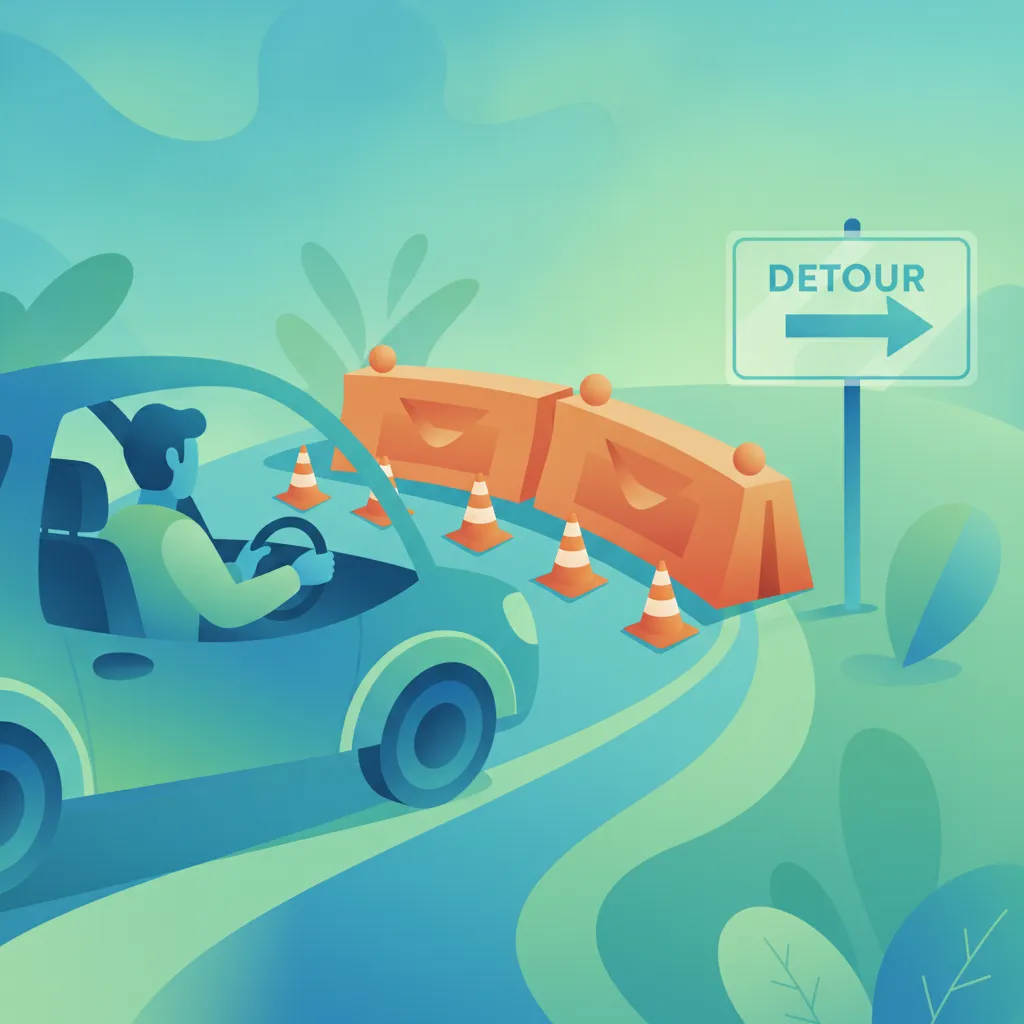
This lesson focuses on effectively managing road closures and detours that affect goods vehicle routes. Learners will explore strategies for obtaining real-time information, updating navigation systems, and planning alternate routes to maintain efficiency and compliance. Emphasis is placed on safety considerations, communication with dispatch centers, and adhering to traffic management.
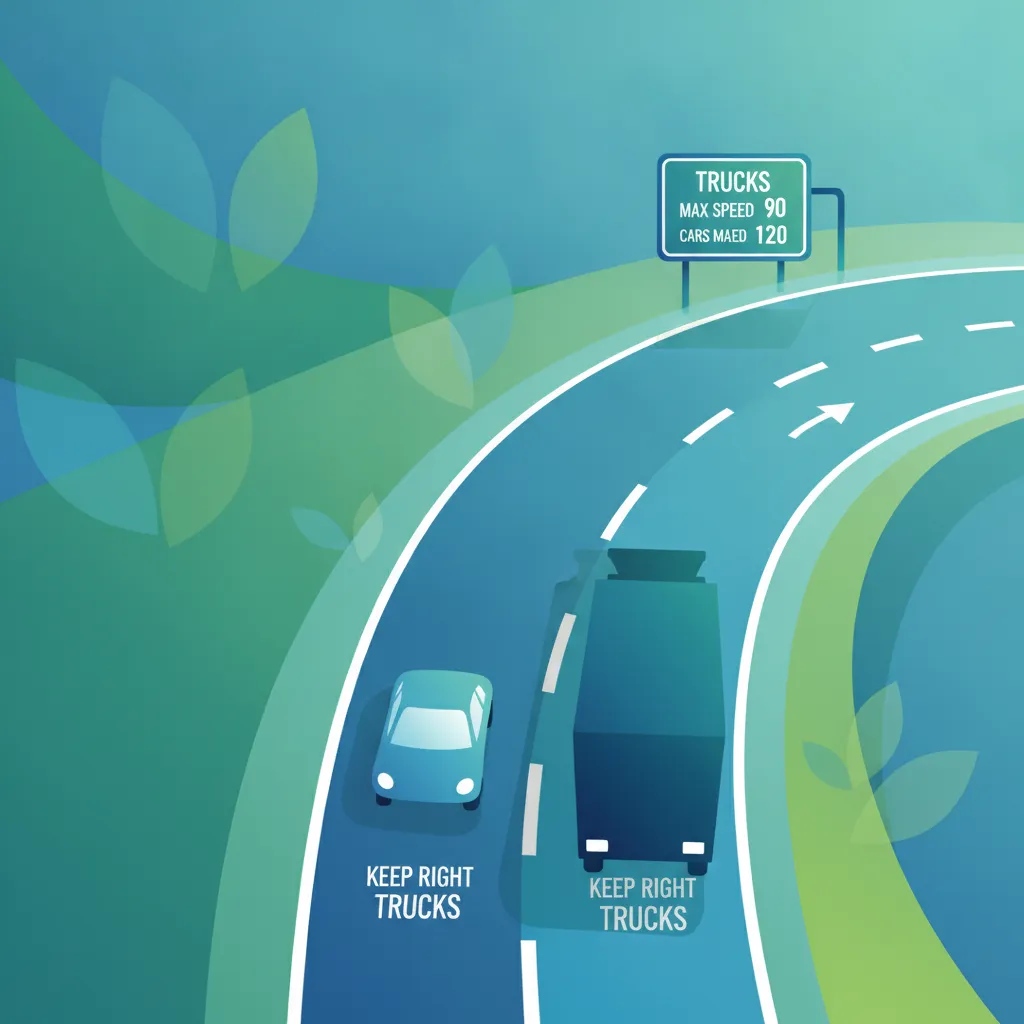
This lesson addresses the specific considerations for goods vehicle operation on highways and expressways, covering speed limits, lane discipline, safe merging, and overtaking. Learners will learn how to adapt to traffic flow, manage heavy vehicle dynamics at higher speeds, and ensure safe operation. The lesson emphasizes the importance of vigilance and proper lane usage to prevent accidents.
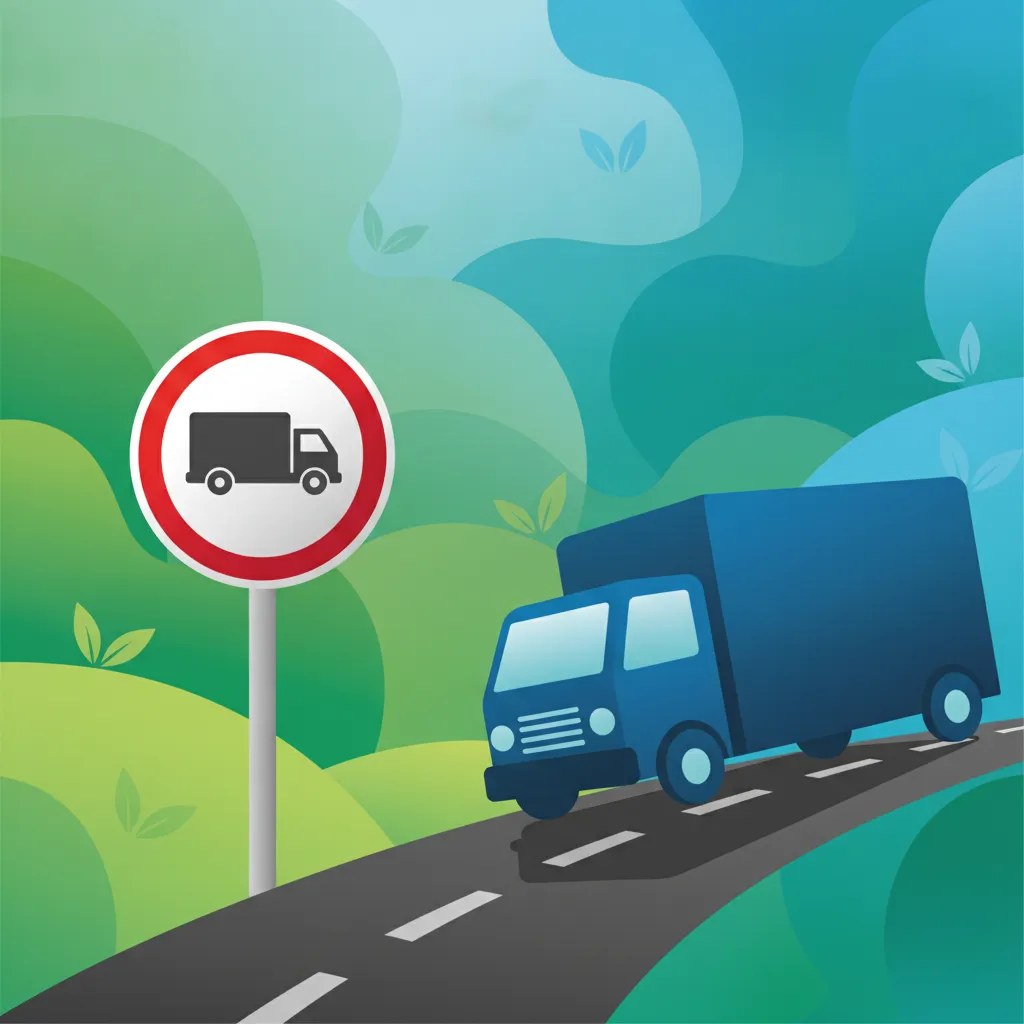
This lesson focuses on traffic signs and road markings that are specifically relevant to goods vehicles in Turkey. Learners will become familiar with signs indicating prohibited routes, weight limits, height restrictions, hazardous material transport, and lane usage regulations. The lesson emphasizes the importance of accurately interpreting these signs to ensure compliance with traffic laws.
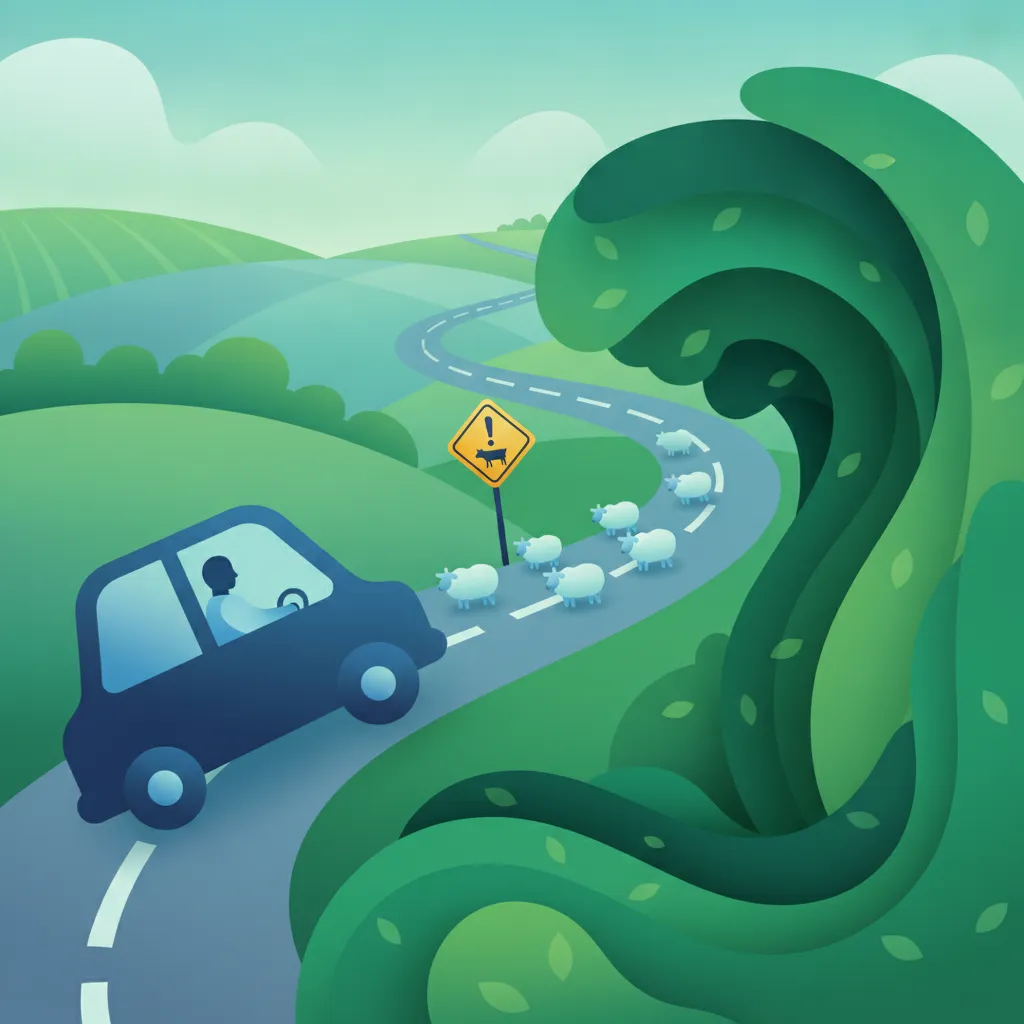
This lesson explores the unique challenges encountered when driving goods vehicles on rural roads, including narrow widths, sharp curves, animal crossings, and varying road surface conditions. Learners will understand the importance of adjusting speed, maintaining vigilance, and respecting road markings. Emphasis is placed on safe navigation practices to mitigate risks associated with rural areas.
This lesson delves into specific manoeuvring strategies required when navigating both tight urban environments and open rural roads with large passenger vehicles. Learners will explore techniques for handling narrow streets, tight turns, and intersections, while maintaining safety and efficiency. The content emphasizes planning and execution of manoeuvres based on road conditions and vehicle dimensions.
Understand the critical importance of situational awareness when sharing urban roads with pedestrians and cyclists. This guide provides theoretical insights into mirror configurations, blind spot identification, and the legal obligations of goods vehicle drivers under the Turkish Highway Traffic Regulation regarding the safety of vulnerable road users in city traffic.

This lesson focuses on protecting vulnerable road users, such as pedestrians, cyclists, and motorcyclists, in mixed traffic environments. Learners will examine specific strategies for increased vigilance, anticipatory driving, and properly yielding to these users. The lesson also covers high-risk zones, such as school areas and public transport stops, emphasizing the need for heightened safety.

This lesson highlights the critical nature of blind spots for motorcyclists, teaching strategies to recognize and mitigate these hidden areas. Learners will practice techniques for checking blind spots before lane changes and overtaking, ensuring they are fully aware of surrounding traffic. The lesson emphasizes how proper mirroring and head checks can significantly reduce the risk of collisions.
Learners will identify the different categories of vulnerable road users and understand the heightened risks they face. The lesson emphasizes the importance of recognizing these users, anticipating their actions, and taking proactive measures to ensure their safety while operating passenger vehicles. Strategies for mitigating danger and fostering a protective driving environment are explored.

Learners will explore the proper adjustment and utilization of mirrors, rear-view cameras, and blind spot sensors to maximize visibility while operating a passenger vehicle. The lesson covers the optimal positioning of mirrors for comprehensive coverage, interpreting camera and sensor alerts, and integrating these tools into safe driving practices. Proper use of these technologies reduces blind spots and enhances overall situational awareness.

This lesson introduces the proper utilization of mirrors, rearview cameras, and additional sensor systems to enhance situational awareness for goods vehicle drivers. Learners will understand the importance of correctly adjusting mirrors for optimal coverage, interpreting camera feeds, and relying on sensor alerts. The lesson emphasizes integrating modern safety technology into daily driving practices.
This lesson focuses on the execution of safe right and left turns with large passenger vehicles, emphasizing the identification and management of blind spots. Learners will understand the correct use of turn signals, proper positioning within the turn, and the importance of thorough observation before and during turning. Strategies for minimizing blind spot exposure are also covered.
Learners will examine the complexities of operating in environments where various road users, including pedestrians, cyclists, and motorcyclists, coexist. The lesson emphasizes the need for heightened situational awareness, defensive driving techniques, and proactive hazard anticipation. Strategies for navigating mixed traffic safely, especially in congested urban areas, are highlighted.

This lesson focuses on identifying and managing blind spots specific to goods vehicles, which are larger and have more extensive blind zones compared to standard cars. Learners will explore techniques for blind spot detection using mirrors, rearview cameras, and sensor systems, ensuring safe lane changes and maneuvering. The lesson emphasizes the importance of continuous observation and modern safety technology.

This lesson examines the critical interactions between goods vehicles and vulnerable road users such as pedestrians, cyclists, and motorcyclists, particularly in urban environments. Learners will explore right-of-way rules, maintaining safe distances, and strategies for anticipating the actions of these road users. The lesson emphasizes the importance of clear communication and protective driving.
In this lesson, learners explore the unique challenges and safety considerations related to motorcyclists and scooter riders. Topics include the importance of visibility, the use of protective gear, and the need for drivers to be aware of blind spots. The lesson also covers lane discipline for two-wheeled vehicles and safe overtaking practices.
Find clear answers to common questions learners have about Urban Delivery Challenges and Solutions. Learn how the lesson is structured, which driving theory objectives it supports, and how it fits into the overall learning path of units and curriculum progression in Turkey. These explanations help you understand key concepts, lesson flow, and exam focused study goals.
Always prioritize designated loading zones while checking for local time restrictions. If none are available, you must ensure your vehicle does not obstruct traffic flow, block pedestrian paths, or violate stopping bans as defined by Turkish traffic law.
Always scan for low-hanging obstacles, overhead signs, and tight turning radii. Use your mirrors and sensors constantly, and if necessary, have a designated spotter help you safely maneuver the vehicle.
Yes, professional drivers face stricter penalties for traffic obstructions. It is vital to plan your route to utilize legal loading bays to avoid fines that impact your professional driving record.
Always assume you are being watched by pedestrians and use your hazard lights and signals early. Pay extra attention to the areas around your mirrors and cameras, as pedestrians often move quickly in blind spots near corners or loading docks.
Use our comprehensive practice search to find exactly the Turkish driving theory questions you need to master. Whether reviewing specific road signs, traffic rules, or first aid scenarios, select your perfect practice set and boost your confidence for the official ehliyet sınavı.