
This lesson focuses on the critical skills needed to safely navigate bus stops while sharing the road with vulnerable pedestrians and other traffic. As part of your Class D passenger vehicle training, you will learn how to anticipate hazards, manage boarding zones, and adhere to priority rules in busy urban environments.
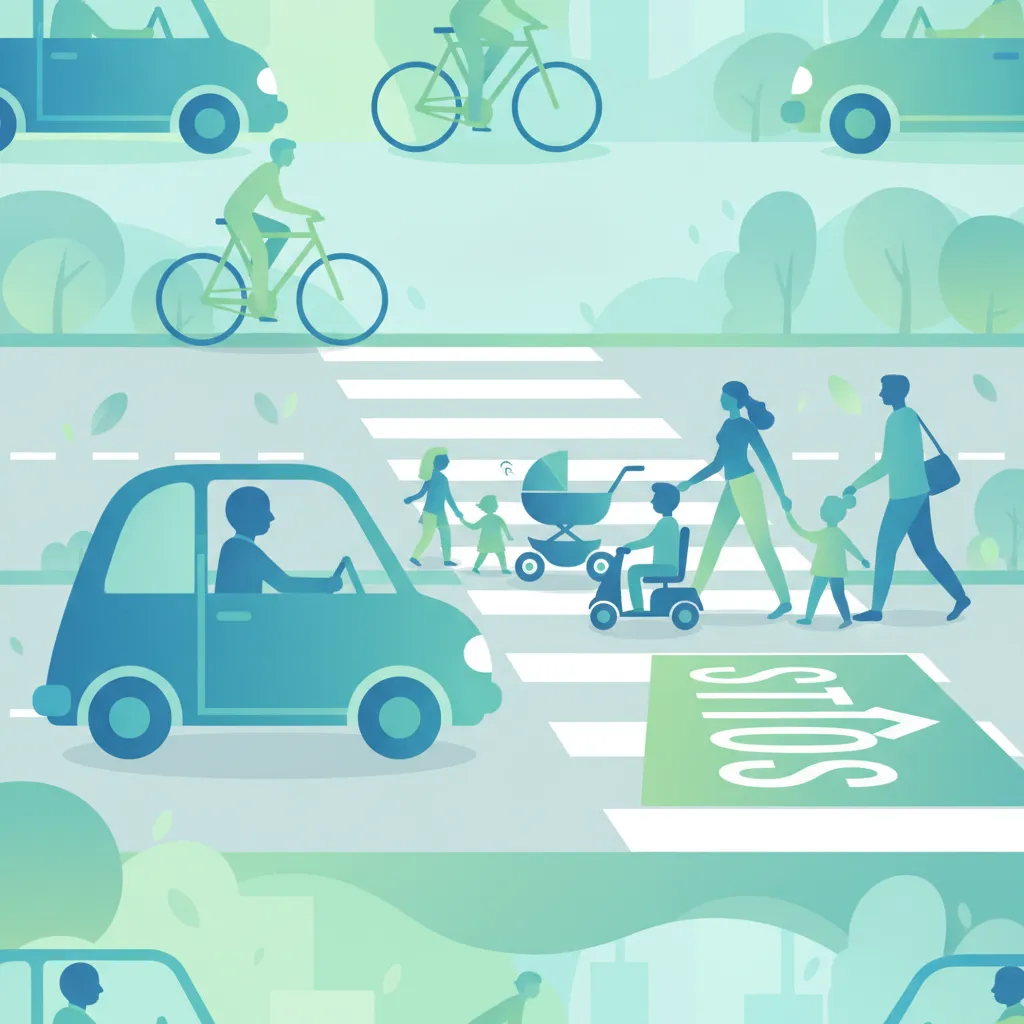
Lesson content overview
Operating a large passenger vehicle under a Class D licence in Turkey requires more than just mastering vehicle controls; it demands a high level of social coordination and defensive driving. Bus stops (durak) are major conflict points in urban areas. They serve as transition zones where high volumes of pedestrians interact with heavy passenger vehicles, passenger cars, cyclists, and motorcyclists.
For a professional driver, coordinating safely at these stops is critical to passing the Turkish Class D Passenger Vehicle Driving Licence Theory exam and ensuring public safety. This lesson details the legal requirements, communication techniques, and defensive driving practices necessary to manage these environments.
Under Turkish Highway Traffic Law (Karayolları Trafik Kanunu - KTK), pedestrians are granted strict priority at marked crosswalks (yaya geçidi) and designated pedestrian zones. When a bus approaches or departs a stop, the driver must yield the right-of-way to any pedestrian who has stepped onto, or is about to step onto, a crossing.
The presence of a bus stop intensifies this legal obligation. Because buses are large and block the vision of other road users, stopping to allow a pedestrian to cross is not just a courtesy—it is a legal necessity that prevents catastrophic secondary collisions.
How you position your vehicle when approaching a stop directly influences the safety of nearby pedestrians and the flow of surrounding traffic. A poorly positioned bus can obscure traffic signs, block crosswalks, or force pedestrians to step into the live traffic lane to board.
When approaching a bus stop, you must guide the vehicle to stop parallel to, and within close proximity of, the curb (typically within 20 to 30 cm). This minimizes the gap, preventing passengers—especially children, the elderly, or those with mobility impairments—from slipping or having to step onto the roadway.
A hazardous traffic scenario where a large stationary vehicle (such as a bus) blocks the line of sight between overtaking drivers and pedestrians crossing in front of the stopped vehicle.
Stopping too close to a pedestrian crossing can trigger this "screen-off" effect. If your bus blocks the view of the crosswalk, overtaking vehicles may not see pedestrians emerging from front of your bus. Always stop at least 5 metres behind a crosswalk if the bus stop is positioned immediately before it.
Professional passenger vehicle drivers must develop "hazard perception"—the ability to read the road ahead and anticipate the actions of others before they occur. At bus stops, this means closely observing pedestrian body language and situational cues.
When coordinating with vulnerable road users, you must allow extra time and space:
Clear communication is your primary tool for maintaining order and preventing conflicts around bus stops. Since you are piloting a large, heavy vehicle, your intentions must be visible and predictable to all surrounding road users.
Indicate Early: Activate your right indicator well in advance of approaching the stop to warn vehicles behind you of your intent to decelerate and pull over.
Establish Eye Contact: Look directly at pedestrians waiting at the curb or crossing. A clear nod can confirm that you have seen them and are yielding, but never wave them across, as this might encourage them to walk into the path of an overtaking vehicle you cannot see.
Use Hazard Lights Appropriately: In congested areas or during school transport, use hazard warning lights (dörtlü ikaz lambaları) to signify a prolonged stop where passengers are boarding or alighting.
Position as a Signal: The physical positioning of your bus serves as a non-verbal cue. Slowing down gradually and keeping the vehicle aligned with the curb signals to other drivers that they should not attempt risky overtaking maneuvers on the right.
A bus stop is not an isolated zone; it is part of an active roadway shared with passenger cars, heavy trucks, cyclists, and motorcyclists. Coordinating with these road users requires a balance of assertiveness and defensive yielding.
Two-wheelers are highly vulnerable and frequently attempt to filter through traffic near bus stops.
On narrow urban streets, a stopped bus can block the entire lane, forcing oncoming vehicles or vehicles behind you to make difficult decisions. If an oncoming vehicle is forced into your lane to pass an obstacle, or if your bus must cross the centerline slightly to clear a tight stop, you must yield to oncoming traffic to prevent a head-on collision.
Departing a bus stop is one of the most high-risk maneuvers for a Class D vehicle. It requires transitioning a long, heavy vehicle back into an active traffic lane while managing blind spots and ensuring passenger comfort.
The Blind Spot Danger: Class D passenger vehicles have extensive blind spots, particularly directly behind the vehicle, along the right flank, and immediately in front of the windshield below the driver's line of sight. Never assume your mirrors show everything.
To ensure a safe and lawful departure from a bus stop, execute the following sequence:
Professional drivers must adapt their stopping and departure techniques to changing environmental conditions. What is safe on a dry, sunny afternoon can become highly dangerous in adverse weather or at night.
| Environmental Condition | Hazard | Defensive Driver Action |
|---|---|---|
| Night / Low Light | Low pedestrian visibility; glare from oncoming headlights. | Reduce speed; rely heavily on headlight sweeps; look for reflective clothing; use interior lights selectively to avoid windshield glare. |
| Rain or Snow | Increased stopping distances; pedestrians running with umbrellas blocking their vision. | Double the following distance; begin braking much earlier when approaching a stop; assume pedestrians cannot see you. |
| High Pedestrian Congestion | Crowds spilling off the pavement onto the roadway near the stop. | Approach at walking speed; keep foot hovering over the brake pedal (hazır fren); wait for the crowd to clear before moving. |
| Disabled/Impaired Pedestrians | Slow movement; inability to hear or see the bus. | Provide maximum clearance; do not use the horn, which can startle or disorient them; wait patiently until they are fully on the pavement. |
To ensure safety and compliance with Turkish road transport regulations, remember these core principles:
This lesson covers the essential skills for safely coordinating with pedestrians and other road users at Turkish bus stops under Class D licence requirements. You will learn that pedestrians have absolute legal priority at marked crossings under the KTK, and that proper vehicle positioning—parallel to the curb within 20-30 cm and at least 5 metres behind crosswalks—prevents dangerous situations like the Screen-Off Effect. The content teaches hazard perception through pedestrian body language, vulnerable group management (children, elderly, disabled), and systematic departure procedures including 360-degree observation and smooth acceleration. Environmental adaptations for night, rain, and high congestion scenarios are provided, along with explicit guidance on communicating with other road users through timely signalling and appropriate use of hazard lights.
A short set of high-value points that capture the most important learning from this lesson.
Pedestrians have absolute legal priority at marked crossings (yaya geçidi) near bus stops, regardless of when the bus arrived.
Position your bus parallel to the curb within 20-30 cm to prevent passengers from stepping into live traffic lanes.
The Screen-Off Effect occurs when a stopped bus blocks overtaking drivers' view of pedestrians crossing—always stop at least 5 metres behind crosswalks.
Anticipate impulsive pedestrian actions by reading body language, especially near schools where children may dart into traffic.
When departing, check all mirrors, perform shoulder checks, signal early, and accelerate smoothly to prevent onboard passenger injuries.
Explore all units and lessons included in this driving theory course.
Turkish Highway Traffic Law (KTK) grants pedestrians strict priority at marked crossings—size of vehicle does not confer any right-of-way.
Class D vehicles have extensive blind spots; always perform a physical shoulder check in addition to mirror observation.
Never wave pedestrians across a crossing because you cannot see overtaking vehicles approaching from behind your bus.
Use hazard warning lights (dörtlü ikaz lambaları) when making prolonged stops for passenger boarding in congested areas.
Reduce speed significantly near schools and allow extra crossing time for elderly or disabled pedestrians.
Assuming pedestrians must wait for the bus to depart because the large vehicle arrived at the stop first—this is incorrect under Turkish law.
Pulling into the curb too quickly without checking for cyclists on the right, risking a squeeze hazard against the curb.
Opening doors or accelerating when departing without verifying no motorcyclist is filtering past on the left side.
Stopping with the bus's front overhang covering white crossing lines, obstructing the pedestrian path.
Forgetting to activate the left indicator before moving off, which is a major error on the Class D practical test.
Lesson content overview
A short set of high-value points that capture the most important learning from this lesson.
Pedestrians have absolute legal priority at marked crossings (yaya geçidi) near bus stops, regardless of when the bus arrived.
Position your bus parallel to the curb within 20-30 cm to prevent passengers from stepping into live traffic lanes.
The Screen-Off Effect occurs when a stopped bus blocks overtaking drivers' view of pedestrians crossing—always stop at least 5 metres behind crosswalks.
Anticipate impulsive pedestrian actions by reading body language, especially near schools where children may dart into traffic.
When departing, check all mirrors, perform shoulder checks, signal early, and accelerate smoothly to prevent onboard passenger injuries.
Explore all units and lessons included in this driving theory course.
Turkish Highway Traffic Law (KTK) grants pedestrians strict priority at marked crossings—size of vehicle does not confer any right-of-way.
Class D vehicles have extensive blind spots; always perform a physical shoulder check in addition to mirror observation.
Never wave pedestrians across a crossing because you cannot see overtaking vehicles approaching from behind your bus.
Use hazard warning lights (dörtlü ikaz lambaları) when making prolonged stops for passenger boarding in congested areas.
Reduce speed significantly near schools and allow extra crossing time for elderly or disabled pedestrians.
Assuming pedestrians must wait for the bus to depart because the large vehicle arrived at the stop first—this is incorrect under Turkish law.
Pulling into the curb too quickly without checking for cyclists on the right, risking a squeeze hazard against the curb.
Opening doors or accelerating when departing without verifying no motorcyclist is filtering past on the left side.
Stopping with the bus's front overhang covering white crossing lines, obstructing the pedestrian path.
Forgetting to activate the left indicator before moving off, which is a major error on the Class D practical test.
Explore search topics learners often look for when studying Coordinating with Pedestrians and Other Road Users at Stops. These topics reflect common questions about road rules, driving situations, safety guidance, and lesson level theory preparation for learners in Turkey.
Browse additional driving theory lessons that cover connected traffic rules, road signs, and common driving situations related to this topic. Improve your understanding of how different rules interact across everyday traffic scenarios.
Understand the advanced techniques for navigating narrow city streets, executing safe turns, and managing blind spots while operating a Class D vehicle. This guide explains how to coordinate your path with smaller road users to maintain traffic flow and safety within dense urban environments as required by Turkish theory.
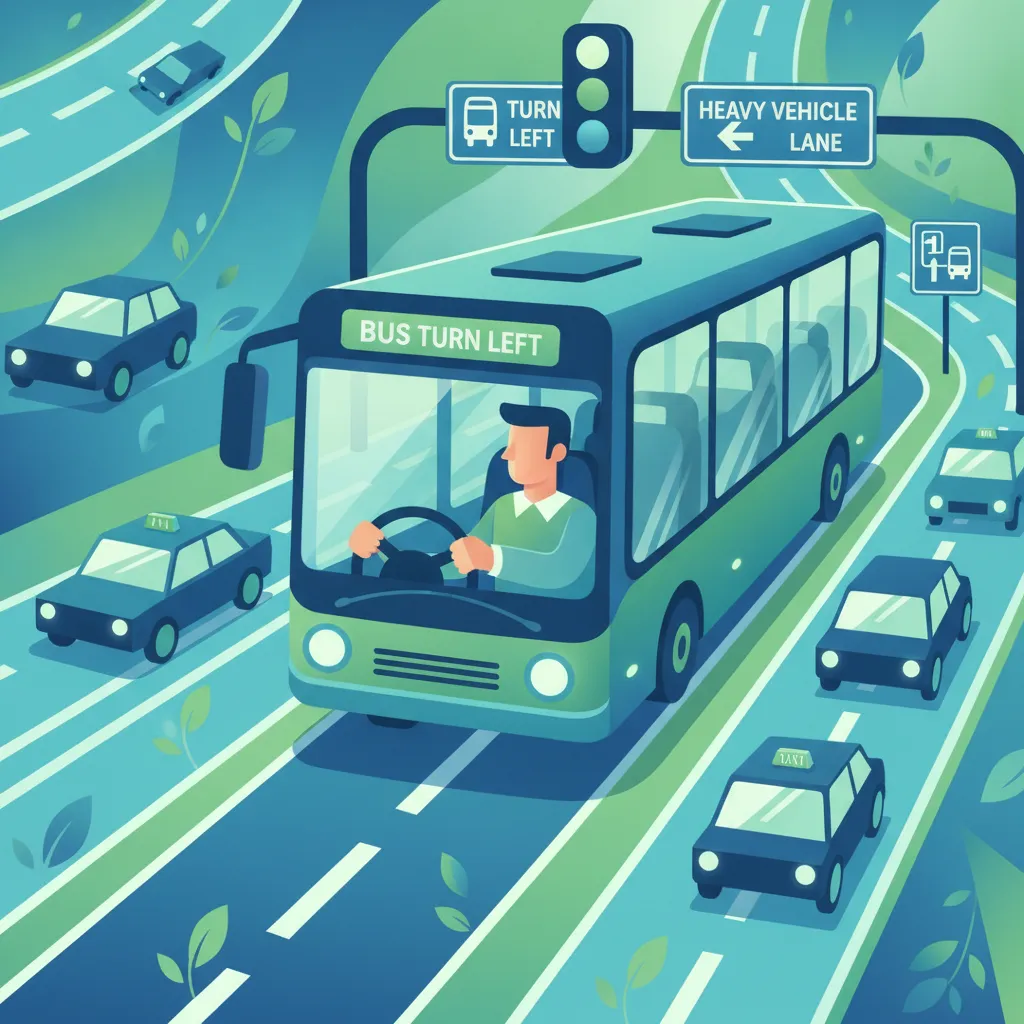
Learners will explore strategies for navigating congested urban traffic environments while operating large passenger vehicles. The lesson covers lane selection, adherence to traffic signals, and the use of bus lanes where applicable. Understanding how to maintain smooth traffic flow while ensuring passenger safety is crucial for efficient urban transportation.
Learners will explore the fundamentals of maintaining correct lane discipline, focusing on appropriate lane positioning, understanding lane markings, and executing lane changes safely. Emphasis is placed on the unique considerations for large passenger vehicles within the lane, such as width and maneuverability. The lesson also addresses the impact of proper lane discipline on overall traffic flow and safety.
This lesson focuses on the critical importance of lane discipline and proper lane usage for large goods vehicles. Learners will understand the challenges posed by wider vehicle dimensions, the necessity of maintaining adequate lane occupancy, and the need for precise lane keeping. Emphasis is placed on selecting appropriate lanes, adhering to traffic flow, and ensuring general highway safety.
This lesson delves into specific manoeuvring strategies required when navigating both tight urban environments and open rural roads with large passenger vehicles. Learners will explore techniques for handling narrow streets, tight turns, and intersections, while maintaining safety and efficiency. The content emphasizes planning and execution of manoeuvres based on road conditions and vehicle dimensions.
This lesson focuses on the challenges and techniques required when maneuvering goods vehicles in confined spaces such as loading docks, narrow streets, and urban environments. It addresses the importance of spatial awareness, precision driving, and understanding vehicle dimensions to avoid collisions. Learners will explore strategies for effective parking, reversing, and handling blind spots safely.
Examine the legal obligations and defensive driving strategies for interacting with cyclists, motorcyclists, and children near schools or transit zones. Learn how to identify hazards early and apply professional road etiquette to prevent accidents involving the most at-risk road users under the Turkish Highway Traffic Law.
Learners will identify the different categories of vulnerable road users and understand the heightened risks they face. The lesson emphasizes the importance of recognizing these users, anticipating their actions, and taking proactive measures to ensure their safety while operating passenger vehicles. Strategies for mitigating danger and fostering a protective driving environment are explored.
This lesson focuses on protecting vulnerable road users, such as pedestrians, cyclists, and motorcyclists, in mixed traffic environments. Learners will examine specific strategies for increased vigilance, anticipatory driving, and properly yielding to these users. The lesson also covers high-risk zones, such as school areas and public transport stops, emphasizing the need for heightened safety.
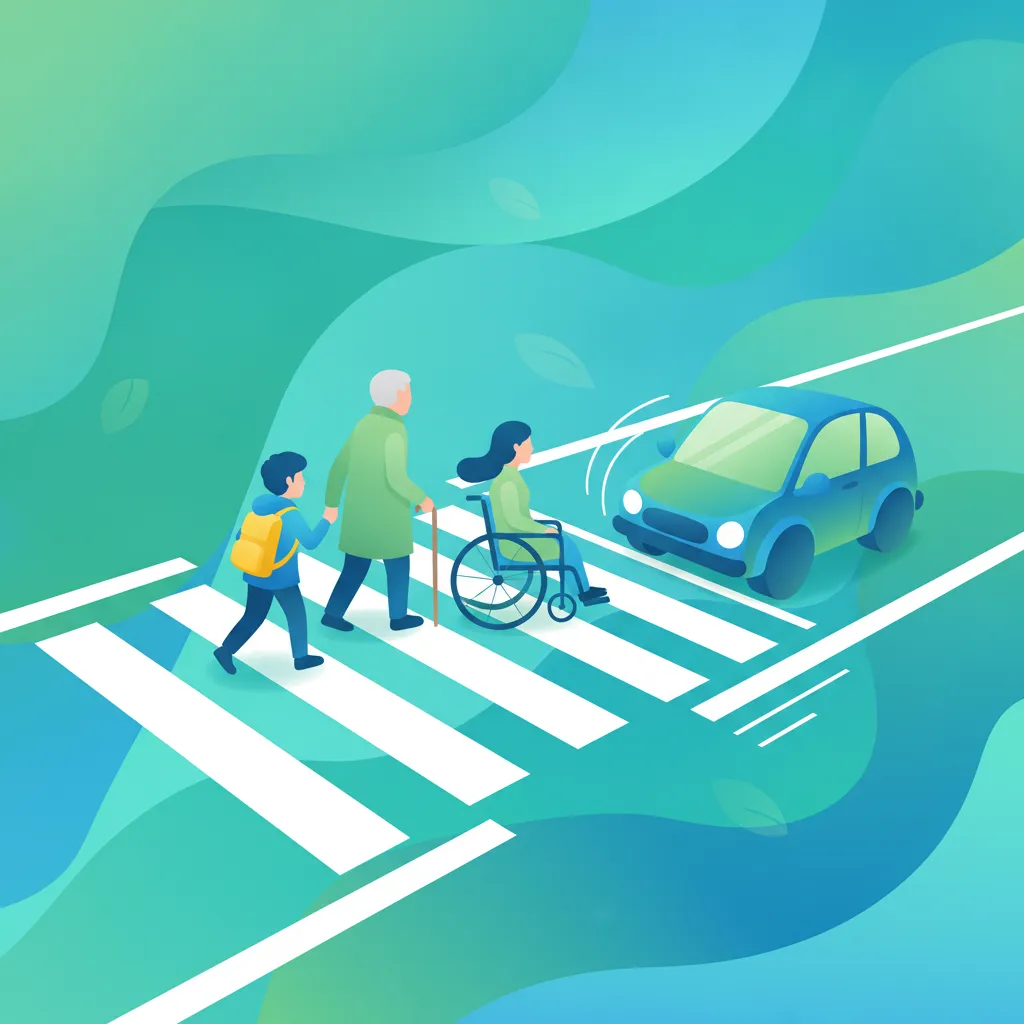
This lesson focuses on the specific needs and challenges faced by children, elderly, and disabled pedestrians. Topics include recognizing vulnerable road users, understanding their behavior, and providing additional safety measures. The lesson also discusses school zones, pedestrian crossing assistance, and strategies to mitigate risks. Real-world examples demonstrate how drivers can anticipate dangers.
This lesson emphasizes the importance of yielding to pedestrians and cyclists at intersections, crosswalks, and designated lanes. Learners will understand the legal obligations to provide safe passage to vulnerable road users and the correct procedures for stopping and allowing them to cross. Real-world examples illustrate scenarios where failing to yield can lead to accidents.
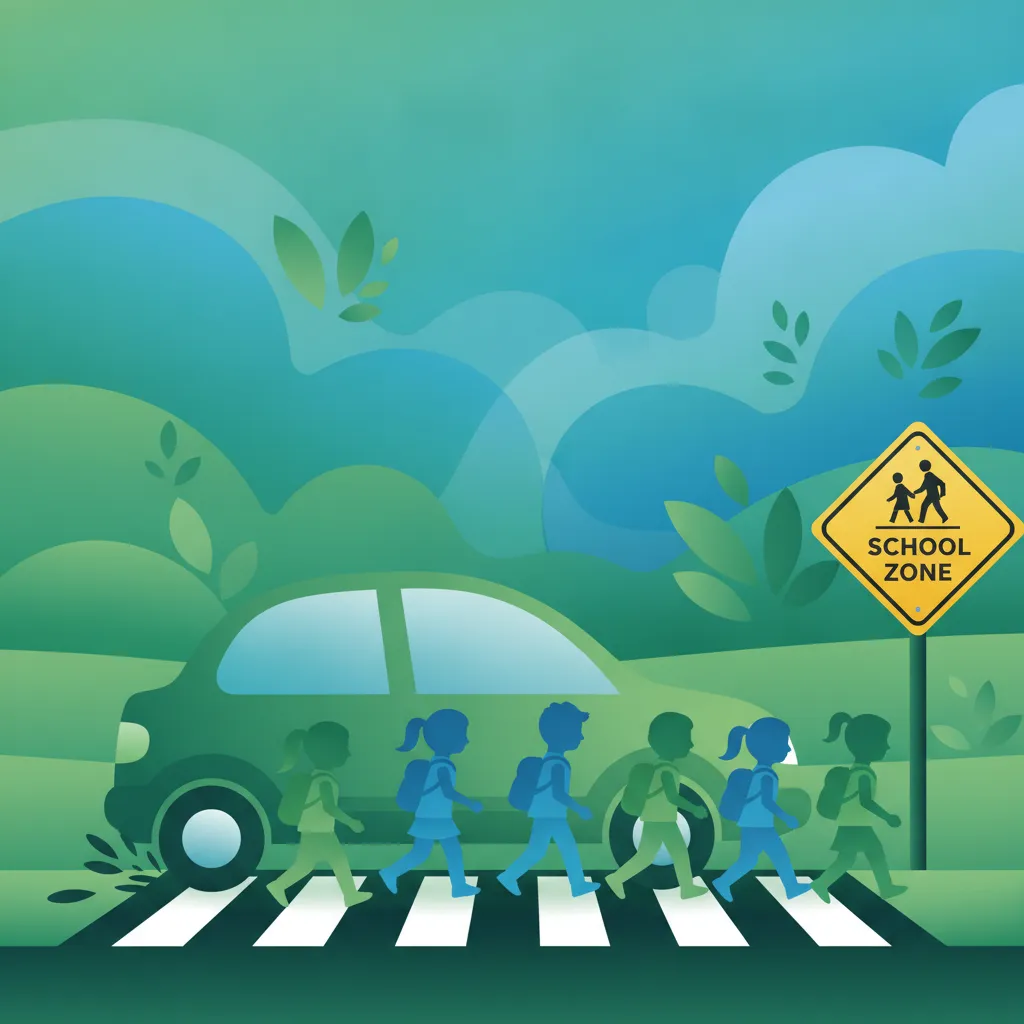
Protecting vulnerable road users is a core legal and ethical responsibility for all motorized vehicle operators in Turkey. This lesson covers the absolute requirement to yield to pedestrians at marked crosswalks, zebra crossings, and designated school zones. You will learn how to identify these zones early, reduce your speed proactively, and maintain heightened situational awareness for children or distracted pedestrians who may step onto the road unexpectedly.
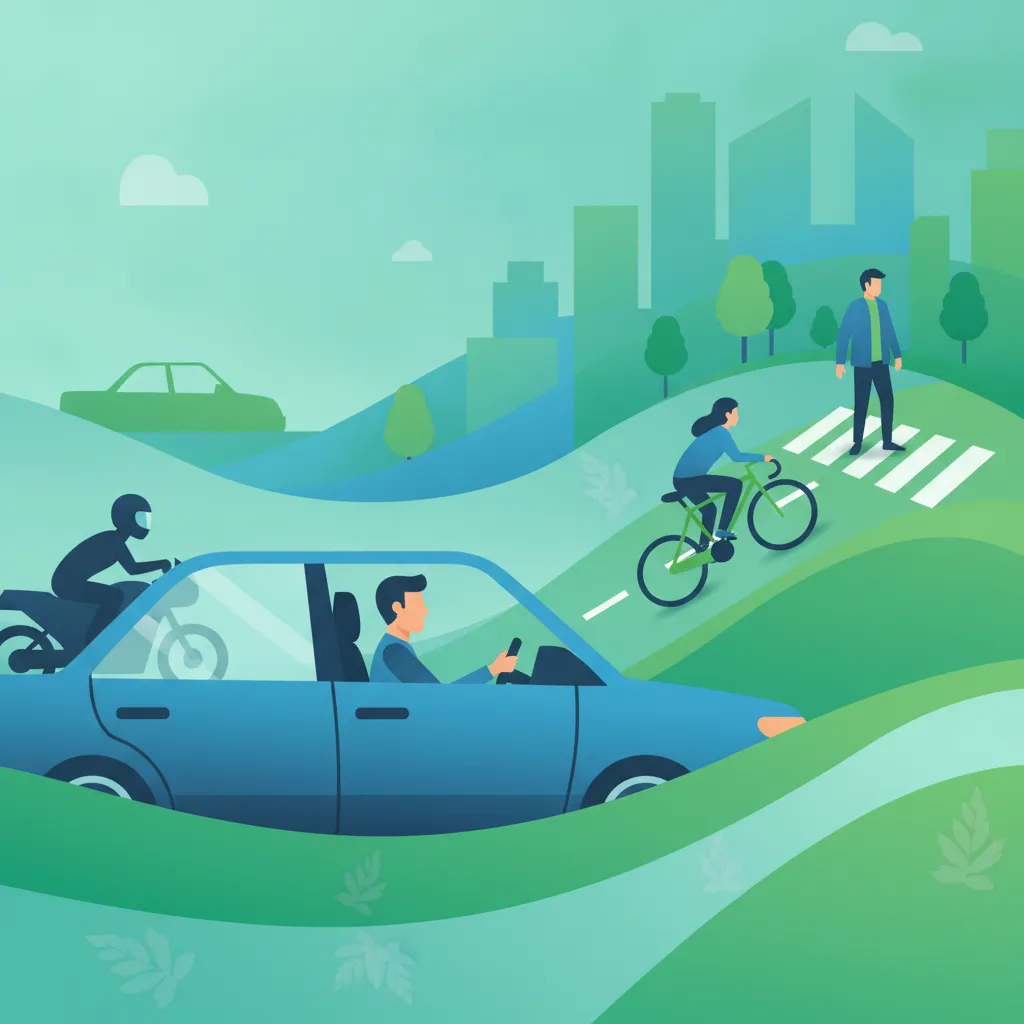
Learners will examine the complexities of operating in environments where various road users, including pedestrians, cyclists, and motorcyclists, coexist. The lesson emphasizes the need for heightened situational awareness, defensive driving techniques, and proactive hazard anticipation. Strategies for navigating mixed traffic safely, especially in congested urban areas, are highlighted.
This lesson examines the critical interactions between goods vehicles and vulnerable road users such as pedestrians, cyclists, and motorcyclists, particularly in urban environments. Learners will explore right-of-way rules, maintaining safe distances, and strategies for anticipating the actions of these road users. The lesson emphasizes the importance of clear communication and protective driving.

This lesson focuses on pedestrian rights and safety measures to ensure their protection on Turkish roads. Topics include proper use of crosswalks, pedestrian signals, and yielding to pedestrians at intersections. The lesson also addresses specific considerations for vulnerable pedestrians such as children, the elderly, and the visually impaired. Real-world scenarios illustrate safe crossing practices.
Focusing on pedestrian safety, this lesson addresses the unique considerations motorcyclists must take when approaching zebra crossings, traffic signal-controlled pedestrian crossings, and designated school zones. Learners will understand the legal obligations to yield to pedestrians, especially children, and the importance of reducing speed in these high-risk areas. The lesson also provides practical tips for ensuring visibility.
Find clear answers to common questions learners have about Coordinating with Pedestrians and Other Road Users at Stops. Learn how the lesson is structured, which driving theory objectives it supports, and how it fits into the overall learning path of units and curriculum progression in Turkey. These explanations help you understand key concepts, lesson flow, and exam focused study goals.
Pedestrians must be given priority at marked crossings near bus stops. While the bus stop is a boarding zone, you must remain vigilant for pedestrians crossing behind or in front of the vehicle, ensuring they are clear before moving off.
You must prioritize the safety of the pedestrian and slow down or stop if necessary. Bus lanes are specifically for public transport, but they do not exempt you from the duty of care toward vulnerable road users.
The exam often presents scenario-based questions where you must identify the correct action to take when approaching a stop with pedestrians present. You will need to choose the option that demonstrates the highest level of caution and adherence to priority laws.
Yes, you must check your mirrors and blind spots carefully and signal your intention to move back into traffic, ensuring that you do not force other vehicles to brake suddenly.
Use our comprehensive practice search to find exactly the Turkish driving theory questions you need to master. Whether reviewing specific road signs, traffic rules, or first aid scenarios, select your perfect practice set and boost your confidence for the official ehliyet sınavı.