
This lesson explores the essential safety protocols for managing standing passengers and securing luggage in Class D vehicles. Understanding these procedures is critical for maintaining vehicle stability during transit, ensuring passenger comfort, and complying with Turkish traffic regulations during your professional driving duties.

Lesson content overview
Operating a passenger-carrying vehicle under a Turkish Class D driving licence requires more than just mastering steering and road rules. It demands a deep understanding of passenger dynamics and load management. Unlike cargo vehicles, where loads are static and easily secured, passenger transport involves dynamic, living "loads"—passengers who move, react, and sometimes stand while the vehicle is in motion. Additionally, their personal luggage introduces weight distribution challenges that can critically affect vehicle stability.
This lesson explores the physical principles, legal regulations, and professional driving techniques required to safely manage standing passengers and luggage. Mastery of these concepts is essential for passing the official Turkish Class D theory exam and ensuring public safety on urban and intercity routes.
To understand why standing passengers and unsecured luggage pose such high risks, you must first understand the fundamental physics of a large commercial vehicle. Buses, midibuses, and minibuses have a higher center of gravity (ağırlık merkezi) than standard passenger cars. This inherent design makes them more susceptible to body roll, weight transfer, and destabilization during sudden maneuvers.
When a vehicle is in motion, every object inside it possesses kinetic energy.
Proper load distribution is a core safety requirement under the Turkish Highway Traffic Regulation (Karayolları Trafik Yönetmeliği). Unbalanced weight distribution degrades braking efficiency, alters steering response, and increases tire wear.
The strategic placement of cargo, luggage, and passenger weight across the vehicle's axles to maintain optimal balance, steering control, and braking performance.
A primary rule of passenger transport is the physical separation of heavy luggage from the passenger cabin.
Under-Floor Luggage Compartments (Bagaj Bölmeleri): Heavy suitcases, trunks, and oversized items must always be stored in the dedicated under-floor compartments.
Overhead Bins (Baş Üstü Rafları): Overhead racks inside the passenger cabin are strictly designed for light personal items (e.g., jackets, small handbags, umbrellas).
Safety Threat: Never allow luggage to be placed in the aisles, near emergency exits, or blocking the entryways. In the event of an emergency evacuation, blocked aisles can lead to panic, entrapment, and serious injury.
Standing passengers (ayaktaki yolcular) present a unique challenge. Unlike seated passengers who are secured by seat belts and cradled by high-backed seats, standing passengers rely entirely on their own physical strength and the vehicle's handholds to remain upright.
Not all Class D vehicles are legally permitted to carry standing passengers.
As the driver, you are responsible for the safety of everyone on board. You must actively manage how and where standing passengers position themselves.
Check Door Areas: Confirm that no passengers are standing in the door wells or blocking the front dashboard visibility.
Assess Passenger Stability: Verify that all standing passengers have secured a grip on a handrail or strap.
Clear the Aisles: Ensure no bags or personal items are resting in the central walkway.
Announce Departure: On transit routes, a brief announcement or warning buzzer before moving alert passengers to brace themselves.
Smooth Transition: Release the parking brake and accelerate smoothly to prevent passengers from swaying backward.
The presence of standing passengers requires a fundamental shift in your driving style. Your inputs to the steering wheel, accelerator, and brake pedal must be exceptionally smooth and progressive.
Sudden speed changes are the primary cause of passenger falls.
Centrifugal force acts heavily on standing passengers during turns.
Adverse conditions amplify every physical force acting on your vehicle.
| Condition | Hazard for Standing Passengers | Required Driver Adjustment |
|---|---|---|
| Rain / Wet Roads | Increased braking distance, slippery passenger shoes on the bus floor, sudden slips. | Double the following distance; request passengers dry their shoes on entry mats; drive significantly below the speed limit on curves. |
| Winding Rural Roads | Continuous, alternating lateral forces causing physical fatigue for standing passengers. | Discourage standing passengers if the route permits; drive at highly conservative speeds; utilize low gears to control speed smoothly. |
| High Winds | Crosswinds can cause sudden lateral shifts in the vehicle's path, catching standing passengers off guard. | Firmly grip the steering wheel; reduce highway speeds; warn passengers to hold on tight. |
Failing to properly manage passengers and luggage is not just a safety hazard; it carries significant legal consequences under the Turkish Highway Traffic Law (Karayolları Trafik Kanunu - KTK).
Professional Responsibility: As a professional Class D driver, you represent your transport agency or municipality. Ensuring passenger comfort and preventing falls directly reduces insurance claims, vehicle downtime, and legal liabilities for your employer.
To ensure safety and pass your theory exam, always remember these three core rules:
This lesson covers the critical safety protocols for Turkish Class D drivers handling standing passengers and luggage, explaining how high vehicle center of gravity combined with unsecured loads creates rollover and injury risks. Key rules include mandatory under-floor storage for heavy items, strict separation of luggage from passenger cabins, and the prohibition of standing passengers on intercity coaches versus permitted limits on urban transit vehicles. The lesson emphasizes that defensive driving with standing passengers requires anticipating stops far ahead, decelerating before curves, and adjusting speed for adverse weather conditions. Legal consequences under Turkish Highway Traffic Law include administrative fines for overloading and criminal liability for unsecured luggage causing injury, with potential SRC Belgesi suspension for drivers who start moving before passengers are stabilized.
A short set of high-value points that capture the most important learning from this lesson.
Heavy luggage must always be stored in under-floor compartments and never placed in overhead bins or aisles
Standing passengers are prohibited on intercity coaches but permitted on urban transit buses within certified limits shown on registration documents
High vehicle center of gravity makes buses highly susceptible to rollover during sudden turns when carrying standing passengers or overhead luggage
Progressive braking and pre-turn deceleration are essential because a 10 kg unsecured suitcase can strike with hundreds of kilograms of force in a sudden stop
Drivers must actively manage passenger positioning, ensuring standing passengers hold handrails and stay behind the safety line near the driver's zone
Explore all units and lessons included in this driving theory course.
Heavy items low, light items overhead - overhead bins are strictly for jackets, small bags, and umbrellas only
Speed reduction before entering turns, not during them - maintain constant slow speed inside the curve
Yellow line rule - standing passengers must remain behind the safety line to preserve driver mirror visibility
Bellows area on articulated buses shifts dynamically during turns - passengers should avoid standing directly on the turntable platform
SRC Belgesi suspension is a real consequence for premature departure that causes passenger injury
Placing heavy backpacks or hard-shell suitcases in overhead racks because they seem conveniently accessible
Late braking and sudden stops, assuming standing passengers can brace themselves in time
Reducing speed during a turn instead of before entering it, which worsens lateral instability
Allowing passengers to stand in door wells or block aisles with luggage, creating evacuation hazards
Loading all heavy luggage on one side of the under-floor compartment, causing uneven handling and suspension wear
Lesson content overview
A short set of high-value points that capture the most important learning from this lesson.
Heavy luggage must always be stored in under-floor compartments and never placed in overhead bins or aisles
Standing passengers are prohibited on intercity coaches but permitted on urban transit buses within certified limits shown on registration documents
High vehicle center of gravity makes buses highly susceptible to rollover during sudden turns when carrying standing passengers or overhead luggage
Progressive braking and pre-turn deceleration are essential because a 10 kg unsecured suitcase can strike with hundreds of kilograms of force in a sudden stop
Drivers must actively manage passenger positioning, ensuring standing passengers hold handrails and stay behind the safety line near the driver's zone
Explore all units and lessons included in this driving theory course.
Heavy items low, light items overhead - overhead bins are strictly for jackets, small bags, and umbrellas only
Speed reduction before entering turns, not during them - maintain constant slow speed inside the curve
Yellow line rule - standing passengers must remain behind the safety line to preserve driver mirror visibility
Bellows area on articulated buses shifts dynamically during turns - passengers should avoid standing directly on the turntable platform
SRC Belgesi suspension is a real consequence for premature departure that causes passenger injury
Placing heavy backpacks or hard-shell suitcases in overhead racks because they seem conveniently accessible
Late braking and sudden stops, assuming standing passengers can brace themselves in time
Reducing speed during a turn instead of before entering it, which worsens lateral instability
Allowing passengers to stand in door wells or block aisles with luggage, creating evacuation hazards
Loading all heavy luggage on one side of the under-floor compartment, causing uneven handling and suspension wear
Explore search topics learners often look for when studying Handling Standing Passengers and Luggage During Transit. These topics reflect common questions about road rules, driving situations, safety guidance, and lesson level theory preparation for learners in Turkey.
Browse additional driving theory lessons that cover connected traffic rules, road signs, and common driving situations related to this topic. Improve your understanding of how different rules interact across everyday traffic scenarios.
Learn how to manage vehicle dynamics and anticipate hazards when driving large passenger vehicles. This guide covers progressive braking, smooth acceleration, and cornering strategies to maintain passenger comfort and stability on both urban and intercity routes while adhering to professional Turkish driving standards.

This lesson focuses on protecting vulnerable road users, such as pedestrians, cyclists, and motorcyclists, in mixed traffic environments. Learners will examine specific strategies for increased vigilance, anticipatory driving, and properly yielding to these users. The lesson also covers high-risk zones, such as school areas and public transport stops, emphasizing the need for heightened safety.
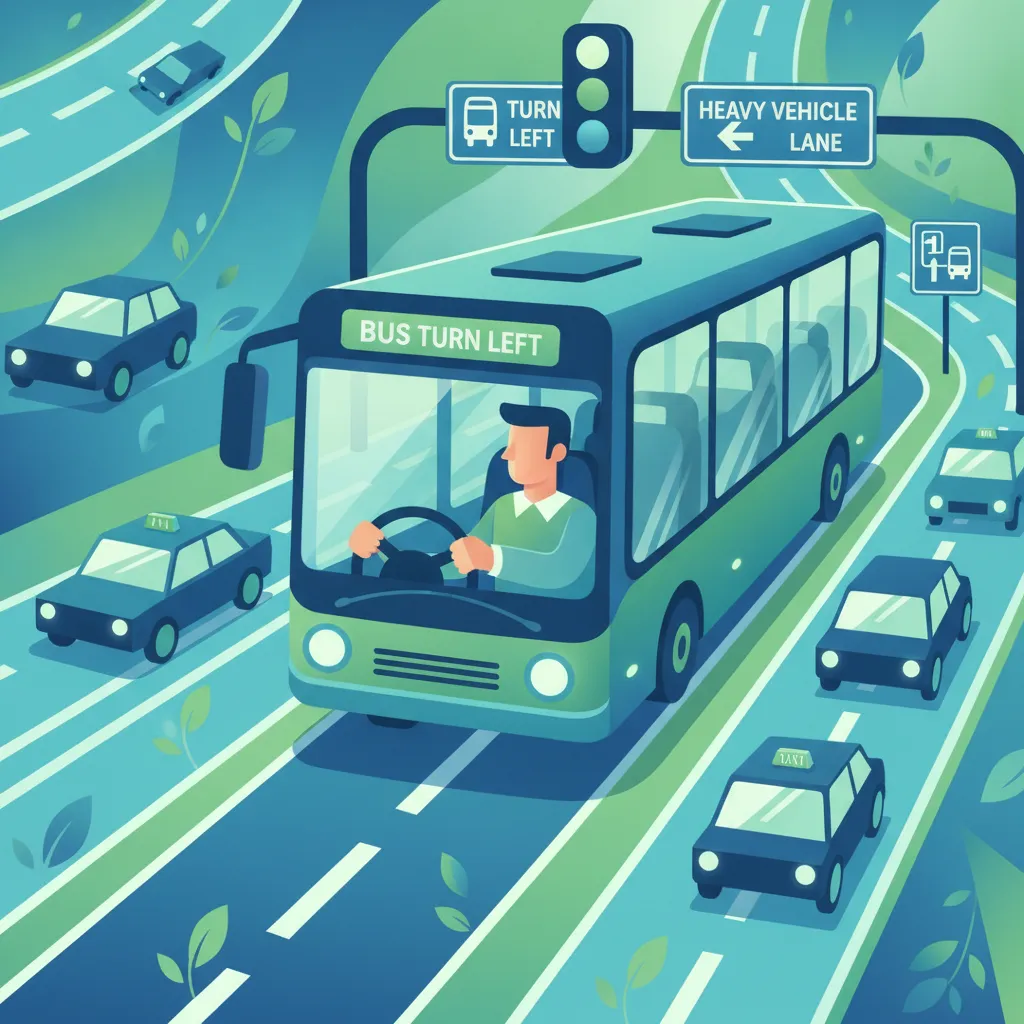
Learners will explore strategies for navigating congested urban traffic environments while operating large passenger vehicles. The lesson covers lane selection, adherence to traffic signals, and the use of bus lanes where applicable. Understanding how to maintain smooth traffic flow while ensuring passenger safety is crucial for efficient urban transportation.

Learners will examine the complexities of operating in environments where various road users, including pedestrians, cyclists, and motorcyclists, coexist. The lesson emphasizes the need for heightened situational awareness, defensive driving techniques, and proactive hazard anticipation. Strategies for navigating mixed traffic safely, especially in congested urban areas, are highlighted.

Defensive riding is the practice of anticipating potential road conflicts and acting early to prevent accidents before they occur. This lesson teaches you how to systematically scan the road ahead for changing conditions, keep an adequate safety cushion around your moped, and pre-plan exit routes in tight spots. You will learn to assume you are invisible to other drivers and adapt your speed and road position proactively to protect yourself against sudden maneuvers.

Learners will learn how to calculate and maintain safe following distances, accounting for the longer braking distances and reaction times inherent to larger passenger vehicles. The lesson emphasizes the importance of a sufficient time gap to allow for safe stopping and to prevent rear-end collisions, particularly in varying traffic conditions.

This lesson delves into specific manoeuvring strategies required when navigating both tight urban environments and open rural roads with large passenger vehicles. Learners will explore techniques for handling narrow streets, tight turns, and intersections, while maintaining safety and efficiency. The content emphasizes planning and execution of manoeuvres based on road conditions and vehicle dimensions.

This lesson focuses on the unique requirements and best practices for operating passenger vehicles on highways and expressways. Topics include maintaining appropriate speed, adhering to lane discipline, executing safe overtaking maneuvers, and managing merges and exits. Emphasis is placed on ensuring a smooth ride for passengers while integrating safely with faster-moving traffic.

Learners will explore methods for achieving smooth acceleration and deceleration, focusing on gradual throttle application and progressive brake pressure to maintain passenger comfort and vehicle stability. The lesson highlights the importance of anticipating road conditions and traffic flow to avoid abrupt speed changes, thereby enhancing safety and reducing fuel consumption.

This lesson focuses on the execution of safe right and left turns with large passenger vehicles, emphasizing the identification and management of blind spots. Learners will understand the correct use of turn signals, proper positioning within the turn, and the importance of thorough observation before and during turning. Strategies for minimizing blind spot exposure are also covered.

Learners will explore the fundamentals of maintaining correct lane discipline, focusing on appropriate lane positioning, understanding lane markings, and executing lane changes safely. Emphasis is placed on the unique considerations for large passenger vehicles within the lane, such as width and maneuverability. The lesson also addresses the impact of proper lane discipline on overall traffic flow and safety.
Understand the regulations for managing bus stops, boarding procedures, and urban traffic interactions in Türkiye. This lesson explains how to safely coordinate with pedestrians, handle bus lane restrictions, and manage passenger movement to comply with the Turkish Highway Traffic Law and professional transport requirements.

Learners will explore best practices for ensuring passenger safety during the boarding and alighting process, focusing on proper vehicle positioning, door operation, and passenger assistance. The lesson covers the use of handrails, steps, and ramps, as well as strategies for managing standing passengers and luggage. Emphasis is placed on clear communication and maintaining situational awareness to prevent accidents.
This lesson focuses on the proper approach to bus stops and terminals within city traffic, emphasizing safe positioning, adherence to traffic signals, and maintaining smooth traffic flow. Learners will understand the importance of signaling intentions, checking blind spots, and ensuring the safety of boarding and alighting passengers. Effective stop management reduces the risk of accidents and traffic disruption.

This lesson covers the proper handling of bus stops and designated passenger boarding zones, emphasizing safety, efficiency, and compliance with regulations. Topics include the correct positioning of the vehicle, safe boarding and alighting procedures, and managing passenger flow during stops. Effective management of these zones reduces the risk of accidents and ensures a smooth passenger experience.
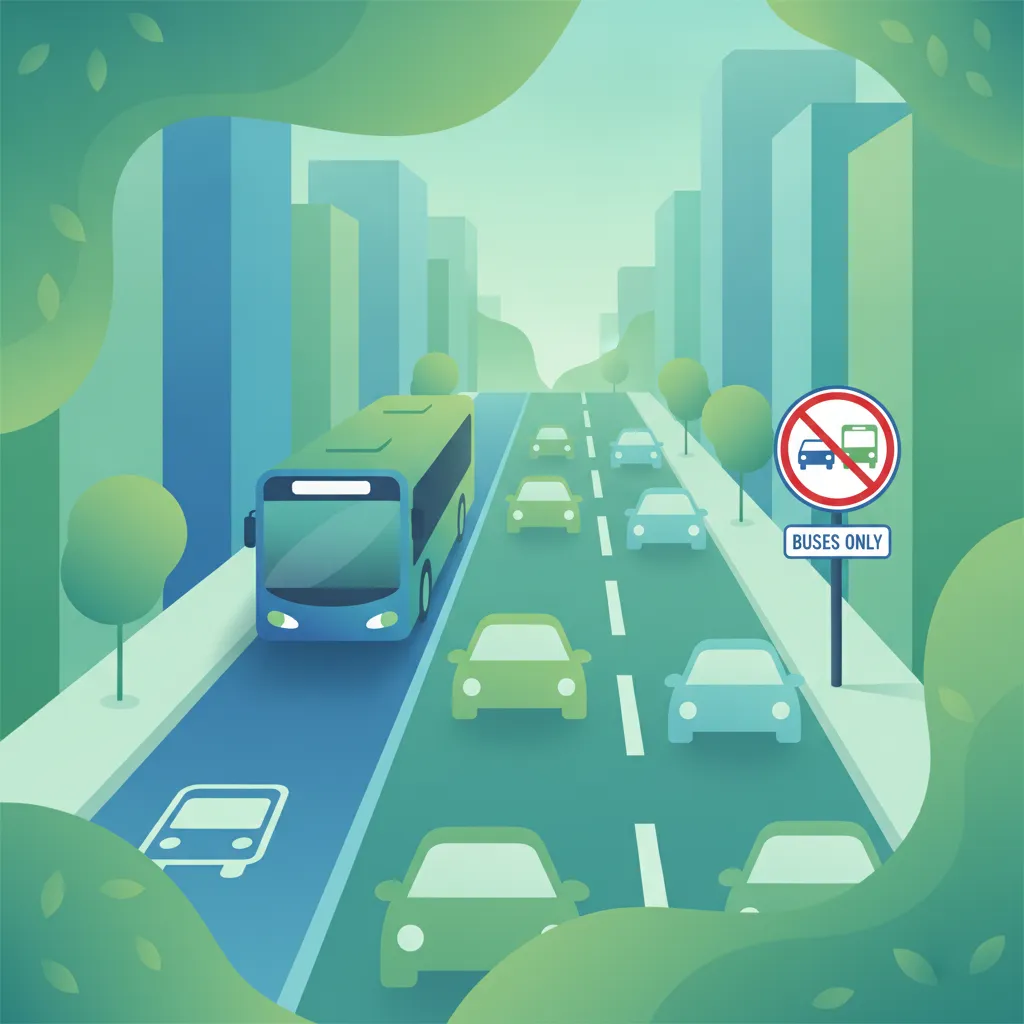
Learners will explore the specific regulations governing bus lanes, priority routes, and other legal restrictions applicable to passenger vehicles. The lesson covers the conditions under which buses may use dedicated lanes, how to navigate priority roadways, and the penalties associated with misuse. Understanding these rules is essential for efficient operation and avoiding violations in high-traffic areas.
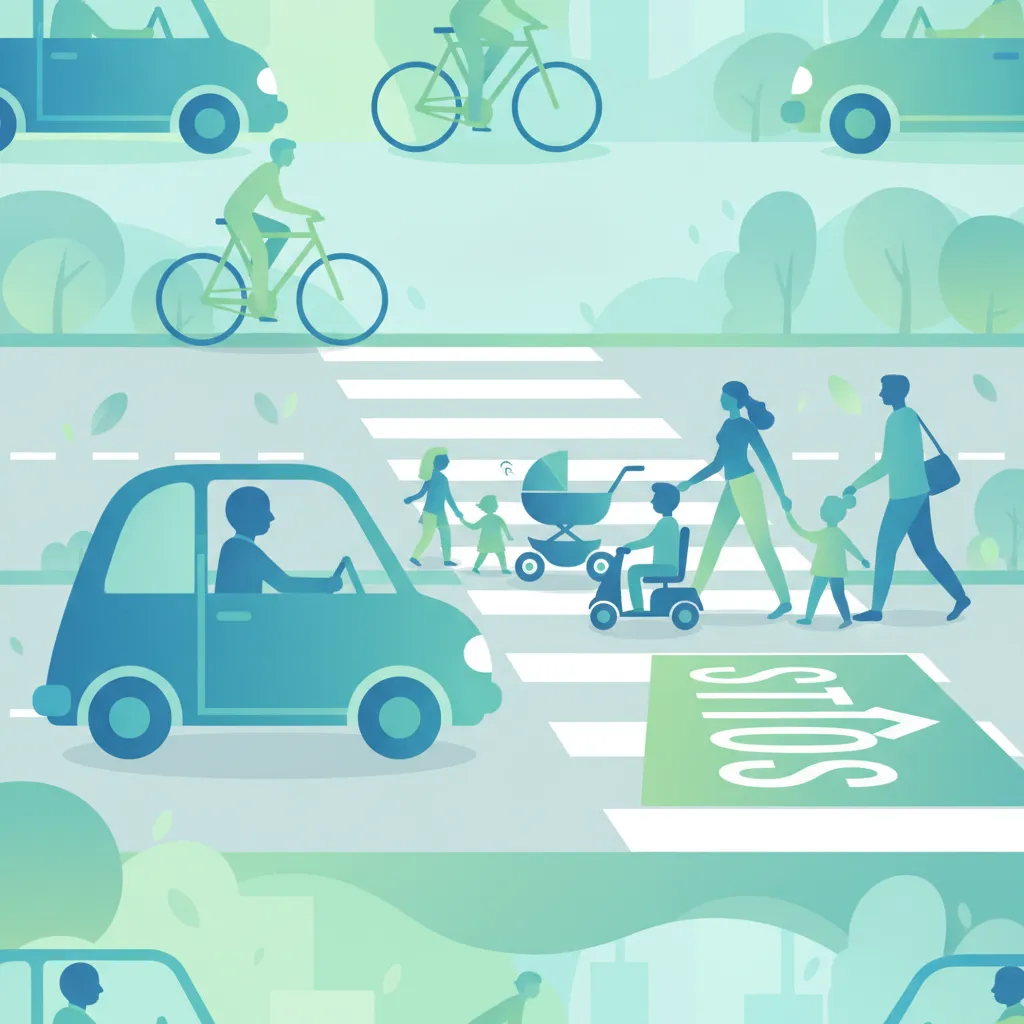
Learners will examine effective strategies for safely coordinating with pedestrians and other road users when approaching and departing bus stops. The lesson highlights right-of-way rules, the importance of yielding at crosswalks, and clear communication with both passengers and other drivers. These practices are vital for preventing accidents and ensuring a harmonious flow of traffic in busy urban areas.
Learners will explore strategies for navigating congested urban traffic environments while operating large passenger vehicles. The lesson covers lane selection, adherence to traffic signals, and the use of bus lanes where applicable. Understanding how to maintain smooth traffic flow while ensuring passenger safety is crucial for efficient urban transportation.

This lesson focuses on managing vehicle speed according to different road environments—urban, rural, and highways—while complying with legal speed limits and traffic flow. Learners will understand how to adjust speed for varying road conditions, traffic density, and safety considerations, ensuring a balance between efficiency and risk mitigation.

This lesson equips drivers with techniques to manage passenger behavior and foster effective in-vehicle communication. Topics include handling disruptive passengers, making clear announcements, and using non-verbal signals to maintain order. By promoting respectful conduct and clear communication, drivers can ensure a smoother, safer journey for everyone on board.

This lesson focuses on the safe interaction with other traffic participants at bus stops and traffic intersections. Learners will explore right-of-way rules, signal compliance, and techniques for maintaining safe distances while stopping and departing. Understanding these interactions is vital for preventing accidents in complex traffic environments.
This lesson focuses on the identification and interpretation of traffic signs and road markings that are particularly relevant to passenger vehicle drivers, such as bus lane indications, priority road signs, and specific speed limits. Learners will explore how these signs affect route planning, compliance, and the overall flow of traffic. Mastery of sign interpretation ensures safe and lawful operation in various traffic conditions.
Find clear answers to common questions learners have about Handling Standing Passengers and Luggage During Transit. Learn how the lesson is structured, which driving theory objectives it supports, and how it fits into the overall learning path of units and curriculum progression in Turkey. These explanations help you understand key concepts, lesson flow, and exam focused study goals.
Uneven weight distribution can significantly affect the vehicle's center of gravity, increasing the risk of rolling over or making the vehicle difficult to handle during emergency braking or sharp turns.
You must ensure that standing passengers are positioned safely, hold on to designated handrails, and do not obstruct the driver's visibility or the entrance/exit doors.
Unsecured luggage acts as a projectile during sudden braking or collisions, causing severe injury to passengers and potentially damaging the interior of the vehicle.
The exam focuses primarily on safety principles, load security, and the impact of weight on braking distance rather than specific weight-in-kilograms calculations.
Use our comprehensive practice search to find exactly the Turkish driving theory questions you need to master. Whether reviewing specific road signs, traffic rules, or first aid scenarios, select your perfect practice set and boost your confidence for the official ehliyet sınavı.