
This lesson guides you through the critical procedures for managing bus stops and terminals within busy urban traffic environments. As part of your Class D passenger vehicle training, you will learn how to maintain safety, efficiency, and legal compliance while interacting with boarding passengers and other road users. Mastering these maneuvers is essential for both your theory exam and your professional driving career in Türkiye.
Lesson content overview
Managing bus stops and terminal approaches is one of the most critical daily responsibilities for a professional Class D driver in Turkey. Operating a large passenger vehicle requires high situational awareness, precise vehicle control, and strict adherence to traffic laws to prevent accidents and avoid traffic congestion.
This lesson details the correct procedures under the Turkish Highway Traffic Law (Karayolları Trafik Kanunu) and related regulations for approaching, stopping at, and departing from bus stops (durak) and terminal (otogar) platforms in urban environments.
In Turkish city traffic, designated bus stops are identified by specific regulatory signs. These zones are legally protected to ensure that buses can pull in safely without obstructing the flow of other vehicles.
The 15-metre exclusion zone around the B-22 sign is designed to provide large passenger vehicles with enough space to decelerate, align parallel to the curb, and accelerate back into the traffic stream safely. As a Class D licence holder, you must understand how to utilize this space effectively without encroaching on regular traffic lanes.
Approaching a bus stop or terminal platform requires early planning. Because of the size and weight of a Class D vehicle, sudden deceleration can cause passenger injuries and increase the risk of rear-end collisions.
When approaching a bus stop on a straight urban road, you must begin your preparation early. Start by releasing the accelerator and scanning the stop area for waiting passengers, pedestrians, or illegally parked vehicles.
Check your rear-view and right-side mirrors to assess the positioning of following traffic and cyclists.
Activate your right turn signal at least 30 metres before reaching the stop area to clearly communicate your intention to pull over.
Apply smooth, progressive braking to reduce your speed gradually, transitioning from urban cruising speed down to a controlled stop.
Position the bus parallel to the curb, keeping a safe lateral distance to avoid striking the curb with your tires or scraping the passenger side mirror against roadside structures.
Approaching a stop located on or immediately after a curve presents limited sight distance. In these situations, you must adjust your speed much earlier.
On curved roads, always assume that there could be pedestrians or hazards hidden from view. Reduce your speed before entering the curve so that you do not have to brake heavily once the bus stop comes into sight.
Ensure that the front and rear of your vehicle do not swing out into adjacent traffic lanes as you navigate the curve into the stopping bay.
Correct vehicle positioning at a bus stop or terminal platform directly affects passenger safety. If the vehicle is parked too far from the curb, passengers may slip or trip while boarding. If it is parked too close, you risk damaging the vehicle or injuring passengers standing near the edge of the platform.
At a standard roadside bus stop, your goal is to align the bus parallel to the curb. The bus should stop with its doors aligned with the passenger waiting area, and the rear end of the bus should be positioned safely within the designated stop marking.
Within a bus terminal (otogar), buses must align precisely with designated boarding platforms.
When maneuvering into terminal bays, you must account for the pivot points of your vehicle. Ensure the front bumper does not overhang the passenger waiting platform, and leave sufficient clearance for vehicles in adjacent bays to enter or exit without obstruction.
Clear communication with other road users is essential for maintaining traffic flow and safety.
The primary signaling tool used to show an intention to change direction or pull over. Under Turkish traffic regulations, these must be used for any planned stop at a designated bus stop.
Flashing indicator lights used to warn other road users of an immediate hazard, emergency, or unexpected breakdown.
A common and dangerous misconception in daily driving is using hazard lights (dörtlüler) during routine passenger boarding and alighting.
According to Turkish traffic laws, hazard lights must NOT be used for normal, scheduled stops at bus stops. Doing so confuses other drivers, who may believe your vehicle is broken down and attempt unsafe overtaking maneuvers. Use your right turn signal to pull in, and your left turn signal to pull out.
Hazard lights should only be activated if your bus experiences a mechanical failure, if you are forced to stop in an unauthorized or hazardous location due to an emergency, or if you are transporting disabled passengers who require specialized, high-risk assistance using a wheelchair ramp.
Large passenger vehicles have extensive blind spots (kör noktalar), particularly on the right side and directly behind the vehicle. Because pedestrians, cyclists, and motorcyclists frequently move around bus stops, you must conduct systematic visual checks before, during, and after every stop.
Before decelerating:
Before moving off:
Passenger safety during boarding and alighting is legally the sole responsibility of the Class D driver.
Bring the bus to a complete stop and secure it using the bus stop brake or parking brake before initiating door opening.
Open the doors only when the vehicle is fully stationary and aligned with a safe landing surface.
Monitor passenger movements through your internal mirrors and door-mounted cameras, ensuring passengers are clear of the door mechanism.
Close and lock all doors completely before releasing the brakes or initiating any vehicle movement.
Never allow passengers to board or alight while the vehicle is in motion, even at extremely slow speeds. Doing so is a major regulatory violation and carries severe legal penalties.
Re-entering the traffic flow from a stopped position is a high-risk maneuver. While Turkish traffic regulations encourage other drivers to facilitate the departure of public transit buses from designated stops, the ultimate responsibility for a safe merge lies with the bus driver.
Bus stops are high-density conflict zones where various road users interact. You must remain highly vigilant of vulnerable road users.
Your driving style must adapt to changing weather, traffic, and seasonal conditions to ensure safety at bus stops and terminals.
| Condition | Hazard / Challenge | Required Driver Action |
|---|---|---|
| Rain & Wet Roads | Reduced traction, longer stopping distances, slipping hazards for passengers stepping off. | Decelerate earlier, apply brakes gently, and stop slightly further from wet, slippery curb edges to avoid splashing pedestrians. |
| Snow & Ice | Severe loss of traction, risk of sliding into the bus stop platform or curb. | Use extremely low speeds, utilize engine braking, and ensure the door step area of the bus is clear of ice before passengers alight. |
| Fog & Low Visibility | Difficulty identifying bus stops and waiting passengers; following traffic may not see you stopping. | Activate fog lights, begin signaling your turn much earlier, and tap your brakes gently to flash your brake lights to warn following drivers. |
| Peak Hours (Rush Hour) | Overcrowded stops, impatient drivers, high passenger density. | Allow extra time for boarding, manage passenger crowding near doors, and exercise maximum patience when waiting to merge back into traffic. |
| Night Driving | Poor visibility of pedestrians wearing dark clothing near the stop. | Use your interior passenger compartment lights effectively, rely heavily on your mirrors, and use the bus's external step lighting to illuminate the boarding area. |
Violating stopping and departure protocols is not only dangerous but also results in significant legal and professional penalties under the Turkish Highway Traffic Law.
The following real-world driving scenarios illustrate the practical application of correct procedures and the potential consequences of errors.
A Class D driver is operating a transit bus on a busy street in Izmir during a heavy rain shower. The driver notices passengers waiting at an upcoming bus stop.
The driver is preparing to depart from a platform at the Esenler Terminal (Esenler Otogarı) in Istanbul during the evening rush hour. The terminal is highly congested with pedestrians and other buses.
To ensure safety and efficiency when managing bus stops and terminal approaches:
Managing bus stops and terminal approaches requires careful preparation, precise positioning, and systematic mirror checks. The B-22 sign establishes a protected 15-metre zone where you must position your Class D vehicle 10 to 30 centimetres from the curb, aligning doors with the passenger waiting area. Always signal 30 metres before stopping using turn indicators, never hazard lights, and perform complete blind spot checks before steering toward the curb and before merging back into traffic. Passenger safety during boarding and alighting is the driver's sole responsibility—doors must remain closed and locked until the vehicle is fully stationary, and the bus must not move until all passengers have cleared the doors. Environmental conditions such as rain, fog, and peak-hour traffic require adjusted techniques including earlier braking, extended signaling distances, and maximum patience during departure.
A short set of high-value points that capture the most important learning from this lesson.
The 15-metre exclusion zone around the B-22 bus stop sign legally prohibits other vehicles from parking and provides your deceleration and acceleration space.
Signal at least 30 metres before stopping using your right turn indicator; use the left indicator only when departing back into traffic.
Position the bus 10 to 30 centimetres from the curb, parallel aligned, with doors aligned to the passenger waiting area.
Hazard warning lights (dörtlüler) are for emergencies only; always use turn signals for routine passenger stops to avoid confusing other drivers.
Doors must be fully closed and locked before the vehicle moves even a centimetre; passengers must never board or alight while the bus is in motion.
Explore all units and lessons included in this driving theory course.
The B-22 sign marks a designated bus stop with a 15-metre parking exclusion zone on both sides.
Curved road approaches require early speed reduction because limited sight distance hides pedestrians and hazards.
The stopping sequence requires checking: rear-view mirror, left mirror, right mirror, then over-the-shoulder front blind spot before steering toward the curb.
Different weather conditions demand adjusted techniques: earlier braking in rain, engine braking in snow, earlier signaling in fog.
In terminals, account for the pivot points of your vehicle to prevent the front bumper overhanging the platform or rear swing blocking adjacent bays.
Confusing turn signals with hazard lights and using dörtlüler for routine stops, which misleads other drivers into thinking the bus is broken down.
Stopping too far from the curb (over 30 cm) requiring passengers to step down onto the road, or too close risking tire or mirror damage.
Accelerating too rapidly after departure before passengers have found handrails, causing falls inside the bus.
Failing to check the front cross-view mirror before moving from a terminal platform, missing pedestrians walking directly in front of the high windshield.
Neglecting the right-side blind spot where cyclists commonly ride and pedestrians wait before the bus has fully stopped.
Lesson content overview
A short set of high-value points that capture the most important learning from this lesson.
The 15-metre exclusion zone around the B-22 bus stop sign legally prohibits other vehicles from parking and provides your deceleration and acceleration space.
Signal at least 30 metres before stopping using your right turn indicator; use the left indicator only when departing back into traffic.
Position the bus 10 to 30 centimetres from the curb, parallel aligned, with doors aligned to the passenger waiting area.
Hazard warning lights (dörtlüler) are for emergencies only; always use turn signals for routine passenger stops to avoid confusing other drivers.
Doors must be fully closed and locked before the vehicle moves even a centimetre; passengers must never board or alight while the bus is in motion.
Explore all units and lessons included in this driving theory course.
The B-22 sign marks a designated bus stop with a 15-metre parking exclusion zone on both sides.
Curved road approaches require early speed reduction because limited sight distance hides pedestrians and hazards.
The stopping sequence requires checking: rear-view mirror, left mirror, right mirror, then over-the-shoulder front blind spot before steering toward the curb.
Different weather conditions demand adjusted techniques: earlier braking in rain, engine braking in snow, earlier signaling in fog.
In terminals, account for the pivot points of your vehicle to prevent the front bumper overhanging the platform or rear swing blocking adjacent bays.
Confusing turn signals with hazard lights and using dörtlüler for routine stops, which misleads other drivers into thinking the bus is broken down.
Stopping too far from the curb (over 30 cm) requiring passengers to step down onto the road, or too close risking tire or mirror damage.
Accelerating too rapidly after departure before passengers have found handrails, causing falls inside the bus.
Failing to check the front cross-view mirror before moving from a terminal platform, missing pedestrians walking directly in front of the high windshield.
Neglecting the right-side blind spot where cyclists commonly ride and pedestrians wait before the bus has fully stopped.
Explore search topics learners often look for when studying Managing Bus Stops and Terminal Approaches in City Traffic. These topics reflect common questions about road rules, driving situations, safety guidance, and lesson level theory preparation for learners in Turkey.
Browse additional driving theory lessons that cover connected traffic rules, road signs, and common driving situations related to this topic. Improve your understanding of how different rules interact across everyday traffic scenarios.
Learn the professional driving theory behind precise alignment, mirror management, and safe departure procedures for large passenger vehicles. Understand how to execute complex approaches and terminal maneuvers while maintaining passenger safety and adhering to Turkish highway traffic regulations in high-density urban environments.
This lesson delves into specific manoeuvring strategies required when navigating both tight urban environments and open rural roads with large passenger vehicles. Learners will explore techniques for handling narrow streets, tight turns, and intersections, while maintaining safety and efficiency. The content emphasizes planning and execution of manoeuvres based on road conditions and vehicle dimensions.
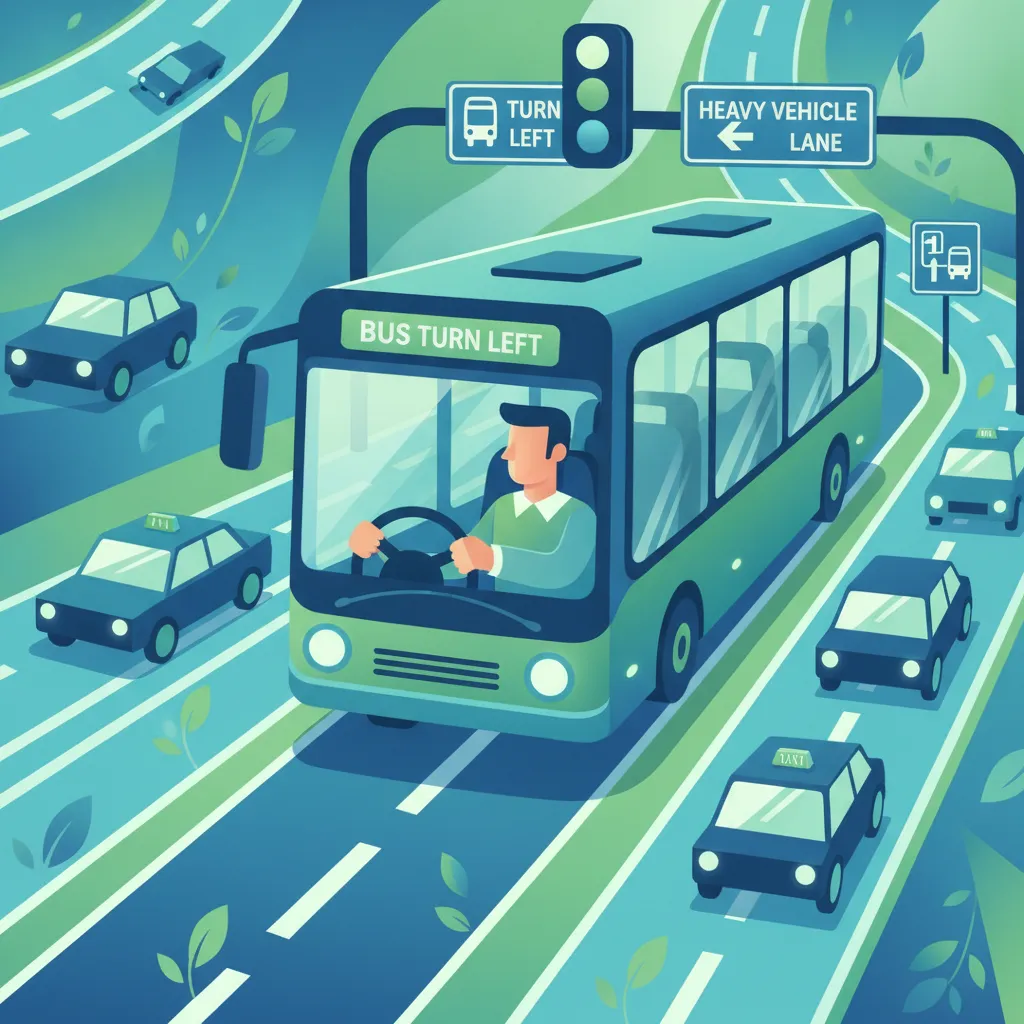
Learners will explore strategies for navigating congested urban traffic environments while operating large passenger vehicles. The lesson covers lane selection, adherence to traffic signals, and the use of bus lanes where applicable. Understanding how to maintain smooth traffic flow while ensuring passenger safety is crucial for efficient urban transportation.
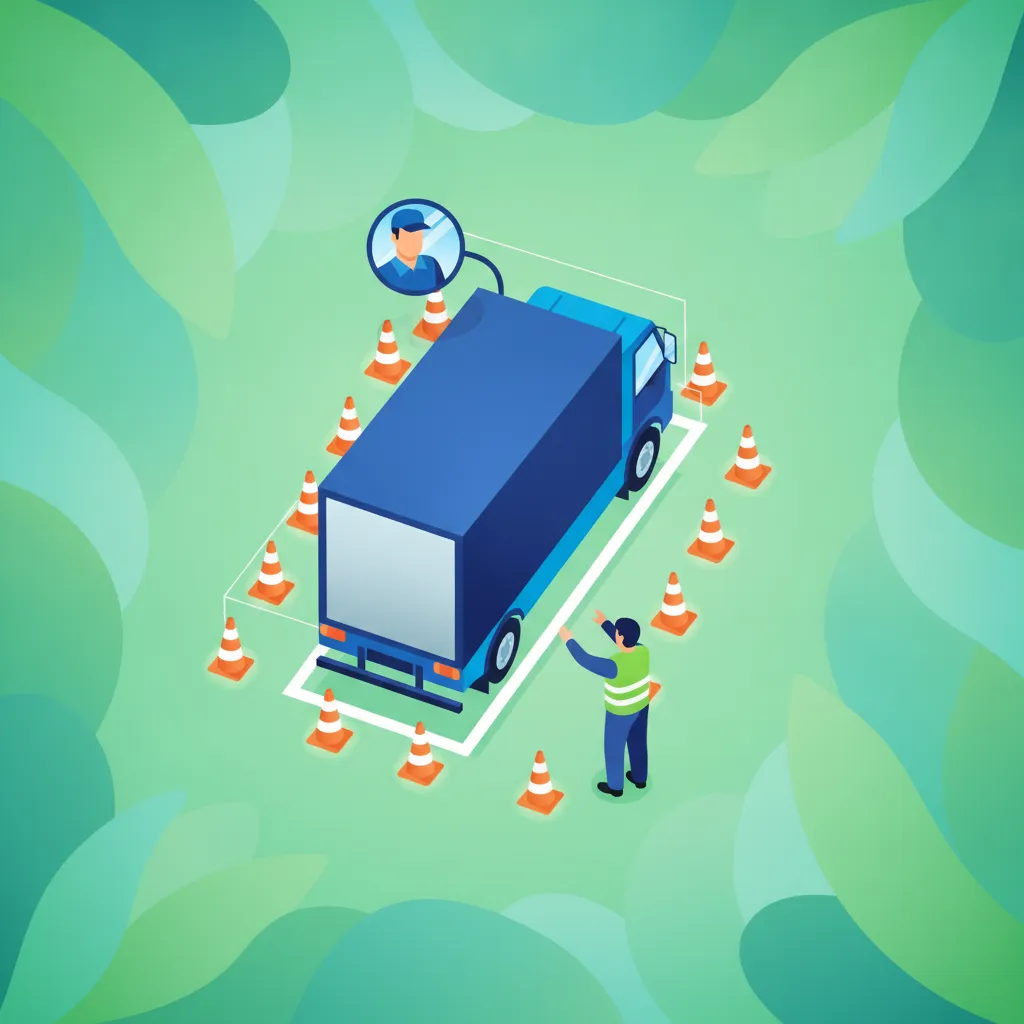
Learners will acquire skills for safely reversing large passenger vehicles in limited spaces, such as bus bays and loading docks. The lesson covers the effective use of mirrors, rear-view cameras, and precise steering inputs to navigate obstacles. Emphasis is placed on slow, controlled movements and constant observation to avoid collisions.
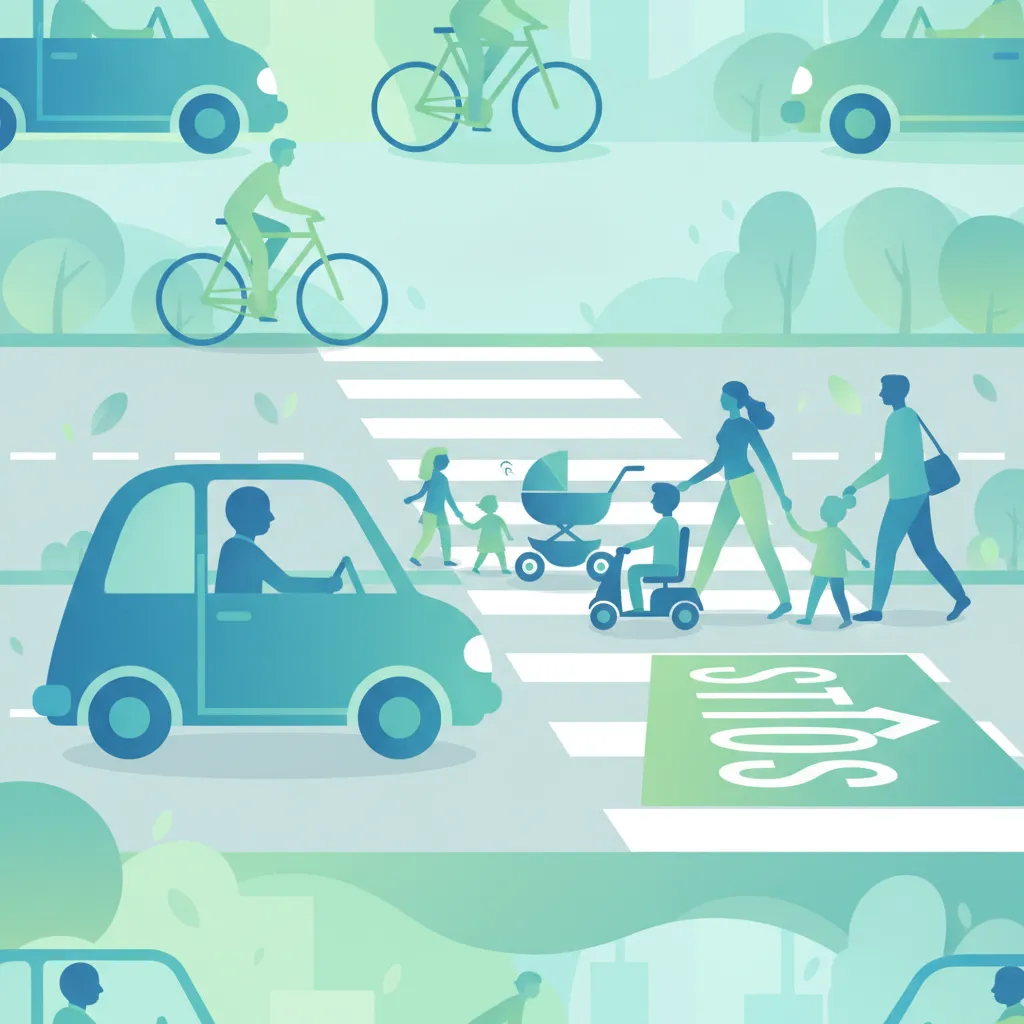
Learners will examine effective strategies for safely coordinating with pedestrians and other road users when approaching and departing bus stops. The lesson highlights right-of-way rules, the importance of yielding at crosswalks, and clear communication with both passengers and other drivers. These practices are vital for preventing accidents and ensuring a harmonious flow of traffic in busy urban areas.
This lesson focuses on the challenges and techniques required when maneuvering goods vehicles in confined spaces such as loading docks, narrow streets, and urban environments. It addresses the importance of spatial awareness, precision driving, and understanding vehicle dimensions to avoid collisions. Learners will explore strategies for effective parking, reversing, and handling blind spots safely.

This lesson focuses on the safe interaction with other traffic participants at bus stops and traffic intersections. Learners will explore right-of-way rules, signal compliance, and techniques for maintaining safe distances while stopping and departing. Understanding these interactions is vital for preventing accidents in complex traffic environments.

This lesson covers the techniques and safety considerations for docking a goods vehicle in loading areas and performing precision parking maneuvers. Learners will learn how to align the vehicle correctly, use reverse gears effectively, and communicate with spotters when necessary. Emphasis is placed on maintaining situational awareness, checking for obstacles, and ensuring secure dock operations.
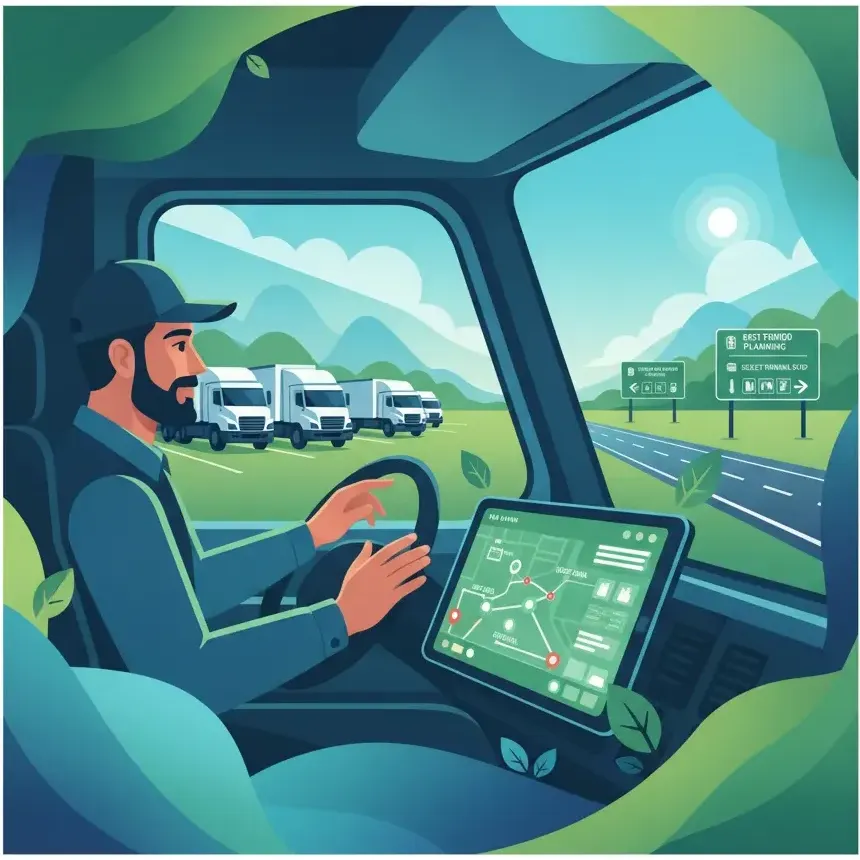
This lesson details the processes involved in terminal operations and the planning of rest stops for passenger vehicles. Learners will learn about safe and efficient procedures for passenger boarding and alighting at terminals, coordinating schedules, and performing safety checks. The importance of selecting appropriate rest areas and managing breaks for both drivers and passengers is emphasized.
Learners will explore best practices for ensuring passenger safety during the boarding and alighting process, focusing on proper vehicle positioning, door operation, and passenger assistance. The lesson covers the use of handrails, steps, and ramps, as well as strategies for managing standing passengers and luggage. Emphasis is placed on clear communication and maintaining situational awareness to prevent accidents.

This lesson covers the proper handling of bus stops and designated passenger boarding zones, emphasizing safety, efficiency, and compliance with regulations. Topics include the correct positioning of the vehicle, safe boarding and alighting procedures, and managing passenger flow during stops. Effective management of these zones reduces the risk of accidents and ensures a smooth passenger experience.
Explore the critical driving theory regarding the protection of pedestrians, cyclists, and passengers during boarding and alighting. Gain a comprehensive understanding of blind spot management, yielding requirements, and professional conduct when operating in mixed traffic and school zones to prevent accidents in urban transport.
Learners will identify the different categories of vulnerable road users and understand the heightened risks they face. The lesson emphasizes the importance of recognizing these users, anticipating their actions, and taking proactive measures to ensure their safety while operating passenger vehicles. Strategies for mitigating danger and fostering a protective driving environment are explored.
This lesson focuses on protecting vulnerable road users, such as pedestrians, cyclists, and motorcyclists, in mixed traffic environments. Learners will examine specific strategies for increased vigilance, anticipatory driving, and properly yielding to these users. The lesson also covers high-risk zones, such as school areas and public transport stops, emphasizing the need for heightened safety.

This lesson examines the critical interactions between goods vehicles and vulnerable road users such as pedestrians, cyclists, and motorcyclists, particularly in urban environments. Learners will explore right-of-way rules, maintaining safe distances, and strategies for anticipating the actions of these road users. The lesson emphasizes the importance of clear communication and protective driving.
Learners will examine the complexities of operating in environments where various road users, including pedestrians, cyclists, and motorcyclists, coexist. The lesson emphasizes the need for heightened situational awareness, defensive driving techniques, and proactive hazard anticipation. Strategies for navigating mixed traffic safely, especially in congested urban areas, are highlighted.
This lesson examines the interaction between drivers and cyclists, focusing on the safe sharing of road space. Topics include the proper use of bicycle lanes, yielding to cyclists at intersections, and safe passing distances. The lesson also addresses cyclist vulnerabilities and ways to minimize risks. Real-world examples illustrate common hazards when sharing the road.
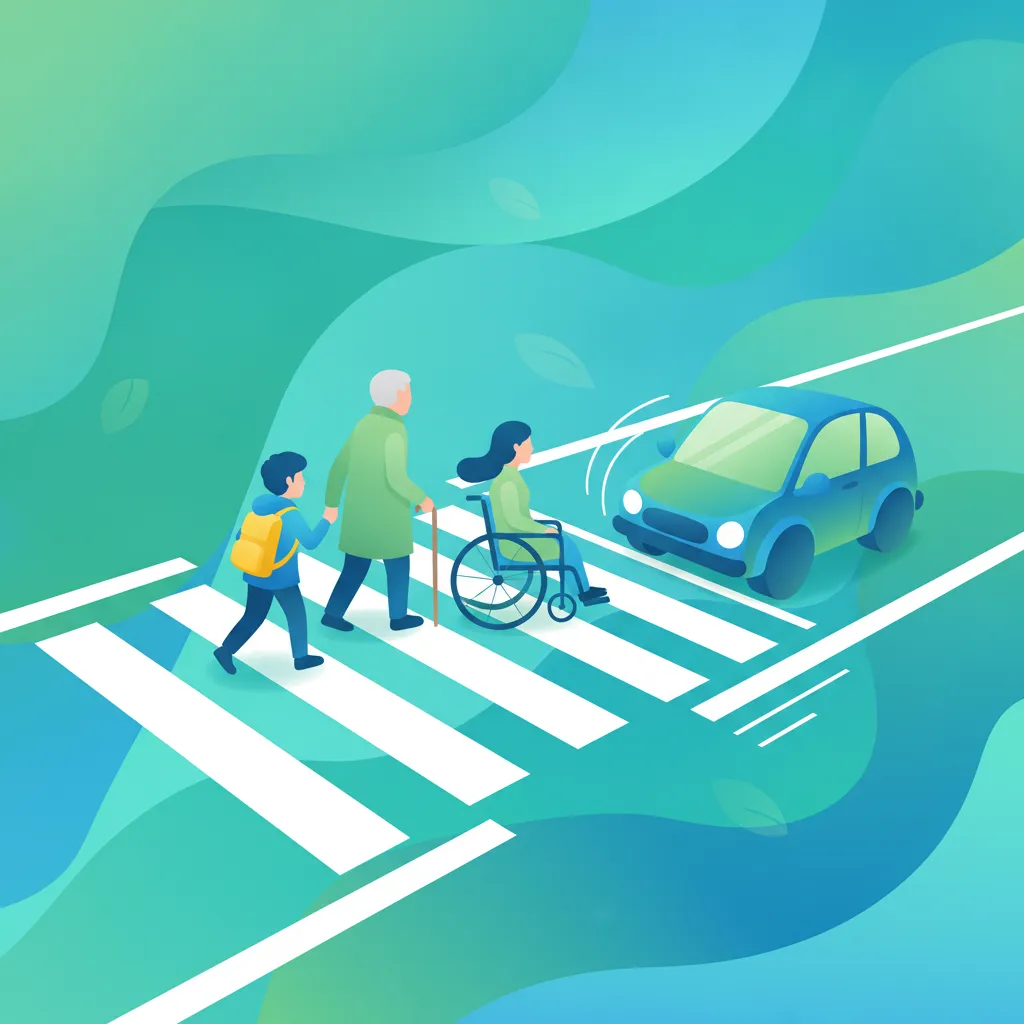
This lesson focuses on the specific needs and challenges faced by children, elderly, and disabled pedestrians. Topics include recognizing vulnerable road users, understanding their behavior, and providing additional safety measures. The lesson also discusses school zones, pedestrian crossing assistance, and strategies to mitigate risks. Real-world examples demonstrate how drivers can anticipate dangers.
This lesson emphasizes the importance of yielding to pedestrians and cyclists at intersections, crosswalks, and designated lanes. Learners will understand the legal obligations to provide safe passage to vulnerable road users and the correct procedures for stopping and allowing them to cross. Real-world examples illustrate scenarios where failing to yield can lead to accidents.
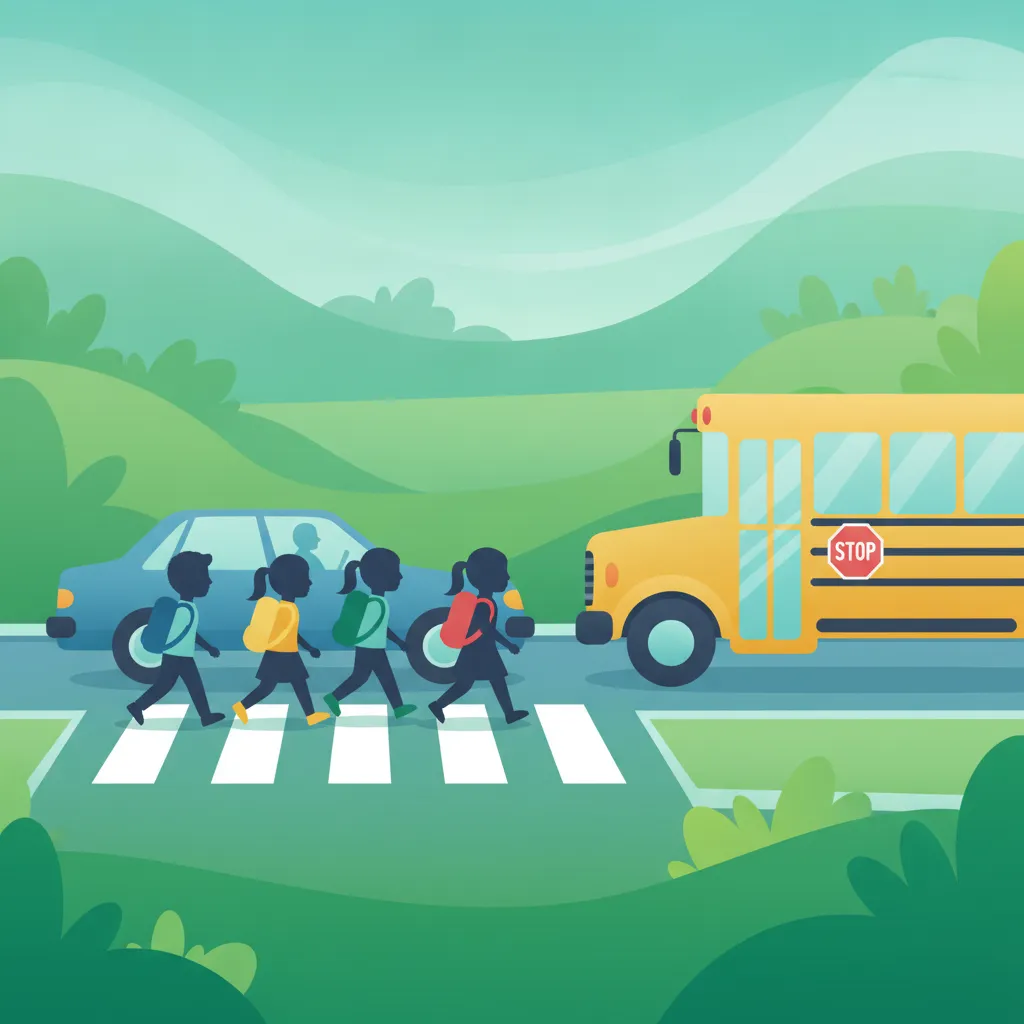
This lesson focuses on the specific considerations for ensuring the safety of pedestrians and schoolchildren around bus stops and terminals. Learners will explore strategies for slowing down, stopping at appropriate distances, and maintaining heightened vigilance. The lesson also covers effective communication with children and the importance of secure boarding and alighting processes to prevent accidents.
Learners will examine effective strategies for safely coordinating with pedestrians and other road users when approaching and departing bus stops. The lesson highlights right-of-way rules, the importance of yielding at crosswalks, and clear communication with both passengers and other drivers. These practices are vital for preventing accidents and ensuring a harmonious flow of traffic in busy urban areas.

This lesson focuses on pedestrian rights and safety measures to ensure their protection on Turkish roads. Topics include proper use of crosswalks, pedestrian signals, and yielding to pedestrians at intersections. The lesson also addresses specific considerations for vulnerable pedestrians such as children, the elderly, and the visually impaired. Real-world scenarios illustrate safe crossing practices.
Find clear answers to common questions learners have about Managing Bus Stops and Terminal Approaches in City Traffic. Learn how the lesson is structured, which driving theory objectives it supports, and how it fits into the overall learning path of units and curriculum progression in Turkey. These explanations help you understand key concepts, lesson flow, and exam focused study goals.
You must check your mirrors and blind spots carefully, signal your intention well in advance, and position the vehicle to allow safe access for boarding passengers without unnecessarily blocking the flow of other traffic.
No. While other drivers should ideally yield to assist buses in urban areas, you must not force your way into traffic if it is unsafe. Always signal your departure and merge only when the lane is clear.
The exam often features situational images and videos testing your judgment on vehicle positioning near stops and the sequence of safety checks required before opening doors. This lesson provides the technical foundation to answer those questions correctly.
Focus on low-speed maneuverability, strict adherence to terminal signage, and constant awareness of pedestrians or other service vehicles moving in confined spaces.
Use our comprehensive practice search to find exactly the Turkish driving theory questions you need to master. Whether reviewing specific road signs, traffic rules, or first aid scenarios, select your perfect practice set and boost your confidence for the official ehliyet sınavı.