
This lesson focuses on the unique safety considerations and road sharing responsibilities when interacting with motorcyclists and scooter riders. As part of our comprehensive Category B curriculum, you will learn how to identify hazards, manage blind spots, and navigate alongside two-wheeled vehicles to ensure road safety. Mastering these concepts is essential for both your upcoming MTSK e-sınav and your future daily driving.
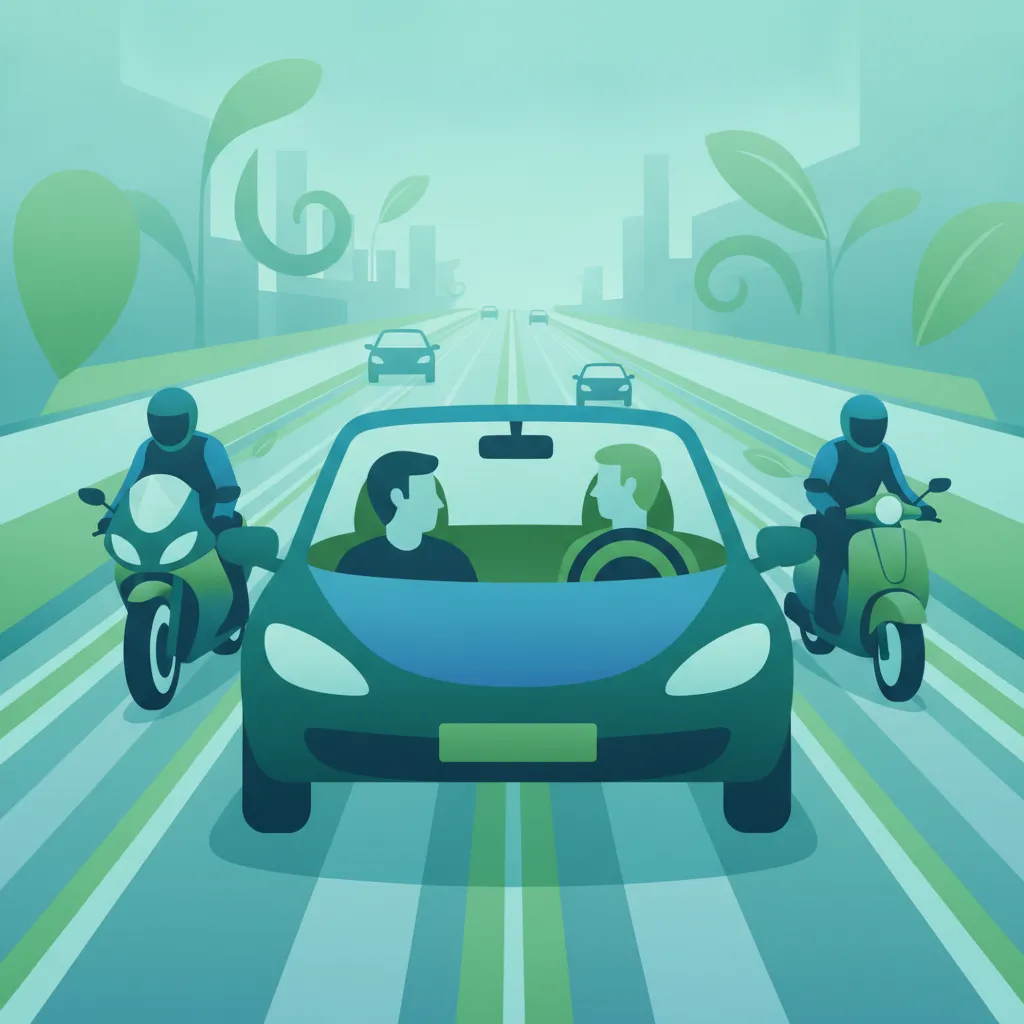
Lesson content overview
Operating a passenger car (Category B license) requires more than just controlling your own vehicle; it demands active co-existence with all other road users. Among the most vulnerable groups you will encounter on Turkish roads (Karayolları) are motorcyclists (motosiklet sürücüleri) and motorized scooter riders (motorlu bisiklet ve scooter sürücüleri). Because of their narrow profile and lack of a protective metal cage, these riders are exposed to significantly higher risks of severe injury or fatality in the event of a collision.
To successfully pass the Turkish MTSK theory e-sınav and, more importantly, to drive defensively, you must understand the unique physical characteristics, legal rights, and behavioral patterns of two-wheeled vehicles. This lesson provides an exhaustive breakdown of how to identify, respect, and safely share the road with motorcyclists and scooter riders under various driving conditions.
In traffic psychology, the concept of "size-arrival illusion" explains why drivers frequently misjudge the speed and distance of smaller vehicles. Because a motorcycle or scooter is substantially smaller than a car, the human brain perceives it as being farther away and moving slower than it actually is. This cognitive error is one of the leading causes of junction collisions.
Furthermore, two-wheeled vehicles lack the physical stability of four-wheeled vehicles. They rely on gyroscopic forces, traction, and active rider balance. Any external disturbance—such as a sudden gust of wind, a pothole, or a minor lateral clip from a overtaking car—can instantly destabilize a motorcycle, resulting in a fall. As a Category B driver, you must recognize these physical limitations and proactively adjust your driving behavior.
According to traffic accident statistics in Turkey, a disproportionate number of multi-vehicle collisions involving motorcycles occur at intersections, often because the car driver failed to yield the right-of-way (geçiş hakkı) or did not notice the oncoming two-wheeler.
The safety of two-wheeled riders relies heavily on two pillars: active visibility (being seen by others) and passive protection (protective gear to minimize injury).
A motorcycle’s front profile is approximately one-third the width of a standard passenger car. This narrow silhouette makes it incredibly easy for them to blend into the background environment, such as trees, buildings, or the headlights of larger vehicles behind them.
To counter this, Turkish traffic regulations impose specific rules regarding motorcycle lighting:
Unlike car occupants, who are protected by seatbelts, airbags, and crumple zones, motorcyclists rely entirely on what they wear.
Specialized apparel—including helmets, armored jackets, gloves, pants, and boots—designed to protect a rider from impact, abrasion, and harsh weather conditions while increasing their visual presence on the road.
The primary and legally mandated protective gear is the safety helmet (kask). Under Turkish traffic law, both the driver and the passenger of a motorcycle or scooter must wear a certified, securely fastened helmet at all times. High-quality helmets absorb the kinetic energy of an impact, dramatically reducing the risk of fatal traumatic brain injuries. Additional gear, such as reinforced leather or textile suits, contains armor plates over critical joints (shoulders, elbows, knees) and provides slide resistance to prevent severe road rash.
Every passenger car has physical blind spots (kör noktalar)—areas around the vehicle that cannot be seen by looking directly through the rearview or side mirrors. Because of their compact size, motorcycles and scooters can completely disappear within these blind spots in a fraction of a second.
To prevent devastating side-impact or sideswipe collisions, drivers must adopt a systematic approach to mirror and shoulder checks:
A common point of confusion for new drivers is how motorcyclists use the space within a single lane. It is a misconception that because a motorcycle is narrow, it should ride near the curb to leave space for cars to pass within the same lane.
In professional defensive riding courses, motorcyclists are trained to ride in the center or dominant third of the lane. This positioning is crucial for several reasons:
The practice of riding a two-wheeled vehicle between lanes of slow-moving or stopped traffic, often along the lane markings.
While lane splitting or filtering is a common sight in heavily congested Turkish metropolises like Istanbul and Ankara, it introduces extreme unpredictability. Motorcyclists filtering through stationary traffic can easily be struck by a car changing lanes without signaling or by a passenger opening a door. As a Category B driver, always check your side mirrors before making any lateral adjustments within your lane, even in gridlocked traffic.
Overtaking (öndeki aracı geçme) a two-wheeled vehicle requires the exact same level of planning and space as overtaking a full-sized passenger car. You must never attempt to squeeze past a motorcycle in the same lane.
When overtaking a motorcycle or scooter, you must leave a minimum lateral clearance of 1 meter (1.5 meters is highly recommended on high-speed roads). This lateral buffer is essential because:
Assess the Situation: Confirm that overtaking is legal in this zone (check road markings and signs) and that oncoming traffic is completely clear.
Signal Early: Activate your left turn signal to alert both the rider and the vehicles behind you of your intention.
Change Lanes Fully: Move entirely into the adjacent overtaking lane. Treat the motorcycle as if it occupied the physical space of a large SUV.
Maintain Speed and Clearance: Pass the rider while maintaining a safe lateral distance of at least 1 meter.
Verify in Mirrors: Do not cut back into the original lane until you can clearly see the motorcycle's headlight in your interior rearview mirror. Signal right and return smoothly.
Under Turkish Traffic Law, you are strictly prohibited from overtaking any vehicle—including motorcycles and scooters—in the following high-risk zones:
The stability of a motorcycle is highly dependent on environmental variables. Conditions that cause minor inconveniences to car drivers can be life-threatening hazards for riders.
When rain begins to fall, it mixes with oil residues and dust on the asphalt, creating an extremely slick surface. Additionally, certain road elements become dangerously slippery when wet:
If you are driving behind a motorcyclist in wet weather, you must double your following distance (takip mesafesi). This gives the rider extra space to react to sudden loss of traction and ensures you have enough time to stop if they slide.
Strong crosswinds (yan rüzgarlar) present a major hazard, particularly on bridges (such as the Bosphorus bridges in Istanbul), coastal roads, and open highways. Lightweight scooters and high-profile touring motorcycles can be physically blown sideways across an entire lane.
When driving in high winds, expect the rider ahead of you to lean heavily into the wind or drift laterally within their lane. Give them extra wide clearance and avoid passing them at high speeds, which could worsen the wind forces acting on them.
To maintain order and safety, the Karayolları Genel Müdürlüğü (General Directorate of Highways) and traffic police strictly enforce regulations concerning vulnerable road users. Below is a structured analysis of common violations, their underlying risks, and the correct defensive driving behavior.
| # | Common Driver/Rider Violation | Why it is Dangerous | Correct Legal/Defensive Behavior |
|---|---|---|---|
| 1 | Overtaking a motorcyclist with less than 1 meter of lateral space. | Air turbulence or minor swerving can cause a catastrophic crash. | Change lanes completely when overtaking; leave at least 1.5m on highways. |
| 2 | Turning right across a motorcycle's path at an intersection (The "Right Hook"). | The driver cuts off the rider, who has no stopping distance and broadsides the car. | Check your right mirror and blind spot; yield to straight-traveling riders before turning. |
| 3 | Failing to perform a shoulder check before lane changes. | The driver sideswipes a motorcycle riding in their blind spot. | Always execute an omuz üstü bakış (shoulder check) before moving laterally. |
| 4 | Motorcyclist riding on designated bicycle paths or pavements. | Creates severe safety hazards for pedestrians and low-speed cyclists. | Keep motor vehicles off pedestrian/bicycle paths; riders must use the main roadway. |
| 5 | Operating a motorcycle or scooter without a fastened safety helmet (kask). | Increases the risk of fatal head injuries by up to 80% in an accident. | Helmets are strictly mandatory for both riders and passengers at all times. |
| 6 | Failing to yield to a motorcycle already inside a roundabout (kavşak). | Causes severe side-impact collisions inside high-density intersections. | Treat motorcycles equal to cars; yield to any vehicle already inside the roundabout. |
| 7 | Blinding oncoming motorcyclists with high-beam headlights (uzun hüzmeli farlar). | Temporarily blinds the rider, causing them to lose road references and crash. | Always switch to low beams (kısa hüzmeli farlar) when encountering oncoming traffic. |
| 8 | Motorcyclist riding without active headlights during the day. | Dramatically reduces the vehicle's visual profile, leading to pull-out accidents. | Keep headlights turned on continuously during all operation hours. |
| 9 | Splashing water or slush onto a rider from road puddles. | Can blind the rider's visor, shock them, or cause instant loss of control. | Slow down when driving through standing water near pedestrian paths or two-wheelers. |
| 10 | Merging onto a highway directly in front of a fast-approaching motorcycle. | Forces the rider to brake heavily, which can cause rear-wheel lockup and a slide. | Accurately gauge the speed of the oncoming rider; wait for a safe, wide gap before merging. |
To fully integrate these safety concepts, let us look at three practical scenarios you will encounter during your driving career and on your practical driving exam.
You are driving in the right lane of a busy boulevard in Izmir. You intend to turn right at the upcoming intersection. You have activated your right turn signal. As you prepare to turn, you must remember that a scooter rider might be traveling straight along the right-hand curb line, slightly behind you.
You are driving on a single-lane mountain road in the Black Sea region (Karadeniz). The asphalt is damp, and there is light gravel washed onto the outer edges of the bends. You are behind a motorcycle traveling slightly slower than your desired speed.
You are on the acceleration lane (katılım şeridi) of the Otoyol (motorway), preparing to merge into the main flow of traffic. In your side mirror, you see a single motorcycle approaching in the right-hand lane.
This lesson teaches Category B drivers how to safely share Turkish roads with vulnerable motorcyclists and scooter riders by understanding their unique physical vulnerabilities, visibility challenges, and behavioral patterns. Key defensive techniques include always performing shoulder checks to eliminate blind spot risks, completely changing lanes when overtaking with at least 1 meter of lateral clearance, and recognizing the cognitive size-arrival illusion that causes misjudgment of two-wheeler speed and distance. Environmental factors such as wet road surfaces, metal manhole covers, painted markings, tram tracks, and high winds pose disproportionate hazards to riders and require increased following distances. The lesson emphasizes that motorcycles have equal legal rights to full lane use, making lane splitting by cars dangerous and requiring drivers to treat two-wheelers as occupying the space of large vehicles during overtaking maneuvers.
A short set of high-value points that capture the most important learning from this lesson.
Motorcyclists and scooter riders are highly vulnerable road users with no protective cabin, making them susceptible to severe injuries even at low-speed collisions.
The size-arrival illusion causes drivers to misjudge a two-wheeler's speed and distance because its small profile is perceived as being farther away and slower than it actually is.
Always perform a physical shoulder check (omuz üstü bakış) before turning or changing lanes, as motorcycles can completely disappear in blind spots within seconds.
Motorcyclists are legally entitled to use the full width of their lane; never attempt to share a lane with or squeeze past a two-wheeled vehicle.
When overtaking two-wheelers, you must change lanes completely and maintain at least 1 meter of lateral clearance to prevent dangerous wind turbulence and eliminate escape space issues.
Explore all units and lessons included in this driving theory course.
The Dutch Reach Technique: Open car doors with your far hand to naturally turn your body and spot oncoming motorcycles or cyclists before exiting.
Lane splitting (şerit filtreleme) makes motorcycles highly unpredictable; always check mirrors before any lateral adjustment in congested traffic.
Increase your following distance significantly in wet weather, high winds, or poor road surfaces because these conditions destabilize two-wheeled vehicles.
Motorcyclists must keep headlights on continuously day and night, and wear reflective vests (reflektif yelek) at night under Turkish Highway Traffic Regulations.
The Right Hook danger: When turning right at intersections, always check your right mirror and blind spot for riders traveling straight along the curb.
Assuming a motorcycle is far enough away or slow enough to clear an intersection because it appears small, leading to dangerous pull-out collisions.
Skipping the shoulder check and relying solely on mirrors, which can miss motorcycles entirely in the vehicle's blind spot zones.
Attempting to squeeze past a motorcycle within the same lane instead of fully changing lanes when overtaking.
Failing to double following distance in wet conditions, not accounting for the dramatically reduced traction that causes motorcycle slides.
Not yielding to motorcycles already inside a roundabout, treating them as smaller and less entitled to the intersection space than cars.
Lesson content overview
A short set of high-value points that capture the most important learning from this lesson.
Motorcyclists and scooter riders are highly vulnerable road users with no protective cabin, making them susceptible to severe injuries even at low-speed collisions.
The size-arrival illusion causes drivers to misjudge a two-wheeler's speed and distance because its small profile is perceived as being farther away and slower than it actually is.
Always perform a physical shoulder check (omuz üstü bakış) before turning or changing lanes, as motorcycles can completely disappear in blind spots within seconds.
Motorcyclists are legally entitled to use the full width of their lane; never attempt to share a lane with or squeeze past a two-wheeled vehicle.
When overtaking two-wheelers, you must change lanes completely and maintain at least 1 meter of lateral clearance to prevent dangerous wind turbulence and eliminate escape space issues.
Explore all units and lessons included in this driving theory course.
The Dutch Reach Technique: Open car doors with your far hand to naturally turn your body and spot oncoming motorcycles or cyclists before exiting.
Lane splitting (şerit filtreleme) makes motorcycles highly unpredictable; always check mirrors before any lateral adjustment in congested traffic.
Increase your following distance significantly in wet weather, high winds, or poor road surfaces because these conditions destabilize two-wheeled vehicles.
Motorcyclists must keep headlights on continuously day and night, and wear reflective vests (reflektif yelek) at night under Turkish Highway Traffic Regulations.
The Right Hook danger: When turning right at intersections, always check your right mirror and blind spot for riders traveling straight along the curb.
Assuming a motorcycle is far enough away or slow enough to clear an intersection because it appears small, leading to dangerous pull-out collisions.
Skipping the shoulder check and relying solely on mirrors, which can miss motorcycles entirely in the vehicle's blind spot zones.
Attempting to squeeze past a motorcycle within the same lane instead of fully changing lanes when overtaking.
Failing to double following distance in wet conditions, not accounting for the dramatically reduced traction that causes motorcycle slides.
Not yielding to motorcycles already inside a roundabout, treating them as smaller and less entitled to the intersection space than cars.
Explore search topics learners often look for when studying Motorcyclist and Scooter Rider Awareness. These topics reflect common questions about road rules, driving situations, safety guidance, and lesson level theory preparation for learners in Turkey.
Browse additional driving theory lessons that cover connected traffic rules, road signs, and common driving situations related to this topic. Improve your understanding of how different rules interact across everyday traffic scenarios.
Learn the defensive driving methods for interacting with pedestrians, cyclists, and motorcyclists on Turkish roads. This theory lesson explains hazard identification, anticipation of unpredictable movements, and safe co-existence strategies essential for navigating urban traffic and rural environments under Turkish traffic regulations.
Learners will identify the different categories of vulnerable road users and understand the heightened risks they face. The lesson emphasizes the importance of recognizing these users, anticipating their actions, and taking proactive measures to ensure their safety while operating passenger vehicles. Strategies for mitigating danger and fostering a protective driving environment are explored.
This lesson focuses on protecting vulnerable road users, such as pedestrians, cyclists, and motorcyclists, in mixed traffic environments. Learners will examine specific strategies for increased vigilance, anticipatory driving, and properly yielding to these users. The lesson also covers high-risk zones, such as school areas and public transport stops, emphasizing the need for heightened safety.
Learners will examine the complexities of operating in environments where various road users, including pedestrians, cyclists, and motorcyclists, coexist. The lesson emphasizes the need for heightened situational awareness, defensive driving techniques, and proactive hazard anticipation. Strategies for navigating mixed traffic safely, especially in congested urban areas, are highlighted.
This lesson examines the critical interactions between goods vehicles and vulnerable road users such as pedestrians, cyclists, and motorcyclists, particularly in urban environments. Learners will explore right-of-way rules, maintaining safe distances, and strategies for anticipating the actions of these road users. The lesson emphasizes the importance of clear communication and protective driving.
Defensive riding is the practice of anticipating potential road conflicts and acting early to prevent accidents before they occur. This lesson teaches you how to systematically scan the road ahead for changing conditions, keep an adequate safety cushion around your moped, and pre-plan exit routes in tight spots. You will learn to assume you are invisible to other drivers and adapt your speed and road position proactively to protect yourself against sudden maneuvers.
In this lesson, learners will discover the principles of defensive riding, focusing on hazard anticipation, maintaining safe distances, and practicing proactive avoidance techniques. It emphasizes developing a vigilant riding posture, constantly scanning the environment, and preparing to react to potential dangers from other road users, road conditions, or unexpected traffic events.

This lesson details defensive driving techniques for adverse weather conditions such as rain, snow, black ice, dense fog, and strong winds. It explains the physics of aquaplaning and how to regain vehicle control when losing traction on slippery surfaces. Drivers will learn how to adjust speed and increase safety gaps to prevent weather crashes.
This lesson explores the critical skill of hazard identification and anticipation while driving. Topics include recognizing potential risks in traffic, road conditions, and environmental factors. Learners will develop skills in anticipatory driving to proactively address hazards before they become dangerous. Real-world examples illustrate how to maintain vigilance.

This lesson explores the hazards characteristic of rural roads, including narrow paths, lack of lighting, slow agricultural vehicles, and sharp curves. It teaches drivers how to anticipate blind corners, adjust speed, and pass slow-moving tractors safely. Motorists will learn to remain highly alert for unexpected roadway obstructions.
This lesson focuses on the specific needs and challenges faced by children, elderly, and disabled pedestrians. Topics include recognizing vulnerable road users, understanding their behavior, and providing additional safety measures. The lesson also discusses school zones, pedestrian crossing assistance, and strategies to mitigate risks. Real-world examples demonstrate how drivers can anticipate dangers.
Understand the legal requirements and safety procedures for overtaking vehicles and changing lanes on highways and urban roads. This theory guide covers mandatory lateral clearance distances, correct signaling, mirror usage, and prohibited zones for overtaking according to the Turkish Highway Traffic Regulation.
This lesson outlines the precise legal and safety procedures for overtaking slower vehicles on two-lane and multi-lane roads. It details when overtaking is strictly prohibited by signs or solid road lines, and how to calculate passing distances. Drivers will learn how to communicate their intentions using indicators and pass other vehicles safely.
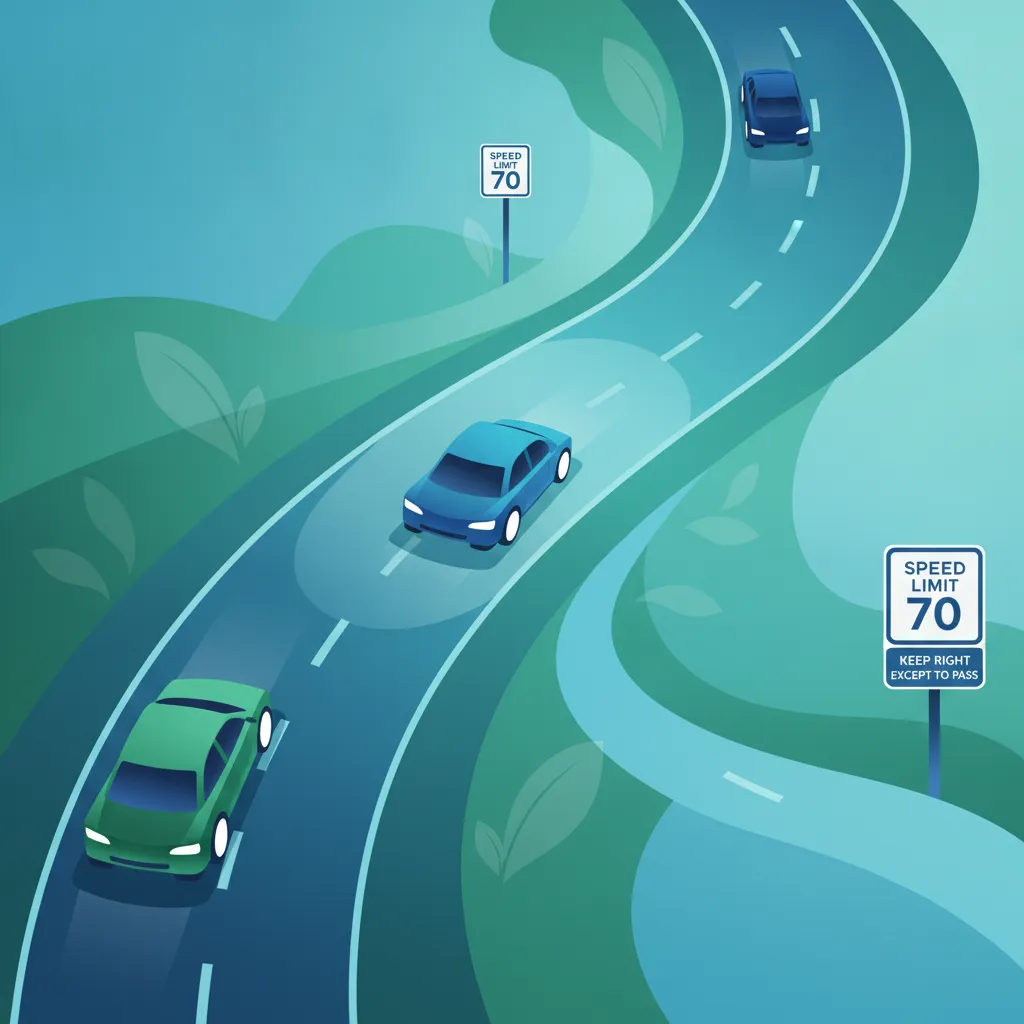
This lesson explains the specific rules, driving etiquette, and safety protocols for operating a vehicle on high-speed Turkish motorways. It covers correct lane usage, overtaking procedures, emergency lane restrictions, and how to maintain consistent high speeds safely. Drivers will learn to avoid dangerous tailgating and sudden lane changes.
In this lesson, learners will gain comprehensive knowledge of safe overtaking maneuvers during riding, emphasizing the importance of assessing traffic flow, checking blind spots, and signaling intentions. The content covers overtaking strategies on both straight roads and curves, considering visibility and speed differentials. By mastering these techniques, motorcyclists can execute overtaking safely.
This lesson examines lane division and proper lane usage on multi-lane roads and highways. Learners will understand the purpose of lane markings in guiding drivers to maintain appropriate lane discipline. Topics include correct lane selection for different vehicle types, overtaking procedures, and lane-changing techniques. Real-world examples illustrate the importance of respecting lane usage rules.
This lesson details the techniques for merging onto busy expressways and executing safe lane changes in urban traffic conditions. It explains how to match the speed of highway traffic in the acceleration lane and select safe gaps for merging. Drivers will learn how to eliminate blind spots and signal early to maintain smooth traffic flow.
In this lesson, learners explore the specific priority rules and navigation techniques for roundabouts. Topics include yielding to traffic already in the roundabout, proper lane selection upon entry, and safe exit strategies. The lesson also addresses interactions with pedestrians and cyclists near roundabouts and the importance of maintaining appropriate speed.
This lesson focuses on the unique requirements and best practices for operating passenger vehicles on highways and expressways. Topics include maintaining appropriate speed, adhering to lane discipline, executing safe overtaking maneuvers, and managing merges and exits. Emphasis is placed on ensuring a smooth ride for passengers while integrating safely with faster-moving traffic.
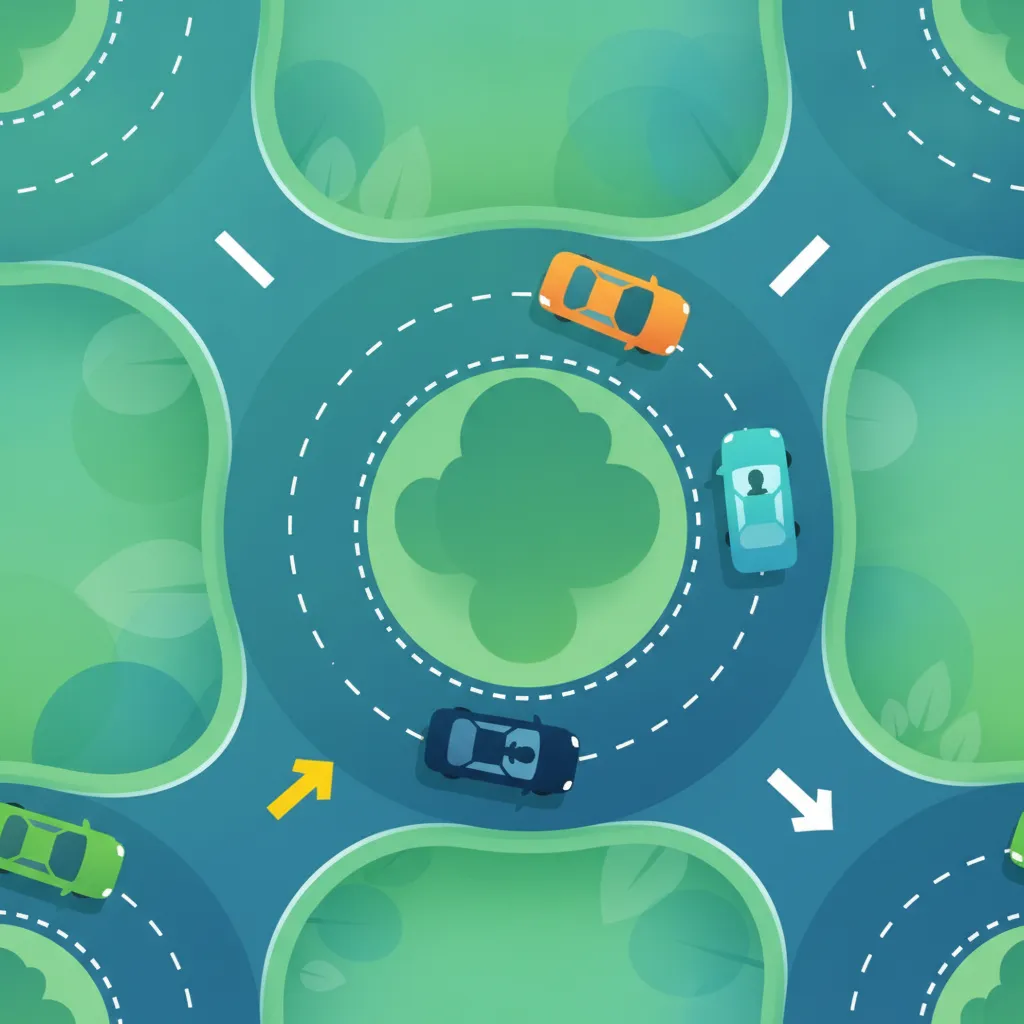
Roundabouts require a clear understanding of yield regulations and precise signaling to avoid conflicts with larger vehicles. This lesson details the legal requirements under Turkish road rules, which demand that entering vehicles yield to traffic already circulating inside the roundabout. You will learn how to select the appropriate lane upon entry, maintain a steady speed, signal your exit intentions clearly with your indicators, and remain alert to drivers who cut across lanes.
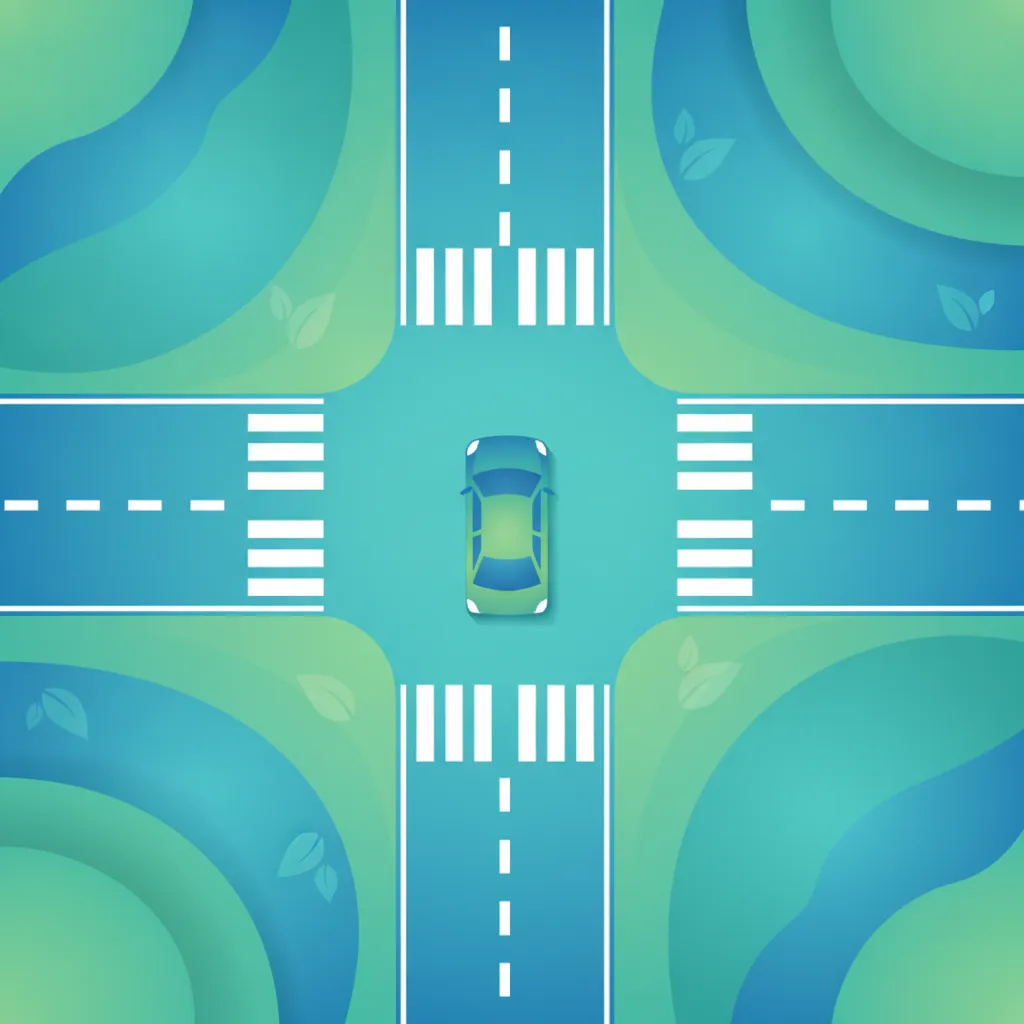
This lesson delves into horizontal road markings, focusing on solid, broken, and double lines that define lane boundaries and overtaking rules. Learners will explore the significance of each type of line in indicating permissible lane changes, passing zones, and stopping points at intersections. The lesson also covers crosswalk markings and their role in pedestrian safety.
This lesson delves into the specific challenges and procedures associated with navigating roundabouts on a motorcycle. It outlines the importance of approaching at a safe speed, selecting the correct lane, and yielding to vehicles already within the roundabout. The content also covers the proper use of signals when exiting and emphasizes the need for heightened awareness of blind spots, especially when larger vehicles are present.
Find clear answers to common questions learners have about Motorcyclist and Scooter Rider Awareness. Learn how the lesson is structured, which driving theory objectives it supports, and how it fits into the overall learning path of units and curriculum progression in Turkey. These explanations help you understand key concepts, lesson flow, and exam focused study goals.
Scooters are often faster than they appear, can accelerate quickly, and are easily hidden in your vehicle's blind spots. Always perform a thorough shoulder check to ensure no scooter is approaching in your intended lane before you turn or change direction.
When overtaking a two-wheeled vehicle, you must maintain a safe lateral distance. Never crowd them or force them to the edge of the road, as sudden gusts or road surface defects can cause them to lose balance.
Exam questions often present visual scenarios showing a motorcycle in a blind spot or near an intersection. You will be tested on whether you correctly yield, check mirrors, or position your vehicle to maintain space and avoid a collision.
While you are driving a car, you must assume they may not be as visible as larger vehicles. Respect their right to space in the lane and be prepared for them to lane-split or occupy parts of the lane where you might not expect a car.
Use our comprehensive practice search to find exactly the Turkish driving theory questions you need to master. Whether reviewing specific road signs, traffic rules, or first aid scenarios, select your perfect practice set and boost your confidence for the official ehliyet sınavı.