
This lesson focuses on the precision driving skills required for operating heavy vehicles in restricted areas like loading docks and narrow urban streets. You will learn to manage your vehicle's unique dimensions and blind spots effectively. This preparation is essential for both your professional license theory exam and for safely navigating real-world delivery environments.

Lesson content overview
Mastering the art of maneuvering heavy goods vehicles (HGVs) in tight, restricted, or congested areas is one of the most demanding tasks for professional drivers. Whether you are aiming to obtain a C1, C, C1E, or CE license in Turkey, or seeking to secure your Professional Driver Certificate (SRC Belgesi), you must develop a deep cognitive understanding of vehicle physics, spatial dynamics, and regulatory safety protocols.
In urban centers like Istanbul, Izmir, or Ankara, historic streets and dense commercial zones present daily challenges. Operating vehicles of massive dimensions and weight within these environments leaves no margin for error. This lesson details the critical competencies, physical principles, and legal frameworks under the Turkish Highway Traffic Regulation (Karayolları Trafik Yönetmeliği) required to execute precise maneuvers without compromising road safety.
Spatial awareness is a driver's ability to continuously and accurately project the physical footprint of their vehicle onto the surrounding environment. For professional drivers, this is not a passive observation but an active calculation that must account for both static dimensions and dynamic changes during movement.
While your vehicle’s static dimensions (total width, height, and length) are fixed when stationary, its dynamic footprint expands dramatically during turns and reversing maneuvers.
When navigating tight curves or narrow entryways, drivers must calculate three critical spatial phenomena:
The weight, height, and distribution of your cargo directly influence how your vehicle handles during low-speed, high-precision maneuvers.
A fully loaded vehicle reacts slower to steering inputs and requires more torque to initiate movement, which can lead to jerky, abrupt adjustments if the driver is impatient. Conversely, an empty vehicle or trailer is highly susceptible to bouncing and sudden traction loss on uneven surfaces, such as gravel-strewn loading yards.
Precision driving is the execution of minimal, deliberate steering, speed, and braking inputs to position a vehicle exactly where intended. In confined spaces, the golden rule is: Maneuver at walking pace.
To maintain absolute control, professional drivers utilize specific mechanical techniques depending on the transmission type:
Assess and Plan: Before beginning the maneuver, stop the vehicle in a safe position. Turn on your hazard warning lights (dörtlü ikaz lambaları) to alert surrounding traffic.
Get Out and Look (GOAL): Physically exit the cab to inspect the dock area, looking for ground obstacles, low-hanging overhead pipes, dock lock mechanisms, or pedestrians.
Establish the Setup: Drive past the dock opening, positioning your vehicle at an angle that minimizes the sharpness of the reverse turn (ideally a "sight-side" reverse where you turn toward the driver's side).
Execute the Reverse: Back up slowly at a steady, controlled pace. Make small steering corrections early rather than large, panicked inputs late in the maneuver.
Constant Mirror Sweeps: Continuously cycle your gaze between your left mirror, right mirror, and front fender clearance. Never focus on a single side for more than two seconds.
Final Securement: Back up until the trailer gently makes contact with the dock bumpers. Apply the parking brake (el freni), shift to neutral, and secure the wheels with wheel chocks (tekerlek takozu) if required by site safety rules.
In heavy goods vehicles, blind spots—often referred to as the "No-Zone" (kör noktalar)—are expansive. In confined spaces, these blind spots are magnified because the angle of the trailer relative to the tractor cabin blocks the view provided by standard side mirrors.
When a tractor-trailer is angled during a turn (jackknifed or articulated), the side mirrors no longer show the rear of the trailer or the path it is traveling. Instead, they show only the side of the trailer body.
Attempting to reverse blind when your trailer is articulated at a sharp angle is extremely dangerous. If you lose sight of your trailer's path in your mirrors, you must stop immediately, pull forward to straighten the vehicle, and resume only when you have regained visual reference.
To mitigate these blind spots, drivers must utilize a combination of methods:
If using a spotter, you must adhere to strict safety protocols:
The Turkish Highway Traffic Regulation (Karayolları Trafik Yönetmeliği) outlines specific legal obligations for professional drivers operating large vehicles in confined or public areas. Understanding these laws is essential for passing the Turkish state driving examinations and avoiding severe penalties.
Under Turkish traffic law, reversing maneuvers are highly restricted to protect public safety:
Drivers must pay strict attention to structural limitations signaled on approaches to tight environments. Local municipalities in Turkey install specific regulatory signs to prevent heavy vehicles from becoming wedged or damaging infrastructure.
Even experienced professional drivers can falter in confined spaces due to overconfidence, fatigue, or environmental pressures. Below are the most frequent violations and errors encountered on Turkish roads:
Your maneuvering strategies must adapt fluidly to changes in weather, light levels, and the presence of vulnerable road users.
Rain, snow, and ice drastically reduce tire-to-road friction. In tight loading yards:
Maneuvering in poorly lit urban alleys or overnight industrial zones demands extra precautions:
In Turkish urban centers, delivery scooters, pedestrians, and street vendors frequently occupy the roadways.
To ensure safety and efficiency in all confined space operations, keep these fundamental principles in mind:
This lesson covers the spatial physics and precision techniques required to maneuver heavy goods vehicles safely in confined spaces under Turkish traffic regulations. Learners must understand how off-tracking and tail swing expand a vehicle's dynamic footprint during turns, and how load distribution affects stability and handling at low speeds. The Turkish Highway Traffic Regulation (Articles 137-138) strictly limits reversing on public roads and mandates spotter use when visibility is restricted, assigning primary liability to drivers who fail to comply. Blind spot management combines systematic mirror checks, the GOAL walk-around principle, and trained spotters with agreed hand signals. Mastery of controlled low-speed techniques, awareness of dimension limit signs, and constant vigilance for vulnerable road users form the core competencies for both the theory exam and professional driving practice.
A short set of high-value points that capture the most important learning from this lesson.
Heavy vehicles have an expanded dynamic footprint during turns due to off-tracking and tail swing that must be calculated before every maneuver
The GOAL principle (Get Out And Look) is a non-negotiable safety habit, not an admission of poor skill
Air brake lag causes a fraction-of-a-second delay that requires proactive, smooth braking inputs rather than sudden corrections
Under Turkish traffic law, reversing a heavy commercial vehicle in public areas requires a spotter when visibility is restricted, and failure to use one assigns primary liability to the driver
Proactive spatial planning means knowing height, width, and weight limits before entering any confined space
Explore all units and lessons included in this driving theory course.
Off-tracking (aks sapması) causes rear wheels to cut inside the front wheel path; longer wheelbases produce more severe off-tracking
Tail swing (arka sarkma) swings the rear corner opposite to the turn direction and can strike adjacent structures or vehicles
Width limit signs (TT-12) and height limit signs (TT-13) are municipal regulatory signs that carry administrative fines under Article 65
If mirrors show only the trailer side during a jackknifed angle, stop immediately and pull forward to straighten before continuing
Differential locks (diferansiyel kilidi) should be engaged on wet metal dock surfaces to prevent traction loss
Attempting to squeeze through narrow gaps without accounting for protruding mirrors, exhaust stacks, or cargo tie-downs that add to overall width
Turning too sharply at intersections, causing the rear overhang to swing onto sidewalks and strike pedestrians or infrastructure
Making large, panicked steering corrections late in a maneuver instead of small early adjustments during slow-speed reversing
Failing to activate hazard warning lights (dörtlü ikaz lambaları) before starting a confined-space maneuver on a public roadway
Relying solely on mirrors during jackknifed reversing without exiting the cab to physically verify the path
Lesson content overview
A short set of high-value points that capture the most important learning from this lesson.
Heavy vehicles have an expanded dynamic footprint during turns due to off-tracking and tail swing that must be calculated before every maneuver
The GOAL principle (Get Out And Look) is a non-negotiable safety habit, not an admission of poor skill
Air brake lag causes a fraction-of-a-second delay that requires proactive, smooth braking inputs rather than sudden corrections
Under Turkish traffic law, reversing a heavy commercial vehicle in public areas requires a spotter when visibility is restricted, and failure to use one assigns primary liability to the driver
Proactive spatial planning means knowing height, width, and weight limits before entering any confined space
Explore all units and lessons included in this driving theory course.
Off-tracking (aks sapması) causes rear wheels to cut inside the front wheel path; longer wheelbases produce more severe off-tracking
Tail swing (arka sarkma) swings the rear corner opposite to the turn direction and can strike adjacent structures or vehicles
Width limit signs (TT-12) and height limit signs (TT-13) are municipal regulatory signs that carry administrative fines under Article 65
If mirrors show only the trailer side during a jackknifed angle, stop immediately and pull forward to straighten before continuing
Differential locks (diferansiyel kilidi) should be engaged on wet metal dock surfaces to prevent traction loss
Attempting to squeeze through narrow gaps without accounting for protruding mirrors, exhaust stacks, or cargo tie-downs that add to overall width
Turning too sharply at intersections, causing the rear overhang to swing onto sidewalks and strike pedestrians or infrastructure
Making large, panicked steering corrections late in a maneuver instead of small early adjustments during slow-speed reversing
Failing to activate hazard warning lights (dörtlü ikaz lambaları) before starting a confined-space maneuver on a public roadway
Relying solely on mirrors during jackknifed reversing without exiting the cab to physically verify the path
Explore search topics learners often look for when studying Maneuvering in Confined Spaces. These topics reflect common questions about road rules, driving situations, safety guidance, and lesson level theory preparation for learners in Turkey.
Browse additional driving theory lessons that cover connected traffic rules, road signs, and common driving situations related to this topic. Improve your understanding of how different rules interact across everyday traffic scenarios.
Understand the extensive no-zone blind spots inherent in heavy goods vehicles and learn legal strategies for interacting safely with pedestrians, cyclists, and motorcyclists in urban Turkish traffic environments to prevent collisions.

This lesson focuses on identifying and managing blind spots specific to goods vehicles, which are larger and have more extensive blind zones compared to standard cars. Learners will explore techniques for blind spot detection using mirrors, rearview cameras, and sensor systems, ensuring safe lane changes and maneuvering. The lesson emphasizes the importance of continuous observation and modern safety technology.

This lesson focuses on protecting vulnerable road users, such as pedestrians, cyclists, and motorcyclists, in mixed traffic environments. Learners will examine specific strategies for increased vigilance, anticipatory driving, and properly yielding to these users. The lesson also covers high-risk zones, such as school areas and public transport stops, emphasizing the need for heightened safety.

This lesson examines the critical interactions between goods vehicles and vulnerable road users such as pedestrians, cyclists, and motorcyclists, particularly in urban environments. Learners will explore right-of-way rules, maintaining safe distances, and strategies for anticipating the actions of these road users. The lesson emphasizes the importance of clear communication and protective driving.

This lesson addresses the challenges of safely reversing a goods vehicle, including the identification of blind spots and rear visibility limitations. It covers proper mirror and rearview camera usage, as well as strategies for maintaining awareness of obstacles and the trailer's path. The lesson also emphasizes the importance of reversing alarms and slow, controlled vehicle movements.

This lesson introduces the proper utilization of mirrors, rearview cameras, and additional sensor systems to enhance situational awareness for goods vehicle drivers. Learners will understand the importance of correctly adjusting mirrors for optimal coverage, interpreting camera feeds, and relying on sensor alerts. The lesson emphasizes integrating modern safety technology into daily driving practices.
Learners will identify the different categories of vulnerable road users and understand the heightened risks they face. The lesson emphasizes the importance of recognizing these users, anticipating their actions, and taking proactive measures to ensure their safety while operating passenger vehicles. Strategies for mitigating danger and fostering a protective driving environment are explored.

This lesson highlights the critical nature of blind spots for motorcyclists, teaching strategies to recognize and mitigate these hidden areas. Learners will practice techniques for checking blind spots before lane changes and overtaking, ensuring they are fully aware of surrounding traffic. The lesson emphasizes how proper mirroring and head checks can significantly reduce the risk of collisions.

Learners will examine the complexities of operating in environments where various road users, including pedestrians, cyclists, and motorcyclists, coexist. The lesson emphasizes the need for heightened situational awareness, defensive driving techniques, and proactive hazard anticipation. Strategies for navigating mixed traffic safely, especially in congested urban areas, are highlighted.

Proper road positioning is your primary shield against being squeezed, sideswiped, or overlooked by larger motor vehicles in daily traffic. This lesson explains how to ride in the center or slightly off-center of your lane to prevent unsafe overtaking within the same lane. You will study how to identify the massive blind spots of buses and trucks, maintain appropriate following distances, and execute overtaking maneuvers with maximum safety margin and clear signal warning.

This lesson explores the unique challenges encountered when driving goods vehicles on rural roads, including narrow widths, sharp curves, animal crossings, and varying road surface conditions. Learners will understand the importance of adjusting speed, maintaining vigilance, and respecting road markings. Emphasis is placed on safe navigation practices to mitigate risks associated with rural areas.
Explore the official Turkish Highway Traffic Regulation guidelines concerning vehicle dimensions, mandatory spotter use, and legal restrictions on reversing manoeuvres to ensure full compliance with professional driving theory requirements.
This lesson addresses the challenges of safely reversing a goods vehicle, including the identification of blind spots and rear visibility limitations. It covers proper mirror and rearview camera usage, as well as strategies for maintaining awareness of obstacles and the trailer's path. The lesson also emphasizes the importance of reversing alarms and slow, controlled vehicle movements.

This lesson focuses on the specific manoeuvring techniques required when operating articulated vehicles or those towing trailers. Learners will understand the dynamics of pivot points, the causes and mitigation of trailer sway, and how to execute turns safely with a trailer attached. Proper coupling checks and trailer length considerations are emphasized for safe operations on public roads.

In this lesson, learners explore the essential techniques for safe reversing. Topics include using mirrors, rearview cameras, and checking blind spots. The lesson emphasizes the importance of maintaining low speeds, checking the rear area, and being aware of obstacles. Real-world examples illustrate common reversing mistakes and how to avoid them.
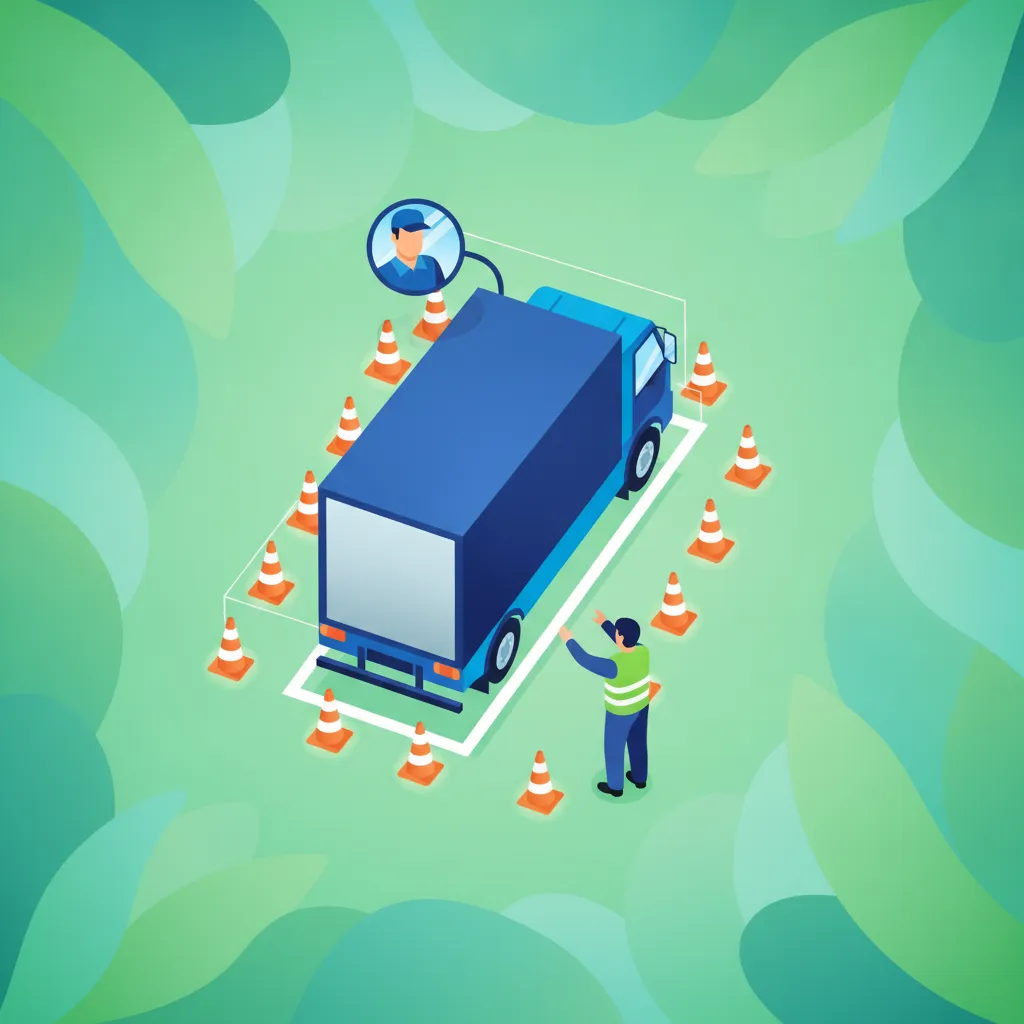
Learners will acquire skills for safely reversing large passenger vehicles in limited spaces, such as bus bays and loading docks. The lesson covers the effective use of mirrors, rear-view cameras, and precise steering inputs to navigate obstacles. Emphasis is placed on slow, controlled movements and constant observation to avoid collisions.
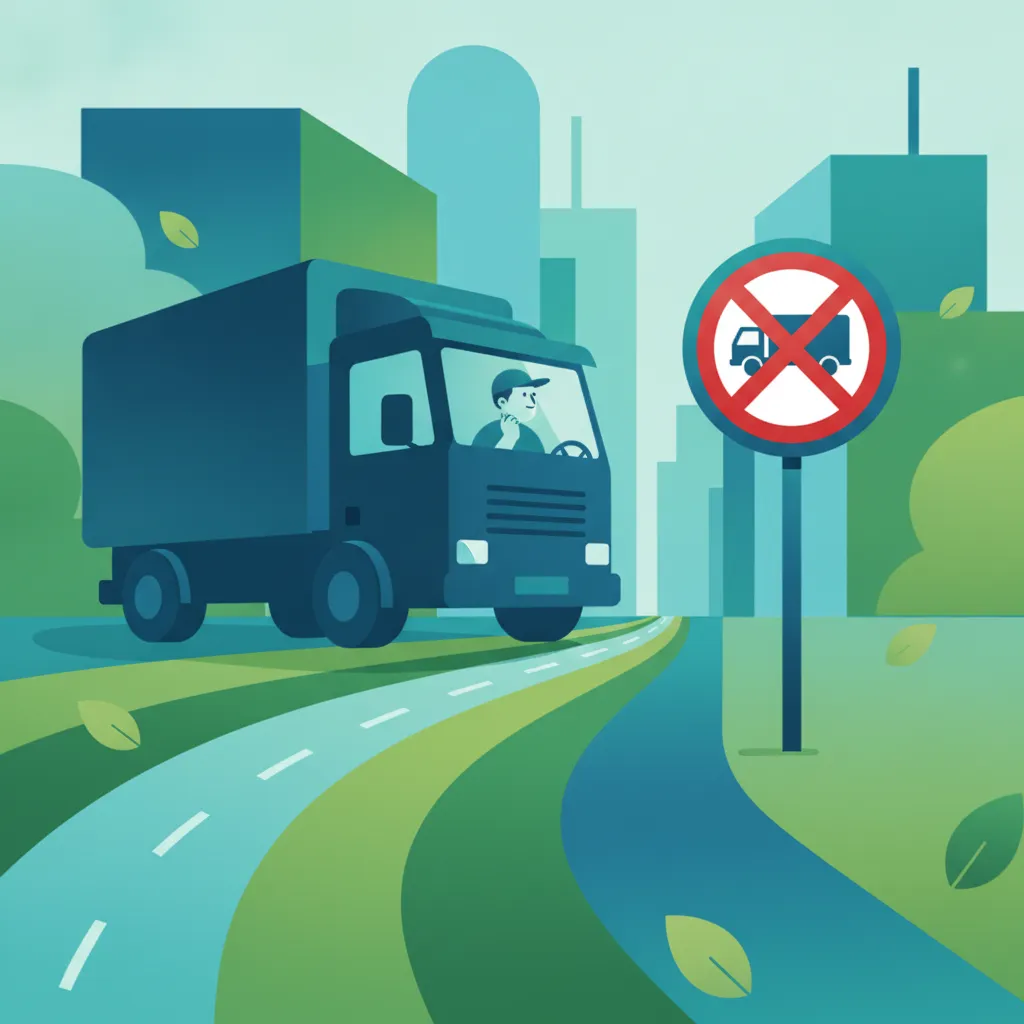
This lesson focuses on the various access restrictions imposed on heavy goods vehicles within Turkish road networks. Learners will understand the reasons for restrictions such as low bridge clearances, tunnel usage, construction zones, and urban delivery area limitations. The lesson also covers how to recognize and comply with legal notices and signage indicating restricted commercial zones.

This lesson focuses on speed regulation for goods vehicles, highlighting how vehicle weight, load, and road conditions influence safe operating speeds. Learners will understand legal speed limits for various road types and the necessity of adapting speed to traffic flow and environmental conditions. The lesson also emphasizes the importance of maintaining appropriate speed to ensure vehicle control.

This lesson examines the specific road space requirements necessary for large goods vehicles to operate safely and efficiently. Topics include the need for adequate lane width, lateral clearance, and turning lanes to accommodate wider and longer vehicles. Learners will explore the proper use of shoulders, overtaking procedures, and the impact of large vehicles on overall road capacity in traffic.

This lesson covers the techniques and safety considerations for docking a goods vehicle in loading areas and performing precision parking maneuvers. Learners will learn how to align the vehicle correctly, use reverse gears effectively, and communicate with spotters when necessary. Emphasis is placed on maintaining situational awareness, checking for obstacles, and ensuring secure dock operations.

This lesson emphasizes the critical importance of maintaining accurate and up-to-date documentation for professional goods vehicle operation. It covers essential documents such as driver's licences, vehicle registration, logbooks, cargo permits, and inspection certificates. Learners will understand the legal requirements for record keeping and the role of tachographs in monitoring driver activity.

This lesson delves into specific manoeuvring strategies required when navigating both tight urban environments and open rural roads with large passenger vehicles. Learners will explore techniques for handling narrow streets, tight turns, and intersections, while maintaining safety and efficiency. The content emphasizes planning and execution of manoeuvres based on road conditions and vehicle dimensions.
Find clear answers to common questions learners have about Maneuvering in Confined Spaces. Learn how the lesson is structured, which driving theory objectives it supports, and how it fits into the overall learning path of units and curriculum progression in Turkey. These explanations help you understand key concepts, lesson flow, and exam focused study goals.
Heavy goods vehicles have significant length and width, creating larger blind spots and a wider turning radius. Understanding these dimensions is vital to prevent collisions with infrastructure and pedestrians in confined delivery areas.
The primary rule is to never reverse if your vision is blocked without the assistance of a spotter. Always maximize the use of all available mirrors and sensors to verify the area is clear.
You must account for 'off-tracking' where the rear wheels follow a tighter path than the front. Always signal early, keep the maneuver slow, and monitor your blind spots continuously throughout the turn.
Yes, the Turkish theory exam often includes situational questions regarding the correct order of operations for docking, such as checking for clearance, using signals, and securing the vehicle upon completion.
Use our comprehensive practice search to find exactly the Turkish driving theory questions you need to master. Whether reviewing specific road signs, traffic rules, or first aid scenarios, select your perfect practice set and boost your confidence for the official ehliyet sınavı.