
This lesson guides you through the complex requirements of long-distance and intercity passenger transport in Türkiye. You will learn how to optimize route planning, manage driver fatigue, and ensure the safety and comfort of passengers on extended trips, essential skills for your Class D licence exam.
Lesson content overview
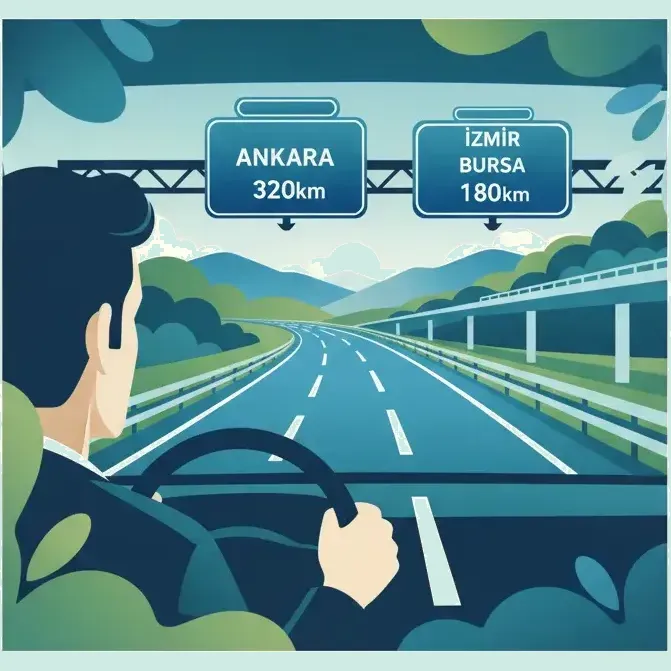
Driving large passenger vehicles over long distances is one of the most demanding tasks a professional driver can undertake. Under the Turkish Class D passenger vehicle driving licence framework, intercity transport requires far more than basic vehicle control. It demands meticulous route preparation, strict adherence to legal driving limits, active fatigue management, and constant attention to passenger welfare.
This lesson explores how to safely plan and execute long-distance journeys. You will learn how to optimize routes, schedule legally compliant rest stops, recognize the early signs of driver fatigue, and manage passenger comfort across varying terrains and weather conditions.
In professional passenger transport, route planning is a proactive safety measure. Choosing the wrong route can lead to unexpected delays, increased fuel consumption, physical wear on the vehicle, and heightened driver stress. Strategic route planning involves analyzing the path before departure to balance efficiency and safety.
Many drivers make the mistake of automatically selecting the shortest physical distance. However, the shortest route may take you through narrow secondary roads, steep mountain passes, or congested urban centers.
Passenger vehicles carrying heavy passenger and luggage loads behave differently on steep inclines and declines. When planning an intercity route, you must evaluate:
Weather is dynamic. A clear departure point does not guarantee a clear destination. Professional planning requires reviewing regional meteorological forecasts along the entire transit corridor. If heavy rain, snow, or dense fog is projected for a specific mountain pass, you should identify alternative routes or schedule departure times to avoid crossing these areas during peak hazard windows.
Driver fatigue is one of the leading causes of severe accidents on intercity highways. Because passenger buses carry dozens of lives, managing physical and mental exhaustion is a non-negotiable professional responsibility.
The specific threshold at which a driver’s cognitive and physiological performance begins to degrade rapidly due to sustained wakefulness or continuous driving. Beyond this point, reaction times, visual acuity, and decision-making abilities drop exponentially.
A professional driver must never wait for "micro-sleep" to occur before taking action. You must monitor your body for the early warning signs of fatigue:
Fatigue management starts hours before you turn the ignition key. To ensure peak alertness:
To prevent commercial driver exhaustion, national and international laws strictly regulate how long a professional can sit behind the wheel. Under Turkish highway traffic regulations and aligned international agreements (like the AETR), driving and rest times are strictly monitored via digital or analogue tachographs.
As a baseline rule for long-distance driving:
Tachograph Tampering is a Severe Offense
Attempting to bypass tachograph monitoring by using another driver's card, driving without a card, or manipulating the recording device is a serious legal violation. It carries heavy financial penalties, points deduction, and can lead to the immediate suspension of your professional driver credentials (such as your SRC certificate in Turkey).
Not all stopping points are equal. When mapping your route, pre-select certified highway service areas (dinlenme tesisleri) that meet specific criteria:
Adequate Commercial Parking: Ensure the facility has designated, spacious parking bays for long passenger buses, allowing safe entry and egress without reversing in pedestrian-heavy areas.
Passenger Amenities: Choose facilities equipped with clean, accessible restrooms, food services, and secure pathways, allowing passengers to move around safely.
Vehicle Security and Maintenance: Look for well-lit rest stops that allow you to conduct a quick walk-around vehicle inspection during the break.
A long-distance journey can be physically taxing for passengers. A professional driver must manage the cabin environment and maintain clear, reassuring communication to keep passengers calm and cooperative.
Maintaining an optimal cabin temperature is essential for passenger comfort and health. Extreme heat can lead to dehydration and irritability, while extreme cold can cause physical discomfort.
While keeping passengers informed is vital, the driver's primary responsibility is driving safety. Distractions inside the cabin must be minimized.
A professional driver must continuously adapt their driving style to changing environmental conditions, vehicle weights, and seasonal changes.
To ensure safety and remain compliant with the law, you must avoid several critical operational mistakes:
You are driving a Class D passenger bus on an intercity route through a mountainous region when a sudden snowstorm hits, reducing visibility to less than 50 metres.
You are 3 hours into your driving shift, and your next scheduled rest stop is still 45 minutes away. You notice that you have drifted across the lane markings twice and are struggling to keep your eyes focused.
To further build your knowledge of commercial bus operations, explore our related articles and practice exams focusing on professional driving standards.
This lesson covers the professional responsibilities of managing long-distance intercity passenger transport in Turkey for Class D drivers. Key topics include strategic route planning that prioritizes divided highways over state roads, the critical importance of fatigue management with defined yield point thresholds, and strict adherence to Turkish driving time regulations (4.5-hour continuous limit, 45-minute mandatory breaks, 9-hour daily maximums). The lesson addresses passenger welfare through climate control and communication protocols, vehicle dynamics under load conditions, and practical scenarios including mountain weather emergencies. Understanding these elements prepares candidates for both the MTSK e-sınav and real-world professional intercity bus operations.
A short set of high-value points that capture the most important learning from this lesson.
Route planning for Class D vehicles should prioritize divided highways (otoyollar) over shorter state roads (devlet yolları) for safety and passenger comfort
The Yield Point is the critical threshold where driver performance degrades rapidly due to fatigue and requires immediate action before micro-sleep occurs
Turkish regulations mandate a maximum continuous driving period of 4.5 hours followed by a mandatory 45-minute rest break, with daily limits of 9 hours
Vehicle dynamics change significantly under load: higher center of gravity increases rollover risk on curves, and braking distances lengthen substantially
Passenger buses require pre-departure briefings, climate control between 20-22°C, and regular progress updates to maintain comfort and cooperation
Explore all units and lessons included in this driving theory course.
The tachograph is a mandatory recording device; tampering or driving without a card results in severe penalties including SRC certificate suspension
Fatigue warning signs include drifting across lane markings, missing exits, and difficulty keeping eyes focused—act immediately, not when micro-sleep begins
Never exceed the 4.5-hour continuous driving limit; stops are legally mandatory regardless of passenger schedules
In mountainous terrain, engage the retarder before descents to prevent brake fade and loss of braking power
Passengers must be kept informed about rest stops, delays, and emergency procedures through clear, concise announcements
Assuming the shortest physical route is the best choice—state highways often have lower speeds, more intersections, and agricultural traffic
Using caffeine or cold air to push through fatigue; stimulants mask drowsiness but do not restore cognitive function
Skipping mandatory rest stops because passengers decline breaks; the break is required for driver safety, not passenger preference
Stopping on the active highway shoulder during emergencies instead of reaching the next designated rest area or exit
Driving at normal speeds when weather conditions change, particularly when entering fog, rain, or snow on mountain passes
Lesson content overview
A short set of high-value points that capture the most important learning from this lesson.
Route planning for Class D vehicles should prioritize divided highways (otoyollar) over shorter state roads (devlet yolları) for safety and passenger comfort
The Yield Point is the critical threshold where driver performance degrades rapidly due to fatigue and requires immediate action before micro-sleep occurs
Turkish regulations mandate a maximum continuous driving period of 4.5 hours followed by a mandatory 45-minute rest break, with daily limits of 9 hours
Vehicle dynamics change significantly under load: higher center of gravity increases rollover risk on curves, and braking distances lengthen substantially
Passenger buses require pre-departure briefings, climate control between 20-22°C, and regular progress updates to maintain comfort and cooperation
Explore all units and lessons included in this driving theory course.
The tachograph is a mandatory recording device; tampering or driving without a card results in severe penalties including SRC certificate suspension
Fatigue warning signs include drifting across lane markings, missing exits, and difficulty keeping eyes focused—act immediately, not when micro-sleep begins
Never exceed the 4.5-hour continuous driving limit; stops are legally mandatory regardless of passenger schedules
In mountainous terrain, engage the retarder before descents to prevent brake fade and loss of braking power
Passengers must be kept informed about rest stops, delays, and emergency procedures through clear, concise announcements
Assuming the shortest physical route is the best choice—state highways often have lower speeds, more intersections, and agricultural traffic
Using caffeine or cold air to push through fatigue; stimulants mask drowsiness but do not restore cognitive function
Skipping mandatory rest stops because passengers decline breaks; the break is required for driver safety, not passenger preference
Stopping on the active highway shoulder during emergencies instead of reaching the next designated rest area or exit
Driving at normal speeds when weather conditions change, particularly when entering fog, rain, or snow on mountain passes
Explore search topics learners often look for when studying Managing Long-Distance Routes and Intercity Travel. These topics reflect common questions about road rules, driving situations, safety guidance, and lesson level theory preparation for learners in Turkey.
Browse additional driving theory lessons that cover connected traffic rules, road signs, and common driving situations related to this topic. Improve your understanding of how different rules interact across everyday traffic scenarios.
Understand the official regulations governing continuous driving limits, mandatory rest breaks, and tachograph usage for professional drivers. Learn how to recognize the physiological signs of fatigue and maintain high safety standards in line with Turkish traffic legislation and commercial transport protocols.
This lesson focuses on recognizing the signs of driver fatigue and implementing effective strategies to manage it while operating a goods vehicle. Learners will understand the health risks associated with prolonged driving periods, the importance of regular rest breaks, and techniques to maintain alertness. Emphasis is placed on fatigue mitigation measures to ensure safe driving and prevent accidents.

Learners will explore the risks associated with driver fatigue, distraction, and stress, particularly during long trips with passengers. The lesson provides strategies for recognizing fatigue, scheduling appropriate rest breaks, and employing techniques to maintain focus and reduce stress. Emphasis is placed on the impact of these factors on safety and passenger comfort.

This lesson focuses on the extreme dangers of driver fatigue, micro-sleep episodes, and the signs of physical exhaustion. It details how sleep deprivation compromises driving safety in a manner comparable to moderate alcohol intoxication. Drivers will learn proactive fatigue management strategies, including scheduling regular rest stops.

This lesson details the processes involved in terminal operations and the planning of rest stops for passenger vehicles. Learners will learn about safe and efficient procedures for passenger boarding and alighting at terminals, coordinating schedules, and performing safety checks. The importance of selecting appropriate rest areas and managing breaks for both drivers and passengers is emphasized.

Learners will understand the importance of ergonomic adjustments for both driver and passenger welfare, covering seat positioning, steering wheel adjustments, mirror settings, and control accessibility. The lesson emphasizes how proper ergonomics can reduce driver fatigue, improve reaction times, and enhance overall safety. Drivers will learn to customize their vehicle setup to suit their own needs and those of their passengers.
Learn how passenger load, vehicle weight, and center of gravity influence braking distances and steering control. This guide explains how to adjust driving techniques for mountainous terrain, varying weather conditions, and highway driving to ensure passenger safety and vehicle stability during intercity travel.

The lesson examines how the physical dimensions of passenger vehicles influence their handling, maneuverability, and blind spot areas. Learners will understand the effects of length, width, height, and wheelbase on turning radius, lane changes, and overall vehicle stability. Grasping these concepts is essential for safe operation in varied traffic environments and tight spaces.

This lesson focuses on the unique requirements and best practices for operating passenger vehicles on highways and expressways. Topics include maintaining appropriate speed, adhering to lane discipline, executing safe overtaking maneuvers, and managing merges and exits. Emphasis is placed on ensuring a smooth ride for passengers while integrating safely with faster-moving traffic.

This lesson addresses the techniques required for safely navigating grades and slopes with heavy goods vehicles. Learners will explore the use of engine braking, proper gear selection, and auxiliary retarders to manage speed on steep downhill sections. The lesson also covers strategies for starting on uphill grades without rollback, considering vehicle weight and load distribution.

Learners will explore techniques for adjusting driving styles based on different road surface conditions, such as gravel, potholes, and wet pavement. The lesson emphasizes the importance of adapting speed, braking, and steering inputs to maintain vehicle control and passenger comfort. Strategies for detecting and responding to road hazards are discussed to ensure safety across diverse driving environments.

This lesson delves into specific manoeuvring strategies required when navigating both tight urban environments and open rural roads with large passenger vehicles. Learners will explore techniques for handling narrow streets, tight turns, and intersections, while maintaining safety and efficiency. The content emphasizes planning and execution of manoeuvres based on road conditions and vehicle dimensions.

This lesson examines the effects of load dynamics on vehicle stability during acceleration and deceleration. Learners will learn how cargo can shift and affect handling, particularly during sudden speed changes or emergency braking situations. The lesson emphasizes proper load securing, gradual acceleration, and controlled braking to maintain stability and prevent serious accidents.

Learners will explore methods for achieving smooth acceleration and deceleration, focusing on gradual throttle application and progressive brake pressure to maintain passenger comfort and vehicle stability. The lesson highlights the importance of anticipating road conditions and traffic flow to avoid abrupt speed changes, thereby enhancing safety and reducing fuel consumption.

This lesson delves into the concept of centre of gravity and its critical impact on the stability of goods vehicles. Learners will explore how load height and distribution affect side and dynamic stability, particularly during braking, cornering, and evasive maneuvers. The lesson explains the increased rollover risk associated with a high centre of gravity and provides strategies for managing weight.
Learners will understand the importance of ergonomic adjustments for both driver and passenger welfare, covering seat positioning, steering wheel adjustments, mirror settings, and control accessibility. The lesson emphasizes how proper ergonomics can reduce driver fatigue, improve reaction times, and enhance overall safety. Drivers will learn to customize their vehicle setup to suit their own needs and those of their passengers.

This lesson delves into the principles of weight distribution and load limits for goods vehicles, emphasizing the impact on vehicle stability and safety. It examines the concept of Gross Vehicle Weight (GVW) and the legal limits imposed on individual axles to prevent overloading. Learners will explore how improper weight distribution affects the centre of gravity, braking performance, and handling characteristics.
Find clear answers to common questions learners have about Managing Long-Distance Routes and Intercity Travel. Learn how the lesson is structured, which driving theory objectives it supports, and how it fits into the overall learning path of units and curriculum progression in Turkey. These explanations help you understand key concepts, lesson flow, and exam focused study goals.
The primary focus is strictly adhering to driving time limits and mandatory rest periods to prevent driver fatigue, which is a major contributor to traffic accidents in passenger transport.
As a professional Class D driver, you should remain calm, use clear communication to de-escalate the situation, and if safety is threatened, stop the vehicle at the nearest safe location or terminal to involve authorities.
Yes, passenger vehicles must adhere to specific speed limits, lane usage rules, and are often restricted from certain lanes on motorways to ensure smooth traffic flow and safety for all road users.
You must account for height restrictions on bridges, width limitations on rural roads, and weight limits on specific routes to ensure the vehicle does not become trapped or cause structural damage.
Use our comprehensive practice search to find exactly the Turkish driving theory questions you need to master. Whether reviewing specific road signs, traffic rules, or first aid scenarios, select your perfect practice set and boost your confidence for the official ehliyet sınavı.