
Fog is one of the most hazardous weather conditions for drivers due to its severe impact on visibility. This guide outlines how to adapt your speed, maintain safe distances, and properly use your vehicle's lighting to reduce risk. Understanding these principles is key to preventing accidents and confidently handling challenging conditions in Türkiye.
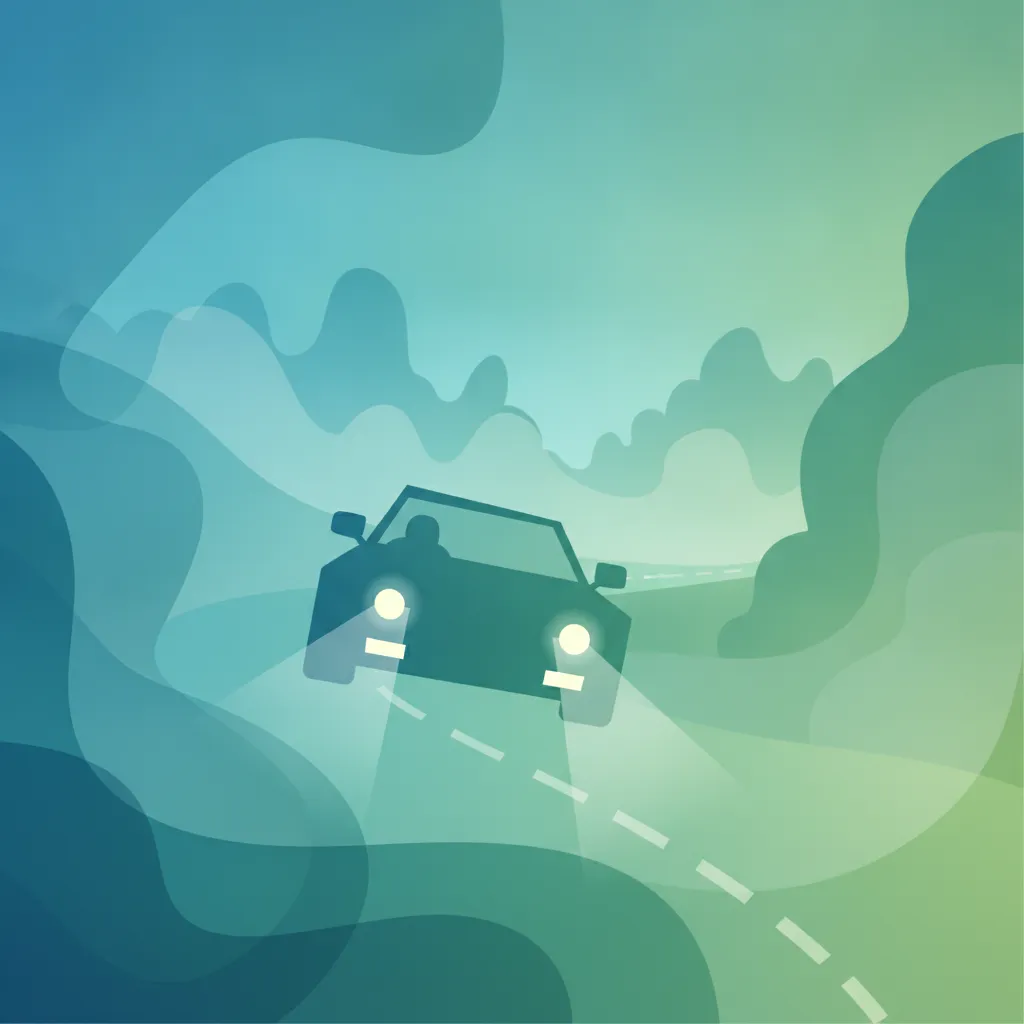
Theory topic content overview
Read the full theory topic guide for Fog Driving Rules with structured, easy-to-scan content built for learners in Turkey. This detailed section explains the exact rule, meaning, traffic context, comparison points, and exam logic behind this Turkish driving theory topic so you can study faster, understand the concept more clearly, and avoid common interpretation mistakes on the theory test.
Driving in fog, a common atmospheric condition in many parts of Türkiye, presents one of the most challenging and hazardous situations for drivers. Fog severely restricts your ability to see the road ahead, other vehicles, pedestrians, and traffic signs, demanding significant adjustments to your driving behavior. The core principle for safe driving in fog is simple yet critical: your speed must allow you to stop safely within the distance you can see clearly. This fundamental rule is paramount for preventing accidents and is a key concept tested in the ehliyet sınavı (Turkish driving theory exam).
Fog reduces your visible distance, compressing the time you have to react to hazards. What might be a safe speed on a clear day becomes dangerously fast in foggy conditions, increasing the risk of rear-end collisions, running off the road, or encountering unexpected obstacles without enough time to respond.
The dangers of driving in fog are multifaceted. Beyond severely reduced visibility, fog can create a disorienting effect, making it difficult to judge distances and speeds of other vehicles. This disorientation contributes to:
For the Turkish driving licence theory exam (ehliyet sınavı), questions about driving in adverse weather like fog are common. Examiners often test your understanding of:
Mastering these concepts is not just for passing the exam; it's about real-world survival and safety on Türkiye's roads.
Navigating safely through fog requires a disciplined approach, focusing on controlling what you can: your speed, your vehicle's visibility, and your awareness.
This is the most important adjustment. The denser the fog, the slower you must go.
Proper lighting ensures you can see and, more importantly, be seen by other drivers.
kısa hüzmeli farlar): Always switch on your low beam headlights. These illuminate the road effectively without reflecting light back into your eyes, which high beams (uzun hüzmeli farlar) would do.Fog compresses your perception of distance and reaction time.
Fog demands your undivided attention.
In very dense fog, drivers might have to pull over.
dörtlü flaşörler) to alert other drivers.The impact of fog can vary based on several factors:
Confusion often arises regarding which lights to use in fog.
kısa hüzmeli farlar) are essential as they direct light downwards and forward, minimizing glare. High beams (uzun hüzmeli farlar) reflect off fog and blind you. This distinction is a frequent point in the ehliyet sınavı.Consider these common scenarios in Türkiye:
trafik işaretleri (traffic signs) that might indicate upcoming exits or changes.Many drivers underestimate the dangers of fog or misuse their vehicle's features:
When fog descends on Turkish roads, your motto should be: "See less, slow down more, light up wisely, and be hyper-aware."
Always:
These actions are critical for your safety, the safety of others, and for correctly answering questions related to ehliyet sınavı about adverse weather conditions.
Driving in fog requires significant adjustments to speed, lighting, and following distance because visibility is severely reduced. The fundamental rule is that you must always be able to stop within the distance you can see clearly. Use low beam headlights and fog lights (front and rear) while never using high beams, which create dangerous glare. Increase your following distance to at least double normal spacing, use road markings to stay in lane, and if visibility becomes zero, pull over safely and activate hazard lights. These principles are frequently tested in the Turkish ehliyet sınavı and are essential for real-world safety on Turkish roads.
A short set of high-value points that capture the most important ideas from this theory explanation.
Your speed must always allow you to stop completely within the distance you can actually see ahead
Use low beam headlights and fog lights (front and rear) in fog; never use high beams as they create dangerous glare
Increase your following distance to at least double or triple the normal gap to allow more reaction time
Use road markings as your lane guide when visibility is severely reduced
Rear fog lights make your vehicle visible from behind but must be switched off when visibility improves to avoid dazzling other drivers
High beam headlights reflect off fog particles and blind you—always use low beams instead
Daytime Running Lights (DRLs) are not sufficient for fog; they do not illuminate the road or penetrate fog effectively
Front fog lights help you see the road; rear fog lights help others see you—both are designed for visibility below 100 meters
Open your window slightly in dense fog to listen for vehicles or hazards you cannot yet see
If visibility becomes zero, pull over as far as possible and activate hazard warning lights
Driving too fast for the conditions and being unable to stop within the visible distance
Using high beam headlights instead of low beams, which worsens visibility for yourself and others
Not activating rear fog lights, making the vehicle nearly invisible to drivers approaching from behind
Following the taillights of the vehicle ahead too closely without maintaining independent safe spacing
Relying on other vehicles' lights as a guide rather than monitoring speed and distance yourself
Start with a short, direct summary of Fog Driving Rules before reading the full explanation below.
When driving in fog, you must significantly reduce your speed to be able to stop within the visible distance ahead. Turn on your headlights and fog lights (if equipped) to improve your own visibility and make your vehicle visible to others. Increase your following distance to allow more reaction time and avoid sudden braking. Remain highly alert for unexpected hazards and follow road markings carefully.
Review the most important terms, rule signals, and traffic concepts linked to Fog Driving Rules.
Explore related theory topic pages connected to Fog Driving Rules and continue with the next useful rule explanation.
See the common search queries learners use when trying to understand Fog Driving Rules in Turkey.

Dive deeper into specific Turkish driving theory topics like traffic signs, first aid, or vehicle mechanics. Each section offers clear explanations to enhance your understanding of official traffic legislation and prepare you effectively for every aspect of your upcoming ehliyet exam in Türkiye.
Explore Turkish Driving Theory TopicsTheory topic content overview
A short set of high-value points that capture the most important ideas from this theory explanation.
Your speed must always allow you to stop completely within the distance you can actually see ahead
Use low beam headlights and fog lights (front and rear) in fog; never use high beams as they create dangerous glare
Increase your following distance to at least double or triple the normal gap to allow more reaction time
Use road markings as your lane guide when visibility is severely reduced
Rear fog lights make your vehicle visible from behind but must be switched off when visibility improves to avoid dazzling other drivers
High beam headlights reflect off fog particles and blind you—always use low beams instead
Daytime Running Lights (DRLs) are not sufficient for fog; they do not illuminate the road or penetrate fog effectively
Front fog lights help you see the road; rear fog lights help others see you—both are designed for visibility below 100 meters
Open your window slightly in dense fog to listen for vehicles or hazards you cannot yet see
If visibility becomes zero, pull over as far as possible and activate hazard warning lights
Driving too fast for the conditions and being unable to stop within the visible distance
Using high beam headlights instead of low beams, which worsens visibility for yourself and others
Not activating rear fog lights, making the vehicle nearly invisible to drivers approaching from behind
Following the taillights of the vehicle ahead too closely without maintaining independent safe spacing
Relying on other vehicles' lights as a guide rather than monitoring speed and distance yourself
Start with a short, direct summary of Fog Driving Rules before reading the full explanation below.
When driving in fog, you must significantly reduce your speed to be able to stop within the visible distance ahead. Turn on your headlights and fog lights (if equipped) to improve your own visibility and make your vehicle visible to others. Increase your following distance to allow more reaction time and avoid sudden braking. Remain highly alert for unexpected hazards and follow road markings carefully.
Review the most important terms, rule signals, and traffic concepts linked to Fog Driving Rules.
Explore related theory topic pages connected to Fog Driving Rules and continue with the next useful rule explanation.
See the common search queries learners use when trying to understand Fog Driving Rules in Turkey.
Dive deeper into specific Turkish driving theory topics like traffic signs, first aid, or vehicle mechanics. Each section offers clear explanations to enhance your understanding of official traffic legislation and prepare you effectively for every aspect of your upcoming ehliyet exam in Türkiye.
Explore Turkish Driving Theory TopicsUse this exam-focused revision tip to understand how Fog Driving Rules is likely to appear in theory questions for learners in Turkey. This section helps you identify the most testable part of the rule, avoid common traps, and remember the concept more effectively during Turkish driving theory exam preparation.
The Turkish ehliyet sınavı frequently tests your knowledge of driving in adverse weather. Remember that in fog, your primary actions are to REDUCE SPEED and use the CORRECT LIGHTING (low beams and fog lights). Do not use high beams, and always increase your following distance. These are common traps in theory questions.
Read direct answers to the most common learner questions about Fog Driving Rules in Turkey. This FAQ focuses on rule confusion, practical meaning, comparison with similar concepts, and the exact uncertainties that appear most often in Turkish driving theory revision and exam preparation.
The primary danger is severely reduced visibility, which limits your ability to see the road, other vehicles, pedestrians, and obstacles, significantly increasing the risk of collision.
You must drive at a speed that allows you to stop safely within the distance you can clearly see ahead, which often means much slower than the posted speed limit.
Front fog lights should be used when visibility is significantly reduced, typically below 50 meters. Rear fog lights are for extremely poor visibility to make your vehicle more visible from behind.
While not all vehicles have them, if your vehicle is equipped with fog lights, you are expected to use them appropriately in foggy conditions as per traffic regulations.
Fog does not directly affect the physical stopping distance of your vehicle, but it drastically reduces your reaction time because you see hazards later, effectively shortening your 'safe' stopping distance.
No, you should never use high beams in fog. The intense light reflects off the fog droplets, creating glare and making visibility even worse. Use low beams and fog lights instead.
You should significantly increase your following distance in fog, leaving much more space than you would in clear conditions. A good rule of thumb is to maintain at least a 4-second gap, or even more if visibility is extremely poor.
Maintain a low speed, listen for traffic you cannot see, use your wipers to keep your windshield clear, and be extra cautious at intersections and crossings. Avoid distractions and focus entirely on the road.
While there isn't a specific 'fog ahead' permanent sign, advisory signs may indicate areas prone to fog. Drivers must always adapt to actual conditions regardless of signage.
If visibility becomes extremely poor, it's safest to pull over to a safe location away from the road, turn on your hazard warning lights, and wait for the fog to clear or improve.
Yes, poor visibility due to fog is a key factor in traffic and environment rules concerning safe driving practices, emphasizing driver responsibility to adapt to hazardous conditions and prevent accidents.
In Türkiye, hazard lights should generally only be used when your vehicle is stationary and posing a hazard. Do not use them while driving as it can confuse other drivers about your intentions.
Road markings become even more critical in fog as they can provide the only clear guidance for lane positioning. Pay close attention to lane lines, edge lines, and other markings.
Ensure your headlights, tail lights, and fog lights are clean and working correctly. Check your tires and ensure your windshield wipers and defroster are functional for maximum visibility.
Use our comprehensive practice search to find exactly the Turkish driving theory questions you need to master. Whether reviewing specific road signs, traffic rules, or first aid scenarios, select your perfect practice set and boost your confidence for the official ehliyet sınavı.