This lesson explores critical methods to maximize your visibility on French roads, helping you prevent accidents caused by drivers failing to see motorcyclists. You will learn about the legal requirements for reflective equipment, proper lighting configurations, and effective positioning to ensure you remain visible in all riding conditions.

Lesson content overview
One of the greatest safety challenges you will face as a motorcyclist under the French Code de la route is conspicuity—your ability to be seen by other road users. Due to their narrow profile, motorcycles are easily overlooked, leading to the common and dangerous "sorry mate, I didn't see you" (L'accident de type "je ne l'ai pas vu") collision.
This lesson covers the critical principles of active and passive visibility. You will study how high-visibility clothing, legally mandated retro-reflective elements, vehicle headlights, auxiliary lighting, and reflectors (catadioptres) work together to create a multi-layered safety bubble around you.
To ride defensively, you must understand why car drivers frequently fail to perceive motorcyclists. Human visual perception is highly optimized for detecting large, moving masses (like cars and trucks). A motorcycle's front silhouette is incredibly compact, measuring only a fraction of a car's width.
This compact silhouette causes two primary visual errors for other drivers:
By actively managing your visibility through high-visibility clothing and smart light management, you provide other drivers with clear, distinct visual cues that trigger immediate recognition and faster reaction times.
Rider apparel is your primary tool for daytime and nighttime passive safety. However, not all bright clothing behaves the same way. To maximize safety, you must understand the distinction between fluorescent and retro-reflective materials.
Material containing special pigments that absorb invisible ultraviolet (UV) light from the sun and re-emit it as highly visible, bright light. This effect is exceptionally powerful during daytime, twilight, and overcast conditions.
Material engineered with microscopic glass beads or prisms that bounce incoming light (such as a car's headlights) directly back to its source, rather than scattering it in all directions. This is the primary mechanism for nighttime visibility.
While a bright red or green jacket might seem highly visible during a sunny afternoon, it loses almost all its effectiveness at night because standard colored fabrics perform diffuse reflection, scattering light. Without retro-reflective strips, you remain practically invisible to drivers whose headlights are pointed at you in pitch-black conditions.
In France, helmet safety standards also reinforce this principle. Every helmet sold and used in France must be equipped with four approved retro-reflective stickers (autocollants réfléchissants)—one on each side (front, rear, left, right)—to ensure 360-degree night visibility.
Under the French Code de la route (Article R312-1), motorcycle lighting serves a dual purpose: it illuminates your path and makes your presence known to traffic during daylight hours.
Motorcycles of all engine capacities (including A1, A2, and Category A) must ride with their dipped beams (feux de croisement) switched on during the day. This legal requirement distinguishes motorcycles from passenger cars during daylight hours and helps counter the compact silhouette effect.
Modern motorcycles sold in Europe are equipped with automatic Daytime Running Lights (DRL) or automatic headlight ignition upon starting the engine, ensuring compliance with this safety regulation.
Knowing when to adjust your beam intensity is essential for both your visibility and the safety of oncoming drivers:
Many riders choose to install auxiliary lights (feux additionnels) to improve their visual footprint. However, these additions must comply with strict vehicle standards to avoid penalties during roadside inspections.
Auxiliary fog lights are designed to project a low, wide beam close to the ground, cutting beneath suspended moisture to illuminate the road edges without self-dazzling the rider. Under French law, you may only use fog lights during:
Using high-intensity fog lights on a clear night is illegal and can result in a fine, as it dazzles oncoming motorists and obscures your indicators.
Advanced modern motorcycles feature cornering lights that automatically activate when the motorcycle leans. Because a motorcycle's standard headlight pitches downward into the turn when leaning, cornering lights illuminate the inside of the curve, allowing you to spot hazards early.
If your electrical system fails or your motorcycle is parked in a dark area, your passive reflectors (catadioptres) are your final line of defense. The French Highway Code outlines specific requirements for these non-electrical reflective units.
Since 1st January 2016, French traffic law (Article R412-19 of the Code de la route) requires all riders of two- or three-wheeled motor vehicles to carry a CE-compliant high-visibility yellow or orange retro-reflective vest (gilet de haute sécurité).
Carrying the Vest: You must carry the reflective vest on board the motorcycle at all times. It can be stored under the seat, in a top box, in a tank bag, or in an easily accessible pocket of your riding gear. It does not need to be worn while riding under normal conditions, though you may choose to do so.
Emergencies and Breakdowns: If you are forced to make an emergency roadside stop or if your vehicle breaks down on the shoulder, you must put on the high-visibility vest before dismounting your motorcycle.
Roadside Inspection Fines: If a law enforcement officer stops you and you cannot present your high-visibility vest, you face a class 1 fine (typically €11).
Emergency Non-Compliance Fines: If you stop on the roadside in an emergency and fail to wear your vest, you face a class 4 fine (typically €135).
The goal of this law is to ensure that if you are stranded on a fast-moving road or motorway (autoroute), you are visible to other vehicles from a safe distance, preventing secondary collisions.
Your visibility strategy must adapt to the specific driving environment and weather conditions:
Rain significantly decreases visibility by dispersing headlight beams. Water on your visor also distorts light sources, creating visual glare. Additionally, wet asphalt absorbs light instead of reflecting it, rendering your headlights less effective. In heavy rain, always wear your high-visibility vest or a high-visibility jacket overlay.
Twilight is one of the most dangerous times to ride. The human eye struggles to adapt to the transitioning ambient light, and contrast decreases dramatically. While headlights should be on, your fluorescent clothing becomes your most effective safety tool during these hours, as it converts UV light to stand out against the grey surroundings.
In large cities, you must fight to stand out. Avoid lane filtering (intersiles) without checking that your dipped beams are clean and fully operational. Keep your lateral positioning dynamic to prevent lingering in drivers' blind spots, and rely on your side reflectors when passing cross-streets.
Avoid these common misconceptions that compromise rider safety:
Explore all units and lessons included in this driving theory course.
Lesson content overview
Explore all units and lessons included in this driving theory course.
Explore search topics learners often look for when studying Rider Visibility: Clothing, Lights, and Reflectors. These topics reflect common questions about road rules, driving situations, safety guidance, and lesson level theory preparation for learners in France.
Browse additional driving theory lessons that cover connected traffic rules, road signs, and common driving situations related to this topic. Improve your understanding of how different rules interact across everyday traffic scenarios.
Learn how to conduct continuous risk assessment and maintain a safety buffer while riding in diverse environments. This guide explains how to identify potential hazards early and apply defensive driving techniques to avoid common motorcycle accidents on French roads, focusing on anticipation and spatial awareness in complex traffic situations.

This lesson teaches you how to establish and preserve a dynamic cushion of safety on all sides of your motorcycle. You will study how to apply the 'two-second rule' to keep a safe following distance, extending it to three or more seconds in adverse weather. Additionally, you will discover how to manage tailgating motorists safely without resorting to dangerous speed increases, ensuring you always maintain a clear escape route.

This lesson covers the operational logic of traffic light signals in France, emphasizing the legal implications of the red, amber, and green cycles. You will study how to safely manage the amber phase to avoid rear-end collisions from vehicles behind while maintaining control. Additionally, you will discover the unique challenge of electromagnetic induction loops, which sometimes fail to detect lightweight motorcycles at quiet intersections.
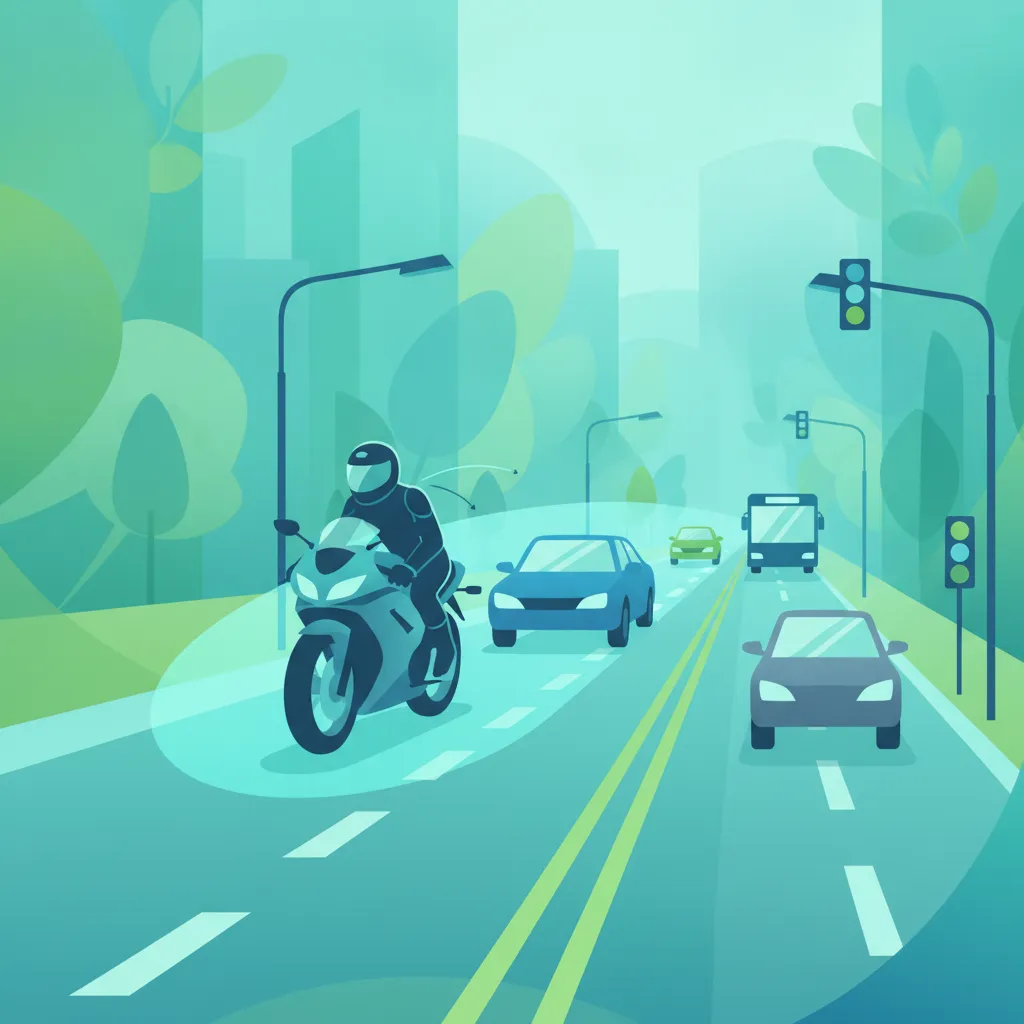
This final lesson integrates all course concepts into a single, cohesive approach to defensive riding and continuous risk assessment. You will study how to maintain a high-mileage visual lead, continuously scanning the road ahead for warning signs of conflict. By learning to assume that other motorists may not see you, you will build the proactive slowing habits and situational awareness needed to remain safe throughout your riding life.
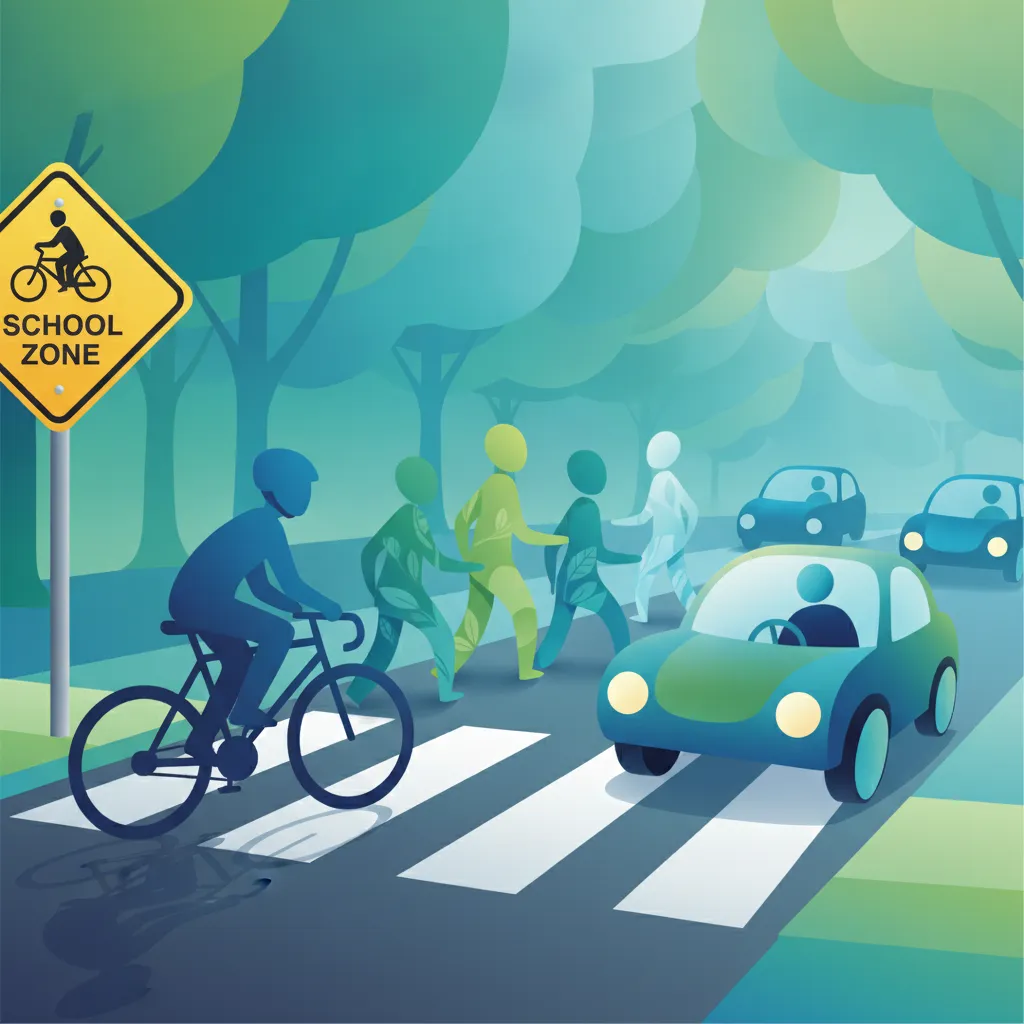
This lesson focuses on the legal requirement to yield to pedestrians on or about to step onto zebra crossings, a major focus of French road safety. You will learn how to approach school zones and pedestrian islands with heightened vigilance and reduced speed. Additionally, the lesson explores shared urban spaces, explaining how to maintain safe lateral distances when overtaking cyclists or personal electric scooters.

This lesson provides practical strategies for managing the physical demands of slow, heavily congested city traffic. You will learn how to maintain excellent low-speed balance through correct body posture, rear brake modulation, and smooth clutch control. It also emphasizes the importance of preserving an adequate safety buffer when stopping behind other vehicles, allowing an immediate escape route if you face a rear-end threat.
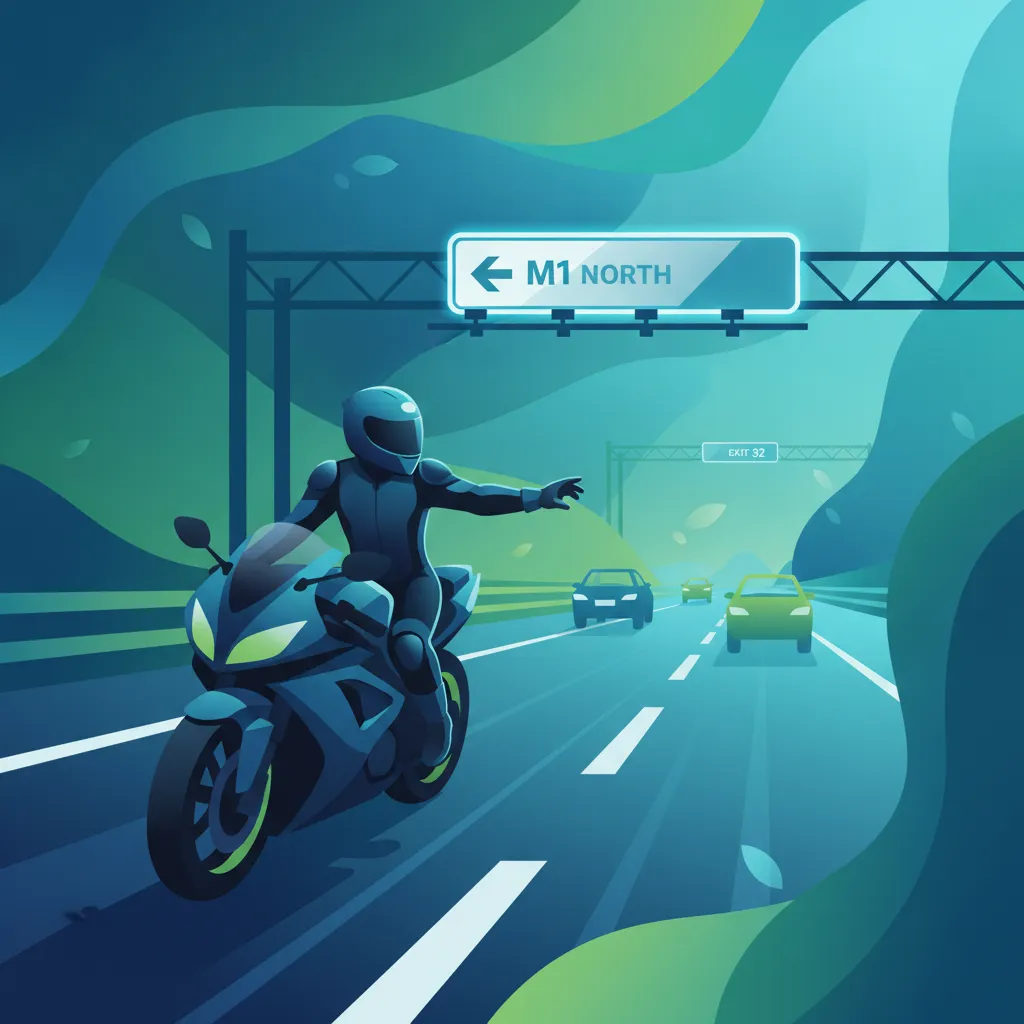
This lesson details how to safely enter, cruise on, and exit French motorways, known as autoroutes, which feature high-speed traffic flows. You will master the process of matching highway speeds in the acceleration lane and performing blind spot checks before merging. The lesson also explains correct lane positioning to avoid aerodynamic turbulences from large semi-trucks, and how to safely prepare for decelerating at exit ramps.

This lesson emphasizes that driving a motorcycle in France involves unique moral and social responsibilities towards vulnerable road users like cyclists and pedestrians. You will examine the importance of defensive riding habits, civil road etiquette, and the prioritizing of shared road safety. Understanding these principles helps to prevent dangerous situations, respect local communities, and lower overall accident statistics.

This lesson covers the strict legal conditions under which you may overtake other vehicles on French roads, including necessary visibility criteria. You will master the step-by-step process of checking rearview mirrors, performing head checks, signaling, and maintaining a safe speed differential during the pass. It also details when overtaking is strictly forbidden, such as before intersections, near pedestrian crossings, or across solid lines.

This lesson teaches critical emergency response maneuvers to help you avoid sudden, unexpected obstacles on the roadway. You will learn the exact step-by-step process of executing a rapid, controlled swerve, keeping braking forces separate from steering inputs to prevent a slide. Additionally, the lesson addresses the psychological challenge of 'target fixation' and provides techniques to keep your eyes focused on your clear escape route.

This lesson explores how dividing your travel lane into three distinct vertical zones allows you to adjust your positioning for optimal safety. You will learn to shift your line to avoid oil slicks in the lane center, road debris at the edges, and wind blasts from passing trucks. Crucially, the lesson covers how to adapt your lane position on blind bends to widen your field of vision and stay clear of oncoming traffic.
Understand the impact of heavy rain, fog, and night riding on rider conspicuity and vehicle lighting efficiency. This lesson covers how to adapt your riding style and gear usage to remain visible during poor light or environmental conditions, ensuring compliance with French traffic regulations for motorcycle lighting and safety.
This lesson provides guidance on safe riding practices during nighttime, emphasizing proper headlamp usage, reflective clothing, and strategies to manage glare from oncoming traffic. Learners will learn to compensate for reduced peripheral vision and increased fatigue, as well as to identify common night road hazards in France. By applying these techniques, riders can enhance their visibility and safety after dark.

Learners will explore techniques for maintaining control and safety while riding in rain, focusing on reduced braking efficiency, hydroplaning prevention, and visibility challenges. The lesson emphasizes appropriate speed reduction, tire condition checks, and the use of rain gear to enhance rider comfort and protection. By mastering these adaptations, riders can navigate wet French conditions with confidence.

This lesson covers the technical and behavioral adaptations needed to ride safely at night under reduced ambient lighting. You will learn the legal parameters for switching between high and low beams, and how to avoid looking directly into oncoming headlights to preserve your night vision. The lesson also emphasizes the heightened threat of rider fatigue after dark and how to utilize retro-reflective clothing to make yourself visible.

This lesson addresses the distinct safety considerations for riding during daylight hours versus nighttime, covering topics such as managing glare from the sun and ensuring adequate lighting after dark. Learners will learn strategies to maintain visibility, stay alert, and adapt riding techniques to varying light conditions, including the use of reflective gear. Emphasis is placed on proactive planning to mitigate risks associated with reduced visibility, thereby fostering safe riding practices.

This lesson focuses on adapting your riding behavior to sudden environmental shifts, such as heavy fog or strong crosswinds on exposed bridges. You will learn specific technical adjustments, including leaning slightly into crosswinds and widening your safety margins during low-visibility fog. The lesson also highlights how seasonal temperature drops affect your tires' ability to warm up and achieve reliable, safe levels of road adhesion.

This lesson addresses the unique hazards of riding a motorcycle in wet conditions, emphasizing the danger of aquaplaning. You will learn how water pooling on the asphalt can cause tires to lose direct contact with the road, leading to a complete loss of steering control. The lesson offers practical advice on reducing your speed, using smooth throttle and brake inputs, and ensuring your tires have adequate tread depth to clear water.

This lesson teaches riders how to negotiate loose surfaces such as gravel, sand, and poorly maintained urban asphalt without dropping the motorcycle. You will study correct body positioning, focusing on keeping your weight centered and your grip relaxed on the handlebars. The lesson also highlights why smooth, constant throttle delivery and avoiding abrupt front braking are essential to prevent the front wheel from washing out.
This lesson provides practical strategies for managing the physical demands of slow, heavily congested city traffic. You will learn how to maintain excellent low-speed balance through correct body posture, rear brake modulation, and smooth clutch control. It also emphasizes the importance of preserving an adequate safety buffer when stopping behind other vehicles, allowing an immediate escape route if you face a rear-end threat.
This lesson focuses on the skill of adjusting speed according to real-time road conditions, visibility, and traffic density. Learners will learn to assess factors such as weather, road surface quality, and pedestrian activity to determine a safe riding speed under French regulatory expectations. By mastering adaptive speed control, riders can enhance safety and reduce the likelihood of accidents caused by inappropriate speed.
This lesson explores how dividing your travel lane into three distinct vertical zones allows you to adjust your positioning for optimal safety. You will learn to shift your line to avoid oil slicks in the lane center, road debris at the edges, and wind blasts from passing trucks. Crucially, the lesson covers how to adapt your lane position on blind bends to widen your field of vision and stay clear of oncoming traffic.
Find clear answers to common questions learners have about Rider Visibility: Clothing, Lights, and Reflectors. Learn how the lesson is structured, which driving theory objectives it supports, and how it fits into the overall learning path of units and curriculum progression in France. These explanations help you understand key concepts, lesson flow, and exam focused study goals.
Yes, French law requires that motorcyclists carry a high-visibility retro-reflective vest or garment on board. It must be worn in the event of an emergency stop on the roadside to ensure you are visible to other traffic.
In France, it is mandatory for motorcycles to have their dipped-beam headlights on at all times, both day and night. This significantly increases your profile to other road users and is a key requirement for safe riding and theory exam success.
Beyond using your lights, avoid lingering in the blind spots of larger vehicles. Proper lane positioning that maximizes your silhouette against the background helps drivers detect you earlier, which is a frequent focus of situational awareness questions.
This refers to incidents where drivers turn into the path of a motorcycle because they failed to perceive the smaller profile of the bike. Understanding your vulnerability and actively compensating with visibility gear and positioning is a core defensive riding skill.
Ready to focus your study? Use the practice search to find exactly the French driving theory questions you need for the Code de la route and permis de conduire ETG. Refine your knowledge on specific topics or challenging rules to boost your confidence and exam readiness.