
This lesson explores the essential moral and social responsibilities every motorcyclist must uphold on French roads. It builds upon your initial understanding of motorcycle licensing to focus on how your behavior as a rider impacts overall traffic safety, particularly for vulnerable road users.

Lesson content overview
Operating a motorcycle under the French Code de la route involves far more than mastering physical control, gear shifts, and braking techniques. As a rider preparing for the French Motorcycle Theory Exam (Épreuve Théorique Moto - ETM) for Category A, A1, or A2 licenses, you must adopt a deep understanding of the moral, ethical, and legal obligations that govern shared public spaces.
Motorcycles occupy a unique position on the road: they possess high performance and acceleration capabilities, yet they offer zero structural crash protection compared to cars. Because of this dual nature—being highly motorized yet physically vulnerable—riders must develop a protective, defensive mindset. This lesson details your legal responsibilities toward other road users, the rules of civil road etiquette, and the proactive habits required to maintain safety and harmony on French roads.
French traffic law is built upon the principle of shared road responsibility (partage de la route). This concept recognizes that the road is a collective public resource. No single category of road user holds exclusive rights over the asphalt. To keep traffic flowing safely, every participant must act predictably and cooperatively.
For motorcyclists, this means accepting that your actions directly influence the safety and emotional state of those around you. Aggressive riding, unexpected lane splitting, or failing to signal does not just put you at risk; it creates panic, induces sudden braking in others, and contributes to the high accident statistics associated with two-wheelers.
The collective legal and ethical duty of all traffic participants to act in a predictable, courteous, and cooperative manner, ensuring that no action unnecessarily endangers or disrupts another road user.
The French Code de la route implicitly structures road safety around the physical vulnerability of different users. Those with the least physical protection always receive the highest level of legal safeguarding.
As a Category A1, A2, or A rider, you sit in the middle of this hierarchy. You must protect yourself from larger vehicles while actively prioritizing and protecting those more vulnerable than you, such as cyclists and pedestrians.
Defensive riding (conduite défensive) is a systematic approach to riding that reduces collision risks by anticipating hazards and adapting to the mistakes of others. You do not ride assuming that others will obey the law; instead, you ride prepared for them to make errors.
The Golden Rule of Anticipation: Never assume another driver has seen you simply because you can see them. Always look at the driver's eyes, front wheels, and indicators for clues about their next move.
Protecting pedestrians, cyclists, and other micro-mobility users is not just an ethical obligation; it is heavily enforced by French law. Violations involving vulnerable road users carry severe penalties, including steep fines and immediate driver's license point deductions.
Pedestrians in France have absolute priority when they are on a designated zebra crossing (passage piéton) or when they clearly indicate their intention to cross.
This article dictates that any driver, including motorcyclists, must yield to a pedestrian who is regularly engaged in crossing a road, or who clearly shows the intention to do so. Failing to yield to a pedestrian is a highly serious traffic offense in France. It results in:
When approaching a pedestrian crossing, you must slow down proactively. If a pedestrian is waiting at the curb, make eye contact, decelerate smoothly, and come to a complete stop to allow them to cross. Never rev your engine or creep forward while they are in front of your motorcycle, as this causes unnecessary distress.
Cyclists are highly susceptible to lateral wind currents, road debris, and sudden balance shifts. When overtaking a cyclist, you must provide a generous safety margin to prevent your motorcycle's aerodynamic wake from destabilizing them.
The French Code de la route mandates precise minimum lateral clearance distances when overtaking any two-wheeled or non-motorized vehicle (such as bicycles, horses, or pedestrians):
This rule is absolute. If the road is too narrow to allow this lateral clearance safely (for example, due to oncoming traffic or a solid white line), you must wait behind the cyclist until it is safe to pass.
Common Misconception: Some riders believe that if a cyclist is riding far to the right, they can squeeze past within the same lane. This is illegal. The 1.0m/1.5m lateral clearance must be maintained regardless of the cyclist's positioning within their lane.
While traffic laws dictate what is legal, civil road etiquette defines what makes shared spaces pleasant and safe. Adopting polite, predictable habits builds goodwill and prevents the escalations that lead to road rage.
Your turn signals (indicators) are your primary tool for communicating with other road users. Under Article R412-36 of the Code de la route, you must signal any change of direction or lateral movement.
Check Mirrors and Blind Spots: Perform a rapid mirror check followed by a direct head check (shoulder check) to cover your blind spot.
Signal Early: Activate your indicator at least 30 meters before initiating any movement (or several seconds prior on fast roads).
Execute Smoothly: Move laterally only after confirming the path is entirely clear, maintaining a steady, predictable line.
Deactivate Signal: Turn off your indicators immediately after completing the maneuver to avoid confusing riders or drivers behind you.
In France, certain informal hand gestures are widely accepted as polite communication:
Riding on sidewalks, designated bicycle lanes (pistes cyclables), or bus lanes is strictly prohibited under Article R412-9 of the Code de la route. Sidewalks are reserved exclusively for pedestrians, strollers, and disabled individuals. Parking or riding your motorcycle on a sidewalk can result in heavy fines and your vehicle being impounded.
Similarly, bicycle lanes are engineered solely for low-speed bicycle and light micro-mobility traffic. Encroaching on these lanes with a high-power motorcycle is a severe breach of both safety regulations and civic ethics.
Your ethical duties and defensive habits must scale dynamically based on your environment, the weather, and your motorcycle's loading state.
Rain, fog, snow, and twilight drastically alter both your visibility and your tires' mechanical grip on the road.
Carrying a passenger (riding "duo") or mounting heavy panniers changes the physical dynamics of your motorcycle. It increases overall weight, which:
When riding duo, your ethical responsibility is doubled. You are directly responsible for the life of your passenger. You must ride with extreme smoothness, avoid aggressive leaning, and increase all following and overtaking distances by a significant margin.
Understanding the direct physical and legal consequences of your riding choices helps reinforce the value of defensive habits.
| Action / Choice | Direct Physical Effect | Legal / Practical Consequence |
|---|---|---|
| Maintaining 2+ second following distance | Gives ample time to react to sudden braking or debris. | Avoids rear-end collisions; eliminates panic braking. |
| Failing to yield at a zebra crossing | Puts pedestrians in immediate physical danger. | 6-point deduction, heavy fine, potential license suspension. |
| Overtaking a cyclist with < 1.5m clearance | Wind wake or slight swerve can cause the cyclist to crash. | Fine for violating Article R412-9-1; high risk of severe injury. |
| Weaving aggressively through traffic | Reduces visibility; surprises other drivers; causes lane confusion. | Fines for dangerous driving; high rate of side-swipe accidents. |
| Using indicators 30m before turning | Informs other road users of your intentions. | Promotes cooperative braking and smooth lane merges. |
Let's examine how these rules and ethical considerations apply to real-world scenarios on French roads.
To pass the French ETM exam, you must be comfortable with the specific terminology used in both French and English contexts.
This lesson covers the ethical and legal obligations of motorcyclists in France, emphasizing that riders must actively protect vulnerable road users while defending themselves from larger vehicles. Key legal requirements include yielding absolute priority to pedestrians at crossings (Art. R415-11, 6 points) and maintaining mandatory lateral clearance of 1.0m in town or 1.5m outside when overtaking cyclists (Art. R412-9-1). Defensive riding principles teach continuous hazard scanning, the two-second safety cushion, escape route planning, and speed adaptation to conditions. Civil etiquette requires early signaling, proper hand gestures for acknowledgments, and avoiding restricted spaces like sidewalks and cycle lanes, while environmental factors demand doubling following distances in wet weather and adjusting handling when riding with a passenger.
A short set of high-value points that capture the most important learning from this lesson.
The French road hierarchy places pedestrians first, then cyclists and EDPM users, followed by motorcyclists, with each category owing protection to those more vulnerable below them
Defensive riding means anticipating errors from other road users rather than assuming they will obey the law
Cyclists must be passed with at least 1.0m clearance in urban areas and 1.5m clearance outside towns
Always signal lane changes and turns at least 30 meters in advance and perform head checks to eliminate blind spots
Your motorcycle must have low-beam headlights on at all times, day and night, in France
Explore all units and lessons included in this driving theory course.
Article R415-11 gives pedestrians absolute priority at zebra crossings; failure to yield costs 6 license points
Article R412-9-1 mandates minimum 1.0m lateral clearance in town and 1.5m outside when overtaking cyclists or two-wheelers
Maintain a minimum 2-second following distance under normal conditions, doubling it on wet roads
If lateral clearance cannot be safely achieved when passing a cyclist, you must wait behind them
Sidewalks, cycle lanes, and bus lanes are strictly prohibited to motorcycles under Article R412-9
Assuming that maintaining the posted speed limit is sufficient in school zones or near pedestrian crossings; defensive riders slow proactively below limits
Believing cyclists must hug the curb; the 1.0m/1.5m clearance applies regardless of the cyclist's lane position
Forgetting to deactivate turn signals after completing a maneuver, which confuses other road users
Riding with only one or two fingers covering the brake lever in high-risk zones instead of two fingers ready to brake immediately
Underestimating increased braking distance when carrying a passenger or heavy cargo and failing to adjust following gaps accordingly
Lesson content overview
A short set of high-value points that capture the most important learning from this lesson.
The French road hierarchy places pedestrians first, then cyclists and EDPM users, followed by motorcyclists, with each category owing protection to those more vulnerable below them
Defensive riding means anticipating errors from other road users rather than assuming they will obey the law
Cyclists must be passed with at least 1.0m clearance in urban areas and 1.5m clearance outside towns
Always signal lane changes and turns at least 30 meters in advance and perform head checks to eliminate blind spots
Your motorcycle must have low-beam headlights on at all times, day and night, in France
Explore all units and lessons included in this driving theory course.
Article R415-11 gives pedestrians absolute priority at zebra crossings; failure to yield costs 6 license points
Article R412-9-1 mandates minimum 1.0m lateral clearance in town and 1.5m outside when overtaking cyclists or two-wheelers
Maintain a minimum 2-second following distance under normal conditions, doubling it on wet roads
If lateral clearance cannot be safely achieved when passing a cyclist, you must wait behind them
Sidewalks, cycle lanes, and bus lanes are strictly prohibited to motorcycles under Article R412-9
Assuming that maintaining the posted speed limit is sufficient in school zones or near pedestrian crossings; defensive riders slow proactively below limits
Believing cyclists must hug the curb; the 1.0m/1.5m clearance applies regardless of the cyclist's lane position
Forgetting to deactivate turn signals after completing a maneuver, which confuses other road users
Riding with only one or two fingers covering the brake lever in high-risk zones instead of two fingers ready to brake immediately
Underestimating increased braking distance when carrying a passenger or heavy cargo and failing to adjust following gaps accordingly
Explore search topics learners often look for when studying Rider Obligations and Ethical Conduct. These topics reflect common questions about road rules, driving situations, safety guidance, and lesson level theory preparation for learners in France.
Browse additional driving theory lessons that cover connected traffic rules, road signs, and common driving situations related to this topic. Improve your understanding of how different rules interact across everyday traffic scenarios.
Learn how to anticipate hazards and adapt to the mistakes of others on the road. This guide covers the proactive mindset required to maintain a safety cushion, scan effectively for risks, and manage unpredictable situations while riding a motorcycle according to the French Code de la route.

Learners will develop the ability to anticipate potential hazards on the road, enhancing reaction times and defensive riding strategies. The lesson emphasizes constant scanning, early identification of threats such as sudden stops, pedestrian crossings, or unexpected lane changes, and appropriate response measures. By cultivating proactive risk assessment, AM riders can significantly reduce accident likelihood.

Proactive drivers scan the road constantly, detecting potential dangers before they turn into real-world emergency situations. This lesson teaches scanning techniques, the use of rear-view mirrors, and the interpretation of visual cues from other road users. You will learn to anticipate hazards like child play near roads, merging vehicles, and sudden lane changes, helping you drive defensively.
This final lesson integrates all course concepts into a single, cohesive approach to defensive riding and continuous risk assessment. You will study how to maintain a high-mileage visual lead, continuously scanning the road ahead for warning signs of conflict. By learning to assume that other motorists may not see you, you will build the proactive slowing habits and situational awareness needed to remain safe throughout your riding life.

This lesson focuses on French warning signs that alert drivers to potential hazards ahead, such as curves, animal crossings, or slippery surfaces, with particular attention to signs relevant to AM riders. Learners will examine how to interpret these signs, understand the associated risks, and adapt riding behavior accordingly. By mastering warning sign recognition, riders can proactively manage safety risks in diverse road conditions.
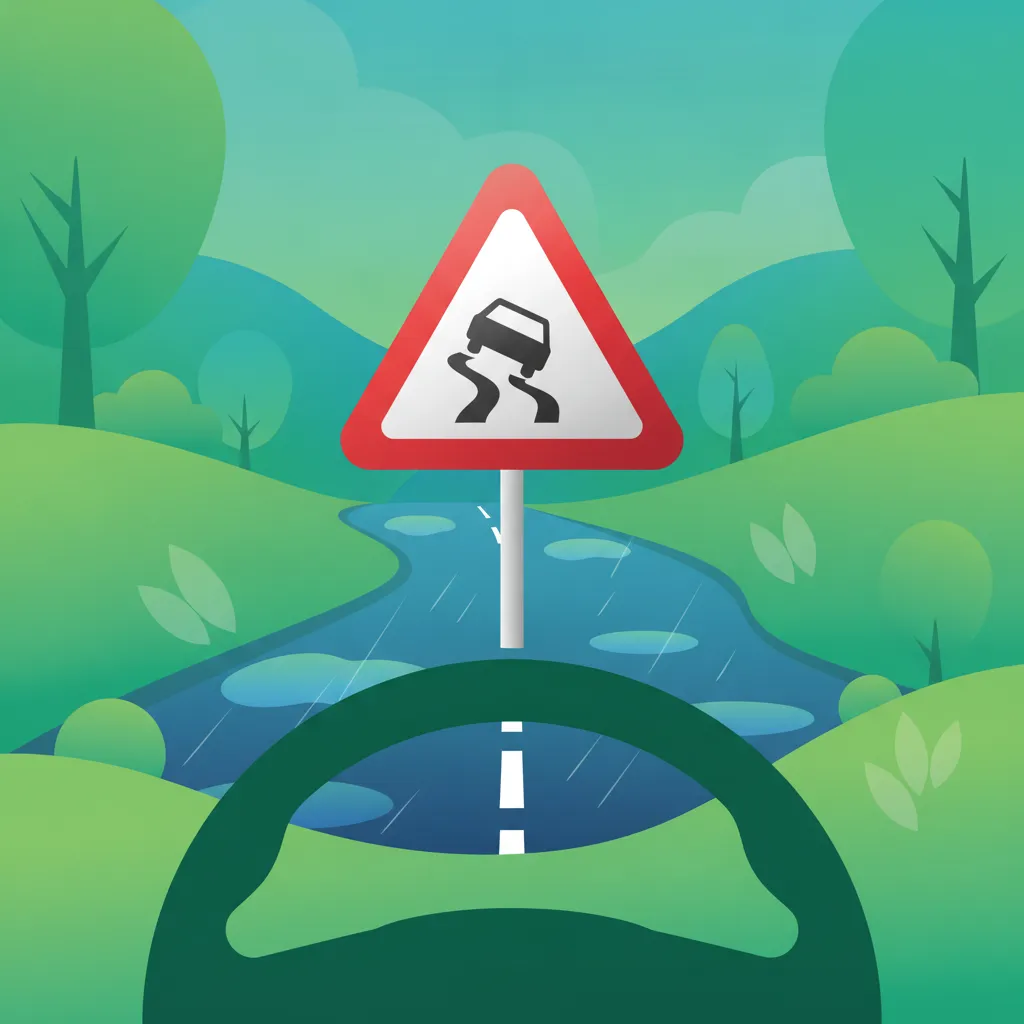
Warning signs on French roads are triangular with a red border, designed to alert drivers to upcoming dangers. This lesson teaches you how to interpret warnings for sharp curves, slippery surfaces, narrowing lanes, and wildlife or animal crossing hazards. You will understand the safety adjustments needed when approaching school zones, active roadworks, or crossings where vulnerable pedestrians are present.

This lesson teaches you how to establish and preserve a dynamic cushion of safety on all sides of your motorcycle. You will study how to apply the 'two-second rule' to keep a safe following distance, extending it to three or more seconds in adverse weather. Additionally, you will discover how to manage tailgating motorists safely without resorting to dangerous speed increases, ensuring you always maintain a clear escape route.

Learners will explore techniques for maintaining control and safety while riding in rain, focusing on reduced braking efficiency, hydroplaning prevention, and visibility challenges. The lesson emphasizes appropriate speed reduction, tire condition checks, and the use of rain gear to enhance rider comfort and protection. By mastering these adaptations, riders can navigate wet French conditions with confidence.

This lesson focuses on adapting your riding behavior to sudden environmental shifts, such as heavy fog or strong crosswinds on exposed bridges. You will learn specific technical adjustments, including leaning slightly into crosswinds and widening your safety margins during low-visibility fog. The lesson also highlights how seasonal temperature drops affect your tires' ability to warm up and achieve reliable, safe levels of road adhesion.

This lesson teaches critical emergency response maneuvers to help you avoid sudden, unexpected obstacles on the roadway. You will learn the exact step-by-step process of executing a rapid, controlled swerve, keeping braking forces separate from steering inputs to prevent a slide. Additionally, the lesson addresses the psychological challenge of 'target fixation' and provides techniques to keep your eyes focused on your clear escape route.

Certain groups of road users require heightened defensive attention from drivers due to physical limitations or unpredictable behaviors. This lesson covers how to recognize signs of visual impairment (white canes), mobility challenges, and the unpredictability of young children. You will learn to reduce your speed, extend yielding patience, and proactively secure extra space to protect these vulnerable users.
Understand the legal hierarchy of road users and your specific obligations toward pedestrians and cyclists. Explore the mandatory lateral clearance rules, right-of-way priorities at crossings, and the importance of civic etiquette when operating a motorcycle alongside non-motorized traffic in French urban environments.
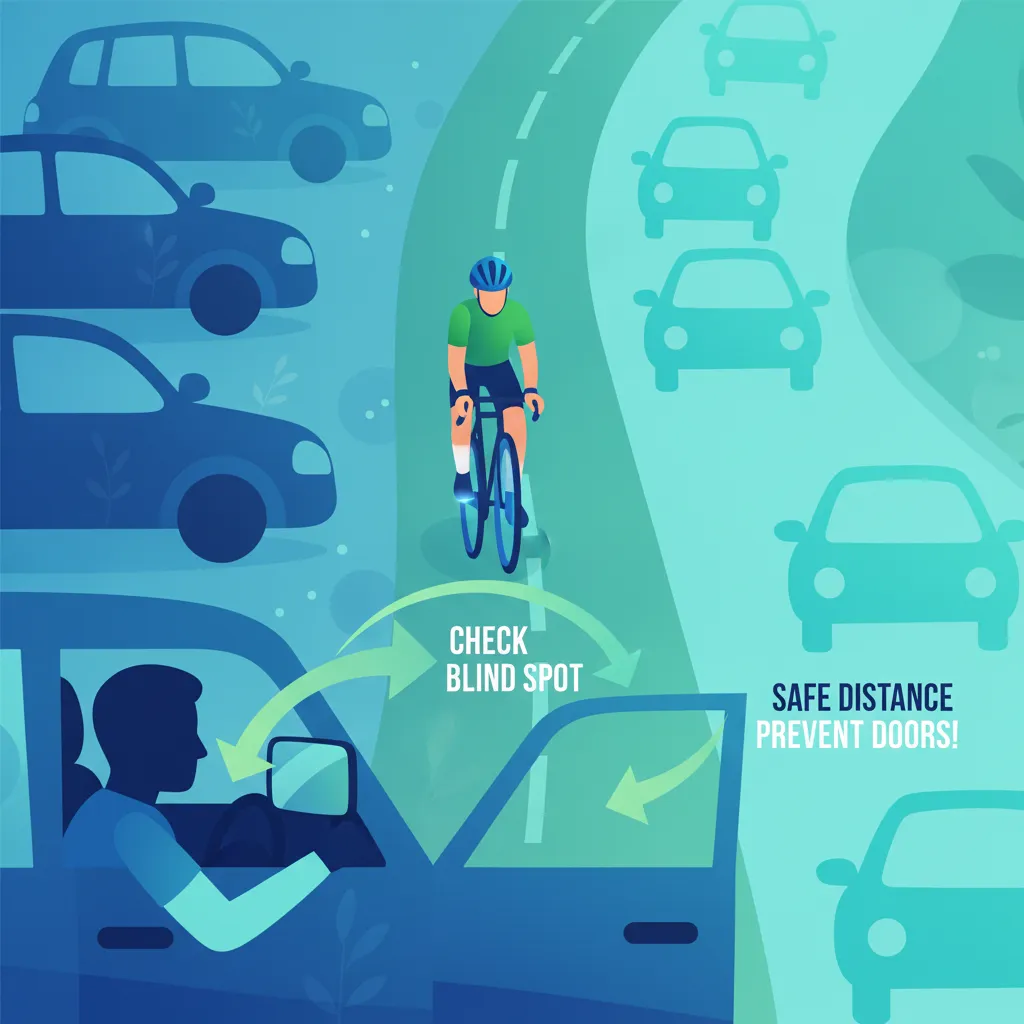
This lesson explains how to share the road safely with cyclists in both urban and rural environments. Drivers will study the legal minimum passing distances when overtaking cyclists, which is one meter in cities and one and a half meters outside urban areas. It also covers recognizing specialized cycling infrastructure, bike boxes at intersections, and preventing blind-spot collisions during right turns.
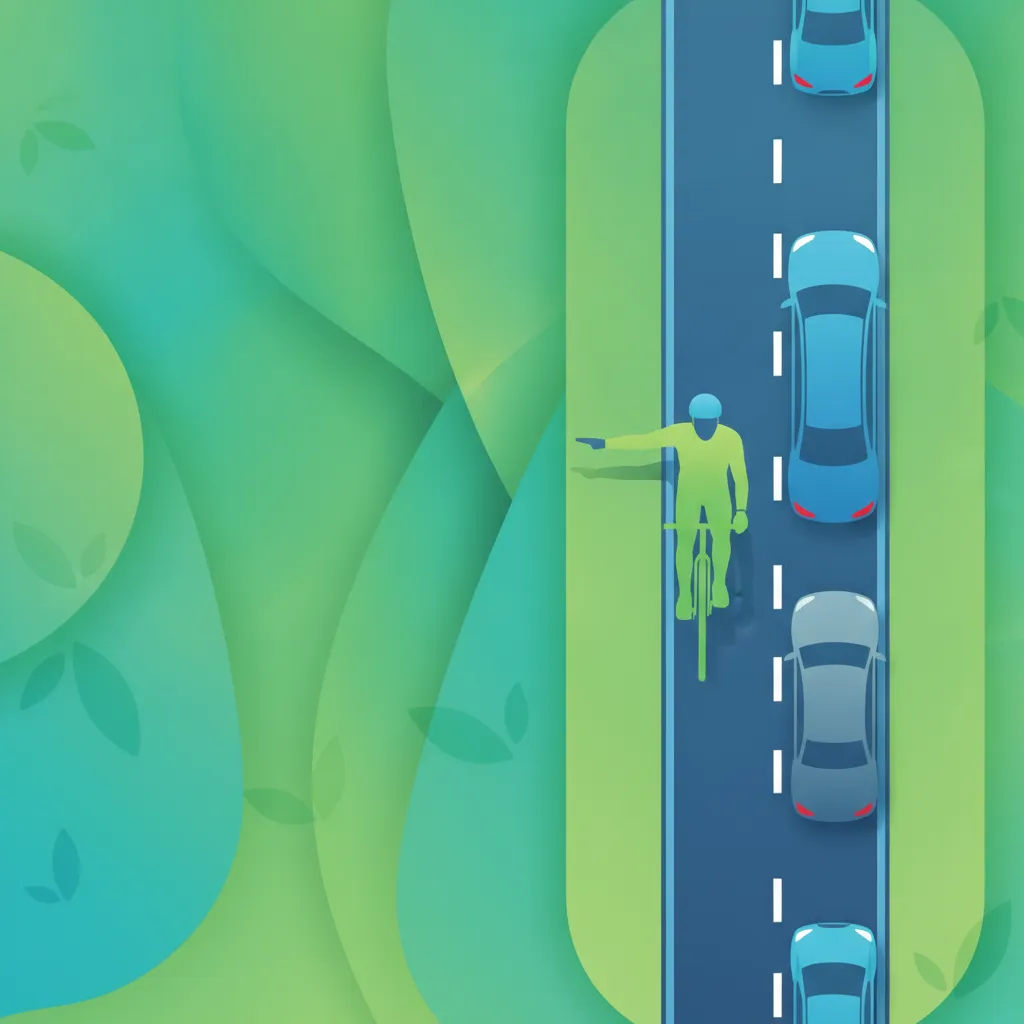
Bicycles represent an eco-friendly transport method with specific rights on French public roadways. This lesson teaches you how to identify dedicated cycle paths, respect bike lanes, and understand cyclist turning privileges at intersections. You will learn the legal minimum safety distance required when overtaking a cyclist: 1 meter in urban areas and 1.5 meters outside city limits.
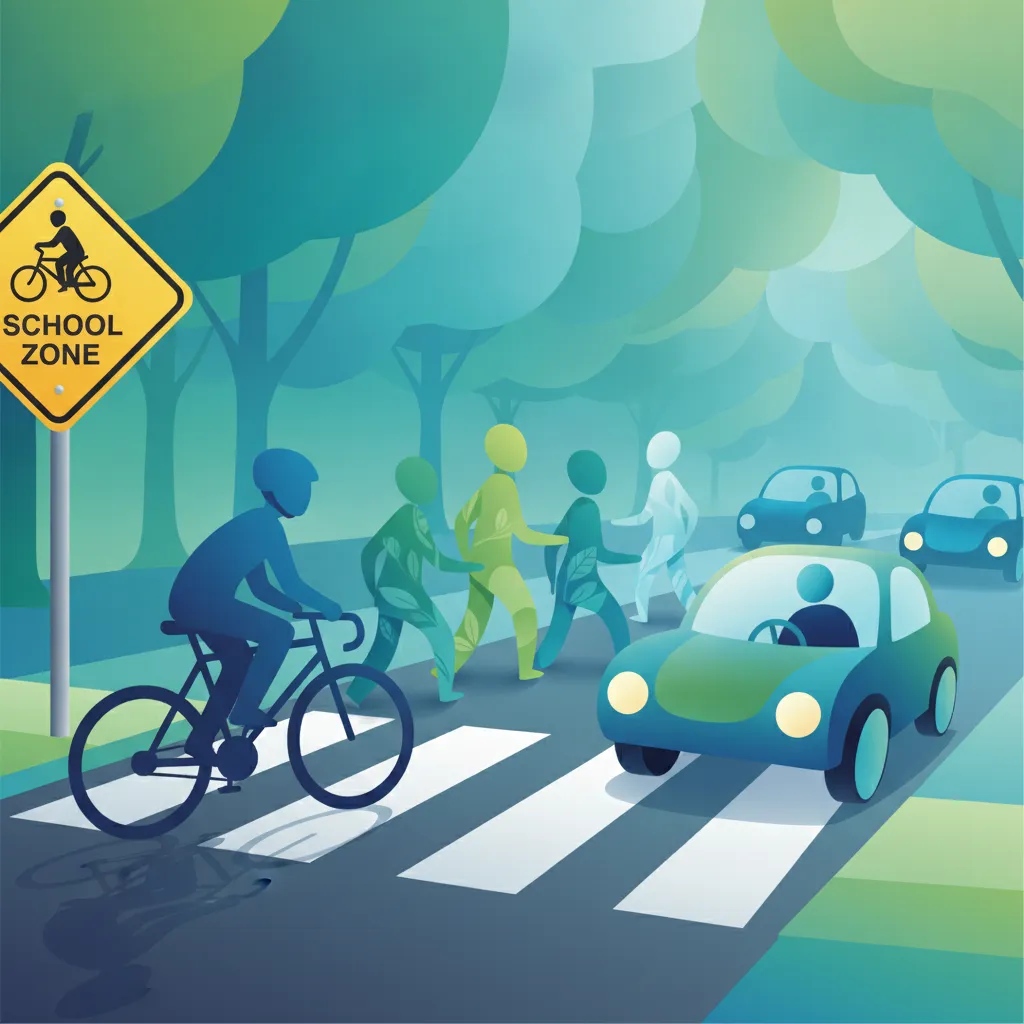
This lesson focuses on the legal requirement to yield to pedestrians on or about to step onto zebra crossings, a major focus of French road safety. You will learn how to approach school zones and pedestrian islands with heightened vigilance and reduced speed. Additionally, the lesson explores shared urban spaces, explaining how to maintain safe lateral distances when overtaking cyclists or personal electric scooters.

Learners will explore the rules related to pedestrian crossings, focusing on the obligation to yield to pedestrians at zebra crossings and flashing pedestrian signals. The lesson highlights the importance of stopping before the stop line, reducing speed, and maintaining vigilance for pedestrian movement. Mastery of these practices ensures the safety of both pedestrians and AM riders at crossing points.

Learners will focus on the best practices for interacting safely with cyclists and pedestrians in mixed traffic environments. The lesson covers proper lane usage, overtaking protocols, maintaining adequate safety gaps, and non-verbal communication techniques in the French urban landscape. By applying these principles, AM riders can coexist harmoniously with vulnerable road users, reducing the likelihood of accidents.

In France, pedestrians have clear legal priority when stepping onto or indicating an intent to use a crossing (passage pieton). This lesson details standard zebra crossings, refuge islands, and pedestrian crossings managed by synchronized traffic light systems. You will learn to scan crossings ahead, anticipate pedestrian movements, and safely come to a stop whenever a pedestrian attempts to cross.
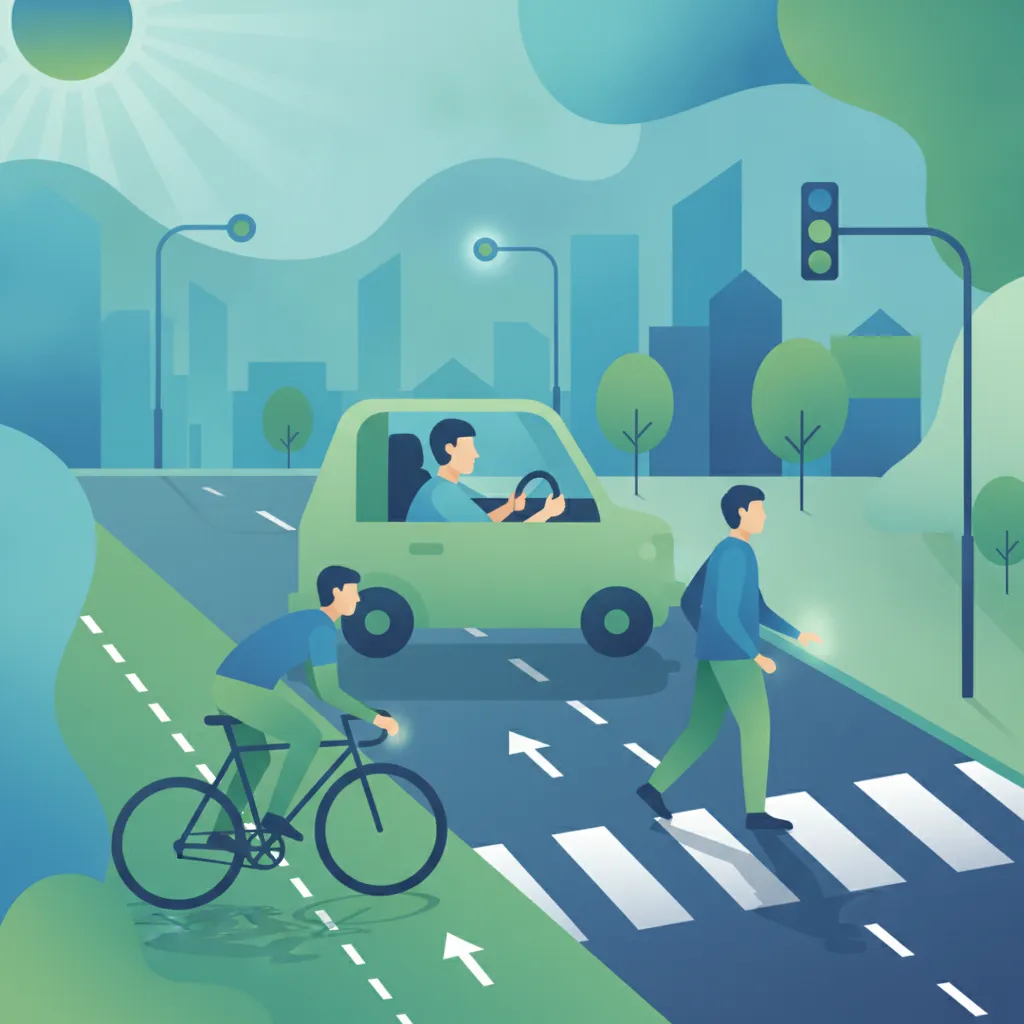
This lesson examines the specific challenges and responsibilities goods vehicle drivers face when interacting with pedestrians and cyclists in urban environments. Learners will understand right-of-way rules, the importance of yielding at pedestrian crossings, and safe turning practices that protect cyclists. The content emphasizes heightened driver vigilance, especially when navigating bike lanes and crowded sidewalks.
Certain groups of road users require heightened defensive attention from drivers due to physical limitations or unpredictable behaviors. This lesson covers how to recognize signs of visual impairment (white canes), mobility challenges, and the unpredictability of young children. You will learn to reduce your speed, extend yielding patience, and proactively secure extra space to protect these vulnerable users.

This lesson examines French Code de la route laws regarding pedestrian right-of-way, emphasizing the driver's legal duty to yield to any pedestrian engaged in crossing. It outlines proper approach speeds when approaching zebra crossings with obstructed views. Candidates will learn to maintain a safe physical buffer zone and verify that crosswalks are entirely clear of pedestrians before accelerating.
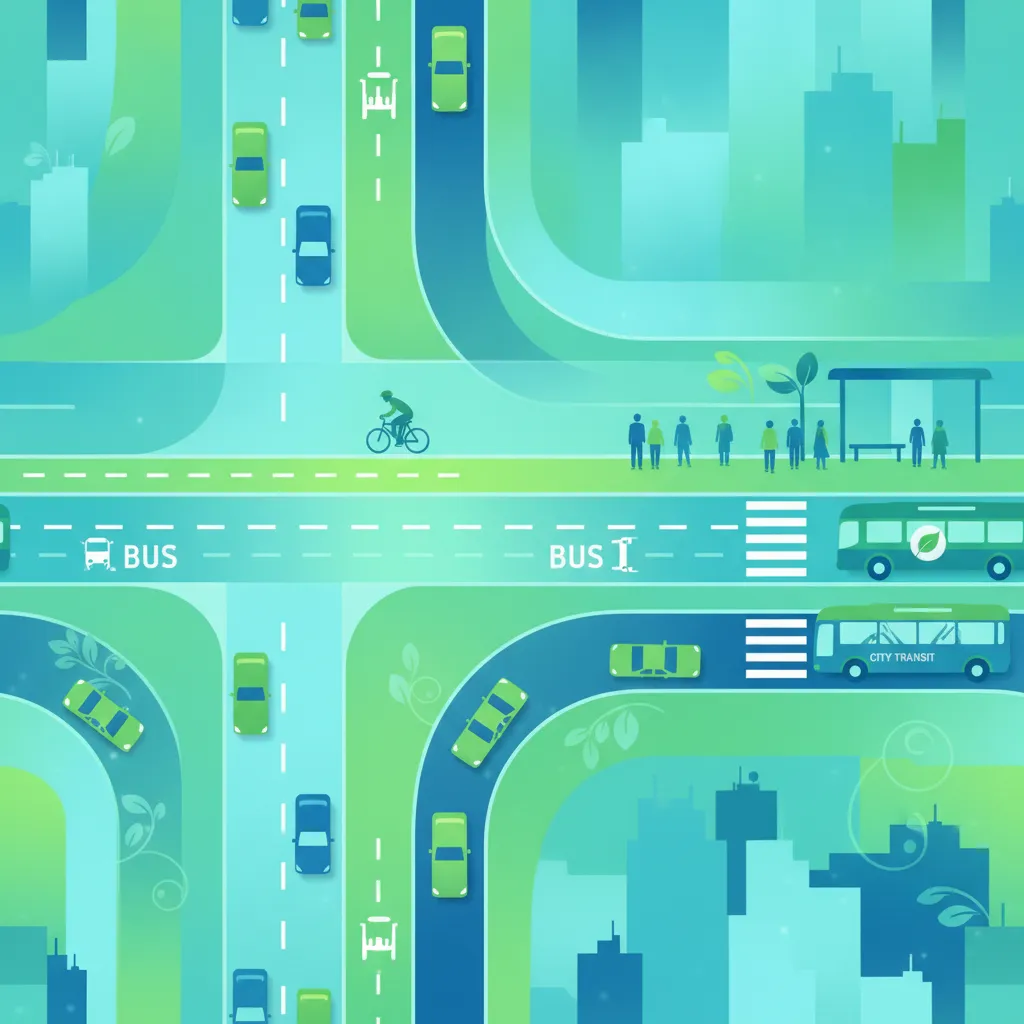
This lesson clarifies the legal boundaries of urban infrastructure, highlighting the strict ban on riding motorcycles within bus lanes or cycle paths. You will study French regulations concerning traffic flow, including where and when experimental lane filtering is permitted between lines of stationary cars. Understanding these boundaries ensures you can keep moving through congested areas without risking heavy fines or dangerous collisions.
Find clear answers to common questions learners have about Rider Obligations and Ethical Conduct. Learn how the lesson is structured, which driving theory objectives it supports, and how it fits into the overall learning path of units and curriculum progression in France. These explanations help you understand key concepts, lesson flow, and exam focused study goals.
The Code de la route emphasizes that driving is a social activity. Questions about ethical conduct test your ability to anticipate risks and demonstrate respect for vulnerable users, which are key indicators of a safe rider.
Defensive riding is an ethical choice to prioritize safety over speed or convenience. By staying alert and anticipating the mistakes of others, you actively contribute to the safety of the entire road environment.
Yes, you may encounter situational questions where you must choose the most responsible action, such as how to safely pass a cyclist or how to behave in congested traffic to avoid creating hazards.
Absolutely. Understanding the 'spirit' of the Code de la route helps you make better decisions in complex scenarios where there isn't always a strict 'yes or no' rule, helping you score points in human-factor sections.
Ready to focus your study? Use the practice search to find exactly the French driving theory questions you need for the Code de la route and permis de conduire ETG. Refine your knowledge on specific topics or challenging rules to boost your confidence and exam readiness.