
This lesson explores the essential link between a rider's physical health, mental focus, and safe motorcycle operation. As part of our comprehensive motorcycle theory course, you will learn how to monitor your own fitness levels to remain alert and responsive on French roads.

Lesson content overview
Operating a motorcycle is a highly active, physically demanding, and cognitively challenging task. Unlike driving a car, where the vehicle provides structural stability and a protective shell, riding a heavy motorcycle under Category A, A1, or A2 licenses requires constant physical input, active balance, and rapid mental processing. Your body and mind are integral components of the motorcycle's dynamic system.
This lesson covers the physiological and psychological requirements of riding. It details how to perform routine fitness self-assessments, manage cognitive load, and understand the legal health frameworks under the French Code de la route.
A motorcycle requires superior muscular coordination, core stability, and rapid cognitive processing compared to other road vehicles. While a car remains upright on four wheels, a motorcycle is inherently unstable at low speeds and requires active physical control to navigate curves, manage traction, and stop safely.
Every physical input you make directly affects the motorcycle's trajectory, tire grip, and overall stability. If your physical fitness is compromised—whether by fatigue, illness, or poor conditioning—your ability to safely control the motorcycle drops dramatically, significantly increasing the risk of an accident.
Physical fitness is the overall combination of muscular strength, endurance, flexibility, and core stability required to safely operate a motorcycle. You must be physically capable of handling a heavy machine, sometimes weighing over 200 kilograms, under various road and environmental conditions.
Your upper body—including your shoulders, arms, wrists, and hands—is responsible for steering inputs, managing the clutch, and modulating the front brake lever.
Your legs, hips, and feet are central to stabilizing the motorcycle.
Core stability refers to the strength and coordination of the muscles in your abdomen, lower back, and pelvis. It provides a stable platform that allows your limbs to operate the motorcycle's controls independently and smoothly.
The ability of the deep trunk muscles (including the transverse abdominis, multifidus, and obliques) to stabilize the spine and pelvis, providing a solid foundation for physical movement and balance control on a motorcycle.
Operating a motorcycle requires the seamless integration of large body movements (gross motor skills) and precise, highly localized adjustments (fine motor skills).
Weight Shift (Gross Motor Skill): As you approach a curve, you shift your body weight slightly inward, using your core and lower body to prepare the motorcycle for the lean.
Countersteering (Gross Motor Skill): You apply progressive forward pressure on the inside handlebar to initiate the lean.
Throttle Modulation (Fine Motor Skill): Throughout the turn, your wrist makes millimeter-scale adjustments to the throttle to maintain a smooth, constant engine delivery and keep the suspension settled.
Clutch and Brake Management (Fine Motor Skill): If shifting gears or trailing the rear brake, your fingers and toes perform highly localized, precise movements to prevent traction loss.
If your muscular coordination is impaired, these movements become disjointed. For example, a rider with poor hand-foot coordination might pull the clutch lever before fully closing the throttle, causing the engine to over-rev, or apply the rear brake too abruptly, causing the rear wheel to lock up and slide.
Mental fitness is your psychological readiness to ride. It encompasses your alertness, concentration, capacity for stress management, and decision-making speed.
Reaction time is the interval between perceiving a hazard and initiating a physical response. It consists of two main phases:
Under normal, alert conditions, the average human reaction time is approximately one second. However, this time can increase significantly based on your Cognitive Load—the total amount of mental effort being used in your working memory.
The Cost of High Cognitive Load: When you are mentally overloaded (due to complex traffic, GPS distractions, or emotional stress), your brain transitions from "simple reaction" to "choice reaction." This can easily double your reaction time, causing you to travel many extra meters at high speeds before even touching your brakes.
Alertness is your level of wakefulness and immediate readiness to react to external stimuli. It is heavily affected by your circadian rhythm (natural sleep-wake cycles) and recent sleep quality.
High psychological stress—whether from personal life, work, or the pressure of navigating heavy traffic—triggers a fight-or-flight response. While a small amount of adrenaline can temporarily heighten alertness, elevated or chronic stress degrades your riding performance in several ways:
Many riders falsely assume that only major medical emergencies (like cardiac arrest or seizures) pose a threat on the road. On a motorcycle, however, even minor physical ailments can significantly impair your balance, control, and visual awareness.
| Minor Health Issue | Specific Physiological Impact on Riding | Real-World Safety Consequence |
|---|---|---|
| Stiff Neck / Sore Shoulders | Restricts range of motion when turning the head. | Inability to perform complete shoulder checks (contrôles directs) before lane changes, leading to blind-spot collisions. |
| Mild Musculoskeletal Ache (Lower Back) | Weakens core support; causes the rider to slouch or lean heavily on the handlebars. | Rapid onset of physical fatigue; delayed and jerky steering inputs during emergency swerves. |
| Ear Congestion / Sinus Pressure | Disrupts the vestibular system in the inner ear, which controls balance. | Dizziness, spatial disorientation, and difficulty maintaining a stable lean angle during low-speed cornering. |
| Mild Eye Strain / Headaches | Reduces contrast sensitivity and slows focal adaptation. | Difficulty spotting road surface hazards (e.g., gravel, wet leaves, diesel spills) in low-light conditions. |
| Common Cold / Flu Symptoms | Slows cognitive processing; causes sudden physical movements (sneezing). | A single sneeze at 90 km/h means traveling blindly for approximately 25 meters without control over the vehicle. |
Before every journey, you must objectively evaluate whether you are fit to ride. This self-assessment is key to preventing accidents caused by physical or mental fatigue.
Physical Mobility and Strength: Rotate your neck fully from left to right. Roll your shoulders and perform a light squat. If you feel sharp pain, stiffness, or weakness in your back, neck, or limbs, postpone your ride.
Cognitive Readiness (The 5-Second Test): Ask yourself: Am I fully focused on the task of riding, or is my mind occupied by work, personal stress, or fatigue? If you cannot concentrate on basic mental tasks (like mentally calculating a simple countdown), you should not ride.
Medication and Substance Screening: Review any medication you have taken in the last 24 hours. Look for the standardized French safety triangles on prescription packaging (Levels 1, 2, or 3 warning of driving impairment).
Hydration and Nutrition: Ensure you have consumed adequate water and a balanced meal. Dehydration accelerates physical fatigue, reduces concentration, and can cause sudden headaches or muscle cramps.
Operating a motorcycle on public roads in France carries strict legal obligations regarding physical and mental fitness under the Code de la route.
In France, the legal blood alcohol limit is strictly enforced, with lower thresholds applying to probationary riders (those within the first 2 or 3 years of obtaining their license):
Why Alcohol and Motorcycles Do Not Mix: Even at a BAC below 0.2 g/L, alcohol begins to depress the central nervous system. This degrades your dynamic balance, slows your reaction times, and falsely inflates your confidence, leading to high-risk behaviors and an inability to recover from a skid or slide.
The French government mandates that certain medical conditions must be declared when applying for or renewing a driving license. Some conditions require a formal medical examination by an authorized physician (médecin agréé par la préfecture):
During the practical exam for Category A1, A2, and A licenses in France, examiners evaluate your coordination, balance, and physical ability to handle the motorcycle during both the off-road (plateau) and on-road (circulation) tests. A clear lack of physical control or balance is grounds for immediate failure.
Understanding where riders typically fail to manage their physical and mental state helps you avoid making the same mistakes.
A rider's physical and mental fitness is not static; it interacts dynamically with environmental conditions.
+-----------------------------------------------------------------+
|                       SITUATIONAL VARIABLES                     |
+-----------------------------------------------------------------+
|                                                                 |
|  [Wet Weather / Low Traction]   --> Demands maximum core        |
|                                     stability & ultra-smooth    |
|                                     muscular coordination.      |
|                                                                 |
|  [Night Riding]                 --> Increases visual strain     |
|                                     & cognitive fatigue;        |
|                                     amplifies sleep inertia.    |
|                                                                 |
|  [Urban Congestion]             --> High cognitive load;        |
|                                     constant "choice-reaction"  |
|                                     scenarios.                  |
|                                                                 |
|  [Heavy Luggage / Passenger]    --> Alters center of gravity;   |
|                                     increases the physical      |
|                                     strength required.          |
|                                                                 |
+-----------------------------------------------------------------+
Your physical and mental preparation directly determines your safety outcomes on the road.
This lesson covers the essential physical and mental fitness requirements for motorcycle riders under French Category A, A1, and A2 licenses, explaining how muscular strength, core stability, and coordination directly affect motorcycle control and safety. It details cognitive load and reaction time dynamics, showing how fatigue, stress, and mental overload degrade hazard perception and increase stopping distances. The lesson provides practical pre-ride self-assessment techniques including physical mobility checks and the 5-second cognitive readiness test. It also covers the French legal framework, including strict BAC limits for probationary riders, mandatory medical declaration requirements, and minimum visual acuity standards. Understanding these human factors is critical for answering scenario-based questions in the French theory exam and for developing safe long-term riding habits.
A short set of high-value points that capture the most important learning from this lesson.
Motorcycle riding requires active physical input from the entire body, unlike car driving where the vehicle provides structural stability
Core stability is essential for weight transfer and maintaining balance through corners without relying solely on handlebar inputs
Cognitive load management is critical because mental overload can double reaction time, from approximately 1 second to 2 seconds or more
Even minor physical ailments like a stiff neck or mild cold can severely impair motorcycle control and safety
Pre-ride self-assessment should evaluate both physical mobility and cognitive readiness before every journey
Explore all units and lessons included in this driving theory course.
Probationary motorcycle riders in France have a strict 0.2 g/L BAC limit (effectively zero tolerance), compared to the standard 0.5 g/L limit
Minimum visual acuity requirement is 5/10 with both eyes (or 6/10 if vision is in only one eye); corrective lenses require license restriction code 01
Muscle fatigue from exercise impairs grip strength and core stability, reducing ability to apply maximum braking force in emergencies
Sleep inertia affects riders for 15-30 minutes after waking; cognitive impairment during this period significantly increases accident risk
The standardized French safety triangles on medication packaging indicate driving impairment levels 1, 2, or 3
Assuming only major medical conditions affect riding safety, when even minor issues like sinus congestion disrupt vestibular balance
Taking over-the-counter antihistamines or cold medication without checking for driving impairment warnings, equating this to riding under the influence
Believing slow-speed urban riding does not require full physical mobility, when in fact urban riding demands constant blind-spot checks
Riding immediately after intense physical exercise when muscle fatigue prevents maximum brake application and core stability
Disregarding stress levels before riding, not recognizing that elevated stress causes tunnel vision and impulsive decision-making
Lesson content overview
A short set of high-value points that capture the most important learning from this lesson.
Motorcycle riding requires active physical input from the entire body, unlike car driving where the vehicle provides structural stability
Core stability is essential for weight transfer and maintaining balance through corners without relying solely on handlebar inputs
Cognitive load management is critical because mental overload can double reaction time, from approximately 1 second to 2 seconds or more
Even minor physical ailments like a stiff neck or mild cold can severely impair motorcycle control and safety
Pre-ride self-assessment should evaluate both physical mobility and cognitive readiness before every journey
Explore all units and lessons included in this driving theory course.
Probationary motorcycle riders in France have a strict 0.2 g/L BAC limit (effectively zero tolerance), compared to the standard 0.5 g/L limit
Minimum visual acuity requirement is 5/10 with both eyes (or 6/10 if vision is in only one eye); corrective lenses require license restriction code 01
Muscle fatigue from exercise impairs grip strength and core stability, reducing ability to apply maximum braking force in emergencies
Sleep inertia affects riders for 15-30 minutes after waking; cognitive impairment during this period significantly increases accident risk
The standardized French safety triangles on medication packaging indicate driving impairment levels 1, 2, or 3
Assuming only major medical conditions affect riding safety, when even minor issues like sinus congestion disrupt vestibular balance
Taking over-the-counter antihistamines or cold medication without checking for driving impairment warnings, equating this to riding under the influence
Believing slow-speed urban riding does not require full physical mobility, when in fact urban riding demands constant blind-spot checks
Riding immediately after intense physical exercise when muscle fatigue prevents maximum brake application and core stability
Disregarding stress levels before riding, not recognizing that elevated stress causes tunnel vision and impulsive decision-making
Explore search topics learners often look for when studying Physical and Mental Fitness for Riding. These topics reflect common questions about road rules, driving situations, safety guidance, and lesson level theory preparation for learners in France.
Browse additional driving theory lessons that cover connected traffic rules, road signs, and common driving situations related to this topic. Improve your understanding of how different rules interact across everyday traffic scenarios.
Explore core defensive riding techniques aimed at continuous risk assessment and hazard perception on French roads. Learn how to maintain protective space and anticipate the actions of other road users to minimize dangers while operating a motorcycle.

This final lesson integrates all course concepts into a single, cohesive approach to defensive riding and continuous risk assessment. You will study how to maintain a high-mileage visual lead, continuously scanning the road ahead for warning signs of conflict. By learning to assume that other motorists may not see you, you will build the proactive slowing habits and situational awareness needed to remain safe throughout your riding life.

This lesson emphasizes that driving a motorcycle in France involves unique moral and social responsibilities towards vulnerable road users like cyclists and pedestrians. You will examine the importance of defensive riding habits, civil road etiquette, and the prioritizing of shared road safety. Understanding these principles helps to prevent dangerous situations, respect local communities, and lower overall accident statistics.

This lesson teaches you how to establish and preserve a dynamic cushion of safety on all sides of your motorcycle. You will study how to apply the 'two-second rule' to keep a safe following distance, extending it to three or more seconds in adverse weather. Additionally, you will discover how to manage tailgating motorists safely without resorting to dangerous speed increases, ensuring you always maintain a clear escape route.

Learners will develop the ability to anticipate potential hazards on the road, enhancing reaction times and defensive riding strategies. The lesson emphasizes constant scanning, early identification of threats such as sudden stops, pedestrian crossings, or unexpected lane changes, and appropriate response measures. By cultivating proactive risk assessment, AM riders can significantly reduce accident likelihood.

This lesson provides guidance on safe riding practices during nighttime, emphasizing proper headlamp usage, reflective clothing, and strategies to manage glare from oncoming traffic. Learners will learn to compensate for reduced peripheral vision and increased fatigue, as well as to identify common night road hazards in France. By applying these techniques, riders can enhance their visibility and safety after dark.

This lesson explains the correct procedures for entering, circulating, and exiting roundabouts, which are highly prevalent throughout France. You will learn the exact lane choice strategies based on your intended exit, and how to use your turn indicators at each stage of the maneuver. The content also addresses the critical task of performing over-the-shoulder blind spot checks to avoid conflicts with overtaking vehicles when exiting.

This lesson details how to safely enter, cruise on, and exit French motorways, known as autoroutes, which feature high-speed traffic flows. You will master the process of matching highway speeds in the acceleration lane and performing blind spot checks before merging. The lesson also explains correct lane positioning to avoid aerodynamic turbulences from large semi-trucks, and how to safely prepare for decelerating at exit ramps.

This lesson teaches critical emergency response maneuvers to help you avoid sudden, unexpected obstacles on the roadway. You will learn the exact step-by-step process of executing a rapid, controlled swerve, keeping braking forces separate from steering inputs to prevent a slide. Additionally, the lesson addresses the psychological challenge of 'target fixation' and provides techniques to keep your eyes focused on your clear escape route.

This lesson covers the operational logic of traffic light signals in France, emphasizing the legal implications of the red, amber, and green cycles. You will study how to safely manage the amber phase to avoid rear-end collisions from vehicles behind while maintaining control. Additionally, you will discover the unique challenge of electromagnetic induction loops, which sometimes fail to detect lightweight motorcycles at quiet intersections.
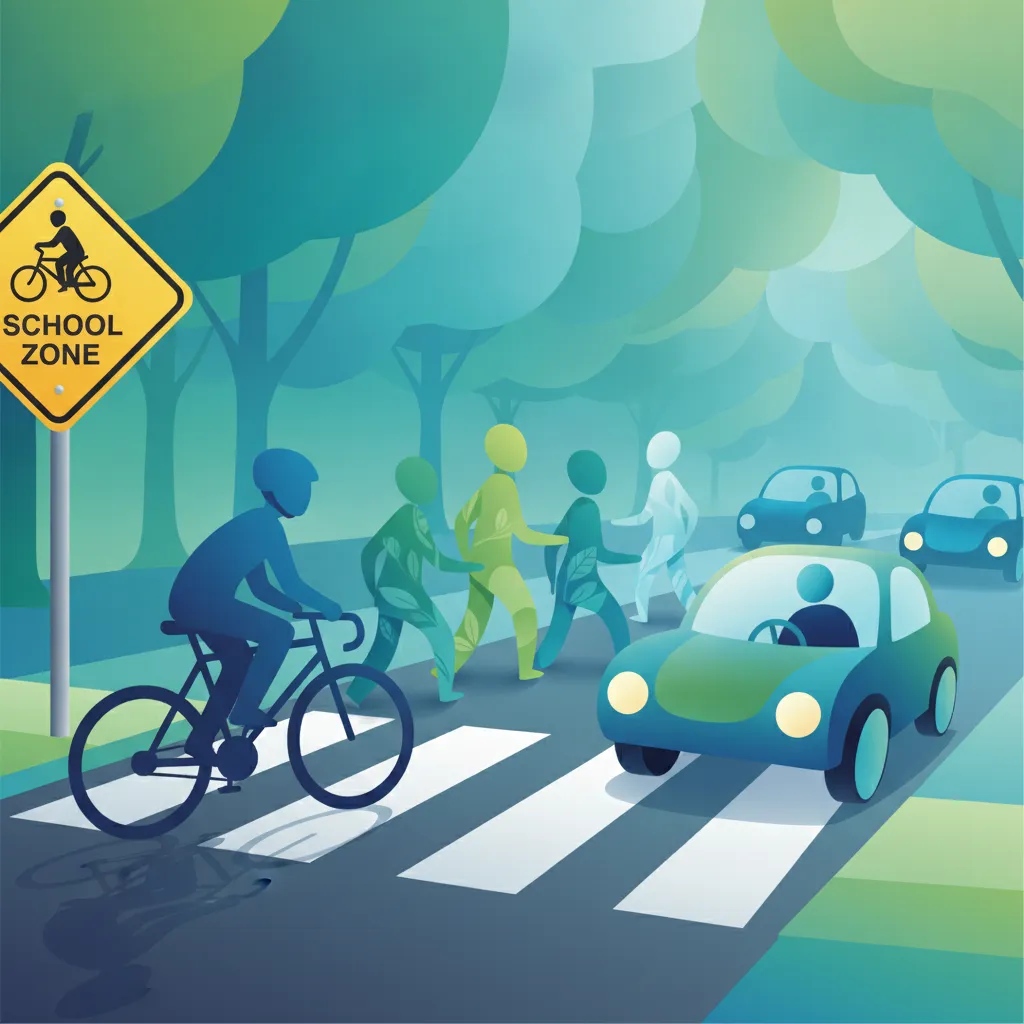
This lesson focuses on the legal requirement to yield to pedestrians on or about to step onto zebra crossings, a major focus of French road safety. You will learn how to approach school zones and pedestrian islands with heightened vigilance and reduced speed. Additionally, the lesson explores shared urban spaces, explaining how to maintain safe lateral distances when overtaking cyclists or personal electric scooters.
Understand how to adapt your riding style to adverse weather conditions, low-grip road surfaces, and night-time visibility challenges. This lesson explains the necessary changes in braking, cornering, and positioning to maintain control in varied environmental scenarios as defined by the French Code de la route.

This lesson focuses on adapting your riding behavior to sudden environmental shifts, such as heavy fog or strong crosswinds on exposed bridges. You will learn specific technical adjustments, including leaning slightly into crosswinds and widening your safety margins during low-visibility fog. The lesson also highlights how seasonal temperature drops affect your tires' ability to warm up and achieve reliable, safe levels of road adhesion.

Learners will explore techniques for maintaining control and safety while riding in rain, focusing on reduced braking efficiency, hydroplaning prevention, and visibility challenges. The lesson emphasizes appropriate speed reduction, tire condition checks, and the use of rain gear to enhance rider comfort and protection. By mastering these adaptations, riders can navigate wet French conditions with confidence.

This lesson addresses the unique hazards of riding a motorcycle in wet conditions, emphasizing the danger of aquaplaning. You will learn how water pooling on the asphalt can cause tires to lose direct contact with the road, leading to a complete loss of steering control. The lesson offers practical advice on reducing your speed, using smooth throttle and brake inputs, and ensuring your tires have adequate tread depth to clear water.
This lesson provides guidance on safe riding practices during nighttime, emphasizing proper headlamp usage, reflective clothing, and strategies to manage glare from oncoming traffic. Learners will learn to compensate for reduced peripheral vision and increased fatigue, as well as to identify common night road hazards in France. By applying these techniques, riders can enhance their visibility and safety after dark.

This lesson focuses on identifying and managing the wide range of road surface grip levels encountered on French highways. You will learn to recognize hazardous low-traction situations, such as tar strips ('tar snakes'), wet manhole covers, gravel patches, and diesel spills at roundabouts. The lesson provides strategies for adjusting your throttle and lean angle in advance to prevent sudden, dangerous slides on compromised pavement.
This lesson details how to safely enter, cruise on, and exit French motorways, known as autoroutes, which feature high-speed traffic flows. You will master the process of matching highway speeds in the acceleration lane and performing blind spot checks before merging. The lesson also explains correct lane positioning to avoid aerodynamic turbulences from large semi-trucks, and how to safely prepare for decelerating at exit ramps.

This lesson addresses the distinct safety considerations for riding during daylight hours versus nighttime, covering topics such as managing glare from the sun and ensuring adequate lighting after dark. Learners will learn strategies to maintain visibility, stay alert, and adapt riding techniques to varying light conditions, including the use of reflective gear. Emphasis is placed on proactive planning to mitigate risks associated with reduced visibility, thereby fostering safe riding practices.

This lesson focuses on the skill of adjusting speed according to real-time road conditions, visibility, and traffic density. Learners will learn to assess factors such as weather, road surface quality, and pedestrian activity to determine a safe riding speed under French regulatory expectations. By mastering adaptive speed control, riders can enhance safety and reduce the likelihood of accidents caused by inappropriate speed.

This lesson teaches riders how to negotiate loose surfaces such as gravel, sand, and poorly maintained urban asphalt without dropping the motorcycle. You will study correct body positioning, focusing on keeping your weight centered and your grip relaxed on the handlebars. The lesson also highlights why smooth, constant throttle delivery and avoiding abrupt front braking are essential to prevent the front wheel from washing out.

This lesson explores practical methods to make yourself visible to other road users, preventing the classic 'sorry mate, I didn't see you' hazard. You will analyze the use of high-visibility yellow or orange retro-reflective waistcoats, which are legally required to be carried on board in France. Additionally, you will study optimal headlight utilization and correct placement of auxiliary indicators to capture driver attention.
Find clear answers to common questions learners have about Physical and Mental Fitness for Riding. Learn how the lesson is structured, which driving theory objectives it supports, and how it fits into the overall learning path of units and curriculum progression in France. These explanations help you understand key concepts, lesson flow, and exam focused study goals.
Riding a motorcycle requires constant physical balance and rapid cognitive decision-making. The exam tests this to ensure you understand that your ability to safely control the vehicle depends on your state of health and alertness.
While fatigue itself is an operational hazard, failing to manage it can lead to dangerous errors. Understanding these factors helps you avoid accidents that could lead to fines or license point penalties under the French system.
Yes, all motorcycle licenses in France require meeting specific health standards. This lesson focuses on the ongoing self-assessment required for every ride, which complements the initial medical requirements for obtaining your license.
Absolutely. High stress levels narrow your focus and delay reaction times. Learning to manage this mental load is a core defensive riding skill taught to help you navigate complex traffic scenarios safely.
Ready to focus your study? Use the practice search to find exactly the French driving theory questions you need for the Code de la route and permis de conduire ETG. Refine your knowledge on specific topics or challenging rules to boost your confidence and exam readiness.