Understanding how to divide your lane into three distinct zones is a vital skill for every motorcyclist in France. This lesson builds on basic road safety principles to help you maximize your visibility and avoid common road hazards like oil slicks, debris, and turbulence from larger vehicles.

Lesson content overview
Unlike car drivers, who generally occupy the center of their lane due to the width of their vehicles, motorcyclists have a significant tactical advantage: lateral flexibility. As a category A, A1, or A2 license candidate in France, mastering how to position your motorcycle within a single lane is one of the most critical defensive riding skills you can develop.
This lesson covers how to split your lane into distinct zones, adjust your positioning to maximize your line of sight on blind bends, protect yourself from hazardous road surfaces, and manage the powerful aerodynamic forces of passing heavy vehicles.
To make precise and rapid decisions, professional riders mentally divide a single travel lane into three distinct vertical sections: Zone 1 (Left), Zone 2 (Center), and Zone 3 (Right).
Zone 1 is located on the left-hand side of your lane, closest to the dividing line or oncoming traffic.
Zone 2 is the exact middle of the lane.
Zone 3 is situated on the right-hand side of the lane, closest to the shoulder, gutter, or curb.
Never commit permanently to a single zone. Your positioning must be active and dynamic. You should constantly scan the road ahead and shift smoothly between Zones 1, 2, and 3 to mitigate emerging risks.
In France, the official motorcycle curriculum heavily emphasizes the Safety Trajectory (la trajectoire de sécurité). This technique is designed to maximize your field of vision through curves, allowing you to react to hidden hazards, while ensuring your upper body does not lean into the oncoming lane.
When approaching a right-hand bend, your view around the corner is obstructed by the natural curve of the landscape, trees, or rock walls on the right.
Preparation (Zone 1): Before entering the curve, position your motorcycle in Zone 1 (the left side of your lane). This widens your angle of vision, allowing you to see further around the obstacle.
Observation: Maintain this outer position as you enter the turn. Keep your eyes focused far ahead, looking for oncoming vehicles, gravel, or stationary hazards.
Apex and Re-entry: Do not dive toward the right curb too early. Wait until you can clearly see the exit of the turn and the road ahead is clear. Once the curve opens up, smoothly guide the motorcycle back toward the center of your lane (Zone 2).
When riding in Zone 1 on a right-hand bend, remember that your motorcycle leans to the right (toward the inside of the curve). However, if you ride too close to the centerline, your head and shoulders can lean directly into the oncoming lane, exposing you to catastrophic head-on collisions with oncoming trucks or cars. Always keep your tires far enough inside your lane to ensure your lean angle remains entirely safe.
For a left-hand bend, the obstruction is on your left, and oncoming traffic is turning toward you.
Preparation (Zone 3): Approach the curve in Zone 3 (the right side of your lane). This keeps you as far away as possible from oncoming vehicles that might cross the centerline.
Observation: Keep your eyes locked on the furthest visible point of the road surface. Watch for oncoming drivers who may be cutting the corner.
Apex and Re-entry: Maintain your position in Zone 3 until you can clearly see the exit of the bend. Once the road straightens out, return safely to Zone 2.
Motorcycles rely on a tiny contact patch—about the size of a credit card per tire—to maintain grip. Choosing the right lane position is your first line of defense against sudden traction loss.
As mentioned, Zone 2 is the primary accumulation point for automotive fluids.
A layer of oil or fuel on the road surface, commonly found at intersections, toll booths, and the center of lanes, which drastically reduces tire friction and can cause immediate loss of control.
If you spot a shiny, rainbow-colored sheen on the pavement, or if it has just started to rain after a dry spell, you must immediately exit Zone 2. Shift your motorcycle into Zone 1 or Zone 3, depending on which side offers the cleanest path and the best visibility.
Heavy vehicles often kick stones, tire tread, and other debris to the margins of the road. Consequently, Zone 3 is highly prone to loose gravel and sand, which can act like ball bearings under your tires.
If you are forced to ride in Zone 3 (for example, to prepare for a left-hand bend), scan the ground closely. If you see loose material, temporarily adjust your path to a cleaner portion of the lane, reducing your lean angle until you have safely bypassed the hazard.
When riding at high speeds, particularly on dual carriageways (voies rapides) and motorways (autoroutes), the aerodynamic forces generated by large vehicles can severely compromise your stability.
The intense, turbulent aerodynamic wave generated by a large, fast-moving vehicle (such as a semi-truck or tourist coach) that can push a nearby motorcyclist sideways.
When a large truck passes you in the opposite direction on a two-lane road, or when you overtake an HGV on the motorway, you will experience two distinct forces:
To minimize these lateral forces, use the following positioning strategy:
Under French traffic law, lane positioning is not merely a recommendation; it is governed by strict legal frameworks.
According to Article R412-9 of the Code de la route, all drivers must keep their vehicles near the right-hand edge of the roadway under normal circumstances. However, for motorcyclists, this rule is applied with flexibility to account for safety requirements. The law recognizes that a motorcyclist must adjust their position within the travel lane to:
However, this flexibility does not permit dangerous or erratic riding. You must always remain entirely within your designated lane boundaries. Crossing a solid white line (ligne continue) to position yourself for a curve is a severe traffic violation.
Failing to maintain a safe and legal position on the road can result in specific penalties:
Even experienced riders can fall into bad habits. Recognizing these common errors will help you pass your practical exam and stay safe on the road.
If you ride directly in Zone 2 behind a large van or truck, the driver cannot see you in their central rearview mirror, and your forward view is entirely blocked.
Some riders try to "clip the apex" of a left-hand bend by hugging the centerline (Zone 1). Because the motorcycle leans to the left into the curve, the rider's body and head hang directly over the centerline into oncoming traffic.
Many riders forget that the center of the lane becomes incredibly slick when wet. Continuing to ride in Zone 2 during a rainstorm drastically increases your braking distance and risk of low-side crashes.
Your lane positioning must adapt to environmental shifts and the presence of other road users.
In heavy crosswinds, do not fight the wind by staying perfectly centered. Lean the motorcycle slightly into the wind to maintain a straight path. Position yourself on the windward side of the lane (the side the wind is blowing from) to give yourself a safety buffer in case a sudden gust pushes you sideways.
At night, your headlight beam is your lifeline.
When passing cyclists, pedestrians, or micro-mobility users (such as electric scooter riders):
Explore all units and lessons included in this driving theory course.
Lesson content overview
Explore all units and lessons included in this driving theory course.
Explore search topics learners often look for when studying Optimal Lane Positioning for Visibility and Safety. These topics reflect common questions about road rules, driving situations, safety guidance, and lesson level theory preparation for learners in France.
Browse additional driving theory lessons that cover connected traffic rules, road signs, and common driving situations related to this topic. Improve your understanding of how different rules interact across everyday traffic scenarios.
Understand how to implement continuous risk assessment and defensive riding strategies to enhance your safety on French roads. This guide explains how to identify potential hazards early and adjust your riding behavior to maintain a protective space and improve your reaction time in complex traffic environments.
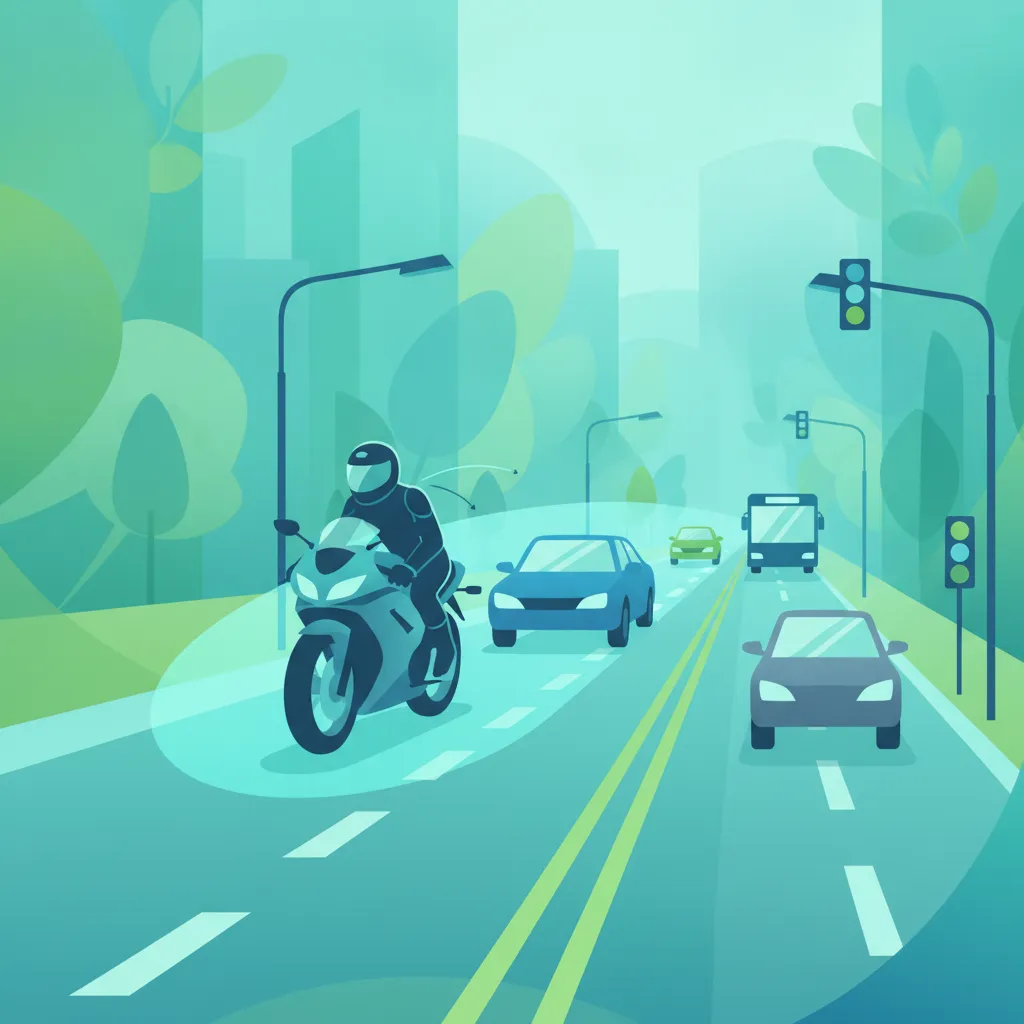
This final lesson integrates all course concepts into a single, cohesive approach to defensive riding and continuous risk assessment. You will study how to maintain a high-mileage visual lead, continuously scanning the road ahead for warning signs of conflict. By learning to assume that other motorists may not see you, you will build the proactive slowing habits and situational awareness needed to remain safe throughout your riding life.

This lesson emphasizes that driving a motorcycle in France involves unique moral and social responsibilities towards vulnerable road users like cyclists and pedestrians. You will examine the importance of defensive riding habits, civil road etiquette, and the prioritizing of shared road safety. Understanding these principles helps to prevent dangerous situations, respect local communities, and lower overall accident statistics.
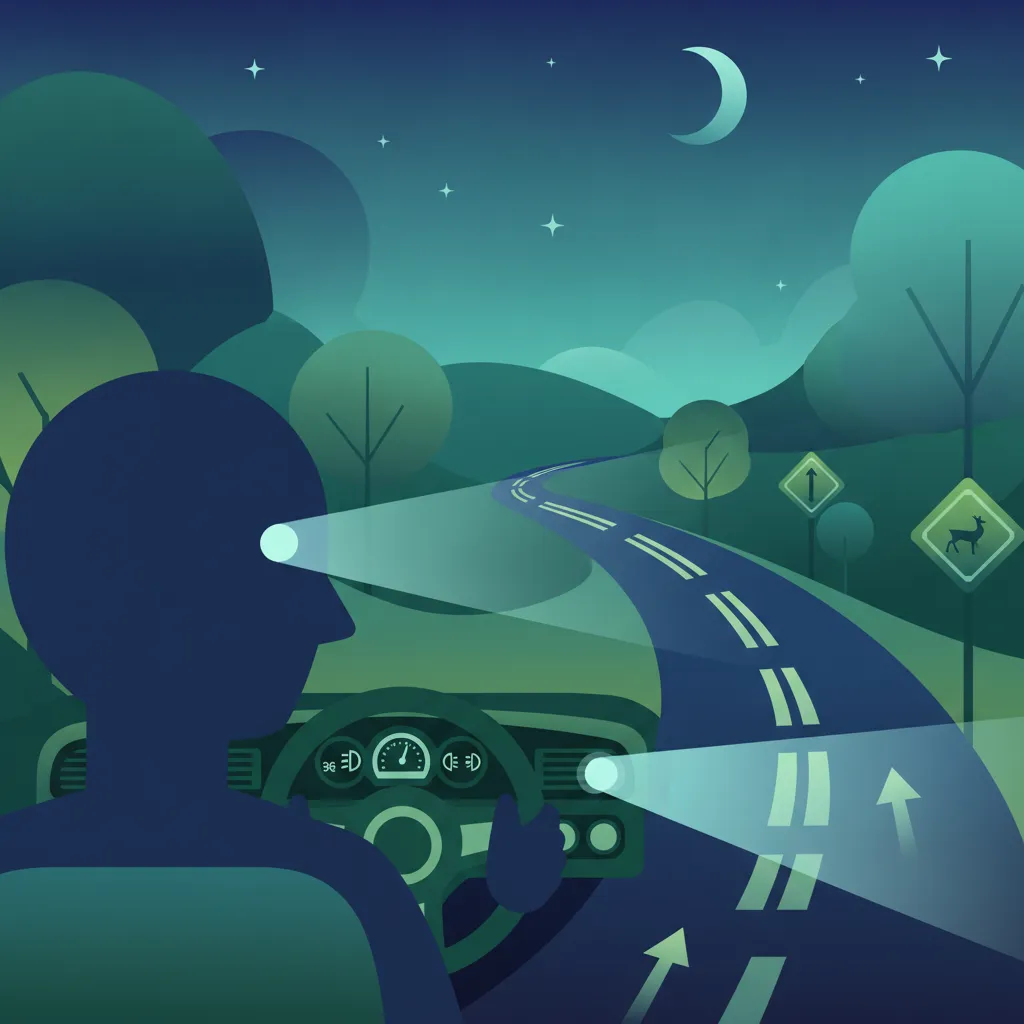
This lesson provides guidance on safe riding practices during nighttime, emphasizing proper headlamp usage, reflective clothing, and strategies to manage glare from oncoming traffic. Learners will learn to compensate for reduced peripheral vision and increased fatigue, as well as to identify common night road hazards in France. By applying these techniques, riders can enhance their visibility and safety after dark.

This lesson teaches you how to establish and preserve a dynamic cushion of safety on all sides of your motorcycle. You will study how to apply the 'two-second rule' to keep a safe following distance, extending it to three or more seconds in adverse weather. Additionally, you will discover how to manage tailgating motorists safely without resorting to dangerous speed increases, ensuring you always maintain a clear escape route.
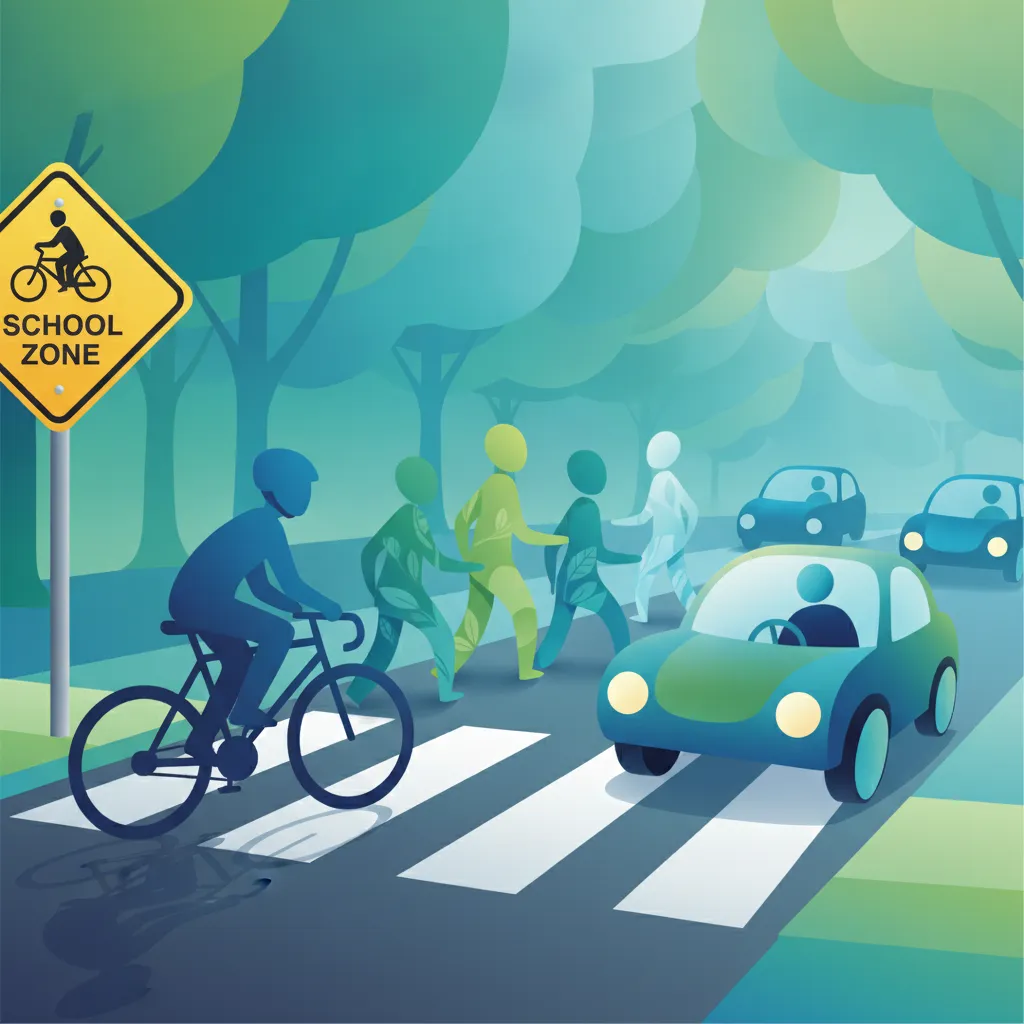
This lesson focuses on the legal requirement to yield to pedestrians on or about to step onto zebra crossings, a major focus of French road safety. You will learn how to approach school zones and pedestrian islands with heightened vigilance and reduced speed. Additionally, the lesson explores shared urban spaces, explaining how to maintain safe lateral distances when overtaking cyclists or personal electric scooters.

This lesson explains the correct procedures for entering, circulating, and exiting roundabouts, which are highly prevalent throughout France. You will learn the exact lane choice strategies based on your intended exit, and how to use your turn indicators at each stage of the maneuver. The content also addresses the critical task of performing over-the-shoulder blind spot checks to avoid conflicts with overtaking vehicles when exiting.

Learners will develop the ability to anticipate potential hazards on the road, enhancing reaction times and defensive riding strategies. The lesson emphasizes constant scanning, early identification of threats such as sudden stops, pedestrian crossings, or unexpected lane changes, and appropriate response measures. By cultivating proactive risk assessment, AM riders can significantly reduce accident likelihood.

This lesson explores practical methods to make yourself visible to other road users, preventing the classic 'sorry mate, I didn't see you' hazard. You will analyze the use of high-visibility yellow or orange retro-reflective waistcoats, which are legally required to be carried on board in France. Additionally, you will study optimal headlight utilization and correct placement of auxiliary indicators to capture driver attention.

This lesson covers the operational logic of traffic light signals in France, emphasizing the legal implications of the red, amber, and green cycles. You will study how to safely manage the amber phase to avoid rear-end collisions from vehicles behind while maintaining control. Additionally, you will discover the unique challenge of electromagnetic induction loops, which sometimes fail to detect lightweight motorcycles at quiet intersections.

Learners will explore techniques for maintaining control and safety while riding in rain, focusing on reduced braking efficiency, hydroplaning prevention, and visibility challenges. The lesson emphasizes appropriate speed reduction, tire condition checks, and the use of rain gear to enhance rider comfort and protection. By mastering these adaptations, riders can navigate wet French conditions with confidence.
Explore the physics of motorcycle cornering including lean angles, traction management, and how to maintain grip on various road surfaces. Learn the theory behind emergency maneuvers and how to execute safe riding lines when navigating blind curves and uneven surfaces according to French driving regulations.

This lesson covers the physical mechanics of cornering, highlighting the technique of countersteering to initiate and control lean angles. You will learn to divide bends into distinct entry, apex, and exit phases, choosing the safest path that maximizes your visibility and grip reserves. Finally, the lesson explains the concept of the traction circle, helping you manage the division of tire grip between lateral cornering forces and acceleration.

This lesson examines how different road surfaces affect tire grip and vehicle stability. Learners will explore strategies for maintaining traction on wet surfaces, gravel, and irregular roadways, including appropriate lean angles and smooth throttle control under French road conditions. Understanding these principles helps riders avoid slip incidents and preserve control during cornering and braking.

This lesson teaches riders how to negotiate loose surfaces such as gravel, sand, and poorly maintained urban asphalt without dropping the motorcycle. You will study correct body positioning, focusing on keeping your weight centered and your grip relaxed on the handlebars. The lesson also highlights why smooth, constant throttle delivery and avoiding abrupt front braking are essential to prevent the front wheel from washing out.

This lesson focuses on identifying and managing the wide range of road surface grip levels encountered on French highways. You will learn to recognize hazardous low-traction situations, such as tar strips ('tar snakes'), wet manhole covers, gravel patches, and diesel spills at roundabouts. The lesson provides strategies for adjusting your throttle and lean angle in advance to prevent sudden, dangerous slides on compromised pavement.

This lesson addresses the unique hazards of riding a motorcycle in wet conditions, emphasizing the danger of aquaplaning. You will learn how water pooling on the asphalt can cause tires to lose direct contact with the road, leading to a complete loss of steering control. The lesson offers practical advice on reducing your speed, using smooth throttle and brake inputs, and ensuring your tires have adequate tread depth to clear water.
Find clear answers to common questions learners have about Optimal Lane Positioning for Visibility and Safety. Learn how the lesson is structured, which driving theory objectives it supports, and how it fits into the overall learning path of units and curriculum progression in France. These explanations help you understand key concepts, lesson flow, and exam focused study goals.
In France, the center of the lane is often where vehicles leak oil, coolant, or grease. This creates a slippery path, especially when it rains, making it a high-risk area for traction loss.
By choosing the right or left portion of your lane instead of the center, you increase your chances of being seen in the mirrors of the vehicle ahead and stand out more clearly in the traffic flow.
Yes, adjusting your lane position before entering a blind bend allows you to see further into the curve, helping you identify oncoming traffic or obstacles much earlier than if you were positioned in the center or on the wrong side.
You should aim for a position that maximizes your distance from the truck's side to reduce the impact of wind gusts, while ensuring you remain visible to the driver in their side mirrors.
Ready to focus your study? Use the practice search to find exactly the French driving theory questions you need for the Code de la route and permis de conduire ETG. Refine your knowledge on specific topics or challenging rules to boost your confidence and exam readiness.