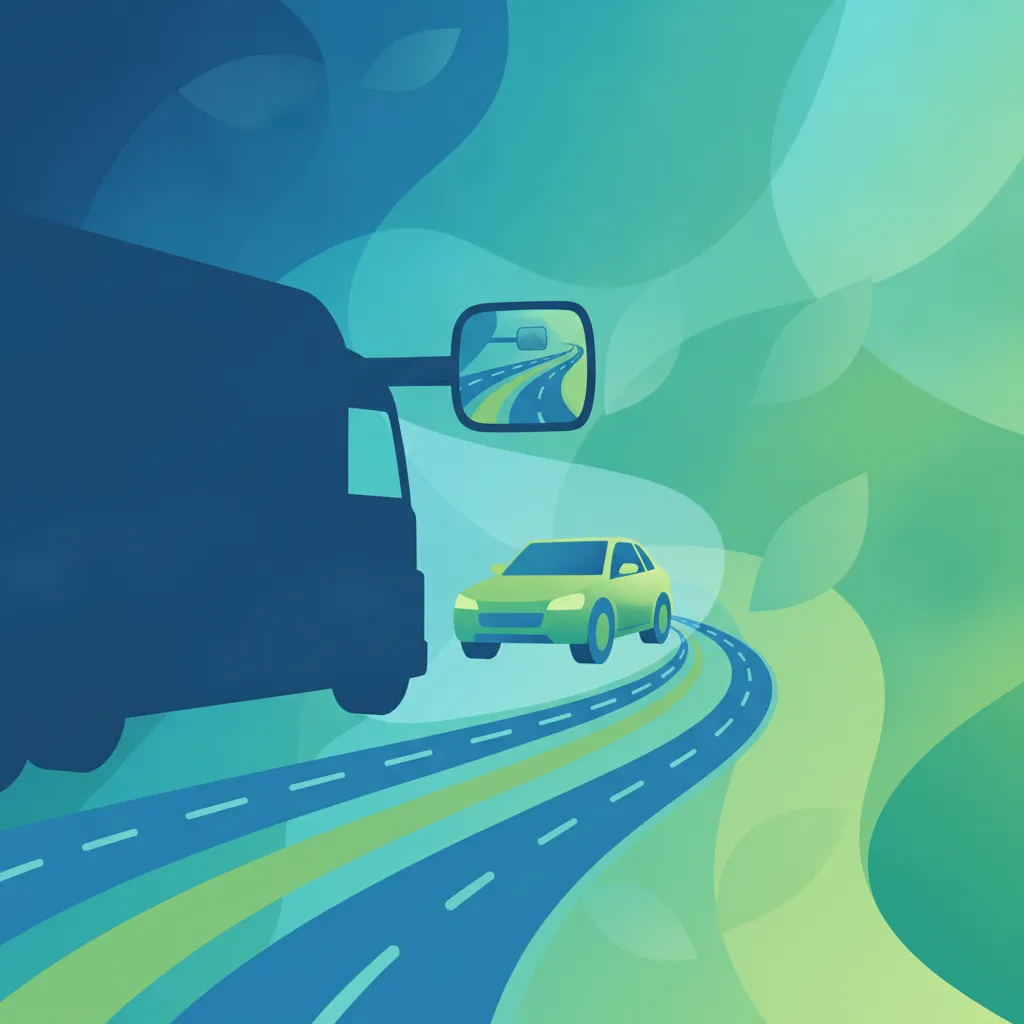
This lesson teaches you how to safely position your cyclomoteur or scooter when sharing the road with buses, lorries, and vans. By understanding blind spots and defensive positioning, you will better anticipate hazards and improve your safety during your Category AM driving experience.
Lesson content overview
Operating a Category AM vehicle—such as a moped (cyclomoteur), scooter under 50cc, or light quadricycle—requires a sophisticated understanding of road sharing. Because of your vehicle's small physical profile and maximum design speed of 45 km/h, you are uniquely vulnerable when navigating traffic alongside larger vehicles. Cars, vans, public transit buses, and heavy goods vehicles (HGVs or poids lourds) dominate the visual landscape and present severe, sometimes invisible hazards to a rider.
To ride defensively and legally under the French Code de la route, you must master the art of strategic road positioning. This lesson teaches you how to maximize your visibility, maintain protective safety margins, anticipate the physical dynamics of heavy vehicles, and avoid the catastrophic mistakes associated with blind spots (angles morts).
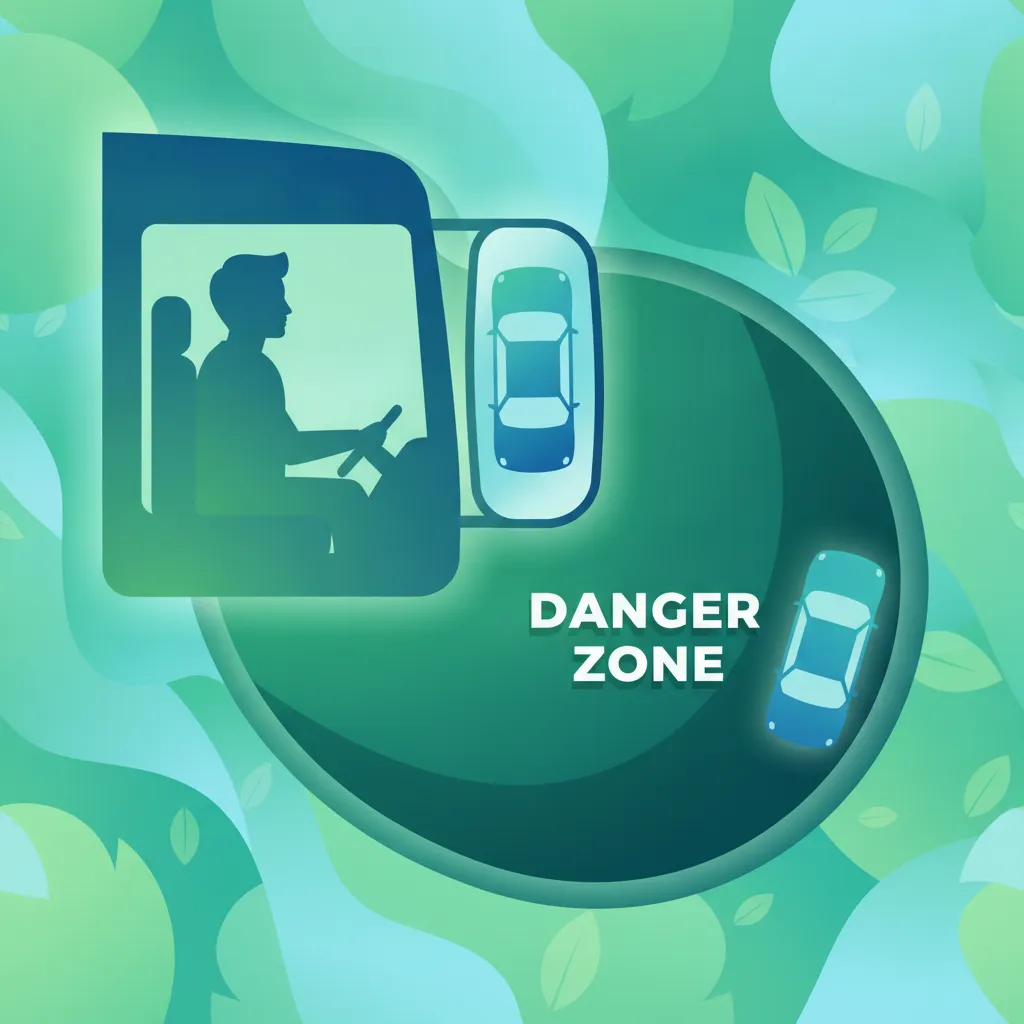
A blind spot is any area around a vehicle that the driver cannot observe directly or through their mirrors. While passenger cars have moderate blind spots, larger vehicles like vans, buses, and lorries have vast zones of zero visibility. If you ride within these zones, you are completely invisible to the driver.
In France, road safety statistics highlight that collisions between heavy vehicles and two-wheelers in blind spots are among the most lethal urban traffic accidents. To combat this, French law (Article R313-32-1 of the Code de la route) mandates that all heavy vehicles over 3.5 tonnes must display authorized "Attention Angles Morts" warning stickers on their sides and rear.
To stay safe, you must memorize and actively avoid the four distinct blind spot zones of any medium or heavy vehicle:
The Golden Rule of Mirrors: If you cannot see the driver’s face in their side-view mirror, they cannot see you. However, even if you can see their mirrors, do not assume they are looking. Always minimize the time you spend riding parallel to any large vehicle.
Maintaining a generous gap between your moped and the vehicle ahead is a core legal requirement in France. Article R412-12 of the Code de la route states that a rider must always leave a safe margin to avoid a rear-end collision in the event of sudden braking.
Under normal driving conditions on dry pavement, you must maintain a longitudinal following distance of at least 2 seconds behind the vehicle in front of you.
Choose a stationary object ahead, such as a road sign, tree, or lamppost, that the vehicle in front of you is about to pass.
As soon as the rear bumper of that vehicle passes the object, start counting: "One thousand and one, one thousand and two."
If your front wheel reaches the same stationary object before you finish saying "one thousand and two," you are tailgating. Increase your distance immediately.
A 2-second gap is the bare legal minimum, but riding behind a bus or HGV demands a 3- to 4-second gap for several critical reasons:
Overtaking a large vehicle on a Category AM scooter is a high-risk maneuver that requires planning, patience, and precise lateral execution. Because your vehicle is speed-limited to 45 km/h, overtaking should only be attempted when the target vehicle is moving significantly slower than your maximum speed (such as a garbage truck, a tractor, or a bus pulling away).
Aerodynamic Turbulence: When overtaking or being passed by a large HGV at speed, the displacement of air creates a dual aerodynamic force: a pushing force as the vehicle approaches, followed by a sudden vacuum suction force (aspiration) as you pass its midsection. Hold your handlebars firmly and lean slightly away from the vehicle to counteract these forces.
Never attempt to pass a large vehicle if:
Intersections and roundabouts are prime locations for severe side-swipe and squeeze accidents. Heavy vehicles require a massive amount of physical space to navigate turns, a dynamic known as the swept path or overhang swing (le porte-à-faux).
When a long vehicle like a bus or articulated lorry turns, its rear wheels do not follow the path of the front wheels. Instead, they cut the corner closely. At the same time, the front and rear overhangs of the vehicle swing outward in the opposite direction of the turn.
[ Turning Right Lorry ]
      \     \
       \     \  <-- Trailer cuts inward (Squeeze Zone!)
  [X]   \_____\
Moped Rider in
Blind Spot!
================= CURB =================
To navigate junctions safely around large vehicles, follow this defensive protocol:
Stop Well Behind: When approaching a red light or stop sign behind a large vehicle, do not pull up right behind its bumper or along its sides. Stop at least one full car length back, keeping yourself in the driver's side mirrors and preserving your own view of the traffic signals.
Do Not Filter on the Right: While lane filtering (inter-files) is regulated in certain parts of France under strict conditions for larger motorcycles, AM riders should never squeeze between a large vehicle and the right-hand curb at intersections.
Anticipate Wide Turns: If a lorry or bus ahead has its indicator blinking to turn, assume it will use the entire width of the junction. Yield the right-of-way, stay back, and let the vehicle complete its maneuver before you proceed.
Narrow rural corridors and tight medieval urban streets in France present severe spatial limitations. When sharing these roads with large oncoming vehicles, you must make immediate, conscious adjustments to your lane placement.
On narrow roads where there is not enough room for a lorry and your moped to pass each other with standard clearances, do not force your way through.
Large vehicles completely block your view of the side of the road. If you are riding behind or passing a parked delivery van or bus, always anticipate that pedestrians, cyclists, or kick-scooter riders (trottinettes) might step out from behind the vehicle where they were previously hidden from your view.
Understanding the cause-and-effect relationship of your positioning choices is vital for your safety on the road and for passing your Category AM theory exam.
| Scenario | Incorrect Behavior (Dangerous) | Correct Behavior (Safe & Legal) |
|---|---|---|
| At a red light behind a bus | Stopping 0.5 metres behind the rear bumper, losing sight of the traffic signals. | Stopping 4–5 metres back, keeping the bus's side mirrors in view. |
| Overtaking a large lorry | Passing with 0.5 metres of clearance on the right-hand side. | Overtaking on the left with a minimum of 2.0 metres of lateral clearance. |
| An HGV is turning right | Squeezing into the open space on the right of the lorry to beat it through the turn. | Staying well behind the lorry, allowing it to complete its wide-angle turn. |
| Riding in heavy rain | Tailgating a delivery van to stay out of the wind. | Increasing following distance to 3–4 seconds to avoid blinding water spray. |
To solidify your understanding of road sharing and safety regulations in France, explore the following semantic resources:
Explore all units and lessons included in this driving theory course.
Lesson content overview
Explore all units and lessons included in this driving theory course.
Explore search topics learners often look for when studying Positioning Near Larger Vehicles. These topics reflect common questions about road rules, driving situations, safety guidance, and lesson level theory preparation for learners in France.
Browse additional driving theory lessons that cover connected traffic rules, road signs, and common driving situations related to this topic. Improve your understanding of how different rules interact across everyday traffic scenarios.
Learn the rules for approaching junctions, roundabouts, and pedestrian crossings in French driving theory. This guide explains how to position your vehicle, interpret priority rules, and manage interactions with other road users at complex urban crossings to maintain safety and compliance with the Code de la route.
In France, pedestrians have clear legal priority when stepping onto or indicating an intent to use a crossing (passage pieton). This lesson details standard zebra crossings, refuge islands, and pedestrian crossings managed by synchronized traffic light systems. You will learn to scan crossings ahead, anticipate pedestrian movements, and safely come to a stop whenever a pedestrian attempts to cross.
France features a vast network of roundabouts (carrefours a sens giratoire) governed by specific entry and lane-use regulations. This lesson explains that vehicles entering a roundabout must yield to traffic already circulating inside. You will learn how to select the correct lane depending on your exit, use direction indicators properly, and yield to pedestrians and cyclists near roundabout exits.
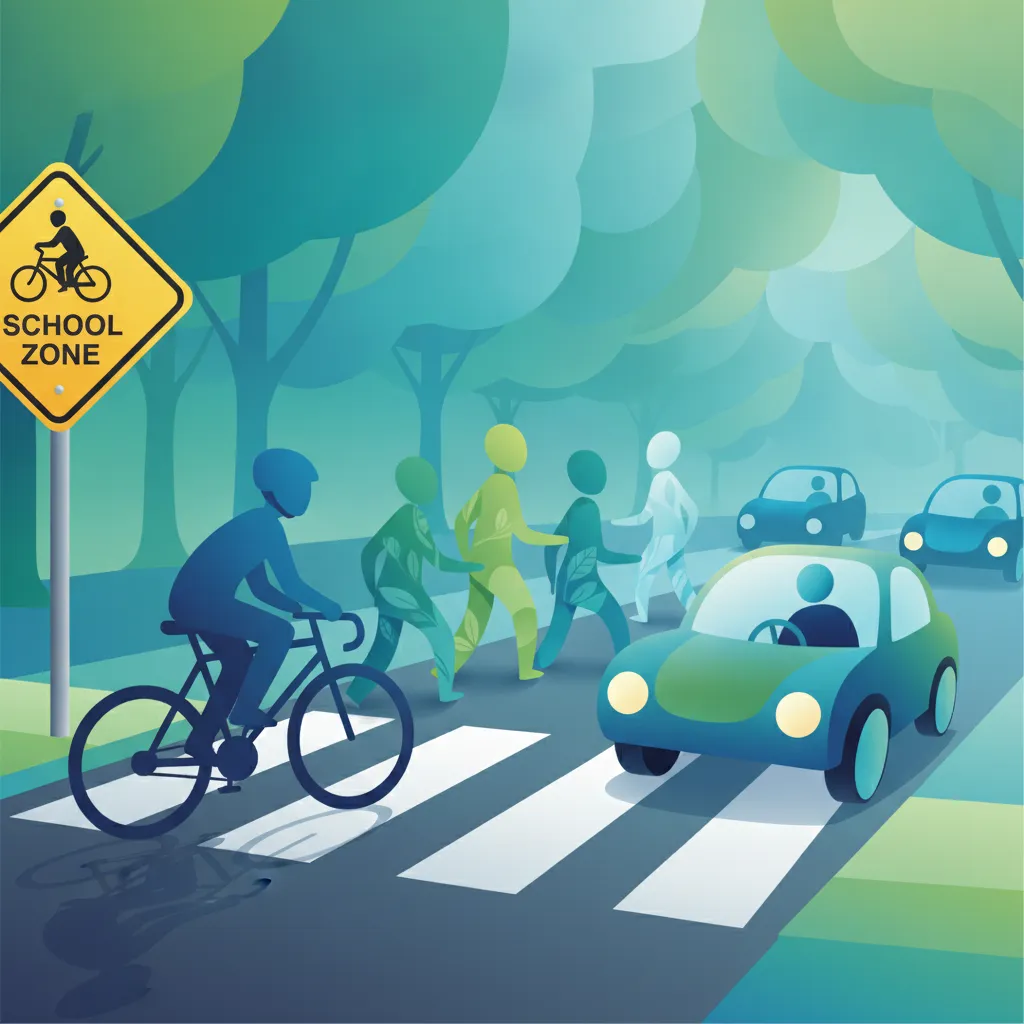
This lesson focuses on the legal requirement to yield to pedestrians on or about to step onto zebra crossings, a major focus of French road safety. You will learn how to approach school zones and pedestrian islands with heightened vigilance and reduced speed. Additionally, the lesson explores shared urban spaces, explaining how to maintain safe lateral distances when overtaking cyclists or personal electric scooters.
Learners will explore the rules related to pedestrian crossings, focusing on the obligation to yield to pedestrians at zebra crossings and flashing pedestrian signals. The lesson highlights the importance of stopping before the stop line, reducing speed, and maintaining vigilance for pedestrian movement. Mastery of these practices ensures the safety of both pedestrians and AM riders at crossing points.
This lesson analyzes the technical path a long wheelbase vehicle must take when turning at intersections and navigating roundabouts. Drivers will learn to calculate tail swing and rear-wheel tracking, intentionally swinging wide to clear roadside curbs and poles safely. The lesson emphasizes yielding protocols for pedestrians and cyclists who may be crossing the target street during the turn.

Negotiating crossroads that lack active traffic light signals requires a clear reading of signs and painted stop or yield lines. This lesson details the obligations of stopping completely at stop signs and slowing down to yield at 'cedez le passage' markings. You will learn to assess cross-traffic speeds, determine priorities when multiple vehicles arrive, and execute turns safely.
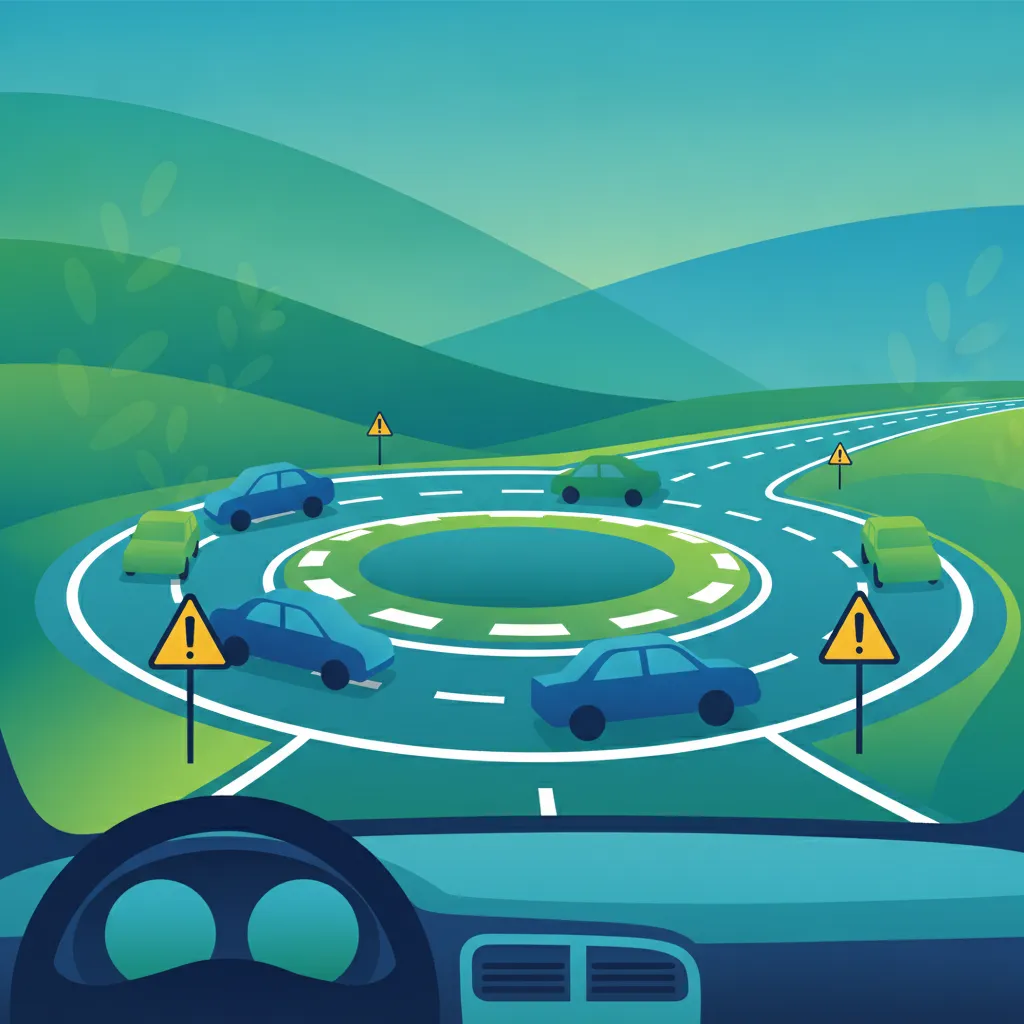
This lesson focuses on the skills required to safely enter, navigate, and exit roundabouts, a common feature in French urban environments. Learners will understand the need to yield to circulating traffic, select the appropriate lane upon entry, and signal intentions when exiting. By mastering these techniques, AM riders can safely integrate into roundabout traffic flow and reduce conflicts with other road users.
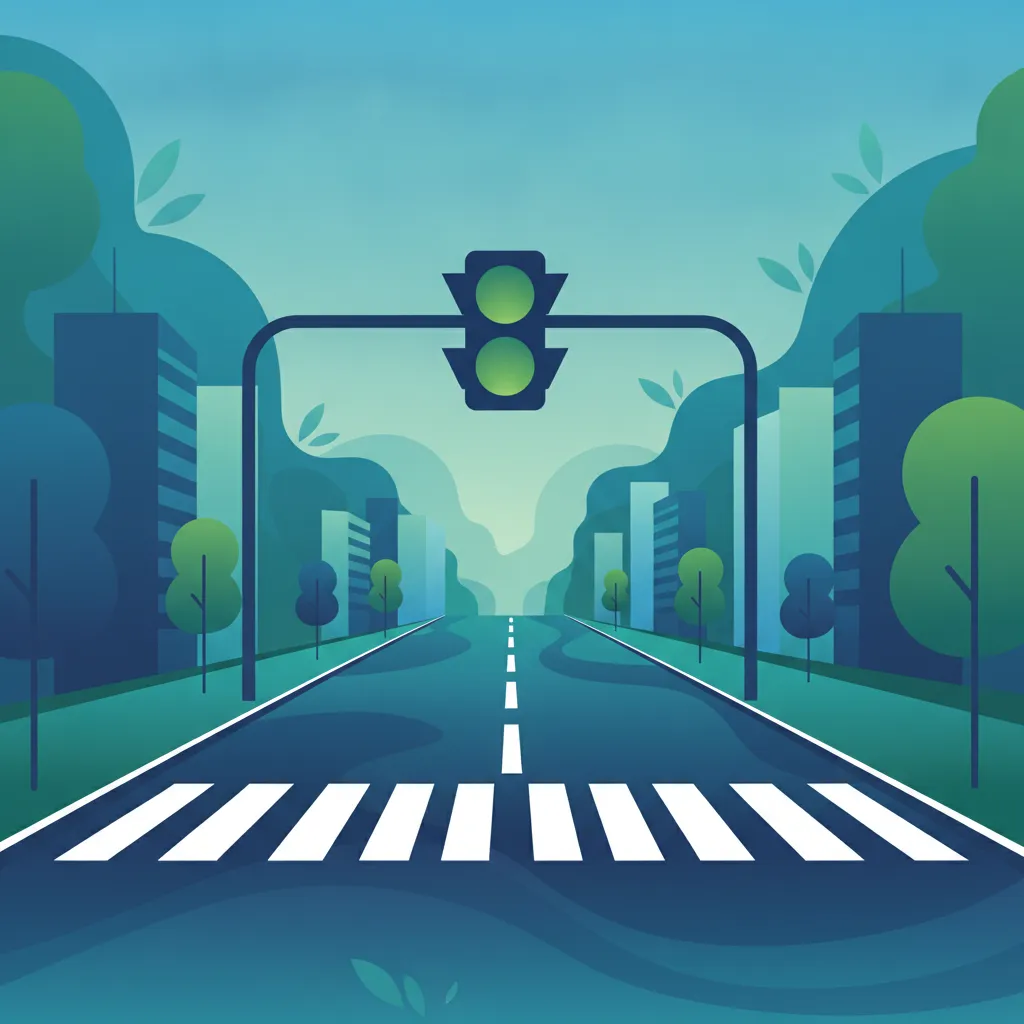
Controlled intersections use traffic lights and accompanying signs to manage busy crossings systematically. This lesson covers how to safely proceed on a green light, negotiate left turns when yielding to oncoming traffic, and obey flashing amber lights. You will also learn the hierarchy of traffic control, where police officer gestures overrule both traffic lights and priority signs.
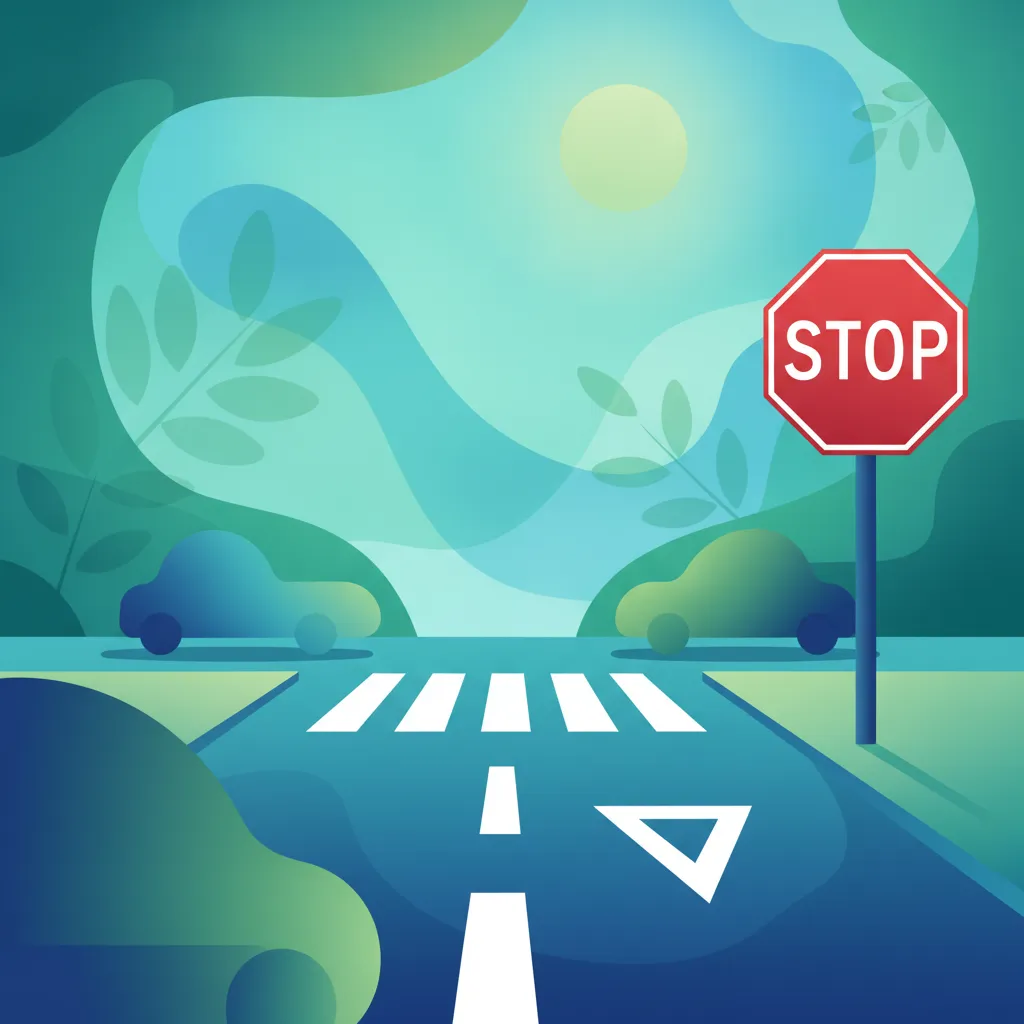
Some crossroads feature complex layouts or specific signs that modify standard priority rules, such as schematic diagrams (panonceaux schematiques). This lesson teaches you how to read these auxiliary signs, which depict the thick line of the priority road and thin lines of secondary roads. You will learn how to maintain priority when the main road curves and how to navigate non-standard intersection layouts.
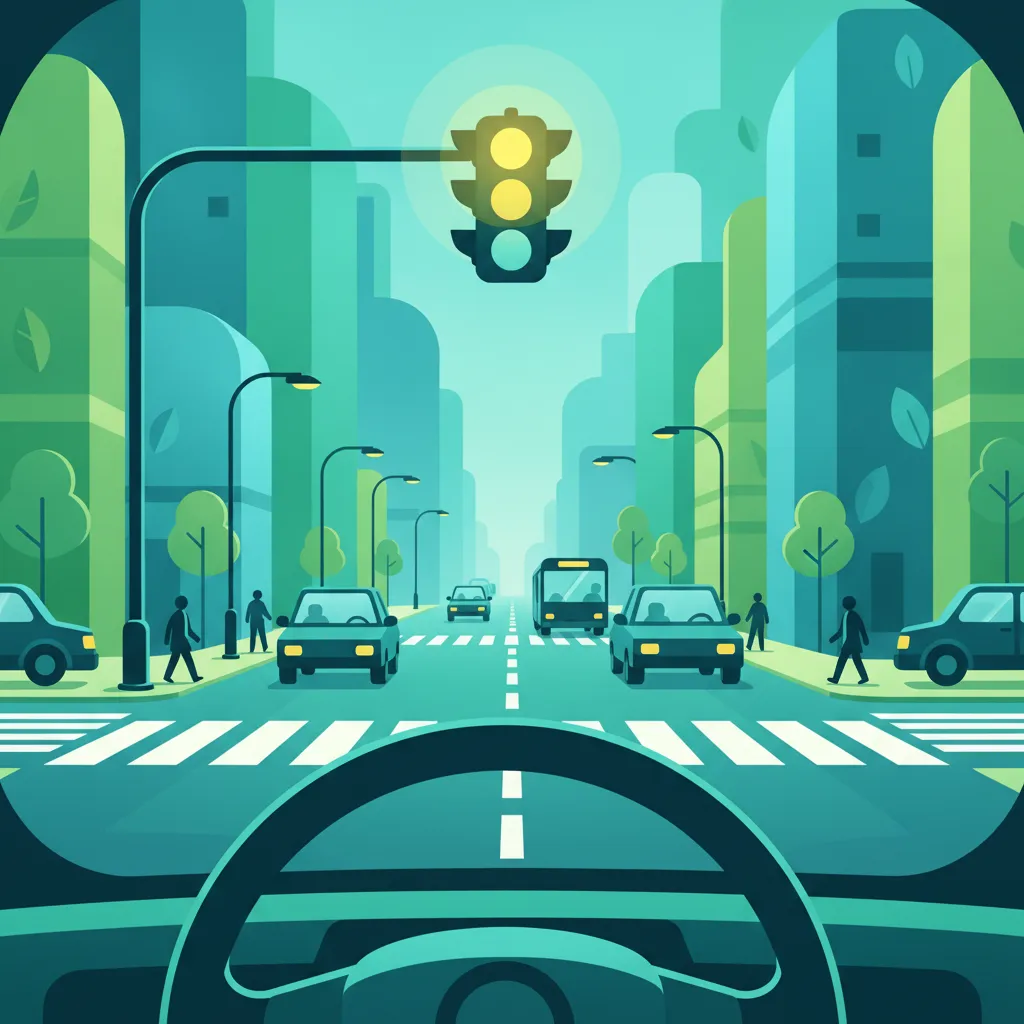
This lesson covers the operational logic of traffic light signals in France, emphasizing the legal implications of the red, amber, and green cycles. You will study how to safely manage the amber phase to avoid rear-end collisions from vehicles behind while maintaining control. Additionally, you will discover the unique challenge of electromagnetic induction loops, which sometimes fail to detect lightweight motorcycles at quiet intersections.
Understand the core principles of defensive riding and hazard anticipation for light vehicles. This lesson provides an overview of managing visibility, responding to changing weather conditions, and handling peer pressure or distractions to ensure consistent safety according to French traffic regulations and general road safety theory.
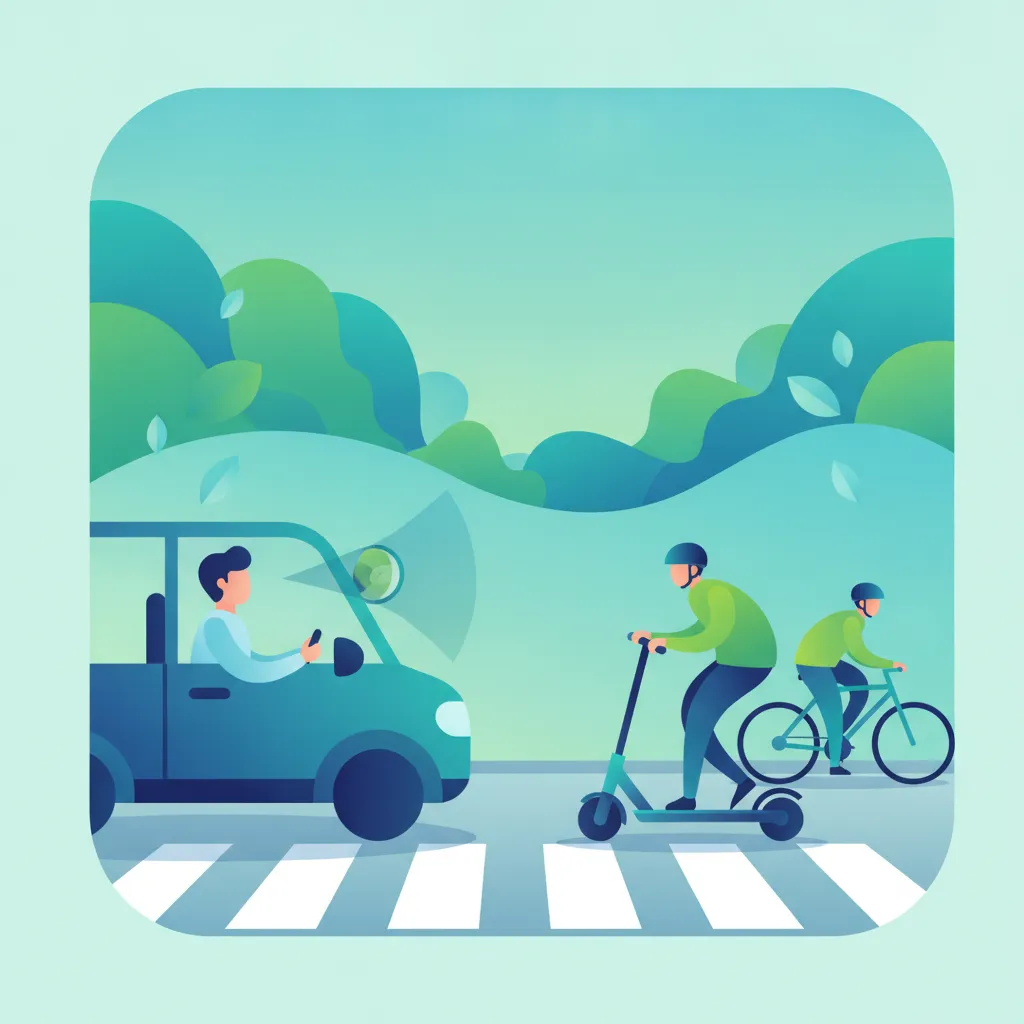
In this lesson, drivers will learn strategies to avoid conflicts with smaller vehicles, such as cars and vans, which may not be as visible in large vehicle blind spots. The content emphasizes maintaining adequate spacing, using proper lane discipline, and being aware of small vehicles' behavior during lane changes and turns. Learners will also be introduced to communication techniques, such as signalling and eye contact.
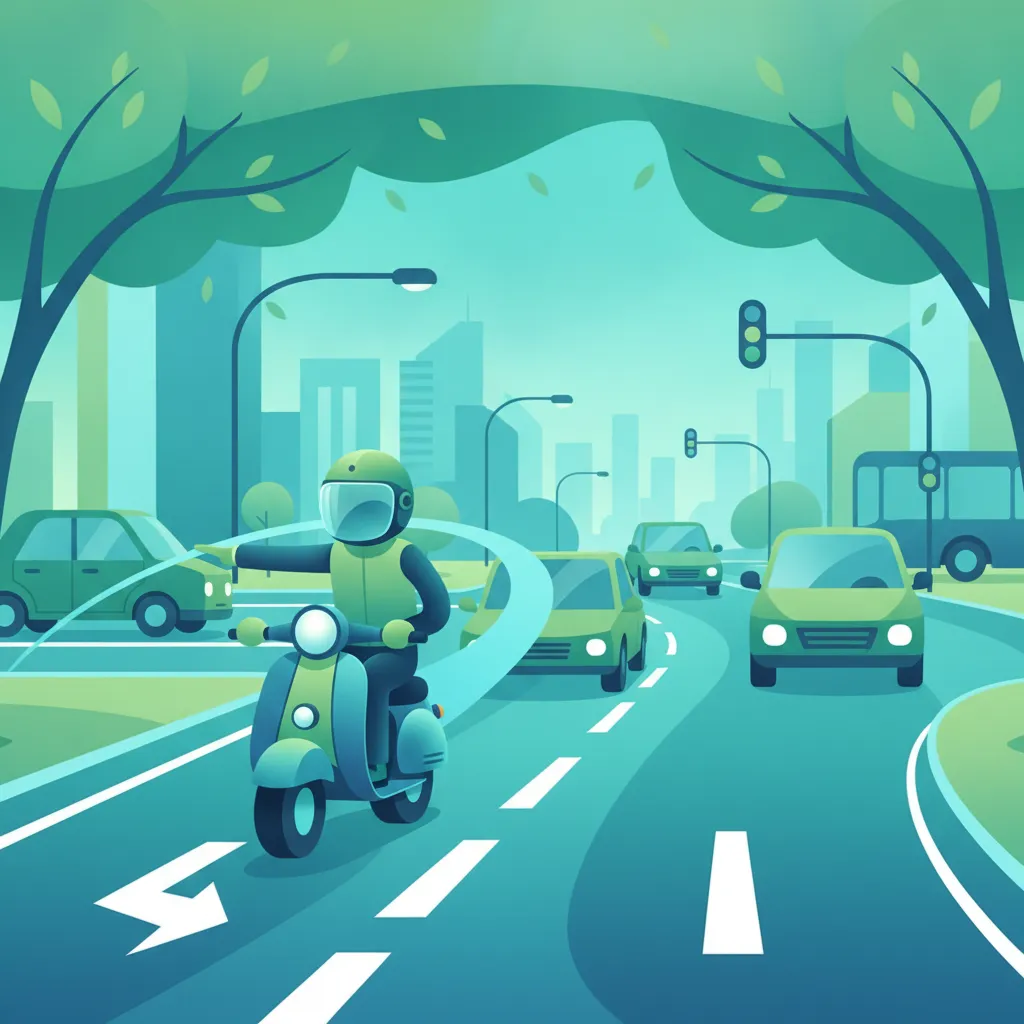
Learners explore the specific responsibilities that accompany operating a small, exposed vehicle, emphasizing the need for heightened defensive driving techniques under French law. The lesson stresses the importance of maintaining visibility and predictability, adhering strictly to the Code de la route, and understanding the dynamics of sharing the road safely. By internalizing these responsibilities, riders can significantly reduce risks and contribute to a safer traffic environment for all users.
This lesson provides global defensive driving strategies to minimize collision risks for all non-motorized and vulnerable road users. Drivers will learn to systematically lower vehicle speed in dense pedestrian zones, even when no active hazards are visible. By cultivating an anticipatory mindset and maintaining generous safety margins, professional drivers establish a protective safety envelope around their vehicle.
Certain groups of road users require heightened defensive attention from drivers due to physical limitations or unpredictable behaviors. This lesson covers how to recognize signs of visual impairment (white canes), mobility challenges, and the unpredictability of young children. You will learn to reduce your speed, extend yielding patience, and proactively secure extra space to protect these vulnerable users.
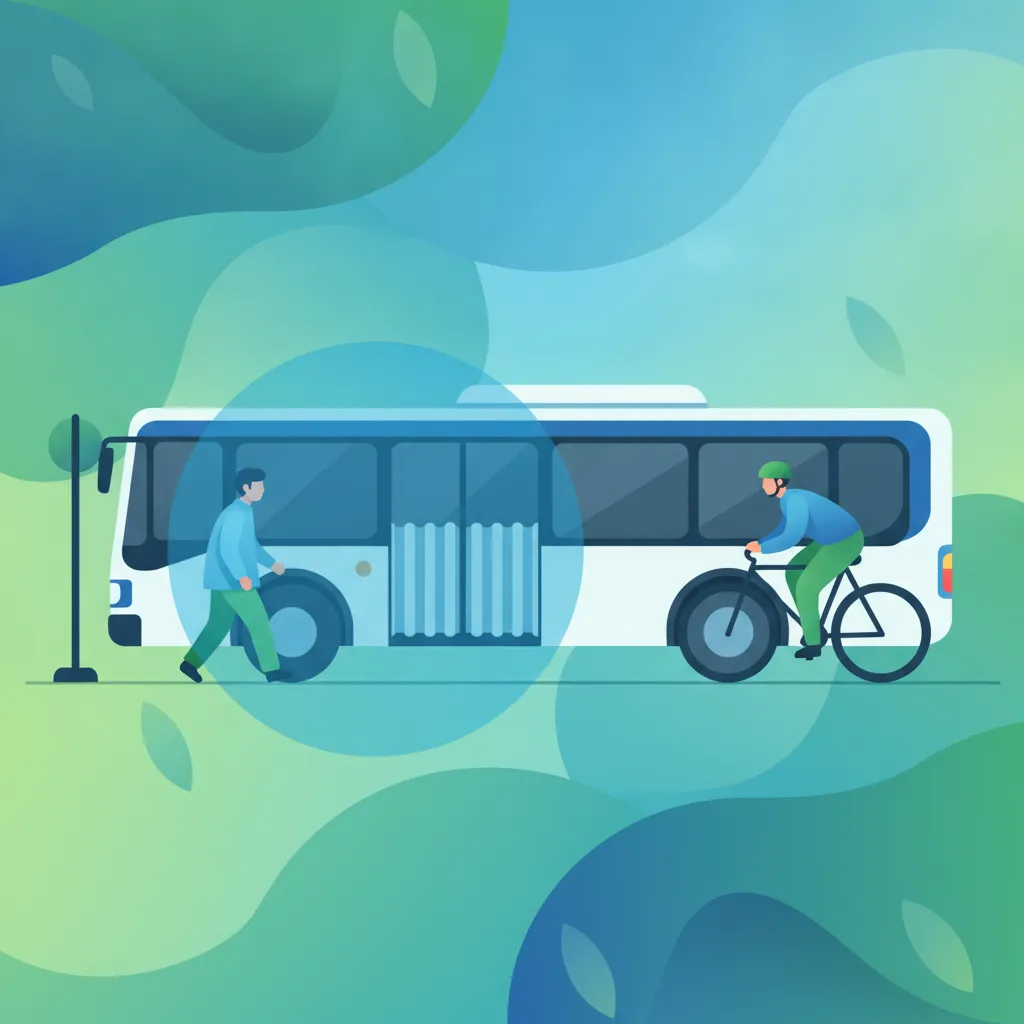
This lesson teaches specific visual scanning methods to detect vulnerable road users, such as children, elderly individuals, and cyclists near stops. Drivers will learn to anticipate sudden movements, like a passenger running to catch a bus or stepping off a sidewalk unexpectedly. Managing the massive blind spots around the front and right-hand sides of passenger vehicles is highlighted as a critical safety duty.
This lesson teaches you how to establish and preserve a dynamic cushion of safety on all sides of your motorcycle. You will study how to apply the 'two-second rule' to keep a safe following distance, extending it to three or more seconds in adverse weather. Additionally, you will discover how to manage tailgating motorists safely without resorting to dangerous speed increases, ensuring you always maintain a clear escape route.
This lesson focuses on the inherent vulnerability of AM vehicles due to their limited mass, exposure, and visibility within mixed traffic flows on French roads. Learners will examine how blind spots, sudden lane changes by larger vehicles, and higher impact severity affect small vehicle safety. The content underscores the necessity for riders to adopt proactive safety measures, maintain safe distances, and be constantly aware of surrounding traffic dynamics.
In this lesson, drivers will learn how to safely share the road with motorcycles and scooters, focusing on the specific blind spots and speed differentials that create risk. The content highlights proper lane positioning, caution when overtaking, and strategies for predicting motorcycle trajectories. Learners will also be introduced to the importance of being aware of scooter movements, especially in narrow streets.
This lesson details the rules of lane discipline for operating wider and longer passenger transport vehicles on highway and city networks. Learners will explore proper lane positioning to prevent encroachment on adjacent lanes or sidewalks. It also covers the step-by-step visual and signaling sequence required to perform safe lane changes, avoiding sudden movements that could startle other drivers.
This lesson details the location and scale of blind spots around passenger cars and heavy goods vehicles, often referred to as the 'no-zone' or 'angles morts'. You will learn why truck drivers cannot see you directly behind or immediately adjacent to their cab doors. The lesson provides actionable strategies to minimize the time you spend in these dangerous zones, ensuring you always pass quickly and safely.
Find clear answers to common questions learners have about Positioning Near Larger Vehicles. Learn how the lesson is structured, which driving theory objectives it supports, and how it fits into the overall learning path of units and curriculum progression in France. These explanations help you understand key concepts, lesson flow, and exam focused study goals.
An angle mort is a blind spot where the driver of a large vehicle cannot see you. For AM riders, staying out of these spots is a fundamental safety requirement that is frequently tested on the theory exam.
Generally, no. Overtaking a large vehicle at a junction is dangerous because the driver may not see you when they start to turn. It is safer to wait behind the vehicle.
Position yourself so you are clearly visible in their mirrors. If you cannot see the driver's face in their side mirror, they likely cannot see you.
Yes, you must learn to recognize the wide turning paths of heavy vehicles, as they often need to swing wide, creating unexpected space that you should not occupy.
Ready to focus your study? Use the practice search to find exactly the French driving theory questions you need for the Code de la route and permis de conduire ETG. Refine your knowledge on specific topics or challenging rules to boost your confidence and exam readiness.