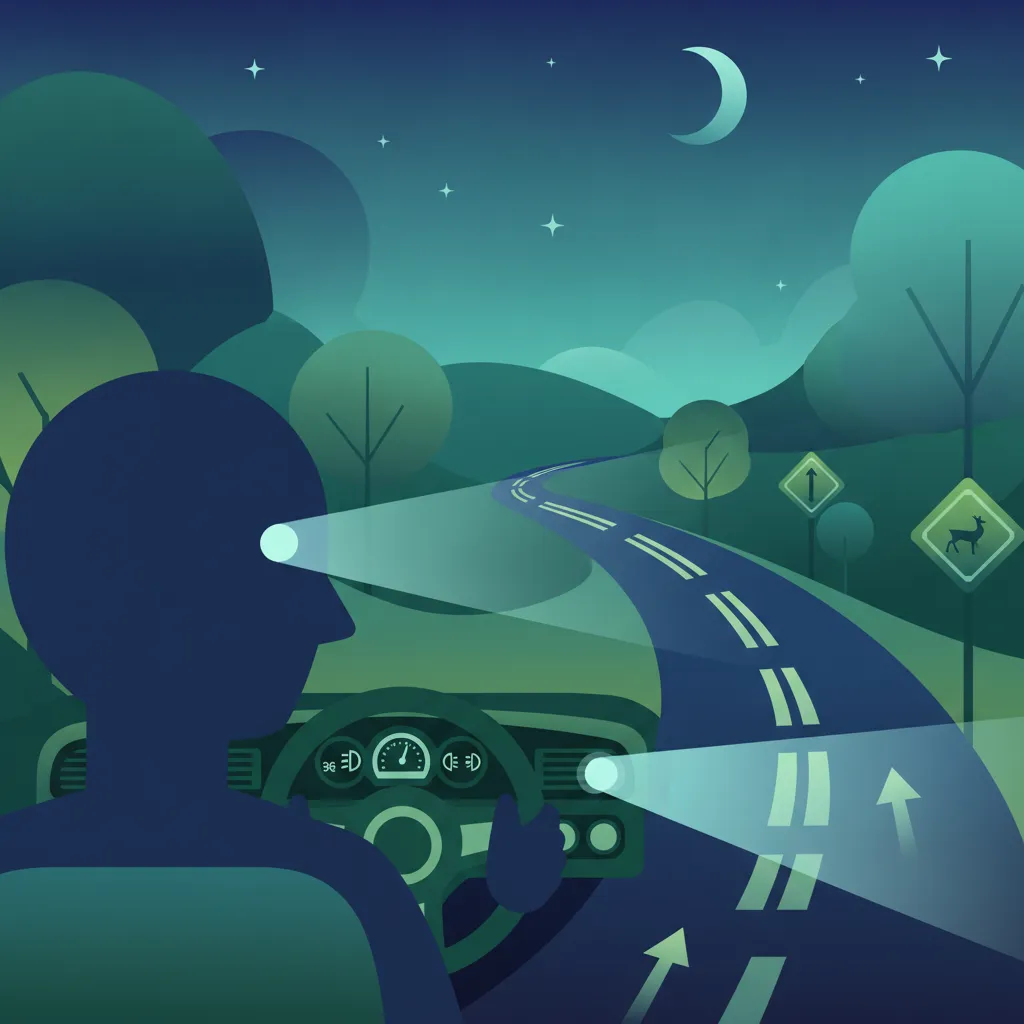
This lesson explores critical safety techniques for operating small vehicles like scooters and cyclomoteurs at night or during periods of reduced visibility. By understanding how to manage lighting, adapt to glare, and identify hazards, you will be better prepared to handle these situations in both the official French AM theory exam and real-world traffic.
Lesson content overview
Riding a light motorized vehicle—such as a moped, scooter, or light quadricycle under the French Category AM licence (permis AM, formerly known as the BSR)—requires exceptional defensive driving skills. While night riding and low-visibility conditions are inevitable, they present disproportionate safety risks. Statistically, a significant portion of serious accidents involving two-wheelers occurs between dusk and dawn.
To navigate these conditions safely, you must master the legal requirements of the French Code de la route, understand how human visual perception changes in the dark, and adapt your riding behavior to compensate for reduced hazard detection.
Operating a small vehicle at night is not merely a matter of turning on your headlights. The human visual system is poorly adapted to darkness, and the engineering limitations of Category AM vehicles compound this vulnerability.
During the day, your eyes rely on cone cells (photopic vision) located in the center of the retina. Cone cells detect sharp details, rapid movement, and a wide spectrum of colors.
At night, your vision shifts to rod cells (scotopic vision). Rod cells are highly sensitive to light but are concentrated on the outer edges of the retina. This means:
Your headlamp has a limited projection range. A common, highly dangerous error is outriding your headlights. This occurs when your total stopping distance exceeds the distance illuminated by your vehicle’s beam.
If your dipped beam (feux de croisement) illuminates the road for 30 metres ahead, but your speed requires 35 metres to come to a complete stop, you will strike any obstacle that suddenly appears at the edge of your light beam before you can physically halt your vehicle.
The Code de la route dictates strict rules regarding when and how to use your vehicle’s lighting systems. Failing to select the correct light setting is a serious traffic violation and creates immediate hazards for you and other road users.
The primary low-beam headlight setting designed to illuminate the road surface ahead (at least 30 metres) without dazzling oncoming drivers.
The high-beam headlight setting designed to provide maximum illumination (at least 100 metres) on unlit roads. It must be turned off when other road users are ahead.
Under Article R313-8 of the French Code de la route, you must manage your beams dynamically based on your surroundings:
Detect the glow of oncoming headlights over a hill crest or around a bend before the vehicle itself is visible.
Switch from main beam (feux de route) to dipped beam (feux de croisement) immediately to prevent blinding the approaching driver.
Slightly shift your gaze down and to the right, focusing on the white edge line (ligne de rive) or the right shoulder of the road to protect your eyes from glare.
Maintain a steady, central lane position and reduce your speed slightly to compensate for the shortened view of the road.
Once the oncoming vehicle has completely passed your rear bumper/wheel, switch back to main beams if the road remains unlit and clear.
In conditions of dense fog, heavy snow, or torrential rain, your standard headlights can reflect off the water droplets in the air, creating a blinding white wall of light.
To be safe at night, you must not only see; you must also be seen. Small vehicles have a narrow profile, making them extremely difficult for car and truck drivers to spot against a backdrop of urban neon lights or rural darkness.
In France, wearing a certified high-visibility reflective vest (gilet de haute sécurité, often called the "gilet jaune") is mandatory under Article R412-36 for any rider operating outside of built-up areas at night or during the day when visibility is insufficient. You must also carry this vest on your vehicle at all times to wear in the event of an emergency breakdown.
Your safety gear should feature retroreflective materials that bounce light directly back to its source (the headlights of approaching cars):
One of the greatest hazards of night riding is glare (l'éblouissement), which can cause temporary blindness, lasting several critical seconds.
If an oncoming driver fails to dim their headlights, do not flash your high beams in retaliation; this will only result in two blinded riders heading toward each other. Instead:
Scratches, dust, and water spots on your helmet visor or windshield scatter light, multiplying the effects of glare.
The human body is regulated by a internal biological clock (the circadian rhythm). Our natural alertness dips significantly during specific hours, most notably between midnight and 5:00 AM, and in the mid-afternoon.
Visual Performance & Alertness Timeline (Night Hours)
[ 20:00 ] Dusk begins -> Switch to Dipped Beams
[ 22:00 ] Contrast sensitivity drops; peripheral vision decreases
[ 00:00 ] Circadian dip -> Reaction times slow down significantly
[ 02:00 ] Peak fatigue zone -> Crucial to take a 15-20 min rest stop
[ 05:00 ] Dawn begins -> High risk of animal crossings in rural areas
Fatigue acts on your brain in a manner highly similar to alcohol consumption. It leads to:
If you must ride at night, plan your journey with active rest strategies:
Your peripheral vision is highly dependent on light. At night, the dark areas outside your headlight beam are virtually invisible. To compensate for this "tunnel-like" view of the road, you must employ active scanning techniques.
Some hazards are uniquely dangerous or far more prevalent after dark. A defensive Category AM rider must anticipate these risks, especially on unlit regional roads (routes départementales).
Pedestrians walking along rural roads without reflective gear are almost impossible to see until you are within 20 to 30 metres of them.
In forested areas of France, wild boars (sangliers) and deer (chevreuils) are highly active at night, particularly at dawn and dusk.
Potholes, oil slicks, gravel, and wet leaves are incredibly difficult to spot in low light.
Your night riding strategies must change dynamically based on several overlapping environmental factors:
| Environment / Condition | Primary Hazards | Mandatory Lighting | Required Rider Behavior |
|---|---|---|---|
| Well-lit Urban Street | Pedestrians, turning cars, visual clutter from signs | Dipped Beams (Feux de croisement) | Lower speed; watch intersections closely; check blind spots frequently. |
| Unlit Rural Road | Animals, sharp bends, slow agricultural vehicles | Main Beams (Feux de route) | Switch to dipped beam when meeting oncoming traffic or following a vehicle; scan road shoulders. |
| Dense Fog / Rain (Visibility < 100m) | Extreme glare, loss of control, rear-end collisions | Dipped Beams + Fog Lights | Reduce speed drastically; increase following distance to 5+ seconds; wear a reflective vest. |
| Heavy Payload (Passenger/Luggage) | Rear of vehicle sags, angling headlights upward | Dipped Beams (manually adjusted) | Adjust headlight aim downward; allow for much longer stopping distances. |
Avoid these common mistakes, which carry stiff legal penalties under the Code de la route and put your life at risk:
To ensure your safety and remain compliant with French road laws, memorize these core practices:
Explore all units and lessons included in this driving theory course.
Lesson content overview
Explore all units and lessons included in this driving theory course.
Explore search topics learners often look for when studying Night Riding and Reduced Visibility Strategies. These topics reflect common questions about road rules, driving situations, safety guidance, and lesson level theory preparation for learners in France.
Browse additional driving theory lessons that cover connected traffic rules, road signs, and common driving situations related to this topic. Improve your understanding of how different rules interact across everyday traffic scenarios.
Learn how to proactively identify hazards such as wildlife, road surface irregularities, and vulnerable road users in challenging night conditions. This guide covers scanning techniques and situational awareness rules defined in the French Code de la route to help you anticipate potential risks before they become critical situations.
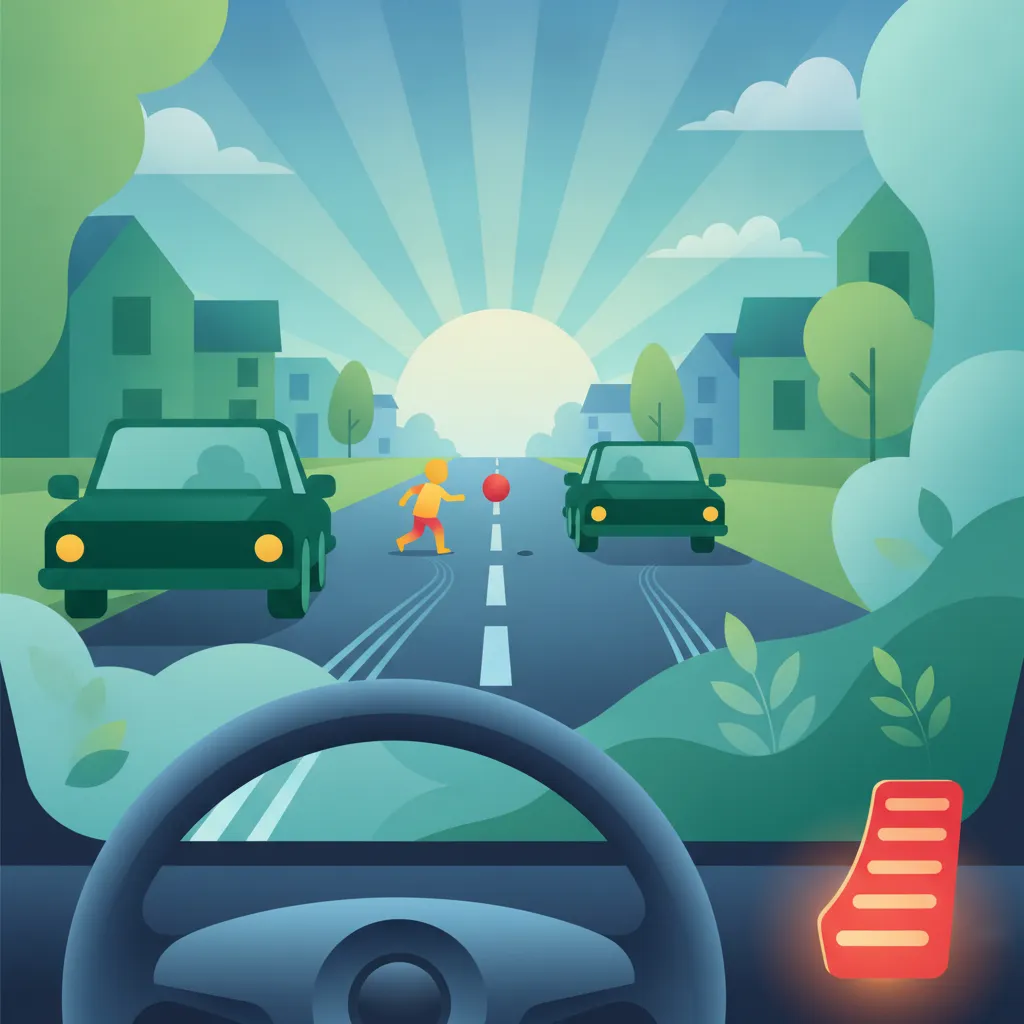
Learners will develop the ability to anticipate potential hazards on the road, enhancing reaction times and defensive riding strategies. The lesson emphasizes constant scanning, early identification of threats such as sudden stops, pedestrian crossings, or unexpected lane changes, and appropriate response measures. By cultivating proactive risk assessment, AM riders can significantly reduce accident likelihood.

This lesson addresses the distinct safety considerations for riding during daylight hours versus nighttime, covering topics such as managing glare from the sun and ensuring adequate lighting after dark. Learners will learn strategies to maintain visibility, stay alert, and adapt riding techniques to varying light conditions, including the use of reflective gear. Emphasis is placed on proactive planning to mitigate risks associated with reduced visibility, thereby fostering safe riding practices.
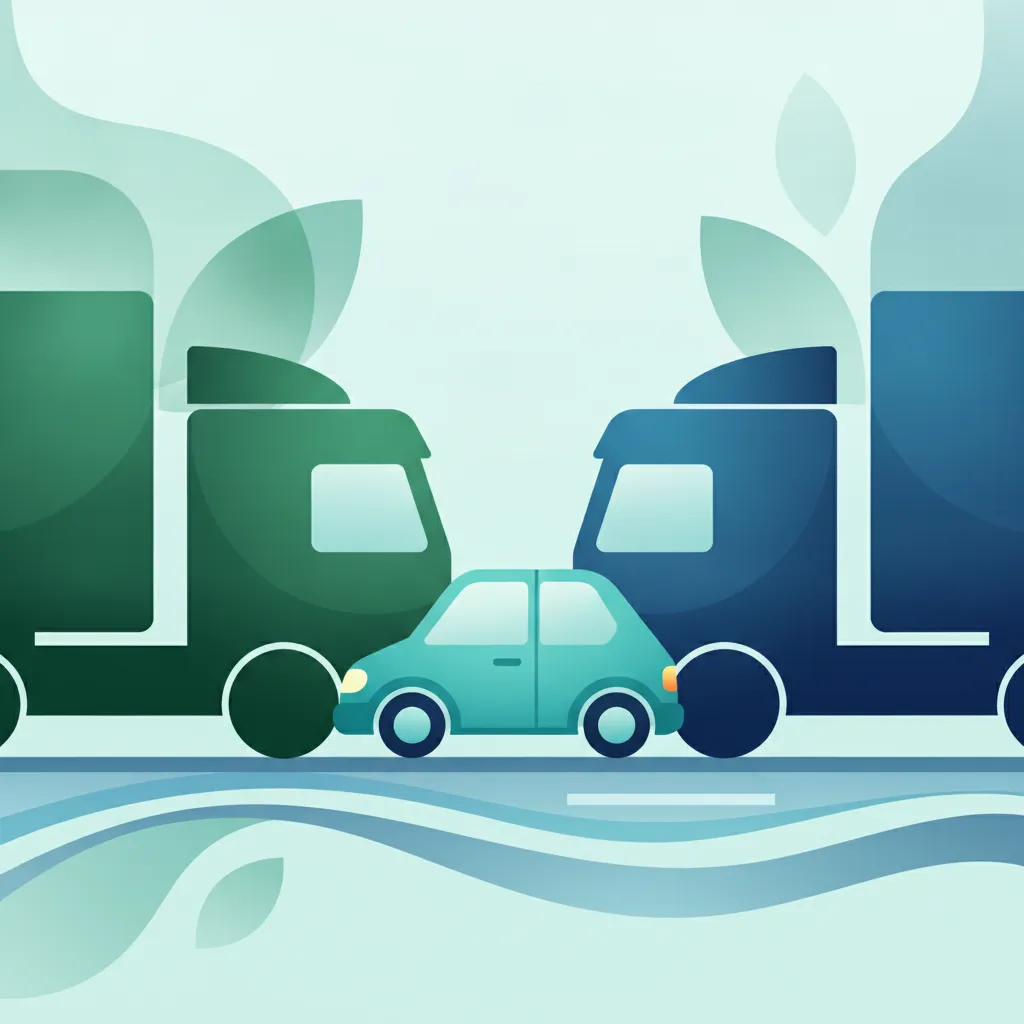
This lesson focuses on the inherent vulnerability of AM vehicles due to their limited mass, exposure, and visibility within mixed traffic flows on French roads. Learners will examine how blind spots, sudden lane changes by larger vehicles, and higher impact severity affect small vehicle safety. The content underscores the necessity for riders to adopt proactive safety measures, maintain safe distances, and be constantly aware of surrounding traffic dynamics.
This lesson focuses on French warning signs that alert drivers to potential hazards ahead, such as curves, animal crossings, or slippery surfaces, with particular attention to signs relevant to AM riders. Learners will examine how to interpret these signs, understand the associated risks, and adapt riding behavior accordingly. By mastering warning sign recognition, riders can proactively manage safety risks in diverse road conditions.
Proactive drivers scan the road constantly, detecting potential dangers before they turn into real-world emergency situations. This lesson teaches scanning techniques, the use of rear-view mirrors, and the interpretation of visual cues from other road users. You will learn to anticipate hazards like child play near roads, merging vehicles, and sudden lane changes, helping you drive defensively.
Learners will explore techniques for maintaining control and safety while riding in rain, focusing on reduced braking efficiency, hydroplaning prevention, and visibility challenges. The lesson emphasizes appropriate speed reduction, tire condition checks, and the use of rain gear to enhance rider comfort and protection. By mastering these adaptations, riders can navigate wet French conditions with confidence.
This lesson focuses on the skill of adjusting speed according to real-time road conditions, visibility, and traffic density. Learners will learn to assess factors such as weather, road surface quality, and pedestrian activity to determine a safe riding speed under French regulatory expectations. By mastering adaptive speed control, riders can enhance safety and reduce the likelihood of accidents caused by inappropriate speed.
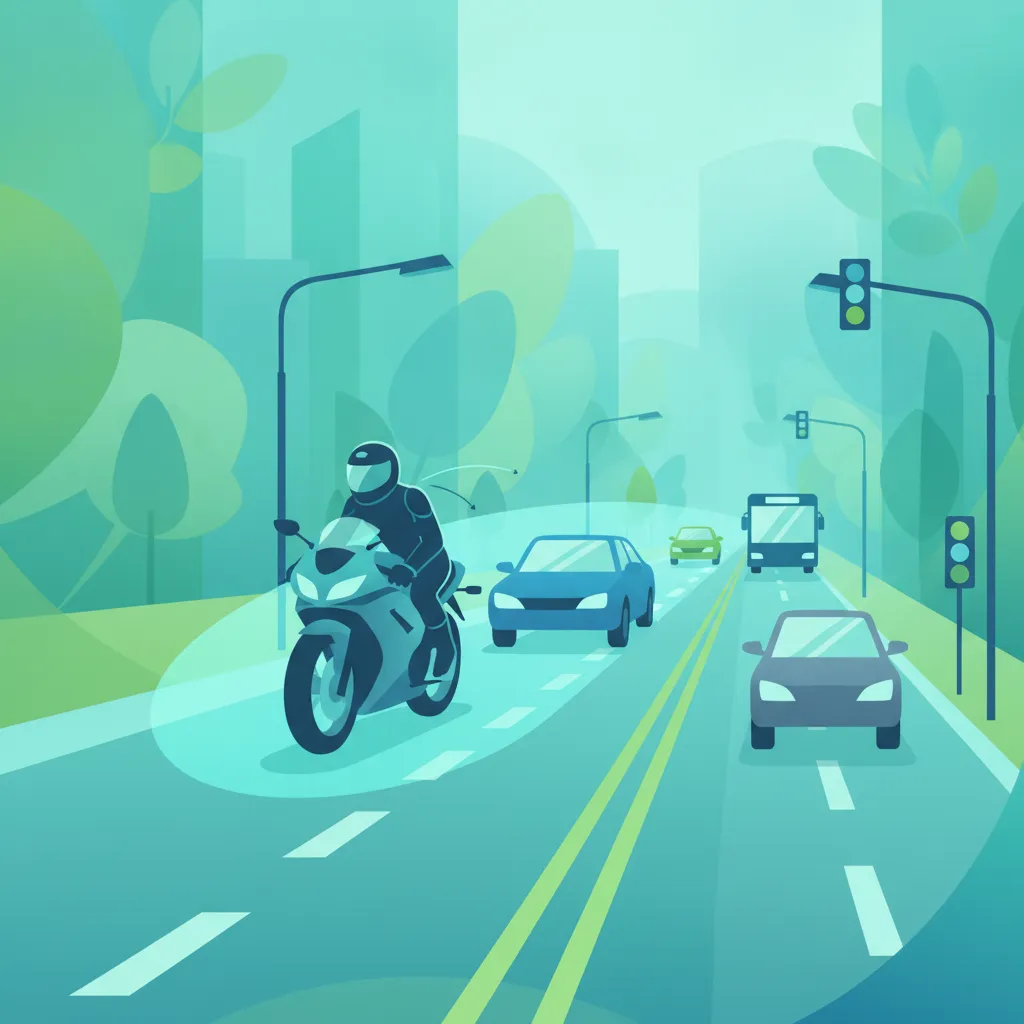
This final lesson integrates all course concepts into a single, cohesive approach to defensive riding and continuous risk assessment. You will study how to maintain a high-mileage visual lead, continuously scanning the road ahead for warning signs of conflict. By learning to assume that other motorists may not see you, you will build the proactive slowing habits and situational awareness needed to remain safe throughout your riding life.
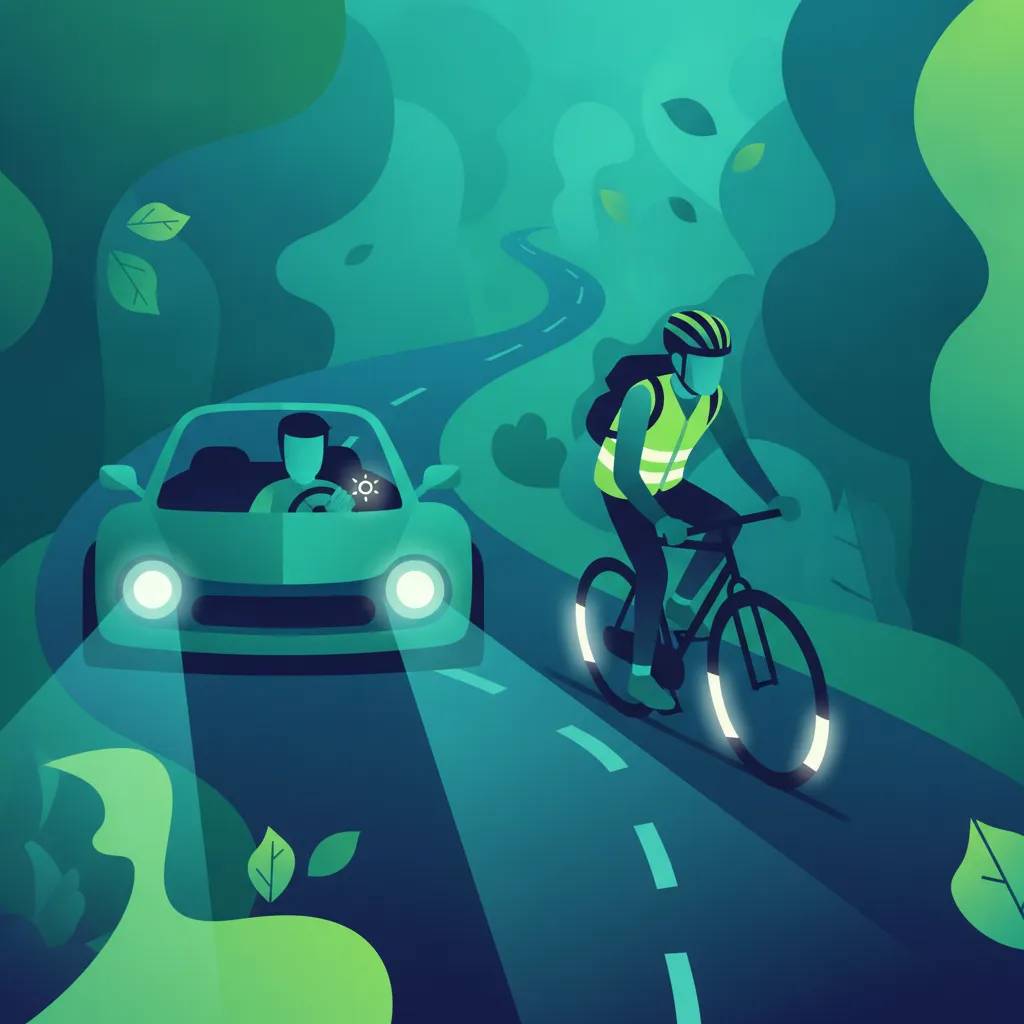
Learners will examine how the strategic use of lighting and reflectors significantly enhances rider visibility to other road users, especially in low-light conditions. The lesson outlines the legal requirements for front and rear lights, the benefits of daytime running lights, and the role of retroreflective strips on clothing. By following these guidelines, AM riders can improve their conspicuity, reducing the risk of collisions during both day and night riding in France.
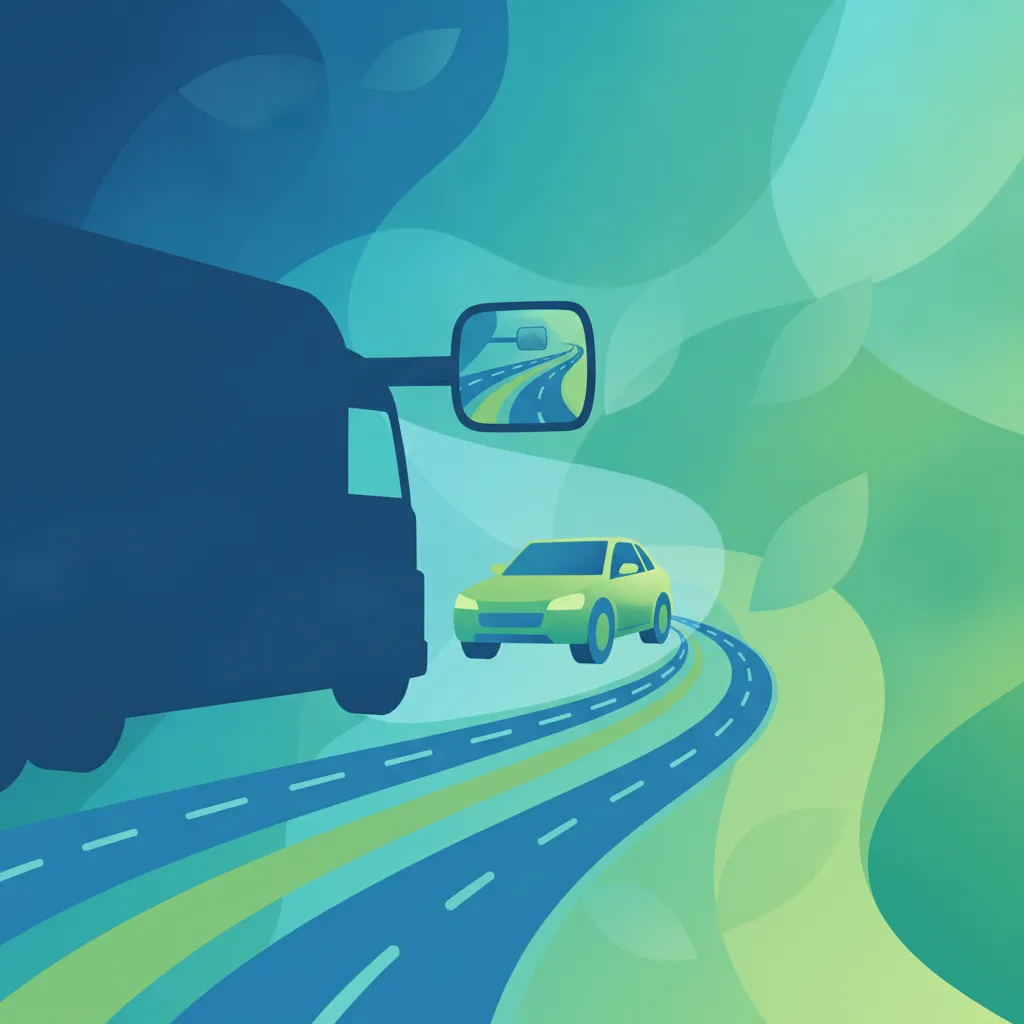
This lesson addresses the challenges of positioning near larger vehicles such as cars, vans, buses, and lorries on French roads. Learners will learn to identify blind spots (angles morts), maintain a safe distance, and position themselves to maximize visibility and predictability. Understanding these dynamics is crucial for AM riders to avoid dangerous situations and ensure safe overtaking and lane sharing.
Understand the official regulations for using dipped, main, and fog beams on French roads under the Code de la route. This lesson details the legal standards for mandatory reflective gear and retroreflective helmet stickers, ensuring you comply with French safety laws during night or low-light operation.
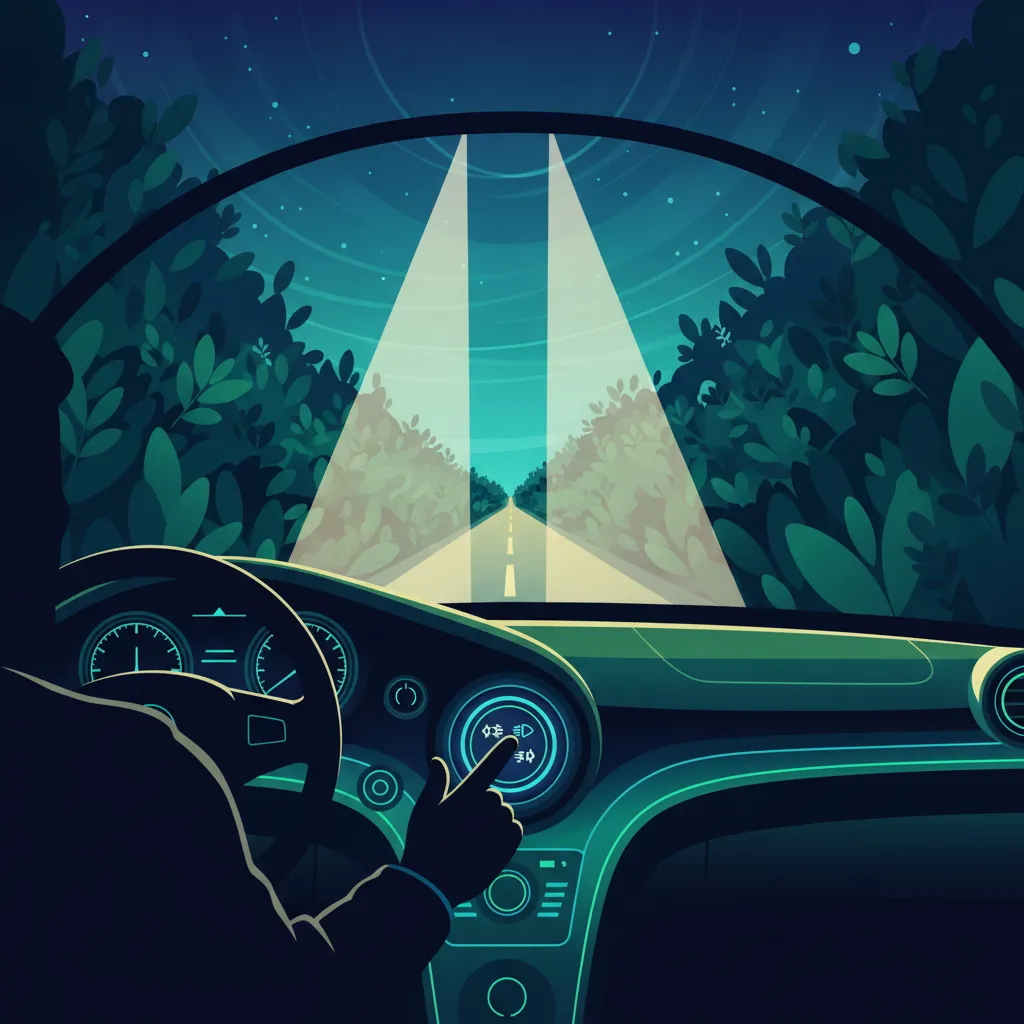
Correctly using your vehicle's lighting system is critical for visibility and communicating with other drivers on the road. This lesson explains when to use low beams (feux de croisement), high beams (feux de route), position lights, and specialized front and rear fog lights. You will learn the legal lighting configurations for driving in urban tunnels, rainy weather, dense fog, and dark rural roads.
This lesson explores practical methods to make yourself visible to other road users, preventing the classic 'sorry mate, I didn't see you' hazard. You will analyze the use of high-visibility yellow or orange retro-reflective waistcoats, which are legally required to be carried on board in France. Additionally, you will study optimal headlight utilization and correct placement of auxiliary indicators to capture driver attention.
This lesson addresses the distinct safety considerations for riding during daylight hours versus nighttime, covering topics such as managing glare from the sun and ensuring adequate lighting after dark. Learners will learn strategies to maintain visibility, stay alert, and adapt riding techniques to varying light conditions, including the use of reflective gear. Emphasis is placed on proactive planning to mitigate risks associated with reduced visibility, thereby fostering safe riding practices.
Learners will examine how the strategic use of lighting and reflectors significantly enhances rider visibility to other road users, especially in low-light conditions. The lesson outlines the legal requirements for front and rear lights, the benefits of daytime running lights, and the role of retroreflective strips on clothing. By following these guidelines, AM riders can improve their conspicuity, reducing the risk of collisions during both day and night riding in France.
Driving at night introduces serious safety challenges, such as reduced visual range, headlight glare, and fatigue. This lesson explains how to correctly transition from high beams to low beams to avoid blinding oncoming traffic. You will learn to look toward the right-side edge line to minimize headlight glare and recognize signs of visual tiredness that necessitate immediate rest breaks.
This lesson covers the technical and behavioral adaptations needed to ride safely at night under reduced ambient lighting. You will learn the legal parameters for switching between high and low beams, and how to avoid looking directly into oncoming headlights to preserve your night vision. The lesson also emphasizes the heightened threat of rider fatigue after dark and how to utilize retro-reflective clothing to make yourself visible.
This lesson covers the operational logic of traffic light signals in France, emphasizing the legal implications of the red, amber, and green cycles. You will study how to safely manage the amber phase to avoid rear-end collisions from vehicles behind while maintaining control. Additionally, you will discover the unique challenge of electromagnetic induction loops, which sometimes fail to detect lightweight motorcycles at quiet intersections.
Every driver in France must be able to present official, up-to-date documentation during routine roadside police checks. This lesson details the certificat d'immatriculation (commonly known as the carte grise), valid insurance documents, and the Crit'Air environmental vignette required in low-emission zones. It explains how to complete transfers of ownership and update addresses using the official ANTS digital portal.
This lesson introduces the standard interior signage required in passenger vehicles to communicate critical safety and accessibility information clearly. Learners will learn to verify the visibility of handicap symbols, emergency exit markers, and priority seating notifications. Proper maintenance of these visual and auditory warning systems ensures that all passenger groups can navigate the vehicle confidently and safely under any conditions.

Adverse weather reduces tyre traction and limits visibility, dramatically raising the risk of multi-car accidents on highways. This lesson details speed reductions required during rainfall, techniques for avoiding aquaplaning, and demisting windshields for visibility. You will learn how to maintain extra stopping distance on snow-covered roads and the correct headlight adjustments to make during fog.
Find clear answers to common questions learners have about Night Riding and Reduced Visibility Strategies. Learn how the lesson is structured, which driving theory objectives it supports, and how it fits into the overall learning path of units and curriculum progression in France. These explanations help you understand key concepts, lesson flow, and exam focused study goals.
Because AM vehicles are smaller and have a lower profile, they are much harder for other road users to spot. Using proper lights and reflective gear makes you significantly more visible to drivers, which is critical for your safety at night.
You should shift your focus toward the right edge of the road (the shoulder or lane marking) to avoid looking directly at the glare. Reduce your speed slightly until the oncoming vehicle passes and your vision readjusts.
Yes, you must ensure your headlamps and taillights are functional and clean at all times. Using high-visibility equipment is not just recommended for safety; it is a vital part of defensive riding as required by French safety standards.
Ready to focus your study? Use the practice search to find exactly the French driving theory questions you need for the Code de la route and permis de conduire ETG. Refine your knowledge on specific topics or challenging rules to boost your confidence and exam readiness.