
This lesson explores the vital interior signage requirements for passenger transport vehicles under French law. You will learn to recognize mandatory indicators for passenger safety, accessibility, and emergency procedures, which are essential for maintaining professional compliance and protecting your passengers. Mastering these visual cues is a fundamental step in Unit 2 of your D-category training.
Lesson content overview
Operating a passenger transport vehicle in France—whether a minibus under Category D1 or a heavy-duty coach under Category D or DE—places a profound legal and moral responsibility on the driver. Beyond mastering vehicle dynamics and navigating complex urban infrastructure, a professional driver must ensure the vehicle's interior environment complies with strict French and European safety and accessibility standards.
This lesson provides a comprehensive guide to the standardized interior signage required in passenger-carrying vehicles. Understanding the placement, visibility, maintenance, and legal implications of these signs is essential for passing your French passenger vehicle theory exam (Examen théorique d'accès à la profession de conducteur de transport routier de personnes) and ensuring the daily safety of all passenger demographics, including persons with reduced mobility (PMR - Personnes à Mobilité Réduite).
In France, interior signage is not merely a design preference; it is heavily regulated by both domestic and European Union laws. The primary domestic authority is the French Transport Code (Code des Transports, specifically Articles R311-1 to R311-20), which dictates the exact technical specifications for public passenger transport vehicles.
Additionally, passenger vehicles must conform to European Union Directive 2010/31/EU and the NF EN ISO 7010 standard, which governs graphical hazard and safety symbols. These frameworks guarantee that safety and accessibility systems are consistent throughout Europe, ensuring that international passengers can navigate any French bus or coach without language barriers.
For safety signs to perform their life-saving functions, they must adhere to four core design and operational principles: visibility, standardization, auditory backup, and absolute priority.
A safety sign is useless if it cannot be seen or read. Signs must be strategically positioned at heights and angles that accommodate passengers of varying heights, including children and those seated in wheelchairs.
French and EU regulations mandate a highly specific, color-coded system for onboard symbols to facilitate instant recognition:
To ensure equal access for visually impaired passengers, critical safety information must not rely solely on visual cues.
Drivers must actively manage the passenger cabin to ensure that designated priority zones—such as spaces reserved for wheelchairs—remain unobstructed. Signage serves as the legal basis for the driver to request non-eligible passengers to vacate these areas.
Below is a detailed breakdown of the mandatory signage categories that must be present, fully functional, and verified before operating a passenger vehicle in France.
The international symbol of accessibility—a stylized white figure in a wheelchair on a blue background—designates spaces and services specifically tailored for disabled passengers.
An internationally recognized graphic symbol (conforming to NF EN ISO 7010) used to identify accessible boarding points, designated wheelchair zones, and accessible onboard facilities.
During an emergency—such as an onboard fire, collision, or rollover—passengers must be able to identify and operate evacuation routes within seconds.
Safety Hammer Inspection: A common point of failure during pre-trip inspections is a missing or stolen glass-breaking hammer. Operating a passenger transport vehicle without the required safety hammers adjacent to escape windows is a severe safety violation and can lead to immediate vehicle grounding during roadside inspections.
French public transport regulations require a specific percentage of forward-facing seats near the entrance doors to be reserved for passengers who require assistance but do not use a wheelchair.
French law mandates that all passenger transport vehicles carry functional, certified fire extinguishers. The exact location of these extinguishers must be marked with highly visible signage.
To maintain order and minimize hazards during transit, several general behavioral and safety signs must be permanently displayed throughout the vehicle interior.
As a professional driver, you are legally liable for the operational readiness of your vehicle's safety features. You must integrate a systematic inspection of all interior signage into your daily pre-shift walkaround (vérifications intérieures).
Verify Entryway Signage: Confirm that exterior accessibility symbols and door-operation instructions are clean, intact, and readable from the curb.
Inspect Emergency Exit Paths: Walk the center aisle and verify that every emergency exit sign (Issue de Secours) is unobstructed. Check that all safety glass-breaking hammers are present and securely seated in their designated brackets.
Test Auxiliary Lighting: Activate the vehicle’s auxiliary and emergency lighting systems. Ensure that all illuminated exit signs light up immediately.
Check Priority Seating Markers: Confirm that all priority seating pictograms are present, unvandalized, and that adjacent grab rails or fold-down armrests are mechanically secure.
Assess Fire Safety Equipment: Verify that the fire extinguisher sign is clean and visible. Double-check that the extinguisher itself is fully charged (pressure gauge in the green zone), within its inspection date, and that its safety pin is secured.
Confirm Auditory Warnings: Test the vehicle's stop-request and ramp-deployment warning systems to ensure that auditory beepers and visual dashboard indicator lights function in unison.
Failure to maintain compliant interior signage can result in administrative fines, failed technical inspections (Contrôle Technique), and severe civil or criminal liability in the event of an accident.
| Infraction / Condition | Real-World Consequence | Corrective Action |
|---|---|---|
| Obstructed Exit Sign | During an emergency evacuation, passengers cannot locate the rear exit due to stacked luggage. This can cause bottlenecks, smoke inhalation, or severe injury. | Immediately relocate the obstructing items to the designated luggage bays before departing. |
| Inoperable Emergency Illumination | In a nighttime collision where main engine power is lost, the cabin falls into total darkness, causing passenger panic and delayed escape. | Do not operate the vehicle if the emergency battery backup for safety exit lighting fails. Report to maintenance. |
| Unmarked Priority Seating | Able-bodied passengers refuse to yield seats to an elderly passenger, leading to a fall during sudden braking. | Ensure priority seating labels are clearly affixed. Politely but firmly request non-eligible passengers to vacate the seats when needed. |
| Missing Safety Hammer | In a rollover accident where doors are jammed, passengers are trapped because they cannot break the reinforced escape windows. | Replace missing hammers immediately from the depot stock before accepting passengers. |
| Auditory Signal Failure | A visually impaired passenger misses their stop or attempts to alight while the wheelchair ramp is still deploying, resulting in a fall. | Confirm that the auditory ramp warning system functions in tandem with the flashing external and internal warning lights. |
The effectiveness of passenger vehicle signage is highly dependent on environmental factors and the operational state of the vehicle.
To fully master the content of this lesson, you should connect these safety signage concepts with the surrounding lessons in your training curriculum:
This lesson covers the mandatory interior signage requirements for French passenger transport vehicles under Categories D1, D, D1E, and DE, governed by the Code des Transports and NF EN ISO 7010 standard. The core color-coding system distinguishes blue for accessibility and priority features, green for emergency exits and safety equipment, and red for fire-fighting equipment. Critical safety systems—including emergency exit markers with photoluminescent properties and auditory warning devices—must remain fully functional and unobstructed at all times. Drivers must conduct systematic pre-shift inspections to verify signage visibility, safety equipment presence, and auxiliary lighting functionality, with specific consequences for violations including obstructed exits, missing safety hammers, and inoperable emergency illumination.
A short set of high-value points that capture the most important learning from this lesson.
Safety signage uses specific color coding: blue backgrounds for mandatory actions and accessibility, green for emergency exits and safety equipment, red exclusively for fire-fighting equipment
Emergency exit signs must be photoluminescent or connected to battery backup to remain visible if the vehicle's main electrical system fails
The accessibility pictogram must appear both inside the vehicle (wheelchair bay, accessible toilet) and on the exterior near the boarding door equipped with a lift or ramp
Drivers are legally liable for the operational readiness of all safety features and must integrate systematic signage inspection into their daily pre-shift walkaround
Auditory complementarity is mandatory—critical safety information must not rely solely on visual cues to ensure accessibility for visually impaired passengers
Explore all units and lessons included in this driving theory course.
All onboard safety pictograms must conform to the NF EN ISO 7010 international standard for graphical hazard and safety symbols
Emergency exits (Issues de Secours) include doors, roof hatches, and designated escape windows (baies de secours), each requiring instructional decals and glass-breaking hammers
Fire extinguisher signs must be mounted at eye level directly above or adjacent to the extinguisher housing, and the cabinet must not be locked in a way that prevents rapid access
Priority seating (Sièges Prioritaires) must be designated for elderly, pregnant women, passengers with young children, and individuals with sensory or physical disabilities
During adverse weather, drivers must use climate control systems to prevent condensation or frost from obscuring window-mounted emergency exit markers
Assuming visual signage alone is sufficient for passenger safety—acoustic beacons and tactile feedback are required for accessibility compliance
Allowing luggage, advertisements, or passenger belongings to obstruct emergency exit paths or safety signage during operation
Operating a passenger transport vehicle without functional emergency battery backup for exit lighting, which creates total darkness during power loss scenarios
Failing to verify that safety hammers are present and securely seated in their brackets adjacent to escape windows—a common inspection failure point
Neglecting to test auditory ramp deployment warnings in conjunction with visual indicators, which can cause accidents during passenger boarding
Lesson content overview
A short set of high-value points that capture the most important learning from this lesson.
Safety signage uses specific color coding: blue backgrounds for mandatory actions and accessibility, green for emergency exits and safety equipment, red exclusively for fire-fighting equipment
Emergency exit signs must be photoluminescent or connected to battery backup to remain visible if the vehicle's main electrical system fails
The accessibility pictogram must appear both inside the vehicle (wheelchair bay, accessible toilet) and on the exterior near the boarding door equipped with a lift or ramp
Drivers are legally liable for the operational readiness of all safety features and must integrate systematic signage inspection into their daily pre-shift walkaround
Auditory complementarity is mandatory—critical safety information must not rely solely on visual cues to ensure accessibility for visually impaired passengers
Explore all units and lessons included in this driving theory course.
All onboard safety pictograms must conform to the NF EN ISO 7010 international standard for graphical hazard and safety symbols
Emergency exits (Issues de Secours) include doors, roof hatches, and designated escape windows (baies de secours), each requiring instructional decals and glass-breaking hammers
Fire extinguisher signs must be mounted at eye level directly above or adjacent to the extinguisher housing, and the cabinet must not be locked in a way that prevents rapid access
Priority seating (Sièges Prioritaires) must be designated for elderly, pregnant women, passengers with young children, and individuals with sensory or physical disabilities
During adverse weather, drivers must use climate control systems to prevent condensation or frost from obscuring window-mounted emergency exit markers
Assuming visual signage alone is sufficient for passenger safety—acoustic beacons and tactile feedback are required for accessibility compliance
Allowing luggage, advertisements, or passenger belongings to obstruct emergency exit paths or safety signage during operation
Operating a passenger transport vehicle without functional emergency battery backup for exit lighting, which creates total darkness during power loss scenarios
Failing to verify that safety hammers are present and securely seated in their brackets adjacent to escape windows—a common inspection failure point
Neglecting to test auditory ramp deployment warnings in conjunction with visual indicators, which can cause accidents during passenger boarding
Explore search topics learners often look for when studying Signage for Passenger Safety and Accessibility. These topics reflect common questions about road rules, driving situations, safety guidance, and lesson level theory preparation for learners in France.
Browse additional driving theory lessons that cover connected traffic rules, road signs, and common driving situations related to this topic. Improve your understanding of how different rules interact across everyday traffic scenarios.
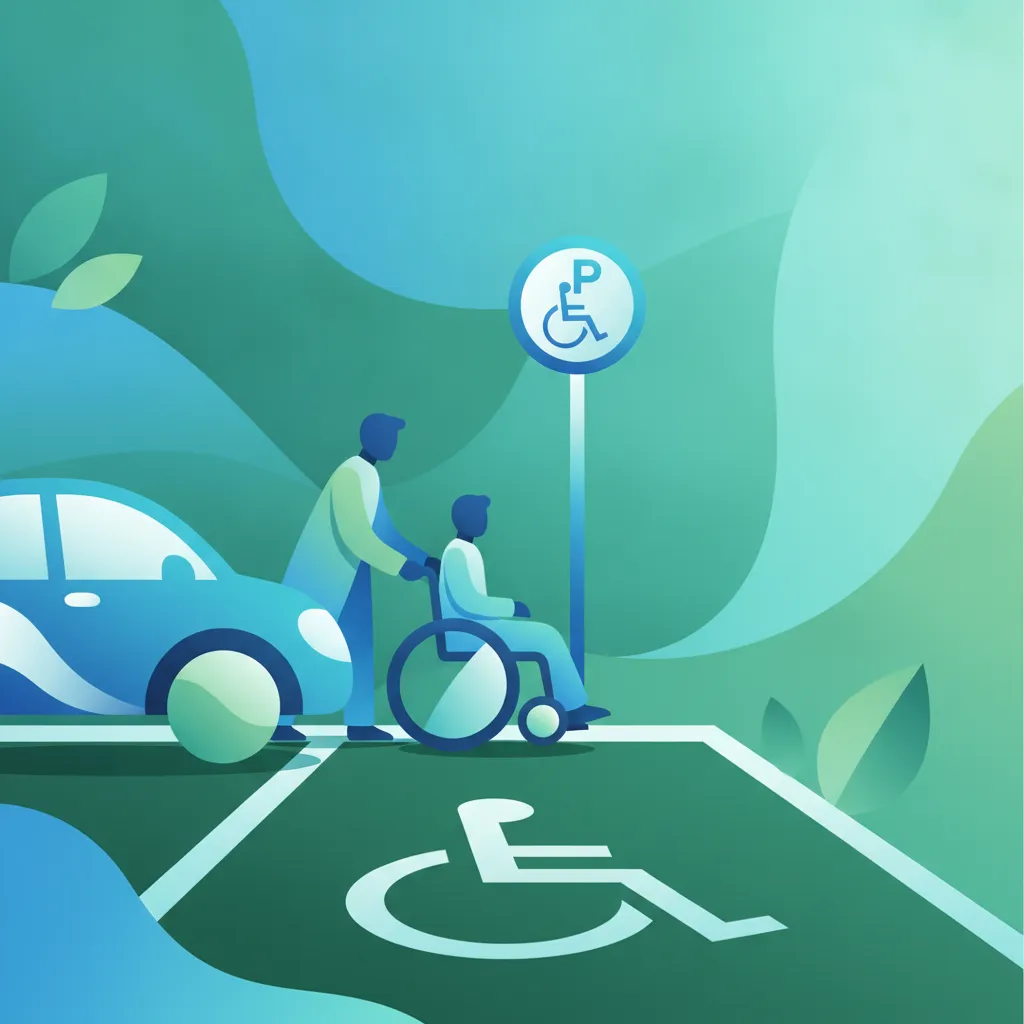
Learn the essential legal and safety procedures for assisting passengers with reduced mobility in passenger transport vehicles. This guide covers safe boarding, correct use of accessibility equipment, and proper communication techniques required under French transport regulations for professional passenger vehicle drivers.

This lesson provides step-by-step instructions for utilizing vehicle accessibility systems, including wheelchair ramps, lifts, and specialized tie-down restraints. Drivers will study French regulatory frameworks mandating equal access to public transport services for all individuals. Crucially, the lesson covers respectful, safe, and efficient communication methods for guiding passengers with sensory, physical, or cognitive impairments.
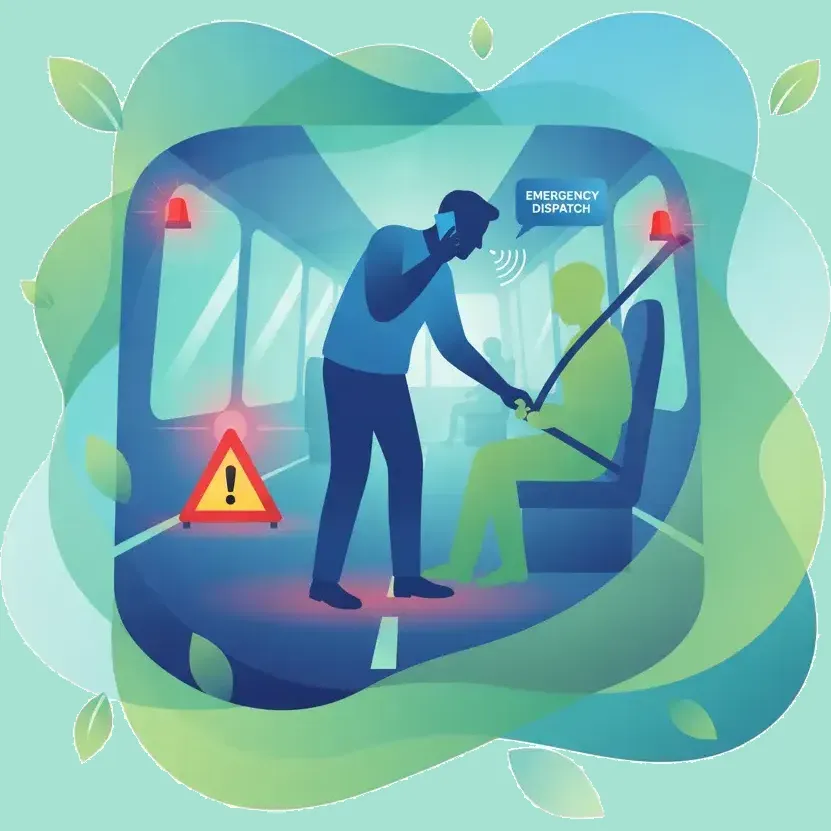
This lesson covers immediate response steps for critical on-board events, including passenger medical emergencies and engine compartment fires. Learners will study the location and proper application of fire extinguishers, safety hammers, and first aid kits. It also explains how to coordinate effectively with French emergency services (SAMU, Fire Brigade) and reassure passengers to maintain calm during an incident.

This lesson details the emergency protocols for handling mechanical breakdowns or tire blowouts on public highways and motorways. Drivers will learn how to park the vehicle in the safest possible location, activate hazard warning lights, and deploy the reflective warning triangle. It teaches precise commands and steps for evacuating passengers quickly through safety exits, positioning them behind protective guardrails.
This lesson focuses on the operational rules inside major passenger terminals, bus stations (gares routières), and airport transfer zones. Drivers will learn to navigate designated arrival and departure platforms, respecting strict speed limits and pedestrian safety zones within terminal property. Coordinating luggage retrieval, boarding clearances, and communicating with station dispatchers are also detailed.

This lesson outlines the step-by-step safety checks and physical controls required to reverse a bus or coach in confined areas. Learners will study the use of rear-view cameras, mirror angles, and acoustic backing alarms to detect obstacles. It highlights the mandatory use of a trained ground guide (guide de manoeuvre) to assist in blind zones, ensuring zero contact with structures or people.

This lesson focuses on techniques for monitoring and managing passenger behavior to maintain a calm and safe environment during transit. Drivers will learn how to enforce seatbelt rules, manage noise levels, and de-escalate verbal conflicts between passengers. Proactive safety announcements and a confident, polite professional demeanor are highlighted as key tools to prevent behavioral issues before they compromise road safety.

This lesson focuses on the technical skills required to position a large bus or coach parallel to the boarding curb. Drivers will learn to minimize the gap between the vehicle steps and the sidewalk, preventing tripping hazards for boarding passengers. The lesson also covers safe approach angles, mirror alignment, and positioning rules that avoid contact with curbside objects or waiting pedestrians.

This lesson highlights the critical ethical framework governing public and private passenger transport services within the French Republic. Drivers are trained to provide equitable, non-discriminatory assistance to all travelers while fully respecting passenger privacy and dignity. Understanding these moral obligations helps prevent conflicts, enhances service accessibility, and reinforces the high standard of social responsibility expected of professional coach operators.

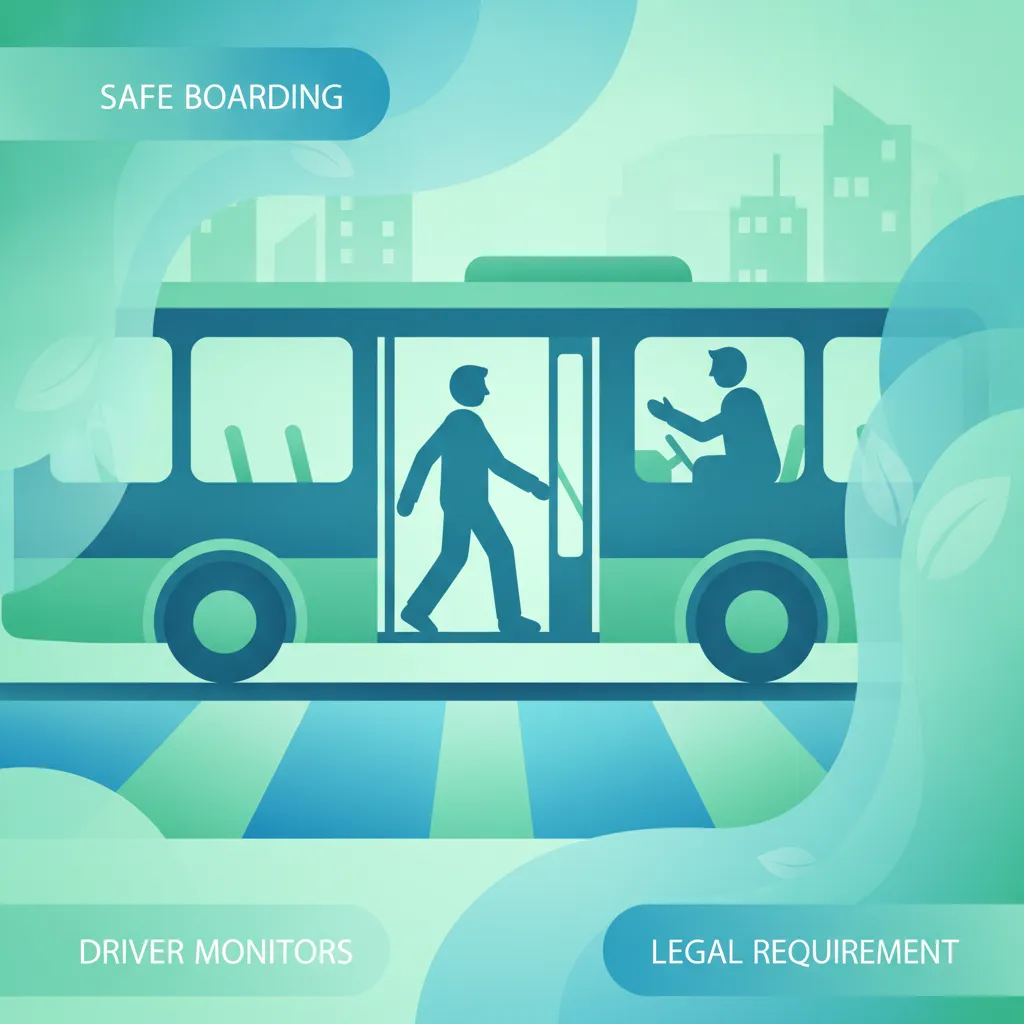
This lesson examines the flow of passengers entering and exiting the vehicle and how to organize this movement to reduce stop delays safely. Drivers will study the operation of door safety interlocks, sensitive edges, and onboard monitoring cameras to prevent boarding accidents. It also covers coordinating priority boarding for elderly, pregnant, or injured passengers in a polite and structured manner.

This lesson outlines the core operational roles that drivers must perform, from ensuring safe passenger boarding to maintaining precise vehicle control throughout the journey. It details the active risk assessments required to identify hazards on the road and handle unexpected delays safely. Additionally, candidates will understand the specific procedures for reporting accidents and communicating effectively with both passengers and operations hubs.
Understand the official protocols for handling onboard emergencies and conducting safe passenger evacuations. This theory lesson explains the critical steps for responding to vehicle breakdowns or accidents, managing passenger safety during evacuations, and using onboard emergency equipment in compliance with French transport standards.
This lesson details the emergency protocols for handling mechanical breakdowns or tire blowouts on public highways and motorways. Drivers will learn how to park the vehicle in the safest possible location, activate hazard warning lights, and deploy the reflective warning triangle. It teaches precise commands and steps for evacuating passengers quickly through safety exits, positioning them behind protective guardrails.
This lesson covers immediate response steps for critical on-board events, including passenger medical emergencies and engine compartment fires. Learners will study the location and proper application of fire extinguishers, safety hammers, and first aid kits. It also explains how to coordinate effectively with French emergency services (SAMU, Fire Brigade) and reassure passengers to maintain calm during an incident.
This lesson examines the flow of passengers entering and exiting the vehicle and how to organize this movement to reduce stop delays safely. Drivers will study the operation of door safety interlocks, sensitive edges, and onboard monitoring cameras to prevent boarding accidents. It also covers coordinating priority boarding for elderly, pregnant, or injured passengers in a polite and structured manner.
This lesson focuses on techniques for monitoring and managing passenger behavior to maintain a calm and safe environment during transit. Drivers will learn how to enforce seatbelt rules, manage noise levels, and de-escalate verbal conflicts between passengers. Proactive safety announcements and a confident, polite professional demeanor are highlighted as key tools to prevent behavioral issues before they compromise road safety.
This lesson outlines the core operational roles that drivers must perform, from ensuring safe passenger boarding to maintaining precise vehicle control throughout the journey. It details the active risk assessments required to identify hazards on the road and handle unexpected delays safely. Additionally, candidates will understand the specific procedures for reporting accidents and communicating effectively with both passengers and operations hubs.

This lesson emphasizes the critical importance of maintaining a safe following distance when carrying dozens of passengers. Learners will study how vehicle weight and passenger load dynamically extend braking and total stopping distances compared to standard passenger cars. The lesson provides concrete spacing rules, such as adjusted safety gaps for highway driving and increased distances on slippery roads.

This lesson focuses on passenger comfort and safety by teaching drivers how to control load transfers during acceleration and gear shifts. Smooth throttle control and progressive gear engagement reduce sudden cabin shifts, preventing standing passengers from falling. Candidates will also explore eco-driving techniques that reduce fuel consumption and wear on mechanical parts without compromising route timetables.
Find clear answers to common questions learners have about Signage for Passenger Safety and Accessibility. Learn how the lesson is structured, which driving theory objectives it supports, and how it fits into the overall learning path of units and curriculum progression in France. These explanations help you understand key concepts, lesson flow, and exam focused study goals.
The exam tests this because a professional driver is legally responsible for passenger safety. You must ensure that passengers can navigate the vehicle, locate exits, and identify priority zones, which is a key part of the Code de la route requirements.
While both must display emergency and safety signs, the specific placement and accessibility icons are dictated by the vehicle's design and capacity. You must know how to identify standard safety markings that apply across all D-category public transport.
Look for specific blue or internationally recognized accessibility pictograms near designated seating areas. Questions often ask you to identify if a vehicle is properly marked for PRM (Persons with Reduced Mobility) access.
You should focus on understanding the purpose of the signs and where they are required by law to be placed. The exam tests your ability to recognize if a vehicle is compliant with professional safety standards, rather than just memorizing labels.
Ready to focus your study? Use the practice search to find exactly the French driving theory questions you need for the Code de la route and permis de conduire ETG. Refine your knowledge on specific topics or challenging rules to boost your confidence and exam readiness.