This lesson guides you through interpreting direction arrows and lane markings on French roads to ensure you always position your vehicle correctly. Mastering these road indicators is vital for following the Code de la route, preventing last-minute lane changes, and succeeding in your Category B theory exam.
Lesson content overview
Navigating intersections, highway merges, and complex urban junctions safely requires rapid decision-making and clear communication with other road users. In France, horizontal road markings—specifically direction arrows (flèches de direction) and preselection arrows (flèches de présélection)—play a vital role in organizing traffic flow and preventing dangerous maneuvers.
For candidates preparing for the French Category B driving theory exam (Épreuve Théorique Générale or ETG), mastering these markings is essential. Violating lane discipline rules can lead to severe penalties under the Code de la route, including heavy fines and point deductions on your licence. This lesson provides an in-depth guide to understanding, anticipating, and complying with road surface arrows and lane allocation systems in France.
In traffic psychology and road safety, predictability is key. Road surface markings are designed to reduce "conflict points" at junctions—areas where the paths of two or more vehicles can cross. By grouping vehicles together based on their intended direction, traffic engineers can program traffic lights more efficiently, reduce side-swipe collisions, and ensure that larger vehicles have the space they need to turn.
Under the French Code de la route, horizontal markings carry the same legal weight as vertical signs.
Crucial Legal Principle: According to Article R411-2 and related provisions of the French Code de la route, road users must strictly comply with direction and preselection arrows painted on the roadway. Using a lane designated for a specific maneuver to perform a different one is a serious traffic violation.
Proper lane positioning is not merely a matter of convenience; it is a legal directive. If you enter a lane painted with a left-turn arrow, you are legally committed to turning left. Attempting to go straight or turn right from that lane crosses traffic paths unlawfully, presenting an extreme risk of collision.
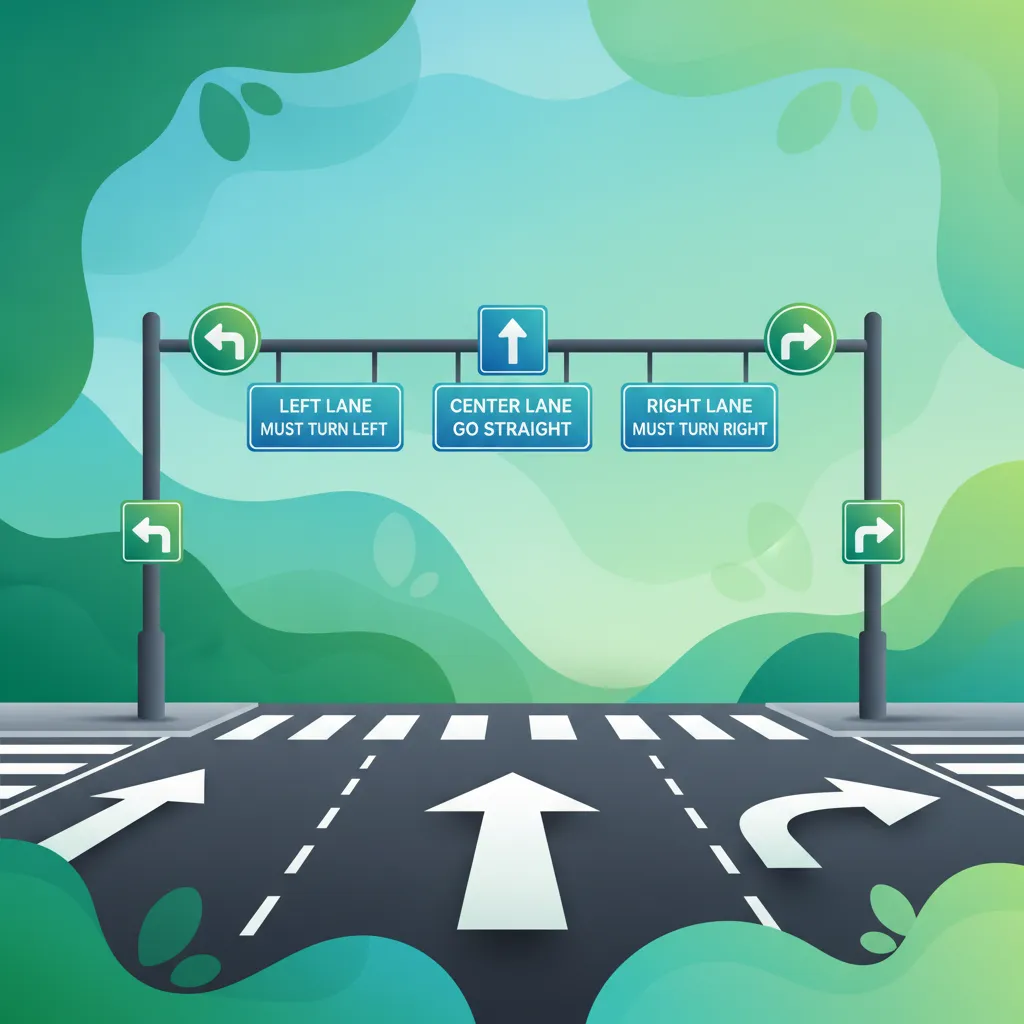
To navigate French roads correctly, you must be able to recognize and interpret the distinct types of arrows painted on the road surface. Each symbol dictates a specific set of rules for vehicle positioning.
This arrow is a simple, straight vertical symbol. It indicates that the lane is strictly reserved for vehicles continuing forward through the upcoming intersection.
These arrows feature a sharp -degree turn to either the left or the right.
These arrows combine two directions on a single stem (e.g., straight-and-right, or straight-and-left).
Preselection arrows are a sequence of directional arrows placed well in advance of an intersection. They are designed to give drivers sufficient time to choose their direction, signal, and change lanes before the lanes are physically separated by solid lines.
In standard French road design, preselection arrows are almost always laid out in a sequence of three:
The First Arrow (Information): This arrow warns you that lane allocation is starting. If you realize you are in the wrong lane for your intended destination, this is your cue to check your mirrors, look over your shoulder (blind spot check), signal, and change lanes safely.
The Second Arrow (Confirmation): At this point, the lane separation lines (broken lines) begin to shorten, indicating that your opportunity to change lanes is closing. You should already be in your target lane or finishing your lane change.
The Third Arrow (Obligation): This arrow is typically accompanied by a solid white line separating the lanes. Once you reach the third arrow, you are legally committed. You cannot change lanes, as crossing a solid line (ligne continue) is a severe infraction.
ETG Exam Tip: On the theory exam, if a question shows your vehicle next to the second or third preselection arrow with a solid line starting, any option suggesting a lane change to correct a navigation mistake is incorrect. You must follow the lane's direction and find a safe place to turn around later.
Lane allocation refers to the assignment of specific lanes on a multi-lane road to different types of traffic or maneuvers. In France, these allocations are indicated by a combination of road markings and overhead vertical signs.
Often, directional lanes run parallel to lanes reserved for specific transport modes, such as bus lanes (voies réservées aux autobus) or cycle lanes (bandes cyclables).
Merging on fast-moving roads, such as motorways (autoroutes) or dual carriageways (voies rapides), requires absolute precision. To facilitate this, French roads use specialized curved guidance lines and lane reduction arrows.
Unlike straight preselection arrows, flèches de rabattement are slightly curved. They point obliquely (usually to the right) and indicate that a lane is ending, or that a dashed line is about to become a solid line.
Under the French Code de la route, failing to respect lane allocation and directional arrows is heavily penalized. The law treats crossing a solid line or making an irregular directional change as high-risk driving behaviors.
The rules of lane preselection remain constant, but their practical application changes depending on environmental factors and vehicle dynamics.
Even experienced drivers sometimes commit errors regarding lane allocation. Review these typical mistakes to ensure you avoid them during your practical driving test and daily driving:
Explore all units and lessons included in this driving theory course.
Lesson content overview
Explore all units and lessons included in this driving theory course.
Explore search topics learners often look for when studying Direction Arrows and Lane Allocation. These topics reflect common questions about road rules, driving situations, safety guidance, and lesson level theory preparation for learners in France.
Browse additional driving theory lessons that cover connected traffic rules, road signs, and common driving situations related to this topic. Improve your understanding of how different rules interact across everyday traffic scenarios.
Understand the general principles of priority and how to apply them at complicated intersections. This lesson covers yielding, priority to the right, and how to safely navigate crossroads where lane discipline and directional arrows must be coordinated with overall priority obligations.

Negotiating crossroads that lack active traffic light signals requires a clear reading of signs and painted stop or yield lines. This lesson details the obligations of stopping completely at stop signs and slowing down to yield at 'cedez le passage' markings. You will learn to assess cross-traffic speeds, determine priorities when multiple vehicles arrive, and execute turns safely.

In France, the default rule at any intersection without clear priority signage is priority-to-the-right (priorite a droite). This lesson explains how to identify unsignaled junctions in urban and rural environments and when you must yield to incoming vehicles. You will learn to spot the standard yellow diamond priority signs and triangular warning signs that indicate whether you hold the priority.

Controlled intersections use traffic lights and accompanying signs to manage busy crossings systematically. This lesson covers how to safely proceed on a green light, negotiate left turns when yielding to oncoming traffic, and obey flashing amber lights. You will also learn the hierarchy of traffic control, where police officer gestures overrule both traffic lights and priority signs.

Learners will study the fundamental priority rules that dictate right-of-way at intersections, focusing on the 'priorité à droite' principle prevalent in French road design. The lesson explains how to identify priority roads, interpret yield signs, and apply these rules safely when operating an AM vehicle. Understanding priority ensures orderly movement and reduces conflict points in mixed traffic scenarios.
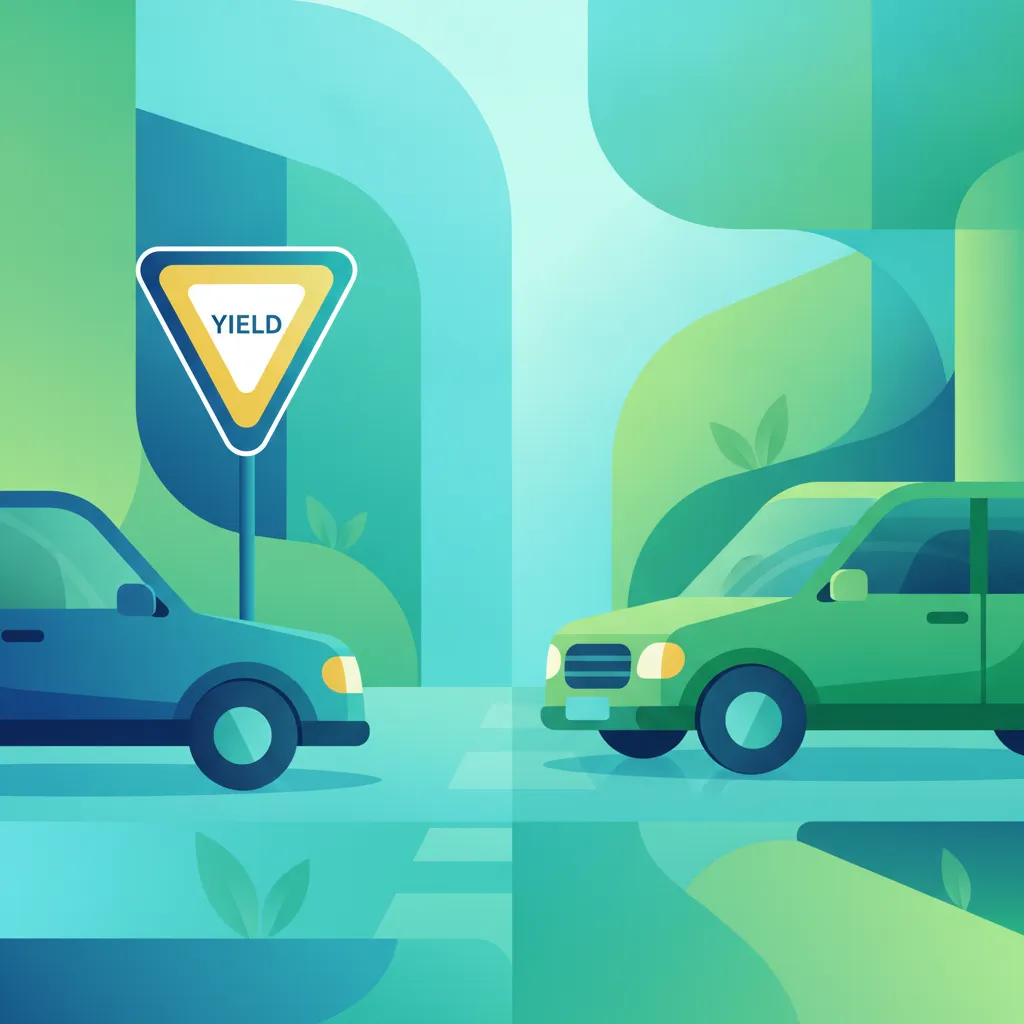
This lesson provides a comprehensive breakdown of priority rules under French law, with special focus on the default rule of priorité à droite. You will learn to recognize when this rule applies, even in the absence of explicit signage, and how to verify that entering vehicles see you. It also explains how to read priority road indicators, stop signs, and yield signs, helping you manage right-of-way safely and confidently.

Some crossroads feature complex layouts or specific signs that modify standard priority rules, such as schematic diagrams (panonceaux schematiques). This lesson teaches you how to read these auxiliary signs, which depict the thick line of the priority road and thin lines of secondary roads. You will learn how to maintain priority when the main road curves and how to navigate non-standard intersection layouts.

In France, pedestrians have clear legal priority when stepping onto or indicating an intent to use a crossing (passage pieton). This lesson details standard zebra crossings, refuge islands, and pedestrian crossings managed by synchronized traffic light systems. You will learn to scan crossings ahead, anticipate pedestrian movements, and safely come to a stop whenever a pedestrian attempts to cross.

Learners will learn the critical steps for safely approaching and traversing intersections, emphasizing speed reduction, priority assessment, and adherence to right-of-way rules, including priorité à droite. The lesson covers recognizing stop lines, interpreting road markings, and maintaining a safe distance from other vehicles. By mastering these practices, AM riders can confidently navigate intersections while minimizing collision risk.

Learners will explore the rules related to pedestrian crossings, focusing on the obligation to yield to pedestrians at zebra crossings and flashing pedestrian signals. The lesson highlights the importance of stopping before the stop line, reducing speed, and maintaining vigilance for pedestrian movement. Mastery of these practices ensures the safety of both pedestrians and AM riders at crossing points.
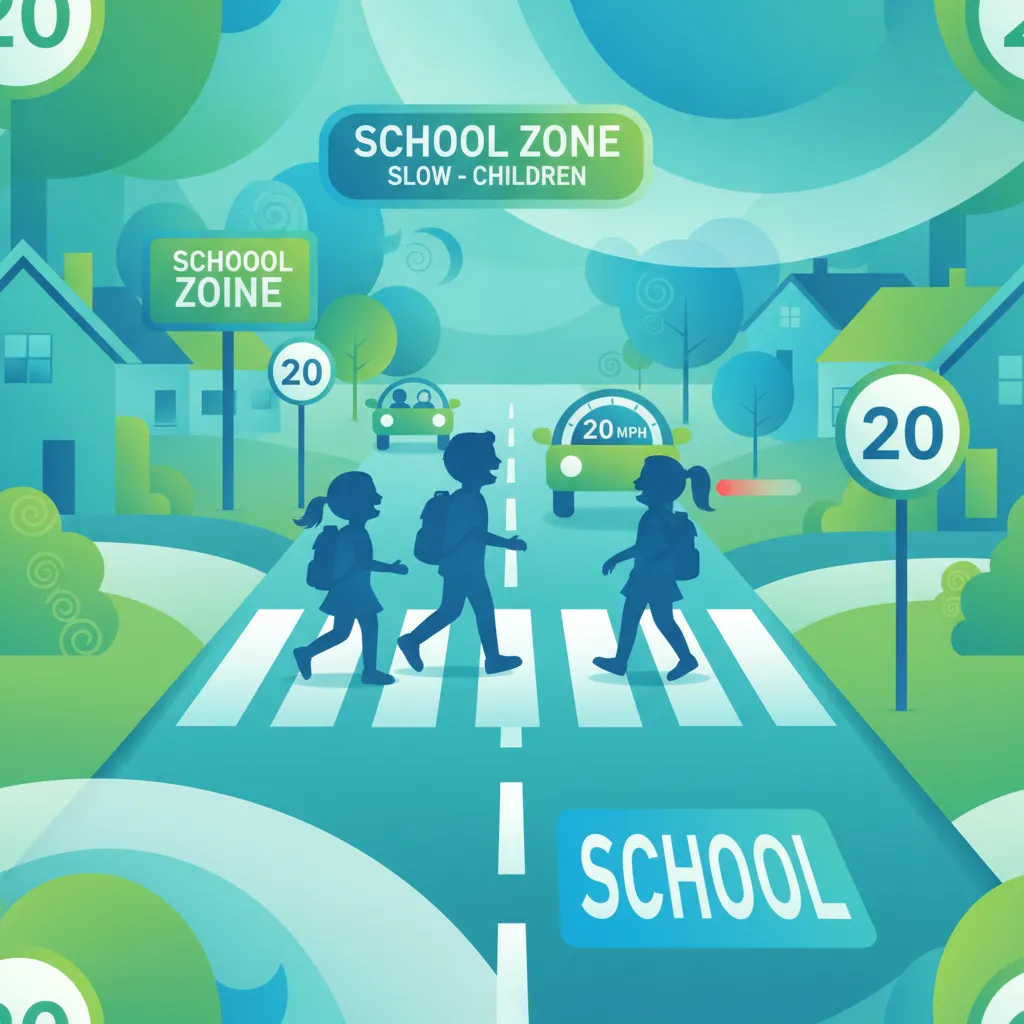
French municipalities utilize distinct low-speed configurations to foster pedestrian safety in residential and educational neighborhoods. This lesson details speed restrictions in 'zone 30', pedestrian-only districts, and shared 'zones de rencontre' where speed is capped at 20 km/h. You will learn how priority hierarchies shift in these zones, giving pedestrians legal priority to use the entire roadway.
Learn the specific requirements for motorway driving in France, including how to interpret lane reduction arrows, merge safely into high-speed traffic, and maintain correct lane discipline. This overview helps you understand the interaction between road surface markings and highway traffic flow.
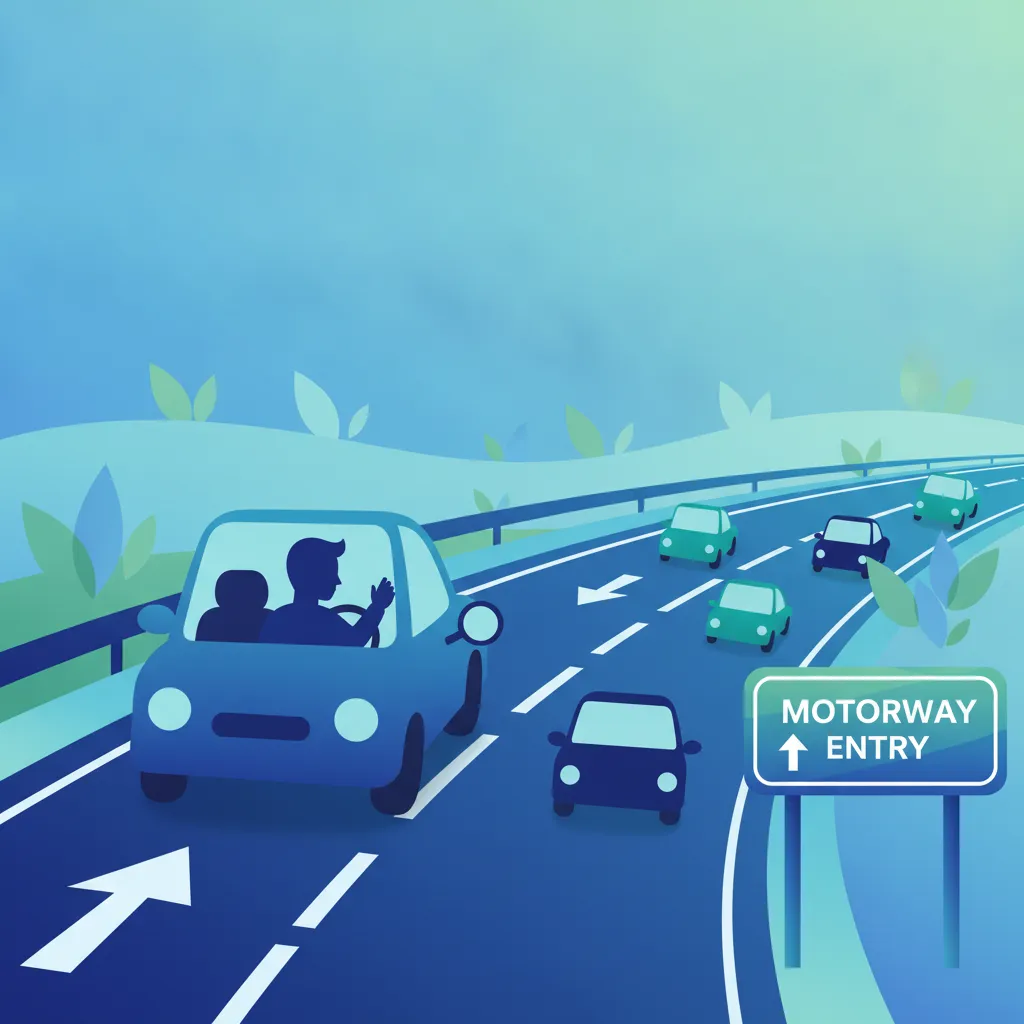
Merging onto a motorway or dual carriageway requires precise coordination of speed, lane observation, and indicator signalling. This lesson explains how to utilize the acceleration lane (voie d'insertion) to match the speed of highway traffic before merging. You will learn how to assess traffic gaps in your side mirrors, signal your intentions, and execute the merge without disrupting the traffic flow.

This lesson details how to safely enter, cruise on, and exit French motorways, known as autoroutes, which feature high-speed traffic flows. You will master the process of matching highway speeds in the acceleration lane and performing blind spot checks before merging. The lesson also explains correct lane positioning to avoid aerodynamic turbulences from large semi-trucks, and how to safely prepare for decelerating at exit ramps.

French motorways (autoroutes) are fast, controlled-access roads with unique laws regulating lane discipline and emergencies. This lesson teaches standard lane-use: cruising in the right lane and reserving the middle or left lanes exclusively for passing. You will study emergency procedures, the use of orange emergency call boxes, safety barrier rules, and navigating toll booths (peages) safely.

This lesson covers the rules of driving passenger vehicles on high-speed French motorways (autoroutes). Learners will study entry-ramp merging protocols, lane restrictions for vehicles over 3.5 tonnes, and motorway-specific speed limits. The lesson also highlights the correct use of toll booths (péages), emergency hard-shoulder safety procedures, and accessing dedicated coach rest areas.

This lesson outlines the rules and practical safety limits of lane filtering, known as 'inter-files' riding, under French road guidelines. You will study the specific speed limits allowed during filtering, the conditions of high congestion where it is permitted, and where it remains completely banned. The lesson also highlights the critical need to anticipate sudden lane changes from frustrated car drivers stuck in stationary traffic queues.

This lesson covers the strict legal conditions under which you may overtake other vehicles on French roads, including necessary visibility criteria. You will master the step-by-step process of checking rearview mirrors, performing head checks, signaling, and maintaining a safe speed differential during the pass. It also details when overtaking is strictly forbidden, such as before intersections, near pedestrian crossings, or across solid lines.
This lesson focuses on the specific considerations for operating goods vehicles on French motorways, including lane selection, speed management, and proper merging techniques. Learners will understand the importance of maintaining lane discipline, using appropriate overtaking practices, and respecting motorway-specific speed limits for heavy vehicles. The content also covers the use of emergency lanes and the handling of traffic flow.
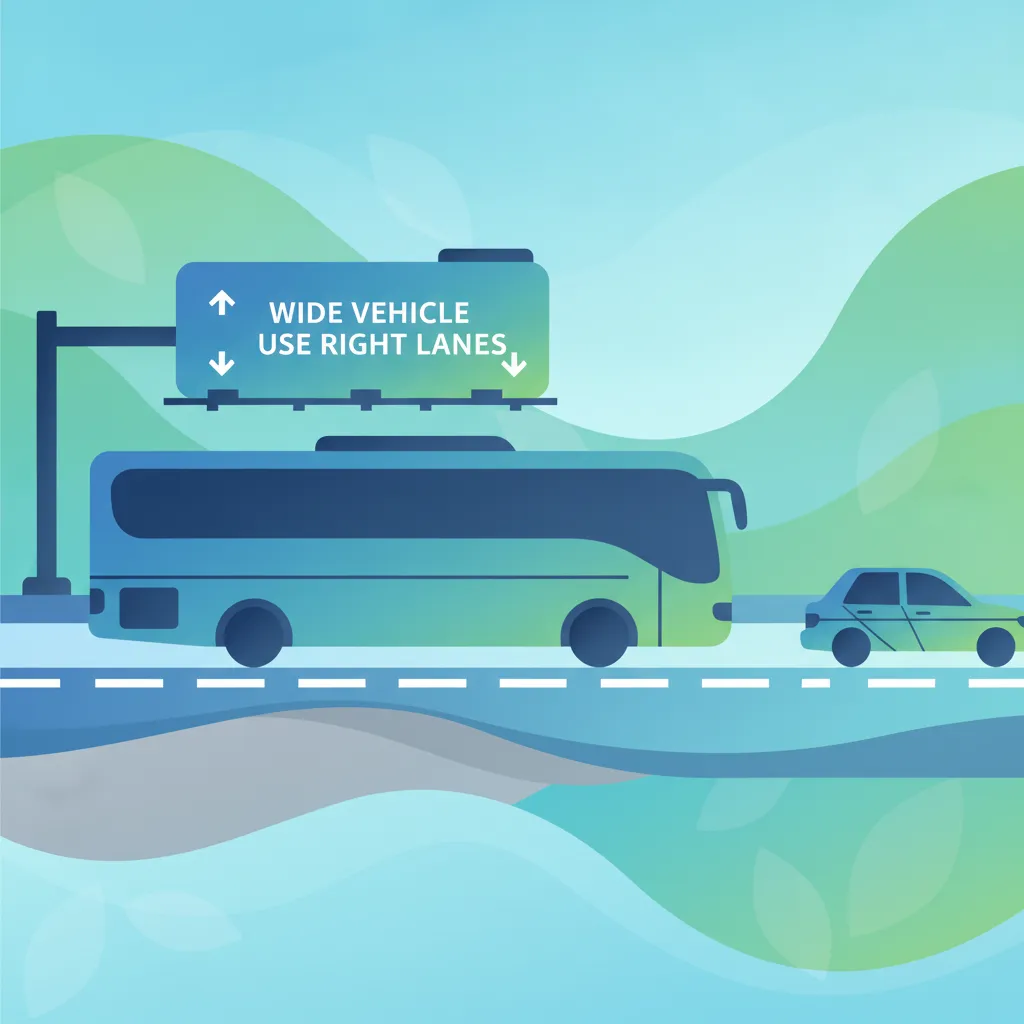
This lesson details the rules of lane discipline for operating wider and longer passenger transport vehicles on highway and city networks. Learners will explore proper lane positioning to prevent encroachment on adjacent lanes or sidewalks. It also covers the step-by-step visual and signaling sequence required to perform safe lane changes, avoiding sudden movements that could startle other drivers.

This lesson explores how dividing your travel lane into three distinct vertical zones allows you to adjust your positioning for optimal safety. You will learn to shift your line to avoid oil slicks in the lane center, road debris at the edges, and wind blasts from passing trucks. Crucially, the lesson covers how to adapt your lane position on blind bends to widen your field of vision and stay clear of oncoming traffic.

France features a vast network of roundabouts (carrefours a sens giratoire) governed by specific entry and lane-use regulations. This lesson explains that vehicles entering a roundabout must yield to traffic already circulating inside. You will learn how to select the correct lane depending on your exit, use direction indicators properly, and yield to pedestrians and cyclists near roundabout exits.
Find clear answers to common questions learners have about Direction Arrows and Lane Allocation. Learn how the lesson is structured, which driving theory objectives it supports, and how it fits into the overall learning path of units and curriculum progression in France. These explanations help you understand key concepts, lesson flow, and exam focused study goals.
Directional arrows indicate the only permitted movements you can make from that specific lane. If an arrow points left, you must turn left or follow the indicated path; you cannot continue straight unless there is also a straight arrow in your lane.
Generally, you should have already chosen your lane before reaching the preselection arrows. If you are in a lane with a turn-only arrow, you are legally required to follow that direction; changing lanes at the last second is dangerous and often penalized in the exam.
Look for road markings and signs before the roundabout. If no specific arrows are present, use the right lane for turning right or going straight (if appropriate), and the left lane for turning left or completing a U-turn.
Yes. Misinterpreting lane arrows is a common source of error in the theory exam. It demonstrates a lack of anticipation and can be classified as a dangerous maneuver if you attempt to correct your path unexpectedly in heavy traffic.
Ready to focus your study? Use the practice search to find exactly the French driving theory questions you need for the Code de la route and permis de conduire ETG. Refine your knowledge on specific topics or challenging rules to boost your confidence and exam readiness.