This lesson focuses on the essential skills for sharing the road safely with vulnerable road users, such as pedestrians, cyclists, and those with disabilities. It is a critical component of the French Category B driving theory curriculum, helping you recognize potential hazards and behave with the necessary caution required by the Code de la route. Mastery of these defensive techniques is vital for both your practical safety and success in the ETG exam.

Lesson content overview
In French road safety, protecting those who have little to no physical protection against motorized vehicles is both a moral duty and a strict legal mandate. Under the French Code de la route, this is guided by the Principe de Prudence (Principle of Caution), which legally obliges drivers of motorized vehicles to show heightened care toward more vulnerable road users.
Whether you are preparing for the French Category B theory exam (Épreuve Théorique Générale - ETG) or learning to navigate French roads safely, understanding how to recognize, anticipate, and protect vulnerable road users (VRUs) is vital. This lesson covers the identification of these users, the specific laws protecting them, and the defensive driving maneuvers required to keep them safe.
In traffic dynamics, a hierarchy of risk exists. Heavy trucks pose a risk to passenger cars, cars pose a risk to motorcycles, and all motorized vehicles pose an immense risk to pedestrians, cyclists, and individuals with reduced mobility.
The Code de la route addresses this imbalance through the legal framework of Vulnerability Priority. This principle dictates that the more powerful and protected a vehicle is, the greater its driver's responsibility is to avoid endangering less protected road users.
To protect vulnerable users, you must first recognize them early and understand their unique physical or behavioral traits.
Visually impaired pedestrians rely entirely on tactile feedback, auditory cues, and assistive aids to navigate.
This group includes wheelchair users, individuals using walking frames, crutches, or walking sticks, and elderly pedestrians.
Children are highly unpredictable due to their developmental stage. They do not perceive danger the way adults do.
Cyclists (bicyclettes) and riders of Personal Mobility Devices (Engins de Déplacement Personnel Motorisés - EDPM), such as electric scooters (trottinettes électriques), share the roadway directly with cars but have zero structural protection.
French traffic law imposes strict rules regarding how drivers must interact with vulnerable road users. Non-compliance results in severe legal penalties, including heavy fines and immediate deduction of points from your driving licence.
Under Article R415-1 of the French Code de la route, drivers must yield to any pedestrian who has stepped onto, or clearly shown an intention to step onto, a pedestrian crossing (passage piéton).
When overtaking a cyclist, pedestrian, or animal rider, you must maintain a safe lateral clearance to prevent collisions caused by wind pressure, sudden swerving, or loss of balance. Under Article R412-9 of the Code de la route:
Within Built-Up Areas (En Agglomération): You must leave a minimum lateral safety clearance of 1.0 metre.
Outside Built-Up Areas (Hors Agglomération): You must leave a minimum lateral safety clearance of 1.5 metres.
Solid White Line Exception: To safely overtake a cyclist while respecting these distances, French law allows drivers to cross a solid white line (ligne continue), provided visibility is clear and the maneuver can be completed without endangering oncoming traffic.
To protect vulnerable users in dense areas, French municipalities deploy special speed-restricted zones.
If you must stop suddenly on the roadway to let a pedestrian cross—especially in an area where drivers behind you might not expect a stop—you should activate your hazard warning lights (feux de détresse). This alerts trailing motorists to slow down, preventing rear-end collisions and stopping them from illegally overtaking you while a pedestrian is crossing in front of your bumper.
Failing to protect vulnerable road users is treated as a major safety violation in France. The following table highlights common errors and their legal consequences:
| Violation | French Legal Class & Fine | Licence Point Deduction |
|---|---|---|
| Failure to yield to a pedestrian at a crossing (or who has shown clear intent to cross) | Class 4 Contravention (€135) | 6 Points (plus potential driving suspension) |
| Insufficient lateral distance when passing a cyclist or pedestrian | Class 4 Contravention (€135) | 3 Points |
| Overtaking a cyclist inside a restricted bicycle lane (bande cyclable) | Class 4 Contravention (€135) | 3 Points |
| Speeding in a Zone 30 or school zone | Scale-dependent fine | 1 to 6 Points (depending on excess speed) |
| Failing to yield to pedestrians exiting a tramway at a designated tram stop | Class 4 Contravention (€135) | 4 Points |
When parking your car on a street with adjacent bicycle traffic, you run the risk of opening your door directly into the path of an oncoming cyclist—a dangerous accident known as "dooring."
To prevent this, practice the Dutch Reach: always open your car door using your far hand (the hand furthest from the door). This physical action forces your entire torso to rotate, naturally directing your line of sight over your shoulder and into your side-view mirror to spot approaching cyclists.
Protecting vulnerable road users is ultimately a matter of physics and human limits. When you double your speed, your braking distance does not just double; it increases by a factor of four.
Drivers are biologically prone to "inattentional blindness." Because we actively look for large safety hazards (like other cars or delivery trucks), our brains can fail to register smaller, slower objects like a child waiting to cross or a cyclist riding on the margin of the lane.
To combat this cognitive bias, you must actively train your eyes to perform structured scans of the roadside, checking transition points (curbs, driveways, space between parked vehicles) where vulnerable users typically emerge.
Your protective strategy must change dynamically depending on the driving environment, weather conditions, and time of day.
Darkness reduces visibility by up to 90%. Pedestrians wearing dark clothing are virtually invisible to a driver using dipped headlights (feux de croisement) until they are approximately 30 meters away—which is less than the stopping distance at 50 km/h.
Wet asphalt slicked with rainwater or ice drastically reduces tire traction, doubling your braking distance. Rain also creates headlight glare on the wet road surface, making it extremely difficult to see dark silhouettes or road markings.
Explore all units and lessons included in this driving theory course.
Lesson content overview
Explore all units and lessons included in this driving theory course.
Explore search topics learners often look for when studying Recognising and Protecting Vulnerable Road Users. These topics reflect common questions about road rules, driving situations, safety guidance, and lesson level theory preparation for learners in France.
Browse additional driving theory lessons that cover connected traffic rules, road signs, and common driving situations related to this topic. Improve your understanding of how different rules interact across everyday traffic scenarios.
Understand the specific legal obligations under the French Code de la route regarding pedestrian crossings. Learn how to identify when a pedestrian has priority, where you must stop, and how to safely navigate around crosswalks to maintain compliance with French traffic regulations and ensure road safety for everyone.

In France, pedestrians have clear legal priority when stepping onto or indicating an intent to use a crossing (passage pieton). This lesson details standard zebra crossings, refuge islands, and pedestrian crossings managed by synchronized traffic light systems. You will learn to scan crossings ahead, anticipate pedestrian movements, and safely come to a stop whenever a pedestrian attempts to cross.

Learners will explore the rules related to pedestrian crossings, focusing on the obligation to yield to pedestrians at zebra crossings and flashing pedestrian signals. The lesson highlights the importance of stopping before the stop line, reducing speed, and maintaining vigilance for pedestrian movement. Mastery of these practices ensures the safety of both pedestrians and AM riders at crossing points.
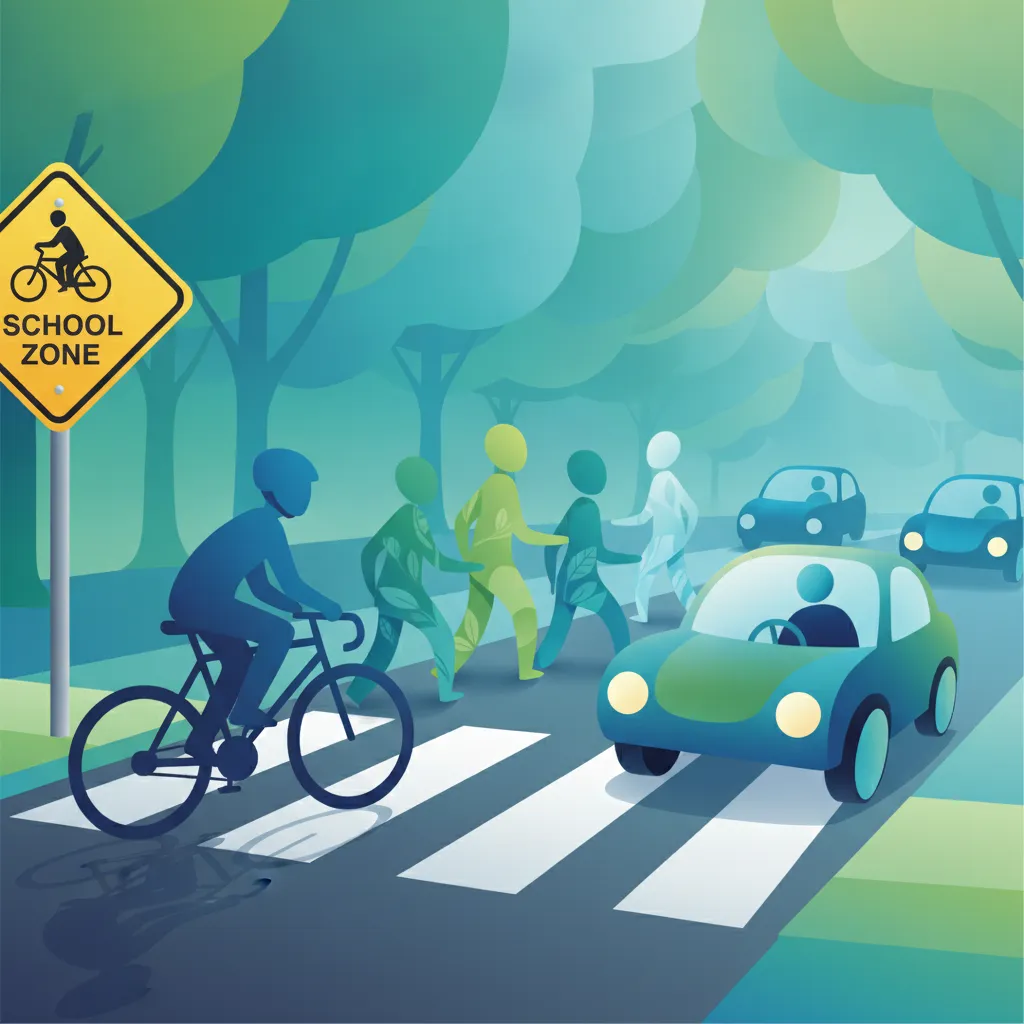
This lesson focuses on the legal requirement to yield to pedestrians on or about to step onto zebra crossings, a major focus of French road safety. You will learn how to approach school zones and pedestrian islands with heightened vigilance and reduced speed. Additionally, the lesson explores shared urban spaces, explaining how to maintain safe lateral distances when overtaking cyclists or personal electric scooters.

This lesson examines French Code de la route laws regarding pedestrian right-of-way, emphasizing the driver's legal duty to yield to any pedestrian engaged in crossing. It outlines proper approach speeds when approaching zebra crossings with obstructed views. Candidates will learn to maintain a safe physical buffer zone and verify that crosswalks are entirely clear of pedestrians before accelerating.

Negotiating crossroads that lack active traffic light signals requires a clear reading of signs and painted stop or yield lines. This lesson details the obligations of stopping completely at stop signs and slowing down to yield at 'cedez le passage' markings. You will learn to assess cross-traffic speeds, determine priorities when multiple vehicles arrive, and execute turns safely.

Lateral road markings run across or along the sides of roadways, signaling limits such as stop lines, yield lines, and pedestrian zones. This lesson explains how painted curbs restrict parking, including continuous or broken yellow lines which signal stopping or parking prohibitions. You will learn how to identify pedestrian zone boundaries and ensure you never obstruct pedestrian or cyclist paths.
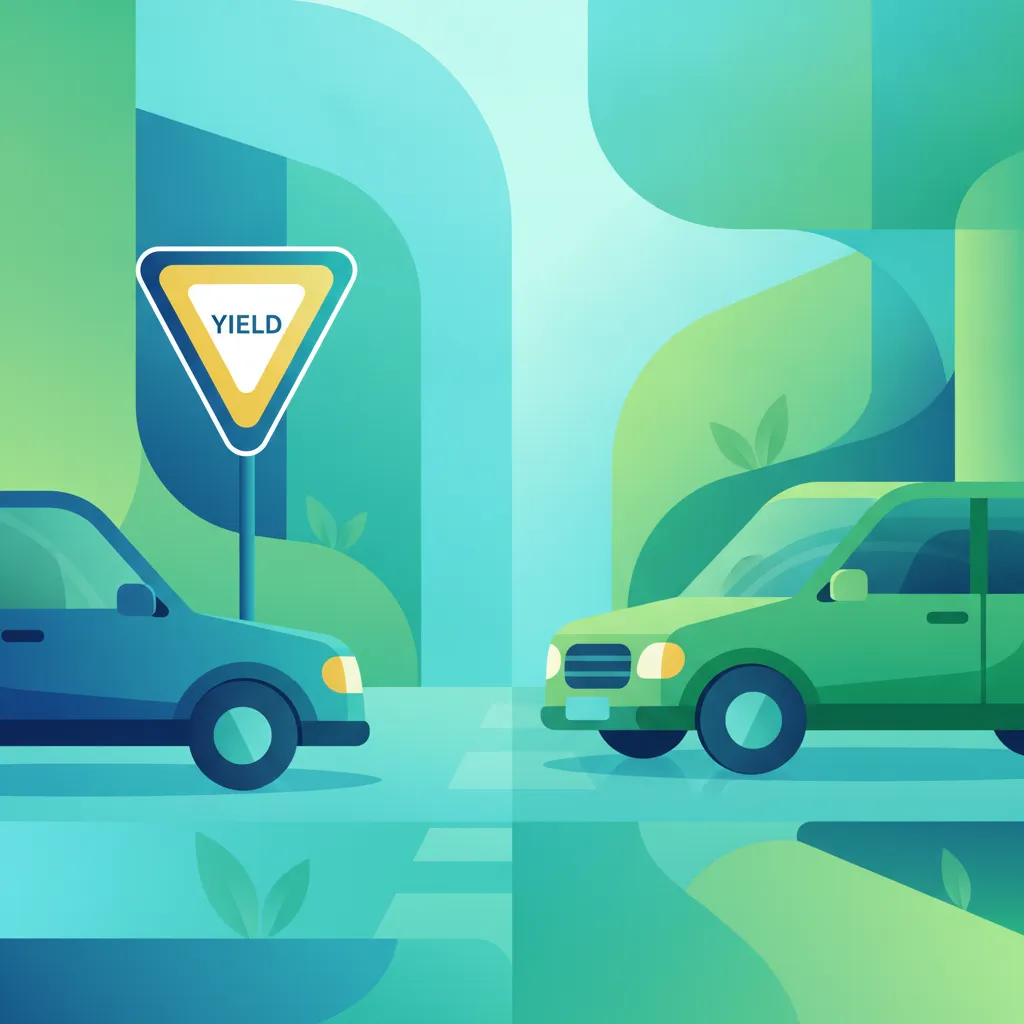
This lesson provides a comprehensive breakdown of priority rules under French law, with special focus on the default rule of priorité à droite. You will learn to recognize when this rule applies, even in the absence of explicit signage, and how to verify that entering vehicles see you. It also explains how to read priority road indicators, stop signs, and yield signs, helping you manage right-of-way safely and confidently.

France features a vast network of roundabouts (carrefours a sens giratoire) governed by specific entry and lane-use regulations. This lesson explains that vehicles entering a roundabout must yield to traffic already circulating inside. You will learn how to select the correct lane depending on your exit, use direction indicators properly, and yield to pedestrians and cyclists near roundabout exits.

In France, the default rule at any intersection without clear priority signage is priority-to-the-right (priorite a droite). This lesson explains how to identify unsignaled junctions in urban and rural environments and when you must yield to incoming vehicles. You will learn to spot the standard yellow diamond priority signs and triangular warning signs that indicate whether you hold the priority.

This lesson details how to manage high-risk interactions with pedestrians who may step off curbs or cross the road near bus stops. Learners will study French Code de la route laws regarding pedestrian priority at crosswalks and near stopping transit vehicles. Developing heightened spatial awareness around blind zones near the front of the bus is emphasized to prevent tragic pedestrian collisions.
Explore the defensive driving techniques required when sharing the road with cyclists and electric scooter riders. Discover the mandatory lateral safety distances, how to correctly perform blind-spot checks, and learn the Dutch Reach method to prevent collisions when opening car doors in urban traffic environments.
This lesson focuses on the legal requirement to yield to pedestrians on or about to step onto zebra crossings, a major focus of French road safety. You will learn how to approach school zones and pedestrian islands with heightened vigilance and reduced speed. Additionally, the lesson explores shared urban spaces, explaining how to maintain safe lateral distances when overtaking cyclists or personal electric scooters.
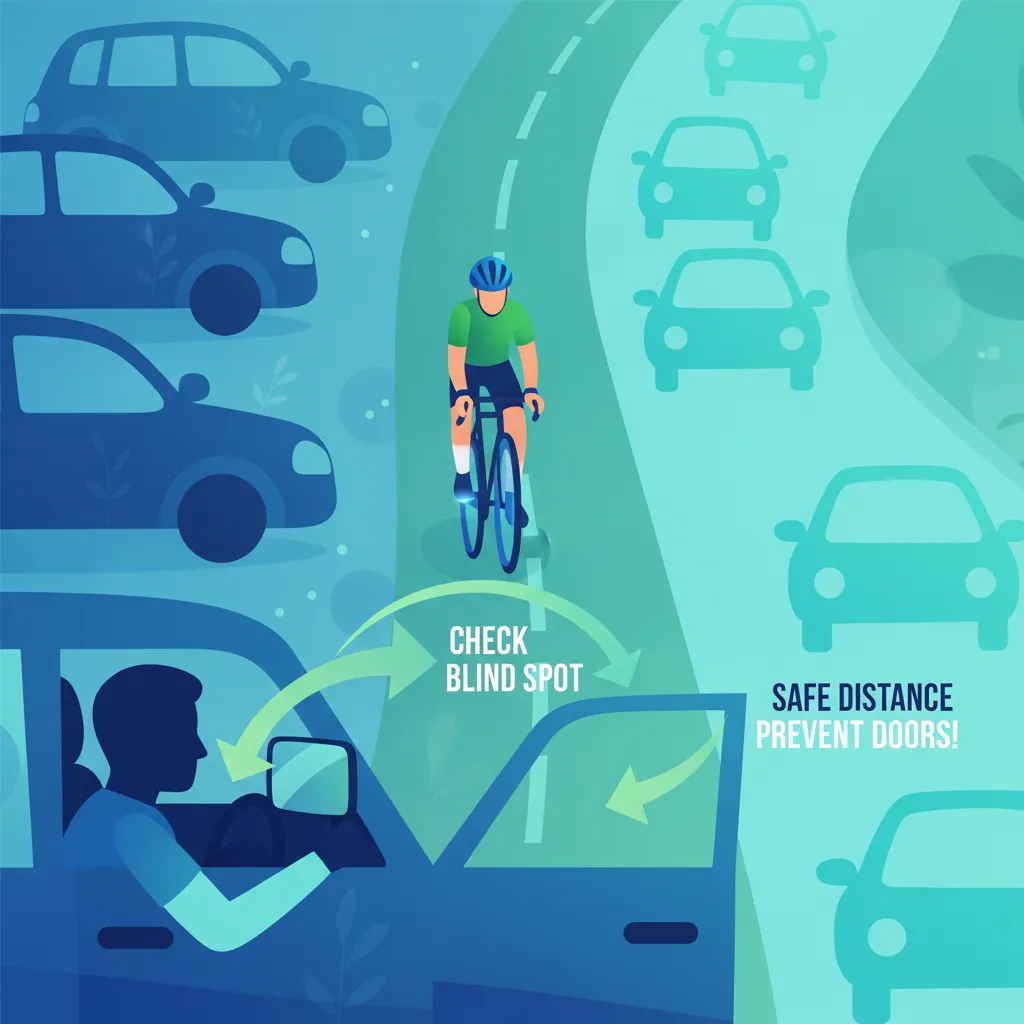
This lesson explains how to share the road safely with cyclists in both urban and rural environments. Drivers will study the legal minimum passing distances when overtaking cyclists, which is one meter in cities and one and a half meters outside urban areas. It also covers recognizing specialized cycling infrastructure, bike boxes at intersections, and preventing blind-spot collisions during right turns.
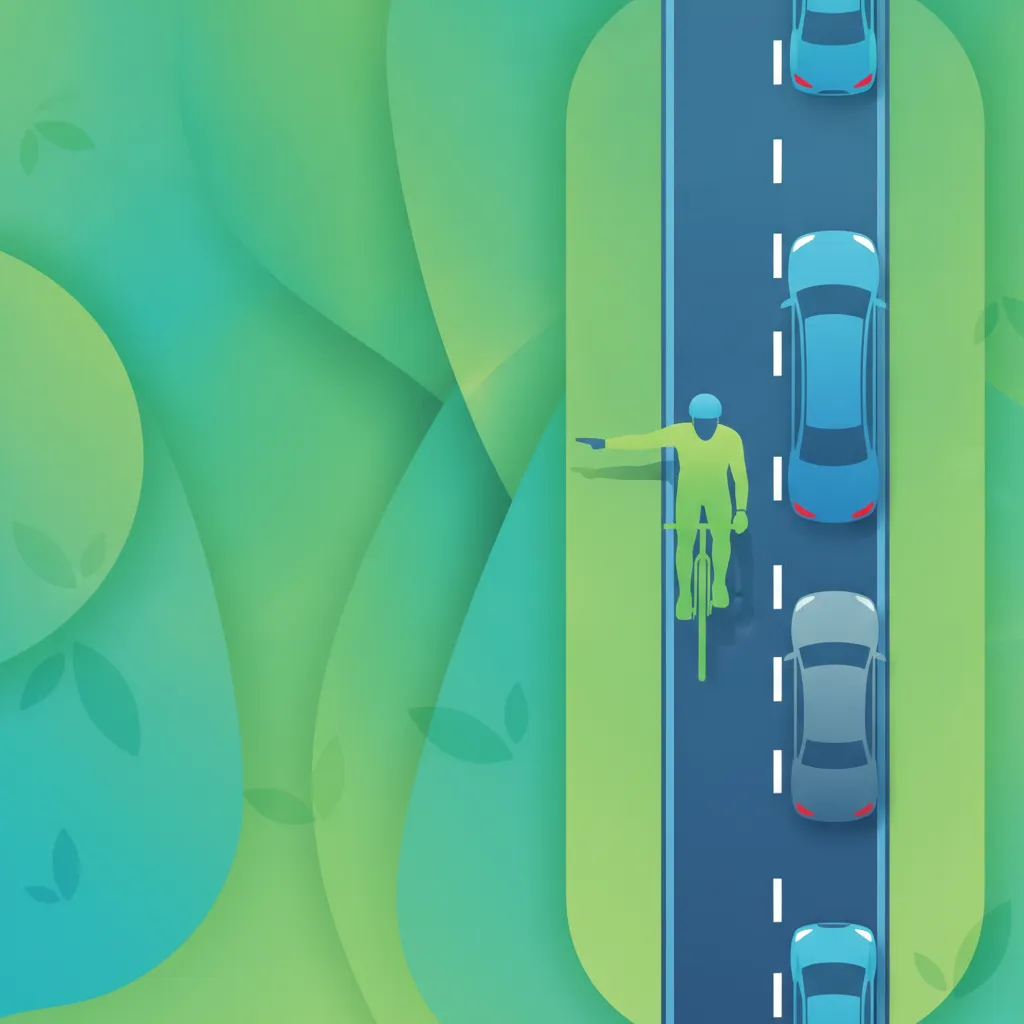
Bicycles represent an eco-friendly transport method with specific rights on French public roadways. This lesson teaches you how to identify dedicated cycle paths, respect bike lanes, and understand cyclist turning privileges at intersections. You will learn the legal minimum safety distance required when overtaking a cyclist: 1 meter in urban areas and 1.5 meters outside city limits.

In this lesson, drivers will learn how to safely share the road with motorcycles and scooters, focusing on the specific blind spots and speed differentials that create risk. The content highlights proper lane positioning, caution when overtaking, and strategies for predicting motorcycle trajectories. Learners will also be introduced to the importance of being aware of scooter movements, especially in narrow streets.
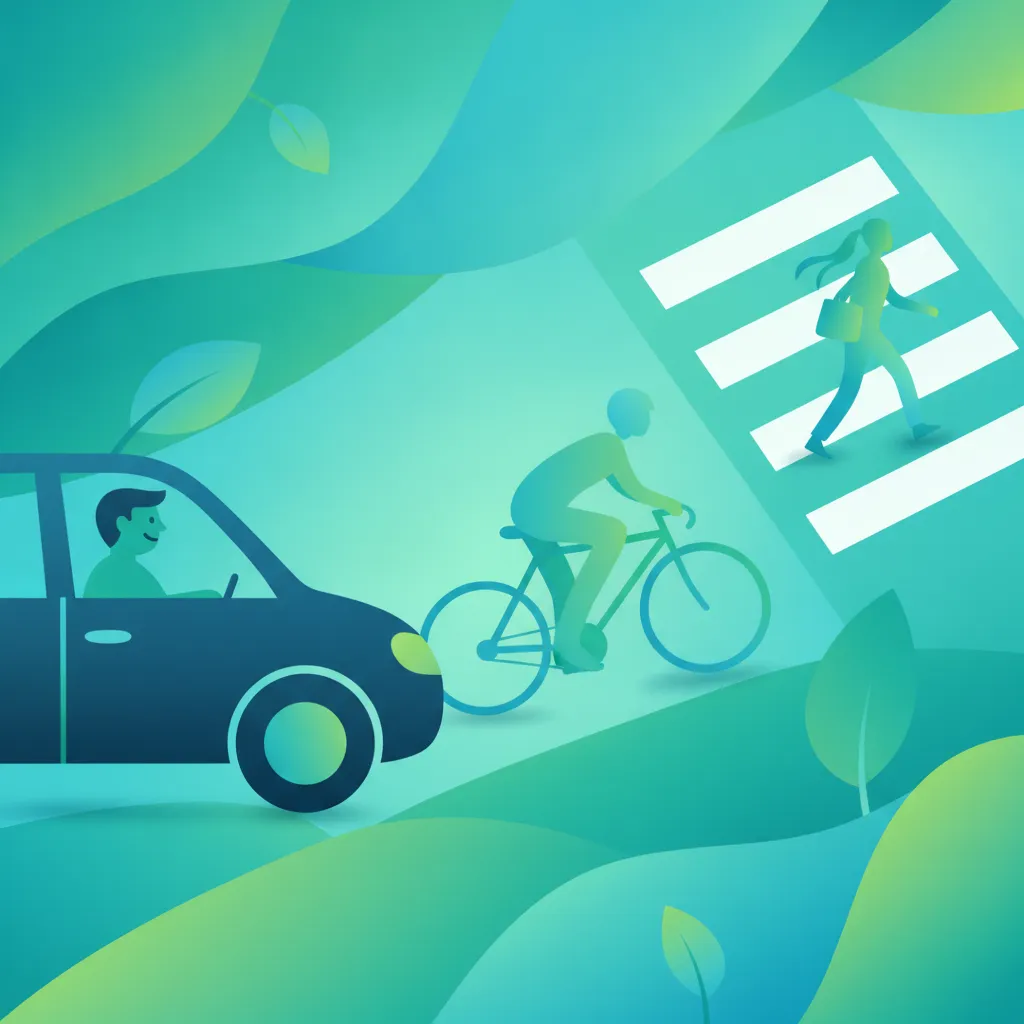
Learners will focus on the best practices for interacting safely with cyclists and pedestrians in mixed traffic environments. The lesson covers proper lane usage, overtaking protocols, maintaining adequate safety gaps, and non-verbal communication techniques in the French urban landscape. By applying these principles, AM riders can coexist harmoniously with vulnerable road users, reducing the likelihood of accidents.

Learners explore the specific responsibilities that accompany operating a small, exposed vehicle, emphasizing the need for heightened defensive driving techniques under French law. The lesson stresses the importance of maintaining visibility and predictability, adhering strictly to the Code de la route, and understanding the dynamics of sharing the road safely. By internalizing these responsibilities, riders can significantly reduce risks and contribute to a safer traffic environment for all users.

This lesson provides guidance on safe riding practices during nighttime, emphasizing proper headlamp usage, reflective clothing, and strategies to manage glare from oncoming traffic. Learners will learn to compensate for reduced peripheral vision and increased fatigue, as well as to identify common night road hazards in France. By applying these techniques, riders can enhance their visibility and safety after dark.

Learners will focus on the importance of clear and consistent signalling to convey intentions to other road users, thereby enhancing predictability and safety on French streets. The lesson covers both hand signals and vehicle indicators, detailing correct usage, timing, and the legal obligations associated with each. By mastering these communication techniques, AM riders can reduce misunderstandings and potential conflicts, contributing to a smoother traffic flow.
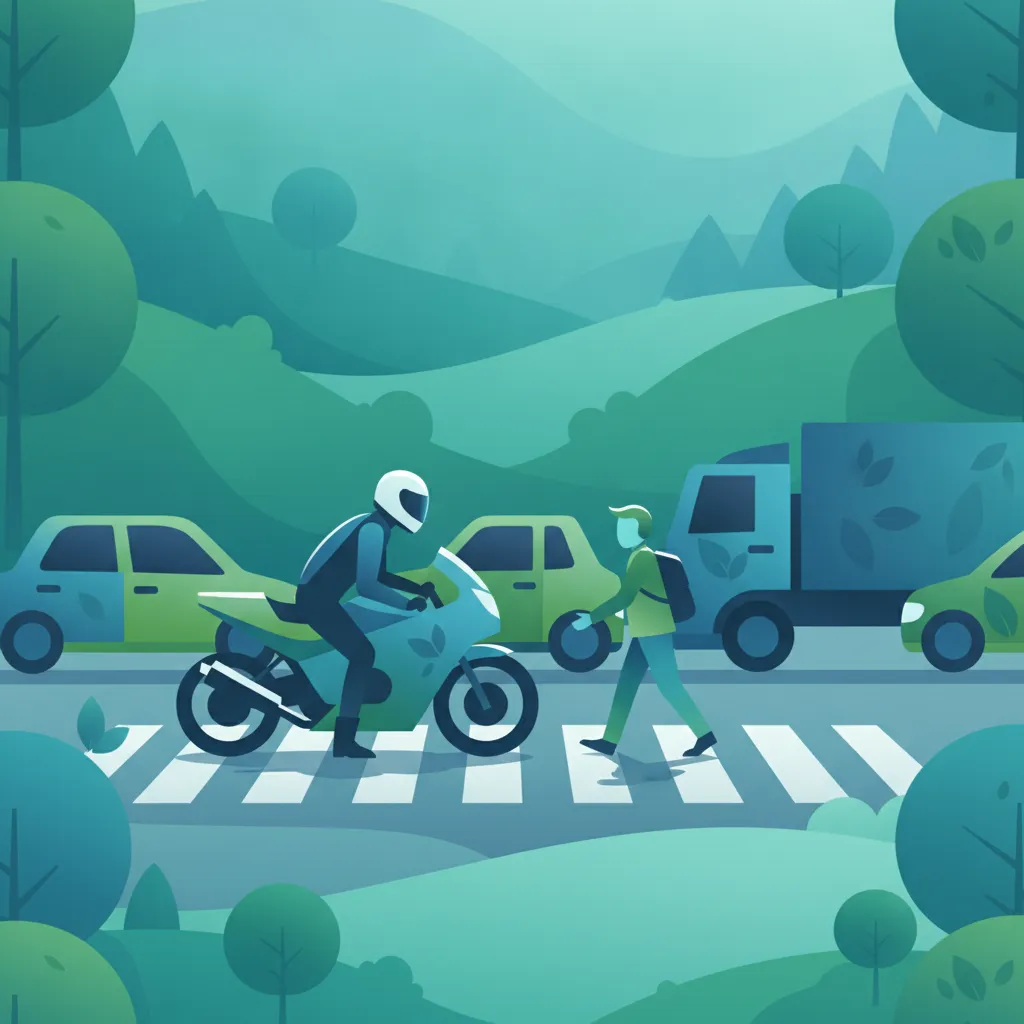
This lesson emphasizes that driving a motorcycle in France involves unique moral and social responsibilities towards vulnerable road users like cyclists and pedestrians. You will examine the importance of defensive riding habits, civil road etiquette, and the prioritizing of shared road safety. Understanding these principles helps to prevent dangerous situations, respect local communities, and lower overall accident statistics.

Learners will explore techniques for maintaining control and safety while riding in rain, focusing on reduced braking efficiency, hydroplaning prevention, and visibility challenges. The lesson emphasizes appropriate speed reduction, tire condition checks, and the use of rain gear to enhance rider comfort and protection. By mastering these adaptations, riders can navigate wet French conditions with confidence.
Find clear answers to common questions learners have about Recognising and Protecting Vulnerable Road Users. Learn how the lesson is structured, which driving theory objectives it supports, and how it fits into the overall learning path of units and curriculum progression in France. These explanations help you understand key concepts, lesson flow, and exam focused study goals.
Drivers must show extreme caution. While pedestrians should use crossings, you are expected to stop if a pedestrian has clearly started to cross, as you must always yield to the most vulnerable user regardless of the road markings.
In urban areas, you must keep a minimum lateral distance of 1 metre, and 1.5 metres on roads outside of towns. This ensures the cyclist has room to maneuver if they hit an obstacle or lose balance.
Look for a white cane, which signifies a person who is blind or visually impaired. They may behave unexpectedly, so you must always give them absolute priority and wait for them to clear the roadway completely.
Yes, children are considered highly unpredictable. You should always anticipate sudden movements and reduce your speed significantly near schools, parks, or residential areas to ensure you can stop immediately.
Ready to focus your study? Use the practice search to find exactly the French driving theory questions you need for the Code de la route and permis de conduire ETG. Refine your knowledge on specific topics or challenging rules to boost your confidence and exam readiness.