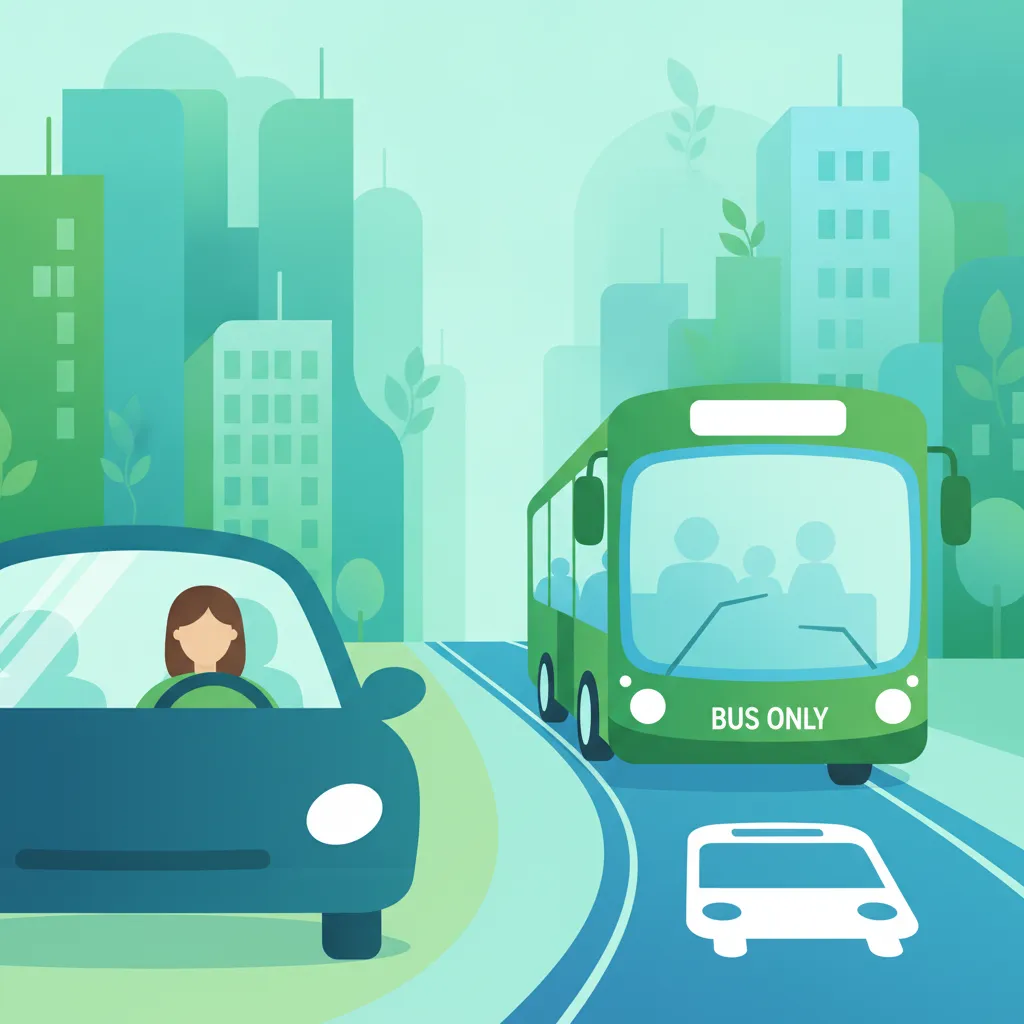
This lesson explores the specific traffic regulations for operating buses and coaches in dedicated bus lanes and reserved spaces on French roads. By mastering these rules, you will gain the clarity needed for professional driving and avoid common exam pitfalls regarding lane access and merging safety.
Lesson content overview
In French urban planning and traffic management, prioritizing public transport is a core strategy for reducing congestion, improving air quality, and ensuring that passenger transport timetables are respected. As a candidate preparing for the French Passenger Vehicle License (categories D1, D, D1E, or DE), mastering the regulations surrounding bus lanes (voies de bus) and other reserved spaces is not merely about passing an exam; it is a fundamental aspect of your daily operational safety and professional conduct.
This lesson details the legal framework governing reserved lanes under the French Highway Code (Code de la Route), the visual indicators used to identify these zones, the rules of shared access with other vehicles, and the practical safety protocols for entering, exiting, and merging with general traffic.
The French road network employs dedicated lanes to isolate public transit vehicles from the unpredictable flow of private passenger car traffic. Under Article L2213-2 of the Code général des collectivités territoriales, local authorities (such as the mayor or the police prefecture) have the legal authority to designate specific lanes for public transport, taxis, and non-motorized users.
By establishing exclusive spaces, municipalities achieve several critical objectives:
For professional drivers, these lanes are your workspace. However, navigating them requires a precise understanding of when they are exclusive, when they are shared, and how to safely transition between them and general urban traffic.
To comply with French traffic law, you must quickly identify reserved lanes through both vertical signage (signalisation verticale) and horizontal road markings (marquage au sol).
The primary signs indicating a reserved or mandatory lane for buses include:
When you see the B27a sign, it signifies an obligation for scheduled transit buses to use the designated lane. For other drivers, it acts as a strict prohibition sign.
The G1 sign is informational but carries regulatory weight. It is often positioned directly above the specific lane it governs or at the entrance to an urban corridor.
On the pavement, reserved lanes are characterized by distinct markings:
The default legal status of a bus lane in France is exclusive to scheduled public transit buses (véhicules de transport en commun réguliers). However, local municipal decrees (arrêtés municipaux) often modify this access to optimize road space.
A traffic lane primarily designated for buses that legally permits other specific categories of vehicles (such as taxis, bicycles, or emergency services) to travel within it, as indicated by auxiliary signs or road markings.
Regular public transport buses are always authorized and, indeed, generally required to use these lanes. However, private coaches (autocars), tourist buses, or long-distance school transport vehicles may not automatically have the right to use them unless a specific additional plate (panonceau) under the sign explicitly permits autocars.
In many French cities, licensed taxis (taxis parisiens or local municipal taxis) are permitted to use bus lanes to facilitate rapid urban transit for clients.
To promote green mobility, French municipalities increasingly open bus lanes to cyclists. This is indicated by:
When sharing a lane with cyclists, professional passenger vehicle drivers must exercise extreme caution. Because of the size and blind spots of buses and coaches, maintaining a safe lateral distance of at least 1.0 metre in urban areas is a legal requirement when overtaking a cyclist.
Priority vehicles under Article R311-1 of the French Highway Code may use bus lanes when on an active, urgent intervention. These include:
These vehicles must display their blue flashing lights (gyrophares) and two-tone sirens (avertisseurs spéciaux) to claim priority access.
Not all bus lanes are active 24 hours a day, 7 days a week. In many urban centers, lanes are reserved only during peak traffic hours to balance public transit efficiency with overall road capacity.
When a bus lane is subject to temporal restrictions, an auxiliary rectangular plate (panonceau) is mounted directly beneath the main regulatory sign.
Rules during different periods:
Always verify the active hours on the sign. Assuming a bus lane is inactive on a weekend can lead to an expensive fine if the local municipality enforces a 24/7 restriction. When in doubt, treat the lane as active and restricted.
The French government strictly enforces bus lane integrity through both physical police patrols and automated camera systems (vidéo-verbalisation). Unauthorized use of these lanes compromises public safety and delays transit times.
Unauthorized Driving in a Bus Lane: Under Article R412-7 of the French Highway Code, driving a non-authorized vehicle in a reserved lane is classified as a Class 4 infraction (contravention de la quatrième classe).
Unauthorized Stopping or Parking: Stopping (arrêt) or parking (stationnement) in a bus lane is considered "highly disruptive" (très gênant) under Article R417-11 of the Highway Code.
For professional drivers of heavy passenger vehicles, transitioning in and out of reserved spaces is a high-risk maneuver. Due to the vehicle's length and significant blind spots (angles morts), you must follow a highly structured safety protocol.
When a bus lane terminates or when you must merge left to make a turn, you must perform a safe merging maneuver (manœuvre de fusion).
Anticipate the Transition: Scan ahead for signs indicating the end of the reserved lane or upcoming lane drops. Avoid waiting until the last moment to begin your maneuver.
Observe Mirrors and Blind Spots: Check your left side mirror and pay special attention to your left blind spot. Passenger vehicles have a substantial blind area directly adjacent to the driver's cabin and along the rear third of the vehicle.
Signal Your Intention: Activate your left indicator early to warn the drivers in the adjacent lane of your intention to merge.
Yield to Existing Traffic: Under standard traffic rules (Article R412-9), a vehicle changing lanes does not have priority. You must yield to vehicles already traveling in the target lane. Wait for a safe, consistent gap.
Execute Smoothly: Once a safe gap is secured, steer gently into the target lane. Maintain a steady speed to avoid disrupting the flow of general traffic.
It is critical to distinguish general lane-changing maneuvers from the specific priority granted to buses leaving designated stops within urban areas.
According to Article R412-11 of the French Highway Code, in built-up areas (en agglomération), other drivers must slow down and, if necessary, stop to allow a public transit bus to leave its stop and rejoin the traffic flow, provided the bus driver has signaled their intention with their indicator.
The physical design of urban reserved spaces often places large passenger vehicles in close proximity to vulnerable road users, specifically cyclists and pedestrians. Managing these interactions requires continuous hazard perception.
When a bus lane is shared with cyclists, the most significant danger occurs when the bus must make a right turn across the path of a cyclist traveling straight in the same lane.
       [Cyclist moving straight]
                 ↑
                 |  (Blind Spot Zone)
                 |
   [Bus turning right] --->
To prevent collisions:
Pedestrians in urban centers often treat bus lanes with less caution than general traffic lanes, sometimes stepping off the curb without looking, assuming the lane is empty because they do not hear or see general car traffic.
As a professional driver, you will encounter diverse road types and weather conditions that alter how you interact with reserved spaces.
Rain, fog, and snow do not alter the legal status of bus lanes, but they severely impact your stopping distances and visibility.
In the event of road construction, municipal authorities may temporarily modify lane rules.
Before moving to practice modules, ensure you have committed these fundamental principles to memory:
Explore all units and lessons included in this driving theory course.
Lesson content overview
Explore all units and lessons included in this driving theory course.
Explore search topics learners often look for when studying Bus Lanes, Reserved Spaces and Their Regulations. These topics reflect common questions about road rules, driving situations, safety guidance, and lesson level theory preparation for learners in France.
Browse additional driving theory lessons that cover connected traffic rules, road signs, and common driving situations related to this topic. Improve your understanding of how different rules interact across everyday traffic scenarios.
Learn the professional techniques for safely merging back into general traffic flows when exiting bus lanes. This guide covers mirror checks, blind spot management, and the legal obligations for heavy vehicle drivers when interacting with other road users during lane changes in French urban environments.
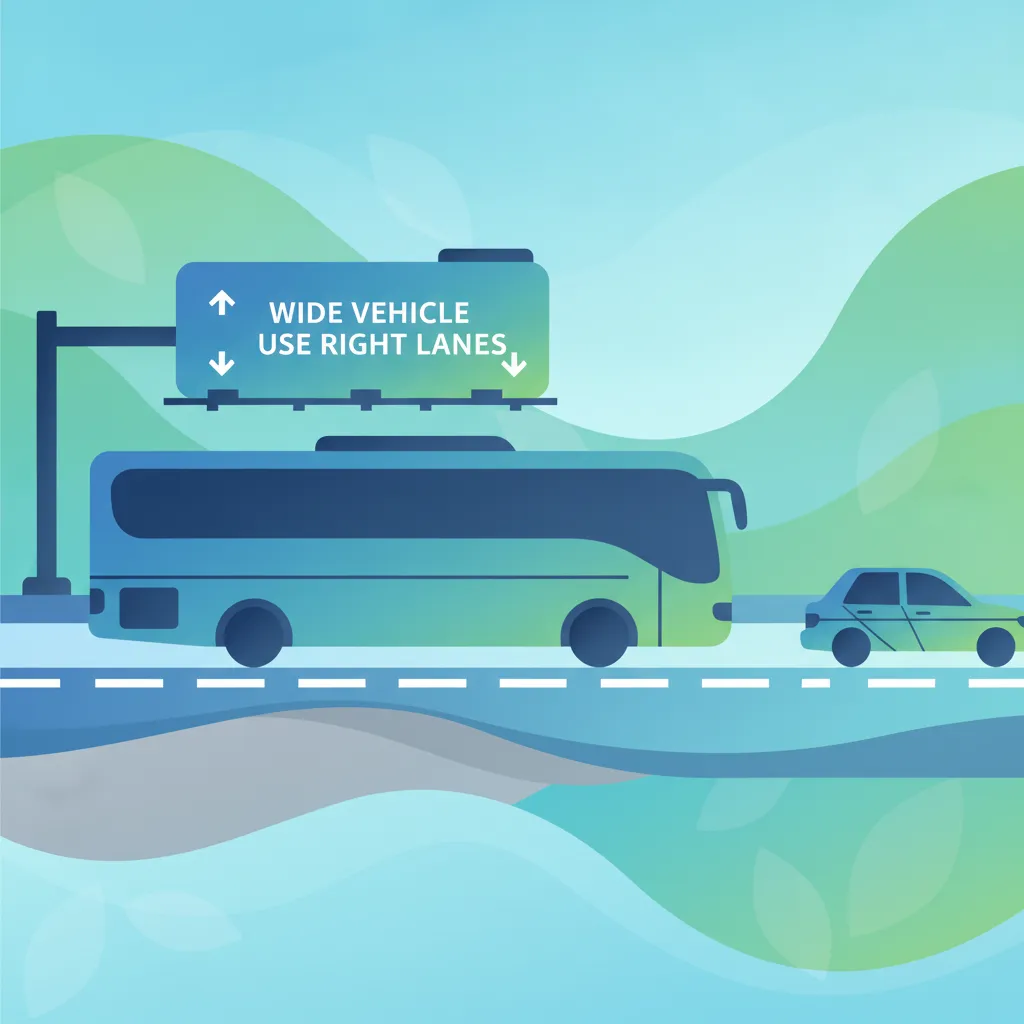
This lesson details the rules of lane discipline for operating wider and longer passenger transport vehicles on highway and city networks. Learners will explore proper lane positioning to prevent encroachment on adjacent lanes or sidewalks. It also covers the step-by-step visual and signaling sequence required to perform safe lane changes, avoiding sudden movements that could startle other drivers.

This lesson analyzes the various traffic challenges unique to operating large passenger vehicles in historic and modern French urban areas. Drivers will learn to manage narrow street layouts, double-parked delivery trucks, and high-density multi-lane roundabouts safely. The lesson emphasizes defensive driving strategies, route adjustments, and maintaining mental focus under severe schedule and time pressures.
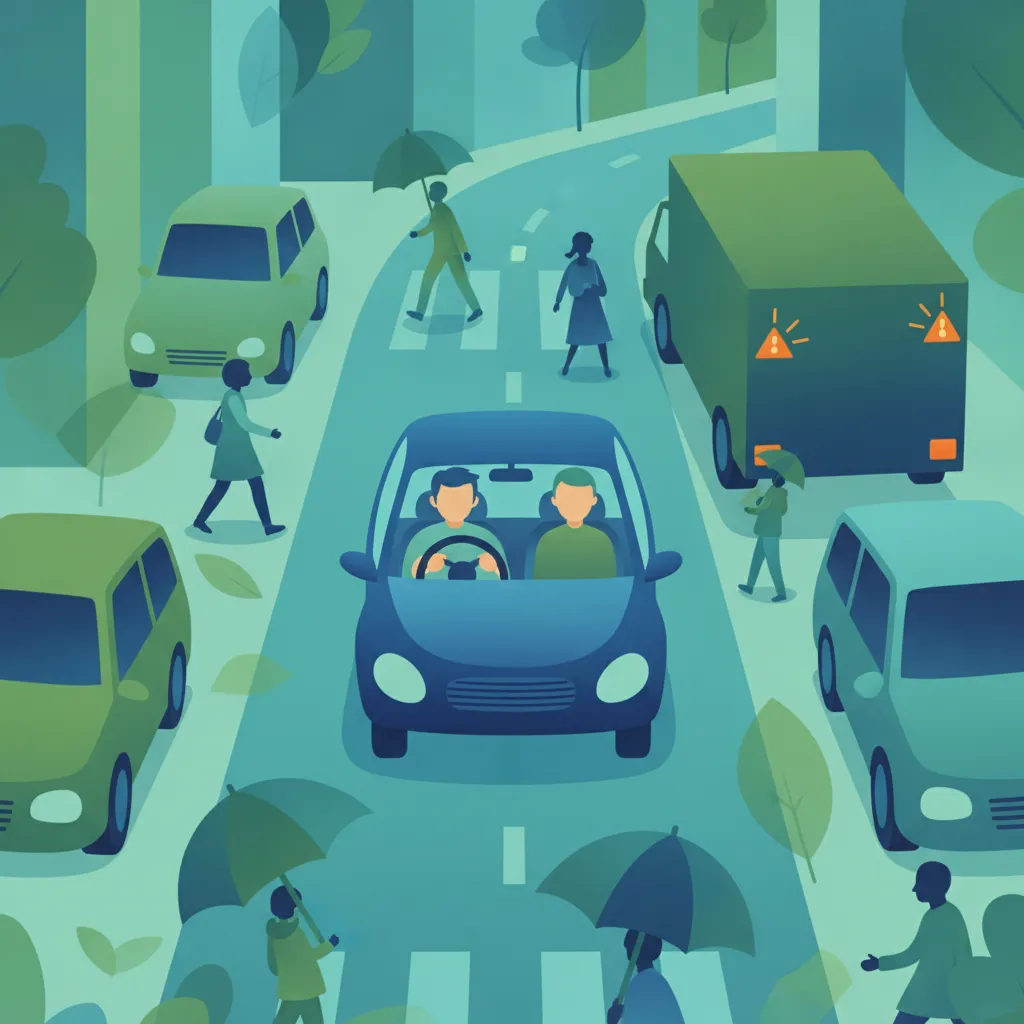
This lesson focuses on maneuvering in extremely crowded areas, passenger terminals, or narrow streets blocked by parked vehicles and obstacles. Drivers will learn to assess clearance distances precisely before committing to narrow pathways. The content teaches steering techniques that maintain stability, optimize space usage, and prioritize public safety during slow-speed, high-difficulty maneuvers.

This lesson covers the specific lane usage rules and best practices for articulated goods vehicles, emphasizing the correct positioning within lane markings and the impact of vehicle length on lane width. Learners will understand how to navigate lane changes safely, the importance of maintaining appropriate gaps with other road users, and the challenges posed by narrow lanes in urban environments. The content also addresses the French road markings standard.

In this lesson, drivers will learn strategies to avoid conflicts with smaller vehicles, such as cars and vans, which may not be as visible in large vehicle blind spots. The content emphasizes maintaining adequate spacing, using proper lane discipline, and being aware of small vehicles' behavior during lane changes and turns. Learners will also be introduced to communication techniques, such as signalling and eye contact.
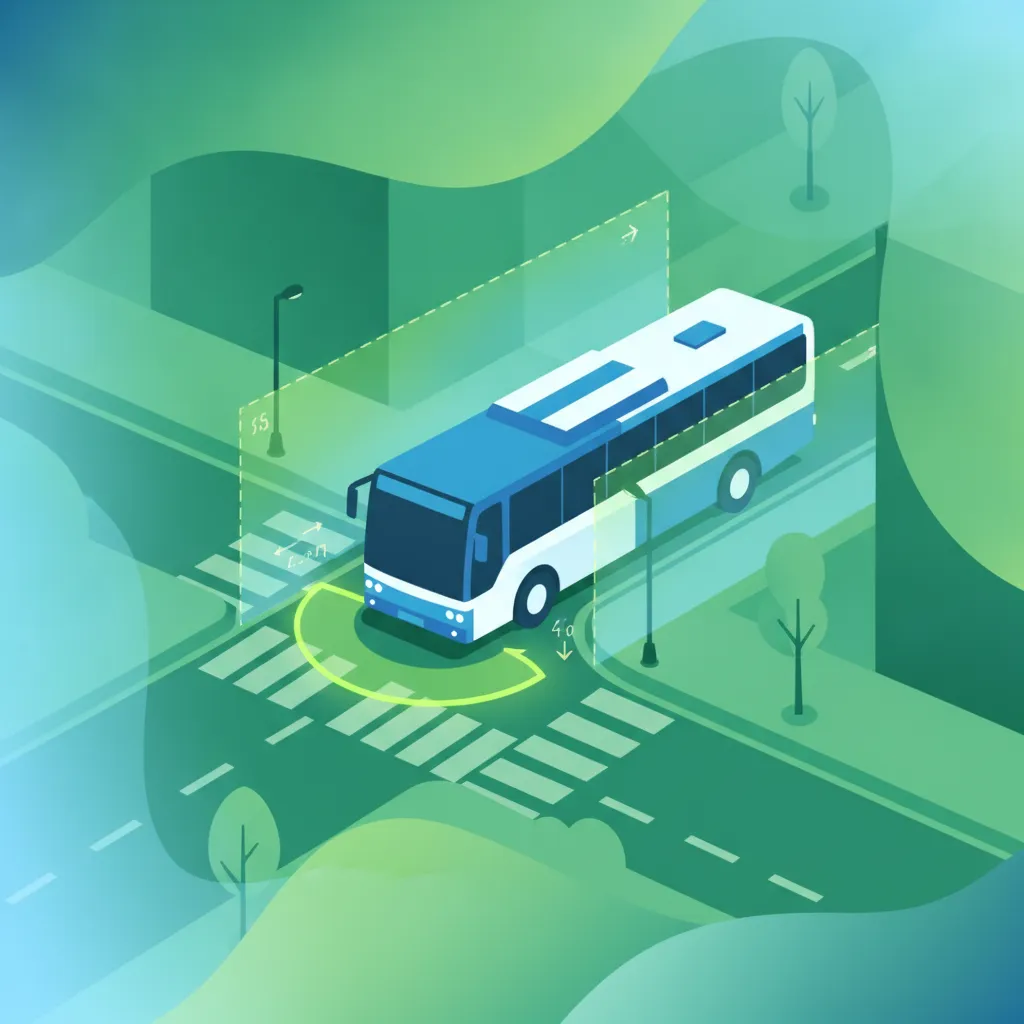
This lesson covers the physical dimensions of passenger vehicles and how their high profile, length, and width alter spatial awareness on the road. Learners will study tail-swing mechanics and track the path of the rear wheels during sharp turns to avoid hitting roadside obstacles. Accurate measurement of overhead structures, bridges, and underpass clearances is taught to prevent catastrophic structural collisions.

This lesson examines the specific challenges and responsibilities goods vehicle drivers face when interacting with pedestrians and cyclists in urban environments. Learners will understand right-of-way rules, the importance of yielding at pedestrian crossings, and safe turning practices that protect cyclists. The content emphasizes heightened driver vigilance, especially when navigating bike lanes and crowded sidewalks.

This lesson addresses the challenges of positioning near larger vehicles such as cars, vans, buses, and lorries on French roads. Learners will learn to identify blind spots (angles morts), maintain a safe distance, and position themselves to maximize visibility and predictability. Understanding these dynamics is crucial for AM riders to avoid dangerous situations and ensure safe overtaking and lane sharing.

In this lesson, drivers will learn how to plan and execute wide turns with goods vehicles, taking into account turning radius, pivot points, and articulation angles. The content emphasizes the necessity of using the full width of the lane, correctly aligning the vehicle through the turn, and anticipating the movement of the trailer. Learners will also explore road marking guidelines for turning and the importance of giving clear signals to surrounding traffic.
Explore the necessary safety protocols for navigating shared road spaces alongside cyclists and pedestrians. Understand how to identify potential hazards near bus stops, manage right-side blind spots, and apply appropriate hazard mitigation strategies to ensure passenger and public safety in accordance with the French Highway Code.
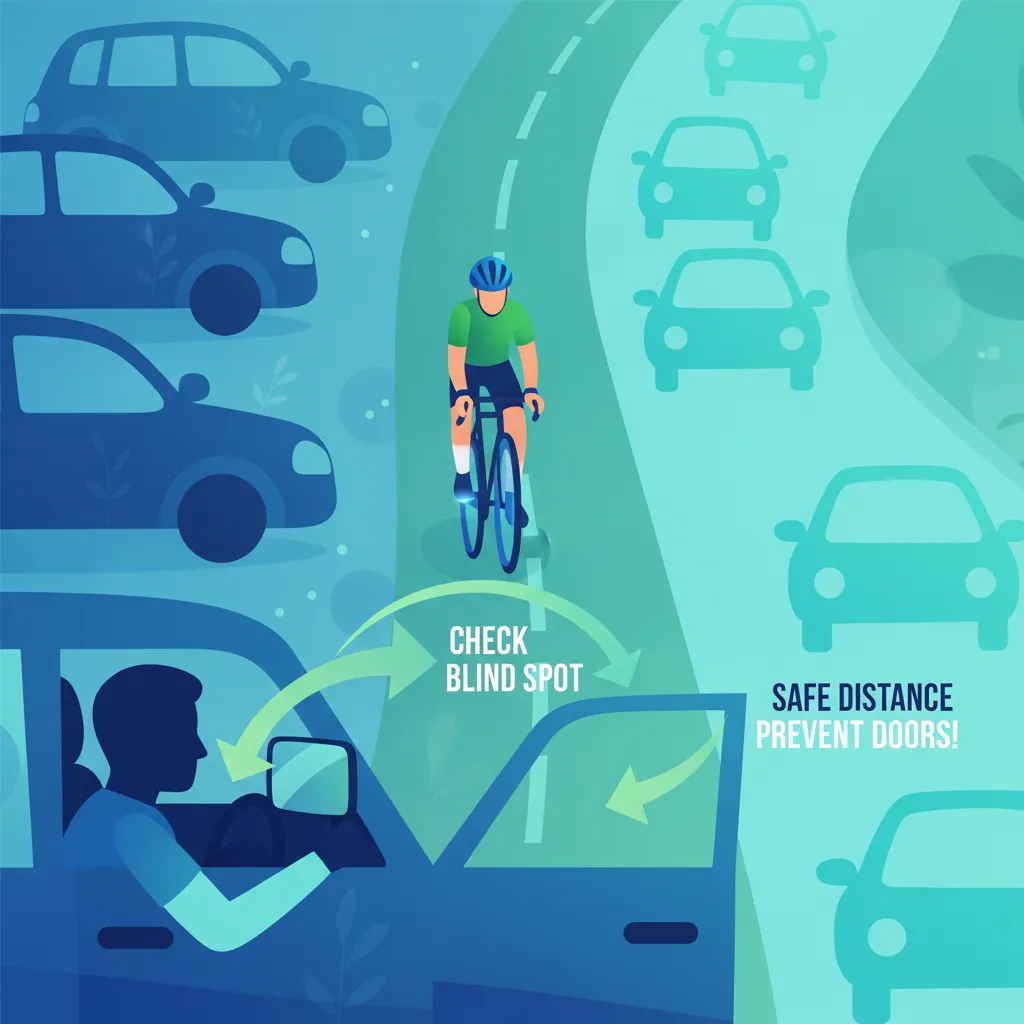
This lesson explains how to share the road safely with cyclists in both urban and rural environments. Drivers will study the legal minimum passing distances when overtaking cyclists, which is one meter in cities and one and a half meters outside urban areas. It also covers recognizing specialized cycling infrastructure, bike boxes at intersections, and preventing blind-spot collisions during right turns.
This lesson examines the specific challenges and responsibilities goods vehicle drivers face when interacting with pedestrians and cyclists in urban environments. Learners will understand right-of-way rules, the importance of yielding at pedestrian crossings, and safe turning practices that protect cyclists. The content emphasizes heightened driver vigilance, especially when navigating bike lanes and crowded sidewalks.
Find clear answers to common questions learners have about Bus Lanes, Reserved Spaces and Their Regulations. Learn how the lesson is structured, which driving theory objectives it supports, and how it fits into the overall learning path of units and curriculum progression in France. These explanations help you understand key concepts, lesson flow, and exam focused study goals.
In France, only authorized vehicles like public transport, taxis (if indicated by signs), and sometimes bicycles or emergency services may use bus lanes. Unauthorized entry by passenger cars is a traffic infraction.
Look for additional road signs beneath the main bus lane sign. These plates specify if the lane restriction is permanent or only in effect during peak hours or specific days.
Always maintain a safe lateral distance. Even if the lane is reserved for buses, you must treat vulnerable road users with caution and adjust your speed to ensure their safety while overtaking.
While the Code de la route sets national standards, local authorities can implement specific markings or local decrees. Always look for specific signage that overrides general rules in certain zones.
Ready to focus your study? Use the practice search to find exactly the French driving theory questions you need for the Code de la route and permis de conduire ETG. Refine your knowledge on specific topics or challenging rules to boost your confidence and exam readiness.