
Driving Theory
French Driving Theory Courses

Lesson 3 of the Weather, Motorways, Rural Roads, Roadworks and Emergency Situations unit

French HGV Theory: Rural Road Navigation and Hazards

This lesson focuses on the specific challenges of operating heavy goods vehicles on rural French roads, where narrow lanes and unexpected hazards are common. You will learn to adapt your driving to varying road surfaces, visibility constraints, and the presence of agricultural machinery. This essential knowledge will prepare you for complex scenario questions in your Category C and CE theory exams.

rural drivinggoods vehiclehazard perceptionC licenceCE licence
French HGV Theory: Rural Road Navigation and Hazards

Lesson content overview

French HGV Theory

Mastering Rural Road Navigation and Hazards: A Guide for Category C & CE Drivers

Navigating rural roads in a heavy goods vehicle (HGV) requires a sophisticated blend of vehicle control, hazard anticipation, and spatial awareness. Unlike the predictable environment of motorways, French rural routes—comprising routes départementales (departmental roads) and routes communales (communal roads)—present variable lane widths, irregular surfaces, and unique shared-space dynamics. For drivers operating Category C (rigid) and Category CE (articulated) vehicles, these roads demand continuous active driving and strict compliance with the French Code de la route.

This lesson focuses on identifying, evaluating, and mitigating the distinct safety risks present in rural environments. By mastering these principles, professional drivers can prevent critical incidents such as rollovers, structural overloads, and collisions with vulnerable road users, wildlife, or agricultural machinery.


Understanding Rural Road Geometry: Curvature, Gradients, and Vehicle Stability

The physical layout of rural roads is often dictated by natural topography rather than modern engineering standards. Tight bends, steep inclines, and narrow lanes directly challenge the lateral and longitudinal stability of large vehicles.

The Physics of Lateral Acceleration on Curves

When a heavy vehicle enters a curve, it is subjected to centrifugal force, which pushes the vehicle outward. This force increases quadratically with speed and is inversely proportional to the radius of the turn. Because Category C and CE vehicles have a high center of gravity, they are highly susceptible to rolling over or sliding off the road.

To safely manage curves, drivers must understand the distinction between a gentle curve and a tight bend. Tight bends feature a small radius, creating high lateral acceleration even at moderate speeds.

Warning

The Rollover Risk: A fully loaded vehicle carrying a high-bulk cargo can roll over at lateral acceleration levels far below what a passenger car can comfortably tolerate. Once a rollover begins, it is mathematically impossible to correct. You must slow down before entering the bend, not during it.

Managing Steep Gradients and Descents

Rural topography frequently includes steep climbs and descents. Descending a steep grade in a heavy vehicle requires a proactive braking strategy to prevent brake fade—a dangerous condition where continuous friction overheats the service brakes, temporarily rendering them useless.

Procedure for Negotiating a Steep Descent Safely

  1. Analyze the Signage: Observe the gradient percentage and length of the descent indicated on the warning sign or supplementary plaque (panonceau).

  2. Select the Correct Gear: Downshift to a lower gear before the descent begins. Use the "engine gear-matching" rule: descend in the same gear you would use to climb the same hill.

  3. Engage Auxiliary Braking: Activate your vehicle's engine brake or retarder (ralentisseur electromagnetic or hydraulic system) to maintain a constant, controlled speed.

  4. Use Service Brakes Sparingly: Use the service brakes only for brief, firm speed adjustments (known as "snubbing") rather than continuous, light dragging.


Managing Surface Conditions and Traction Control

The surface quality of rural roads is highly variable. Unlike major national highways, these roads are more prone to neglect, weather damage, and localized contamination.

Common Rural Surface Hazards

  • Agricultural Runoff and Mud: During harvest seasons, tractors frequently deposit thick layers of wet mud (boue sur la chaussée) onto the road, severely reducing tire grip.
  • Gravel and Loose Stone: Loose chippings are common after surface dressing. They reduce braking efficiency and can be kicked up by heavy dual tires, shattering windscreens.
  • Potholes and Edge Deterioration: The heavy axle loads of Category C vehicles can cause the weak edges of narrow rural roads to crumble, pulling the vehicle's outer tires into the soft verge.
  • Microclimates and Black Ice (Verglas): Rural roads running through valleys, forests, or alongside rivers are highly susceptible to localized freezing and black ice, even when major highways remain dry.
Definition

Aquaplaning / Hydroplaning

A phenomenon where a layer of water builds up between the vehicle's tires and the road surface, leading to a complete loss of traction and rendering steering and braking ineffective.

If you encounter variable surface conditions, you must immediately increase your following distance to at least four seconds (or more in icy conditions) and avoid abrupt steering inputs. Sudden braking on low-friction rural surfaces can cause a tractor-trailer combination to jackknife (mise en portefeuille).


Visibility and Low-Light Navigation on Unlit Rural Roads

A lack of street lighting, combined with natural obstacles like dense woodlands, high hedges, and rolling hills, makes visibility a premium on rural routes.

Proper Headlamp and Fog Light Usage

At night or during adverse weather, you must optimize your vehicle's lighting configuration to see and be seen without dazzling other road users.

  • Dipped Beams (Feux de croisement): Use these as your default setting when driving at night on unlit rural roads when other vehicles are present. They provide illumination without blinding oncoming traffic.
  • High Beams (Feux de route): Switch to high beams on unlit stretches when there is no oncoming traffic and you are not closely following another vehicle. You must switch back to dipped beams immediately upon detecting oncoming headlamps or the rear lights of a vehicle ahead.
  • Fog Lights (Feux de brouillard): Under French law, front fog lights may be used to supplement or replace dipped beams in heavy rain, snow, or dense fog. Rear fog lights, however, are highly restrictive: they must only be used in fog or snow. Using rear fog lights during rain is a violation because their intense glare dazzles drivers behind you.

Interacting Safely with Slow-Moving Agricultural Machinery

Rural roads are shared workspaces. Farmers operating large, slow-moving tractors, combines, and trailers have a legal right to use these routes, requiring patience and extreme caution from professional HGV drivers.

Recognizing Slow-Moving Vehicles (SMVs)

Many agricultural vehicles are speed-limited and display a distinctive triangular, reflective orange and red sign on the rear, indicating they travel at speeds below 40 km/h.

Safe Overtaking of Agricultural Vehicles

  1. Assess the Road Ahead: Never attempt to overtake near a junction, bend, crest, or narrow bridge. You must have a completely clear line of sight.

  2. Calculate Overtaking Distance: Remember that a Category CE vehicle can be up to 18.75 metres long. You require a much larger gap in oncoming traffic to complete an overtake than a standard passenger vehicle does.

  3. Communicate Your Intent: Signal your left turn well in advance. Keep a safe following distance before pulling out so the tractor driver can see you in their mirrors.

  4. Maintain Lateral Clearance: Give the agricultural vehicle at least 1.5 metres of lateral space when overtaking on rural roads, as these machines can bounce or sway unexpectedly.

Note

French Overtaking Restrictions: In some rural zones, a solid white line (ligne continue) strictly prohibits overtaking. Under Article R414-4 of the French Code de la route, you may only cross a solid white line to overtake a very slow-moving vehicle (like a bicycle) if visibility is clear, but this exception does not automatically apply to large agricultural combines or tractors moving at moderate speeds.


Anticipating Wildlife Crossings and Domestic Animals

Forestry regions and agricultural plains in France host significant populations of wild animals, including wild boars (sangliers) and deer (chevreuils). Colliding with an animal of this size in a heavy vehicle can cause severe structural damage, trigger secondary collisions, or destabilize your cargo.

Defensive Driving Tactics for Wildlife Hazards

  • Vigilance at Dawn and Dusk: Most wild animal activity occurs during twilight hours and during autumn breeding seasons.
  • Scan the Tree Lines: Do not focus solely on the asphalt. Use your peripheral vision to scan ditches and tree lines for reflective eyes.
  • Assume More Will Follow: Many herd animals, such as deer, travel in groups. If one animal crosses the road safely, assume there are others immediately behind it.
  • Avoid Sudden Swerving: If a collision is imminent, do not make a violent steering maneuver to avoid the animal. Swerving at high speed in a Category C or CE vehicle often leads to a fatal rollover or a head-on collision with oncoming traffic. Apply maximum, controlled straight-line braking instead.

Operating a heavy vehicle legally and safely on rural routes requires strict compliance with specific signs, speed limits, and weight restrictions.

Speed Limits for Category C & CE Vehicles on Rural Roads

Under the general rules of the French Code de la route (Article R413-8), the maximum speed limits for goods vehicles with a Gross Vehicle Weight (GVW) or Gross Combination Weight (GCW) exceeding 3.5 tonnes on non-priority, two-lane rural roads are as follows:

  • Standard Limit: 80 km/h for vehicles up to 12 tonnes and vehicles over 12 tonnes.
  • Hazardous Materials: Vehicles carrying dangerous goods (matières dangereuses) are subject to lower limits (often 70 km/h or 60 km/h) depending on their class and weight.

Always check localized signs, as individual French departments have the authority to lower speed limits on specific routes to 70 km/h or 50 km/h based on accident history or road conditions.

Weight and Dimension Restrictions

Rural infrastructure is often fragile. Bridges over small rivers or canals may have strict structural load limits.

Before setting off on any rural route, drivers must reference their route planning documents, ensuring the vehicle's height, width, and gross weight comply with local restriction signs. Ignoring a weight limit sign can lead to structural bridge damage, vehicle impoundment, and heavy fines.


Summary of Cause-and-Effect Relationships

Understanding the physics and rules of rural driving helps prevent common operator errors. The table below outlines how specific actions lead to direct safety outcomes:

Initial Action / Driver DecisionDirect Physical or Legal EffectUltimate Safety Outcome
Reducing speed before entering a tight bend.Lowers centrifugal force and maintains lateral stability.Minimizes the risk of cargo shifting or vehicle rollover.
Relying solely on service brakes down a steep gradient.Friction brakes overheat, causing brake fade.Total loss of stopping power and runaway vehicle.
Activating rear fog lights during a heavy rainstorm.Blinds and dazzles drivers following behind you.Increased risk of a rear-end collision; fine under the Code de la route.
Swerving violently to avoid a small animal on a narrow road.Causes extreme lateral shift in the vehicle's center of gravity.Immediate loss of control, potential rollover, or head-on crash.
Respecting the B13 weight-per-axle limit sign.Keeps vehicle axle loads within safe structural tolerances of bridges.Prevents bridge collapse and avoids severe legal penalties.


Learn more with these articles

Check out these practice sets


Search topics related to Rural Road Navigation and Hazards

Explore search topics learners often look for when studying Rural Road Navigation and Hazards. These topics reflect common questions about road rules, driving situations, safety guidance, and lesson level theory preparation for learners in France.

rural road driving rules for heavy goods vehicles in Francehow to handle agricultural vehicles on rural roads C licenceFrench theory test rural road hazards and signsdriving large trucks on narrow rural lanes tipsCategory C and CE exam rural navigation questionsroad safety for heavy vehicles in the French countryside

Related driving theory lessons for Rural Road Navigation and Hazards

Browse additional driving theory lessons that cover connected traffic rules, road signs, and common driving situations related to this topic. Improve your understanding of how different rules interact across everyday traffic scenarios.

Navigating Urban Delivery Zones and Traffic Rules

Understand the specific challenges and regulatory requirements for driving heavy goods vehicles in dense urban environments. This guide explains how to manage delivery access, navigate narrow city streets safely, and mitigate risks when sharing space with pedestrians and cyclists in accordance with French driving theory and traffic regulations.
urban drivinggoods vehicledeliveryhazard perceptionroad safety
Navigating Urban Delivery Zones lesson image

Navigating Urban Delivery Zones

In this lesson, drivers will learn how to navigate urban delivery zones, understanding the rules surrounding loading bays, time windows, and restricted access areas. The content includes the process for obtaining delivery permits, strategies for safe maneuvering in congested city streets, and best practices for minimizing impact on pedestrian traffic. Learners will also be introduced to French city-specific regulations that govern goods vehicle deliveries.
French HGV TheorySigns, Restrictions, Route Planning and Access Limits
View lesson
Restrictions for Passenger Vehicles in Urban Areas lesson image

Restrictions for Passenger Vehicles in Urban Areas

This lesson examines the regulatory limits and environmental controls applied to large passenger vehicles operating in dense French urban centers. Drivers will study the Crit'Air clean air sticker system and low-emission zones (ZFE) that restrict access for older, high-polluting vehicles. It also addresses navigating physical constraints, such as narrow streets, tight turning radii, and strict municipal weight limits.

French D Category TheorySigns, Bus Rules, Restrictions, Stops and Route Awareness
View lesson
Urban Delivery Challenges and Best Practices lesson image

Urban Delivery Challenges and Best Practices

This lesson focuses on the unique challenges of performing deliveries in dense urban areas. Learners will explore best practices for loading and unloading safely, navigating traffic congestion, and minimizing risks to pedestrians and cyclists. The content also covers compliance with city regulations for delivery zones, scheduling considerations, and the importance of careful maneuvering to avoid accidents.
French HGV TheoryBlind Spots, Vulnerable Road Users and Urban Delivery Risks
View lesson
Special Zones: School Areas, Residential Streets lesson image

Special Zones: School Areas, Residential Streets

French municipalities utilize distinct low-speed configurations to foster pedestrian safety in residential and educational neighborhoods. This lesson details speed restrictions in 'zone 30', pedestrian-only districts, and shared 'zones de rencontre' where speed is capped at 20 km/h. You will learn how priority hierarchies shift in these zones, giving pedestrians legal priority to use the entire roadway.

French Category B TheoryPedestrians, Crossings, Cyclists and Vulnerable Road Users
View lesson
Urban Traffic Challenges for Passenger Vehicles lesson image

Urban Traffic Challenges for Passenger Vehicles

This lesson analyzes the various traffic challenges unique to operating large passenger vehicles in historic and modern French urban areas. Drivers will learn to manage narrow street layouts, double-parked delivery trucks, and high-density multi-lane roundabouts safely. The lesson emphasizes defensive driving strategies, route adjustments, and maintaining mental focus under severe schedule and time pressures.
French D Category TheoryBoarding, Alighting, Bus Stops and Urban Traffic
View lesson
Access Restrictions and Authorisations lesson image

Access Restrictions and Authorisations

In this lesson, learners will explore the various access restrictions that apply to goods vehicles in France, such as low emission zones and weight-restricted areas. The focus is on understanding the process to obtain necessary access permits and authorisations, and how these restrictions influence route planning and operational decisions. Learners will also be introduced to specific regulations governing vehicle entry into city centres and environmentally sensitive zones.

French HGV TheoryVehicle Size, Weight, Dimensions and Road Space
View lesson
Interactions with Pedestrians and Cyclists lesson image

Interactions with Pedestrians and Cyclists

This lesson examines the specific challenges and responsibilities goods vehicle drivers face when interacting with pedestrians and cyclists in urban environments. Learners will understand right-of-way rules, the importance of yielding at pedestrian crossings, and safe turning practices that protect cyclists. The content emphasizes heightened driver vigilance, especially when navigating bike lanes and crowded sidewalks.
French HGV TheoryBlind Spots, Vulnerable Road Users and Urban Delivery Risks
View lesson
School Zone Regulations and Safety Protocols lesson image

School Zone Regulations and Safety Protocols

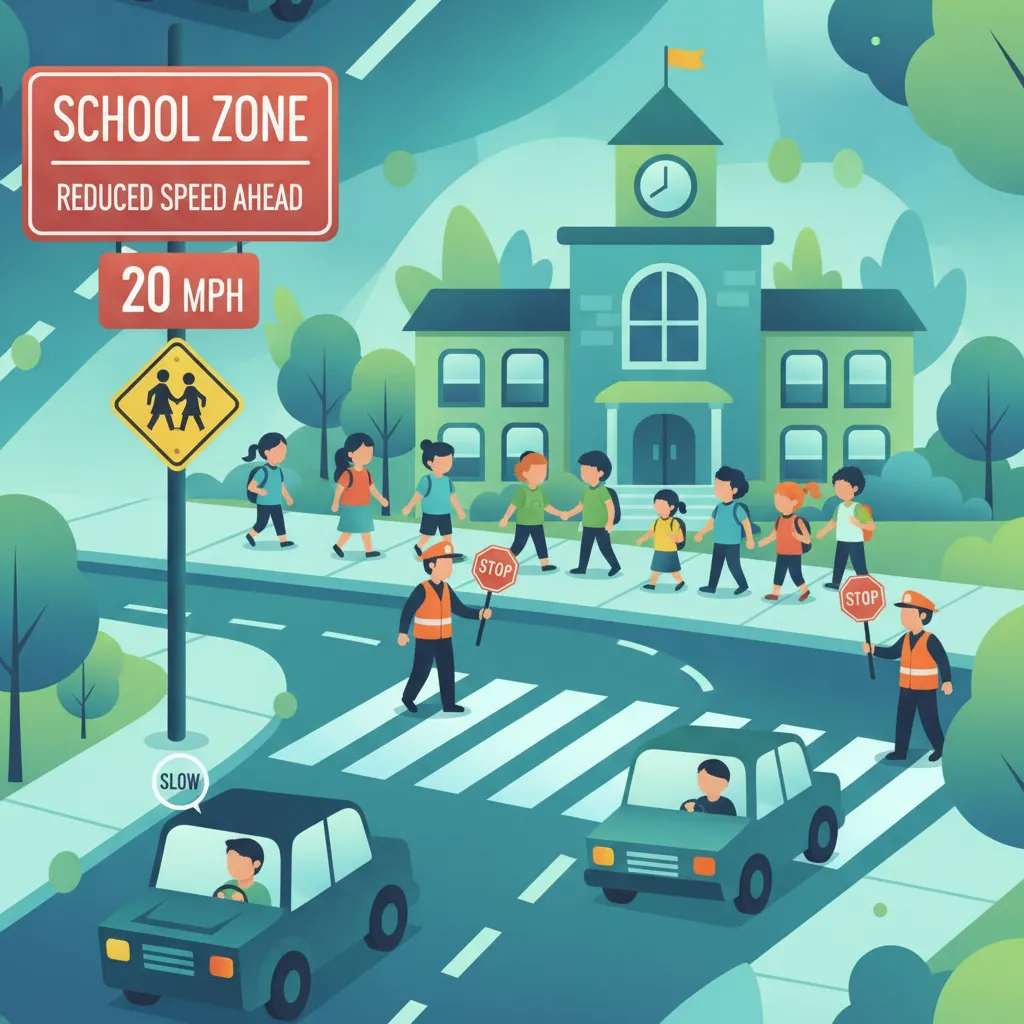
This lesson focuses on the legal rules and safety procedures required within school zones and during school transport (transport scolaire) services in France. Drivers will study strict speed limits, school bus warning sign applications, and mandatory stopping rules when children are boarding. It also details how to respond to official crossing guard signals and ensure students are safely clear before moving.
French D Category TheoryVulnerable Road Users, Pedestrians, Cyclists and School Areas
View lesson
Planning Preferred Routes for Heavy Vehicles lesson image

Planning Preferred Routes for Heavy Vehicles

This lesson provides guidance on selecting preferred routes for heavy vehicles, taking into account freight corridors, toll roads, and restricted zones. Learners will be introduced to practical tools for route optimization, including GPS systems tailored for goods vehicles, and strategies for minimizing travel time while adhering to legal constraints. Emphasis is placed on balancing delivery efficiency with compliance to French transport policies.

French HGV TheorySigns, Restrictions, Route Planning and Access Limits
View lesson
Environmental Zones and Low Emission Requirements lesson image

Environmental Zones and Low Emission Requirements

In this lesson, the focus is on French environmental zones (ZFE) and low emission requirements that affect goods vehicle access to certain urban areas. Learners will explore how emissions criteria determine vehicle eligibility, the process for obtaining permits, and the consequences of non-compliance. The content also covers strategies for route planning that consider environmental restrictions while maintaining operational efficiency.

French HGV TheorySigns, Restrictions, Route Planning and Access Limits
View lesson

Heavy Vehicle Braking Systems and Gradient Control

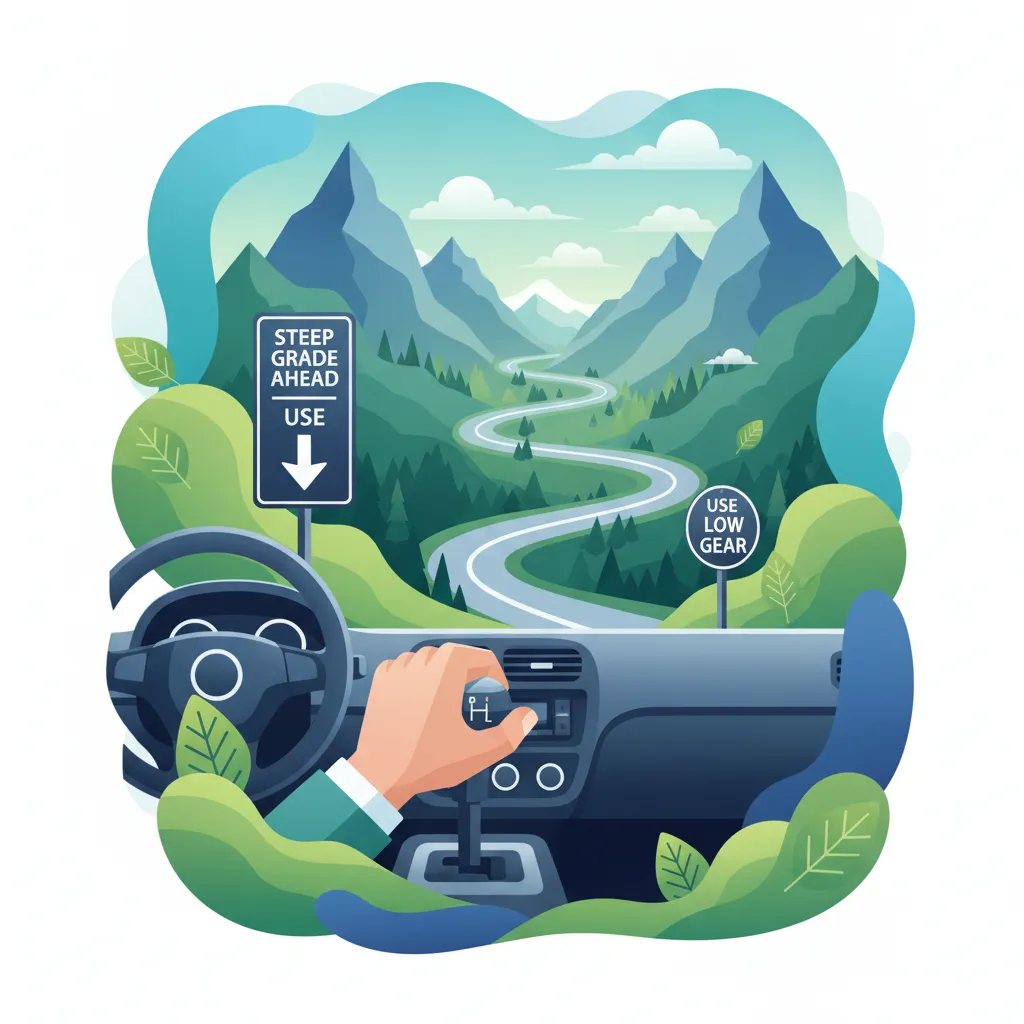
Learn the mechanics of heavy goods vehicle braking systems, including ABS and retarders. This lesson covers the physics of vehicle control on steep gradients, the risk of brake fade, and the proper use of auxiliary braking systems to ensure safe deceleration as required by French road safety theory.
braking systemsheavy vehiclephysicsgradient controldriving theory
Managing Gradients and Downhill Control lesson image

Managing Gradients and Downhill Control

This lesson covers techniques for managing gradients while driving goods vehicles, focusing on downhill control, engine braking, and appropriate gear selection. Learners will understand how load distribution and vehicle dynamics affect descending performance and the importance of avoiding brake overheating. The content includes practical advice on using hill start assistance systems and maintaining safe speeds on steep slopes.
French HGV TheorySpeed, Braking, Following Distance, Gradients and Heavy Vehicle Control
View lesson
Braking Systems and Performance lesson image

Braking Systems and Performance

This lesson focuses on the various braking systems used in goods vehicles, including air brakes, hydraulic brakes, and advanced safety systems such as ABS and ESP. Learners will understand how these systems function, their impact on braking performance, and the importance of regular brake inspection and maintenance. The content also addresses brake wear, brake fade, and how these factors affect stopping distances, especially under heavy load conditions.

French HGV TheorySpeed, Braking, Following Distance, Gradients and Heavy Vehicle Control
View lesson

Frequently asked questions about Rural Road Navigation and Hazards

Find clear answers to common questions learners have about Rural Road Navigation and Hazards. Learn how the lesson is structured, which driving theory objectives it supports, and how it fits into the overall learning path of units and curriculum progression in France. These explanations help you understand key concepts, lesson flow, and exam focused study goals.

How should I handle meeting an agricultural vehicle on a narrow rural road?

You must reduce your speed early and look for a safe place to pass. If the road is too narrow, prepare to stop and wait for the vehicle to move into a wider section or a field entrance, maintaining a safe distance at all times.

What is the most important factor when driving a heavy vehicle on rural bends?

Managing your speed before you enter the bend is critical. Because of your vehicle's higher center of gravity, entering a curve too fast can lead to instability or rollover, so always slow down well in advance.

Do rural road signs for width restrictions differ for C & CE drivers?

Yes, always watch for weight and width restriction signs that apply specifically to heavy goods vehicles. These are legally binding and must be strictly followed to avoid road infrastructure damage or fines.

How do I safely manage wildlife crossings in rural areas?

Stay alert at dawn and dusk when animal activity is highest. If you see a warning sign for wildlife, reduce your speed and scan the verges, being prepared to brake firmly but safely if an animal steps into the road.

Start Your Targeted French Driving Theory Practice Search Now

Ready to focus your study? Use the practice search to find exactly the French driving theory questions you need for the Code de la route and permis de conduire ETG. Refine your knowledge on specific topics or challenging rules to boost your confidence and exam readiness.

Search Practice Questions

Continue your French driving theory learning journey

French road signsFrench article topicsFrench HGV Theory courseSearch French road signsFrench driving theory homeFrench road sign categoriesFrench driving theory topicsSearch French theory articlesFrench driving theory coursesFrench driving theory articlesFrench driving theory practiceFrench practice set categoriesFrench Motorcycle Theory courseFrench Category B Theory courseFrench D Category Theory courseCategory AM French Theory courseFrench driving licence proceduresSearch French driving theory practiceFrench driving theory terminology A–ZFrench driving theory terms and glossarySpeed Limits and Road Networks unit in French Category B TheoryFrench Road Signs and Traffic Signals unit in French Category B TheoryFrench Traffic Laws and Priority Rules unit in French Category B TheoryHelmet, Visibility and Protective Behaviour unit in Category AM French TheoryMotorcycle Licence Basics and Rider Responsibility unit in French Motorcycle TheoryAM Licence Basics and Small Vehicle Responsibility unit in Category AM French TheoryCategory B Licence Basics and Driver Responsibility unit in French Category B TheoryGoods Vehicle Licence Scope and Professional Responsibility unit in French HGV TheoryProtective Equipment, Visibility and Rider Condition unit in French Motorcycle TheoryPassenger Vehicle Licence Scope and Professional Responsibility unit in French D Category TheoryRural Road Navigation and Hazards lesson in Weather, Motorways, Rural Roads, Roadworks and Emergency SituationsAccident Procedures and Reporting lesson in Weather, Motorways, Rural Roads, Roadworks and Emergency SituationsAdapting to Adverse Weather Conditions lesson in Weather, Motorways, Rural Roads, Roadworks and Emergency SituationsDriving on Motorways with Heavy Vehicles lesson in Weather, Motorways, Rural Roads, Roadworks and Emergency SituationsEncountering Roadworks and Temporary Restrictions lesson in Weather, Motorways, Rural Roads, Roadworks and Emergency Situations