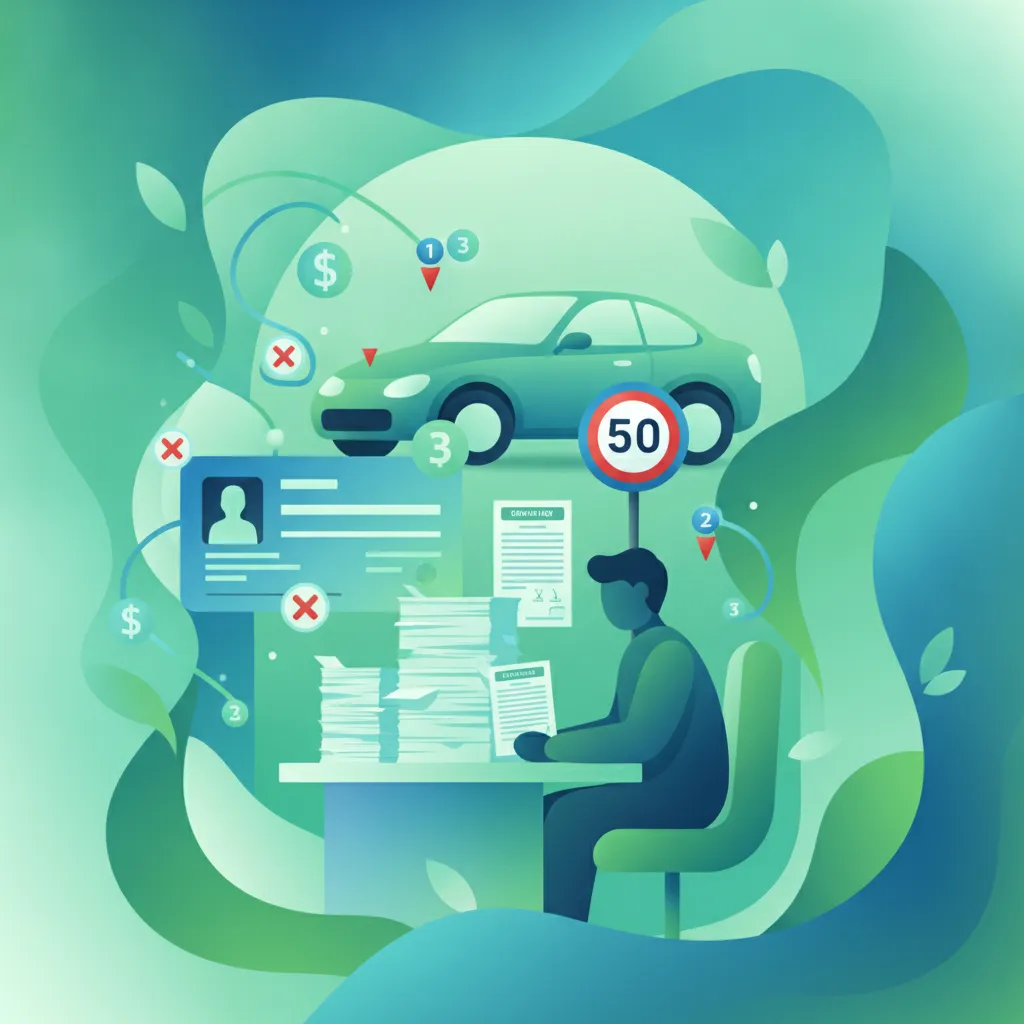
This lesson breaks down the Irish penalty points system, a vital enforcement tool for maintaining road safety. You will learn how violations lead to points, the specific threshold for learner and novice drivers, and the long-term impact on your licence and insurance. This knowledge is essential for passing your Category B Driver Theory Test and becoming a responsible road user.

Lesson content overview
Maintaining safety on public roads requires a clear, consistent, and legally binding mechanism to deter dangerous driving behaviors. In Ireland, this is achieved through the Penalty Points System, an administrative and legal framework designed to monitor driver behavior, penalize traffic violations, and temporarily or permanently remove high-risk drivers from the road.
Whether you are preparing for your Official Irish Driver Theory Test Preparation (Category B) or are already a licensed driver, understanding how penalty points accumulate, how they are enforced by An Garda Síochána (the Irish police force), and how they affect your legal and financial standing is critical.
The Penalty Points System is a cumulative corrective framework. When a driver commits specific road traffic offenses, numerical points are recorded against their driving licence record. The system is designed to act as a preventative measure rather than a purely punitive one, encouraging drivers to correct unsafe habits before they lead to serious collisions or automatic disqualification.
Numerical marks recorded on a driver's record maintained by the National Driver Licence Service (NDLS) for specific traffic offenses. They remain active on the licence for a period of three years.
When you are notified of a penalty point offense, the points do not appear on your licence instantly. They are formally recorded 28 days after the date of the notification or after the payment of the associated fixed charge fine.
The Road Traffic legislation in Ireland establishes a tiered system of thresholds. This structure recognizes that inexperienced drivers are statistically more vulnerable to accidents and require stricter boundaries to reinforce safe habits during their formative driving years.
For drivers who hold a full Category B driving licence and have completed their novice period, the limit before automatic disqualification is 12 penalty points. If a driver accumulates 12 points within any rolling three-year window, they face an immediate, mandatory six-month suspension from driving.
Under the Road Traffic (Amendment) Act 2012, a much lower threshold is applied to pre-licence and newly licensed drivers:
For these drivers, accumulating 5 penalty points within a rolling three-year period triggers an automatic six-month driving suspension.
If you accumulate 5 or more points as a learner driver, your suspension takes effect immediately. Crucially, any points accumulated during your learner phase carry over to your novice phase when you pass your practical driving test.
Statistics show that newly qualified drivers face a significantly higher risk of collision during their first two years on the road. The 5-point threshold ensures that minor infractions (such as a single speeding offense combined with a mobile phone offense) result in immediate intervention. This serves as a vital safeguard to protect both the novice driver and other road users.
Not all traffic violations carry the same weight. The points assigned to an offense reflect its potential to cause harm, collision, or loss of life.
Generally, there are two levels of point allocation for most offenses:
| Traffic Offense (Category B) | Points on Payment of Fine | Points on Court Conviction | Key Safety Implications |
|---|---|---|---|
| Exceeding the Speed Limit | 3 points | 5 points | Higher speeds reduce reaction times and exponentially increase stopping distances. |
| Holding a Mobile Phone | 3 points | 5 points | Cognitive and manual distraction highly elevates the risk of rear-end collisions. |
| Unaccompanied Learner Driver | 2 points | 4 points | Learners lack the experience to handle complex hazards without a qualified supervising driver. |
| Failure to Display L or N Plates | 2 points | 4 points | Other road users must be made aware of a driver's entry-level experience to allow extra space. |
| Failure to Wear a Seatbelt | 3 points | 5 points | Seatbelts are the primary safety restraint; the driver is also responsible for passengers under 17. |
| Disobeying traffic lights / Stop Signs | 3 points | 5 points | Failing to yield at controlled junctions direct causes severe side-impact collisions. |
For instance, ignoring critical regulatory signs like a "Stop" sign is a serious violation that directly risks cross-traffic collisions:
An Garda Síochána is the statutory authority responsible for monitoring, detecting, and prosecuting road traffic offenses across Ireland's road network.
Gardaí utilize various methods to detect traffic violations, including:
If detected committing a minor or mid-tier point-carrying offense, you will normally receive a Fixed Charge Notice (FCN) in the post or by hand.
Initial 28-Day Period: You have 28 days from the date of the notice to pay the specified fine. If paid, the lower tier of penalty points (e.g., 3 points for speeding) is added to your record, and no court appearance is required.
Secondary 28-Day Period (The Grace Period): If you fail to pay within the first 28 days, you have an additional 28 days to pay the fine, which is now increased by 50%. The point allocation remains at the lower "on payment" tier.
Court Summons: If the fine remains unpaid after 56 days, a court summons is issued. If you are convicted in court, you face a significantly higher fine and the higher "on conviction" tier of penalty points (e.g., 5 points instead of 3).
While the prospect of licence suspension is a powerful legal deterrent, the direct financial consequence of accumulating penalty points is felt through motor insurance premiums.
Under the Private Insurance (Road Safety) Act 2010, insurance companies operating in Ireland have direct access to the National Driver Licence Database via the Central Register. When you apply for a new motor insurance policy or seek to renew an existing one, you are legally required to declare any penalty points on your record. Insurers routinely cross-reference these declarations with the official database to verify accuracy.
Insurers use penalty points as a primary metric to assess a driver's risk profile.
Navigating the legal landscape of traffic violations requires debunking several common myths that lead drivers into severe legal difficulties.
The Reality: Penalty points are personal. They are recorded against the driving licence of the person driving the vehicle at the exact time of the offense, not the registered owner. If you borrow a friend's car and are caught speeding by a safety camera, the owner will receive the initial notice but is legally required to nominate you as the actual driver. The points and fine will then be reissued to your name.
The Reality: If you are disqualified because you reached your threshold (12 points for full licence holders, 5 points for learners/novices), your licence is suspended for six months. However, when you receive your licence back at the end of the suspension, the points that triggered the ban are removed from your active record, but any underlying history remains. Furthermore, getting caught driving while suspended carries mandatory court prosecution, vehicle seizure, and long-term disqualification.
The Reality: If you are detected committing multiple penalty-point offenses on the same occasion (for example, being stopped for speeding while simultaneously holding a mobile phone), the law applies a specific logical rule:
If you drive in Ireland on a foreign driving licence (from another EU state or a recognized country), you are not exempt from the penalty points system. The NDLS creates a shadow record in your name on the Central Register. If you accumulate 12 points (or 5 points if you are considered a learner/novice equivalent), you will be formally disqualified from driving on Irish roads.
To help solidify your understanding, let us review how these laws apply to real-world driving situations.
A learner driver on their way to work is caught using a handheld mobile phone while driving. They are also driving unaccompanied, without L-plates displayed.
A fully licensed Category B driver is caught traveling at 140 km/h in a 120 km/h motorway zone by a speed camera van. They already have 9 active penalty points on their licence from previous speeding and red-light offenses.
The core purpose of the Penalty Points System is to modify driver psychology. Driving is a privilege, not a right, and maintaining that privilege requires constant adherence to safety protocols. By linking measurable, escalating consequences directly to daily driving habits, the system forces drivers to evaluate the true cost of minor infractions.
For learner and novice drivers, the low 5-point threshold is not designed to be unfair, but rather to serve as an early-warning intervention. Recognizing that your driving privileges can be suspended after just two minor mistakes instills a higher standard of vigilance during the most critical learning phases of your driving career.
Explore all units and lessons included in this driving theory course.
Lesson content overview
Explore all units and lessons included in this driving theory course.
Explore search topics learners often look for when studying Penalty Points System and Enforcement. These topics reflect common questions about road rules, driving situations, safety guidance, and lesson level theory preparation for learners in Ireland.
Browse additional driving theory lessons that cover connected traffic rules, road signs, and common driving situations related to this topic. Improve your understanding of how different rules interact across everyday traffic scenarios.
Learn how the penalty points system impacts your legal standing and motor insurance premiums. This guide explains the relationship between traffic offence convictions, the Central Register, and how insurance companies assess driver risk profiles following accumulation of penalty points on a driving licence.
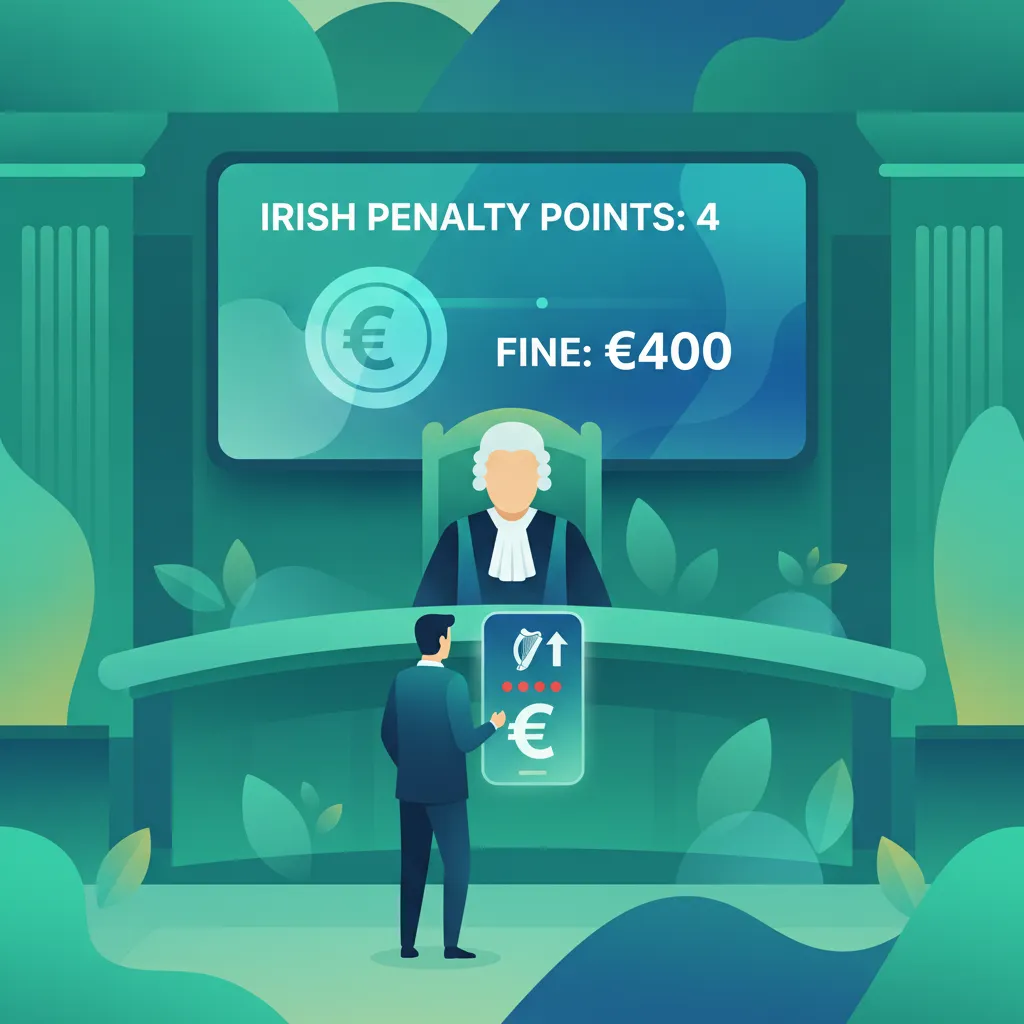
This lesson details the legal consequences of non-compliance with Irish road traffic laws, focusing on fixed charge notices, fines, and court prosecutions. It explains how persistent traffic violations can lead to mandatory licence disqualification, vehicle seizure, and soaring insurance premiums. Motorcyclists will learn about the serious long-term impact that a criminal driving record has on employment.
Violating passenger transport laws can lead to severe operator penalties, heavy fines, and the immediate suspension of driving privileges. This lesson examines common operational infractions, including tachograph violations, overloading offences, and driving with defective tires. Drivers will understand their personal legal liabilities under Irish legislation, supporting long-term safety compliance.
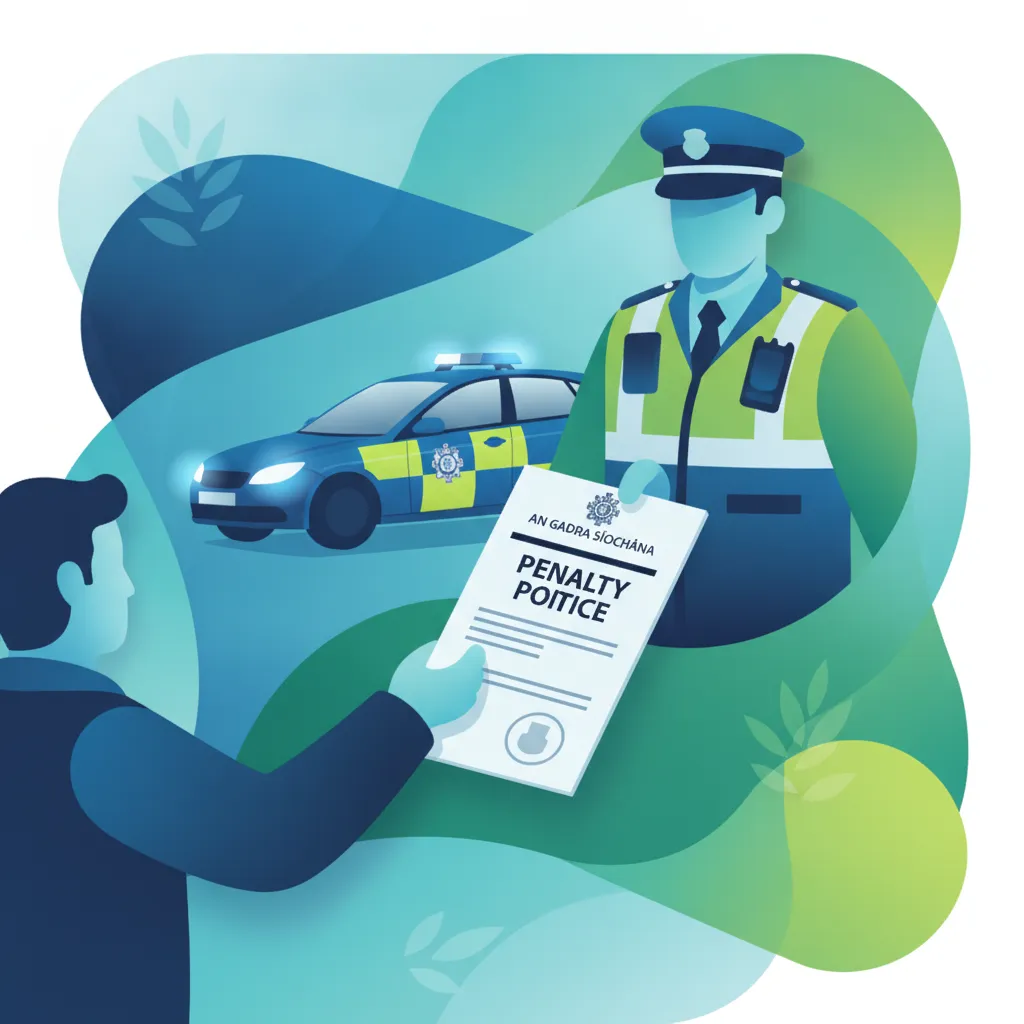
Violating Irish traffic laws triggers a structured enforcement process, starting with fixed charge notices and ending in severe court-ordered bans. This lesson details the roles of the Garda Síochána and the National Car Testing Service in enforcing safety regulations on roads. You will learn how fines are paid, how penalty points are formally added to your NDLS record, and the legal consequences of driving while disqualified.
This lesson details the legal requirements for motorcycle insurance under Irish law, emphasizing the absolute necessity of holding valid third-party cover. It outlines the rider's responsibility to maintain their motorcycle in a completely roadworthy condition, focusing on critical safety components like tyres, brakes, and lights. Learners will examine how mechanical failures and non-compliance with maintenance standards compromise legal eligibility and safety.
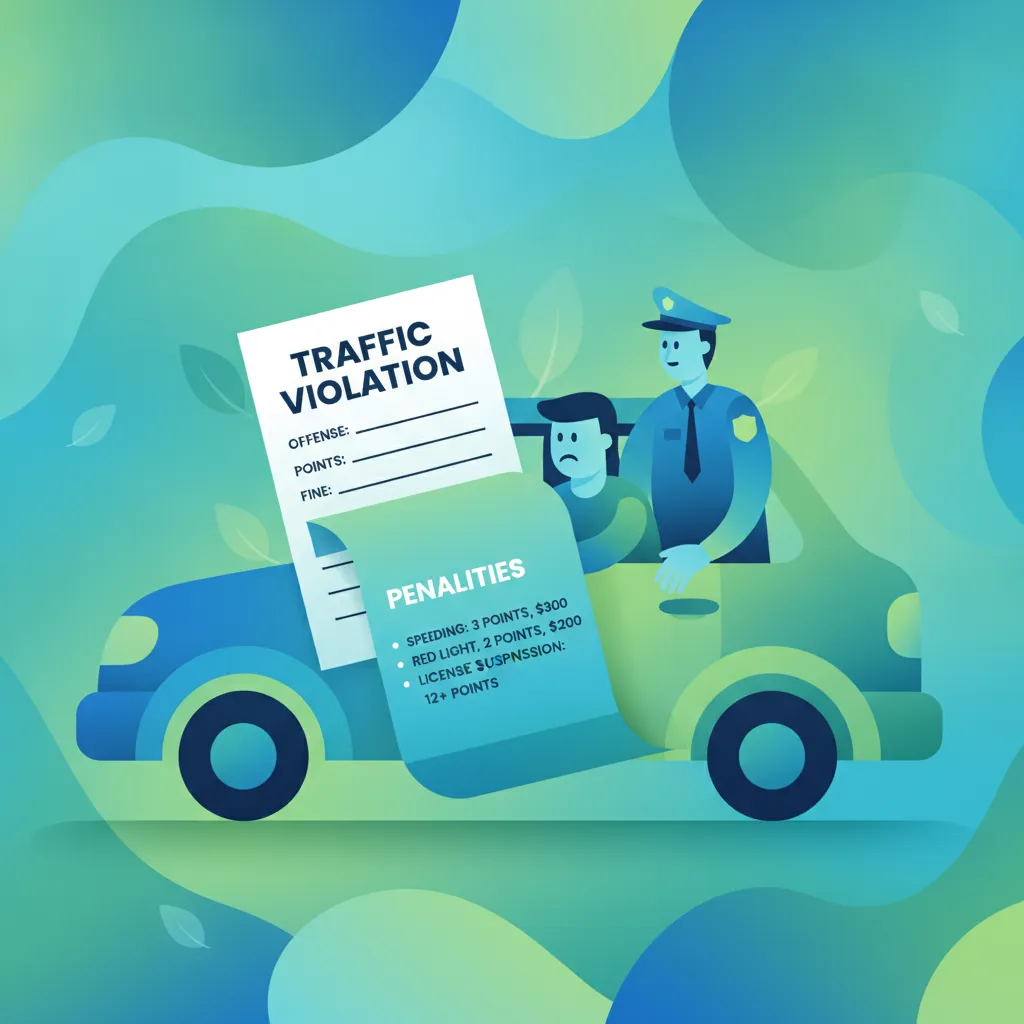
This lesson details the legal consequences of failing to adhere to the Irish Rules of the Road as a Category AM rider. It explains the structure of financial fines, penalty points, and situations that trigger immediate license suspension or disqualification. Understanding these severe penalties emphasizes the importance of consistent compliance and safe road use.
Operating commercial passenger vehicles requires strict adherence to Irish road laws to prevent heavy fines, penalty points, or disqualification. This lesson outlines the primary motoring offences, the mechanics of the Irish penalty points system, and active enforcement by An Garda Síochána. Drivers will learn the serious operational and professional consequences of non-compliance, encouraging long-term safe driving habits.
Driving under the influence of illegal drugs or impairing prescription medication is a major contributor to road traffic accidents in Ireland. This lesson details how officers conduct roadside oral fluid tests for substances like cannabis and cocaine, and the legal penalties for driving while impaired. You will learn to read warnings on over-the-counter medicine labels and assess your fitness to drive before taking medication.

To legally drive in Ireland, your car must be insured, taxed, and certified as roadworthy through the National Car Test. This lesson details the types of motor insurance cover available, how to display your tax and insurance discs, and the schedule for mandatory NCT inspections. Keeping these documents up to date ensures your vehicle meets national safety and environmental standards, preventing heavy fines or vehicle seizure.

This lesson details the statutory blood alcohol concentration limits in Ireland and the severe penalties for operating a motorcycle under the influence. It explains the physiological effects of alcohol, illicit drugs, and everyday prescription medication on vision, reaction speed, and overall coordination. Motorcyclists will understand how chemical impairment fundamentally alters risk assessment and vehicle control.

This lesson provides a comprehensive overview of the Irish penalty point system and how traffic offences are monitored by An Garda Síochána. It details the accumulation limits that trigger automatic licence suspension, with a focus on special lower thresholds for learner drivers. Learners will explore common traffic violations, such as speeding and reckless riding, which carry statutory point penalties.
Understand the core responsibilities of a learner and novice driver within the Irish road safety framework. This overview examines how driver behaviour affects safety on public roads and why adherence to traffic rules is essential for maintaining driving privileges and avoiding penalty point accumulation.
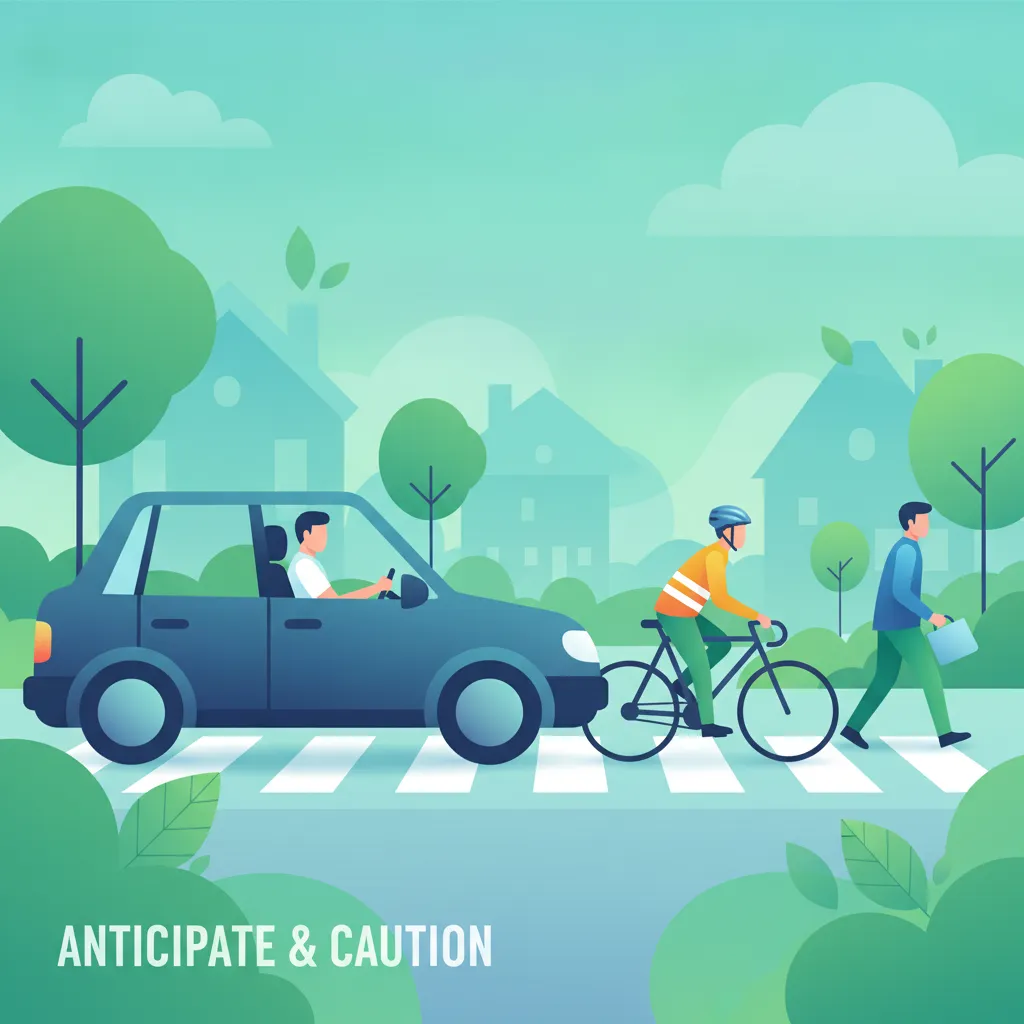
Safeguarding vulnerable road users requires more than simple obedience to traffic signs; it demands a defensive driving mindset. This lesson summarizes safe practices, including scanning far ahead in urban areas, keeping massive safety margins in wet weather, and executing thorough blind spot checks before reversing. By anticipating the unpredictable movements of others, you can prevent accidents and support a safe road culture.

Drivers bear the legal responsibility of ensuring that all passengers under seventeen years of age are properly secured in the vehicle. This lesson covers Ireland's strict seatbelt laws and the requirement to use an EU-approved child restraint system appropriate for the child's height and weight. You will learn how to locate ISOFIX anchorage points, fit child seats correctly, and deactivate passenger airbags when using rear-facing seats.

Pedestrians are the most common vulnerable road users, and drivers must maintain constant vigilance to protect them. This lesson covers pedestrian priority, especially when you are turning into side roads or navigating busy urban centres. You will learn why you must yield to pedestrians already crossing, how to scan blind spots for hidden walkers, and the safety dangers of blocking footpaths or pedestrian zones with your car.
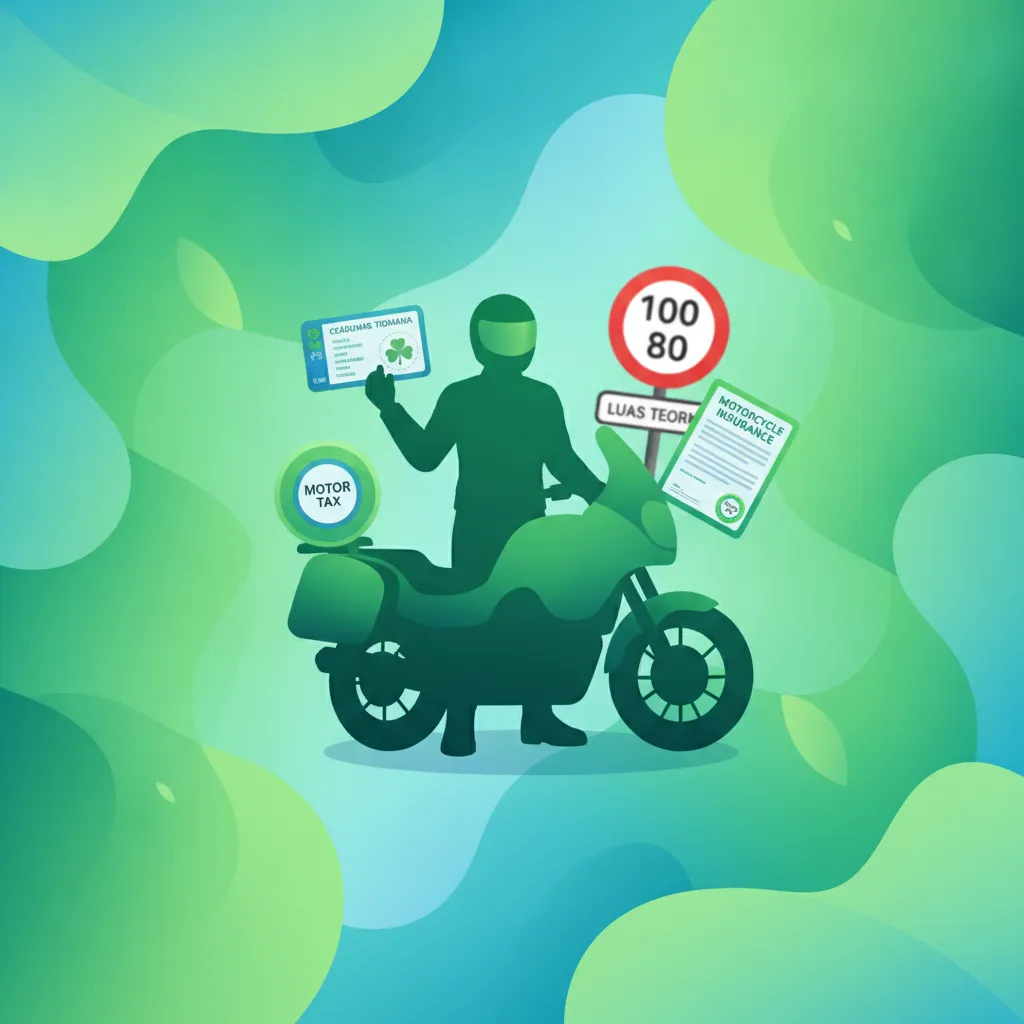
This lesson explains the foundational legal obligations of motorcyclists under Irish road traffic legislation and the official Rules of the Road. It covers mandatory compliance with speed limits, correct signalling protocols, and strict adherence to lane discipline and right-of-way laws. Riders will gain a comprehensive understanding of the legal consequences and safety risks associated with traffic violations.
This lesson details the legal requirements for motorcycle insurance under Irish law, emphasizing the absolute necessity of holding valid third-party cover. It outlines the rider's responsibility to maintain their motorcycle in a completely roadworthy condition, focusing on critical safety components like tyres, brakes, and lights. Learners will examine how mechanical failures and non-compliance with maintenance standards compromise legal eligibility and safety.

Irish driving theory demands that drivers keep to the left-hand side of the road unless overtaking or turning right. This lesson explains how to maintain consistent lane discipline on multi-lane roads, how to perform safe lane changes, and the dangers of drifting. You will learn the safety sequence of checking mirrors, checking blind spots, signalling, and smoothly executing a lane change without disrupting trailing traffic.

School zones and pedestrian crossings require high driver alertness and strict compliance with local speed limits in Ireland. This lesson details the legal rules of zebra and pelican crossings, explaining driver requirements when amber warning beacons are flashing. Drivers will study safety procedures for dropping off or picking up children, preventing common blind-spot accidents near schools.

This lesson delivers a detailed analysis of the legal and moral duty of care that passenger vehicle operators hold in Ireland. Drivers will learn to manage risk effectively, establishing a proactive safety culture that prioritizes vulnerable occupants and external road users. It covers practical methods for protecting passengers during transit, accelerating smoothly, and maneuvering safely in high-risk zones.

This lesson outlines the vital actions required from a professional driver immediately following a collision on Irish roads. It details the correct protocols for contacting emergency services, assisting injured parties safely, and securing the accident scene to prevent secondary incidents. Additionally, the lesson explains the legal requirements for documenting the event, exchanging insurance details, and reporting to authorities.
The Road Safety Authority establishes clear operational frameworks to ensure maximum safety in the Irish commercial passenger transport sector. This lesson covers critical guidelines regarding daily vehicle walkaround checks, scheduled maintenance records, and ongoing driver CPC compliance. By studying these official recommendations, drivers will understand how to maintain total legal compliance while elevating transport safety.
Find clear answers to common questions learners have about Penalty Points System and Enforcement. Learn how the lesson is structured, which driving theory objectives it supports, and how it fits into the overall learning path of units and curriculum progression in Ireland. These explanations help you understand key concepts, lesson flow, and exam focused study goals.
Learner drivers are subject to a lower threshold compared to full licence holders. If you accumulate 7 penalty points, you face an automatic disqualification from driving for a period of six months.
No, penalty points remain on your driving record for a period of three years from the date of the offence. If you are disqualified, the points are cleared after the disqualification period ends.
Yes, insurance companies in Ireland typically view penalty points as an indicator of higher risk. Accumulating points can lead to increased premiums or, in some cases, difficulty securing cover.
Not necessarily. Penalty points are applied for specific road traffic offences as defined by legislation. Some minor offences may only result in a fixed charge notice or a fine without the addition of penalty points.
Use the practice question search tool to pinpoint specific topics, road signs, or rules you need to master for your official Driver Theory Test. Refine your study strategy and ensure comprehensive preparation for all aspects of the Irish driving exam. Start your focused revision now and build confidence for your learner permit test.