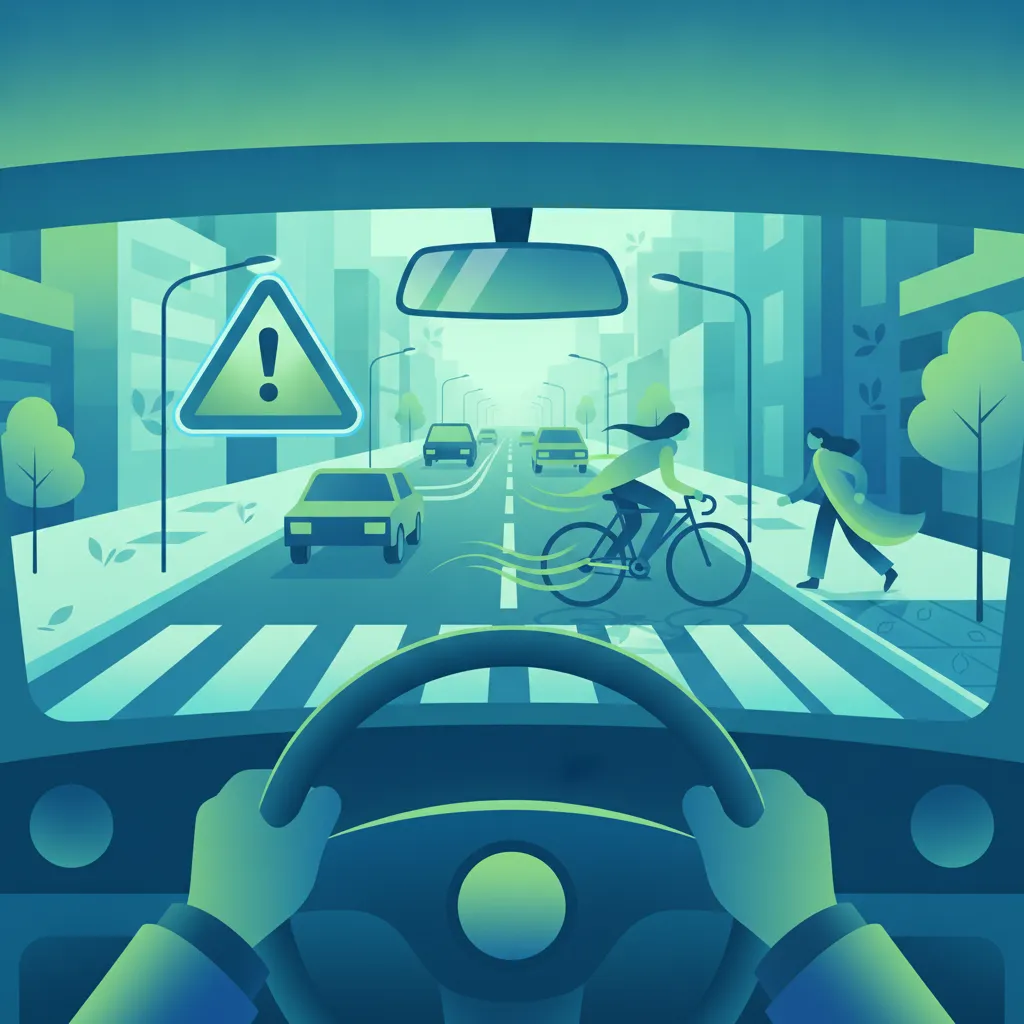
This lesson teaches you how to proactively scan the road and anticipate potential dangers, a vital skill for both the Irish Driver Theory Test and real-world safety. Building on your knowledge of speed and stopping distances, you will learn to spot subtle clues that signal developing hazards. Mastering these techniques will help you maintain control and make safer, more informed decisions on Irish roads.
Lesson content overview
Operating a passenger car (Category B) on Irish roads requires far more than physical vehicle control. It demands a highly developed cognitive skill set known as hazard perception and anticipation. Proactive hazard perception is the mental and visual process of continuously scanning the road environment, identifying potential dangers early, and predicting how situations will develop so that you can adjust your speed and position safely before a risk escalates into an emergency.
According to Irish road safety data, a significant portion of collisions involving novice drivers can be traced back to delayed hazard detection. Under the Road Traffic Act 1961, all drivers have a legal "duty of care" to exercise reasonable care, attention, and caution. Failing to anticipate hazards not only endangers lives but can also lead to prosecutions for careless or dangerous driving. This lesson details the advanced scanning, anticipation, and decision-making techniques required to pass the Category B Driver Theory Test and maintain lifelong safety on the road.
To master hazard perception, you must understand the distinction between a potential hazard, a developing hazard, and an emergency.
Any physical feature, road condition, or road user behaviour that may require you to change speed, alter your direction, or stop.
The primary goal of hazard anticipation is to intervene during the potential or developing phases, completely preventing the situation from deteriorating into an emergency.
Many novice drivers suffer from "tunnel vision," a dangerous scanning failure where their eyes fixate solely on the bumper of the vehicle directly ahead. To perceive hazards effectively, you must employ systematic, active scanning patterns that cover the entire road environment.
Your eyes must constantly sweep through three distinct visual fields:
Maintaining situational awareness requires knowing what is happening behind and to the sides of your vehicle. Under the Road Safety Authority (RSA) guidelines, you must establish a continuous mirror-checking routine:
Expert drivers do not wait for a hazard to become obvious. They train their minds to spot subtle, indirect clues that reveal hidden dangers.
Look for Exhaust Smoke from Parked Vehicles: Visible exhaust fumes indicate the engine is running. The driver may be preparing to pull out suddenly, or the vehicle could stall on a hill, creating an immediate stationary obstruction.
Observe Parked Vehicle Front Wheels: If the front wheels of a parked car are angled toward the live lane, expect the vehicle to merge into your path, even if no indicator is flashing.
Monitor Pedestrian Body Language near Curbs: Children playing, pedestrians looking at their phones, or individuals standing close to the curb near a zebra crossing indicate an imminent crossing attempt. Children are highly unpredictable; if you see a ball bounce into the road, always assume a child is running closely behind it.
Detect Vehicle Wobble and Unstable Loads: A vehicle ahead swaying slightly within its lane may indicate a driver who is distracted, fatigued, under the influence, or experiencing a mechanical failure (such as a slow puncture or suspension issue). Increase your following distance immediately.
Analyze Shadows and Light Clues: At junctions or blind bends, look for the headlights of oncoming vehicles casting light onto roadside hedges, or shadows of pedestrians moving behind parked vans.
Identifying a hazard is useless if you do not modify your driving to accommodate it. Safe drivers utilize two primary control mechanisms: speed adjustment and lane positioning.
When you identify a developing hazard, your first action should be to release the accelerator. This allows the vehicle's engine braking to reduce your speed naturally. Simultaneously, you should cover the brake by hovering your right foot lightly over the brake pedal without pressing it.
Covering the brake eliminates your physical reaction time (moving your foot from the accelerator to the brake), saving precious split-seconds and reducing your total stopping distance in an emergency.
If you must pass a hazard (such as a cyclist, a pedestrian walking on a road without a footpath, or a parked delivery truck), you must adjust your lateral position:
Your ultimate safety margin is the space between your vehicle and the one directly in front of you. This buffer provides the physical space required to react, brake, and come to a complete stop if the lead vehicle brakes suddenly.
A time-gap measurement technique used to maintain a safe following distance behind the vehicle ahead under dry, normal road conditions.
The two-second rule is a minimum standard for ideal, dry conditions. You must adjust this gap based on external factors:
| Road/Weather Condition | Recommended Minimum Time Gap | Reason for Adjustment |
|---|---|---|
| Dry Road, Clear Skies | 2 Seconds | Standard human reaction time + vehicle braking capabilities. |
| Wet Roads / Heavy Rain | 4 Seconds | Water lubricates the road surface, reducing tyre grip and doubling the stopping distance. |
| Icy or Snowy Roads | Up to 10 Seconds | Extreme loss of friction can increase braking distances up to tenfold; tyres can easily slide. |
| Fog / Poor Visibility | 4+ Seconds | Reduced visibility slows down hazard detection, requiring a larger spatial buffer to compensate. |
| Towing a Trailer / Heavy Load | 4 Seconds | The added momentum of a trailer increases the kinetic energy, requiring significantly more braking force and distance to stop. |
Understanding where drivers fail helps you avoid identical mistakes on your theory and practical tests.
Many modern Category B cars feature advanced driver assistance systems (ADAS) such as autonomous emergency braking (AEB), lane-keeping assist, and automatic wipers. Overrelying on these systems is a dangerous mistake. ADAS sensors can be blinded by heavy rain, low winter sun, or dirt. No technological aid can replace active scanning and human anticipation.
Vulnerable road users, including pedestrians, cyclists, motorcyclists, children, and horse riders, require extreme vigilance.
Irish rural roads are often narrow, winding, bounded by high hedges, and lacking footpaths.
Let us examine real-world driving situations to illustrate how scanning, anticipation, and execution integrate seamlessly.
Explore all units and lessons included in this driving theory course.
Lesson content overview
Explore all units and lessons included in this driving theory course.
Explore search topics learners often look for when studying Hazard Perception and Anticipation Techniques. These topics reflect common questions about road rules, driving situations, safety guidance, and lesson level theory preparation for learners in Ireland.
Browse additional driving theory lessons that cover connected traffic rules, road signs, and common driving situations related to this topic. Improve your understanding of how different rules interact across everyday traffic scenarios.
Learn how to apply defensive driving principles to minimize risks on Irish roads. This lesson explores advanced techniques for maintaining a safety buffer, interpreting driver behavior, and managing vehicle stability in challenging road conditions to ensure consistent safety and compliance with the Road Traffic Act.
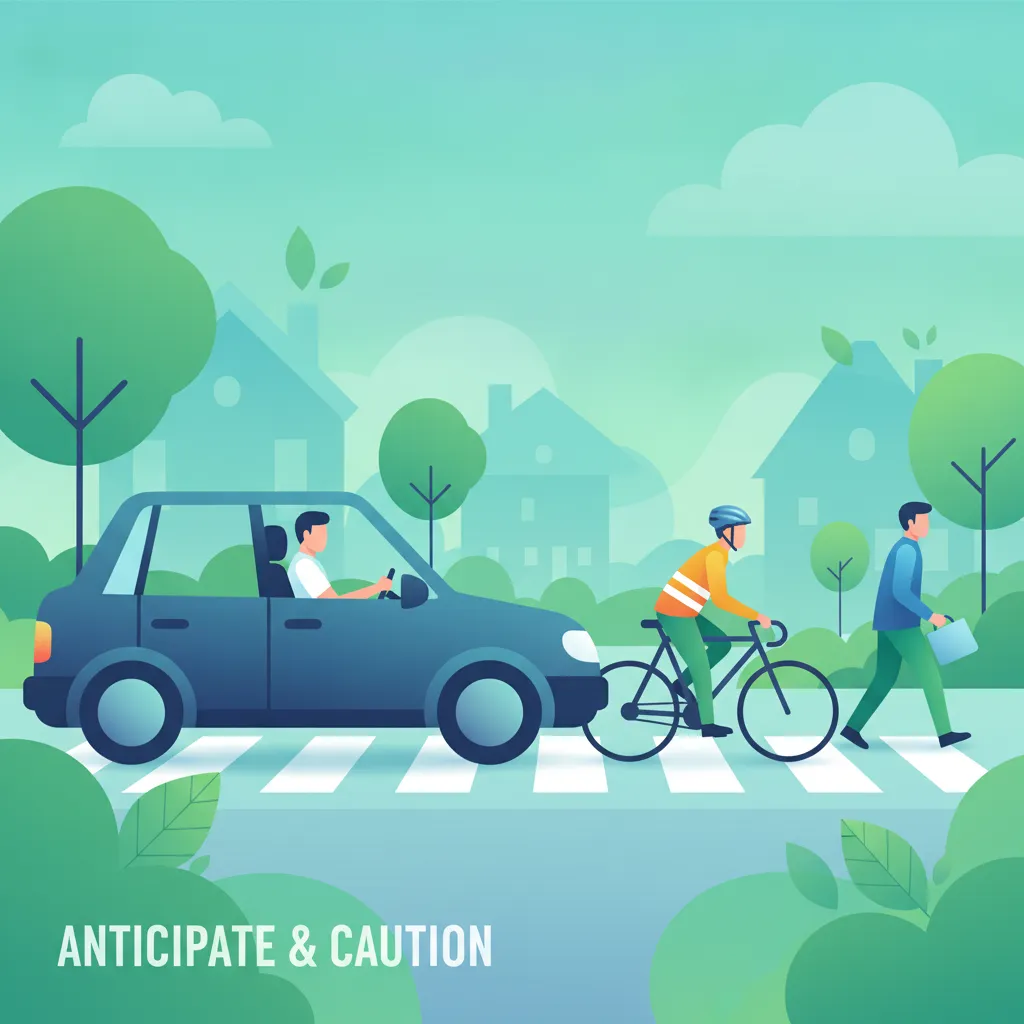
Safeguarding vulnerable road users requires more than simple obedience to traffic signs; it demands a defensive driving mindset. This lesson summarizes safe practices, including scanning far ahead in urban areas, keeping massive safety margins in wet weather, and executing thorough blind spot checks before reversing. By anticipating the unpredictable movements of others, you can prevent accidents and support a safe road culture.
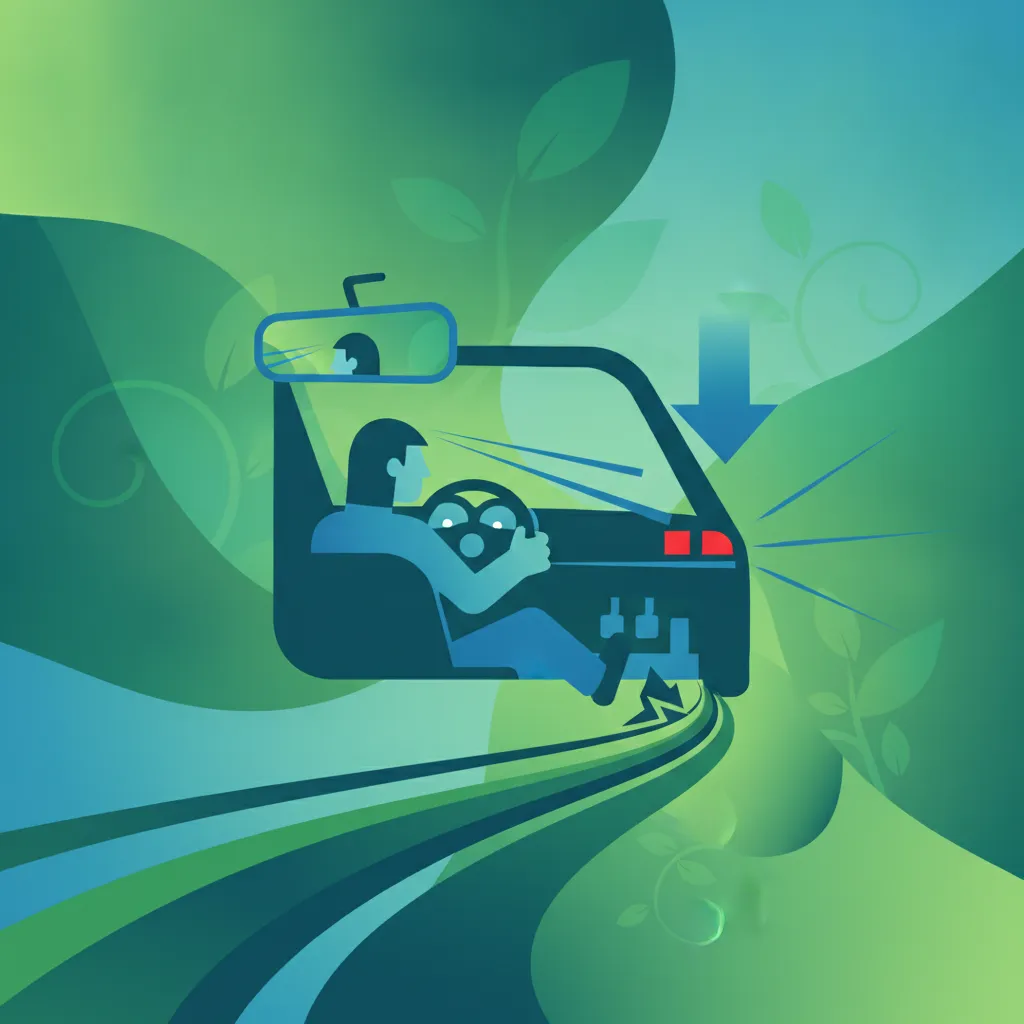
Defensive driving prepares you to react safely when facing unexpected mechanical failures or immediate road hazards. This lesson explains how to execute an emergency stop using Anti-lock Braking Systems (ABS) and how to recover from front and rear-wheel skids on slippery roads. You will learn the importance of remaining calm, avoiding panic-steering, and applying controlled evasive actions to prevent collisions.

This lesson teaches how to cultivate a proactive defensive riding mindset, focusing on situational awareness and constant hazard scanning. It describes the system of motorcycle control, encouraging riders to anticipate potential mistakes from other drivers, pedestrians, and cyclists. Motorcyclists will learn to position themselves defensively, leaving clear escape routes in all driving environments.
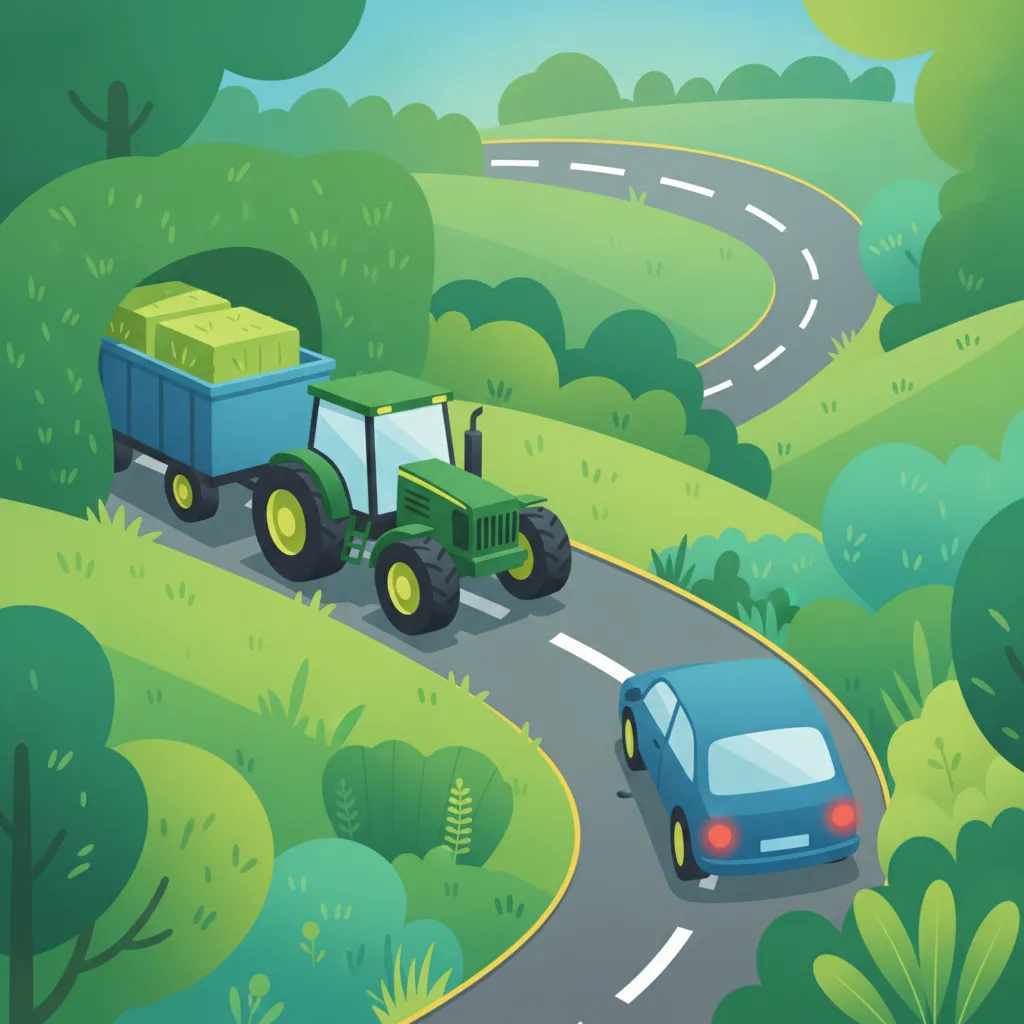
Irish rural roads are often narrow, winding, and bordered by high hedges, presenting unique hazards compared to urban streets. This lesson focuses on scanning for hidden hazards such as slow-moving farm machinery, mud on the road surface, and loose livestock. You will learn how to adjust your speed before entering blind bends, sound your horn at blind crests, and safely share the road with local agricultural traffic.

Heavy vehicles require continuous visual scanning to identify small or slow-moving road users who may enter the path of travel. This lesson explores the typical behaviors of young children, elderly pedestrians, and visually impaired road users. Drivers will build strong hazard perception skills to anticipate sudden movements, ensuring they can brake safely and avoid serious accidents.

Children often struggle to judge heavy vehicle speeds accurately, while elderly pedestrians may possess limited mobility or hearing impairments. This lesson addresses these unique risks, explaining how to adjust driving patterns in residential neighborhoods and near shopping districts. Drivers will learn to maintain a high safety margin, ensuring they can yield quickly to vulnerable road users.

Irish rural routes are often narrow, lacking central markings, and bordered by tall hedges that restrict forward visibility on sharp bends. This lesson teaches drivers how to negotiate blind curves, anticipate slow-moving agricultural machinery, and respond to wandering farm animals. Drivers will learn to regulate vehicle speed proactively, maintaining a safe stopping margin in rural areas.

This lesson identifies prevalent risky behaviours among motorcyclists, including speeding, tailgating, and reckless riding under the influence of alcohol or drugs. Learners will understand the associated penalties, legal implications, and the impact of fatigue and peer pressure on decision-making, following RSA and Irish legal frameworks.
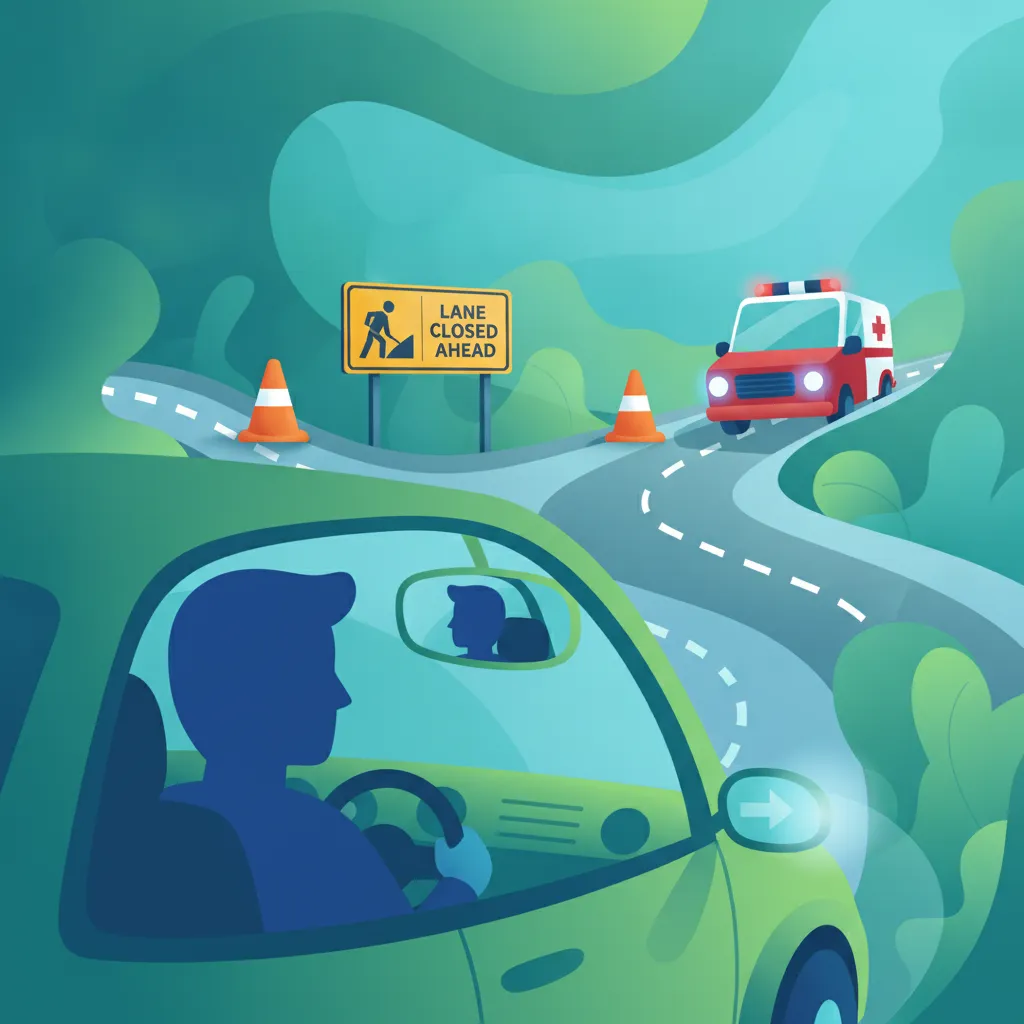
This lesson focuses on the defensive driving skills needed when encountering highway maintenance zones, narrow contraflows, and active roadside workers. It details the precise steps a driver must take when experiencing a major mechanical breakdown, including parking on the hard shoulder and deploying warning triangles. Drivers will learn standard emergency procedures to coordinate with vehicle rescue operations and safety personnel.
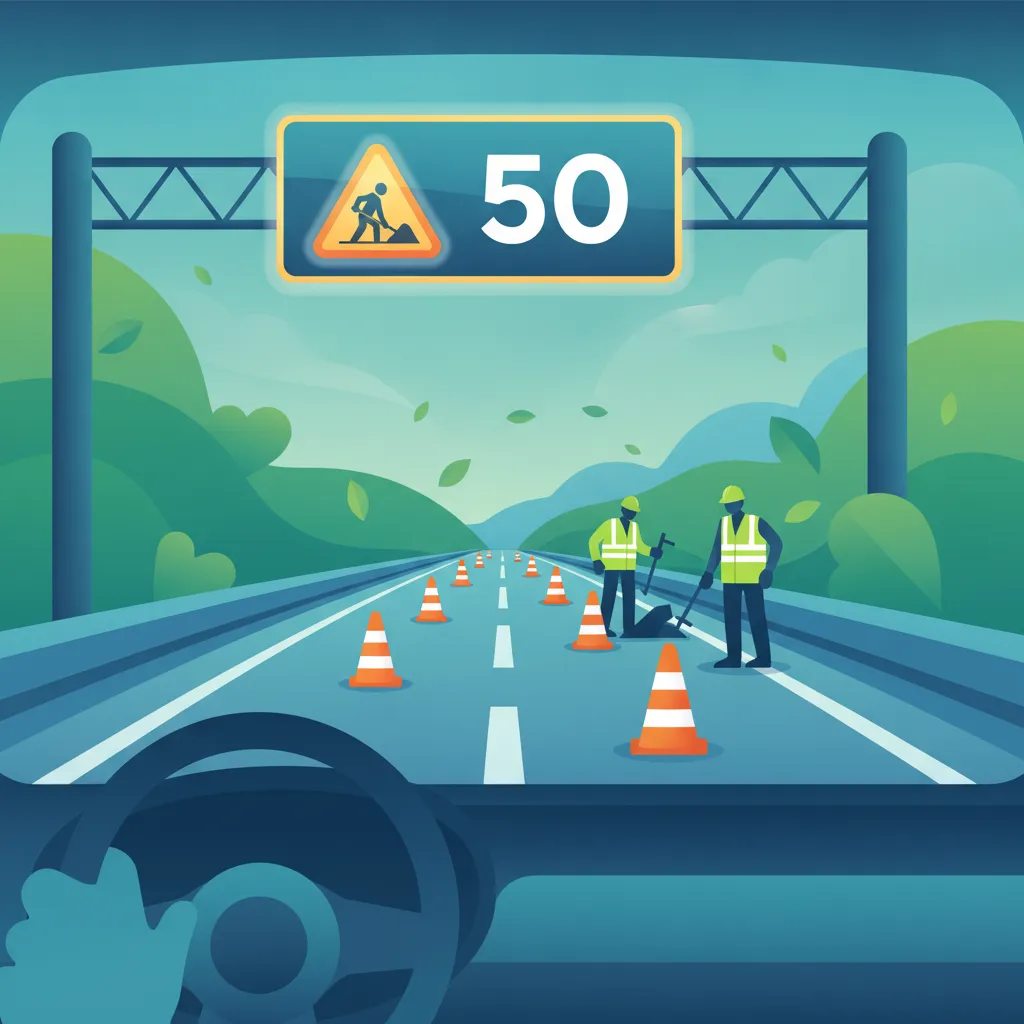
Variable Message Signs and roadwork indicators communicate temporary safety conditions, such as lane closures, heavy delays, or dynamic speed restrictions. This lesson teaches you how to interpret digital overhead gantries, temporary hazard cones, and specific detour layouts often encountered on Irish motorways and regional routes. Adhering to these real-time instructions protects both you and the vulnerable road crews working ahead.
Explore the specific rules and anticipation strategies for sharing the road with pedestrians, cyclists, and vulnerable road users in Irish towns. Understand how to identify potential hazards around schools, busy junctions, and cycle lanes to protect yourself and others while navigating complex urban traffic flow.

This lesson covers the rules governing zebra, pelican, and toucan pedestrian crossings, focusing on driver obligations and rider safety. It details how to interact safely with cyclists, personal mobility devices, and pedestrians in busy urban sectors. Motorcyclists will learn to scan pavement edges, yield right-of-way, and maintain safe overtaking distances when passing slower road users.
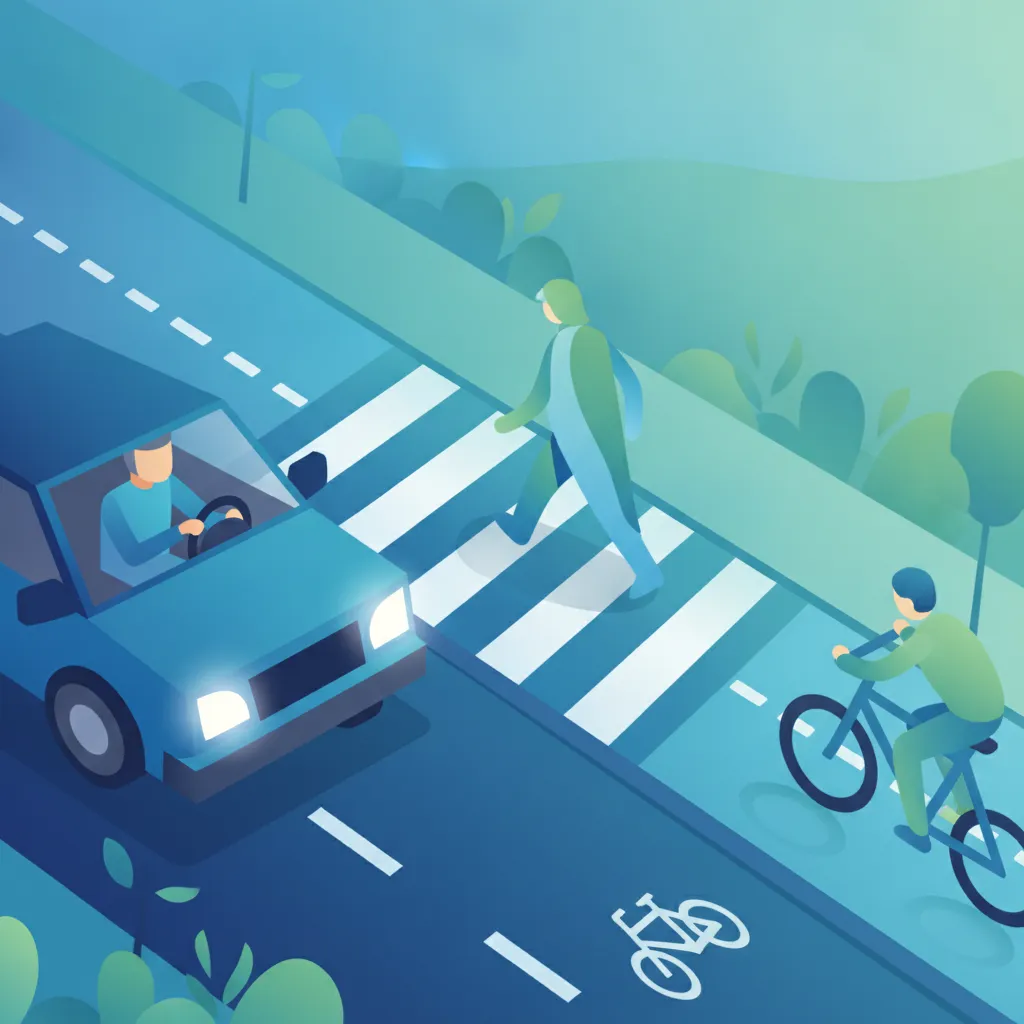
This lesson details how to approach zebra, pelican, and other pedestrian crossings safely, ensuring complete priority is given to walkers. It also covers the safe guidelines for overtaking cyclists and sharing lanes in busy urban centers without causing danger. Respecting these interactions is critical for maintaining overall safety and compliance with Irish road law.

This lesson focuses on managing the interactions between commercial goods vehicles and non-motorized or lightweight commuters. It outlines defensive driving techniques to utilize when overtaking cyclists, navigating pedestrian crossings, or negotiating shared junctions in Irish cities. Drivers will examine common cyclist behaviors at roundabouts and understand how to maintain massive safety margins to protect lives.
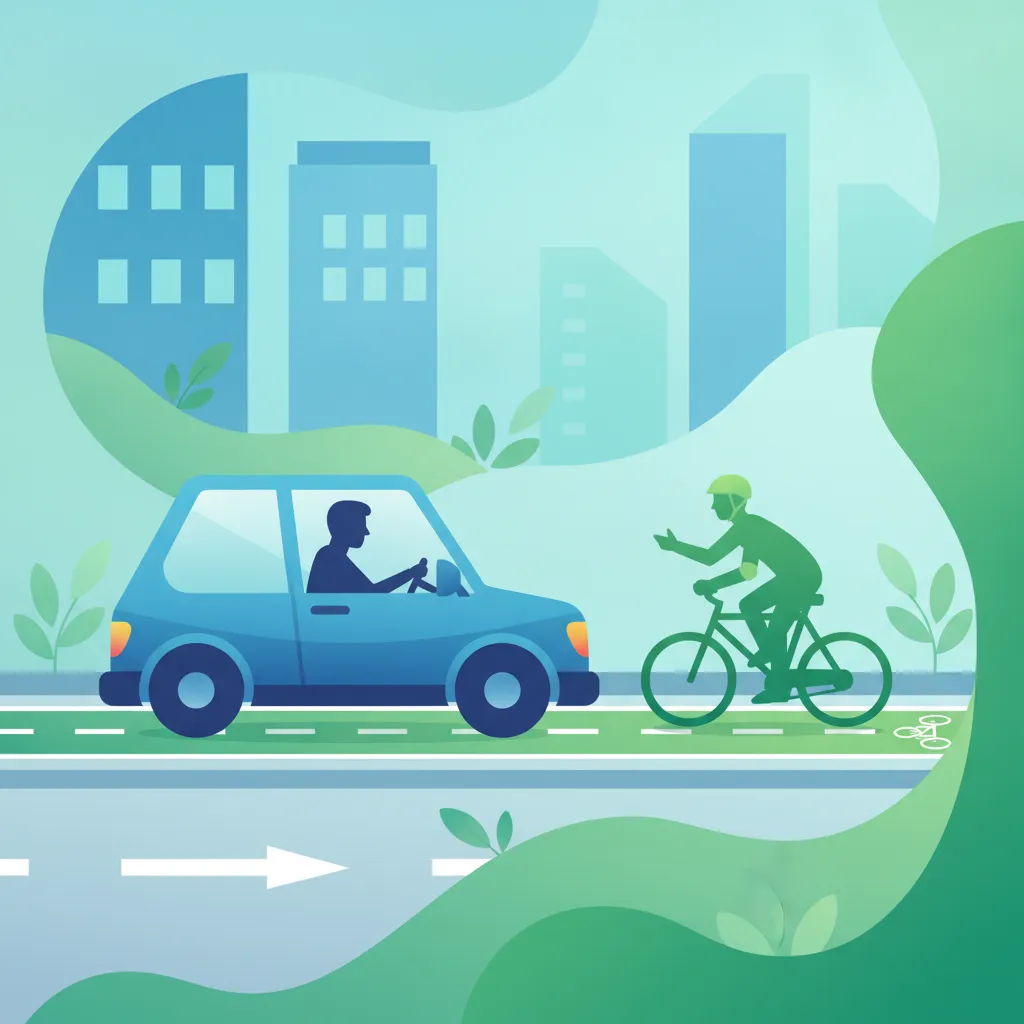
Cyclists share public roads under unique safety constraints, requiring drivers to keep wide clearances and anticipate sudden steering changes. This lesson covers the minimum safe passing distance of 1 to 1.5 metres, rules for driving near cycle tracks, and the danger of the 'dooring' hazard when parking. You will also learn to check your left-side blind spot before turning, preventing dangerous side-swipe collisions.

Bus stops often intersect with designated bicycle lanes and busy walking pathways, creating high-risk conflict areas for drivers. This lesson trains drivers to check blind spots for oncoming cyclists before pulling into or exiting public stop bays. It emphasizes yielding right-of-way to passengers crossing the road, preventing collision risks in active urban transport hubs.
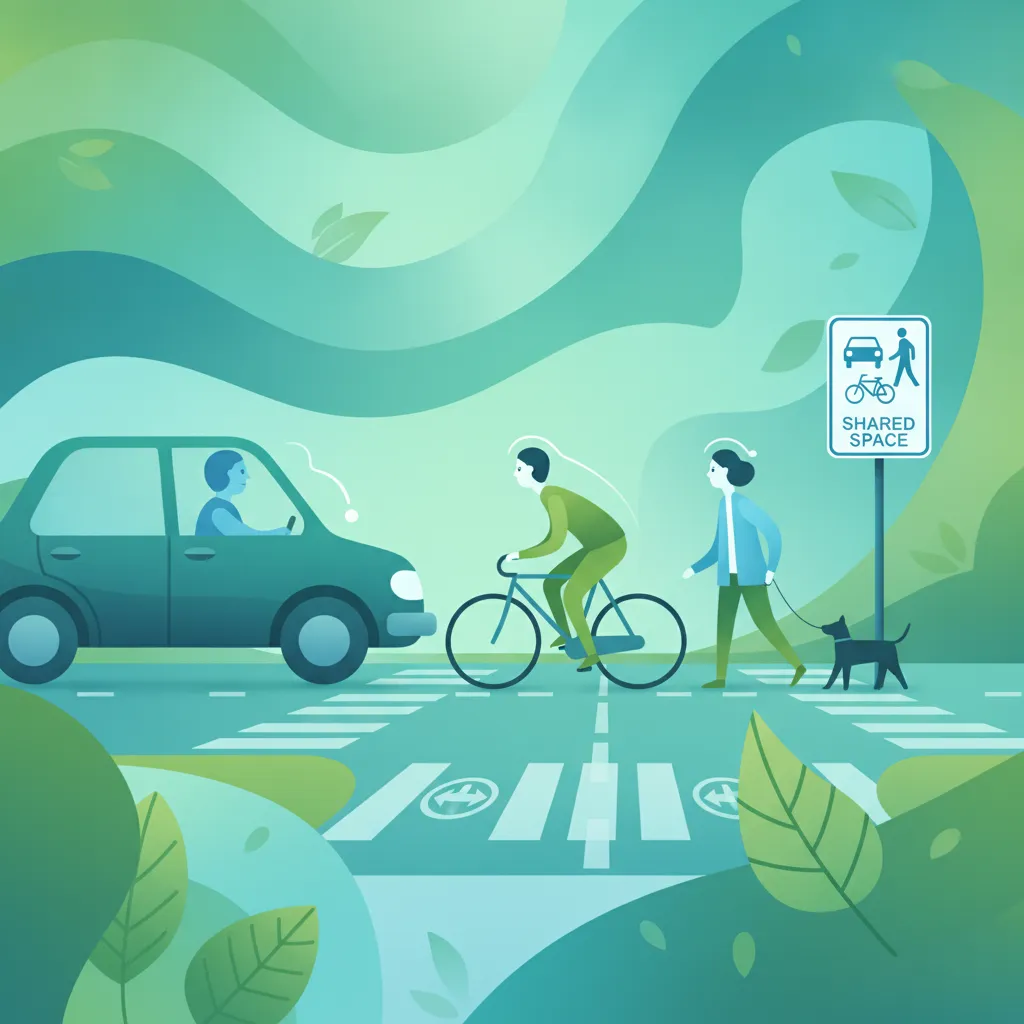
Shared public spaces rely heavily on road user cooperation, low speeds, and active visual communication rather than traditional traffic signals. This lesson teaches drivers how to navigate these open zones safely, yielding priority to pedestrians and integrated cyclists. Drivers will study how traffic calming designs alter vehicle trajectories, allowing safe, stress-free transit through modern city centers.

Motorcycles and bicycles are often hidden from view in the large blind spots of passenger buses and coaches during turns. This lesson covers safe lateral clearances when overtaking cyclists, recognizing advanced stop lines, and sharing narrow lanes. Drivers will understand how to signal clearly, giving riders enough room to navigate safely near busy public transit corridors.
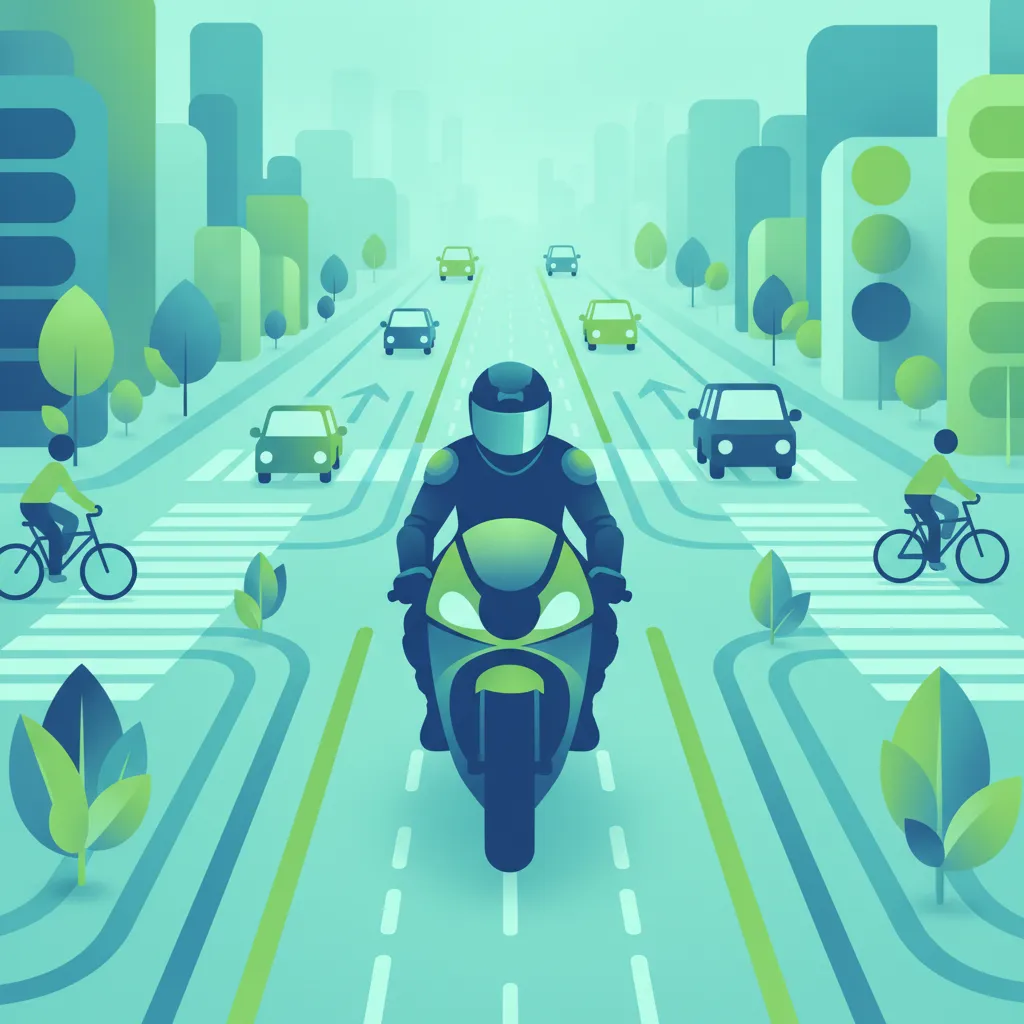
This lesson analyzes traffic flow characteristics in dense municipal areas and teaches safe riding methods for congested gridlock situations. It covers the maintenance of adequate safety cushions, scanning for opening car doors, and monitoring pedestrians stepping from between parked cars. Riders will learn to manage frequent stopping, constant clutch wear, and the stress of urban commuting.
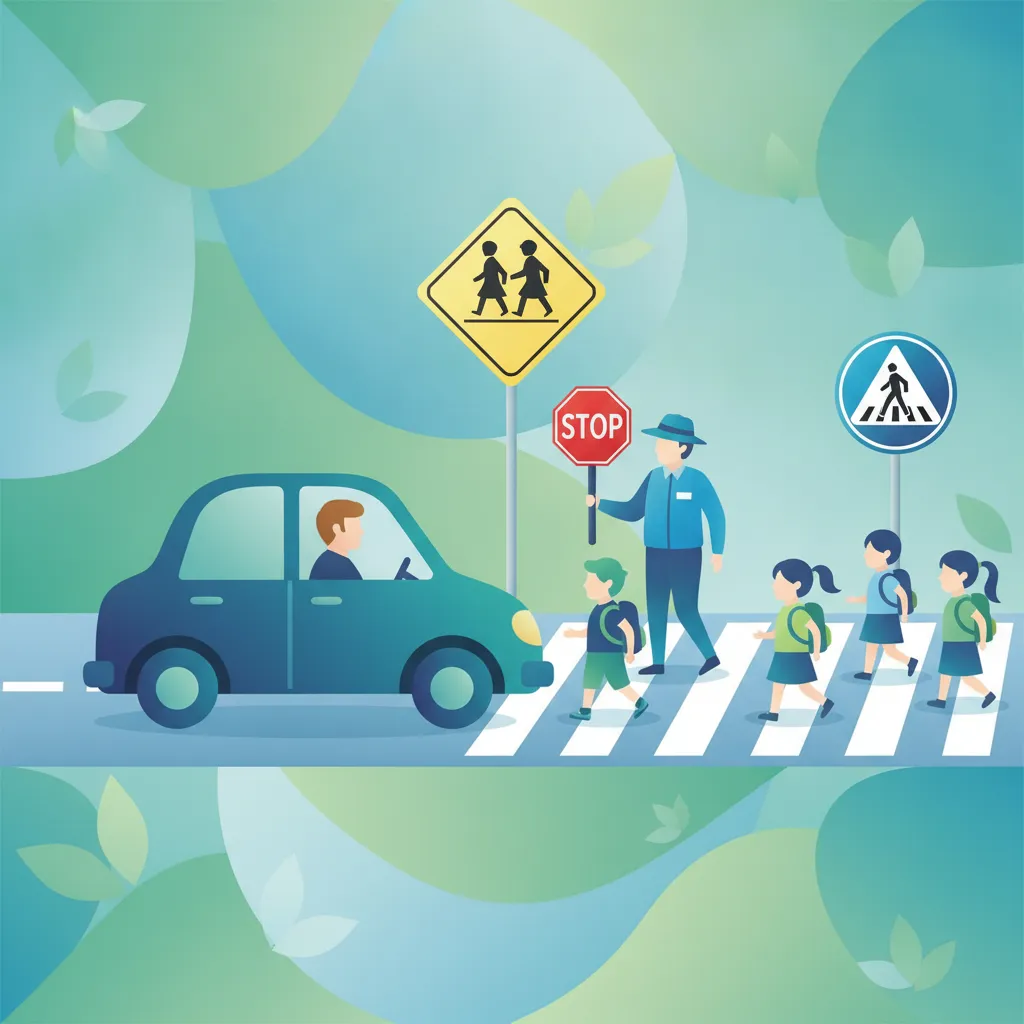
School zones and pedestrian crossings require high driver alertness and strict compliance with local speed limits in Ireland. This lesson details the legal rules of zebra and pelican crossings, explaining driver requirements when amber warning beacons are flashing. Drivers will study safety procedures for dropping off or picking up children, preventing common blind-spot accidents near schools.
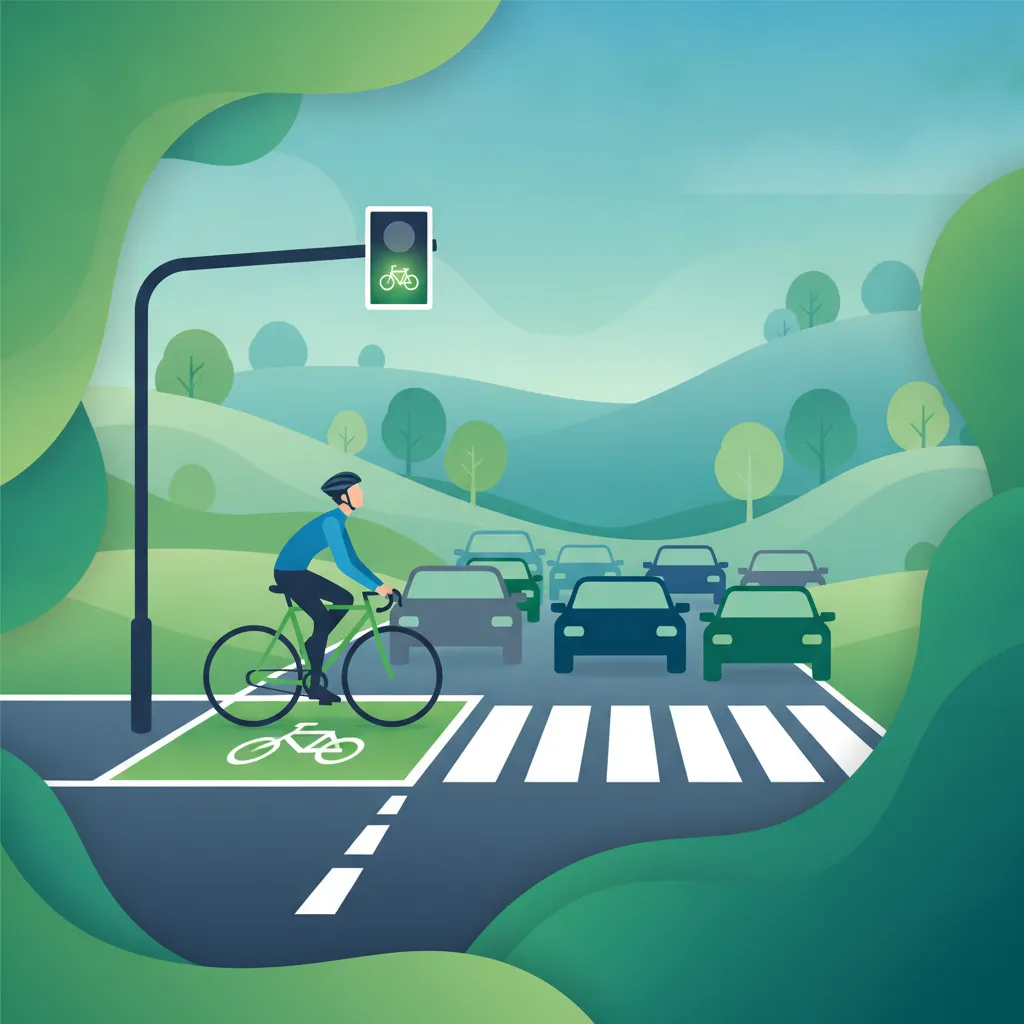
This lesson details the correct sequence and meaning of automated traffic light signals and specialized cycling indicators at Irish intersections. It explains the legal requirements associated with solid red, flashing amber, green filter arrows, and pedestrian crossing lights. Motorcyclists will learn to manage their speed when approaching lights to avoid emergency stops on slippery road surfaces.
Find clear answers to common questions learners have about Hazard Perception and Anticipation Techniques. Learn how the lesson is structured, which driving theory objectives it supports, and how it fits into the overall learning path of units and curriculum progression in Ireland. These explanations help you understand key concepts, lesson flow, and exam focused study goals.
Seeing a hazard means reacting to an object already in your path, whereas anticipating involves identifying subtle clues—like smoke from a parked car or brake lights in the distance—to slow down or reposition before the situation becomes dangerous.
You should check your mirrors regularly, especially when you perceive a potential hazard that might require you to change speed or position, ensuring you remain aware of traffic behind you at all times.
Yes, while the Irish theory test is multiple-choice, many questions focus on identifying risky situations and deciding on the safest course of action, which requires strong anticipation skills.
Practice by constantly scanning the road, thinking about 'what if' scenarios for every vehicle or pedestrian you see, and reviewing the hazard scenarios provided in our lesson modules.
Use the practice question search tool to pinpoint specific topics, road signs, or rules you need to master for your official Driver Theory Test. Refine your study strategy and ensure comprehensive preparation for all aspects of the Irish driving exam. Start your focused revision now and build confidence for your learner permit test.