This unit focuses on the critical aspects of speed management, braking, and understanding stopping distances for heavy goods vehicles in Poland. You will learn how to calculate total stopping distances, understand the impact of various factors, and apply safe braking strategies, including specific speed limits for HGVs. Mastering these concepts is vital for both your Category C theory exam and safe daily operation.
Browse all lessons that make up Speed Management, Braking, and Stopping Distances. Each lesson focuses on specific topics, learning objectives, and core concepts, helping you build essential knowledge and follow a clear, structured progression toward your study goals in Poland.
This lesson outlines the statutory speed limits that professional drivers of Category C vehicles must adhere to on Polish roads. It clearly distinguishes the maximum permitted speeds in built-up areas, on single carriageways, and on motorways. The content also explains how to interpret road signs that may indicate temporary or vehicle-specific speed restrictions, ensuring drivers remain compliant with the law and avoid penalties from speed enforcement measures.
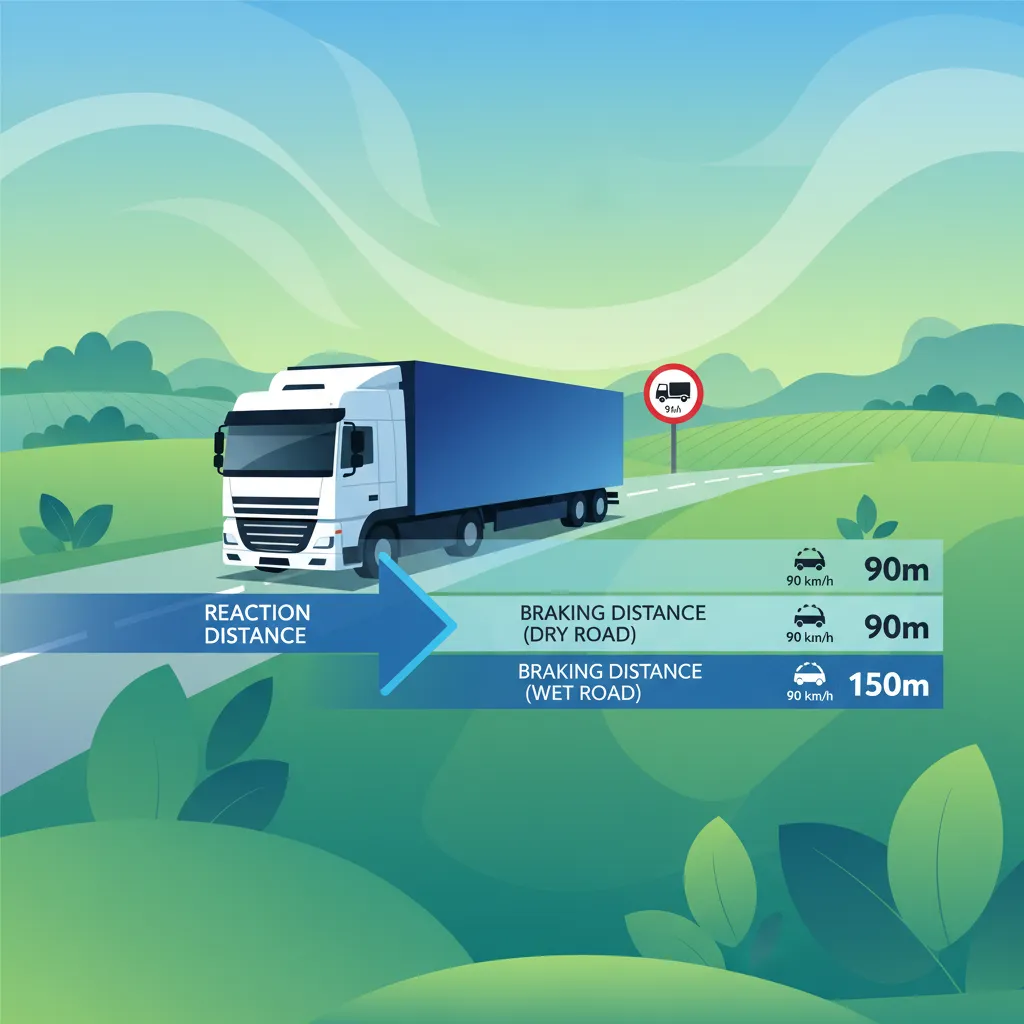
This lesson teaches the essential skill of calculating a heavy vehicle's total stopping distance. It breaks the calculation into two key parts: the driver's perception-reaction distance and the vehicle's braking distance. Learners will understand how factors such as vehicle mass, speed, road gradient, and the friction coefficient of the road surface dramatically influence the distance required to come to a complete and safe stop, emphasizing the need for large safety margins.
This lesson focuses on the critical procedures for executing an emergency stop with an air-braked vehicle. It explains how to apply firm, steady pressure to the brake pedal to achieve maximum braking force without locking the wheels, which could lead to a loss of control. The content also discusses the response time of air brake systems and how to manage the significant forces of deceleration when the vehicle is fully loaded, ensuring the quickest possible stop in a crisis situation.
This lesson teaches drivers how to adapt their speed, following distance, and control inputs to safely navigate adverse conditions. It covers the challenges posed by rain, snow, and ice, explaining the loss of traction and the increased risk of skidding or aquaplaning. The content provides specific strategies for driving in fog, which reduces visibility, and strong crosswinds, which can affect the stability of a high-sided vehicle, promoting a proactive and defensive driving mindset.
This lesson introduces the principles of eco-driving, a set of techniques designed to minimize fuel consumption and emissions. It explains how factors like smooth acceleration, maintaining a steady speed, and anticipating traffic flow can lead to significant fuel savings. Learners will understand the benefits of reducing unnecessary idling, using cruise control effectively on appropriate terrain, and planning routes to avoid congestion, contributing to both economic and environmental sustainability.
Explore high-intent keywords and long-tail search topics learners use when researching Speed Management, Braking, and Stopping Distances. These terms reflect how people search for reliable study materials, structured explanations, and unit-level theory preparation support in Poland.
Find clear answers to the most common questions learners ask about Speed Management, Braking, and Stopping Distances. Understand how the unit is organized, what learning goals it supports, and how it contributes to your study progression with structured explanations and practical guidance tailored for learners in Poland.
Braking distance is the distance a vehicle travels from the moment the brakes are applied until it stops. Stopping distance, however, includes both the braking distance and the distance the vehicle covers during the driver's reaction time. For HGVs, understanding the total stopping distance is crucial for maintaining safe following distances and preventing accidents.
A heavier load significantly increases an HGV's braking distance. This is due to increased mass requiring more force to decelerate. Therefore, drivers must anticipate longer stopping distances when carrying heavy cargo and adjust their speed and following distance accordingly. The total stopping distance calculation must account for this.
In Poland, general speed limits apply, but specific limits are set for HGVs (vehicles over 3.5 tonnes). Typically, on express roads and motorways, the limit is 80 km/h, while on other roads outside built-up areas, it's 70 km/h. Inside built-up areas, it is usually 50 km/h. Always check current regulations and signage, as these limits can vary.
Eco-driving focuses on driving in a way that minimizes fuel consumption and environmental impact. For HGVs, this includes smoother acceleration and deceleration, anticipating traffic flow to avoid unnecessary braking, maintaining optimal speed, and ensuring proper tire inflation. It not only reduces costs but also contributes to lower emissions and a more sustainable transport sector.
Adverse weather conditions like rain, snow, or ice drastically reduce tire grip, thereby increasing braking distance. Wet roads can double braking distances, while icy conditions can increase them tenfold. Drivers must reduce their speed significantly and increase following distances in poor conditions to safely manage their stopping distances.
Reaction time is the period between a driver perceiving a hazard and physically reacting to it (e.g., applying the brakes). During this time, the vehicle continues to travel at its current speed. For an HGV, even a few seconds of reaction time can result in covering a considerable distance, which is why alert driving and anticipating hazards are essential for safety.
All included lessons
Lessons in Speed Management, Braking, and Stopping Distances
See who benefits most from studying Speed Management, Braking, and Stopping Distances. This overview explains how the unit supports different learning needs, what level of knowledge is helpful before starting, and how it fits into the overall study path in Poland.
This unit is essential for all candidates preparing for the Polish Category C theory exam to obtain a Heavy Goods Vehicle licence. It's particularly crucial for drivers who need a detailed understanding of how speed, braking, and stopping distances directly impact vehicle control and safety, especially when operating under load.

Dive into our curated curriculum designed for Polish driving license aspirants. Select a course, follow its guided modules, and master every aspect of traffic rules and road signs necessary to pass your theory exam with confidence.
Polish Theory CurriculumExplore all units and lessons included in this driving theory course.
Dive into our curated curriculum designed for Polish driving license aspirants. Select a course, follow its guided modules, and master every aspect of traffic rules and road signs necessary to pass your theory exam with confidence.
Polish Theory Curriculum