
This lesson, part of the 'Speed Management, Braking, and Stopping Distances' unit, will equip you with vital strategies for safely operating a Category C HGV in challenging weather. You'll learn to adapt your driving to various conditions like rain, snow, ice, fog, and strong crosswinds. Mastering these techniques is crucial for preventing accidents, maintaining vehicle control, and successfully navigating related questions on your Polish driving theory exam.

Lesson content overview
Driving a heavy goods vehicle (HGV) in Poland, particularly a Category C truck, demands exceptional skill and constant vigilance. This is especially true when confronting adverse weather and challenging road conditions. The sheer mass and dimensions of HGVs amplify risks associated with reduced traction, extended stopping distances, and compromised visibility. Proper adaptation is not merely a recommendation; it is a legal requirement under Polish traffic law and is fundamental to safe operations on both national and international routes.
This lesson explores how environmental factors such as rain, snow, ice, fog, and strong crosswinds impact heavy vehicle dynamics. It provides practical strategies for adjusting speed, maintaining safe following distances, and controlling your vehicle to mitigate these risks effectively, promoting a proactive and defensive driving mindset essential for professional drivers.
Environmental conditions directly influence the fundamental physics of vehicle control. For HGVs, these influences are profoundly significant due to their increased inertia and specific aerodynamic profiles. Understanding the underlying physics and safety regulations is crucial for anticipating hazards and making timely adjustments. Polish traffic law, specifically the Prawo o ruchu drogowym (Road Traffic Act), mandates drivers to adjust their speed and behaviour to prevailing road conditions, ensuring the ability to stop safely and maintain lane discipline.
Traction refers to the frictional grip between your tyres and the road surface. This grip is essential for braking, accelerating, and steering. Adverse weather conditions significantly diminish traction, leading to a higher risk of losing control.
Aquaplaning, also known as hydroplaning, occurs when a layer of water builds up between the vehicle's tyres and the road surface, causing the tyres to lose contact with the road. The vehicle then skims on this film of water, losing critical steering, braking, and acceleration capabilities. For heavy goods vehicles, which typically have wider tyres and higher speeds on motorways, the risk of aquaplaning is significant, especially in heavy rain. This phenomenon is more likely at higher speeds and when tyres are worn.
On snow-covered or icy roads, the coefficient of friction (µ) between the tyres and the road surface drops drastically, sometimes nearing zero on black ice. This severe reduction in friction means that even moderate braking or acceleration can lead to wheel slip. A truck that brakes too hard on an icy road, for instance, may experience wheel lock-up, causing an uncontrolled skid, even with advanced braking systems. Snow and ice create a treacherous surface where every control input must be gentle and deliberate.
The total distance required for a vehicle to come to a complete stop—known as stopping distance—comprises two main components: perception-reaction distance and braking distance. Both of these distances are significantly extended when traction is compromised by adverse weather.
Polish legislation (Art. 71 of the Road Traffic Act) requires drivers to maintain a safe distance that allows them to stop within their line of sight. This legal obligation becomes even more critical in poor conditions. For instance, a fully loaded truck travelling at 80 km/h on a dry motorway might require around 100 metres to stop. On a wet motorway, this could easily increase to 150 metres or more. On an icy road, the stopping distance can be several times longer.
Adapting your speed and following distance is the primary and most effective way to manage the risks posed by adverse weather. These strategies are interconnected and form the bedrock of defensive driving in challenging conditions.
Speed adaptation is the process of selecting a travel speed that allows for safe vehicle control given the prevailing weather, road surface, and load. It's crucial to understand that the maximum safe speed is often considerably lower than the legal speed limit. Even if the legal limit for your Category C vehicle is 80 km/h, the safe speed may be much lower in heavy rain, snow, or dense fog.
Practical Guidance for Speed Reduction:
The Polish Road Traffic Act (Art. 79) explicitly obliges drivers to adapt their speed to conditions, ensuring they can stop within the visible distance. This means your speed must allow you to react to any hazard that appears from the fog or behind a blind curve.
Following distance is the longitudinal gap between the rear of your vehicle and the vehicle ahead, typically expressed in metres or seconds. This distance is your crucial safety buffer.
Adjustment Rule:
The reasoning is simple: a longer following distance provides more time for perception and reaction, and critically, more space for your vehicle to brake on low-traction surfaces. Given the significantly longer stopping distances of fully loaded HGVs, this buffer is non-negotiable for safety.
Conditions that impair visibility present unique challenges, forcing drivers to rely more heavily on vehicle lighting and careful speed management. Fog, heavy rain, and night-time precipitation all significantly reduce perception and reaction windows.
In conditions of reduced visibility due to atmospheric moisture (fog, heavy mist, dense rain), appropriate lighting is paramount for both seeing and being seen.
Key Procedures:
Polish Regulation on Lighting (Art. 32) specifies the conditions under which fog lights may be used. Incorrect use can lead to fines and, more importantly, create hazards for other road users. Always ensure your vehicle's lighting is clean and fully operational.
Heavy goods vehicles, especially those with high-profile trailers, are particularly susceptible to crosswinds—winds blowing perpendicular to the direction of travel. These lateral forces can significantly affect vehicle stability, leading to dangerous situations.
Strong crosswinds can:
Control Strategies for Crosswinds:
The Polish Road Traffic Act (Art. 197a) requires drivers to keep their vehicle under control at all times, a principle directly applicable to managing crosswind effects.
The mass and distribution of cargo in a heavy goods vehicle profoundly affect its dynamic behaviour, especially under adverse conditions. A fully loaded truck behaves very differently from an empty one.
Key Points:
Polish regulations on cargo securement mandate that all loads must be properly secured to prevent shifting. This is crucial not only for preventing cargo damage but also for maintaining vehicle stability, particularly in challenging weather conditions or during emergency manoeuvres. A shifting load can drastically alter the vehicle's centre of gravity and handling characteristics, leading to loss of control.
Modern heavy goods vehicles are equipped with sophisticated electronic safety systems designed to assist the driver in maintaining control. These systems are invaluable, but it is critical to understand their capabilities and, more importantly, their limitations.
Operational Limits:
While these systems significantly enhance safety, they do not defy the laws of physics. They can only work within the available friction limits between the tyres and the road surface.
Therefore, these systems assist but do not replace driver judgement and proper technique. The driver must still adapt speed, maintain safe following distances, and apply gentle control inputs, especially in adverse conditions. Mandatory installation of these systems on Category C vehicles is a testament to their importance (EU Directive 2005/62/EC), but the ultimate responsibility for safe operation rests with the driver.
Polish road traffic law sets clear requirements for drivers navigating challenging conditions. Adherence to these regulations is crucial for safety and avoiding penalties.
Art. 79 of the Road Traffic Act (Prawo o ruchu drogowym): Speed Adaptation. This article explicitly states that drivers must adjust their speed to the road conditions, visibility, and traffic intensity, ensuring they can stop within the visible distance.
Correct Example: Reducing speed from 80 km/h to 60 km/h on a wet motorway, increasing following distance. Incorrect Example: Maintaining 80 km/h on a wet motorway while visibility is limited.
Art. 71 of the Road Traffic Act: Safe Following Distance. This provision requires drivers to maintain a safe distance from the vehicle ahead, allowing for safe stopping within the line of sight. This distance must be actively increased in poor weather.
Correct Example: Keeping at least a 150-metre gap on a wet road at 80 km/h. Incorrect Example: Tailgating within 30 metres on a wet road at 80 km/h.
Art. 31 and 32 of the Lighting Regulation: Vehicle Lighting. These articles detail the appropriate use of vehicle lighting, including low-beam headlights, high-beam headlights, and fog lights, based on visibility conditions (e.g., fog lights only when visibility < 100 metres).
Correct Example: Turning on low-beam headlights and front fog lights when visibility drops to 70 metres. Incorrect Example: Using high beams in fog, causing back-scatter glare.
Regulation on Cargo Securement (Rozporządzenie Ministra Infrastruktury z 2018 r.): This regulation mandates that cargo must be secured to prevent shifting, which is critical for maintaining vehicle stability, especially during braking or in crosswinds.
Correct Example: Using proper tie-down straps and checking tension before departure, especially if bad weather is expected. Incorrect Example: Leaving cargo loosely placed on the flatbed during a rainy journey.
Ignoring the principles of adaptation can lead to serious consequences. Here are some common violations and safer alternatives:
Excessive Speed on Wet Roads:
Tailgating in Snow:
Using High Beams in Fog:
Neglecting Load Securing Before a Storm:
Abrupt Braking During Strong Crosswinds:
Relying Solely on ABS in Icy Conditions:
Scenario 1: Rainy Motorway, Fully Loaded Truck
Scenario 2: Foggy Rural Road, Lightly Loaded Vehicle
Scenario 3: Strong Crosswinds on an Open Bridge
Mastering driving in adverse conditions boils down to a few fundamental principles:
By diligently applying these principles and adhering to Polish traffic regulations, professional Category C drivers can navigate challenging weather and road conditions safely, protecting themselves, their cargo, and other road users. This proactive and defensive mindset is the hallmark of a responsible heavy goods vehicle operator.
This lesson covers essential strategies for Category C HGV drivers to safely navigate adverse weather in Poland, addressing rain, snow, ice, fog, and crosswinds. Key principles include adapting speed to stay within traction limits, extending following distances significantly on low-grip surfaces, and ensuring the ability to stop within visible distance per Art. 79 of the Polish Road Traffic Act. The lesson explains how aquaplaning and black ice create near-zero friction conditions, why fully loaded HGVs have extended stopping distances, and how crosswinds can cause trailer sway or rollover. Proper lighting procedures, the limitations of electronic safety systems, and the importance of proper cargo securing are also covered, providing exam-relevant knowledge with practical application for real-world driving scenarios.
A short set of high-value points that capture the most important learning from this lesson.
Traction is significantly reduced by rain, snow, and ice, and HGV drivers must understand that braking, acceleration, and steering depend on tyre-to-road friction.
Speed must always be adapted to conditions—the legal speed limit is not the safe speed in adverse weather; you must be able to stop within your visible distance.
Stopping distances for fully loaded HGVs expand dramatically: a wet road can double the stopping distance, while ice can multiply it several times.
Crosswinds pose serious stability risks for high-sided HGVs; reducing speed on exposed sections like bridges and using smooth steering corrections are essential.
Electronic safety systems (ABS, ESP, TCS) assist but do not override physics—they cannot create more traction than the road surface allows.
Explore all units and lessons included in this driving theory course.
Art. 79 of the Polish Road Traffic Act requires drivers to adjust speed so they can stop within the visible distance, regardless of the posted limit.
In heavy rain, reduce speed by 10-20 km/h and increase following distance by at least 50%; in snow, reduce by 20-30 km/h and double the gap.
Use low-beam headlights and front fog lights when visibility drops below 100 metres; rear fog lights only when visibility is below 50 metres.
A higher centre of gravity from stacked cargo increases rollover risk, especially in crosswinds or when cornering.
Fully loaded trucks have longer stopping distances and greater kinetic energy, requiring more time and space to brake safely.
Maintaining 80 km/h on wet roads with standing water, increasing the risk of aquaplaning and losing control.
Using high-beam headlights in fog, which creates back-scatter glare that actually worsens visibility.
Tailgating on snowy or icy roads with insufficient gap, failing to account for the vastly longer braking distances.
Relying solely on ABS to prevent skids on ice, without understanding that stopping distance remains extremely long.
Neglecting to re-check cargo securing before journeys in forecasted bad weather, risking load shift and vehicle destabilisation.
Lesson content overview
A short set of high-value points that capture the most important learning from this lesson.
Traction is significantly reduced by rain, snow, and ice, and HGV drivers must understand that braking, acceleration, and steering depend on tyre-to-road friction.
Speed must always be adapted to conditions—the legal speed limit is not the safe speed in adverse weather; you must be able to stop within your visible distance.
Stopping distances for fully loaded HGVs expand dramatically: a wet road can double the stopping distance, while ice can multiply it several times.
Crosswinds pose serious stability risks for high-sided HGVs; reducing speed on exposed sections like bridges and using smooth steering corrections are essential.
Electronic safety systems (ABS, ESP, TCS) assist but do not override physics—they cannot create more traction than the road surface allows.
Explore all units and lessons included in this driving theory course.
Art. 79 of the Polish Road Traffic Act requires drivers to adjust speed so they can stop within the visible distance, regardless of the posted limit.
In heavy rain, reduce speed by 10-20 km/h and increase following distance by at least 50%; in snow, reduce by 20-30 km/h and double the gap.
Use low-beam headlights and front fog lights when visibility drops below 100 metres; rear fog lights only when visibility is below 50 metres.
A higher centre of gravity from stacked cargo increases rollover risk, especially in crosswinds or when cornering.
Fully loaded trucks have longer stopping distances and greater kinetic energy, requiring more time and space to brake safely.
Maintaining 80 km/h on wet roads with standing water, increasing the risk of aquaplaning and losing control.
Using high-beam headlights in fog, which creates back-scatter glare that actually worsens visibility.
Tailgating on snowy or icy roads with insufficient gap, failing to account for the vastly longer braking distances.
Relying solely on ABS to prevent skids on ice, without understanding that stopping distance remains extremely long.
Neglecting to re-check cargo securing before journeys in forecasted bad weather, risking load shift and vehicle destabilisation.
Explore search topics learners often look for when studying Adaptation to Weather and Road Conditions. These topics reflect common questions about road rules, driving situations, safety guidance, and lesson level theory preparation for learners in Poland.
Browse additional driving theory lessons that cover connected traffic rules, road signs, and common driving situations related to this topic. Improve your understanding of how different rules interact across everyday traffic scenarios.
Understand the specific dangers of driving heavy goods vehicles in Poland during rain, snow, ice, fog, and crosswinds. Learn about reduced traction, aquaplaning, and extended stopping distances for Category C drivers.
This lesson focuses on the specific hazards introduced by seasonal weather, such as mud, snow, ice, fog, and heavy rain. It explains how these conditions affect traction, braking, and driver visibility, and provides guidance on adjusting speed and using appropriate tires. The lesson also covers the proper use of lights and reflectors to improve visibility in low-light conditions.
This lesson explains the specialized techniques required for initiating movement and bringing a heavy, loaded truck to a halt. It emphasizes fine clutch and throttle control to overcome inertia without causing driveline stress or cargo shift. Learners will also study methods for smooth, gradual braking that account for the vehicle's significant momentum, ensuring safety, passenger comfort, and the integrity of the cargo while minimizing wear on the braking system.
This lesson highlights the professional driver's heightened responsibility to protect vulnerable road users. It focuses on the significant blind spots around a large truck, particularly during turns in urban areas where pedestrians and cyclists are common. The content teaches strategies for anticipating the unpredictable movements of these users, providing ample space when passing, and using warning signals to communicate intentions clearly, fostering a culture of shared road safety.
This lesson details the specific driving adjustments needed for adverse weather. It focuses on how rain, snow, and ice affect vehicle dynamics and driver perception. Learners will study techniques to prevent hydroplaning, use winter tires effectively, and increase following distances on slippery surfaces while using safety systems like fog lights.

This lesson equips drivers with the skills to operate a large vehicle within the challenging confines of an urban environment. It addresses how to navigate narrow streets, deal with traffic calming measures, and manage frequent stop-and-go situations while being vigilant for pedestrians and other road users. The content also emphasizes the importance of meticulous route planning to avoid unsuitable roads and the use of anticipation to maintain smooth progress and minimize disruption in congested areas.

This lesson addresses the high-risk maneuver of reversing a large truck. It provides systematic techniques for using mirrors and, if available, cameras to monitor the vehicle's path, while strongly emphasizing the importance of managing extensive blind spots. Learners will study procedures for maneuvering within tight spaces like loading docks and yards, including the proper use of a spotter (banksman) to ensure the area is clear and to provide guidance, minimizing the risk of collisions.
This lesson focuses on the specific challenges of driving in rainy conditions. It explains the phenomenon of hydroplaning, where tires lose contact with the road surface, and how to prevent it by reducing speed. The importance of good tire condition, effective windscreen wipers, and extending following distances is also covered in detail.
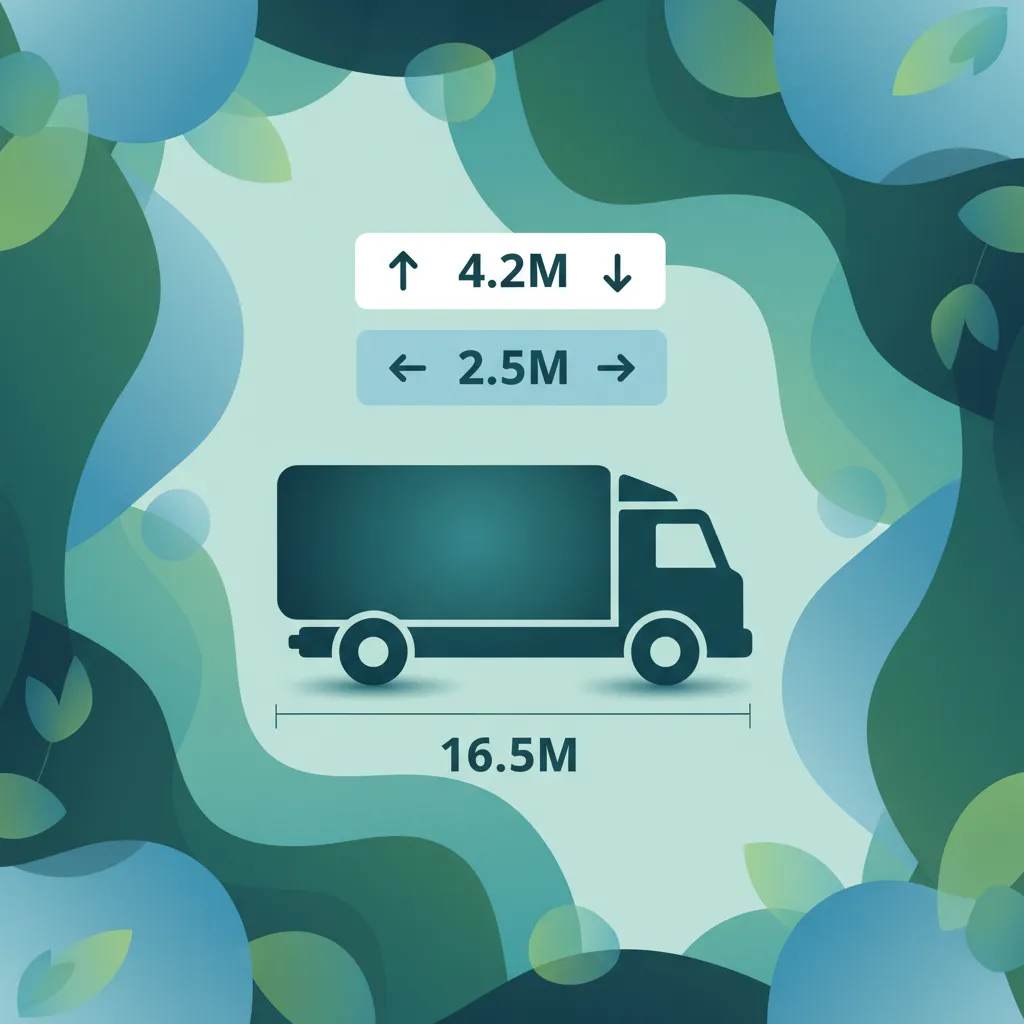
This lesson concentrates on the specific road signs that are of utmost importance to HGV drivers. It details how to interpret signs indicating maximum permissible weight, axle load, vehicle height, and overall length. Understanding these restrictions is crucial for effective route planning to avoid bridges with low clearance, roads with weight limits, or tunnels that cannot accommodate the vehicle's dimensions, thus preventing accidents and infrastructure damage.
This lesson explores the dynamic relationship between cargo weight and a vehicle's performance. It explains how increased mass raises kinetic energy, significantly lengthening braking distances and requiring earlier, more gradual brake application. Learners will also analyze how a heavy or poorly distributed load alters the vehicle's handling characteristics, particularly during cornering, and understand the necessity of adjusting speed and driving style to compensate for these effects.
This lesson focuses on the specific challenges HGVs face when navigating roundabouts. It details the correct procedure for approach, including selecting the appropriate lane based on the intended exit and yielding to traffic already circulating. The content emphasizes the need to account for the vehicle's large turning radius and off-tracking to avoid encroaching on adjacent lanes or mounting curbs, ensuring a smooth and safe passage through the roundabout.
Learn essential strategies for adjusting speed, following distance, and control inputs when driving HGVs in challenging Polish weather. Covers managing reduced visibility, traction loss, and vehicle stability effectively for Category C.
This lesson teaches the crucial concept that drivers must always adapt their speed to the current conditions. It explains how factors like rain, fog, ice, heavy traffic, and poor visibility reduce safety margins and require a lower speed than the posted limit. This principle of defensive driving is essential for preventing accidents in challenging situations.
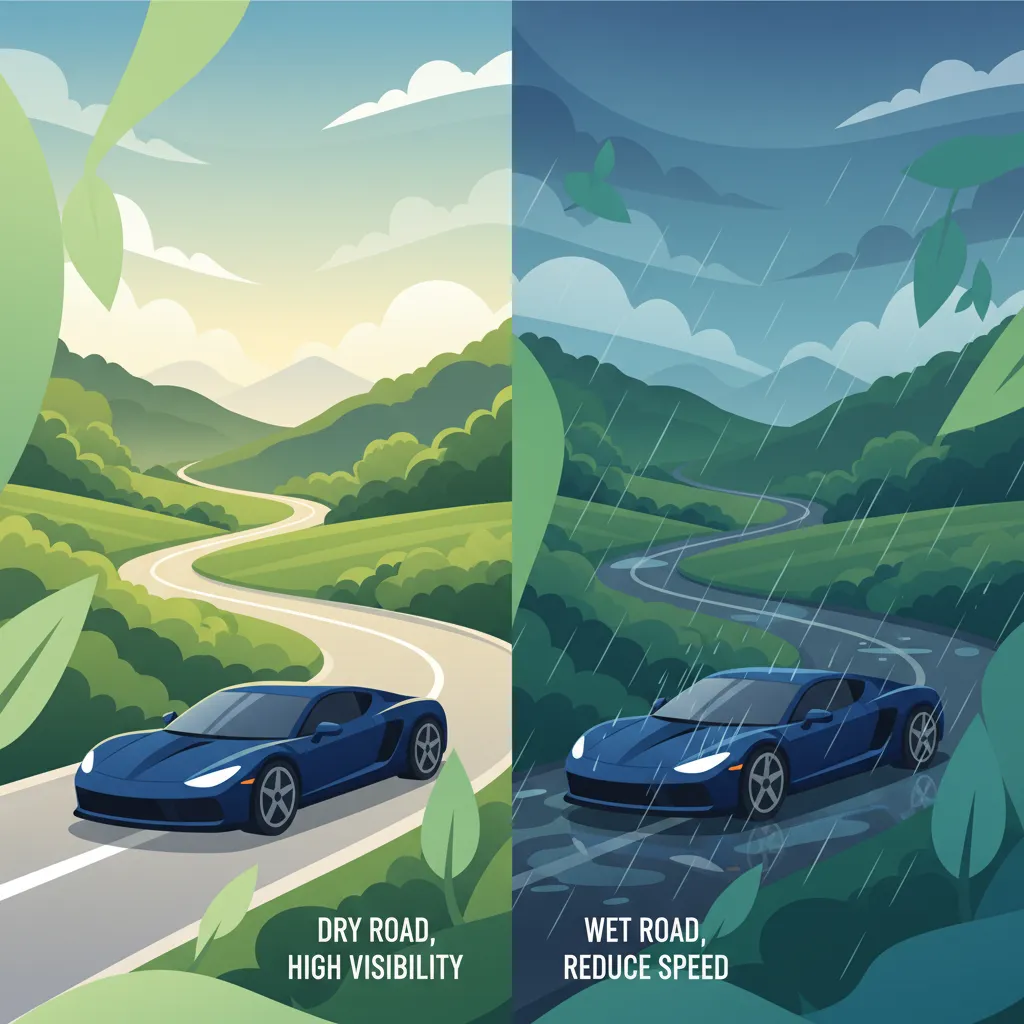
In this lesson, learners examine how environmental conditions such as rain, wind, ice, and reduced visibility necessitate adjustments in riding speed. The content provides guidelines for assessing road surfaces, judging appropriate cornering speeds, and reducing speed proactively in adverse weather. Learners will understand the impact of temperature on tyre performance and the need to increase safety margins, mastering adaptive speed management to maintain control.
This lesson outlines the statutory speed limits that professional drivers of Category C vehicles must adhere to on Polish roads. It clearly distinguishes the maximum permitted speeds in built-up areas, on single carriageways, and on motorways. The content also explains how to interpret road signs that may indicate temporary or vehicle-specific speed restrictions, ensuring drivers remain compliant with the law and avoid penalties from speed enforcement measures.
This lesson details the specific driving adjustments needed for adverse weather. It focuses on how rain, snow, and ice affect vehicle dynamics and driver perception. Learners will study techniques to prevent hydroplaning, use winter tires effectively, and increase following distances on slippery surfaces while using safety systems like fog lights.
This lesson equips drivers with the skills to operate a large vehicle within the challenging confines of an urban environment. It addresses how to navigate narrow streets, deal with traffic calming measures, and manage frequent stop-and-go situations while being vigilant for pedestrians and other road users. The content also emphasizes the importance of meticulous route planning to avoid unsuitable roads and the use of anticipation to maintain smooth progress and minimize disruption in congested areas.
This lesson focuses on the specific challenges of driving in rainy conditions. It explains the phenomenon of hydroplaning, where tires lose contact with the road surface, and how to prevent it by reducing speed. The importance of good tire condition, effective windscreen wipers, and extending following distances is also covered in detail.

This lesson introduces the principles of eco-driving, a set of techniques designed to minimize fuel consumption and emissions. It explains how factors like smooth acceleration, maintaining a steady speed, and anticipating traffic flow can lead to significant fuel savings. Learners will understand the benefits of reducing unnecessary idling, using cruise control effectively on appropriate terrain, and planning routes to avoid congestion, contributing to both economic and environmental sustainability.
This lesson focuses on the specific hazards introduced by seasonal weather, such as mud, snow, ice, fog, and heavy rain. It explains how these conditions affect traction, braking, and driver visibility, and provides guidance on adjusting speed and using appropriate tires. The lesson also covers the proper use of lights and reflectors to improve visibility in low-light conditions.
This lesson focuses on the specific challenges HGVs face when navigating roundabouts. It details the correct procedure for approach, including selecting the appropriate lane based on the intended exit and yielding to traffic already circulating. The content emphasizes the need to account for the vehicle's large turning radius and off-tracking to avoid encroaching on adjacent lanes or mounting curbs, ensuring a smooth and safe passage through the roundabout.
This lesson provides essential guidance for driving in fog, one of the most dangerous conditions. It instructs on the correct use of low-beam headlights and fog lights to maximize visibility without causing glare. The core advice is to significantly reduce speed and use the edge of the road or markings as a guide.
Find clear answers to common questions learners have about Adaptation to Weather and Road Conditions. Learn how the lesson is structured, which driving theory objectives it supports, and how it fits into the overall learning path of units and curriculum progression in Poland. These explanations help you understand key concepts, lesson flow, and exam focused study goals.
A heavy load can either increase or decrease stability depending on its distribution and center of gravity. A high center of gravity with a heavy load makes the vehicle more susceptible to overturning in strong crosswinds, especially high-sided vehicles. Proper load securement and distribution are critical to mitigate this risk.
In snow, you still have some friction, allowing for gentle, continuous braking. On ice, friction is minimal, so braking must be extremely gentle and progressive to avoid locking wheels or skidding. Engine braking becomes a more critical technique on both snow and ice for Category C vehicles.
In heavy rain, the road surface becomes significantly more slippery, and visibility is reduced. You should at least double your normal following distance, or even triple it, to allow ample time and space for braking. Remember, an HGV's stopping distance is already much longer than a car's.
In thick fog, visibility is severely limited, making it hard to see other vehicles, road signs, and markings. Reduce your speed significantly, use fog lights (front and rear) if fitted and legal, and increase your following distance. Avoid sudden braking or steering movements, and be prepared to stop if visibility becomes too low for a Category C vehicle.
Yes, aquaplaning can affect HGVs, especially if tires are worn or underinflated, or if there's significant standing water. If you feel your Category C vehicle aquaplaning, ease off the accelerator, keep the steering wheel straight, and avoid braking suddenly. Let the vehicle slow down naturally until tire grip returns.
Build custom practice sessions tailored precisely to your needs. Focus on areas requiring improvement, review specific Polish road signs, or master complex traffic rules to ensure full preparation for your official driving license exam.