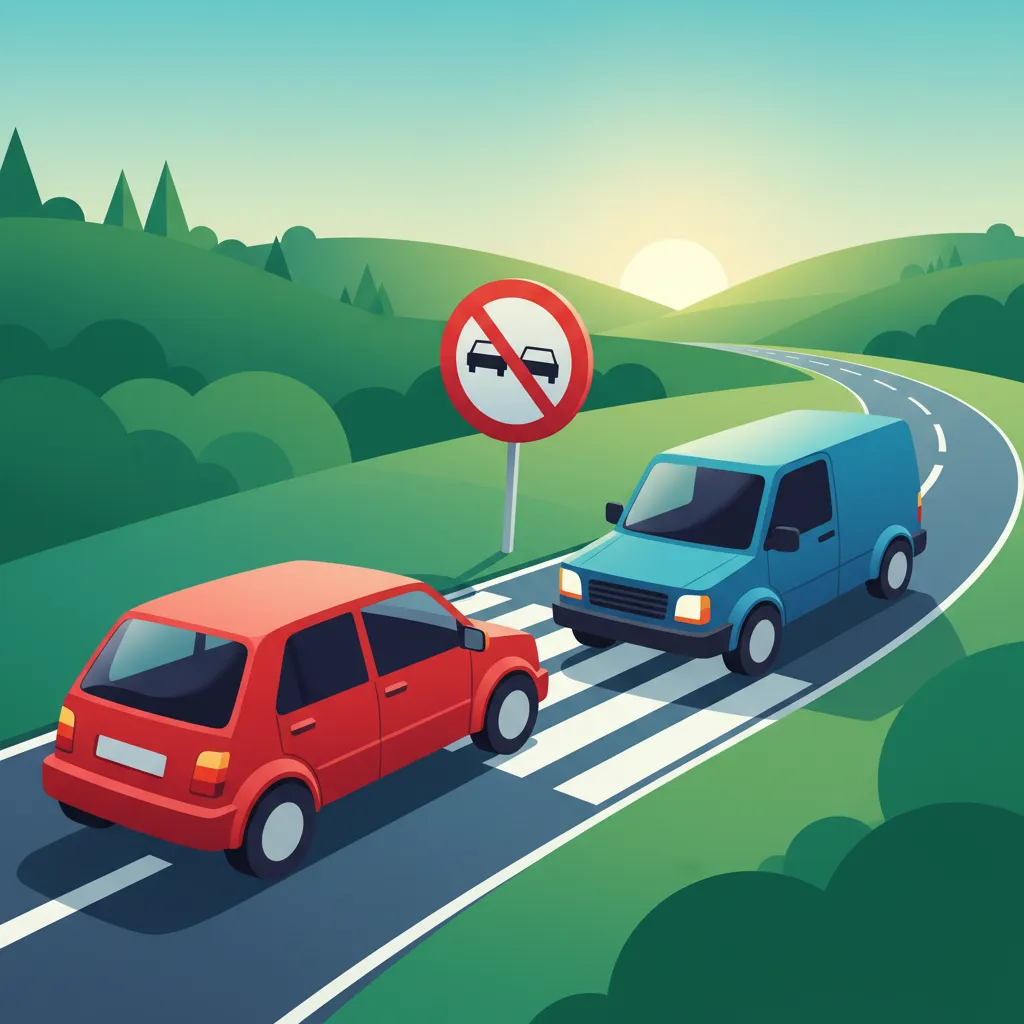
When driving in Poland, understanding the correct procedures for overtaking is critical for both your driving exam and real-world safety. This section details the steps involved in safely passing another vehicle, explains the crucial assessment drivers must make before initiating the maneuver, and clearly outlines all situations where overtaking is strictly forbidden by Polish traffic law.
Theory topic content overview
Read the full theory topic guide for Overtaking Rules & Safety with structured, easy-to-scan content built for learners in Poland. This detailed section explains the exact rule, meaning, traffic context, comparison points, and exam logic behind this Polish driving theory topic so you can study faster, understand the concept more clearly, and avoid common interpretation mistakes on the theory test.
Overtaking, known as wyprzedzanie in Polish traffic regulations, is the maneuver of passing a vehicle or other road user (such as a pedestrian or cyclist) travelling in the same direction. While a common part of driving, overtaking is inherently one of the most complex and risky maneuvers. It requires precise judgment, adherence to specific rules, and a deep understanding of road conditions to ensure the safety of all road users. In Poland, mastering these overtaking rules is not only vital for your driving theory exam but also for safe, responsible driving on any road.
In Poland, a significant number of accidents are directly linked to improper or illegal overtaking. The dynamic nature of Polish roads, from busy urban areas with frequent pedestrian crossings to winding rural routes with varying visibility, makes careful overtaking procedures critical.
wyprzedzanie can be performed. Violating these rules can result in significant fines, penalty points, and even loss of your driving license, especially for serious offenses like overtaking on a continuous line or at a railway crossing.Before initiating any overtaking maneuver on Polish roads, a driver must undertake a thorough assessment and follow a structured sequence of actions. The fundamental principle, as often emphasized in Polish driving theory, is that you must always ensure you have sufficient visibility and space to maneuver without obstructing others.
Assess the Situation:
Signal Your Intentions:
Execute the Maneuver:
Return to Your Lane:
Polish traffic law specifies several conditions that must be met before and during an overtaking maneuver. Failure to meet any of these makes overtaking illegal and highly dangerous.
Maintaining a safe lateral distance from the overtaken vehicle or road user is a specific point of emphasis in Polish traffic regulations and exam questions. These distances vary depending on the type of road user:
These minimum distances are critical for protecting vulnerable road users and are frequently tested in the Polish driving theory exam.
Polish traffic law strictly prohibits overtaking in certain high-risk situations to prevent collisions. These prohibitions are absolute unless explicitly overridden by specific traffic signals or markings (e.g., controlled traffic). Pay close attention to these scenarios for your theory exam:
Learners frequently make mistakes related to overtaking, often due to impatience or misjudgment. These are often highlighted in the Polish theory test:
Wyprzedzanie in PolandOvertaking in Poland is a privilege, not a right. It demands a high degree of responsibility and caution. Always prioritize safety over speed and convenience. If there is any doubt about the safety or legality of an overtaking maneuver, do not attempt it. Patience and adherence to the clear rules of Polish traffic law are your best guides to safe driving. Remember the critical distances for vulnerable road users, and internalize the zones where wyprzedzanie is strictly forbidden.
Overtaking (wyprzedzanie) in Poland is a high-risk maneuver requiring thorough assessment and strict adherence to Polish traffic law. Drivers must assess visibility, road conditions, and traffic before signaling and executing the maneuver while maintaining specific lateral distances for vulnerable road users. Overtaking is absolutely prohibited at intersections, pedestrian crossings, railway crossings, and across continuous lines, though exceptions exist for signal-controlled crossings and roundabouts. Key learner focus areas include distance requirements for cyclists and pedestrians, prohibited zones with their exceptions, speed limit compliance during the maneuver, and proper mirror and blind spot checks throughout.
A short set of high-value points that capture the most important ideas from this theory explanation.
Before overtaking, assess the road ahead for oncoming traffic, check mirrors for vehicles overtaking you, evaluate the vehicle being overtaken, and consider road conditions including weather and surface.
Maintain specific lateral distances when overtaking vulnerable road users: minimum 1 metre for cyclists and pedestrians, and 2 metres for motorcycles outside built-up areas.
Overtaking is prohibited at intersections, pedestrian crossings, and railway crossings unless overridden by specific traffic signals or in permitted situations.
Overtaking does not permit exceeding the posted speed limit; if safe completion is impossible within the limit, the maneuver should not be attempted.
Overtake only from the left on multi-lane roads; passing on the right (undertaking) is generally prohibited except in queueing traffic or when indicated by signals.
Prohibited zones include intersections, pedestrian crossings, railway crossings, and areas marked by continuous lines (linia ciągła) or road signs.
Distance requirements: 1 metre minimum lateral distance when overtaking cyclists and pedestrians; 2 metres for motorcycles outside built-up areas.
The four-part assessment before overtaking covers: road ahead, vehicle behind, vehicle being overtaken, and current road conditions.
Continuous lines (single or double) prohibit overtaking unless overtaking a clearly stationary vehicle blocking the lane.
Signal with left indicator, maneuver, then signal with right indicator when returning to lane after seeing the overtaken vehicle in the interior mirror.
Underestimating the distance needed for the maneuver, especially with oncoming traffic, leading to dangerous situations.
Overtaking in prohibited zones such as uncontrolled intersections, pedestrian crossings, or at continuous lines due to ignoring signs and road markings.
Accelerating beyond the speed limit during the overtaking maneuver, which is illegal and defeats the safety requirement.
Checking mirrors only and failing to check blind spots before changing lanes, risking collision with a vehicle already overtaking.
Pulling back into the lane too soon after overtaking, forcing the overtaken vehicle to brake or obstructing other road users.
Start with a short, direct summary of Overtaking Rules & Safety before reading the full explanation below.
Overtaking in Poland involves carefully assessing road and traffic conditions, signaling intentions, and executing the maneuver safely without obstructing other road users. Drivers must ensure clear visibility, sufficient space, and adhere to specific distance requirements, especially when passing cyclists or pedestrians. It is strictly prohibited in many high-risk zones like intersections or pedestrian crossings unless explicitly allowed by traffic signals.
Review the most important terms, rule signals, and traffic concepts linked to Overtaking Rules & Safety.
Explore related theory topic pages connected to Overtaking Rules & Safety and continue with the next useful rule explanation.
See the common search queries learners use when trying to understand Overtaking Rules & Safety in Poland.

Continue your preparation by exploring specific Polish driving theory topics in detail. Review each section to reinforce your understanding of traffic rules, road signs, and safe driving practices. Our comprehensive explanations are structured to support your learning journey and help you confidently approach the official driving licence theory exam.
Polish Driving Theory TopicsTheory topic content overview
A short set of high-value points that capture the most important ideas from this theory explanation.
Before overtaking, assess the road ahead for oncoming traffic, check mirrors for vehicles overtaking you, evaluate the vehicle being overtaken, and consider road conditions including weather and surface.
Maintain specific lateral distances when overtaking vulnerable road users: minimum 1 metre for cyclists and pedestrians, and 2 metres for motorcycles outside built-up areas.
Overtaking is prohibited at intersections, pedestrian crossings, and railway crossings unless overridden by specific traffic signals or in permitted situations.
Overtaking does not permit exceeding the posted speed limit; if safe completion is impossible within the limit, the maneuver should not be attempted.
Overtake only from the left on multi-lane roads; passing on the right (undertaking) is generally prohibited except in queueing traffic or when indicated by signals.
Prohibited zones include intersections, pedestrian crossings, railway crossings, and areas marked by continuous lines (linia ciągła) or road signs.
Distance requirements: 1 metre minimum lateral distance when overtaking cyclists and pedestrians; 2 metres for motorcycles outside built-up areas.
The four-part assessment before overtaking covers: road ahead, vehicle behind, vehicle being overtaken, and current road conditions.
Continuous lines (single or double) prohibit overtaking unless overtaking a clearly stationary vehicle blocking the lane.
Signal with left indicator, maneuver, then signal with right indicator when returning to lane after seeing the overtaken vehicle in the interior mirror.
Underestimating the distance needed for the maneuver, especially with oncoming traffic, leading to dangerous situations.
Overtaking in prohibited zones such as uncontrolled intersections, pedestrian crossings, or at continuous lines due to ignoring signs and road markings.
Accelerating beyond the speed limit during the overtaking maneuver, which is illegal and defeats the safety requirement.
Checking mirrors only and failing to check blind spots before changing lanes, risking collision with a vehicle already overtaking.
Pulling back into the lane too soon after overtaking, forcing the overtaken vehicle to brake or obstructing other road users.
Start with a short, direct summary of Overtaking Rules & Safety before reading the full explanation below.
Overtaking in Poland involves carefully assessing road and traffic conditions, signaling intentions, and executing the maneuver safely without obstructing other road users. Drivers must ensure clear visibility, sufficient space, and adhere to specific distance requirements, especially when passing cyclists or pedestrians. It is strictly prohibited in many high-risk zones like intersections or pedestrian crossings unless explicitly allowed by traffic signals.
Review the most important terms, rule signals, and traffic concepts linked to Overtaking Rules & Safety.
Explore related theory topic pages connected to Overtaking Rules & Safety and continue with the next useful rule explanation.
See the common search queries learners use when trying to understand Overtaking Rules & Safety in Poland.
Continue your preparation by exploring specific Polish driving theory topics in detail. Review each section to reinforce your understanding of traffic rules, road signs, and safe driving practices. Our comprehensive explanations are structured to support your learning journey and help you confidently approach the official driving licence theory exam.
Polish Driving Theory TopicsUse this exam-focused revision tip to understand how Overtaking Rules & Safety is likely to appear in theory questions for learners in Poland. This section helps you identify the most testable part of the rule, avoid common traps, and remember the concept more effectively during Polish driving theory exam preparation.
The Polish driving theory exam frequently tests your knowledge of overtaking prohibitions, especially at intersections, pedestrian crossings, and railway crossings. Pay close attention to road markings and signs, as these often indicate where overtaking is forbidden. Remember to always prioritize safety and sufficient distance over speed.
Read direct answers to the most common learner questions about Overtaking Rules & Safety in Poland. This FAQ focuses on rule confusion, practical meaning, comparison with similar concepts, and the exact uncertainties that appear most often in Polish driving theory revision and exam preparation.
In Polish driving theory, "wyprzedzanie" refers to the maneuver of overtaking, where one vehicle passes another vehicle traveling in the same direction. It requires careful adherence to specific traffic laws.
The key steps include checking mirrors and blind spots, signaling intent, assessing visibility and oncoming traffic, accelerating to pass, and returning to your lane only when you can do so safely without cutting off the overtaken vehicle.
Overtaking is generally prohibited at intersections, pedestrian crossings, railway crossings, curves with limited visibility, hilltops, and wherever road signs or markings (like a continuous single line) forbid it, unless traffic is directed or in specific multi-lane scenarios.
When overtaking a bicycle, scooter, or a column of pedestrians in Poland, you must maintain a safe distance, generally not less than 1 meter. This distance is crucial for their safety.
Yes, Polish traffic law strictly requires drivers to always ensure they have sufficient visibility and space to complete the overtaking maneuver safely without obstructing other road users.
Generally, rail vehicles (trams) should be overtaken from the right in Poland. However, it is permissible to overtake a rail vehicle from the left on a one-way road.
Overtaking in violation of a continuous single line is a serious road traffic offense in Poland and can result in significant fines and penalty points. In some cases, a driving license may be withheld.
Higher speeds significantly increase the distance required to complete an overtaking maneuver safely. This includes the distance needed to accelerate past the vehicle and the space required to return to your lane without causing danger.
Build custom practice sessions tailored precisely to your needs. Focus on areas requiring improvement, review specific Polish road signs, or master complex traffic rules to ensure full preparation for your official driving license exam.