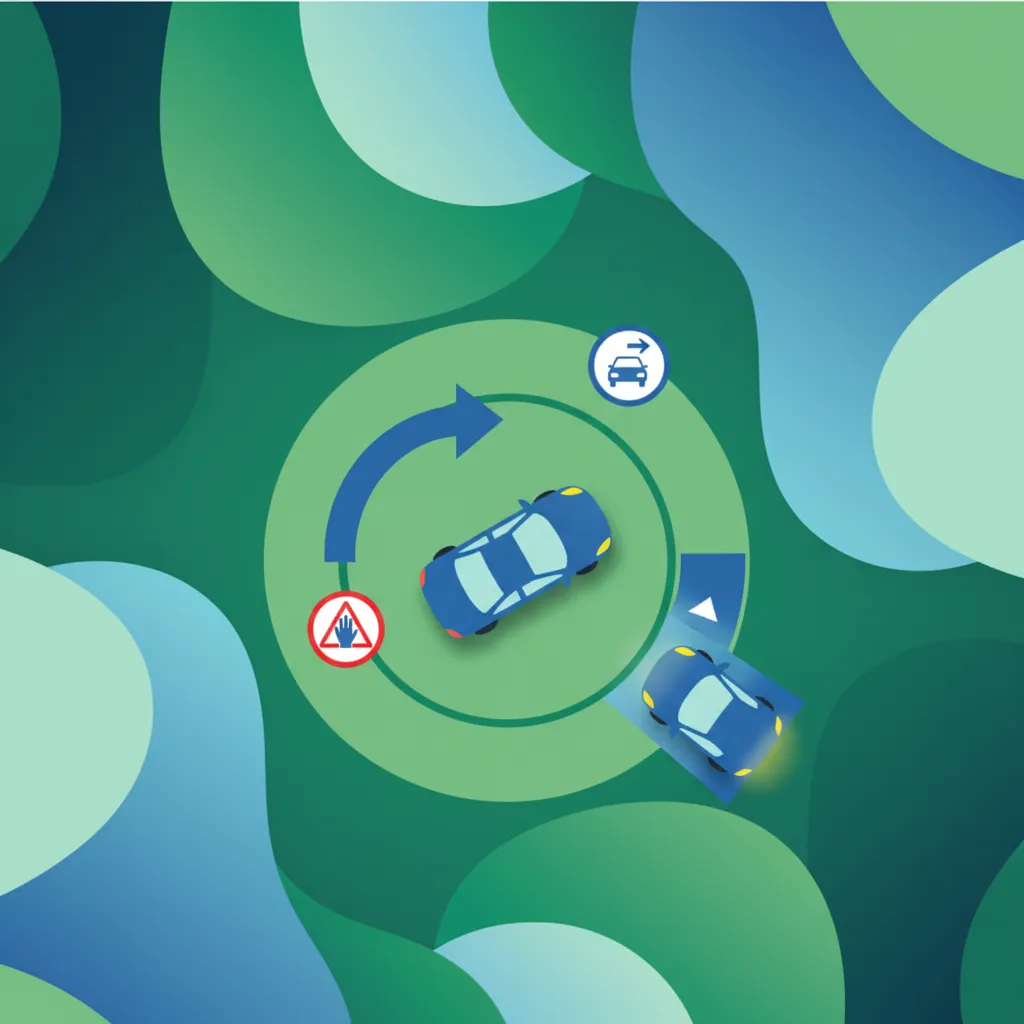
Roundabouts (cirkulationsplatser) are designed to improve traffic flow and safety by reducing collision points. In Sweden, specific rules govern how drivers enter, circulate, and exit them. This page explains who has priority, how to use your indicators, and how to choose the right lane.
Theory topic content overview
Read the full theory topic guide for Roundabout Priority with structured, easy-to-scan content built for learners in Sweden. This detailed section explains the exact rule, meaning, traffic context, comparison points, and exam logic behind this Swedish driving theory topic so you can study faster, understand the concept more clearly, and avoid common interpretation mistakes on the theory test.
Navigating a cirkulationsplats (roundabout) effectively and safely is a fundamental skill for drivers in Sweden, and a common subject in the Swedish driving theory exam. Roundabouts are designed to improve traffic flow and reduce the severity of collisions compared to traditional intersections. However, their safety and efficiency depend entirely on drivers understanding and correctly applying the specific förkörsrätt (priority) rules.
At its core, roundabout priority in Sweden dictates an ovillkorlig väjningsplikt (unconditional duty to yield) for vehicles entering the roundabout. This means traffic already circulating inside the cirkulationsplats typically has priority.
Mastering roundabout rules is crucial for several reasons:
väjningsplikt prevents dangerous cutting-off or sudden braking.svenska körkortsteori (Swedish driving theory) exam. Mistakes here can easily lead to failing the test.svenska trafikregler (Swedish traffic rules) is a legal requirement.The standard Swedish rule for roundabouts can be broken down into three main phases: approaching, circulating, and exiting.
When you approach a roundabout in Sweden, you will almost always encounter a roundabout sign (blue circular sign with white arrows) combined with a yield sign (väjningsplikt sign, an inverted red triangle) and/or hajtänder (shark teeth) road markings.
Väjningsplikt): These signs and markings mandate that you have an unconditional duty to yield to all traffic already inside the roundabout, regardless of their direction of travel. This includes vehicles, cyclists, and moped riders.Once you have safely entered, you are part of the circulating traffic.
Correct signaling when exiting is a key aspect of Swedish roundabout rules.
väjningsplikt) to pedestrians and cyclists who are crossing the exit road you are turning onto, unless specific traffic lights or signs dictate otherwise. This is a common point of oversight.Several factors influence safe roundabout navigation and priority:
väjningsplikt), and hajtänder (shark teeth) markings, as they explicitly define priority.Väjningsplikt vs. Stopplikt: While väjningsplikt requires you to yield, stopplikt (stop duty) mandates a complete stop before the stop line, even if no traffic is present. In roundabouts, väjningsplikt is the norm.svenska trafikregler difference.väjningsplikt on entry, makes it distinct from a standard högerregeln (right-hand rule) intersection.cirkulationsplats) in Stockholm intending to take the third exit (a left turn). You observe the väjningsplikt sign. You slow down, check for traffic inside. There's a car in the right lane inside the roundabout. You wait for it to pass, then enter, moving into the left lane of the roundabout if available. You drive past the first and second exits, then activate your right indicator just before the third exit and yield to any pedestrians or cyclists before exiting.väjningsplikt) to the cyclist, waiting for them to pass before entering.Väjningsplikt: Failing to fully yield to traffic already in the roundabout before entering, leading to dangerous situations.To master roundabout priority in Sweden, always prioritize observation, reduced speed, and correct signaling. Assume väjningsplikt upon entry and remember to signal right only when exiting, or before entering for the very first exit. By internalizing these svenska körkortsteori rules, you ensure both your safety and the smooth flow of traffic for everyone on the road.
Swedish roundabouts require an unconditional yield duty (väjningsplikt) to all traffic already circulating inside before you enter. The signaling rule is distinctive: signal right before entering only for the first exit; signal right only when you are about to exit for any other exit. In multi-lane roundabouts, position your vehicle in the right lane for early exits (first or second) and in the left lane for later exits, always following lane arrows. When exiting, you must yield to pedestrians and cyclists crossing the exit road. This differs from many other countries and is a frequent exam focus area.
A short set of high-value points that capture the most important ideas from this theory explanation.
Vehicles already circulating inside the roundabout have priority over those attempting to enter
Signal right before entering only when taking the very first exit; signal right only when exiting for all other exits
Never use your left indicator while inside a Swedish roundabout
Choose your lane based on your intended exit: right lane for early exits, left lane for later exits
Always yield to pedestrians and cyclists when exiting the roundabout, unless traffic lights dictate otherwise
Väjningsplikt (yield duty) is the standard rule at Swedish roundabouts, not stopplikt (full stop)
Right signal before entering = first exit only
Right signal when exiting = all other exits (second, third, etc.)
Yield to circulating traffic, cyclists, and pedestrians upon exit
In multi-lane roundabouts, position yourself in the correct lane before entering based on where you want to exit
Using the left indicator while circulating inside the roundabout, which is incorrect in Sweden
Failing to yield to traffic already inside the roundabout upon entry (cutting in)
Not scanning sufficiently for cyclists and pedestrians, especially around the exit
Choosing the wrong lane in multi-lane roundabouts, causing late lane changes
Forgetting to yield to pedestrians and cyclists crossing the exit road
Start with a short, direct summary of Roundabout Priority before reading the full explanation below.
In most Swedish roundabouts, you have an unconditional duty to yield (väjningsplikt) to all traffic already circulating inside. This means you must slow down and wait for a safe gap before entering. Once inside, you maintain your position and signal only when you are about to exit, immediately before your intended exit road. If you are taking the first exit, you should signal right *before* entering the roundabout.
Review the most important terms, rule signals, and traffic concepts linked to Roundabout Priority.
Explore related theory topic pages connected to Roundabout Priority and continue with the next useful rule explanation.
See the common search queries learners use when trying to understand Roundabout Priority in Sweden.

Dive deeper into specific theory topics, review detailed explanations of road rules, and reinforce your understanding of Swedish traffic regulations. Continue your preparation for the driving licence exam by exploring each core concept in detail.
Explore Driving Theory TopicsTheory topic content overview
A short set of high-value points that capture the most important ideas from this theory explanation.
Vehicles already circulating inside the roundabout have priority over those attempting to enter
Signal right before entering only when taking the very first exit; signal right only when exiting for all other exits
Never use your left indicator while inside a Swedish roundabout
Choose your lane based on your intended exit: right lane for early exits, left lane for later exits
Always yield to pedestrians and cyclists when exiting the roundabout, unless traffic lights dictate otherwise
Väjningsplikt (yield duty) is the standard rule at Swedish roundabouts, not stopplikt (full stop)
Right signal before entering = first exit only
Right signal when exiting = all other exits (second, third, etc.)
Yield to circulating traffic, cyclists, and pedestrians upon exit
In multi-lane roundabouts, position yourself in the correct lane before entering based on where you want to exit
Using the left indicator while circulating inside the roundabout, which is incorrect in Sweden
Failing to yield to traffic already inside the roundabout upon entry (cutting in)
Not scanning sufficiently for cyclists and pedestrians, especially around the exit
Choosing the wrong lane in multi-lane roundabouts, causing late lane changes
Forgetting to yield to pedestrians and cyclists crossing the exit road
Start with a short, direct summary of Roundabout Priority before reading the full explanation below.
In most Swedish roundabouts, you have an unconditional duty to yield (väjningsplikt) to all traffic already circulating inside. This means you must slow down and wait for a safe gap before entering. Once inside, you maintain your position and signal only when you are about to exit, immediately before your intended exit road. If you are taking the first exit, you should signal right *before* entering the roundabout.
Review the most important terms, rule signals, and traffic concepts linked to Roundabout Priority.
Explore related theory topic pages connected to Roundabout Priority and continue with the next useful rule explanation.
See the common search queries learners use when trying to understand Roundabout Priority in Sweden.
Dive deeper into specific theory topics, review detailed explanations of road rules, and reinforce your understanding of Swedish traffic regulations. Continue your preparation for the driving licence exam by exploring each core concept in detail.
Explore Driving Theory TopicsUse this exam-focused revision tip to understand how Roundabout Priority is likely to appear in theory questions for learners in Sweden. This section helps you identify the most testable part of the rule, avoid common traps, and remember the concept more effectively during Swedish driving theory exam preparation.
A common mistake in the Swedish driving theory exam related to roundabouts is incorrect signaling. Remember: signal right *before* entering if taking the first exit, otherwise signal right *when exiting* the roundabout. Also, always assume you have to yield to traffic already in the roundabout unless explicitly stated otherwise by traffic lights.
Read direct answers to the most common learner questions about Roundabout Priority in Sweden. This FAQ focuses on rule confusion, practical meaning, comparison with similar concepts, and the exact uncertainties that appear most often in Swedish driving theory revision and exam preparation.
In most Swedish roundabouts, drivers entering must yield to all traffic already inside the roundabout. This is typically indicated by yield signs or road markings.
You should use your right indicator immediately before the exit you intend to take. The only exception is if you are taking the first exit, in which case you signal right *before* entering the roundabout.
While most Swedish roundabouts follow the general yield-on-entry rule, some larger or more complex ones may be regulated by traffic lights or specific road markings. Always observe signage.
Follow any specific road signs or markings guiding lane choice. Generally, for the first exit or going straight, use the right lane. For later exits or turning left, use the left lane.
Yes, when exiting a roundabout, you typically have to yield to pedestrians and cyclists who are crossing the exit road. Always be attentive to vulnerable road users.
Roundabouts are generally safer and more efficient than traditional intersections. They reduce severe collisions by lowering speeds and directing traffic in one direction, leading to a smoother traffic flow.
Refine your study plan by exploring practice sets on specific Swedish traffic rules, road signs, or driving situations. Use the search to quickly access relevant questions and focus your preparation for the official driving licence theory exam.